Two-Fold Studio: Multi-Functionality in a Limited Space

Multi-Functionality within a Limited Space
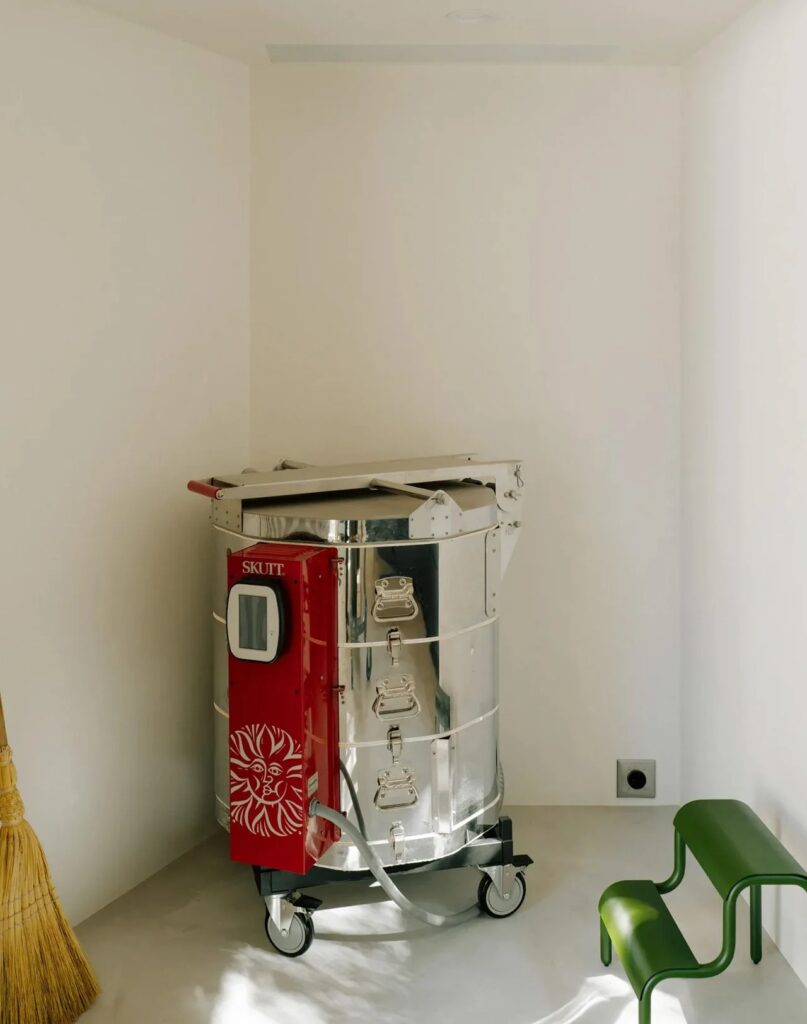
The Two-Fold Studio project reflects a functional paradox; while the name suggests duality, the building actually accommodates three primary functions within a space not exceeding 800 square feet. These functions include a Pilates studio, a fully equipped ceramics workshop, along with service elements such as storage and a small kitchen, with the added potential to transform into a guest house. This configuration reflects an attempt to maximize spatial efficiency by integrating uses without additional horizontal expansion.
Form as a Response to Site Constraints
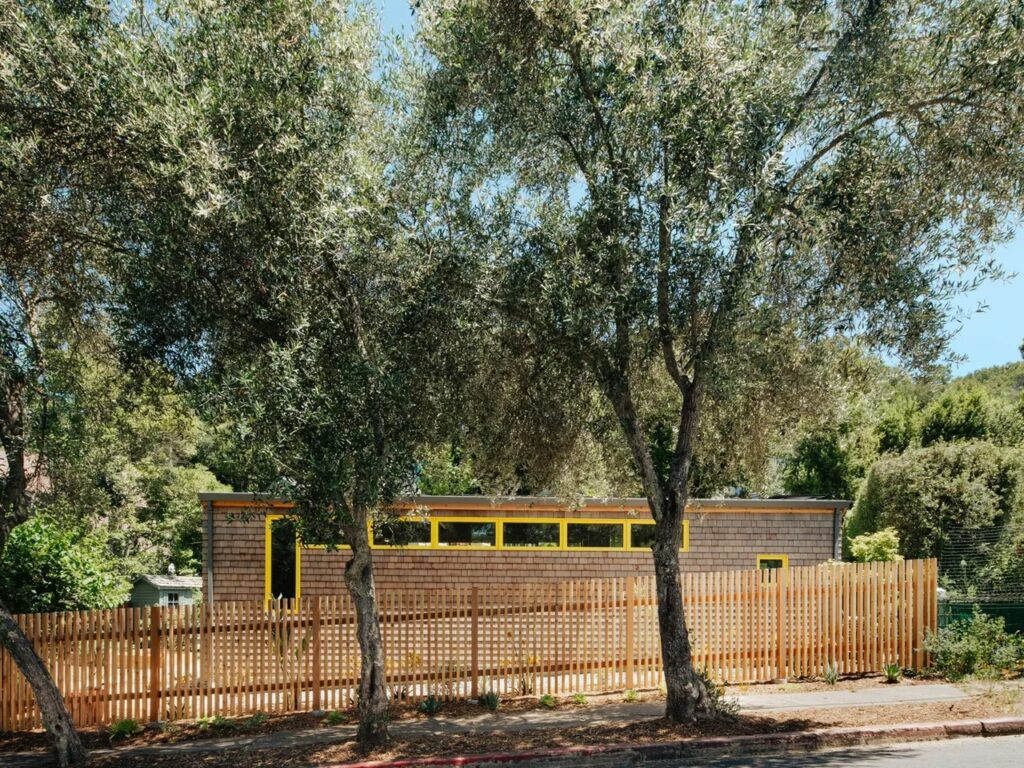
The building’s design emerged as a direct response to site limitations, particularly the presence of trees that could not be removed. As a result, an L-shaped layout was adopted, wrapping around the existing natural elements rather than displacing them. In this way, the building does not impose itself on the site but instead adapts to it, preserving the courtyard character while minimizing radical intervention in the surrounding environment.
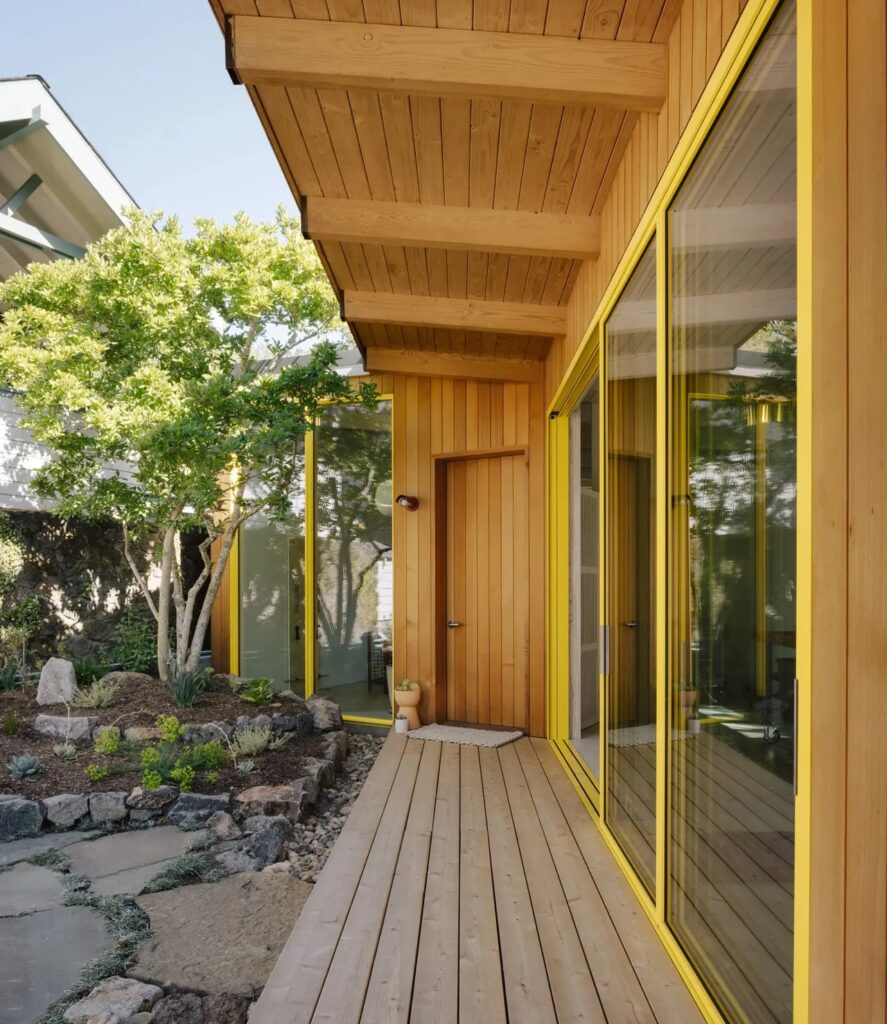
Relationship Between Mass and Natural Void
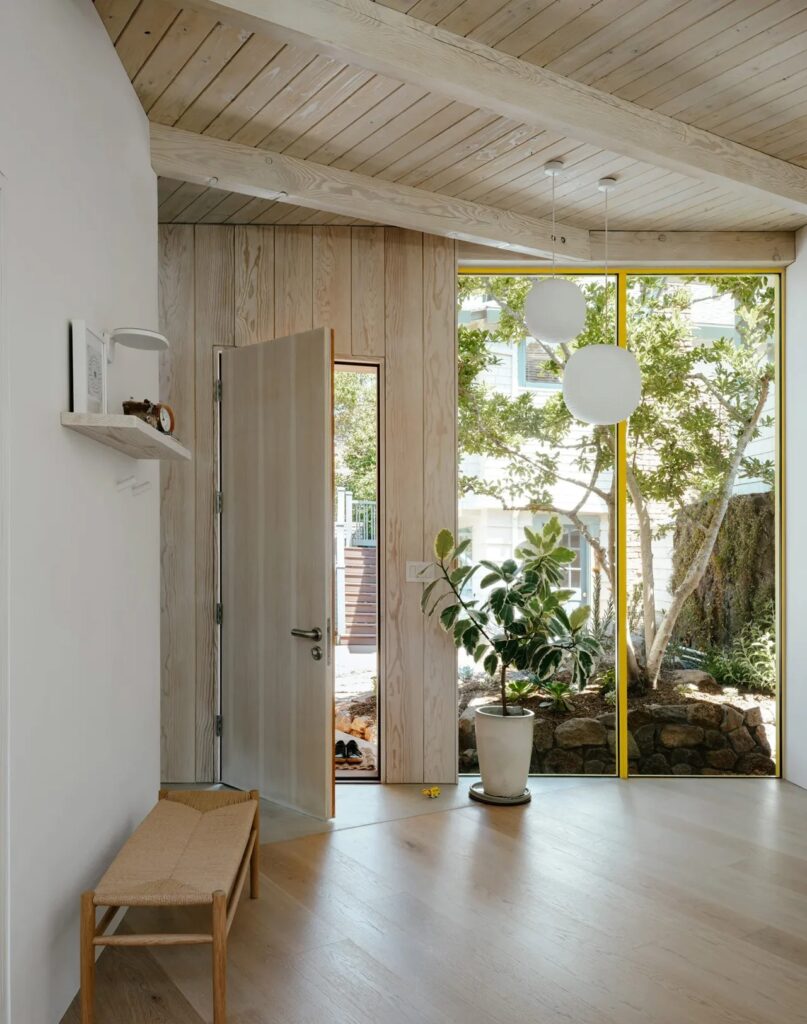
Here, the architectural form is transformed into a visual frame that organizes its relationship with the surrounding nature. This configuration redefines the role of the building from an independent mass into an element that directs the gaze and embraces the void. By referencing the rock gardens of the Ryoan-ji Temple, the project can be understood as a study in how architecture can merge with the natural landscape, making the relationship between both an essential part of the design concept.
Facade Treatment and Contextual Integration
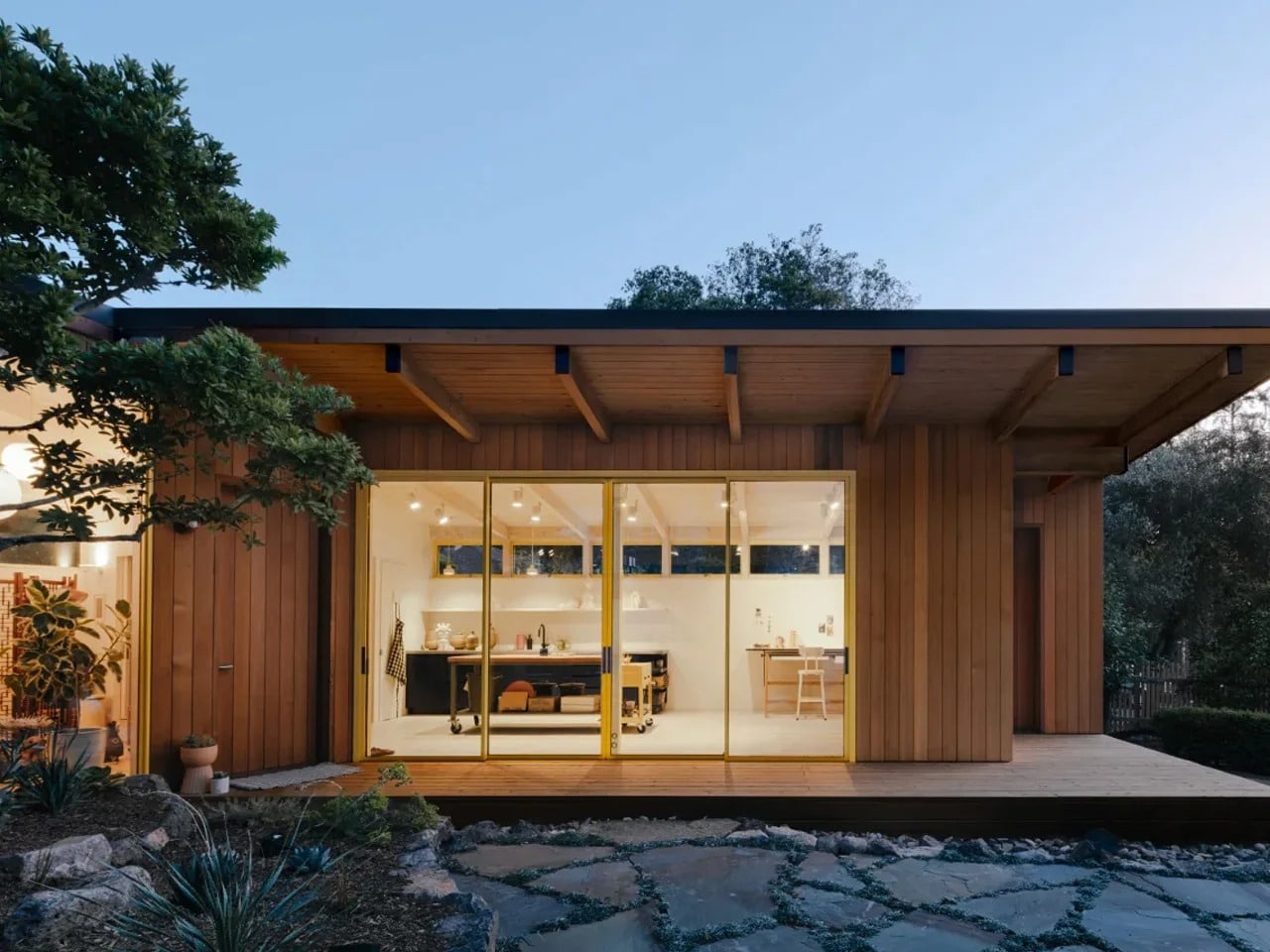
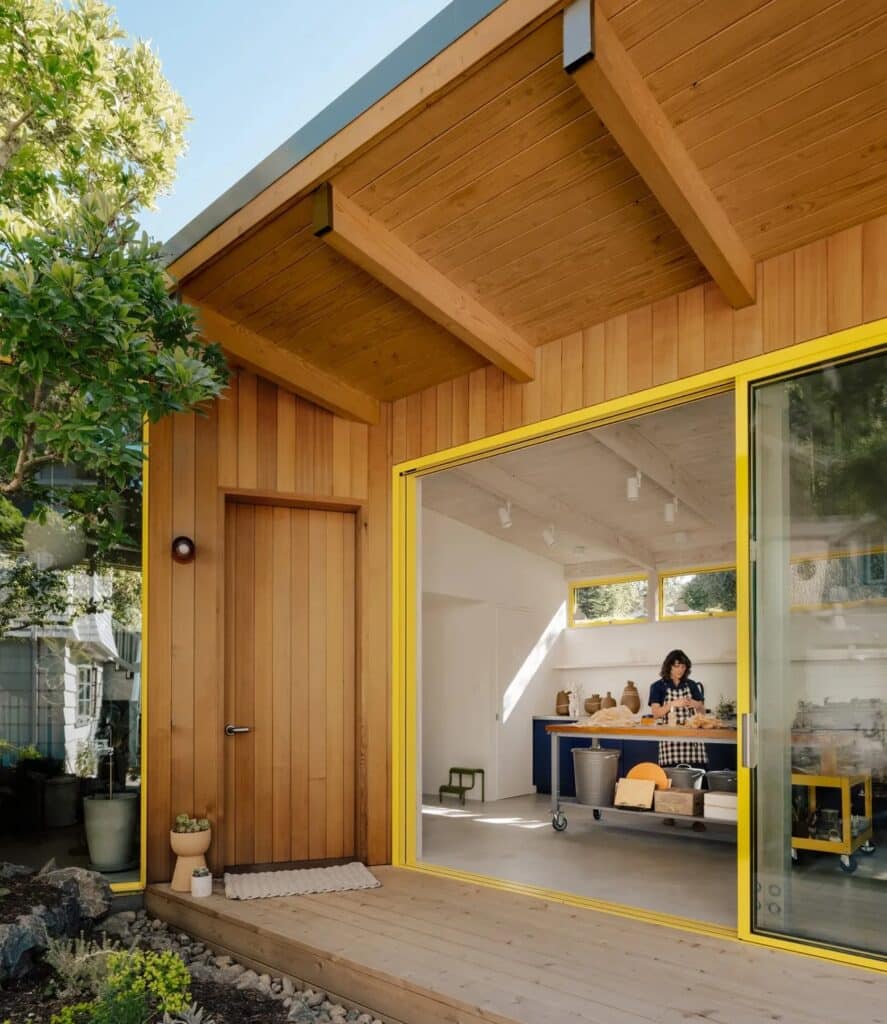
From the outside, the building appears as a calm, restrained volume that does not seek visual dominance. The use of cedar wood cladding visually connects it to the existing house, softening the presence of the new mass within the surrounding environment. In contrast, sliding glass doors introduce a sense of openness, transforming one facade into an outdoor extension sheltered by the roof overhang. Meanwhile, the yellow-painted metal frames add a controlled contrast, reflecting an intention to link the architectural composition to the user’s character without disturbing the overall balance.
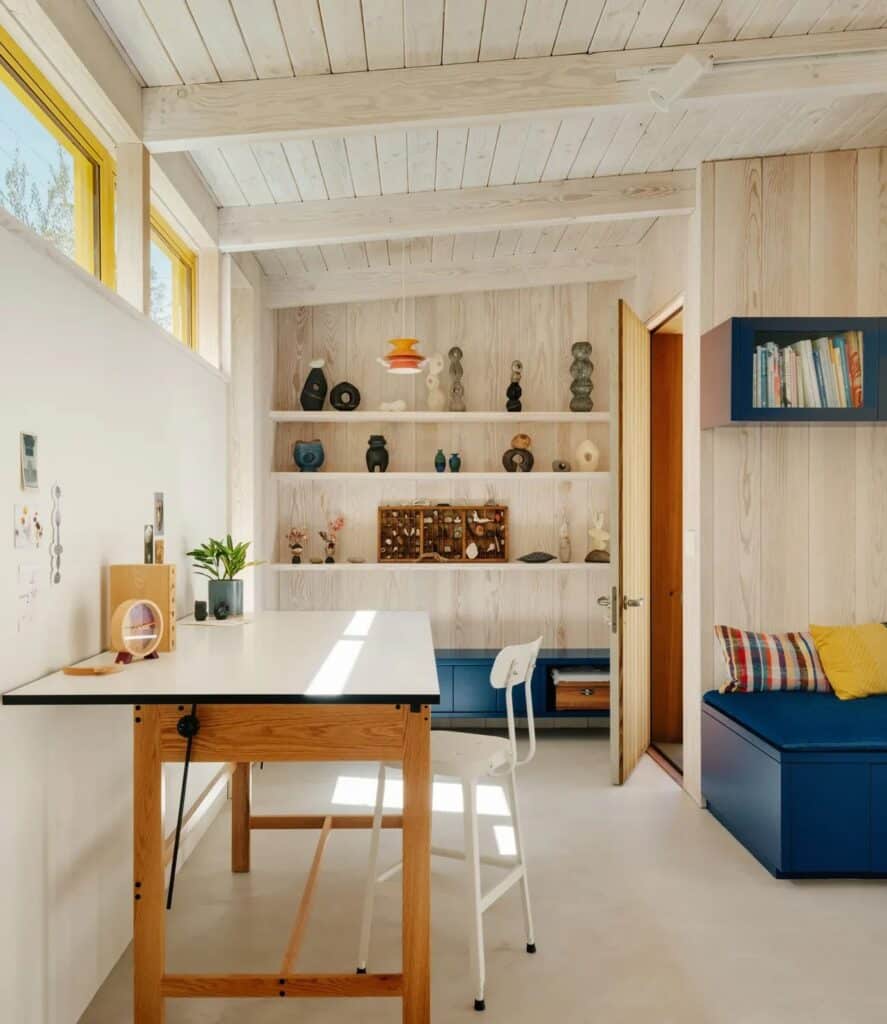
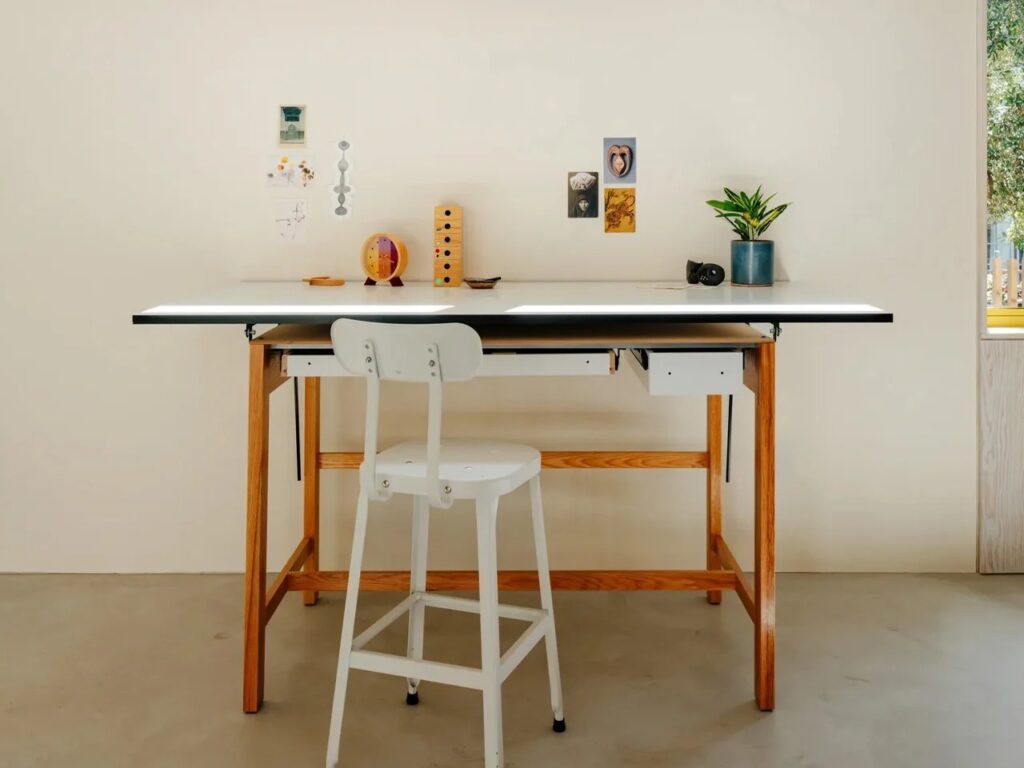
Internal Organization Balancing Difference and Connection
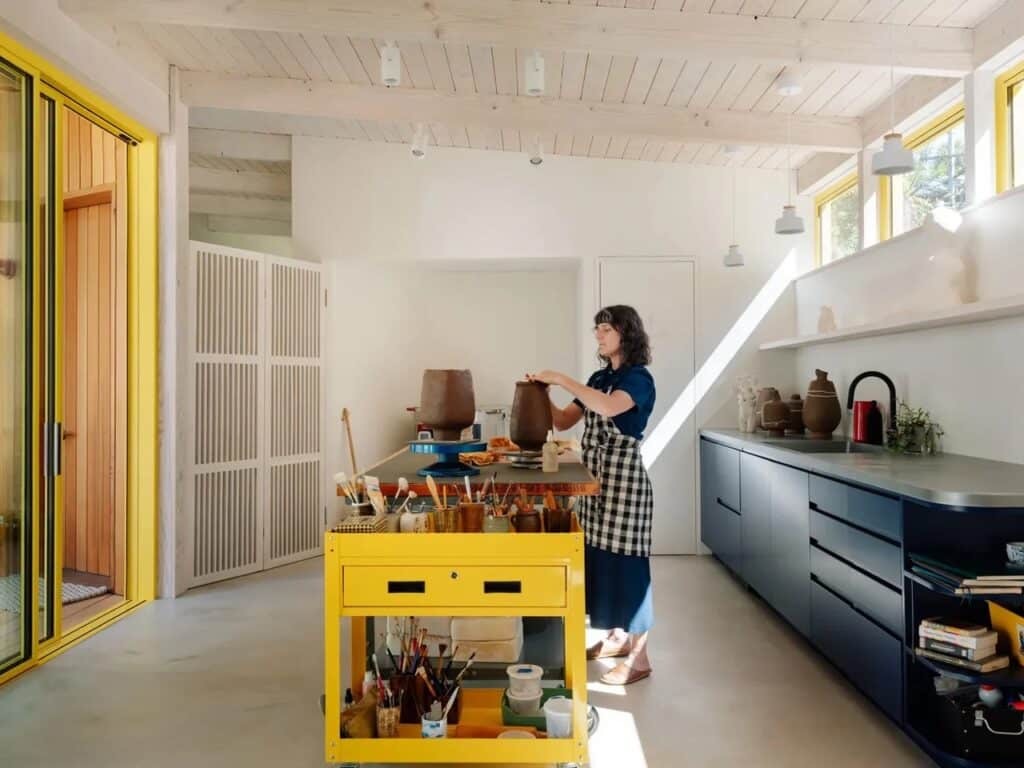
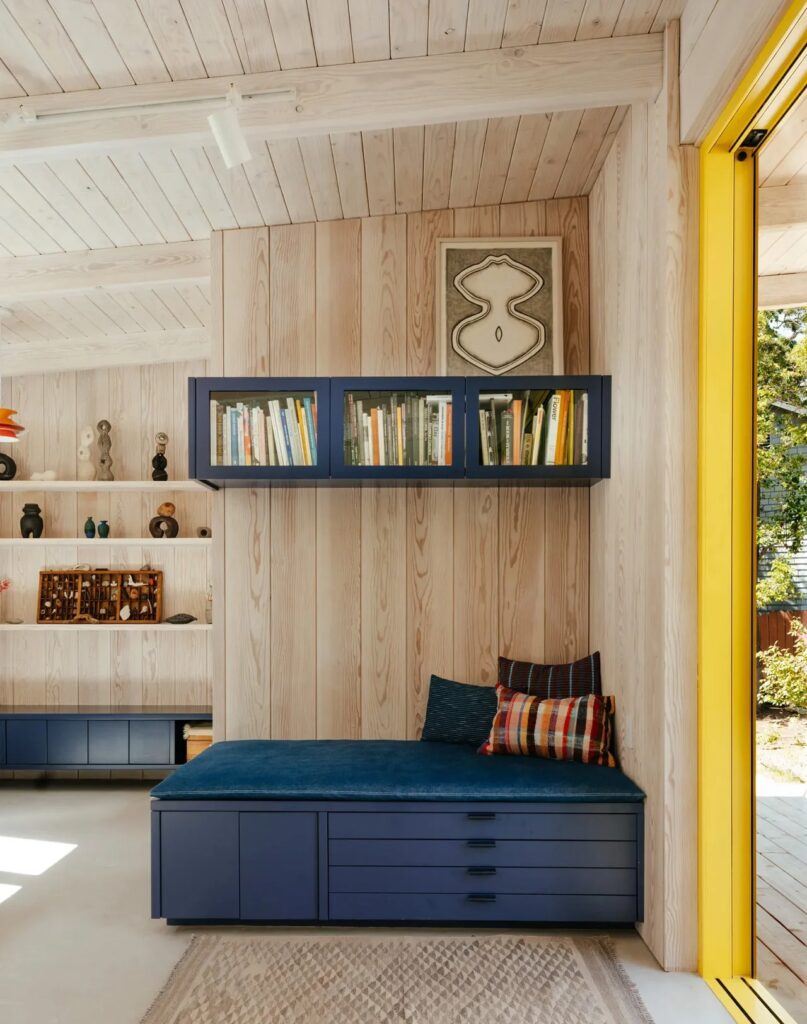
The interior space is divided into two clearly defined functional zones while maintaining visual and spatial continuity between them. The Pilates area is characterized by a sense of calm through the use of wood and minimal finishes, whereas the ceramics side expresses a more open character through elements such as exposed beams and colored cabinetry. This contrast does not result in separation, but instead creates a functional gradient that allows for a smooth transition between different uses within a limited space.
Interior Design
Natural light plays a fundamental role in shaping the spatial experience within Interior Design. Skylights allow sufficient illumination while preserving privacy, whereas sliding doors strengthen the connection to the exterior. At certain times of the day, light enters at an oblique angle, enhancing working conditions within the studio. Accordingly, light is not treated merely as an illuminating element, but as a tool for organizing time and activity within the space.
Light as a Form-Giving and Functional Element
Natural light plays a fundamental role in shaping the spatial experience. Skylights allow sufficient illumination while preserving privacy, whereas sliding doors strengthen the connection to the exterior. At certain times of the day, light enters at an oblique angle, enhancing working conditions within the studio. Accordingly, light is not treated merely as an illuminating element, but as a tool for organizing time and activity within the space.
✦ ArchUp Editorial Insight
The Two-Fold Studio project appears less as a deliberate architectural gesture and more as a direct outcome of small-scale capital accumulation, initiated through a dual-client model combining craft production and physical training. This condition necessitated the integration of multiple functional programs within an existing residential structure dating back to 1912. The primary driver here is not architectural intent, but rather land-use constraints and tree-preservation requirements, which evolved into environmental compliance parameters that ultimately shaped the building’s massing.
The L-shaped configuration operates as a spatial compromise between programmatic density and the limited buildable footprint. Material choices and glazed openings are better understood as cost-reduction strategies and daylight-performance optimizations rather than purely aesthetic decisions. The result is a layered distribution of uses within a single volume, reflecting a broader logic of suburban intensification through the transformation of the domestic unit into a multi-functional productive asset. The project thus reveals how constrained design logic produces new spatial hierarchies within the contemporary building typology.