
The Paper Log: Shell and Core Waste as Design Material

Re-reading the Folding Process: From Product to By-Product
In the production process of ISSEY MIYAKE’s pleated garments, the folding stage is a fundamental phase where fabric intersects with precise manufacturing technology. The fabric enters the process and exits in an organized and visually transformed form, which for a long time was the central focus of attention. However, Satoshi Kondo, one of the Design directors at MIYAKE DESIGN STUDIO, shifted attention away from the final product toward what is left behind from the process in terms of material remnants.
Industrial paper as a production output and the redefinition of its value
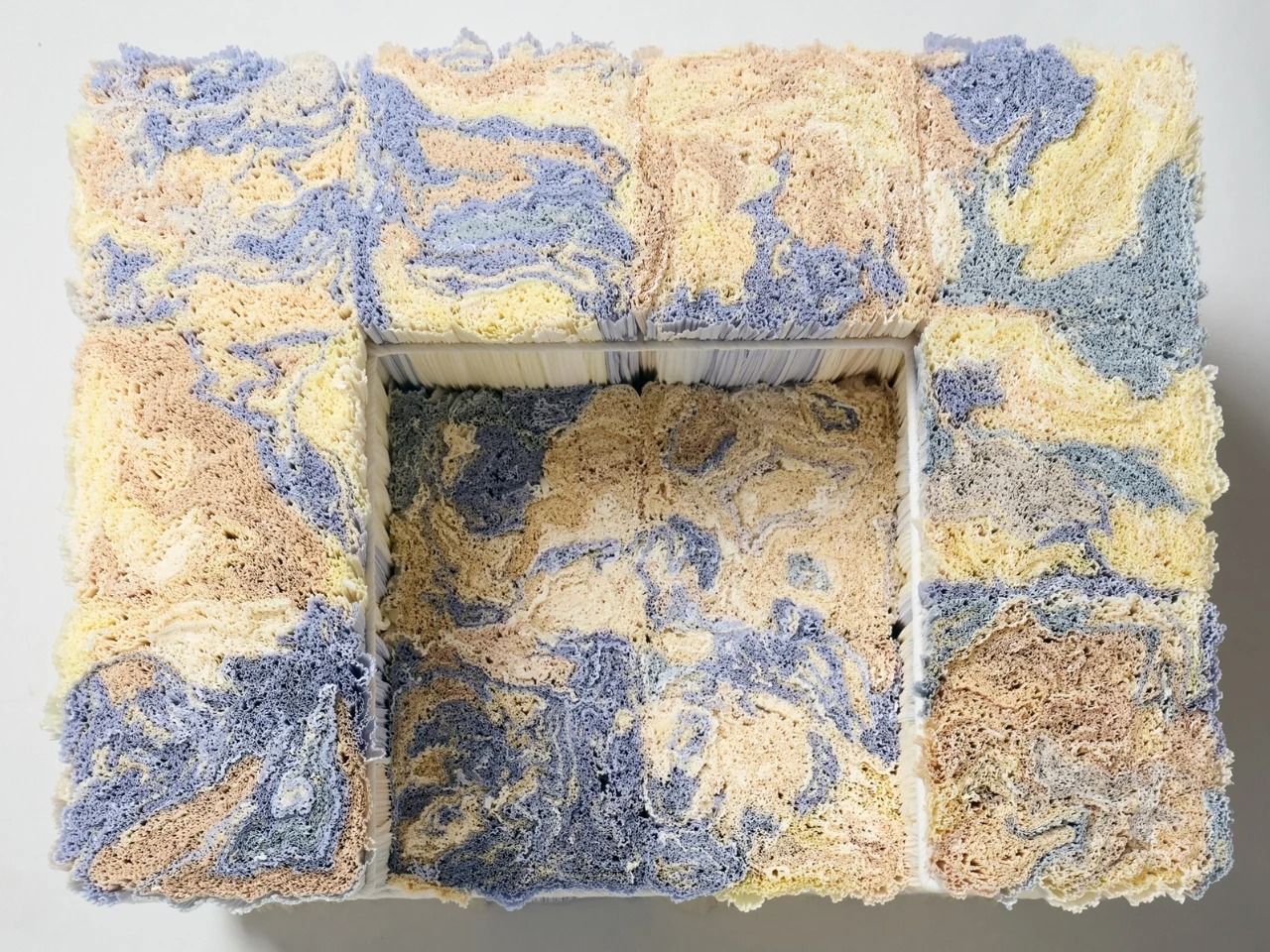
During a review of the production process, rolls of thin paper used to protect the fabric during the folding stage emerged. After manufacturing is completed, these sheets are compressed, rolled, and then discarded or sent for recycling. What was observed is that these remnants were not seen as mere waste, but as a material output carrying clear formal and structural properties resulting from the manufacturing process itself. For more insights on material properties, you can explore Material Datasheets.
The Paper Log Exhibition: a formal reading of the material
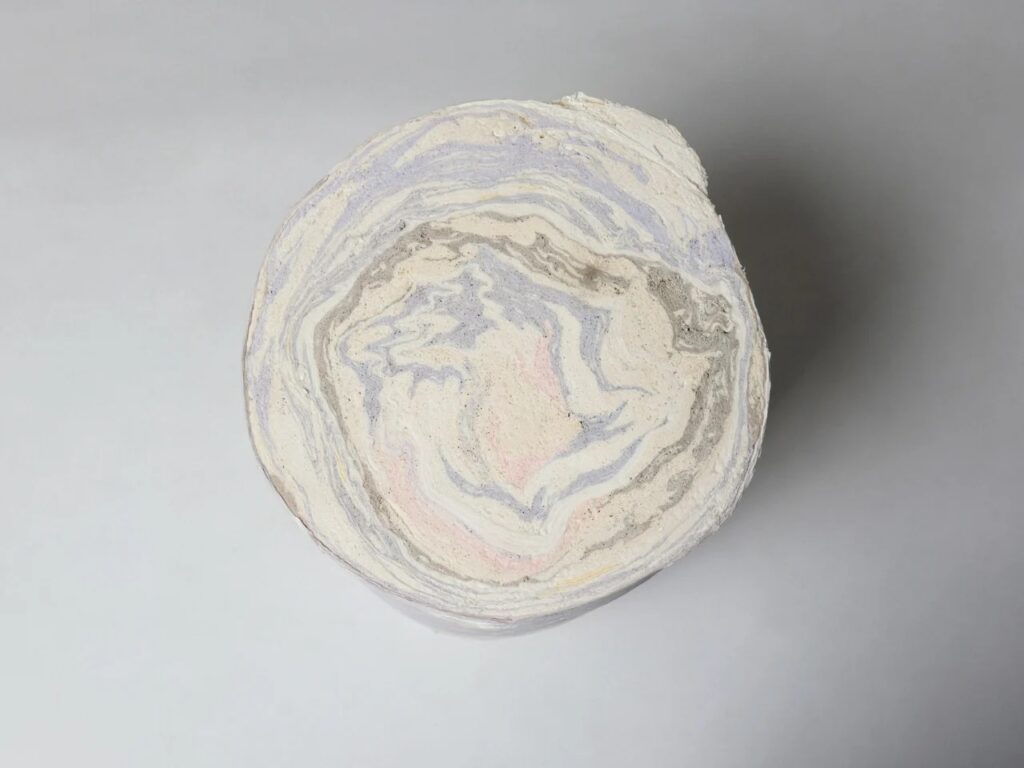
This tracing results in the exhibition The Paper Log: Shell and Core, held at the ISSEY MIYAKE store in Milan in conjunction with Milan Design Week 2026. The paper rolls, each reaching 80 cm in height and 40 cm in width, reveal, when viewed in their circular sections, layered formations resembling the internal rings of tree trunks. This visual similarity formed the basis of the project’s naming, as a formal reading of the structure of a material produced by an industrial process. Such innovative approaches are often discussed in Research.
Structural Similarity Between Material and Memory
The similarity between paper rolls and tree trunk masses carries a structural dimension rather than a purely visual one. Just as growth rings record time within a tree, the layers of the Paper Log reflect the imprint of the production process and its accumulation through the stages of garment manufacturing. In this sense, the material resulting from the industrial process becomes an unintended physical record, linked to time and repetition within a production system. This relationship between materials and memory is a recurring theme in Architecture.
Material Treatment Between Deconstruction and Reconstruction
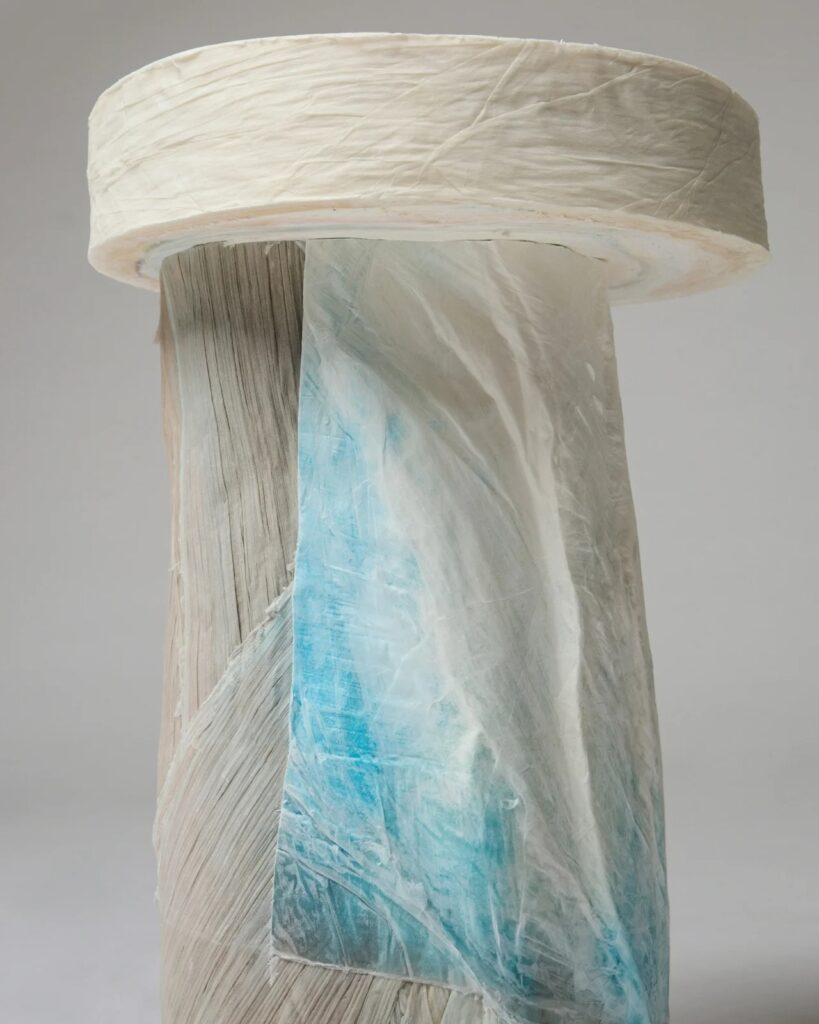
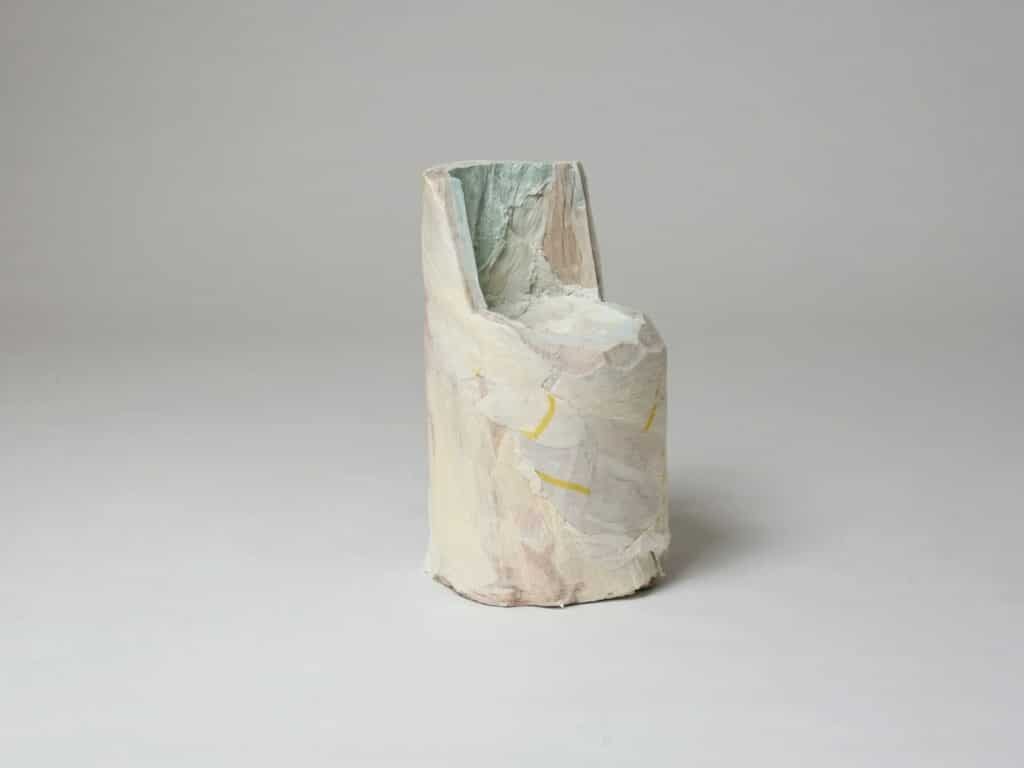
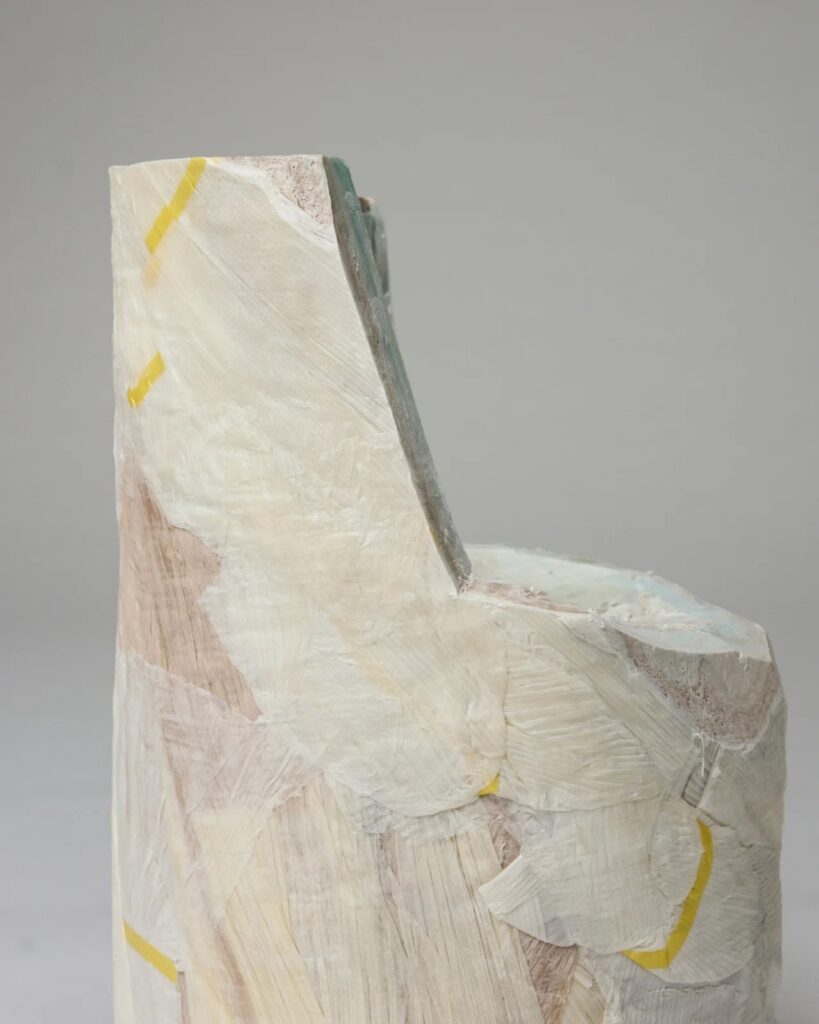
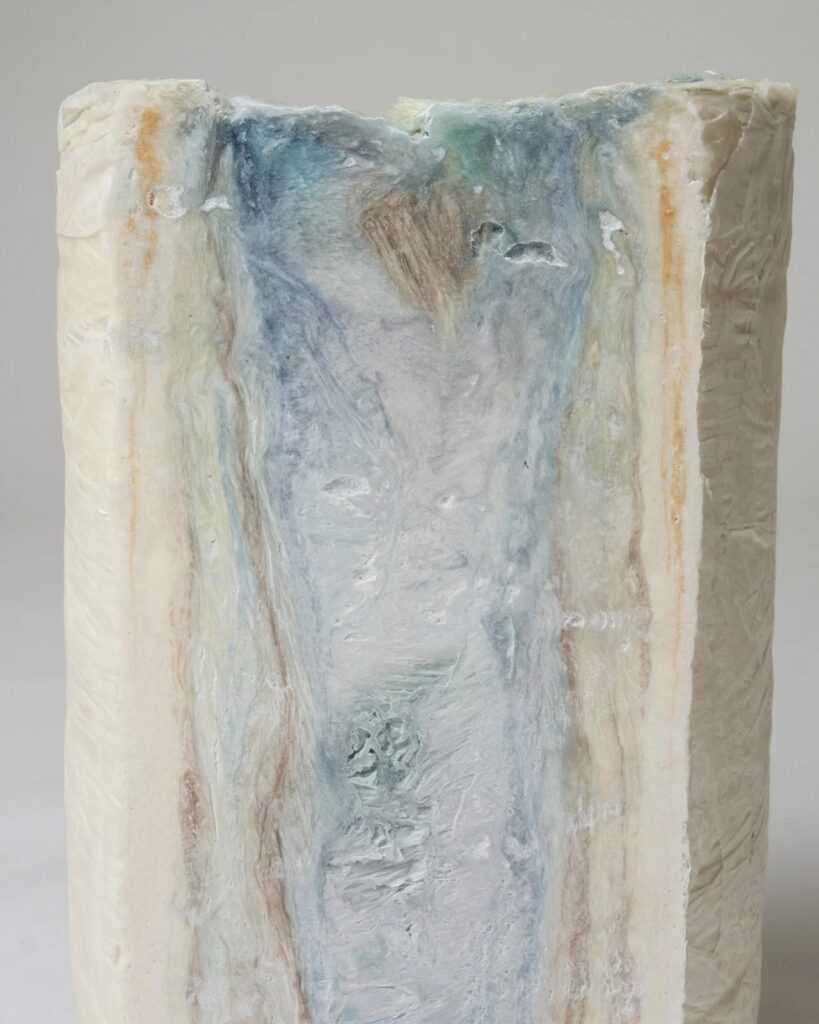
Within the framework of the exhibition, collaboration was established with Ensamble Studio to develop two different approaches to handling the same material. In the first approach, the paper rolls are deconstructed and treated as a sculptural raw material, resulting in light and fragile forms that appear in a state of incomplete formation, while preserving the imprint of folding and the original configuration of the material. For further exploration of material applications, see Building Materials.
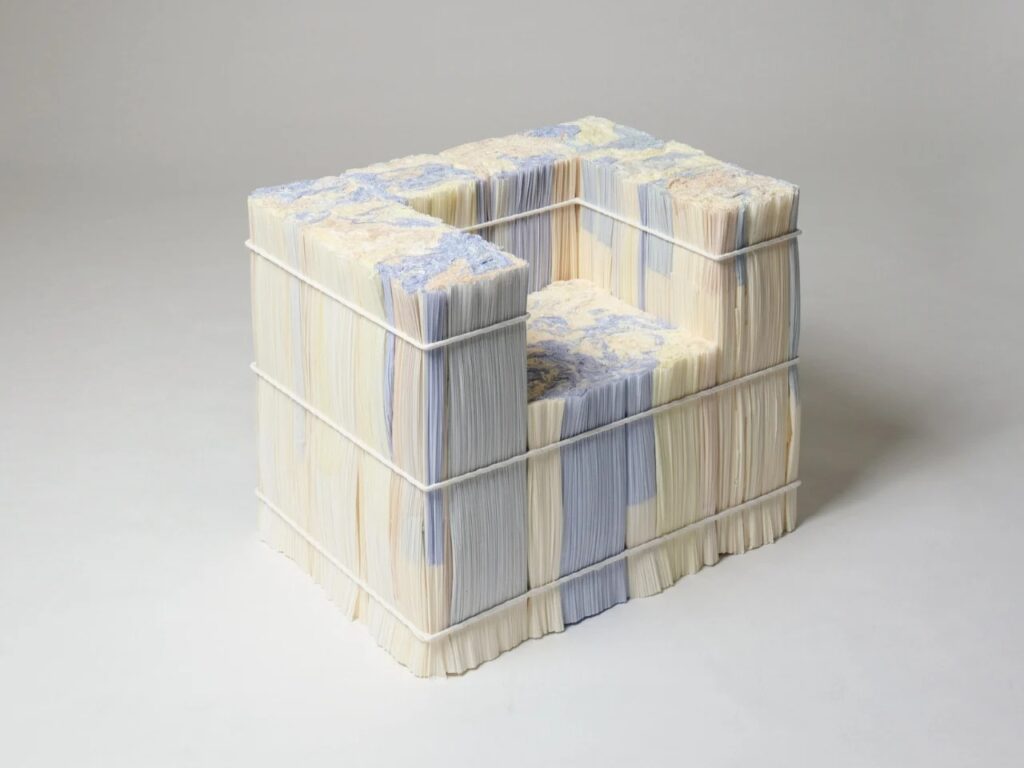
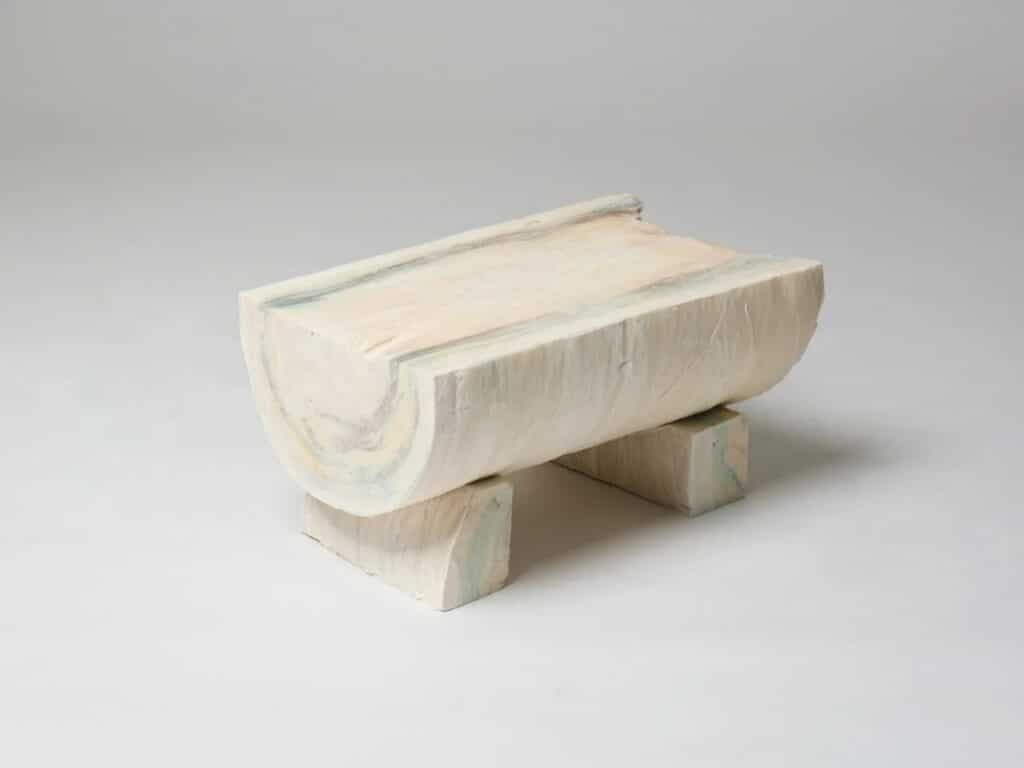
In the second approach, the paper is treated as a structural system capable of use. It is employed in prototype furniture pieces such as benches, chairs, and tables, producing more rigid and functional elements. This contrast between fragility and solidity highlights differing ways of reading the material within a single context, without departing from its original boundaries. The principles of Construction play a key role here.
Exhibition Organization as a Dialogue Between Material Values
The installation is arranged inside the store so that both Shell and Core are presented in direct opposition, creating a dual reading between contrasting concepts such as ephemeral versus solid and fragile versus durable. This contrast is not used as a purely aesthetic device, but as a framework for understanding how a single material can be approached differently within the same production context. Similar dialogues are central to many Architecture Competitions.
The Logic of Process as a Design Subject
What distinguishes this project is the shift of focus from the final product to the process itself, including its by-products. Within this context, the folding technique is re-read as a system of thinking rather than merely a forming technique, where production mechanisms become an essential part of design value. Accordingly, the waste generated by the process is viewed as a direct extension of the logic of manufacturing rather than a marginal element outside it. This approach is documented in the Archive.
Redefining the Invisible in Production
The project raises questions about what is typically overlooked when attention is directed solely toward the final product. By highlighting the materials generated by the process, the boundaries of what is considered valuable within the production chain are re-examined. In this way, the exhibition becomes a critical reading of both material and process together, rather than an independent visual display, while also situating it temporally and spatially at the ISSEY MIYAKE store in Milan during the specified period. Stay updated with Architectural News for more such exhibitions.
✦ ArchUp Editorial Insight
Within the pleated garment production system of ISSEY MIYAKE, the driving force emerges from a tightly regulated industrial model based on maximizing material control and protection within standardized production lines, where protective paper is imposed as a non-productive interface separating fabric from machinery. The point of friction arises in the post-production stage, when these compressed rolls become waste managed through disposal and recycling systems governed by cost-reduction logic and environmental compliance, rather than any design value. The exhibition The Paper Log: Shell and Core re-appropriates this material surplus as a spatial solution that reveals the trace of the production cycle within the material itself. Through two approaches developed with Ensamble Studio, the system is divided into sculptural deconstruction and functional reconfiguration, demonstrating how industrial production stabilizes itself by exporting its material excess into secondary formations outside the center of the process. For related discussions, visit the Architects Lobby.

★ ArchUp Technical Analysis
Technical and Documentary Analysis of The Paper Log: Shell and Core – Milan, Italy:
This article presents a design analysis of The Paper Log project as a case study in reinterpreting industrial process waste as a design material. To enhance its archival value, we would like to present the following key technical and design data.
The exhibition was held at the ISSEY MIYAKE store in Milan in conjunction with Milan Design Week 2026, in collaboration with Ensamble Studio. The material originates from thin paper rolls used to protect fabric during the folding stage of pleated garment production, which are compressed and rolled after manufacturing. Each roll reaches a height of 80 cm and a width of 40 cm, and when viewing their circular cross-sections, layered formations resembling the inner rings of tree trunks appear.
Two approaches to the material were developed: the first involves dismantling the rolls and treating them as a sculptural material to produce fragile forms that retain the trace of folding, and the second employs the paper as a structural framework in furniture prototypes (seats, chairs, tables) that are more rigid and functional.
The exhibition was organized to bring together Shell and Core in direct confrontation, creating a dual reading between the ephemeral versus the solid and the fragile versus the durable.
Related Insight: Please refer to this article to understand the context of modern architectural preservation:
Industrial Waste Recycling in Design: Between Material and Memory.







✅ Official ArchUp Technical Review completed for this article.