Urban Gable Park: Redefining Compact Living


Redefining the Concept of Living in Small Units
Some models of compact housing are based on reducing spaces to the absolute minimum, often requiring the sacrifice of essential elements such as ceiling height, countertop area, or the presence of a fully equipped kitchen. In contrast, the Urban Gable Park model appears as a different case within the category of single-level “park model” homes, where the Design is directed toward enhancing interior comfort rather than spatial compression. As a result, the interior experience feels closer to a carefully designed apartment than to a constrained living space.
Dimensions and Their Impact on Spatial Perception
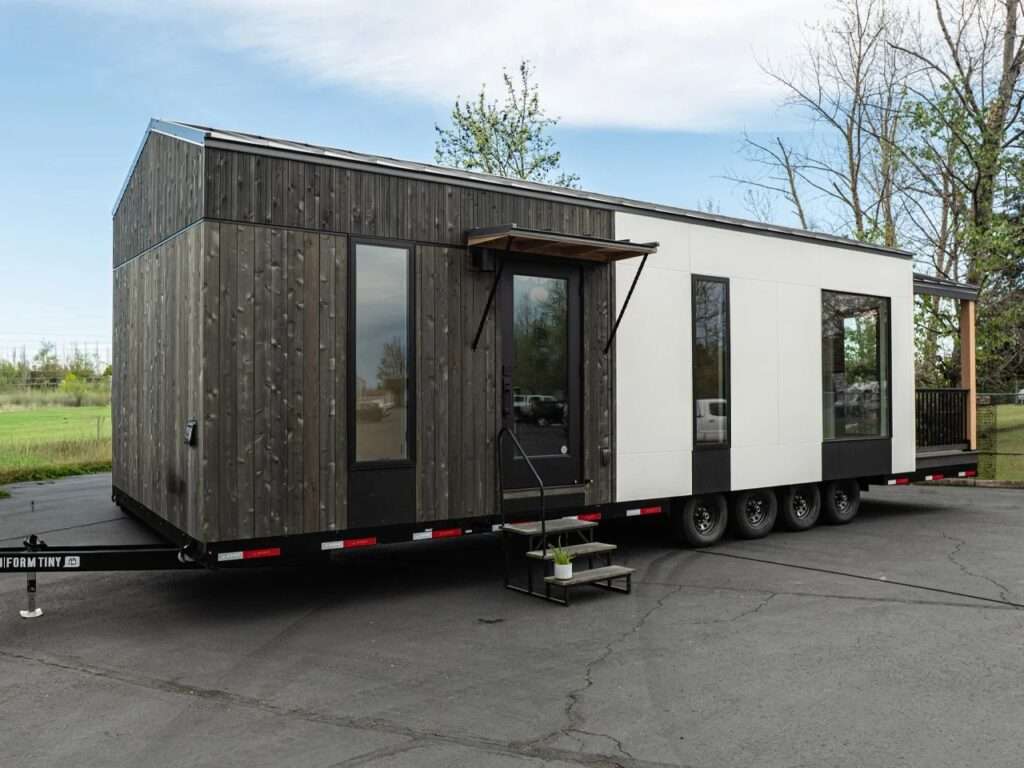
The overall dimensions, at 30 feet in length and 11 feet in width, reflect a clear departure from the standard 8.5-foot width found in most small mobile homes. This lateral expansion is directly reflected in the interior sense of space, where rooms feel more open and movement within the spaces becomes easier. In addition, the interior height allows for a stronger sense of spaciousness in the bedroom, while the living area comfortably accommodates real furniture pieces without visual or functional congestion. Many contemporary Buildings face similar spatial challenges, yet this model offers a unique solution. However, this model typically requires a road transport permit; yet, in the context of being designed for a fixed location, this does not represent a significant practical limitation.
Internal Organization and Material Quality
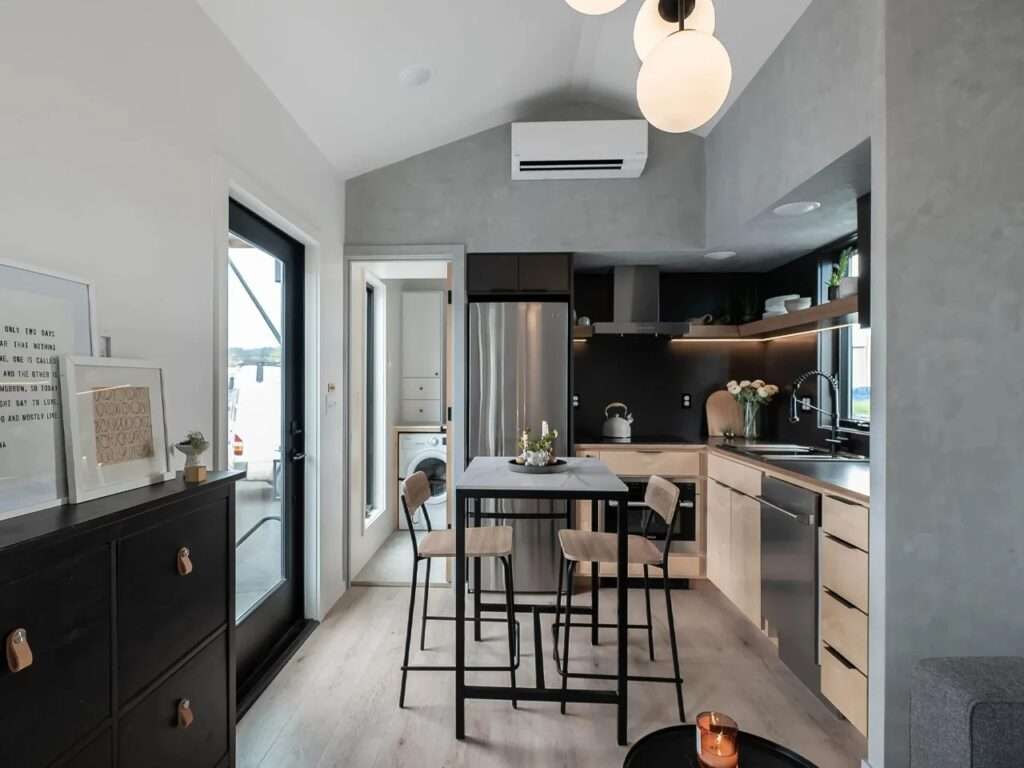
The design approach in this model relies on simplicity and precision in the selection of elements. In the kitchen, maple wood cabinets with a flat finish are integrated with an electric induction cooktop, a full-size refrigerator, and a dishwasher, all placed within an architectural alcove finished in white limewash. The choice of Building Materials reflects a functional direction that makes cooking part of a carefully structured spatial organization rather than an improvised activity. For more technical specifications, detailed Material Datasheets can provide further insights.
Bathroom Treatment and Finish Selection
The bathroom maintains the same level of material consistency. It features a concrete vessel sink, terrazzo tile flooring, and matte black fixtures, along with a walk-in shower and a stacked washer and dryer unit. These elements are not presented as cosmetic solutions to budget constraints, but rather as material choices grounded in a clear functional awareness of how the space is used. This attention to detail aligns with contemporary Interior Design principles.
Spatial Planning and the Relationship with the Exterior
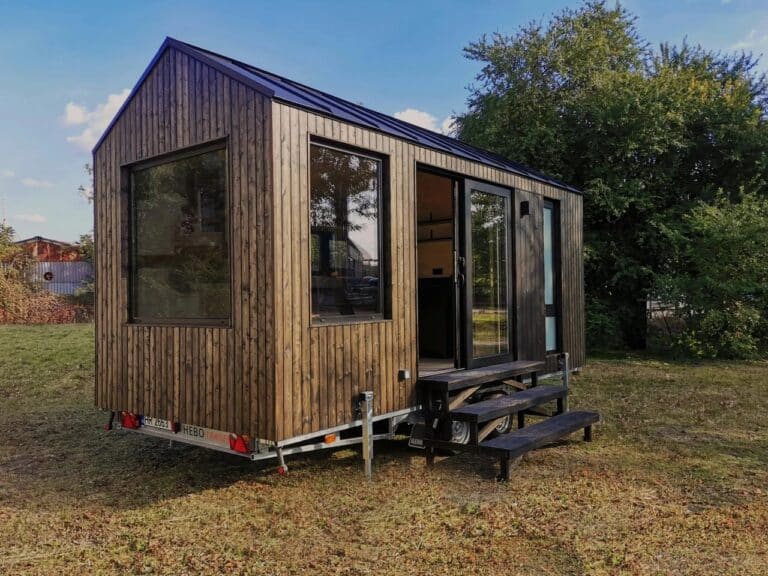
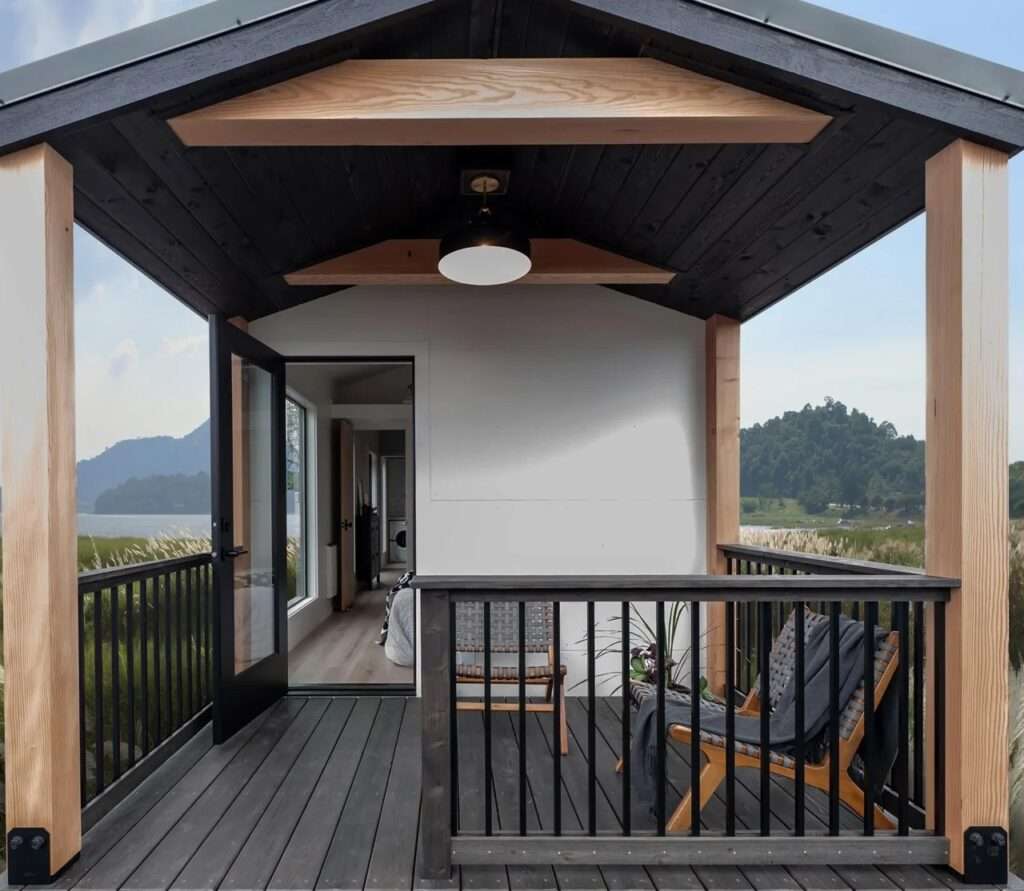
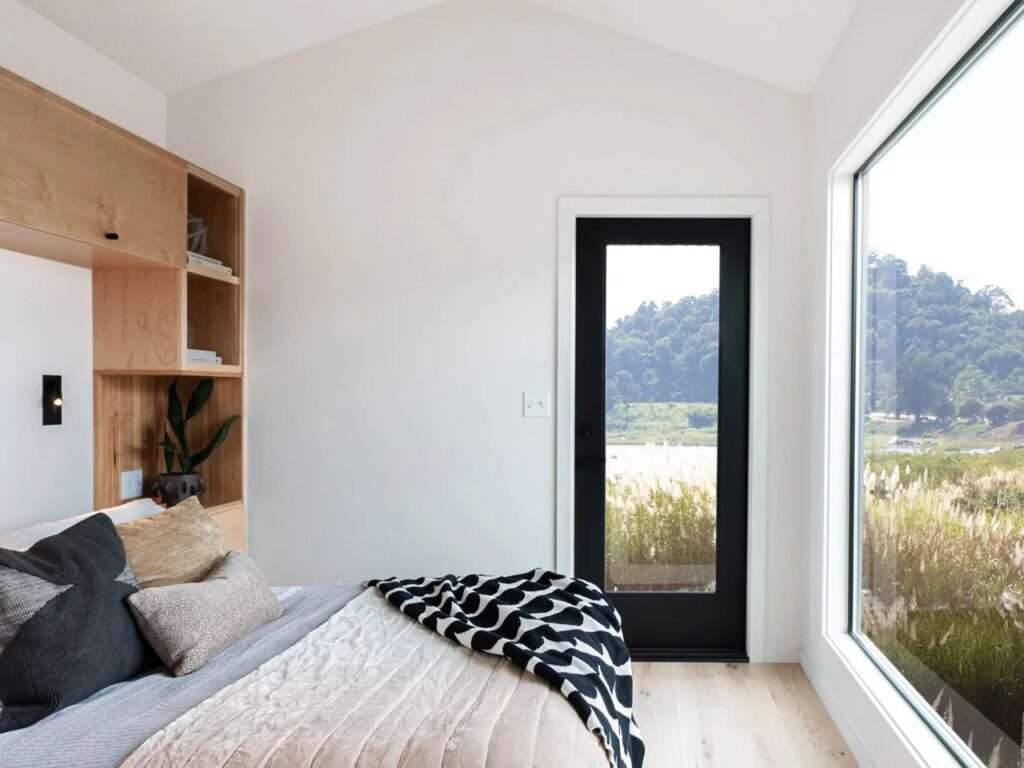
The internal layout is designed to accommodate two occupants, providing a bedroom that connects directly to an outdoor deck, creating a visual and functional extension toward the exterior within a limited footprint. In addition, the black-framed glass entrance door strengthens the relationship between the interior and the gabled architectural façade. Furthermore, the covered porch provides an additional extension of outdoor living space, increasing the efficiency of spatial use. This model is built on a four-axle trailer platform and reflects an approach that links compactness with high Construction quality while maintaining full functional integrity. Similar innovative Projects can be found in modern architectural practices.



✦ ArchUp Editorial Insight
Urban Gable Park operates as a spatial outcome of the pressure of housing purchasing power and rising land values within peripheral urban networks, where the “park model” category shifts into an intermediate regulatory solution between recreational vehicle codes and semi-permanent housing demand. The driving force lies in real estate capital’s pursuit of producing low-cost units within a market suffering from a structural shortage in housing supply. Points of friction emerge through transport requirements, multi-axle standards, and the gap between legal classification and actual use, all of which affect insurance and ownership. These challenges are frequently discussed in Discussion forums. As a result, a relatively expanded spatial configuration is produced, one that redistributes internal functions and redefines the relationship between permanent residence and regulatory constraints, so that the final form becomes a negotiated settlement between bureaucratic compliance and efficiency of use within a high-pressure housing market. For ongoing updates, check the latest Top News in the field.