Vermont Villa Reassesses Container Housing

Revisiting the Concept of Container Homes
The Vermont Villa project by Backcountry Containers is presented as a case study within the broader discourse on shipping container housing. The project sits within the familiar debate surrounding this type of dwelling, which is often framed either as a cost-effective solution or as an expensive design experiment that does not always align with its Architecture context. Within this framework, the project reflects a middle position along this spectrum without stepping outside it.
Architectural Composition and Massing Strategy
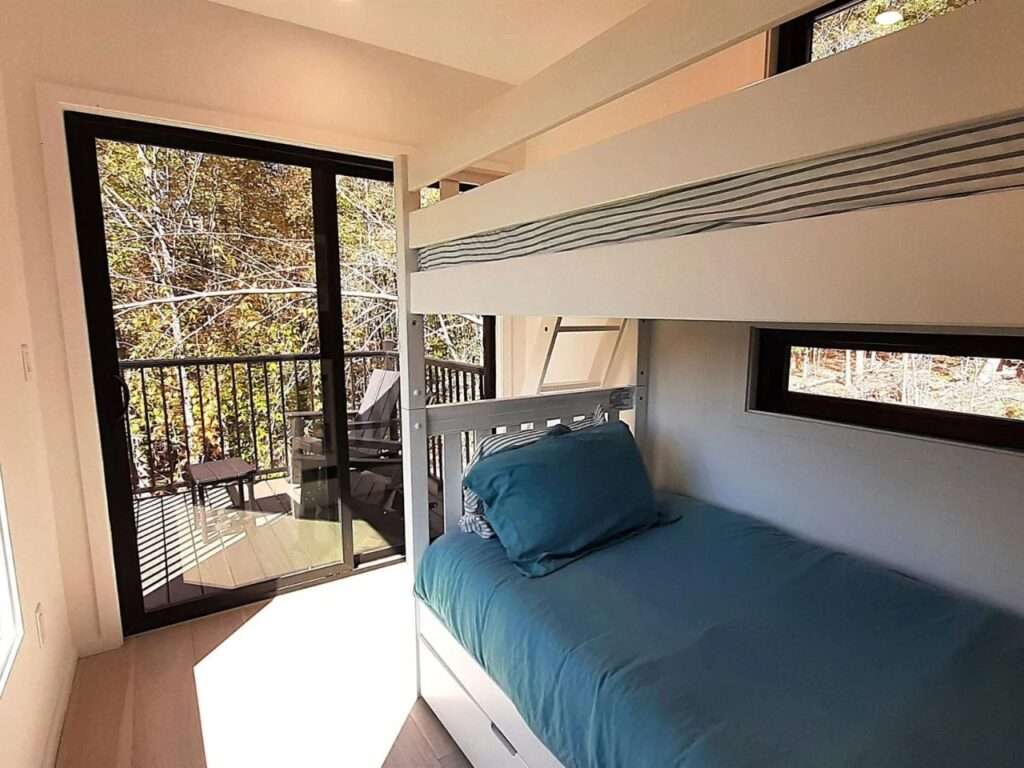
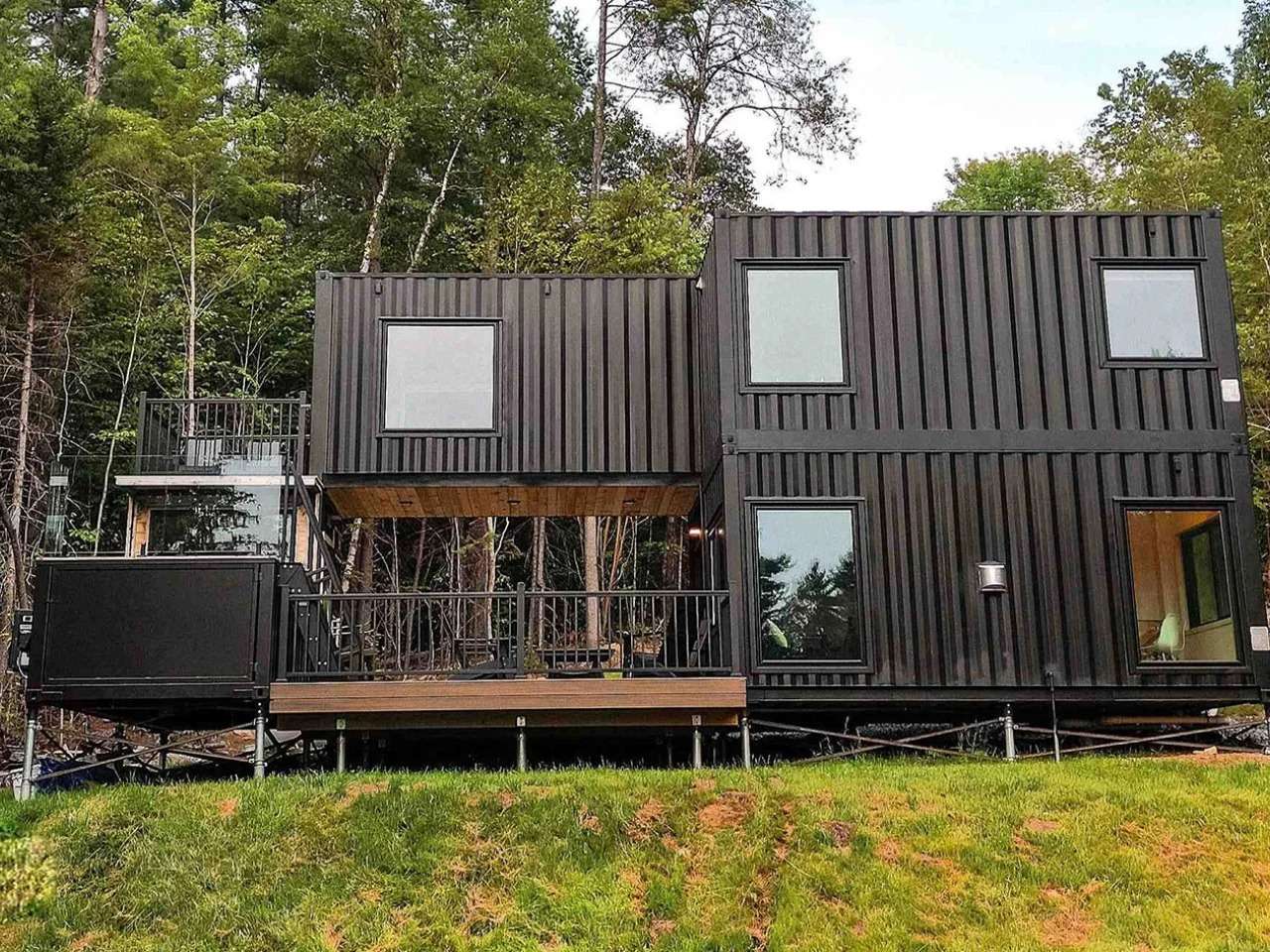
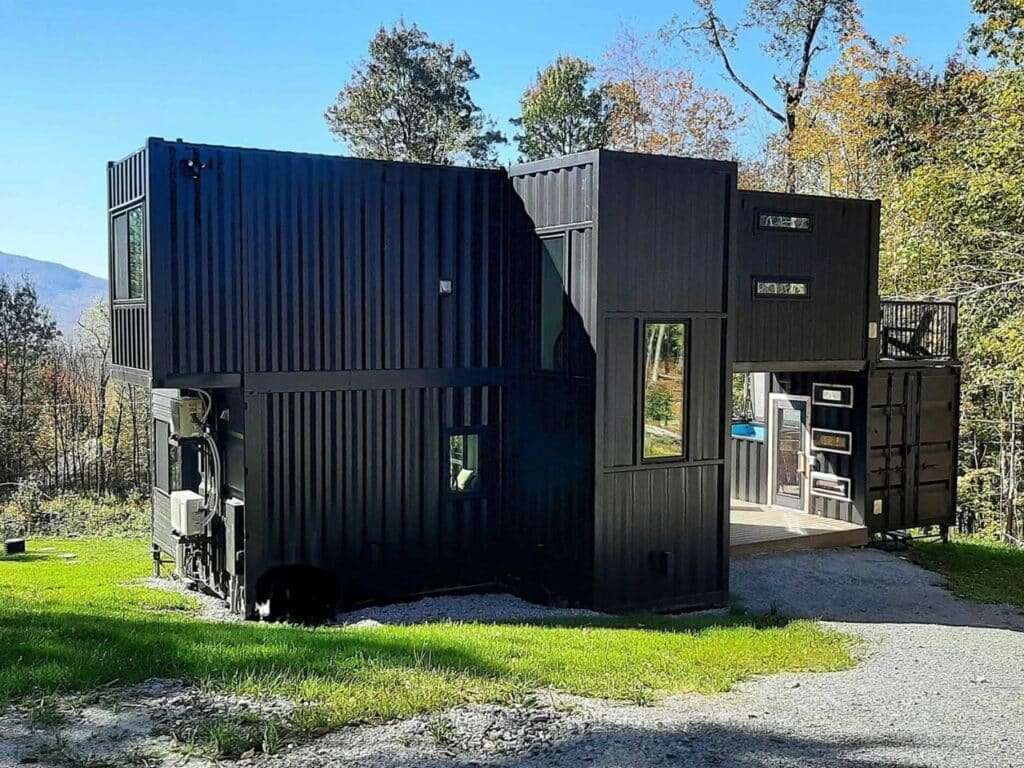
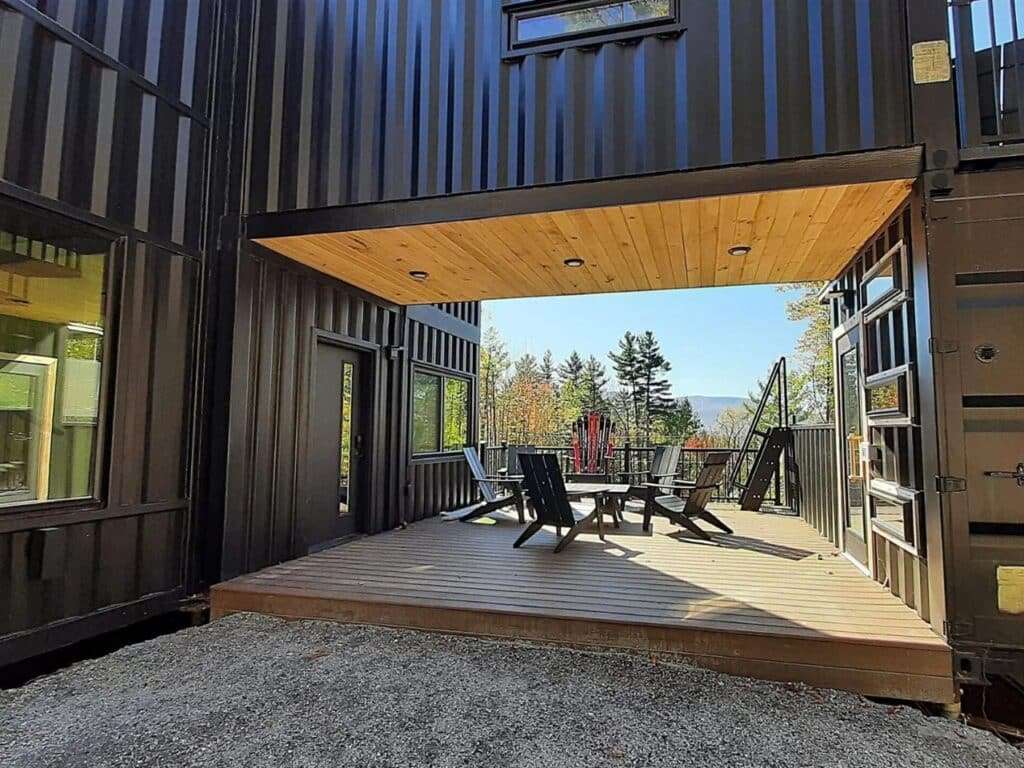
The project is based on the assembly of five shipping containers of varying sizes to form a two-story residence comprising three bedrooms and two bathrooms, along with an additional dedicated unit that includes a sauna and a cold plunge. The volumes are arranged in a staggered configuration rather than a linear alignment, resulting in the creation of outdoor spaces across multiple levels. This organization establishes a direct relationship between the Architecture mass and the surrounding rural context.
Material Treatment and Spatial Openings
The containers are unified through a matte black paint finish, eliminating visual contrast between the different elements. Structural modifications were also introduced, including cutting and the insertion of openings for windows and doors. These interventions redefine the original industrial mass, transforming it from closed boxes into architecturally legible units within a cohesive Design composition. Careful selection of Building Materials and finishes ensures durability and aesthetic consistency.
Interior Organization and Natural Light
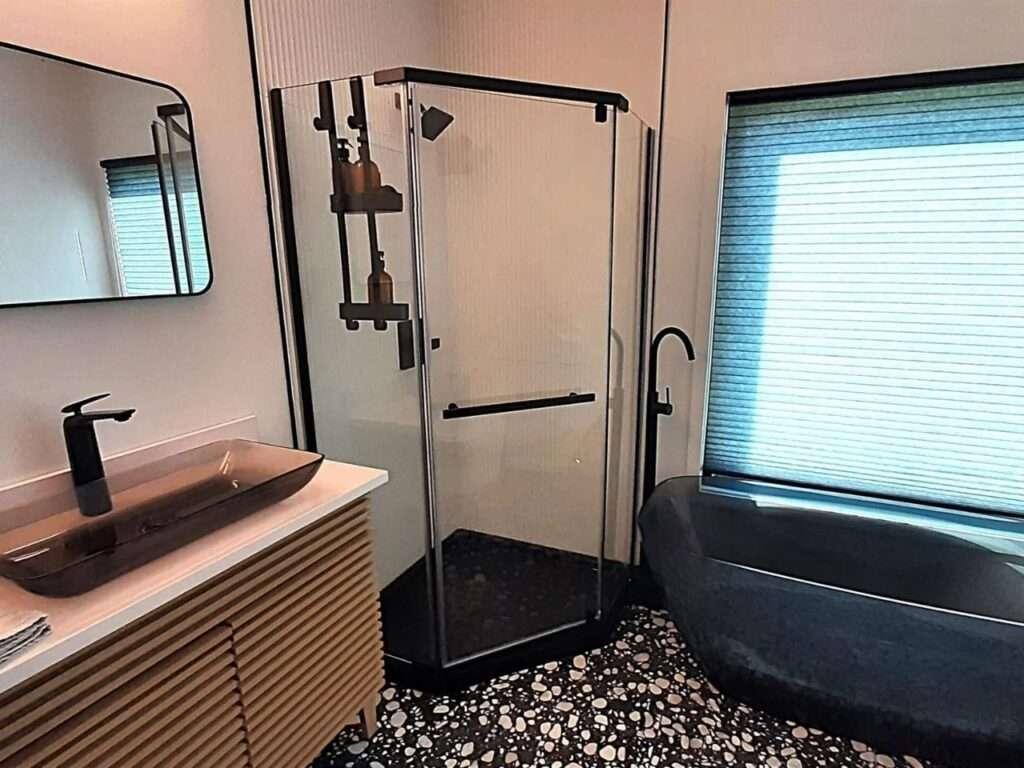
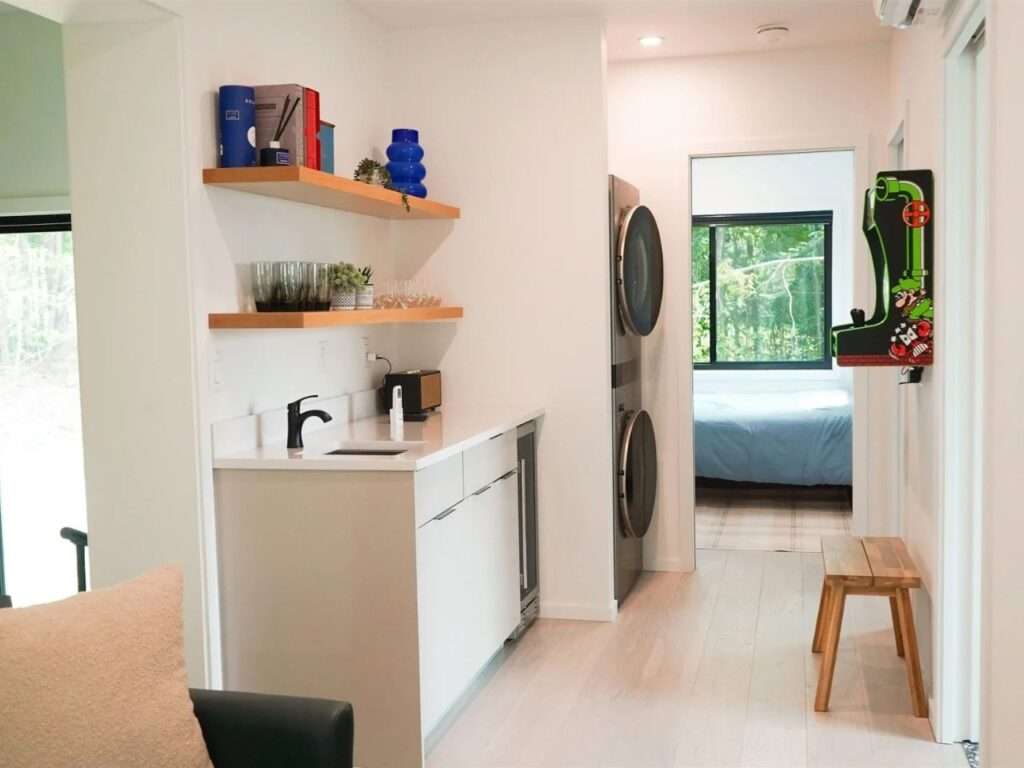
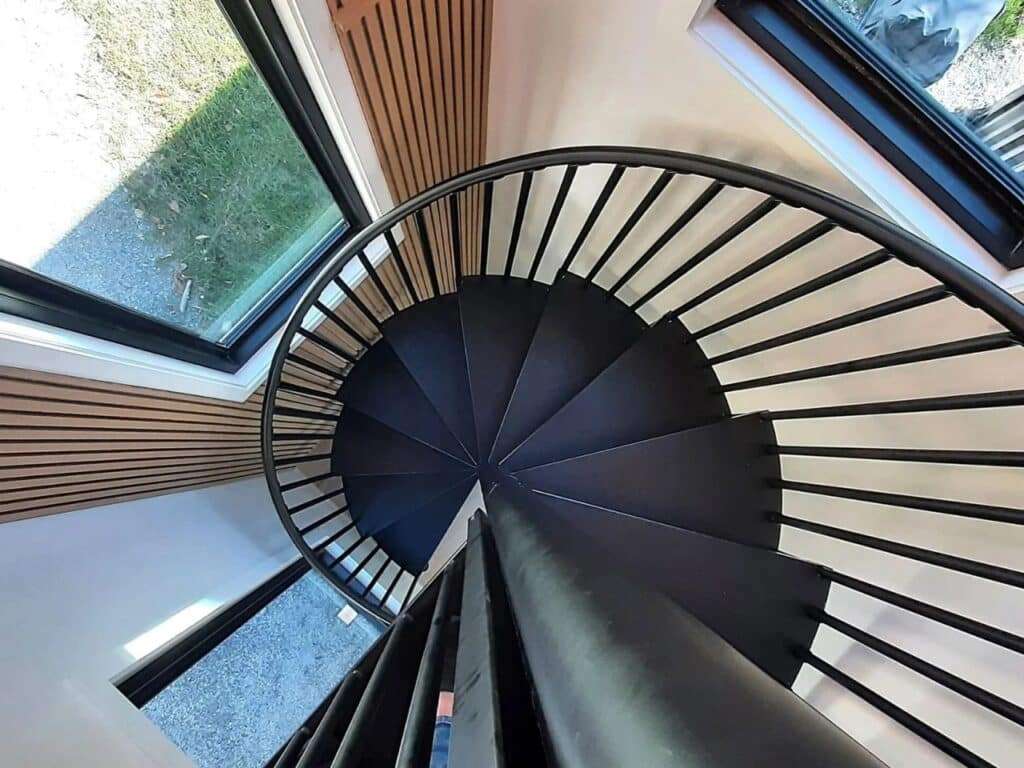
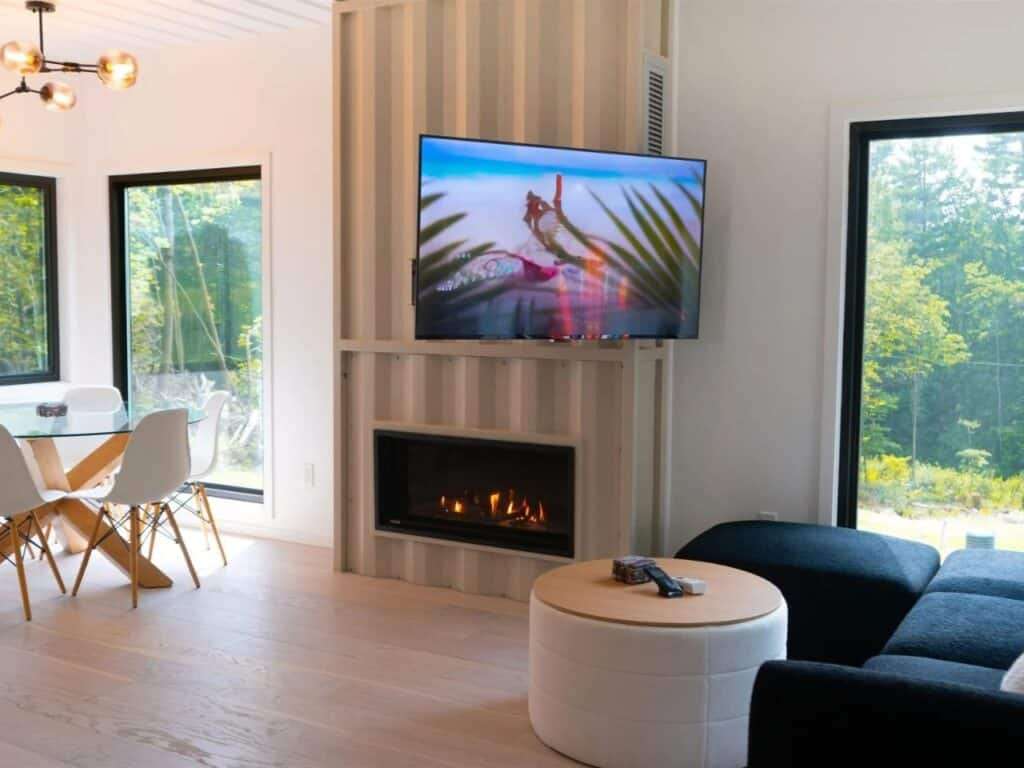
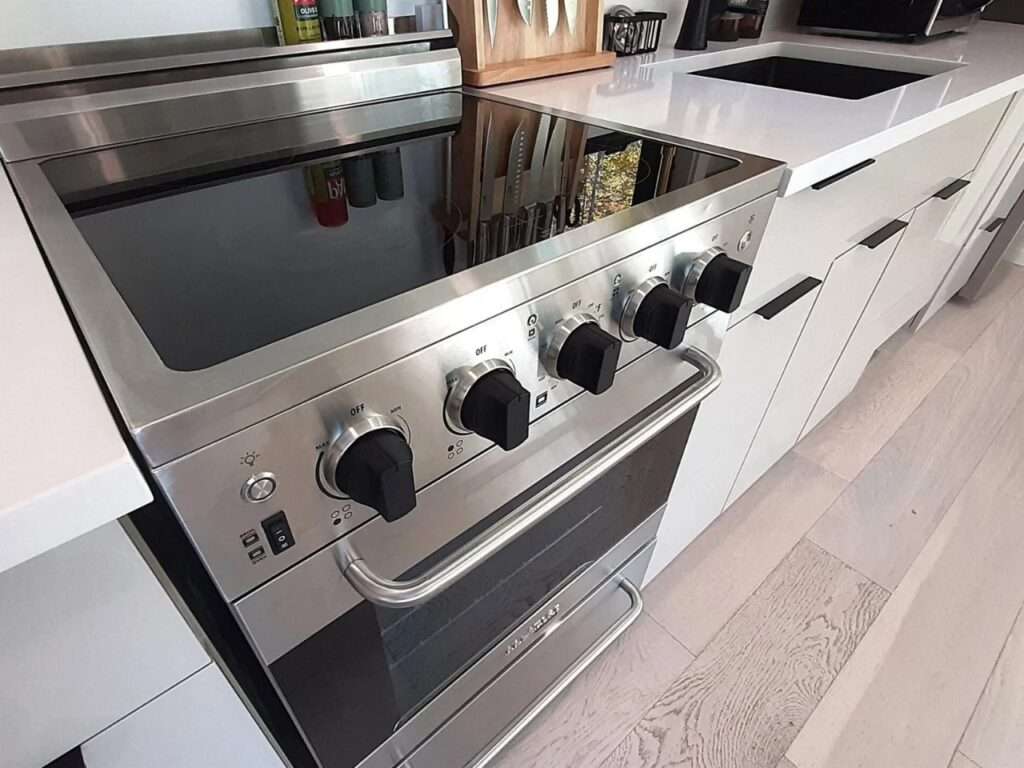
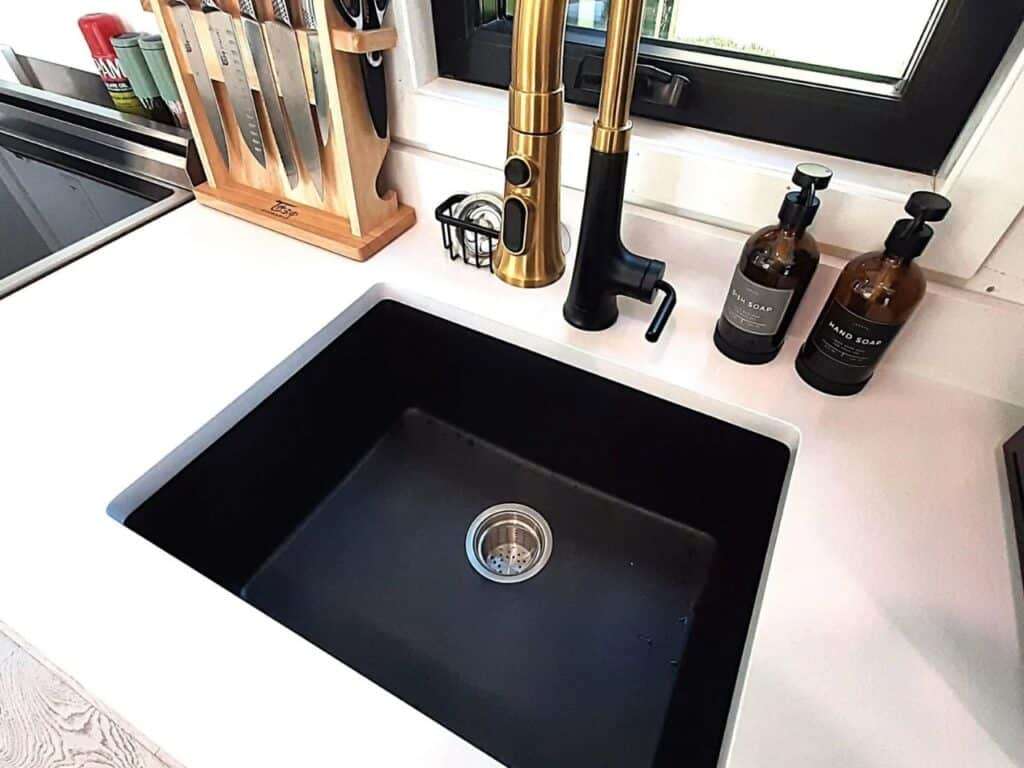
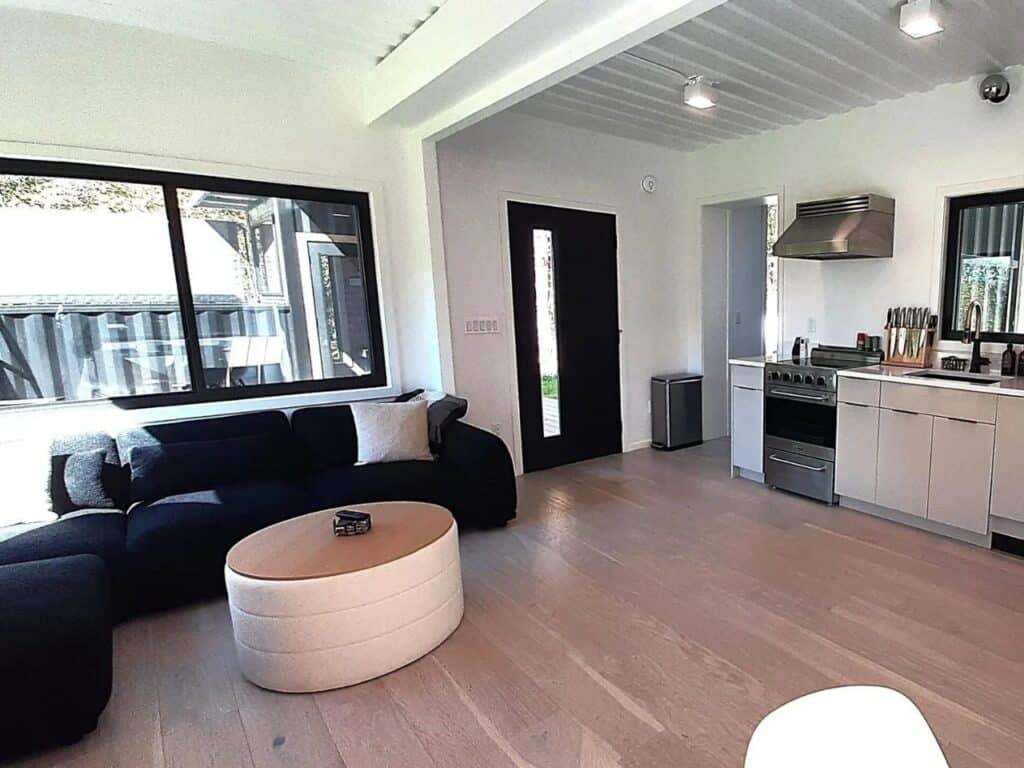
The internal layout is based on a clear functional distribution that includes a fully equipped kitchen, a wet bar, and two separate living areas, in addition to a spiral staircase connecting the two floors. In this context, natural light plays a central role in shaping the interior experience. Accordingly, large windows and an open-plan layout were adopted to reduce the sense of enclosed metallic mass, which is one of the common criticisms of container homes. The Interior Design approach prioritizes fluidity and visual comfort. The bedrooms and bathrooms are described as fully equipped, with a clear emphasis on functionality without exaggeration in description.
Handling the Transition Between Interior and Exterior
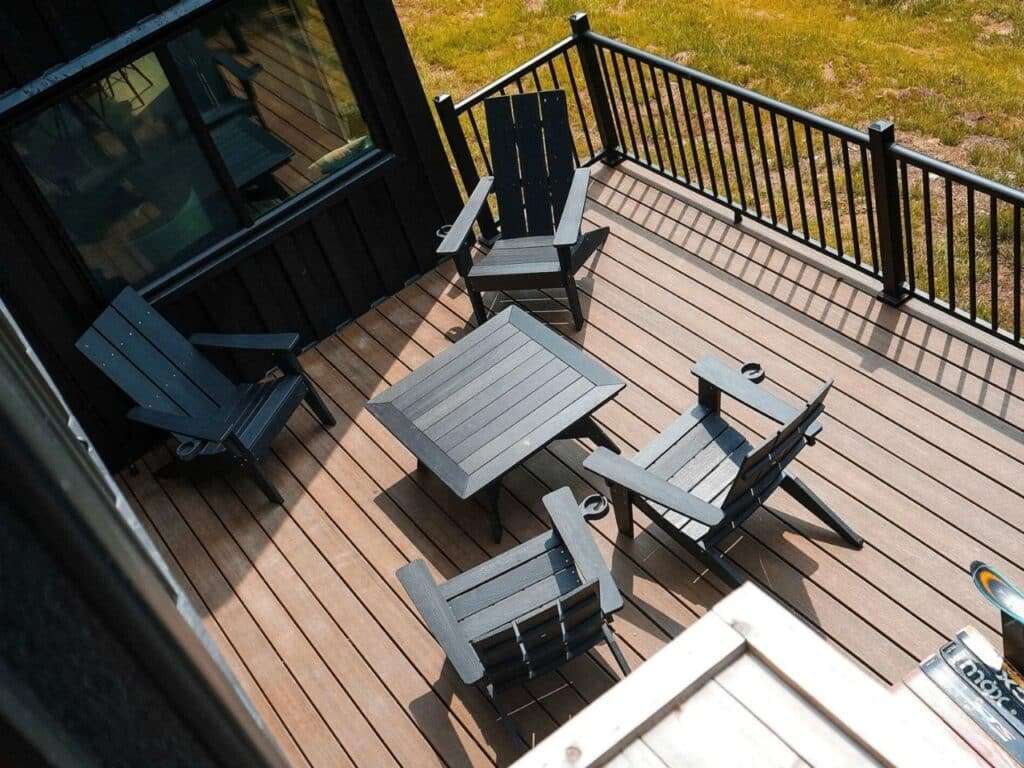
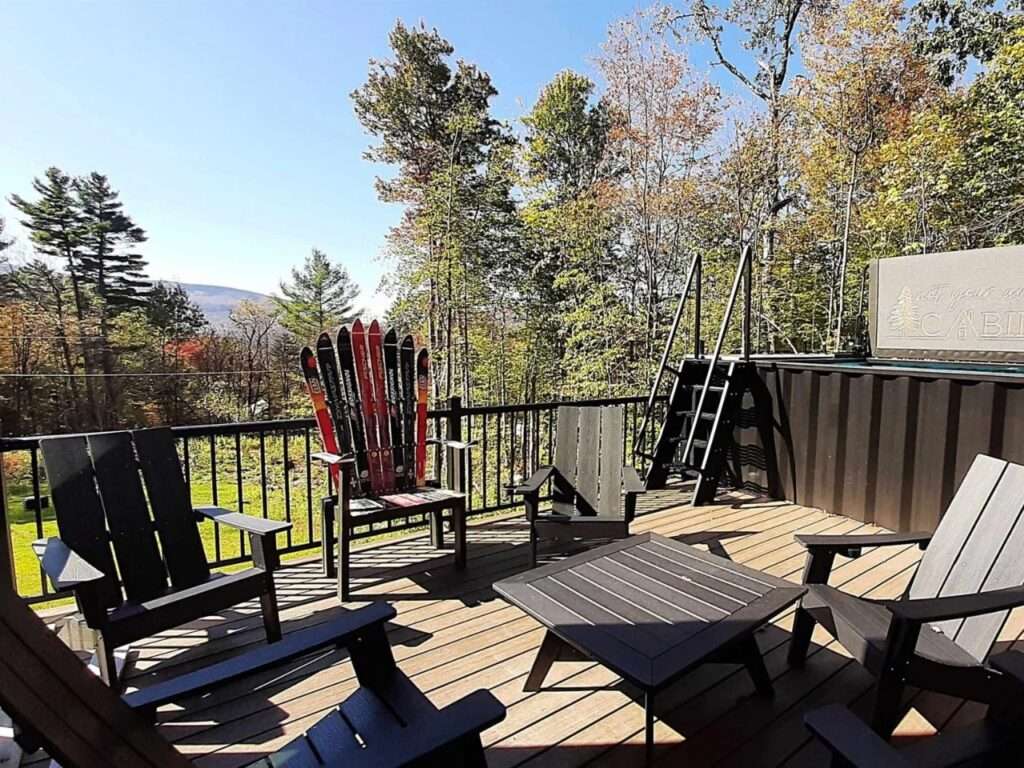
The spatial extension continues through two terraces, one at ground level and another on the roof, enhancing the relationship between the interior space and the natural surroundings. The elevated position of the rooftop also provides a direct visual extension toward the landscape, particularly in an environment where views change throughout the year. This gradation of outdoor spaces adds an additional layer to the architectural experience without detaching it from the primary mass. Such strategies are increasingly discussed in Architectural News as models for integrating built forms with nature.
Integrating Wellness Elements as Part of the Structure
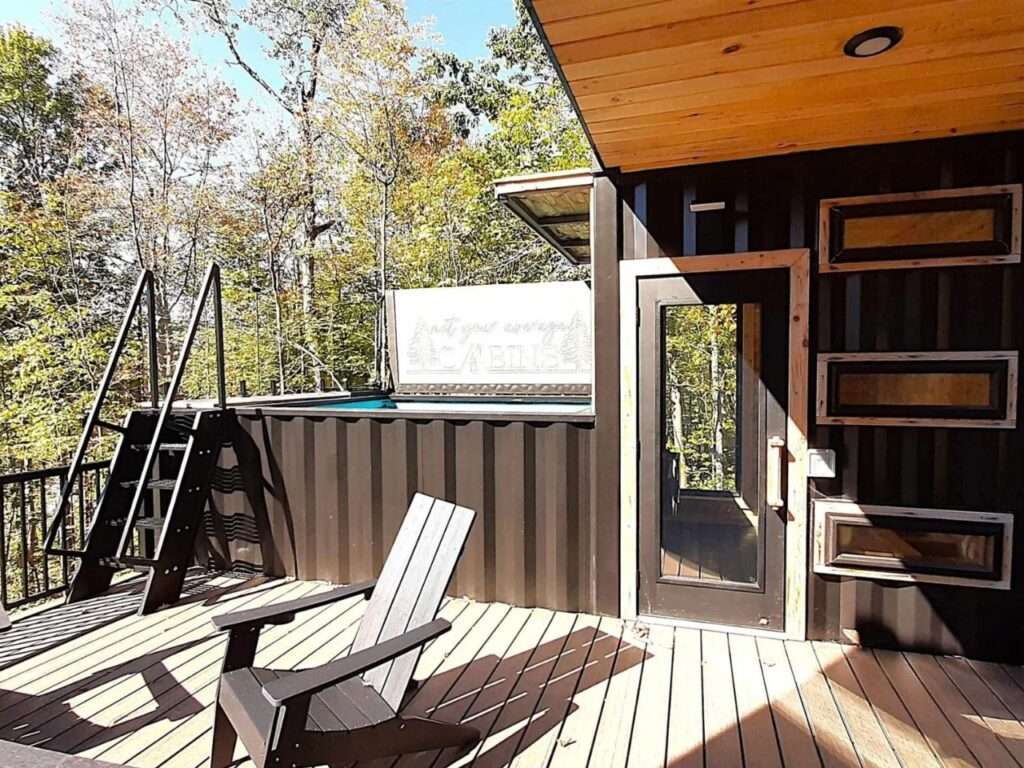
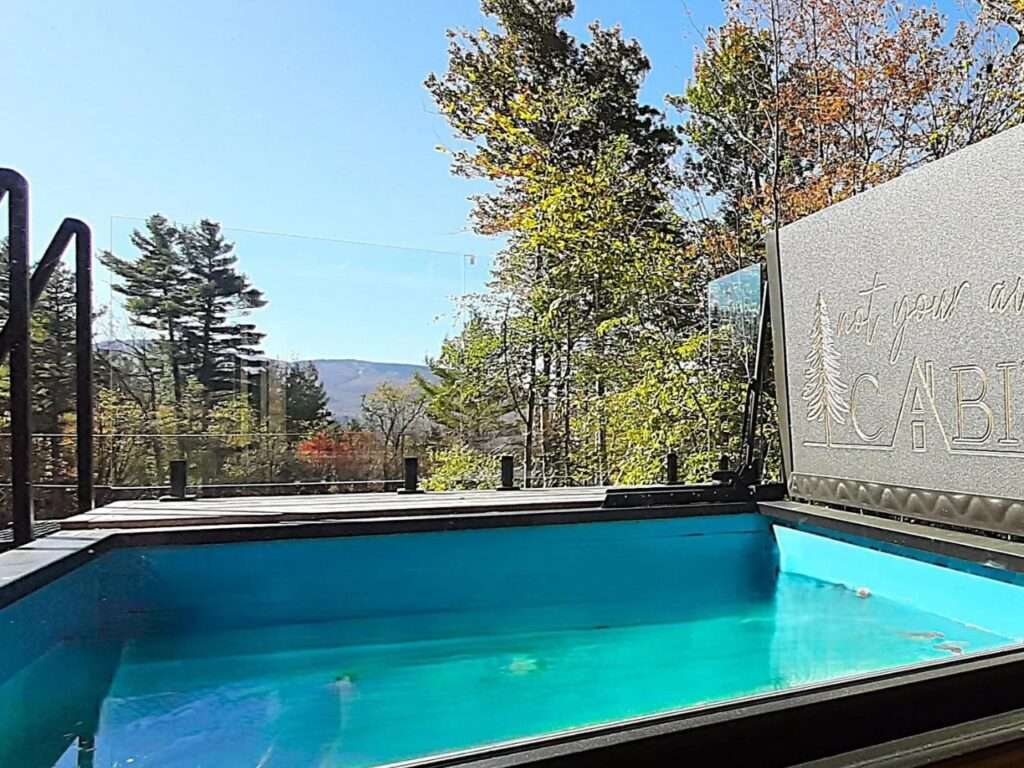
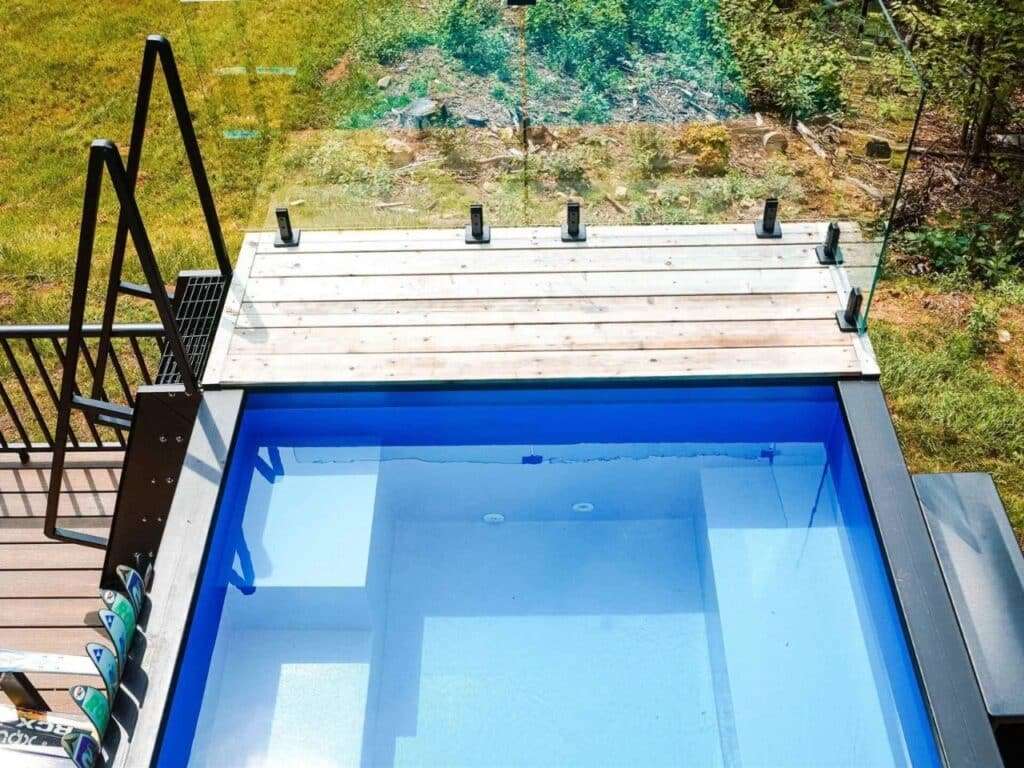
The project includes a dedicated 20-foot unit that incorporates a sauna and a cold plunge within a single configuration. This integration reflects a growing approach that treats wellness activities as part of the Construction structure rather than as a separate add-on. As a result, this function is embedded within the overall residential system instead of being presented as an independent annex, reinforcing the coherence of use within the project.
Container Architecture Between Sustainability and Critical Debate
Container architecture has been positioned for over a decade within a fluctuating architectural discourse. While it is sometimes viewed as a solution linked to sustainability and the reuse of industrial materials, it is also criticized as a design trend that does not provide direct solutions to housing crises. Both perspectives hold some validity, particularly when considering the technical complexities associated with insulation and structural modification. In this context, the Vermont Villa project is not presented as a solution to housing shortages, but rather as a private residence that relies on the adaptive reuse of industrial units within a specific design framework. Numerous Projects have explored similar paths, yet few achieve this level of coherence.
Execution Approach and Project Formation
The project builds on the experience of Backcountry Containers, a company that has operated in this field for years, handling all stages of production in-house, from design and metal fabrication to finishing works and mechanical systems. Some of its Projects have been featured on specialized media platforms focused on Construction and design, reflecting the continued presence of this type of project within contemporary residential production. In the case of the Vermont Villa, the result is a fully functional building that includes multiple living spaces, outdoor levels, and amenities such as a sauna, all within a composition based on repurposed metal containers while maintaining a cohesive residential character.
The Project’s Position Within the Container Architecture Discourse
The central question surrounding this type of project remains its ability to redefine prevailing perceptions of housing, rather than being evaluated solely from a technical or economic standpoint. Within this framework, the Vermont Villa contributes to reopening this discussion by presenting a complete residential model within the container typology, without claiming to resolve broader housing issues. Consequently, the project becomes part of the ongoing debate over whether this approach can evolve into a more stable architectural practice or remain within the realm of individual experimentation. Readers interested in broader context may explore the Archive or follow Architecture Competitions that challenge conventional housing models.
✦ ArchUp Editorial Insight
The Vermont Villa project emerges as a shift within the category of container-based housing, where it is less tied to the logic of housing crises and more reflective of a development model oriented toward a specialized real estate market that relies on differentiation as a mechanism for value generation. The primary driver here is a developer-led capitalist model that repurposes surplus container supply chains into the production of low-volume, high-margin residential units, with wellness programs integrated as a means of increasing market value. Points of friction include Buildings code requirements, thermal insulation demands, structural reinforcement, transportation constraints, and insurance risks resulting from the mismatch between standardized container dimensions and residential compliance conditions. Detailed Material Datasheets often highlight these technical challenges in container adaptation.
The final outcome materializes in a volumetric composition of five staggered units that generate multi-level outdoor spaces, with the integration of a sauna and cold plunge as a programmatic solution embedded within the overall system. Meanwhile, the black coating operates as a unifying device that consolidates heterogeneous industrial materials within an operational logic driven more by patterns of occupancy than by formal design intent. This approach can be compared to other experimental Projects that prioritize market differentiation. For a broader perspective on urban trends, exploring Cities and their evolving housing models provides useful context. Additionally, Research on adaptive reuse frequently discusses similar friction points between industrial materials and residential standards. Professionals seeking opportunities in this niche may refer to Architectural Jobs listings focused on innovative construction. Finally, ongoing Architecture Competitions often challenge designers to resolve such contradictions creatively.