Véronique Tiny House: Rethinking Spatial Layout

Rethinking the logic of Tiny House homes
A recurring design pattern in micro-housing
Tiny House homes often follow a relatively fixed design pattern, where the bedroom is placed on an elevated upper level, while the ground floor is dedicated to living space, with a ladder used as the connection between the two levels. Despite the simplicity of this configuration, it has proven effective and has become widely adopted in this type of housing.
However, from time to time, some designers raise a different question about this design pattern: what if this arrangement were completely reversed? Here begins a rethinking of the relationship between space and function, and between comfort and daily movement.
Reversing the traditional configuration
In this context, the “Véronique” model appears as a design case that reconsiders this dominant logic. Instead of placing the bedroom upstairs, it is moved to the ground floor, while the upper level is dedicated to living space.
This seemingly simple switch creates a shift in the daily user experience, as it redefines the relationship between privacy and movement within a limited space. However, this configuration may initially feel unfamiliar, before it becomes clear from a functional perspective that it carries a practical logic in certain contexts.
Physical dimensions and a specific environmental context
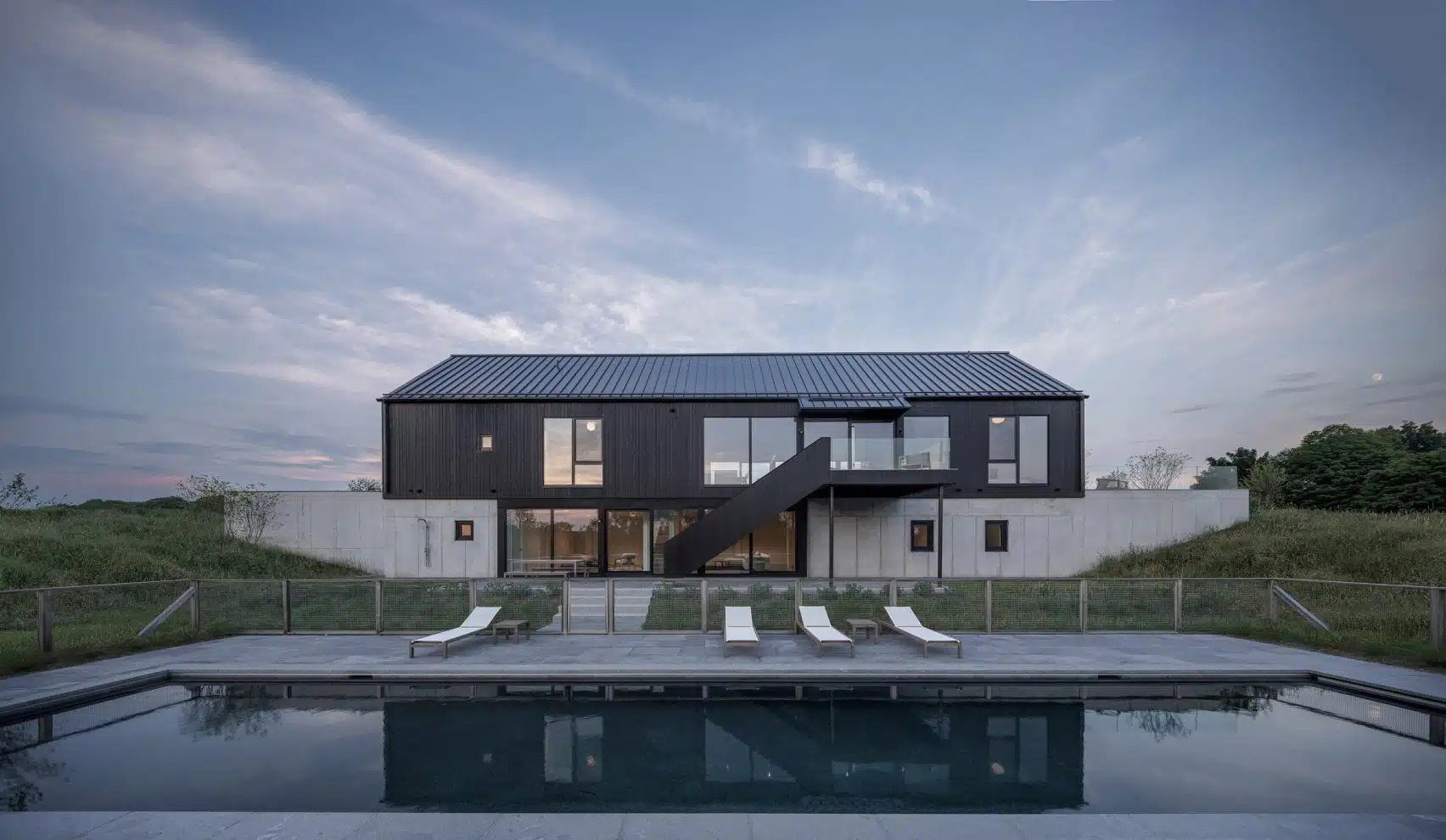
On a material level, this house extends to no more than 5.80 meters in length, and is built on a dual-axle trailer, placing it within the ultra-compact category even by the standards of tiny homes themselves.
In In terms of materials, spruce wood was used for the exterior cladding, along with a metal roof that gives the architectural volume a simple character leaning toward Scandinavian style, despite the French origins of the design.
This project was not designed in a general sense, but rather as a response to the needs of a specific user, taking into account a mountainous site in the Cantal region, known for its harsh winters rather than a temperate climate. Accordingly, the design clearly reflects awareness of climatic conditions, particularly through the adoption of passive heating solutions aimed at reducing energy consumption while maintaining a comfortable thermal level.


Reorganizing spatial layout as a functional solution, not merely a design concept
Moving beyond the ladder logic in tiny homes
Reversing the distribution of spaces inside Tiny House homes cannot be seen as a purely unconventional aesthetic choice; at its core, it is a response to a recurring functional problem. In traditional models, the design relies on an elevated sleeping loft accessed via a ladder, a solution that may seem acceptable at certain life stages, especially when nighttime use of the ladder is not perceived as a daily burden.
However, as lifestyles evolve and needs change, this assumption becomes less suitable, particularly when the space is intended to serve the user long-term without physical strain or movement complexity.
Ground-floor bedroom: redefining daily comfort
In this context, relocating the bedroom to the ground floor offers a direct solution to the issue of daily accessibility. Instead of relying on ladders each time one enters or exits the sleeping area, movement becomes smoother and more natural within the broader logic of architecture.
In addition, this distribution allows for a more comfortable bedroom environment, where a double bed can be paired with full-height windows that provide abundant natural light and ventilation. As a result, the space transforms into a calmer environment more closely linked to real comfort, rather than simply being a compressed solution within a limited volume.
Upper level as a multifunctional living space
In contrast, the upper floor takes on a completely different role, becoming a primary living area rather than a secondary annex. Here, furniture can be arranged in a simple configuration including a sofa, a coffee table, and some plant elements, creating a sense of relative spaciousness despite the limited footprint within contemporary design thinking.
Accordingly, this level becomes a flexible space that can be used for daily lounging, reading, or even as a quiet workspace. With the growing prevalence of remote work patterns, the importance of adaptable spaces within small residential units becomes increasingly evident.
It is also notable that storage planning is addressed more precisely at this level, since storage management has become a fundamental component of modern micro-housing, especially given the diversity of daily usage patterns within the same constrained space.


Rethinking the bedroom inside tiny houses
The bedroom as a comfort space, not just a function
I feel that many tiny house designs treat the bedroom as a purely functional space, closer to a place for sleeping than a true refuge for rest. In contrast, the idea of climbing to an elevated loft bed via a ladder, especially in daily use, feels closer to a temporary solution than a well-considered design choice.
From here, the inverted model appears as a calmer and more realistic idea, one that rethinks the meaning of comfort within a limited space, without making it feel like a compromise or an imposed solution.
Redefining the concept of “small”
This distribution does not only change the form; it reshapes what “smallness” means in housing. Instead of treating space as a constraint, it is used in a way that makes movement easier and daily experience more fluid within modern design approaches.
In this sense, the architecture does not feel like a sacrifice of space, but rather a conscious choice to improve the quality of use.
Simple materials and a quiet identity
This type of interior design relies on natural materials and simple detailing, particularly wood, along with a carefully considered arrangement of elements within the space. The result is a sense of visual calm and a reduction in complexity, without losing function or efficiency in the overall architecture.
An idea that goes beyond context
Although these projects are often documented within broader projects archives, they raise wider questions about the principles of micro-housing itself. The real value of such design approaches often lies in their ability to rethink what has become taken for granted, rather than simply providing solutions to individual problems.


✦ ArchUp Editorial Insight
Véronique House operates as a direct material response to a system of constraints shaped by micro-housing financing mechanisms, trailer-related transport regulations, and occupancy standards in cold environments such as Cantal within broader construction logic.
The inversion of the conventional bedroom model to the ground level is not read as a formal choice, but rather as a mechanism for reducing use-related risks associated with vertical access in extremely small units, where ladder use remains tied to a cost-minimization logic in modular structures often discussed in architecture discourse.
Meanwhile, transforming the upper floor into a living space reflects a functional compromise between spatial limitation and thermal performance efficiency, taking advantage of heat stratification within enclosed volumes studied in research.
In this context, the architect does not appear as a central authorial figure, but rather as an intermediary between regulatory compliance requirements, movement constraints, and the pressure to optimize efficiency per linear meter of a towable structure documented in architectural news.