Vihara House: Water, Light, and Spatial Design

Relationship Between Architecture and the Ecological System
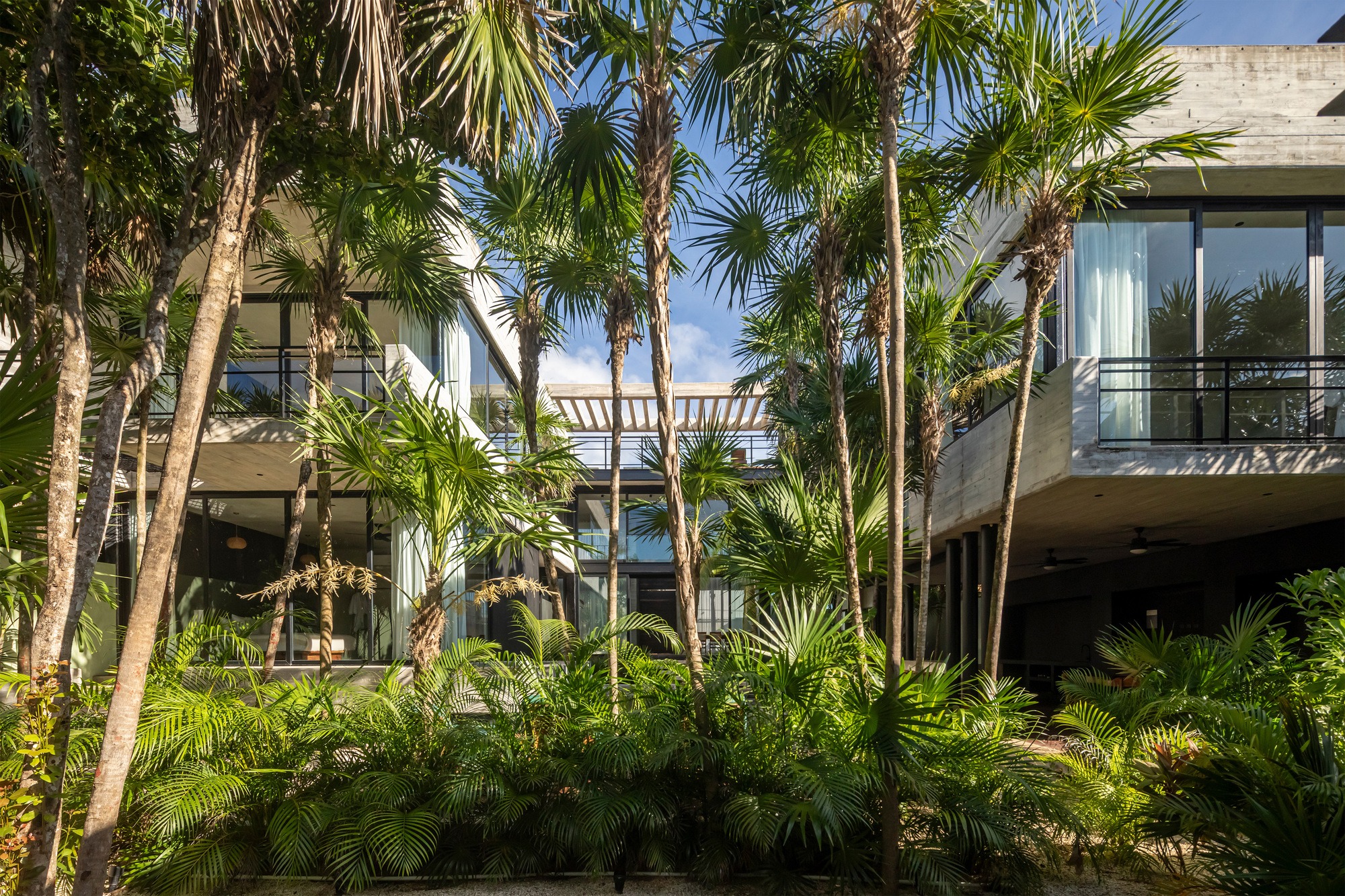
The text reflects a vision of environments in which life is organized around water, where light filtering through vegetation shapes space, while plants control air movement. In this context, architecture is not treated as an isolated element, but rather seeks to understand the mechanisms of interaction between water and land, similar to what occurs in mangrove forests. Accordingly, the project emerges as an extension of this system, adopting principles of openness, protection, and movement guidance.
Spatial Sequence and the Construction of Privacy
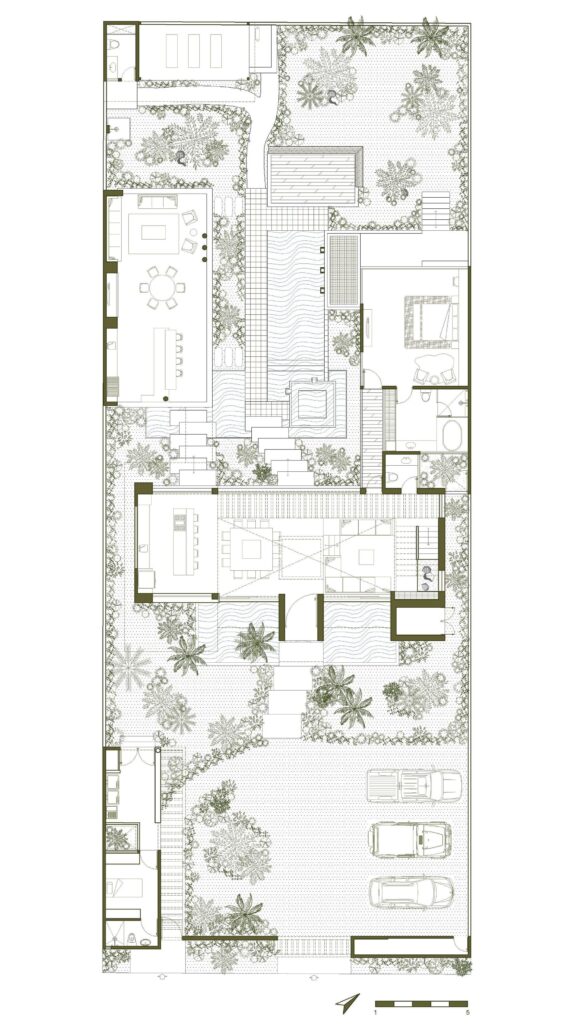
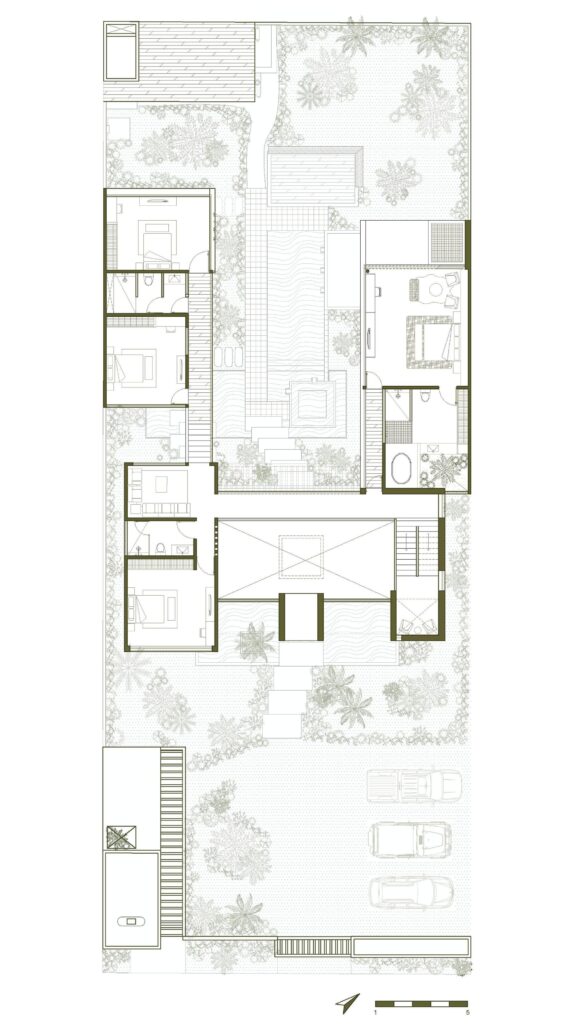
Access to the house is achieved by passing through two volumes that form an initial layer of visual shielding. The path then leads to an internal courtyard, through which the main façade is gradually revealed. This gradual transition highlights an approach focused on organizing space around courtyards and gardens, where these elements become the center of daily life rather than direct façades.
Movement and Vertical Gradation
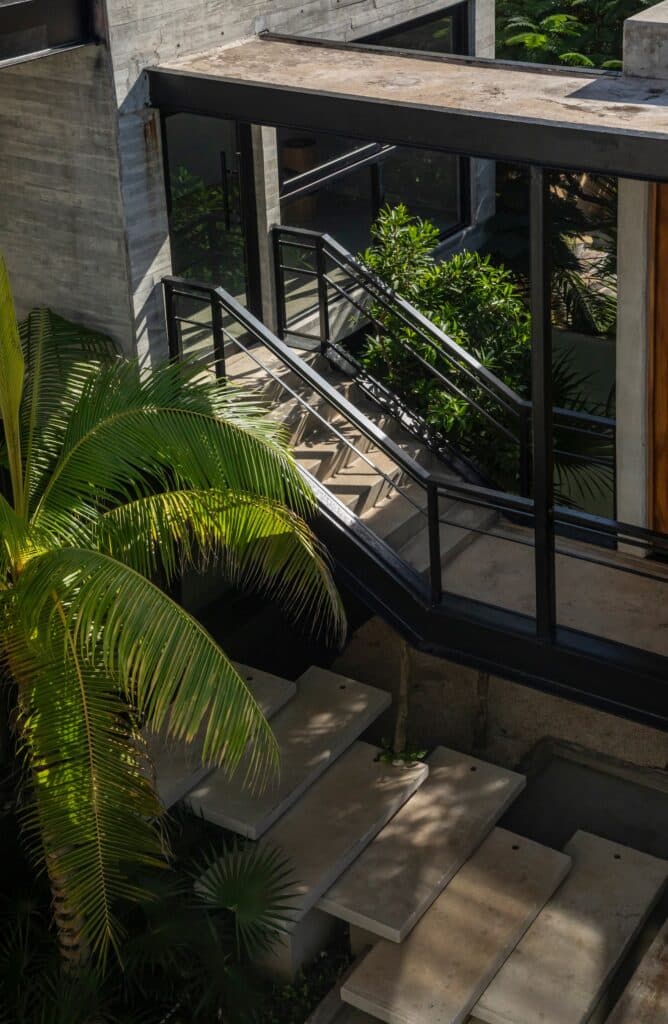
The construction composition is organized across multiple levels connected by external staircases, creating a stepped circulation path. This gradation is synchronized with changes in elevation, allowing space to be progressively revealed during movement. As a result, viewpoints become multiple, and circulation within the project transforms into a spatial experience based on phased discovery.
| Item | Details |
|---|---|
| Architects | Di Frenna Arquitectos |
| Area | 634 m² |
| Year | 2025 |
| Photographs | Onnis Luque |
| Lead Architect | Matia Di Frenna Müller |
| Category | Houses |
| Project Team | Omar Anguiano de la Rosa |
| City | Tankah Pueblo |
| Country | Mexico |
Mass Formation and Response to the Surrounding Context
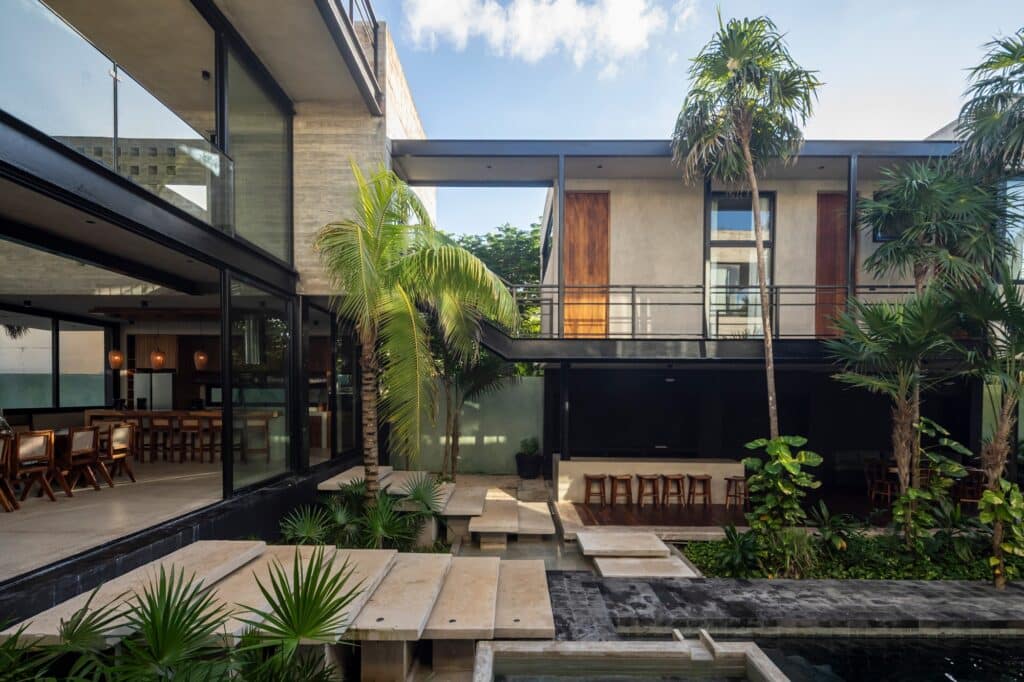
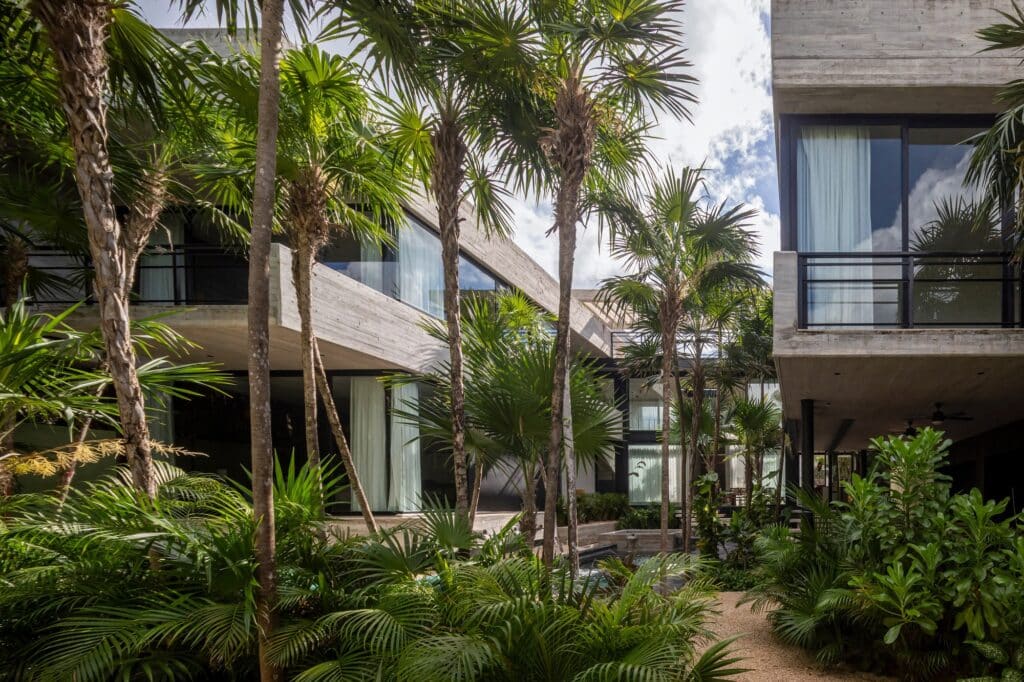
The architectural mass is based on elements that project forward and recede, reflecting an attempt to connect the buildings with two different natural contexts: the forest and the sea. This approach is evident in the way the volumes are oriented, as they interact with the surroundings rather than detach from them, creating a balance between outward expansion and internal discipline.
The Courtyard as a Climatic and Social Organizer
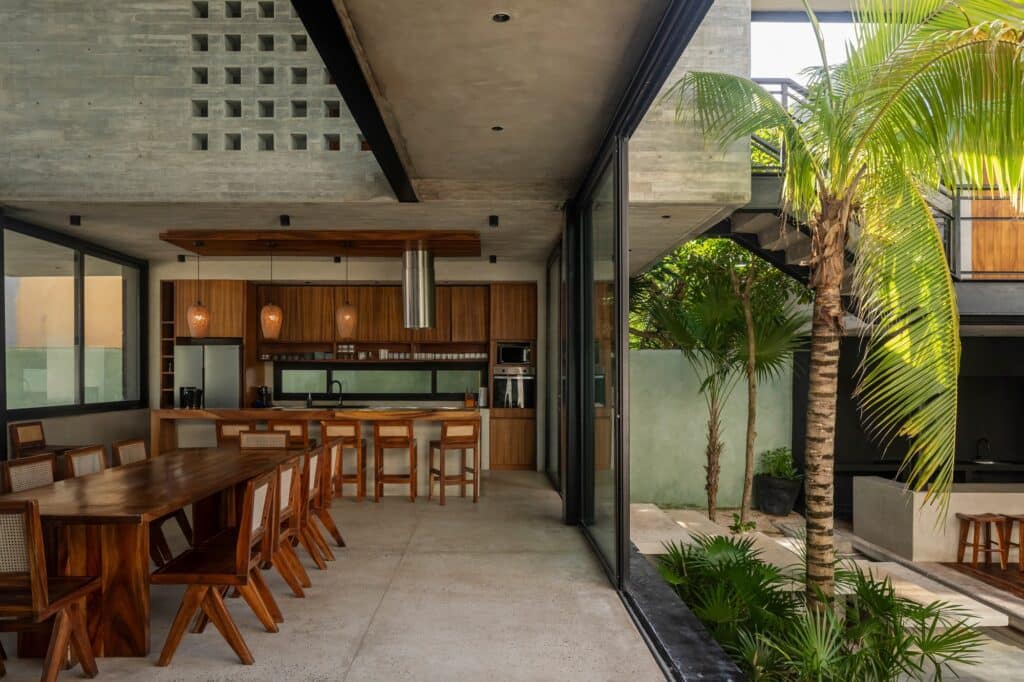
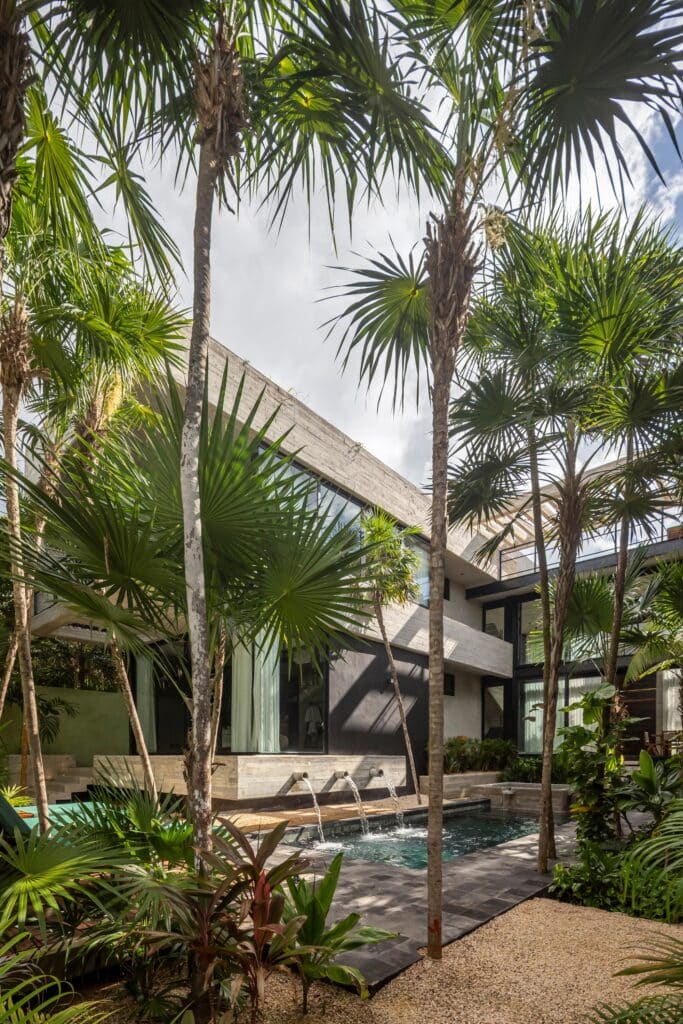
At the center of the project lies a longitudinal courtyard designed to serve both climatic and functional roles. This void helps reduce direct exposure to sunlight and regulates comfort conditions in the surrounding social spaces, such as the living room, dining area, kitchen, and terrace. At the same time, it integrates water and vegetation into the composition, reinforcing the connection between daily use and natural elements. This approach to interior design demonstrates how voids can organize both climate and social interaction.
Vertical Gradation and the Diversity of Spatial Experience
The bedrooms are distributed on the upper floor, with their views oriented toward the internal courtyards and the external landscape. The roof is used as an elevated space that provides a broader visual extension. The presence of a glass dome contributes to visually linking the different levels, allowing natural light to pass through and reflect off the water, adding a dynamic dimension to the experience of the interior space. Similar strategies can be found in various projects that prioritize light modulation.
Materials and Climatic Adaptation
The material approach relies on the use of concrete adapted to a tropical environment, meeting requirements of durability and reduced maintenance. This selection of building materials contributes to defining the overall structure of the building, while at the same time allowing vegetation to emerge visually within the composition, enhancing the presence of natural elements without direct competition from the solid mass. For technical specifications, material datasheets provide further insight into such environmental adaptations.
The Staircase as a Visual Organizing Element
At the center of the project is a main staircase designed as a sculptural concrete element connecting the different levels. Its trajectory reflects a geometric organization inspired by historical compositions, reinterpreted within a contemporary context. Thus, its role is not limited to circulation, but also contributes to shaping the visual identity of the interior space. This element echoes themes found in research on vertical circulation and spatial perception.
Overall Compositional Logic
Overall, the project reflects an approach based on achieving a balance between water, light, and vegetation. This balance is expressed in the way elements are distributed and integrated within the space, forming an architectural environment grounded in a calm interaction between its components, without any single element dominating the others. Such integrated design principles are increasingly relevant in contemporary ecological debates.
✦ ArchUp Editorial Insight
The spatial composition here appears to be less the result of an individual design decision and more a direct outcome of intersecting regulatory systems related to water management, environmental performance standards, and risk mitigation mechanisms in residential development within sensitive natural interfaces. The organization of space around water and the use of vegetation as an environmental mediator reflect an institutional logic driven more by environmental efficiency metrics than by formal intent. Contemporary top news in architecture frequently highlight such performance-driven approaches.
The transition through successive layers of visual shielding, the gradual revelation of the courtyard, and the vertical gradation of movement function as mechanisms for regulating privacy and improving climatic performance. The courtyard becomes an organizing device that balances reduced thermal load with the consolidation of daily functions, while materials are governed by a logic of low operational cost and long lifecycle performance in a tropical environment. These strategies are part of a broader discussion in cities facing climate adaptation challenges.
Elements such as the central staircase and the glass dome are instead read as solutions that integrate circulatory efficiency with the regulation of light and climate, reflecting architecture as an outcome of overlapping environmental, economic, and regulatory constraints rather than an autonomous formal expression.

★ ArchUp Technical Analysis
Technical and Documentary Analysis of the Vihara House Project – Tankah Pueblo, Mexico:
This article presents an architectural analysis of the Vihara House project as a case study in reinterpreting the relationship between water, light, and spatial organization within a tropical context. To enhance its archival value, we would like to present the following key technical and design data.
The project has a total area of 634 square meters and was completed in 2025 in Tankah Pueblo, Mexico. The design organizes the space around a longitudinal courtyard as a climatic and functional regulator that reduces direct sun exposure and regulates comfort conditions in the surrounding social spaces (living, dining, kitchen, terrace), integrating water and plants within this composition.
Access to the house involves passing through two blocks that form a visual buffer layer, then an internal courtyard through which the main facade is gradually revealed. A main concrete staircase acts as a sculptural element at the project’s core, connecting the different levels (ground floor: living areas; upper floor: bedrooms overlooking internal courtyards and the external surroundings; roof: an elevated space for a wider visual extension), with a glass dome allowing natural light to pass through and reflect off the water.
The material treatment relies on concrete conditioned for the tropical environment to meet durability requirements and reduce maintenance, with architectural blocks that advance and recede to connect the building to two natural contexts (the jungle and the sea).
Related Insight: Please refer to this article to understand the context of modern architectural preservation:
Tropical Architecture: Natural Ventilation and Shading Strategies in Humid Climates.