
Scandi Inn Project: Redefining Design in Tiny House Architecture

Aesthetic Transformations in the Tiny House Movement
Over the years, the tiny house movement has experienced clear fluctuations in aesthetic direction. At times, it leans toward rustic elements such as wooden cladding and sliding doors, while in other phases it shifts toward an industrial character relying on metal pipes and Edison bulbs. Within this changing context, the importance of projects that adopt a consistent and clearly defined design language becomes evident. The Scandi Inn house presents an example of this approach through its commitment to a single visual direction without fragmentation or uncontrolled stylistic mixing.
External Composition and Relationship to Scandinavian References
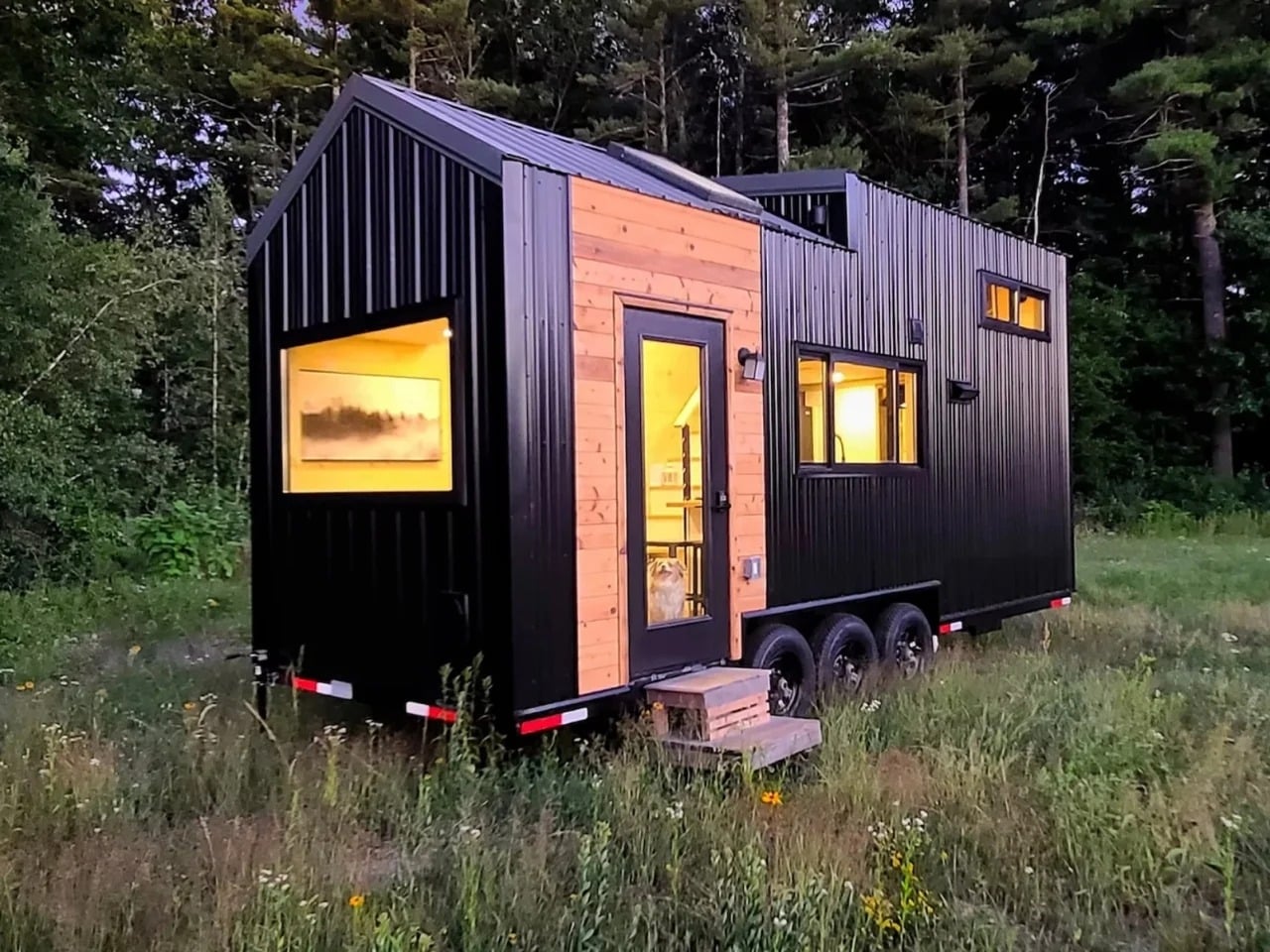
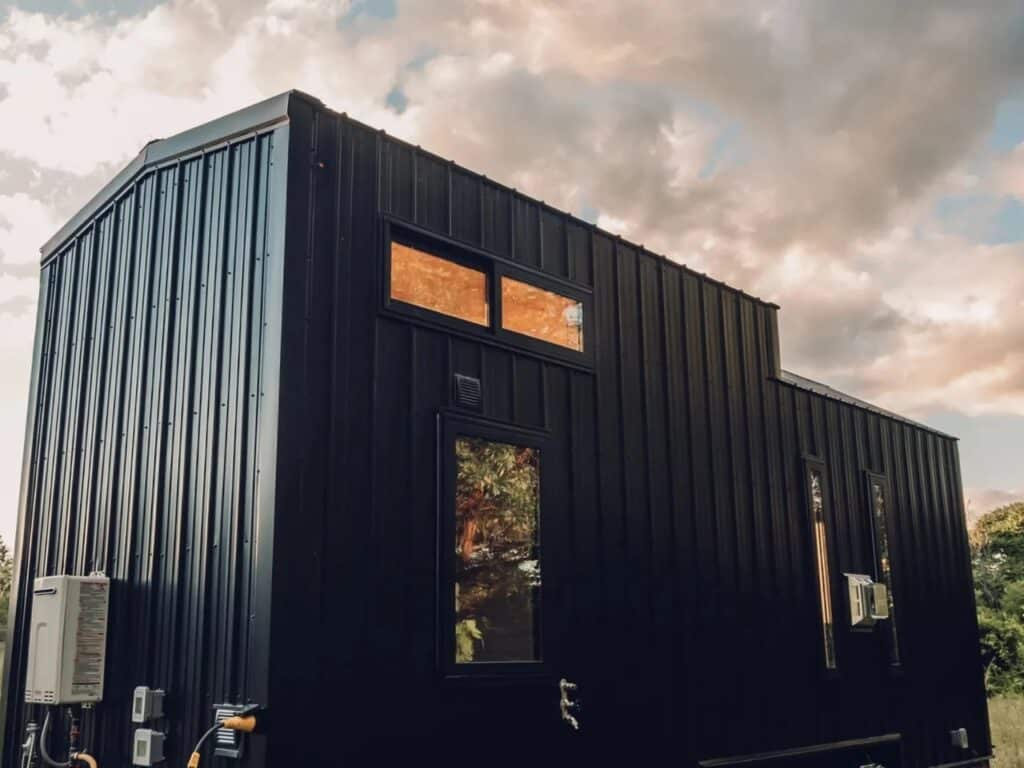
The project sits on a 270-square-foot footprint with a length of 24 feet, mounted on a triple-axle trailer. The exterior composition relies on cedar wood cladding in a tongue-and-groove system, supported by metallic elements. This combination produces a simple, cabin-like character, yet it is visually more aligned with European mountainous environments compared to American rural references. Overall, the design avoids visual exaggeration and instead relies on clarity of massing and a calm architectural expression.
Interior Organization and the Philosophy of Wood Usage
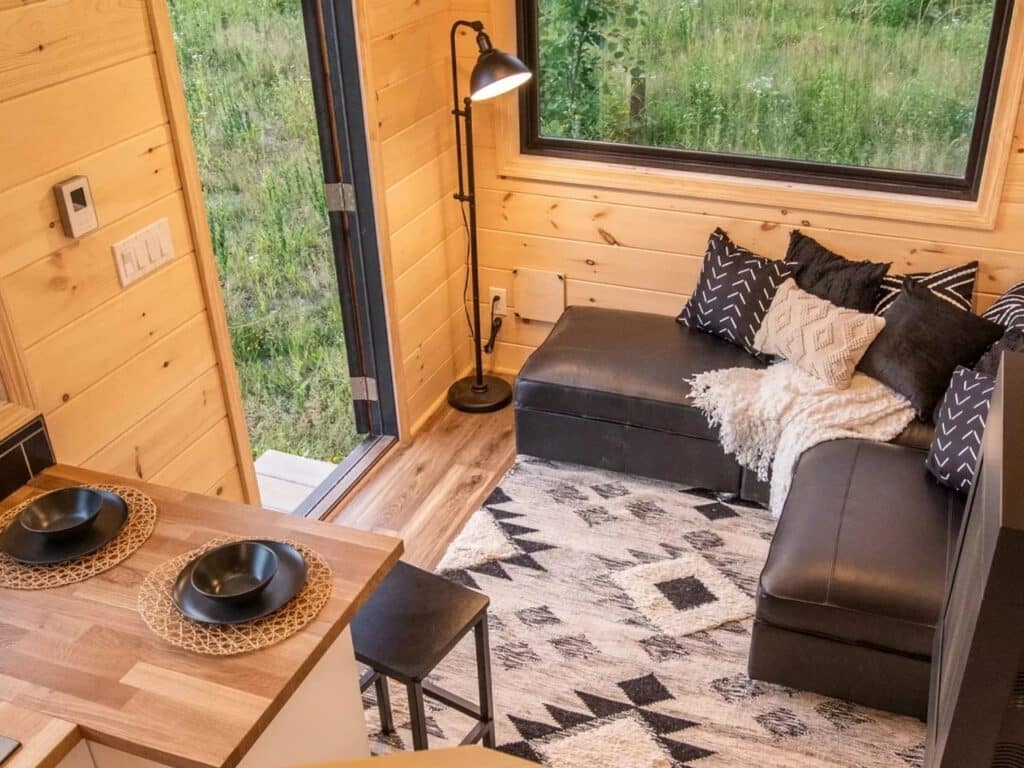
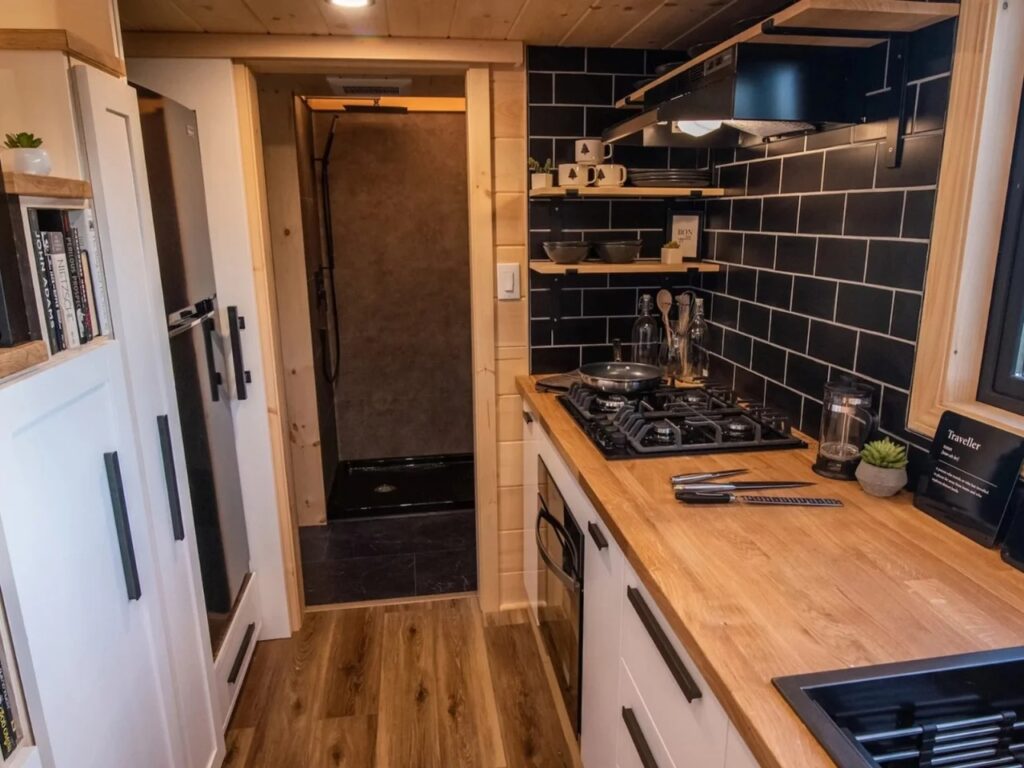
Inside, all surfaces are covered with pine wood using a tongue-and-groove system, creating a visually unified environment. This treatment produces a sense of warmth without increasing visual density, which is a common challenge in small spaces. The design also reflects Scandinavian principles in the use of wood and light, where natural materials are employed to compensate for spatial limitations. The result is an environment that sits between a mountain cabin atmosphere and a functionally designed room, achieving a careful balance despite the limited space.
Spatial Organization and Functional Distribution
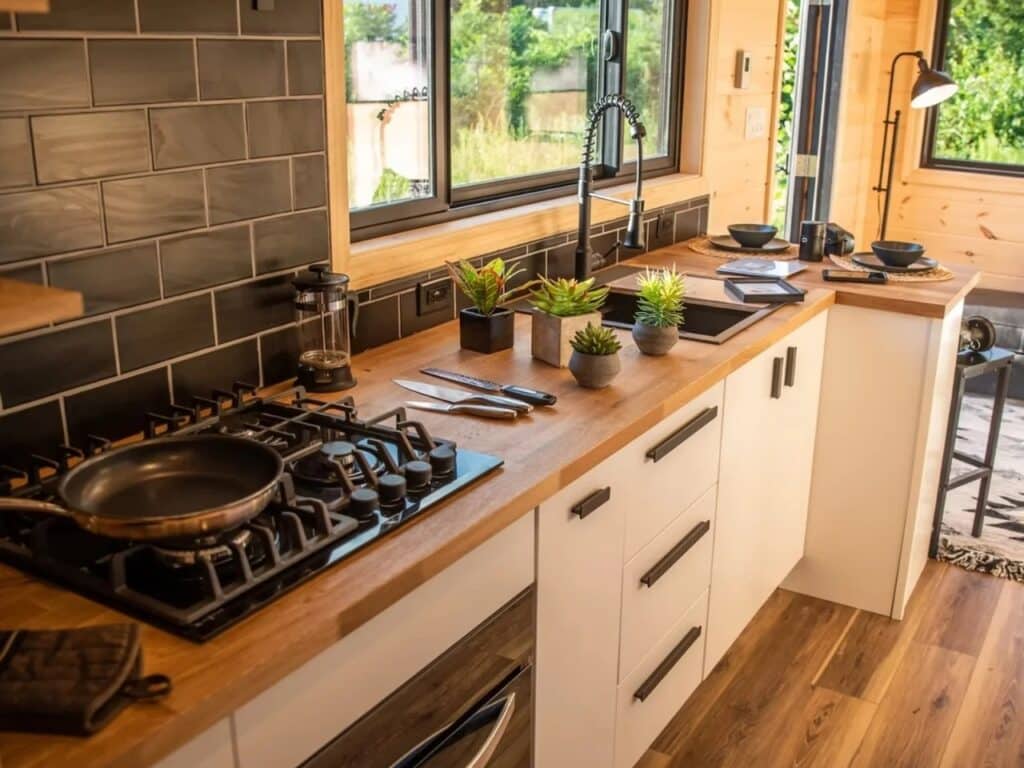
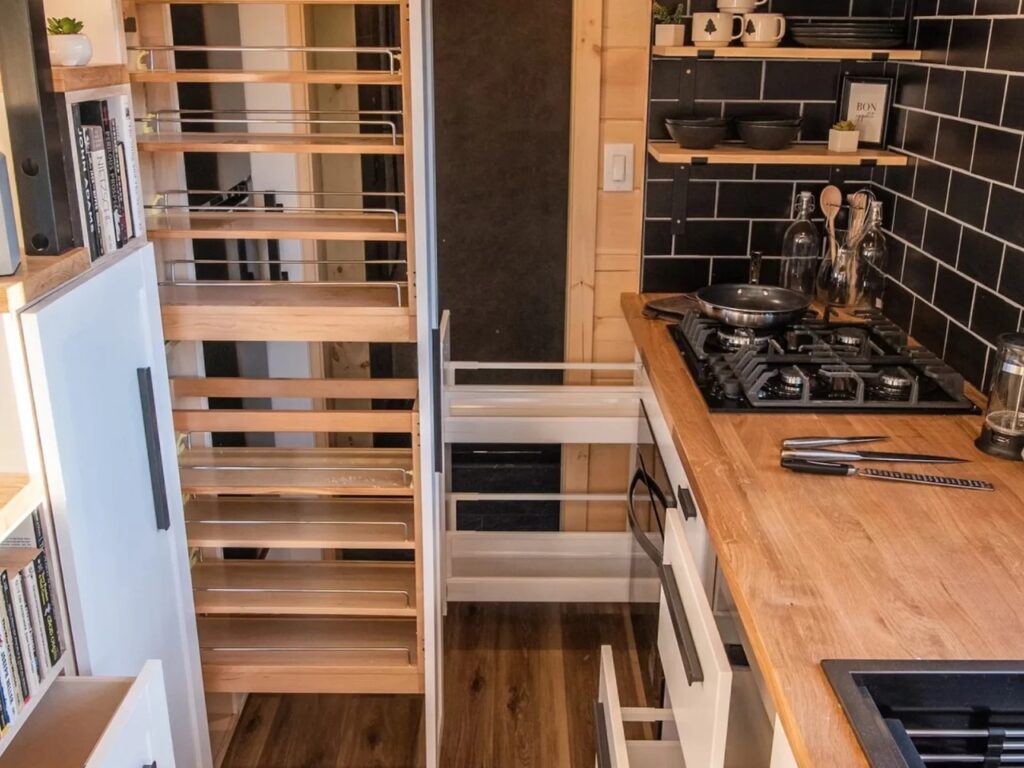
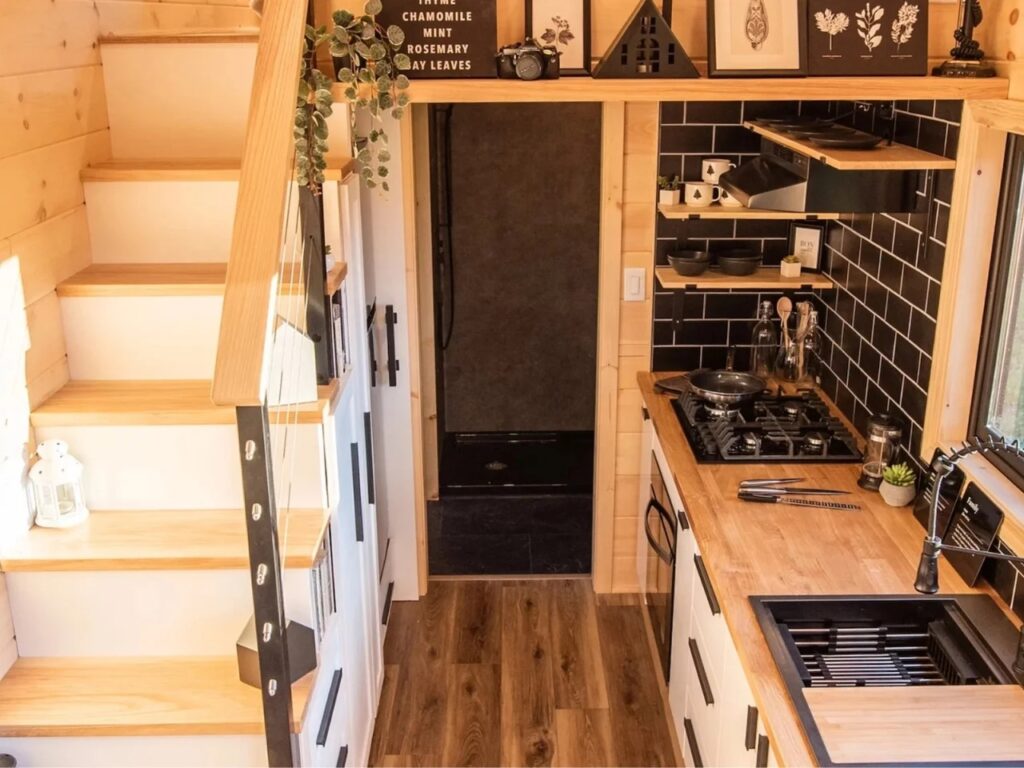
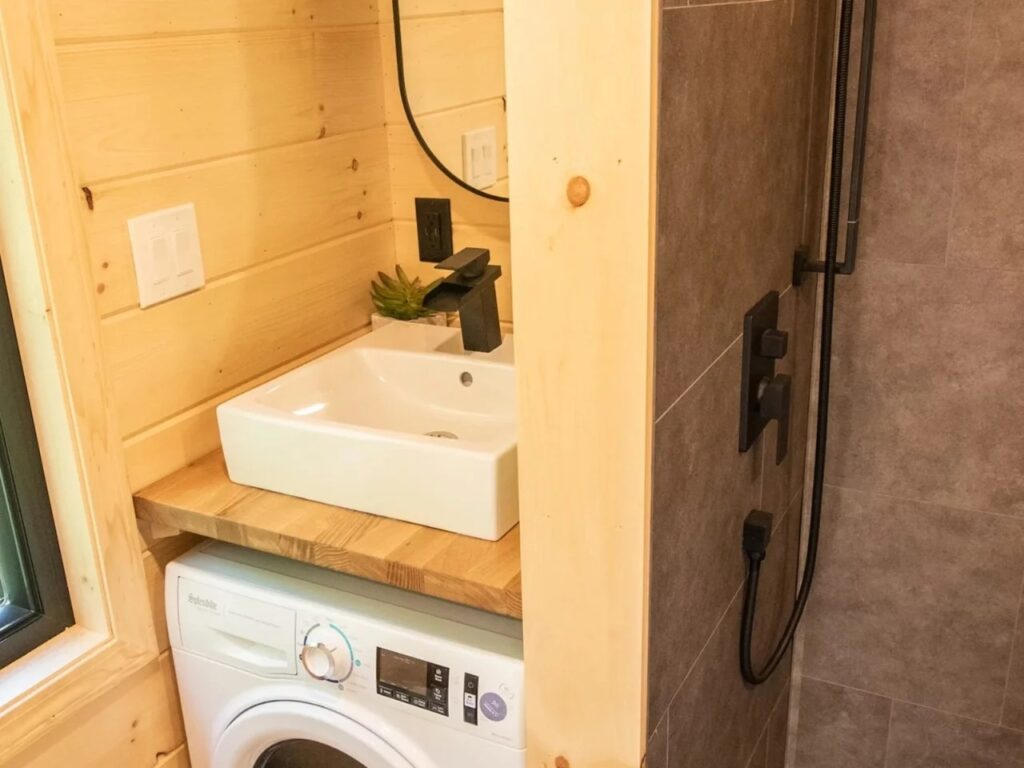
The design fully utilizes the available space through a clear distribution of daily functions. The main floor includes a kitchen with a breakfast table for two, along with a dining area, a living room, and a bathroom equipped with a tiled shower. This layout reflects an attempt to integrate multiple functions within a limited footprint without creating visual or functional clutter, while maintaining clear usability for each zone. You can find similar approaches in many buildings designed for efficiency.
Intermediate Elements and the Role of Quiet Spaces
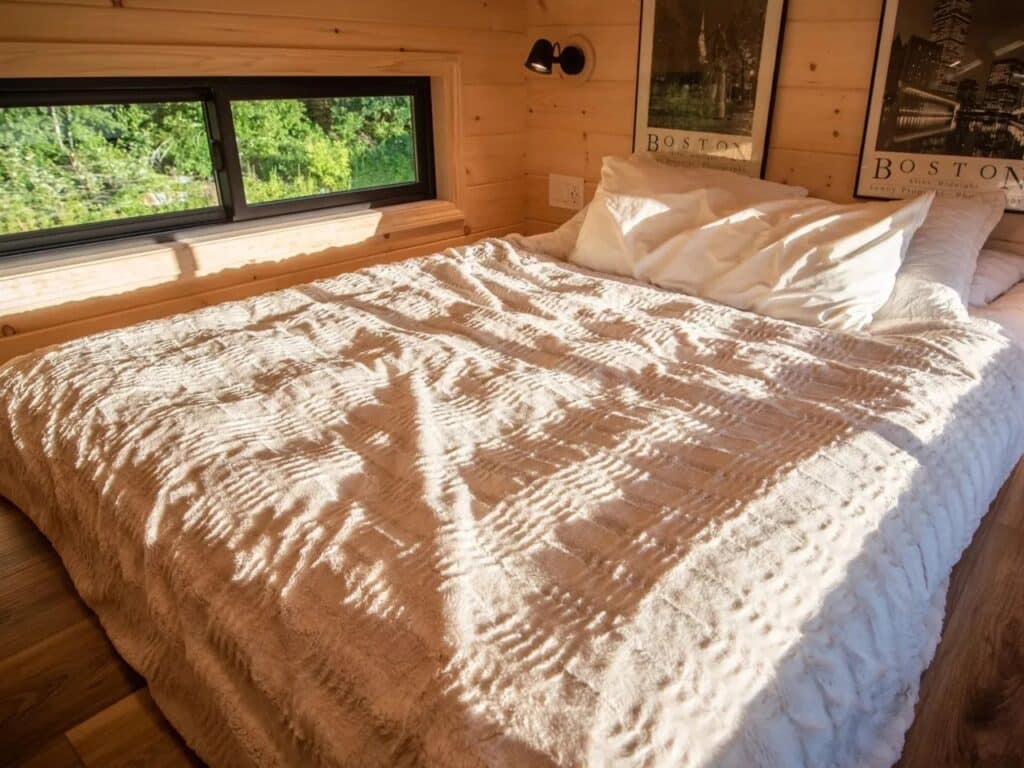
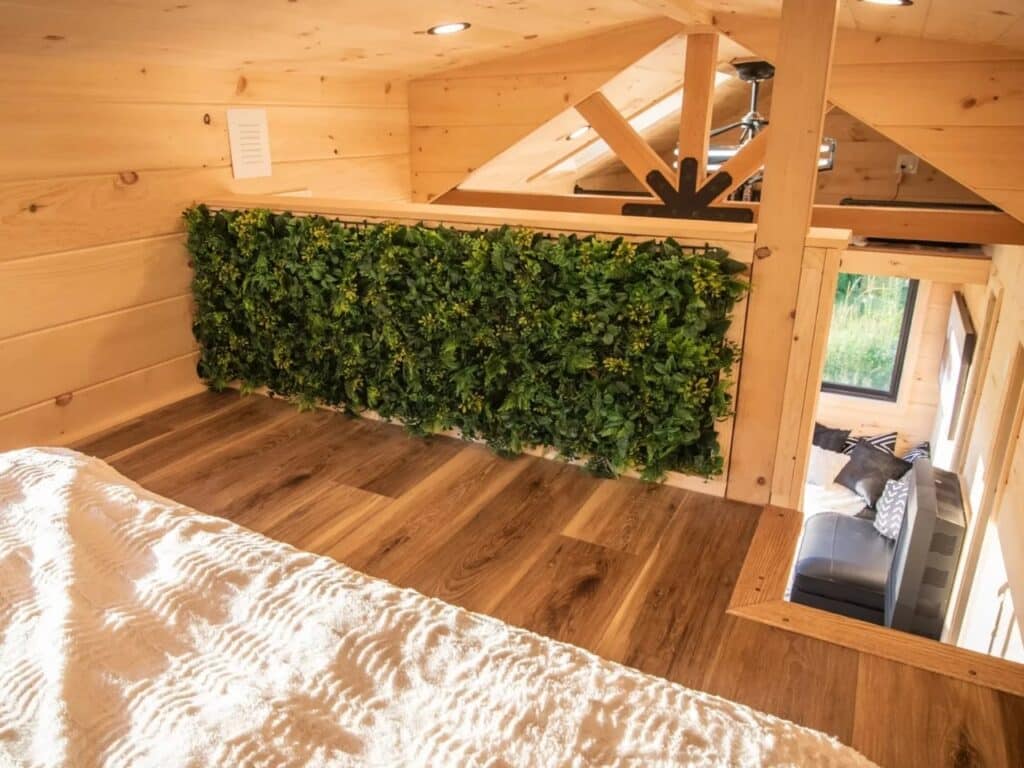
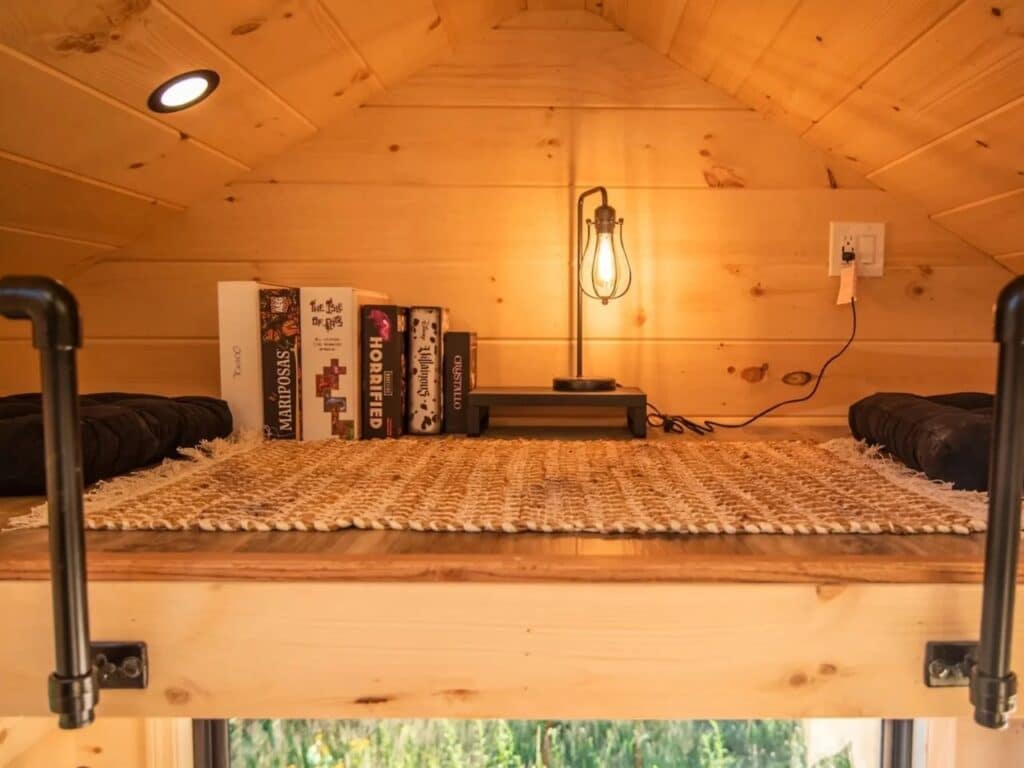
The plan includes a lofted bedroom located above the main floor, along with a reading nook embedded in an intermediate point of the design. This addition goes beyond simply occupying leftover spaces, suggesting an awareness of the need for quiet areas within small-scale environments. The inclusion of such voids also balances direct functional use with moments of pause or isolation within the dwelling. This reflects broader trends discussed in architectural news regarding the importance of mental health in spatial planning.
Vertical Spatial Treatment and Internal Composition Integration
The house accommodates up to three people within a 270-square-foot area, achieved through the use of the upper level as a sleeping solution without compromising the main living space. This type of organization is commonly used in tiny house design in general, but what distinguishes it here is how it is integrated into the overall composition. The loft does not appear as a separate add-on, but rather as a cohesive part of the plan, harmonizing with the rest of the elements without visual or functional interruption. For those interested in similar spatial strategies, exploring architectural research on compact living can provide deeper insights. Additionally, keeping up with architectural competitions often reveals innovative solutions for small spaces.
Maturation of Design Direction in Tiny House Projects
Projects by Backcountry Tiny Homes, including the Scandi Inn, reflect a clear evolution in handling design principles within tiny houses. In earlier models, whether from this developer or others, it was common to see multiple aesthetic styles coexisting within a limited space, resulting in visual conflict that does not serve the nature of such environments. In contrast, the Scandi Inn avoids this fragmentation by adopting a calm color palette, consistent material selection, and carefully considered proportions instead of relying on loosely integrated, additive solutions. You can follow similar architectural news to stay updated on evolving trends in small-scale living.
Economic Context and the Redefinition of Home Ownership
The price of the ready-made unit is approximately $77,800, a figure that remains relatively low within the current housing market, even if it is not insignificant in absolute terms. Amid continuously rising housing prices in the United States, such projects emerge as potential alternatives for groups reconsidering the concept of home ownership. Within this framework, the issue is not about abandoning essential elements, but rather about reordering priorities within different financial and spatial constraints. This shift in thinking is also evident in many cities where housing affordability is being redefined.
From the Logic of Sacrifice to Intentional Design Thinking
Traditionally, tiny houses have been associated with a narrative of sacrifice and reduced needs. However, the Scandi Inn reflects a shift in this perception, focusing instead on material quality, coherence of internal composition, and the practical usability of space. This transformation suggests that the goal is no longer simply to reduce size, but to produce a dwelling that is carefully considered in terms of planning, proportions, and lighting. Within a 270-square-foot footprint, the precision of these decisions becomes the determining factor in the quality of the architectural experience. Such precision is a hallmark of thoughtful design in any context.
✦ ArchUp Editorial Insight
Within the context of the rising housing affordability crisis in the U.S. market and the expansion of the tiny house model as a portable investment unit, the Scandi Inn emerges as a regulatory response shaped by prefabrication-based financing and short-term occupancy patterns rather than as an autonomous design decision. The primary driver lies in transforming the dwelling into a mobile physical unit governed by market considerations within an urban regulatory environment defined by land-use zoning constraints and transportation standards. Points of friction arise through trailer dimension limits, insurance requirements, material standardization, and labor cost pressures, leading to a densification of the functional program within 270 square feet. The resulting spatial outcome is formed as a negotiation between regulatory constraints and demand logic, where the use of wood operates as a low-risk solution within a standardized supply chain, while the Scandinavian reference is employed as a differentiation tool within an otherwise highly uniform housing model. For more insight into material choices, explore dedicated building materials resources. Additionally, reviewing material technical data sheets can help understand performance specifications. Those interested in career aspects of this field can browse architectural jobs or check architectural competitions for innovative tiny house concepts. A wealth of past architectural research is also available in the content archive.

★ ArchUp Technical Analysis
Technical and Documentary Analysis of the Scandi Inn Project – United States:
This article presents an architectural analysis of the Scandi Inn project as a case study in redefining design in tiny homes within the mobile home movement. To enhance its archival value, we would like to present the following key technical and design data.
The project spans an area of 270 square feet with a length of 24 feet, mounted on a triple-axle trailer, with exterior cladding of tongue-and-groove cedar wood and supportive metal elements, at a price of approximately $77,800 for the ready-made unit.
All interior surfaces are covered with tongue-and-groove pine panels, with a functional distribution that includes on the main floor a kitchen with a breakfast bar for two, a dining area, a living room, and a bathroom with a tiled shower, in addition to an upper bedroom above the main floor and an integrated reading nook at an intermediate point in the design.
The home accommodates a maximum of three people, and the design reflects the use of wood and natural light to compensate for limited space, avoiding multiple aesthetic styles through a calm color palette, consistent materials, and carefully considered proportions.
Related Insight: Please refer to this article to understand the context of modern architectural preservation:
Mobile Tiny Homes: Between Spatial Efficiency and Aesthetic Distinction.





✅ Official ArchUp Technical Review completed for this article.