
Green Anarchy: Urban Decay as Ecological Interface

Cities Between Human-Centered Design and the Potential of Decay
Cities are primarily designed to meet human needs, where surfaces, façades, and walls are constructed, maintained, and repaired according to direct human use. However, this perspective overlooks the fact that cities are not inhabited by humans alone, but are shared with other living organisms. Therefore, viewing urban decay, such as cracked façades or eroded plaster, only as a problem ignores the latent ecological potentials it may contain.
Reinterpreting Urban Decay as an Ecological Condition
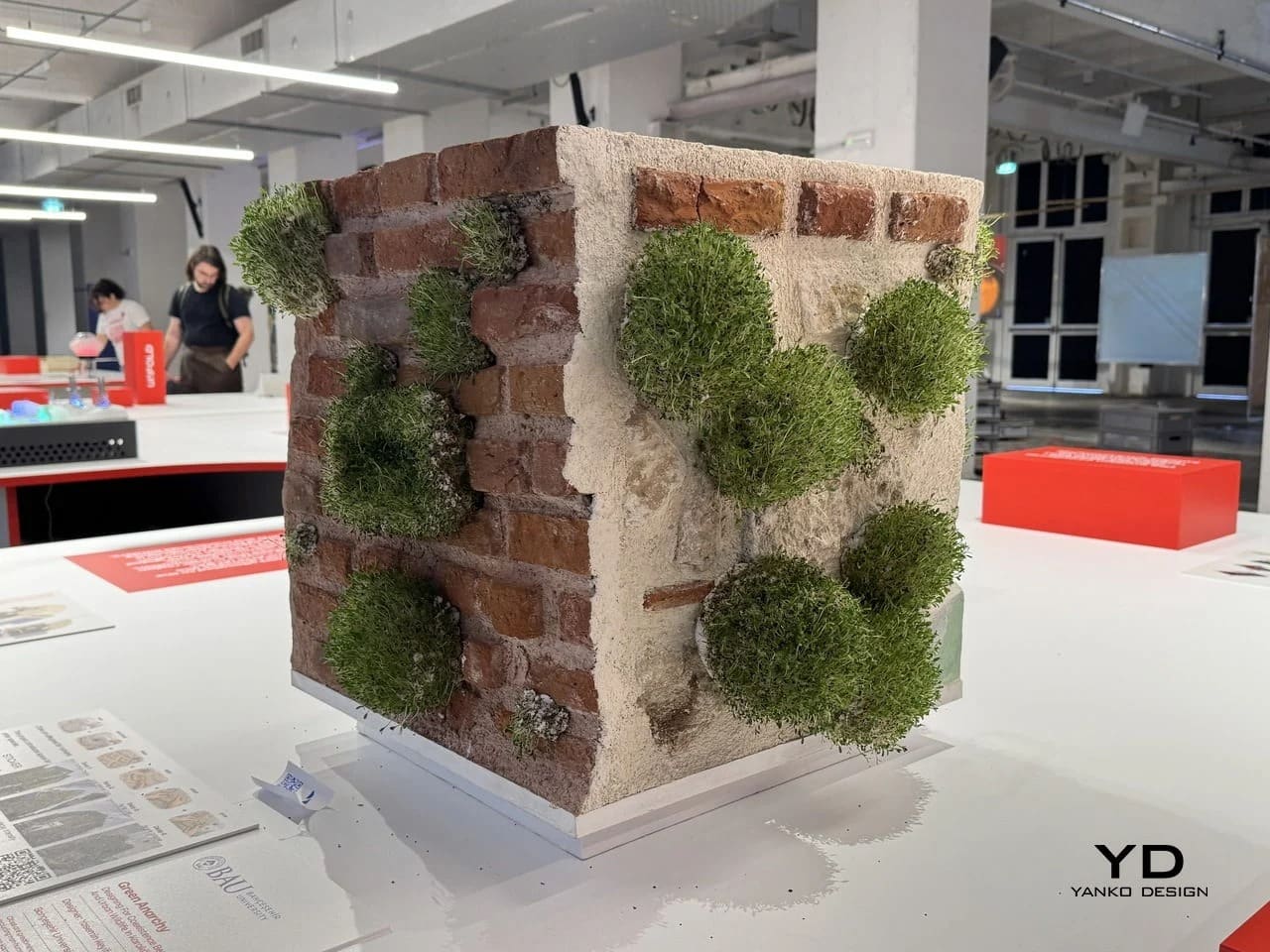
The Green Anarchy project, as a case study from the work of Yasemin Keyif at Bahçeşehir University in Istanbul, begins by rethinking the relationship between design and urban deterioration. Rather than treating damaged surfaces as elements that must be covered or repaired, the project proposes working with this decay as part of the design process. In this sense, urban deterioration becomes an interface that can be interacted with rather than resisted.
A Bio-Based Design Mechanism
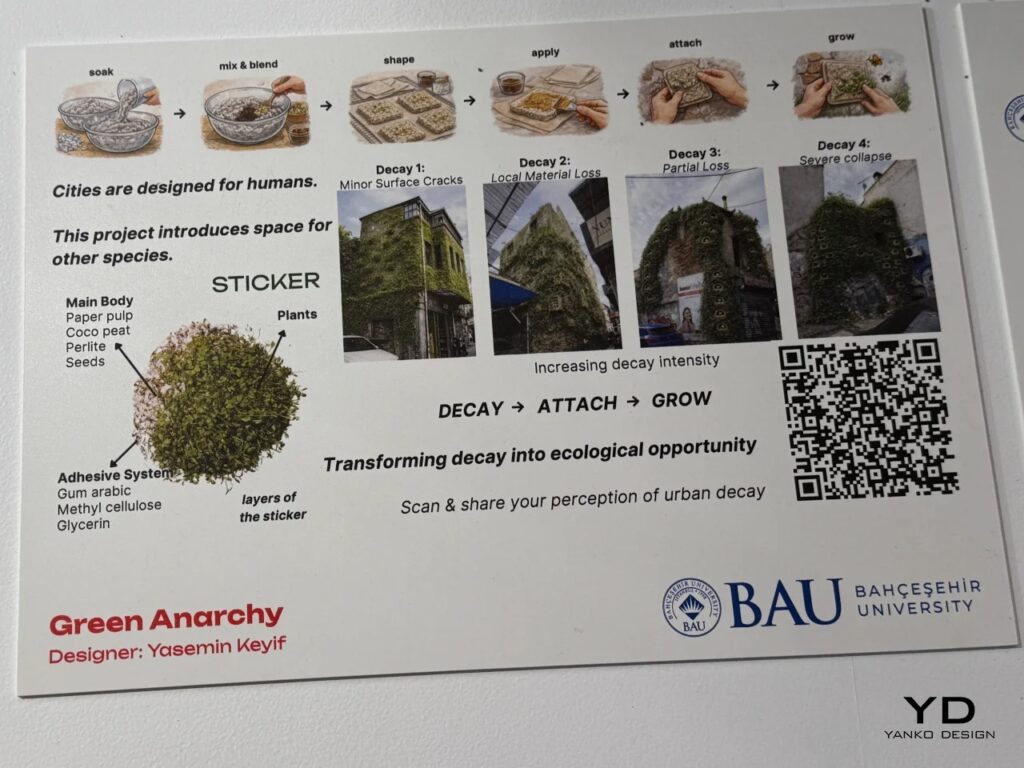
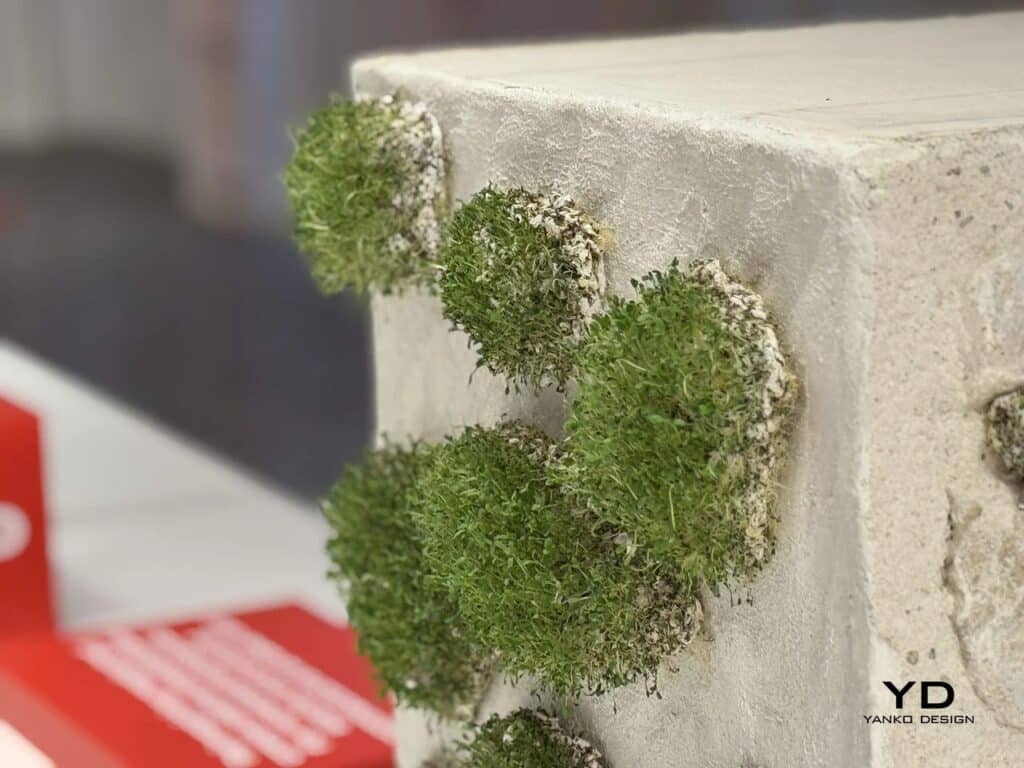
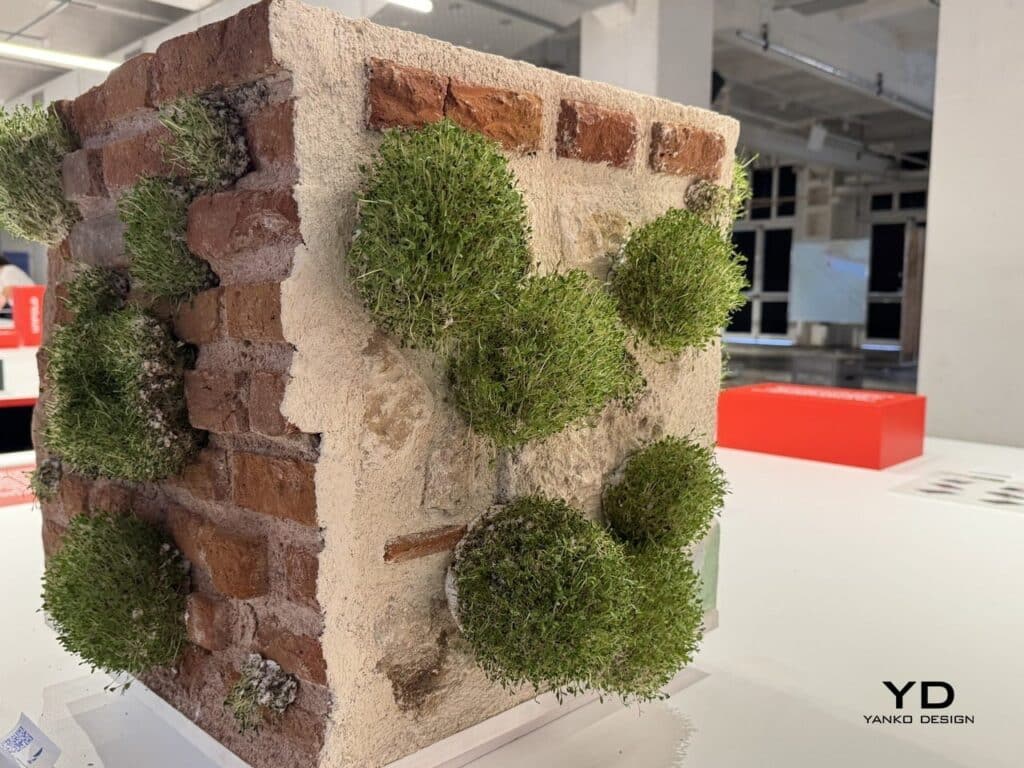
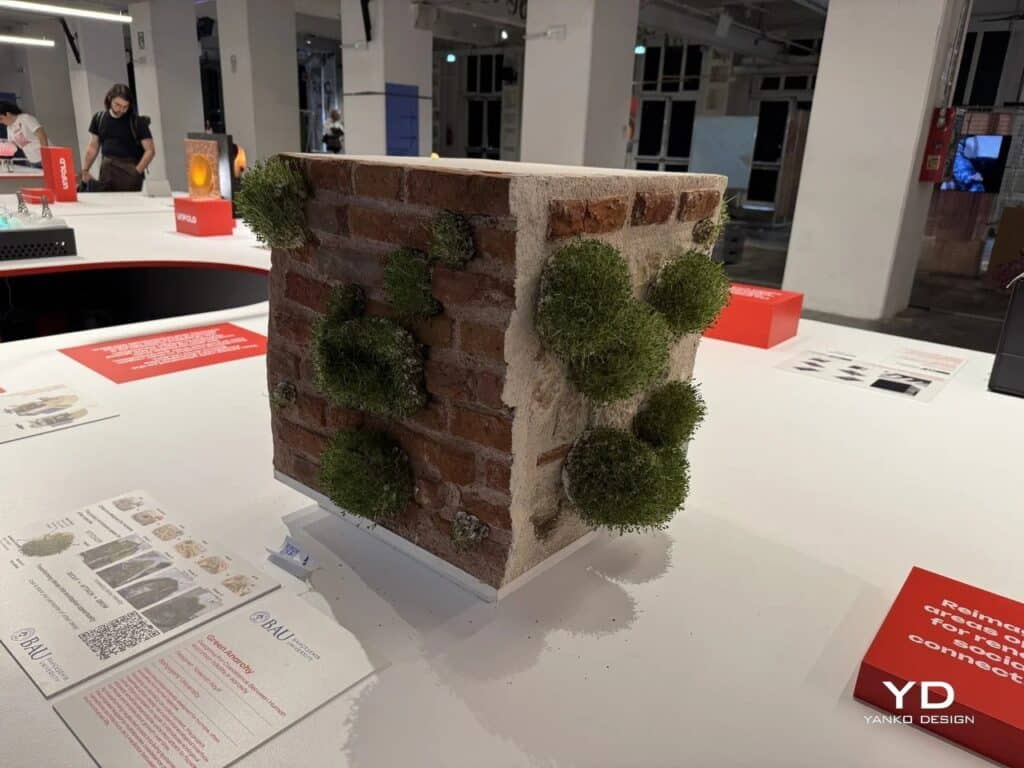
This idea is embodied in small biodegradable units that are directly attached to damaged surfaces. These units are composed of a mixture of paper pulp, coconut coir peat, perlite, and seeds as their core structure. They also rely on an adhesive system made of gum arabic, methyl cellulose, and glycerin, allowing them to adhere to rough or deteriorated surfaces without the use of synthetic materials.
From Material Application to Ecological Interaction
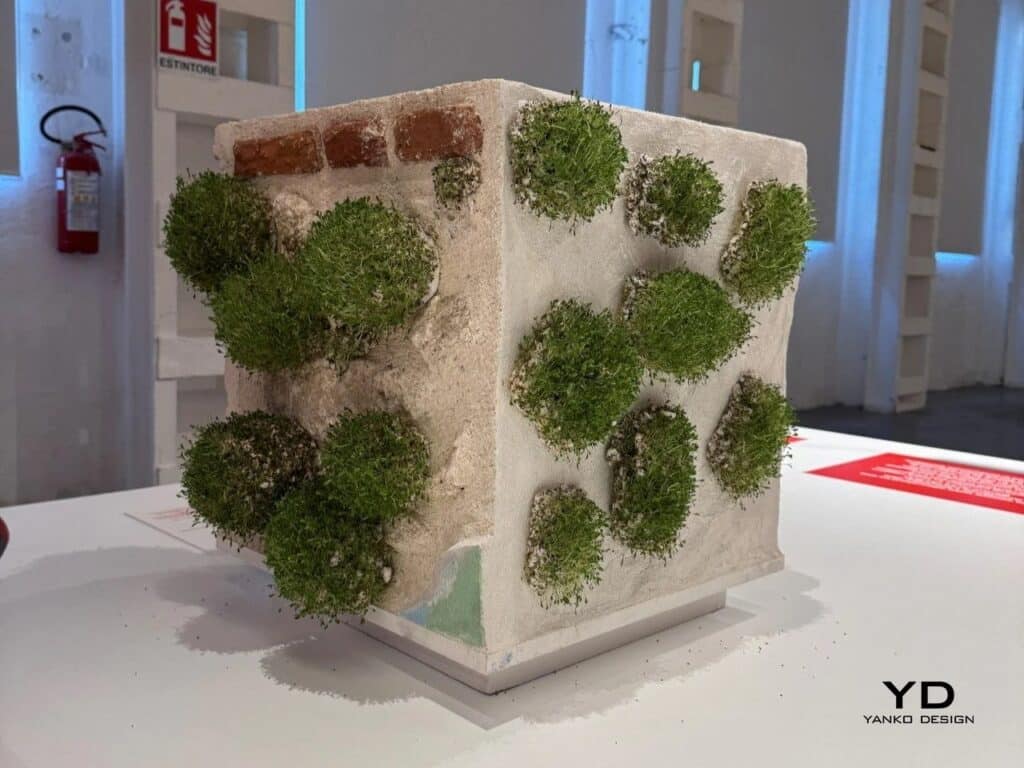
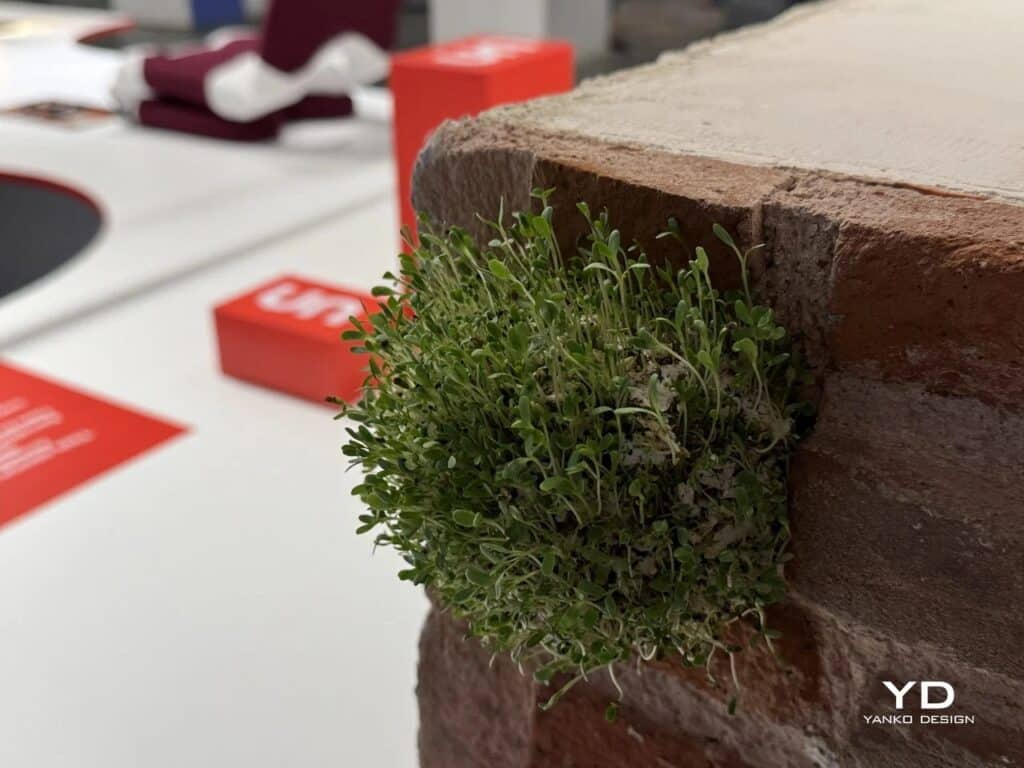
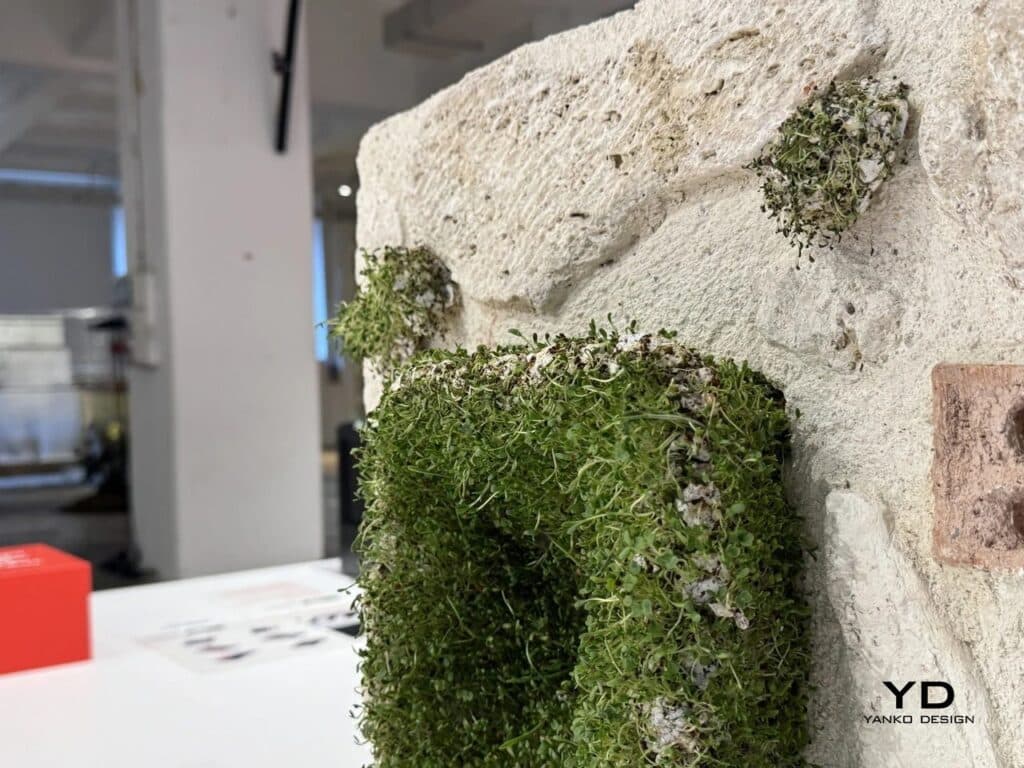
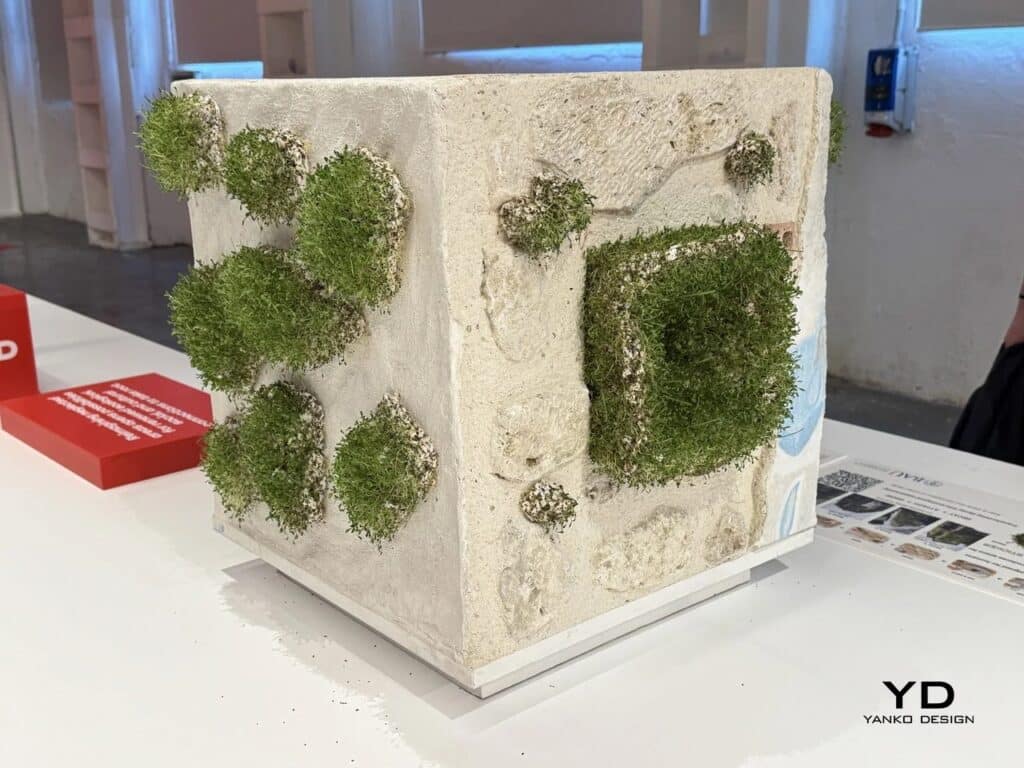
The process relies on straightforward steps that begin with soaking the stickers, then mixing and shaping them, before manually applying them onto wall buildings surfaces. Over time, the seeds embedded within the material begin to germinate inside existing cracks and cavities. As a result, neglected surfaces gradually transform into small self-sustaining ecological systems. The sequence of “decay, adhesion, growth” is used as an organizing framework that governs the logic of the project.
Gradual Decay as a Design Opportunity
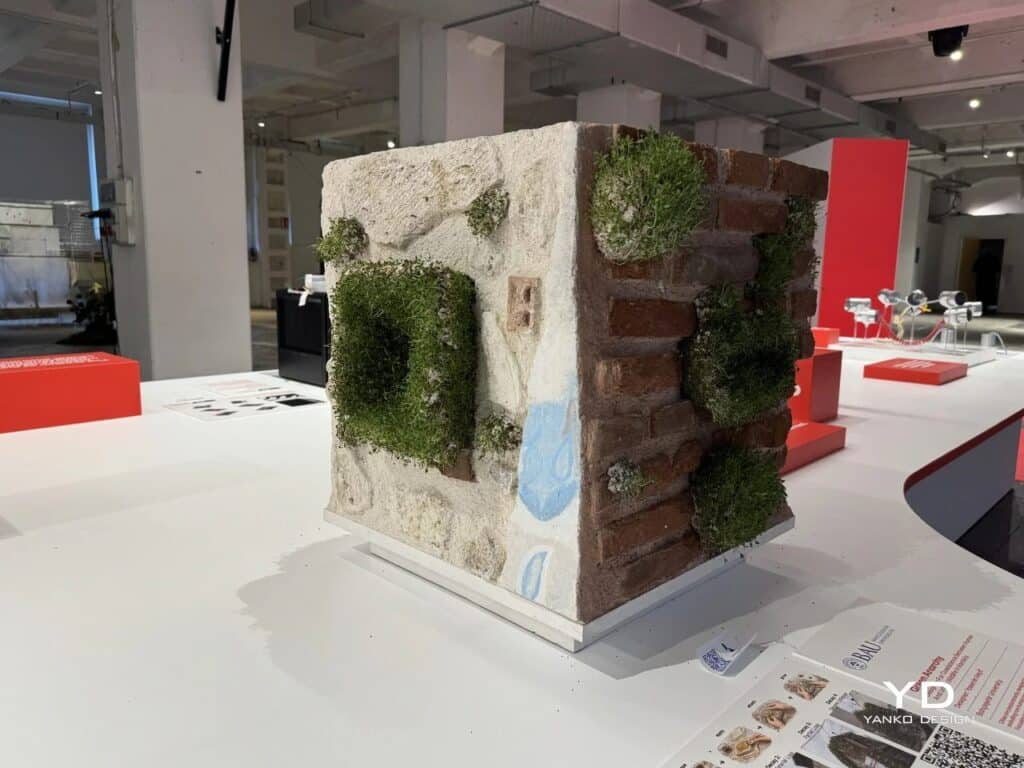
This concept was developed within the context of Karaköy district in Istanbul, treated as an urban condition through which the idea could be tested. The project divides urban deterioration into four progressive stages, starting from surface cracks and ending with severe structural collapse. Accordingly, each stage is treated as a valid point for applying the system, expanding the range of interaction with different surface conditions.
Decay as a Fertile Space for Transformation
The higher the level of deterioration in a building, the greater the opportunities for material adhesion and growth. Consequently, the most damaged walls are not viewed solely as a state of functional loss, but as spaces holding greater potential for ecological transformation. This shift in interpretation redefines the relationship between urban damage and the capacity to generate new ecological systems.
Redefining the Role of Architecture
The core idea is based on reconsidering the very concept of architecture itself. Instead of limiting buildings to being infrastructure dedicated solely to human activity, they are treated as interfaces that can enable interaction between human and non-human life. In this context, cities emerge as living systems that already host birds, insects, algae, and small organisms inhabiting overlooked spaces.
Design as a Mediator Between Life Systems
The project is driven by the question of whether design can open up a wider space for these organisms rather than pushing them outside the built environment. Accordingly, architectural intervention is not understood as a process of separating humans from nature, but rather as a means of reorganizing this already existing entanglement within the city.
Exhibition Context and Interpretive Framework
The project was presented as part of UNFOLD 2026, the annual international design exhibition of Domus Academy, held under the theme “Engage Friction: Designing Through Conflict.” Within this framework, Green Anarchy does not aim to eliminate the tension between the built environment and nature, but instead treats it as a condition that can allow both to gradually grow into one another without direct intervention.
✦ ArchUp Editorial Insight
Urban decay is reframed here not as a material failure, but as a direct outcome of maintenance economies and regulatory compliance frameworks that prioritize visual stability over ecological permeability. Within this regulatory fabric, façade cracks and surface erosion become the result of deferred maintenance, shaped by the boundaries of insurance liability, the rigidity of supply chains, and standardized restoration contracts. The Green Anarchy project operates as a low-cost spatial reconfiguration layer, introducing biodegradable units into existing fissures, transforming structural neglect into a medium for gradual biological occupation. Here, the architect does not appear as a direct actor; instead, non-human patterns of use are absorbed into urban voids. This reading reveals that architecture is nothing more than a delayed negotiation between capital-maximizing cycles and ecological leakages, where decay becomes a low-cost entry point for environmental recalibration rather than a defect to be corrected.




✅ Official ArchUp Technical Review completed for this article.