Wakura Onsen Footbath and Post-Disaster Public Space Revival


Urban Context and Site
The Wakura Onsen Footbath project is situated in a small coastal town in Nanao, Japan, within Yuttari Park in Ishikawa Prefecture. This intervention takes place in an open public space, where cultural entertainment elements merge with a calm local environment, creating a point of attraction within a low-density Cities.
Spatial Composition and Visual Symbols
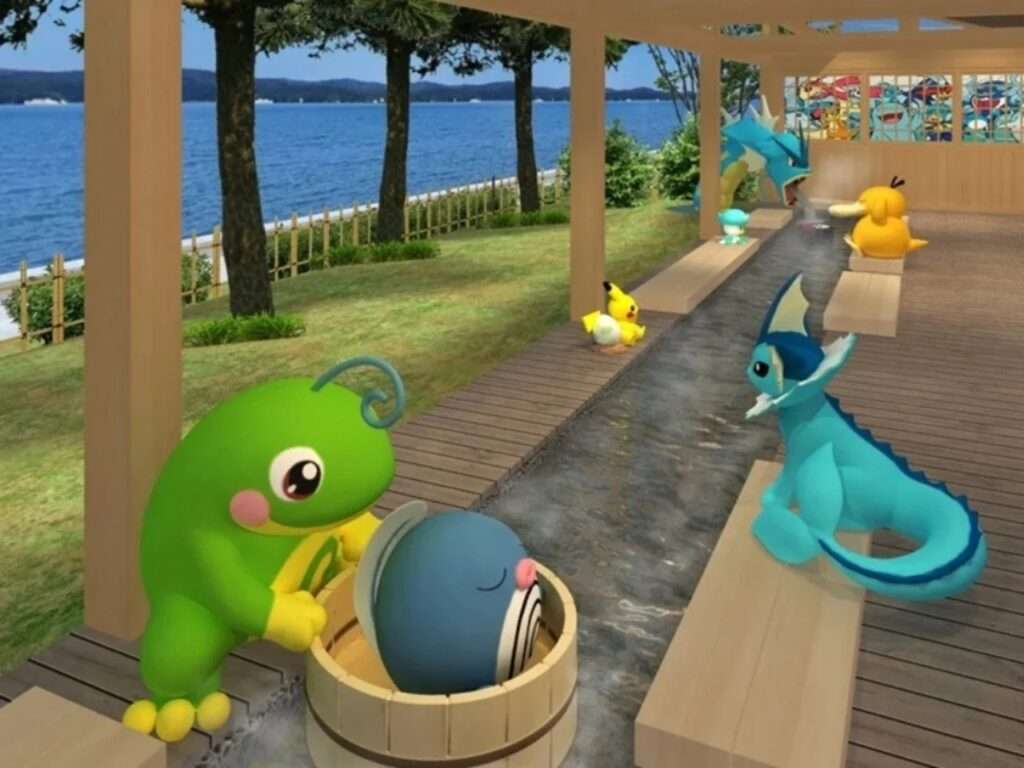
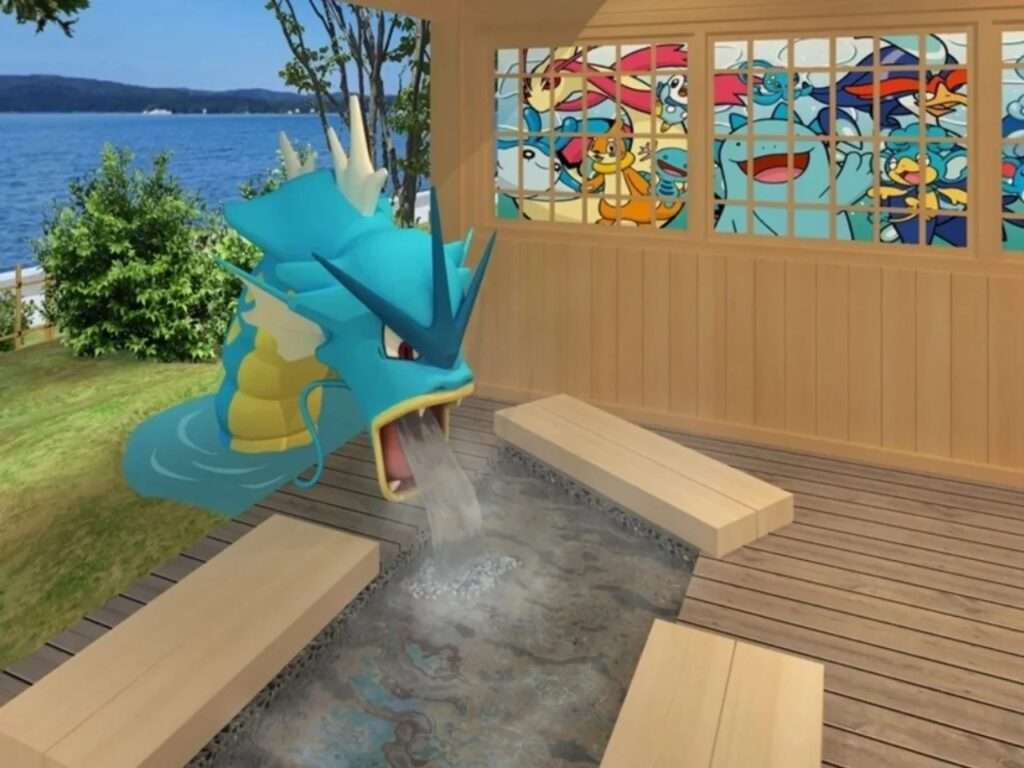
The Design relies on distributing characters inspired by the Pokémon series associated with the water element around a footbath basin. The scene is dominated by a Gyarados sculpture positioned in a way that suggests water being discharged, while other characters such as Psyduck, Vaporeon, Pikachu, Poliwag, Poliwhirl, and Quaxly appear within the surrounding wooden structure. This arrangement connects the function of the water element with the nature of the characters, forming a unified visual composition within the space.
Function and Usage Mechanism
The facility operates as a free public footbath, with daily operating hours extending from morning until evening. However, operation may be affected by weather conditions, reflecting the open-air nature of the space and its dependence on the surrounding environment to determine usability.

Design Reading and Symbolic Integration
From a visual design perspective, the project appears as a cohesive installation rather than separate additions to the space. The character sculptures do not seem attached superficially but are instead integrated through a spatial organization that links them to the function of the footbath. The choice of Gyarados in a central position creates a striking symbolic reading; a creature culturally associated with violence and strong motion is repurposed within a calm water-based relaxation environment, giving the symbol a new function within the Architecture system of the place. The wooden structure also helps unify the different visual elements within a single material framework, reducing any sense of fragmentation or overt promotional character. As a result, the characters are embedded within a more traditional spatial context, making the experience closer to a genuinely functional public space rather than a purely visual display detached from use.
Urban Context and Local Reactivation
The project extends beyond design to become part of an urban context shaped by reconstruction conditions. The Wakura Onsen area in Nanao was affected by the 2024 Noto Peninsula earthquake, which impacted the region’s tourism infrastructure. Within this framework, the footbath was developed through collaboration between the city and the Pokémon With You Foundation, an organization that uses Pokémon symbols in social initiatives aimed at communities affected by crises. In this context, the project functions as an urban support element aimed at reactivating local movement by attracting visitors to public space. Its opening coincided with an official Events attended by children from a local kindergarten, reflecting the integration of direct community use at the moment of launch and reinforcing the project’s social function alongside its design identity.


Re-reading the Design as Functional Transformation
When analyzed from a purely design-oriented perspective, the Gyarados sculpture and the footbath basin appear as a coherent visual composition within public space, where characters are not treated as isolated decorative elements but as part of a unified spatial logic. The reinterpretation of Gyarados within a calm water context reflects a functional transformation of the symbol from one associated with power or turbulence into an element contributing to a collective relaxation experience. In this sense, the design does not merely represent visually but redefines the function of the icon within the architectural environment. This approach aligns with broader discussions found in Research on symbolic adaptation in public realms.
Social Context and Urban Reactivation
The reading of the project shifts further when placed within the context of urban recovery in Wakura Onsen after the 2024 Noto Peninsula earthquake. Here, the intervention becomes part of a process of reactivating public space affected by the loss of tourism activity and infrastructure. The opening event attended by local children adds a layer of meaning tied to the reintroduction of everyday communal use, transforming the project from a visual element into an indicator of the gradual return of public life. Many similar initiatives are documented in the Archive of post-disaster design strategies.
Soft Infrastructure and the Role of Public Space
The project is also connected to a broader system of interventions based on popular symbols, such as Pokémon-themed manhole covers under the Pokéfuta initiative, which redirect attention toward traditionally less-visited areas. Within this framework, the footbath can be understood as part of what might be called soft infrastructure, where elements are not only intended to provide direct functional services but also to create reasons for being in a place and encourage pause and interaction with public space. In this logic, the project’s core value lies in its ability to reconnect people with the site rather than its physical form alone. The use of durable Building Materials ensures longevity and resilience in the coastal environment.

✦ ArchUp Editorial Insight
The Wakura Onsen footbath installation functions as a material outcome of a municipal response embedded within a risk-management framework in a post-disaster tourism economy following the 2024 Noto Peninsula earthquake. The foundational driver is not purely design-oriented, but rather a convergence of declining regional revenues, dependency of the local economy on tourism flows, and administrative pressure to restore economic activity. The institutional mechanism relies on licensed intellectual property through the Pokémon With You Foundation as a low-cost marketing intermediary, reducing the need for conventional campaigns while increasing visitor attraction potential. This strategy is comparable to recent Competition Results that blend social engagement with architectural interventions. Regulatory frictions emerge in the management of public space, insurance responsibilities associated with open water usage, and seasonal operational variability. The project results as a spatial compromise between economic recovery funding and the requirements of sustaining local commercial activity, where patterns of visitor occupation become a metric for economic reactivation, while the architectural role remains subordinate to an institutional coordination logic rather than an autonomous design decision. For professionals seeking similar opportunities, Architectural Jobs in the field of community-focused design are increasingly relevant.