Southern Lookout: Quarry to Viewing Platform

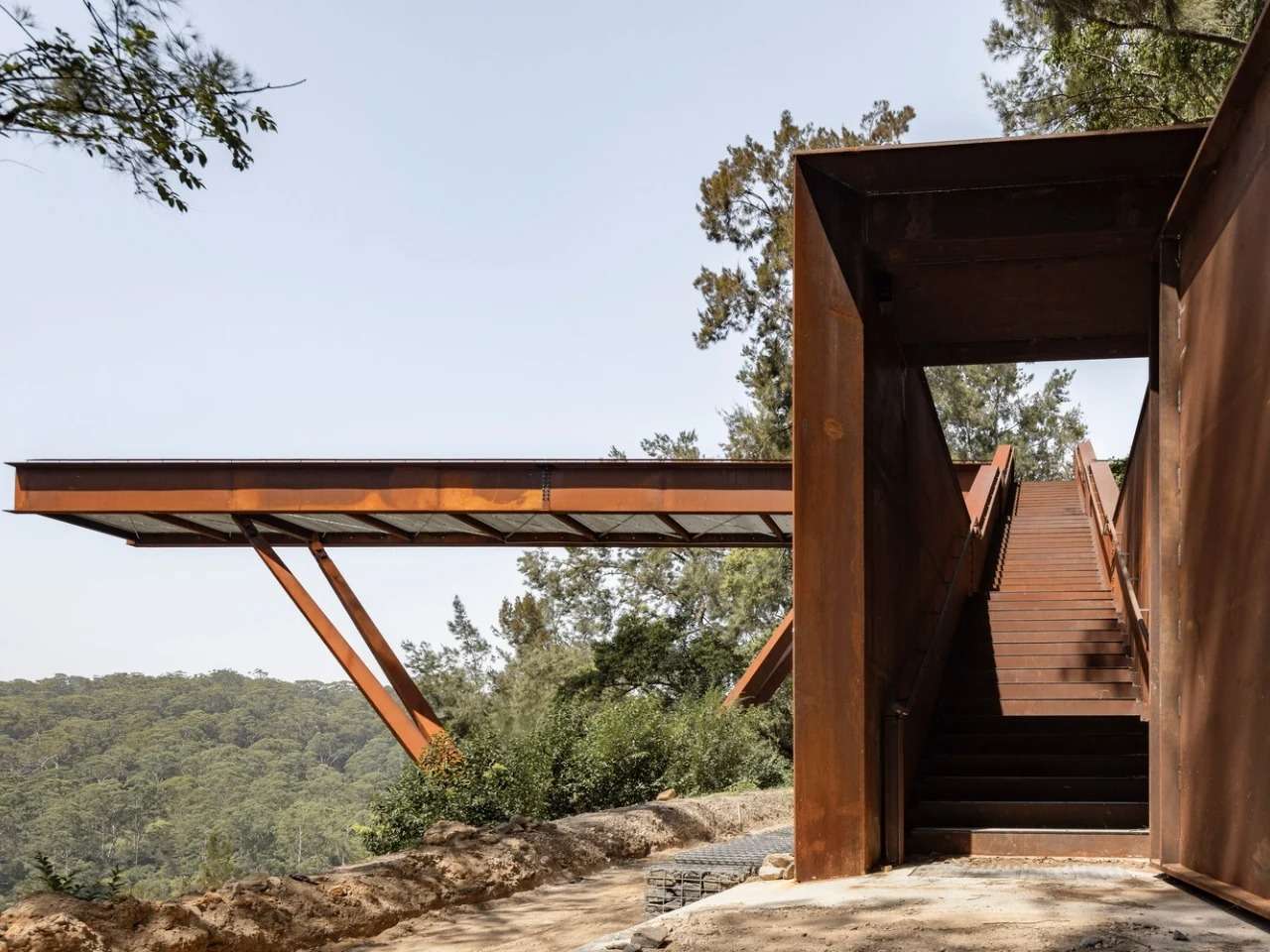
A Platform Suspended Above the Topography of a Former Quarry
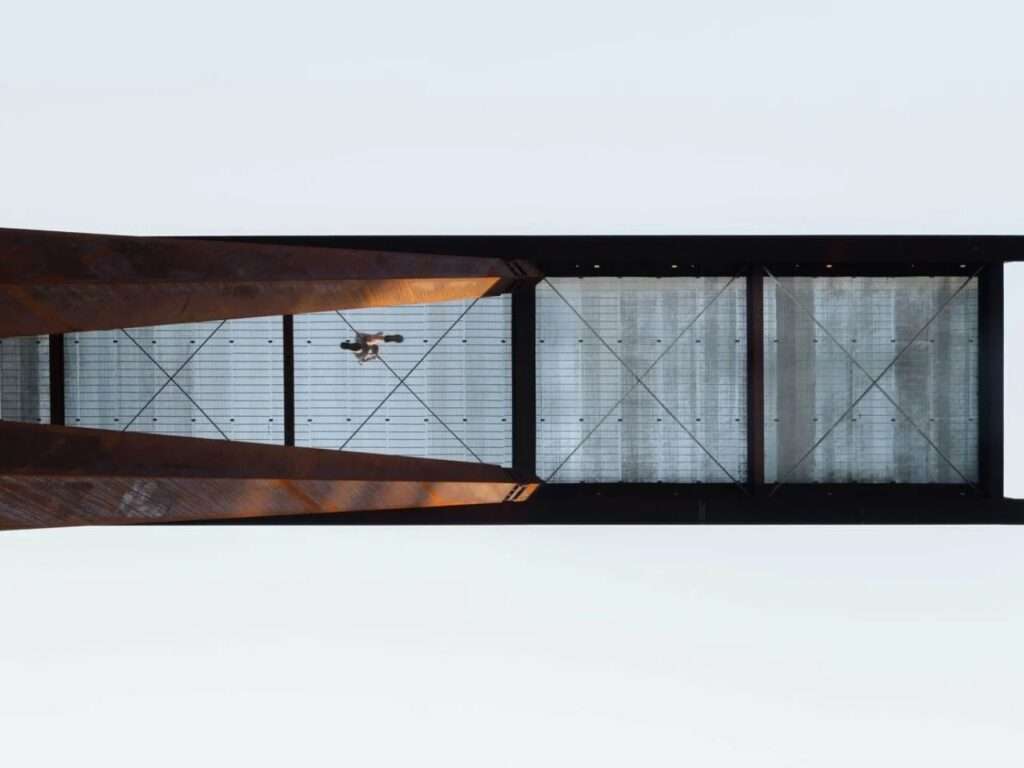
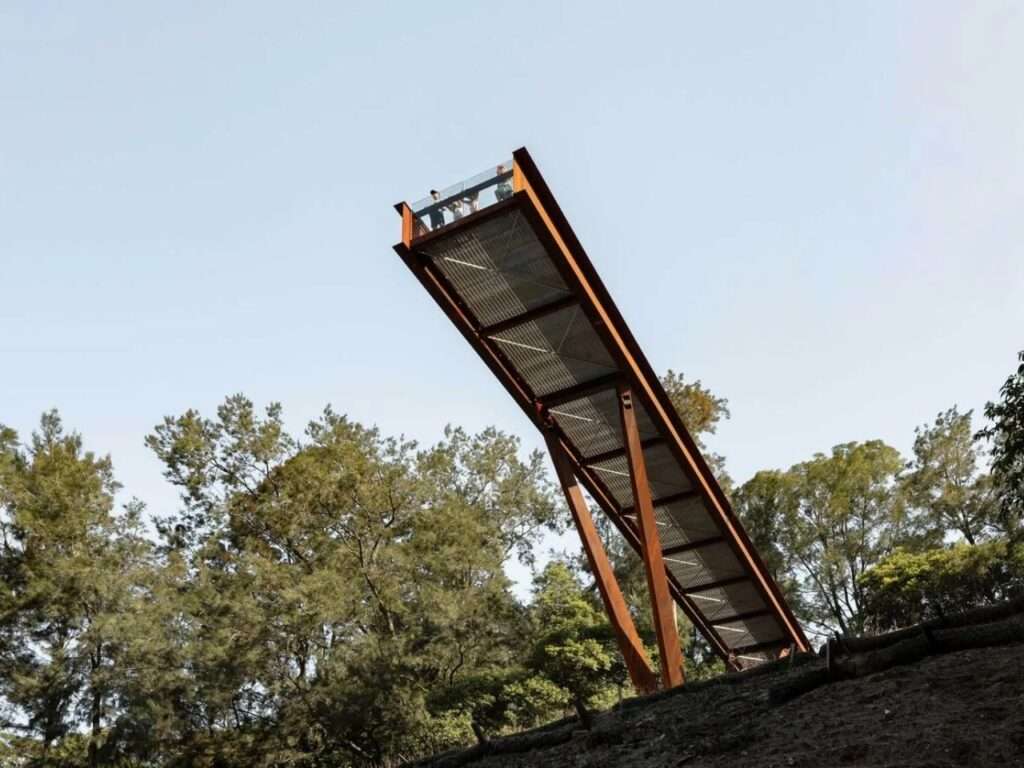
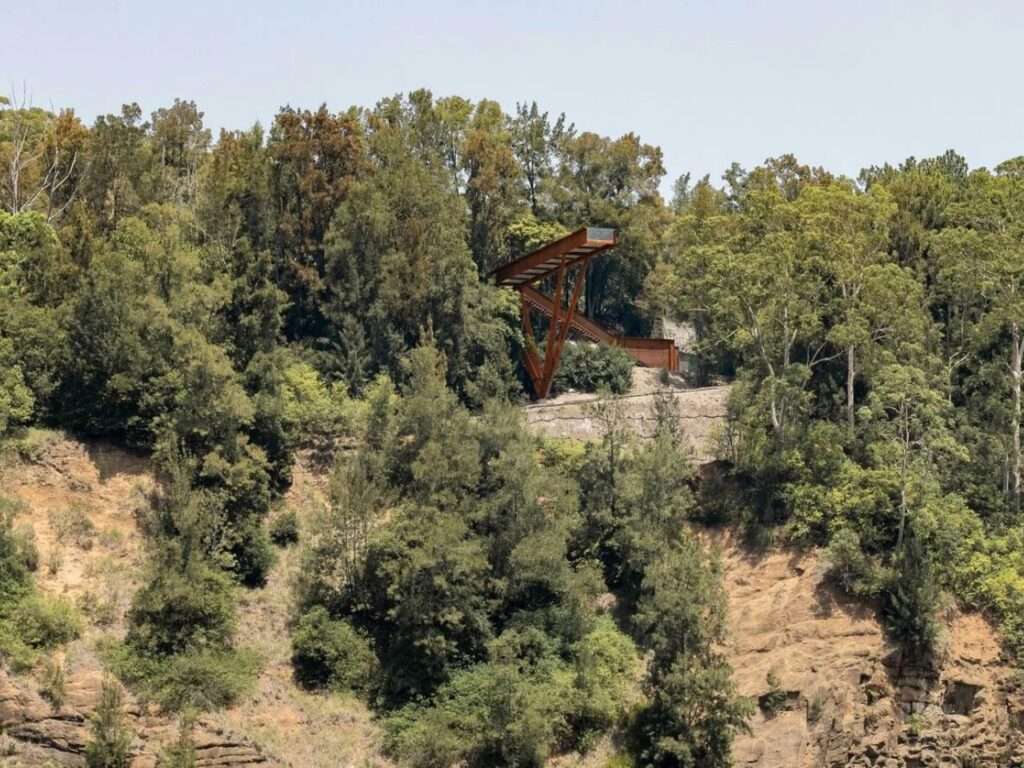
“Southern Lookout” introduces a 42-metre-long platform, made of weathered steel, suspended above a site that was once a rock quarry. The core idea here is not as much about Design as it is about transforming an abandoned industrial void into a public viewing point. In this sense, the structural element becomes part of the site’s reading rather than an external addition.
Reframing the Quarry Within the City
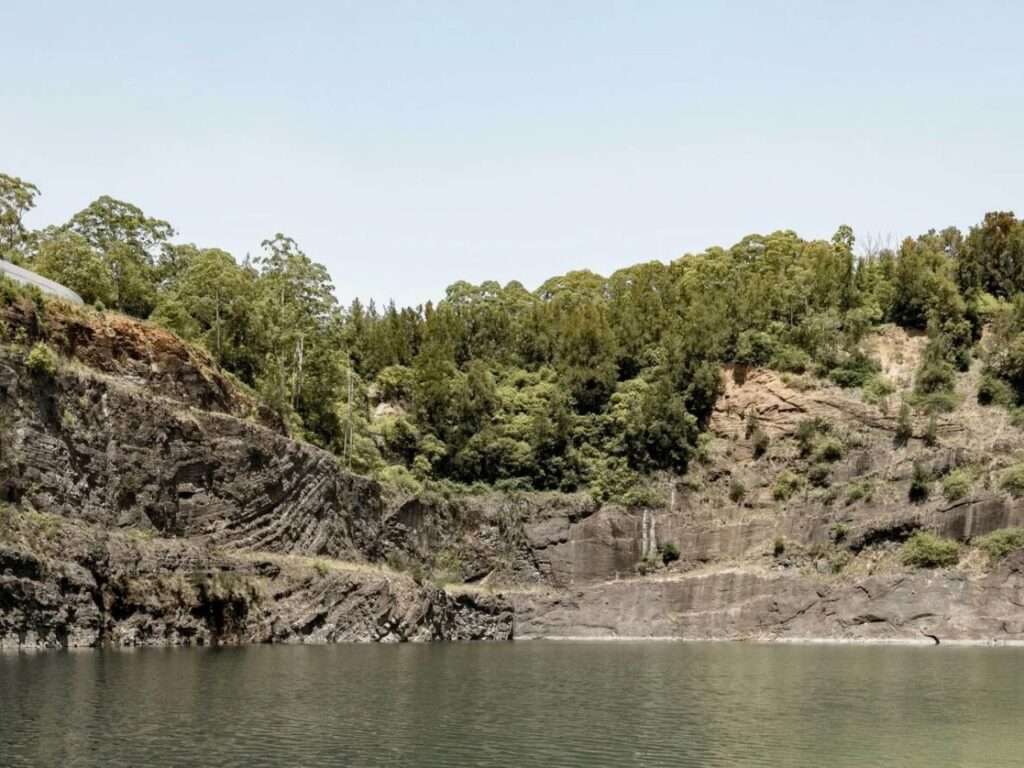
The project is located on the northern edge of Sydney, in a site defined by sharp and striking topography. Historically, the quarry remained closed to the public for over a century, undergoing cycles of extraction and excavation before being left to gradually become a semi-natural landscape. Within this context, the Architecture appears as a transitional phase between past isolation and the opening of the site to public use.
Part of a Broader Urban Transformation Plan
“Southern Lookout” represents the first completed element within a wider development strategy spanning 60 hectares. It can therefore be read as an initial point in the process of reintegrating the site into the city’s broader fabric. This transformation does not present a final solution, but rather opens a gradual trajectory for redefining the relationship between the Cities and the former industrial-natural landscape.
A Material That Treats Time as Part of Design
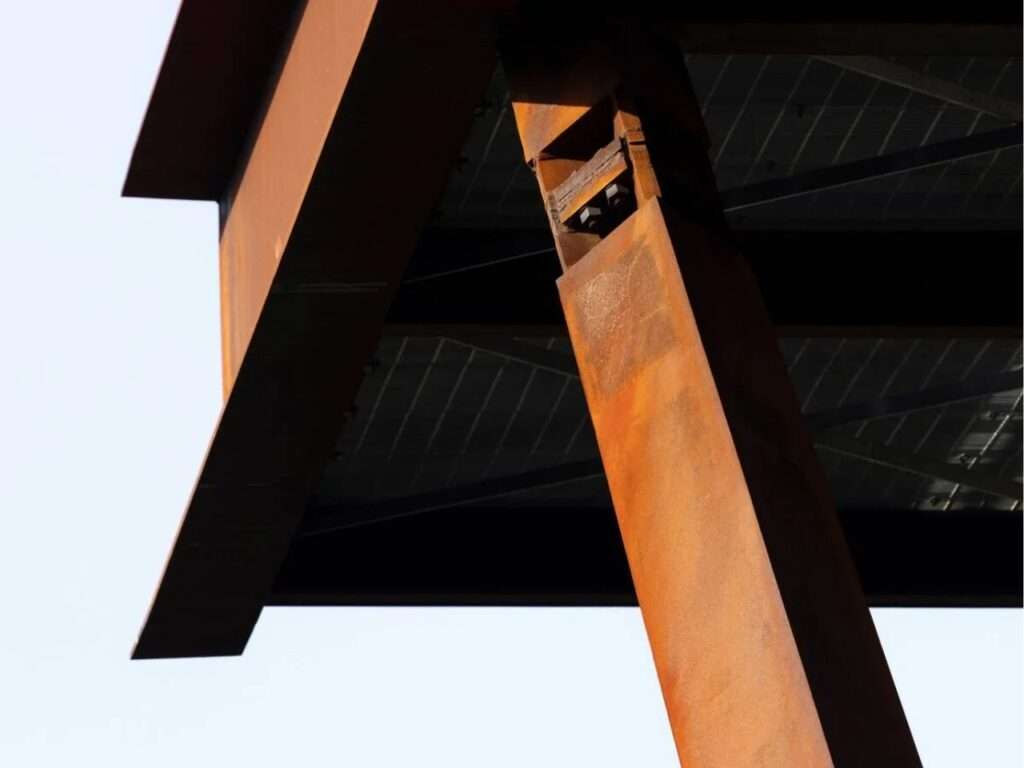
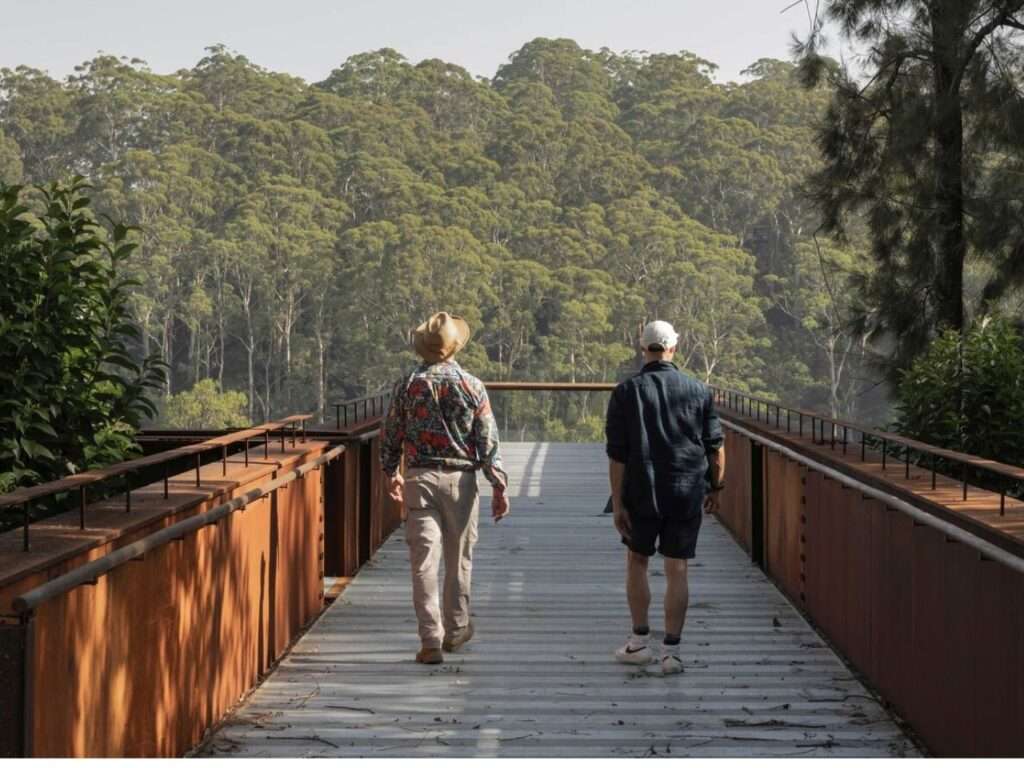
The choice of Corten steel stands out as a key element in interpreting the project. This material is intentionally oxidized to form a stable protective layer over the structure, while revealing a deep brown, amber-like tone. In this sense, corrosion is not treated as a defect, but as a visible temporal process that reflects the material’s change over time, aligning with a site historically defined by erosion and transformation. This approach aligns with contemporary Building Materials strategies.
A Structural Composition Extending Through Vegetation
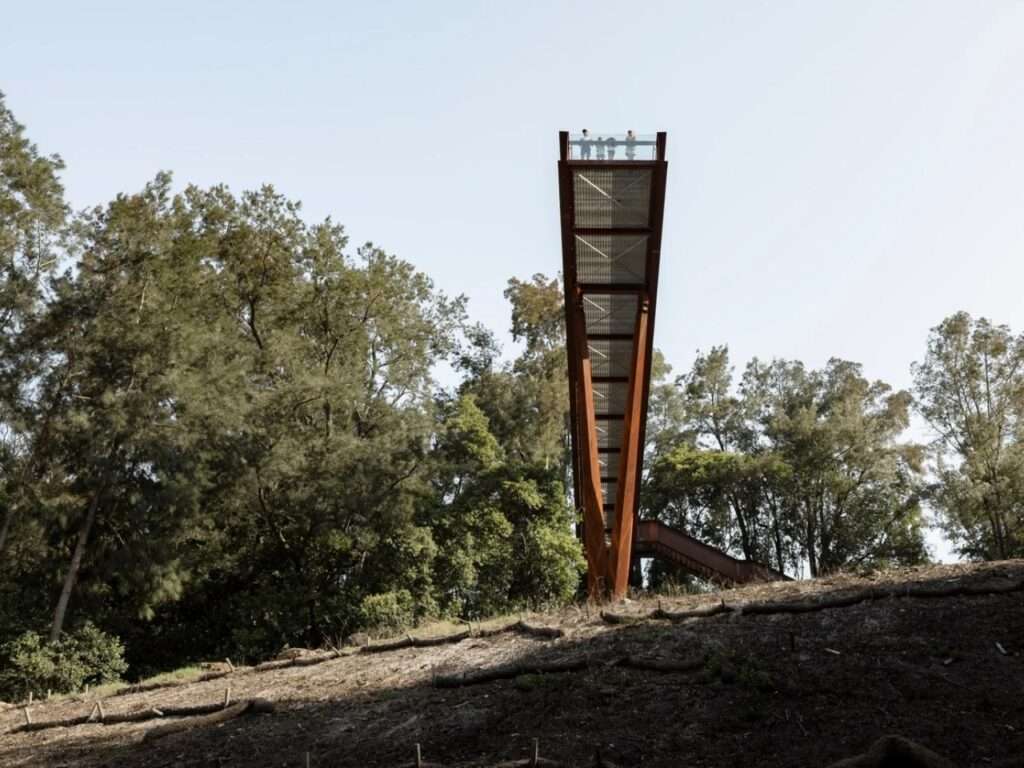
The platform extends 42 metres through the tree canopy, anchored at the edge of the slope and supported by four inclined columns converging at a central base point below. This structural logic reduces the number of Buildings elements to a minimum, aiming to limit direct impact on the soil and sensitive slope, thereby preserving the stability of the natural terrain as much as possible.
A Balance Between Structural Boldness and Reduced Impact
The resulting structure combines structural clarity with a cautious approach to the ground. While the extension appears bold and direct over the topography, its physical footprint remains limited and carefully controlled. This balance between architectural presence and environmental restraint defines the overall character of the composition without requiring additional formal complexity, as explored in various Construction methodologies.
Walking Experience as Part of Spatial Reading
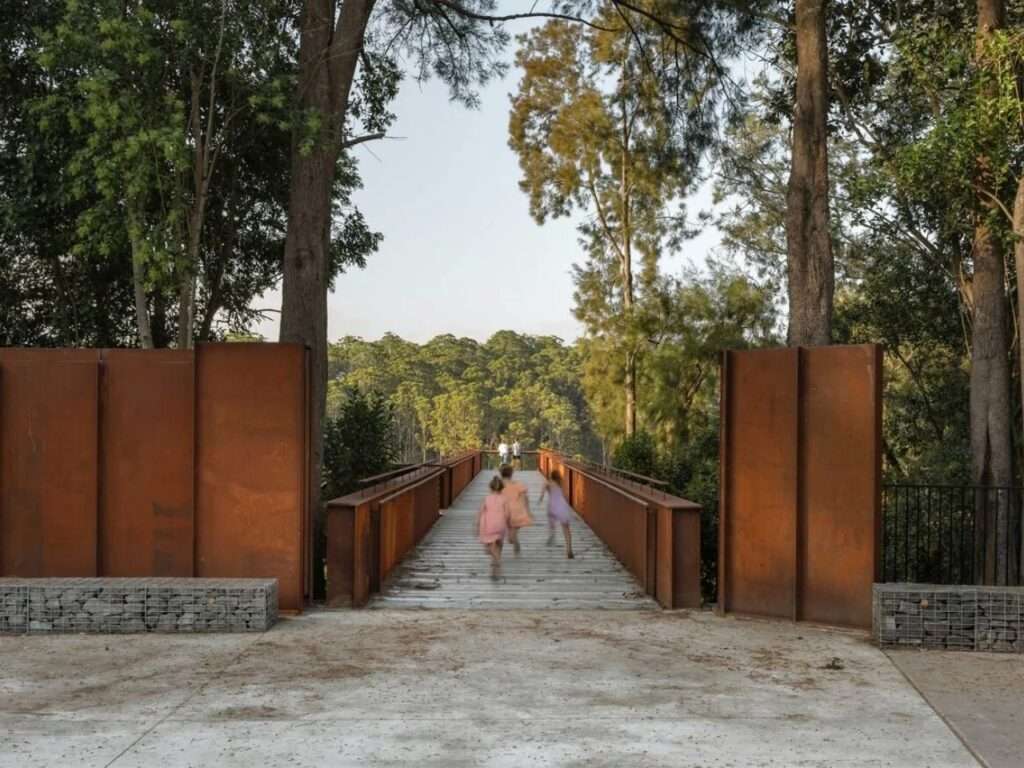
The movement experience on the platform is designed so that observation becomes inseparable from action. The rhythmic sound of footsteps on the metal surface, the shifting viewing angles toward the industrial valley floor, and the gradual change in elevation all contribute to a direct bodily engagement with the site’s topography. In this way, the experience is not limited to passage, but extends into a deeper awareness of place and scale, a key theme in Interior Design when applied to spatial sequences.
Turning Infrastructure Into a Tool of Perception
This type of design redefines the function of public pathways, where they are not merely connections between two points but instruments for reading the site itself. The experience is constructed around confronting emptiness and engaging with it visually and sensorially, rather than passing through it in a neutral or accelerated manner. For similar case studies, refer to the Archive on spatial perception.
A Material Language Rooted in Site Conditions
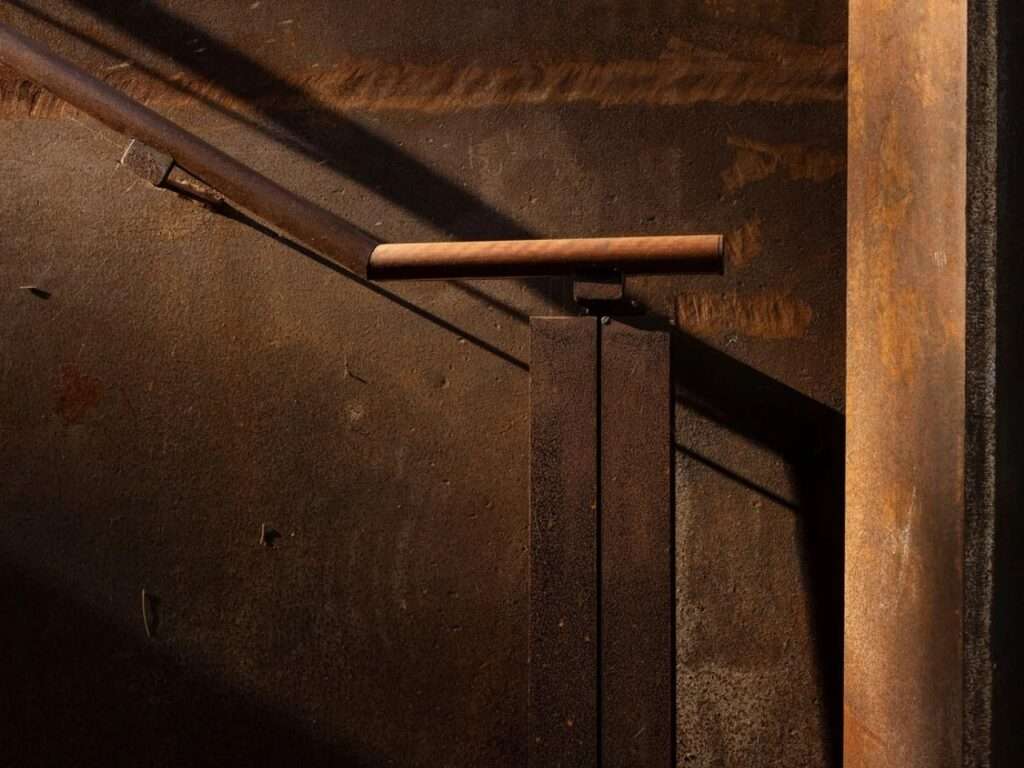
Entry points are defined through steel gates and gabion stone walls, creating a raw structural language directly tied to the quarry’s material character. This choice does not aim to replicate the former industrial form, but to evoke the logic of materials already present in the site. As a result, the project appears as an extension of its context rather than a separate insertion, relying on restraint rather than formal excess. Detailed specifications can be found in Material Datasheets.
A Project Within a Wider Urban Transformation Process
“Southern Lookout” represents the first phase of a plan aimed at transforming Hornsby Quarry into a 60-hectare public park. Urban regeneration Projects of this kind typically progress slowly and with complexity, making this early opening and public accessibility a foundational moment rather than a transitional step in a long process.
A Design Approach Based on Exposure Rather Than Interpretation
Developed in collaboration between AJC Architects and Hornsby Shire Council, the project adopts an approach that avoids explicitly narrating the site’s history. Instead, the architecture provides only the essential experiential elements, elevation, materiality, sound, and view. This approach places the user directly within the site, leaving interpretation open and unmediated. This methodology has been discussed in various Research papers on experiential design.
Reactivating the Relationship Between Humans and Landscape
This form of architectural intervention produces a direct relationship between visitor and place, particularly within Sydney’s dramatic topography, which is often under-perceived or underutilized. Through this project, the former quarry site becomes an active viewing device, redefining how the landscape is perceived rather than merely observed from a distance.
✦ ArchUp Editorial Insight
Southern Lookout in Hornsby Quarry operates as a tool within a municipal program for post-extraction land reuse, where abandoned land is gradually transformed into a 60-hectare public park. The project does not emerge from an autonomous architectural intent as much as it is a direct outcome of urban regeneration policies and long-term liability reduction strategies associated with derelict industrial sites. Points of regulatory friction appear in slope stabilization, environmental protection requirements, and public access provision, all of which imposed a structurally minimal ground-contact system. Phased funding and multi-stage governance further position the platform as an early operational node within a longer process. The result is not a completed architectural object so much as a spatial settlement between risk management and public visibility within an urban framework that redistributes land use rather than producing an isolated architectural icon. Stay updated with the latest Top News on such innovative transformations.