Aedas Architecture Graduate Award 2027

Aedas invites emerging architects to present an existing academic project. For an eligible entrant, the useful question is whether a graduation project can communicate its architectural argument to a professional audience without the studio presentation that originally accompanied it.
Eligibility and submission
Individual entries only: final-year architecture students and 2025–2026 graduates from recognized Saudi universities. Entry is free (USD 0). Submit one project in English: two portrait A0 boards in one PDF, 300 DPI, maximum 200 MB, using the official template, plus a summary of up to 300 words. Entrants must own the material; submitted entries cannot be edited. Aedas may publish and exhibit them.
Dates and awards
| Submission date | 22 December 2026; exact closing time and timezone not stated in the reviewed official materials |
| Shortlist | 12 January 2027 on the website; the PDF says January |
| Ceremony | Riyadh, January 2027 |
| Cash awards, approximate USD | First: 6,666.67; second: 4,000; third: 2,666.67 |
| Additional recognition | Graduate programme for the three winners; two honourable mentions; 50 shortlisted entries exhibited |
Dollar equivalents use 3.75 Saudi riyals per USD; payment remains subject to the organizer’s original currency and conditions. The graduate programme is not described here as a guaranteed employment contract.
Jury and checks
The PDF assigns 25 points each to concept/narrative and spatial resolution, 20 to context, and 15 each to originality and communication. Jurors are described as Aedas leaders and guests; names are still to be announced. A closing-date line at the bottom of the website incorrectly repeats 12 November, the opening date, while the schedule and PDF state 22 December. Confirm the exact cutoff with Aedas; no hour has been assumed.
ArchUp assessment
The strongest submission will make a small number of architectural decisions readable. A clear plan and a well-chosen section can explain circulation, environmental response and spatial hierarchy more convincingly than a wall of renderings. We would begin by identifying the one question the project answers, then select drawings that show how the design follows from that question.
Editing matters because a graduation project often contains several layers of research accumulated over a long semester. The entry should preserve the evidence behind the design while removing material that no longer advances the argument. A diagram should earn its space by clarifying a decision; repeating the same shape in several graphic styles adds little.
Context should be demonstrated through consequences. If privacy, climate or collective life is central to the thesis, show how it changes entrances, thresholds, shading or the relationship between rooms. Avoid treating a cultural reference as proof of contextual performance. A reader should be able to trace the claim to a spatial choice.
The professional value of the opportunity will depend partly on what follows the exhibition. Entrants considering the programme should ask about duration, location, supervision and any practical conditions. These are questions to resolve with the organizer, not benefits we can infer from the word training.
Our reading is that this is a useful presentation exercise for eligible graduates who already have a coherent project. The work should be strengthened through precise editing and honest explanation of its limits. A speculative environmental or structural proposal should remain identified as speculative unless the supporting analysis has actually been completed.
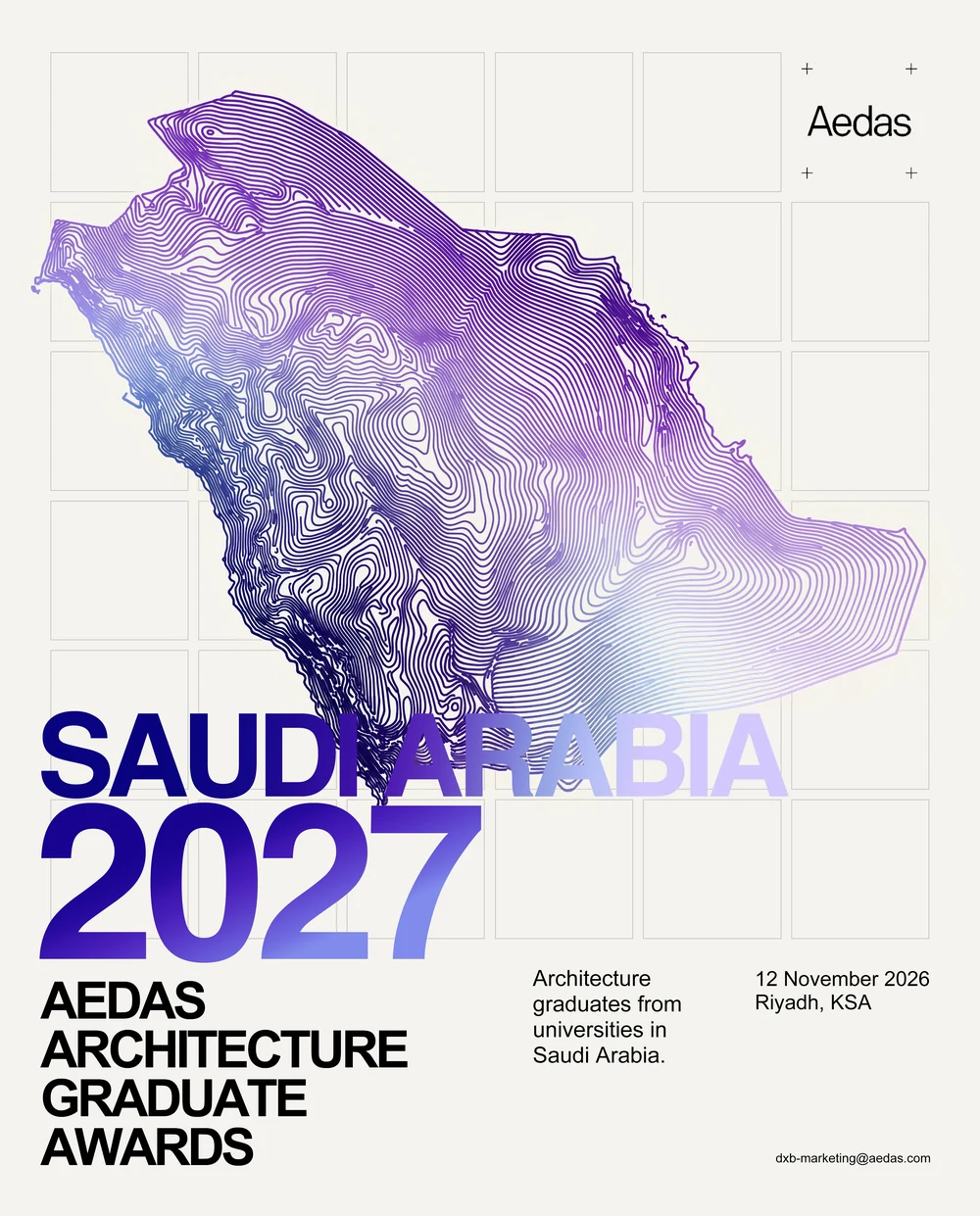
Reviewed 22 November 2026. Sources: official brief; entry rules; currency conversion basis. Featured poster: Aedas.
Countdown to the announced date — indicative
This timer runs to the start of 22 December in UTC for orientation only. It is not an official closing-time countdown: Aedas has not specified the hour or timezone. Submit early and confirm the cutoff.