A More Efficient Air Conditioner Is Not Less Cooling

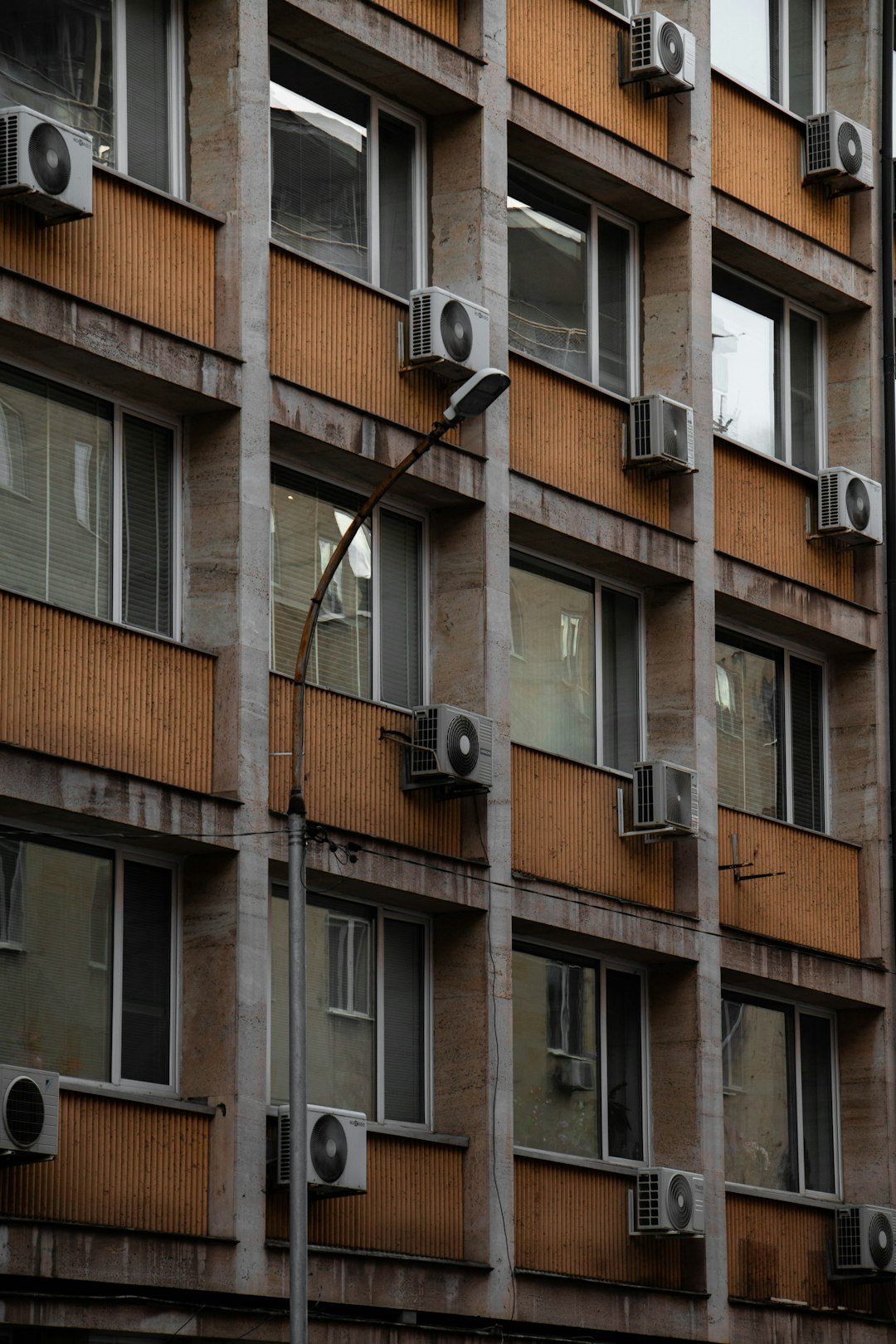
A more efficient air conditioner lowers the cost of staying cool — and cheaper cooling invites more of it: cooler setpoints, more rooms, more hours of the day. Whether that cancels the saving is one of the oldest and least settled questions in energy, and it lands squarely on how we design buildings for hot cities.
In 1865, the economist William Stanley Jevons noticed something counter-intuitive about coal. More efficient steam engines did not reduce Britain’s coal consumption; they increased it, because cheaper, more useful power expanded the demand for it. He was emphatic on the point: it is a confusion of ideas, he wrote, to suppose that economical use of fuel means reduced consumption — the very contrary is the truth. A century and a half later, the same question hangs over the machine that defines life in hot climates: does a more efficient air conditioner use less energy, or does it quietly make cooling cheap enough that we buy a great deal more of it?
The mechanism, in cooling terms
Economists call it the rebound effect, and in cooling it has several channels. The direct rebound is behavioural: when running the air conditioner costs less per hour, people set it a degree colder, cool rooms they used to leave warm, and run it for more of the day. The indirect rebound is budgetary: money not spent on the electricity bill is spent on something else that also uses energy. And the largest channel in a hot, developing region is not rebound in the strict sense at all but adoption — as cooling becomes cheaper and incomes rise, households that never had air conditioning acquire it. Davis and Gertler, in a widely cited 2015 study, showed that air-conditioning adoption climbs steeply with income and with heat, and that the combination points to very large future growth in cooling energy across hot parts of the world.
When all these channels run in the same direction, the efficiency gain in a single unit can be swamped by the growth in how much cooling the society as a whole consumes. At its extreme, this is called backfire: efficiency that ends in more total energy use, exactly as Jevons claimed for coal.
What the evidence actually supports
Here the honest answer is that the size of the effect is disputed, and the dispute matters more than either slogan. The cautionary case is often told through a striking pair of numbers: between 1993 and 2005, room air conditioners in the United States became roughly 28 per cent more efficient, yet the energy an average air-conditioned household used for cooling rose by about 37 per cent over a similar period. Taken alone, that looks like backfire. But most economists who have examined it argue the comparison conflates true rebound with wealth and adoption effects — bigger houses, more rooms cooled, more households cooling at all — which are not the same thing as people using more cooling simply because it got efficient. Careful estimates of the direct rebound for space conditioning tend to land well below full cancellation, often in the range of ten to thirty per cent of the expected saving, with economy-wide backfire regarded as unlikely in the literature reviewed by Gillingham and colleagues. The defensible summary: rebound is real and not trivial; backfire is rare and contested; and the exact magnitude is local, depending on incomes, climate, prices, and how much cooling a population has yet to adopt.
Why this is an architectural question, not only a thermostat one
The reason rebound belongs to architects is that buildings decide how much cooling is needed before any machine is switched on. Cheaper, more efficient cooling quietly licenses design choices that raise the cooling load: the deeper floor plate that cannot be daylit or cross-ventilated, the fully glazed facade that would be unbearable without mechanical cooling, the extra conditioned hours and spaces that the lower running cost makes affordable. Efficiency at the unit, uncoupled from the building, can expand the very envelope it was meant to shrink. This is the counterpart to the argument that desert architecture makes: the cheapest cooling is the load the building never creates, through orientation, mass, shading, and ventilation. Passive design does not rebound, because it lowers the demand itself rather than the price of meeting it.
The design response follows. Pair every efficiency gain with passive measures that cap the load, so there is less demand for rebound to expand into. Design for comfort at higher setpoints — adaptive comfort, air movement, radiant strategies — so the efficient machine is asked to do less, not licensed to do more. And measure the outcome at the level that matters: whole-building and, ultimately, whole-grid demand, not the efficiency rating on the box. As an earlier ArchUp piece insisted, the energy model is not the building; a coefficient of performance on a datasheet is not a kilowatt-hour on a meter in August.
Limits
The rebound literature is unsettled by design: estimates vary with method, scope, and whether direct, indirect, or economy-wide effects are counted, and reasonable economists disagree about magnitudes. Most of the strongest data comes from the United States and Europe, where cooling is already widespread; the dynamics in the Gulf and other rapidly cooling regions, where adoption and wealth effects dominate, are under-measured and may behave differently. Nothing here argues against efficiency, which remains necessary. The argument is narrower and firmer: efficiency alone is not a safe proxy for lower energy use, and in a region electrifying cooling at scale, the assumption that a better machine means a lighter grid should be tested, not presumed.
✦ ArchUp Editorial Insight
Efficiency is necessary and not sufficient, and treating it as sufficient is how a region can spend a decade improving its air conditioners while its total cooling demand climbs. The lever that actually governs demand is not the thermostat or the datasheet; it is how much cooling the building makes unavoidable, and that is an architectural and regulatory choice made long before the unit is specified. A policy that rewards efficient machines while permitting buildings that could not function without them is optimising the wrong variable. The test for the Gulf’s building boom is not how efficient its cooling becomes, but whether total cooling demand can be bent downward while comfort is held — and that is decided in the plan, the section, and the facade, not in the compressor.
References
- Jevons, W. S. (1865). The Coal Question: An Inquiry Concerning the Progress of the Nation, and the Probable Exhaustion of Our Coal-Mines. London: Macmillan.
- Sorrell, S. (2009). Jevons’ Paradox revisited: The evidence for backfire from improved energy efficiency. Energy Policy, 37(4), 1456–1469. doi:10.1016/j.enpol.2008.12.003
- Gillingham, K., Rapson, D., & Wagner, G. (2016). The rebound effect and energy efficiency policy. Review of Environmental Economics and Policy, 10(1), 68–88. doi:10.1093/reep/rev017
- Davis, L. W., & Gertler, P. J. (2015). Contribution of air conditioning adoption to future energy use under global warming. Proceedings of the National Academy of Sciences, 112(19), 5962–5967. doi:10.1073/pnas.1423558112
- Owen, D. (2010, December 20 & 27). The efficiency dilemma. The New Yorker.