AlUla Manara: Redefining Desert Space and Sky Relationship

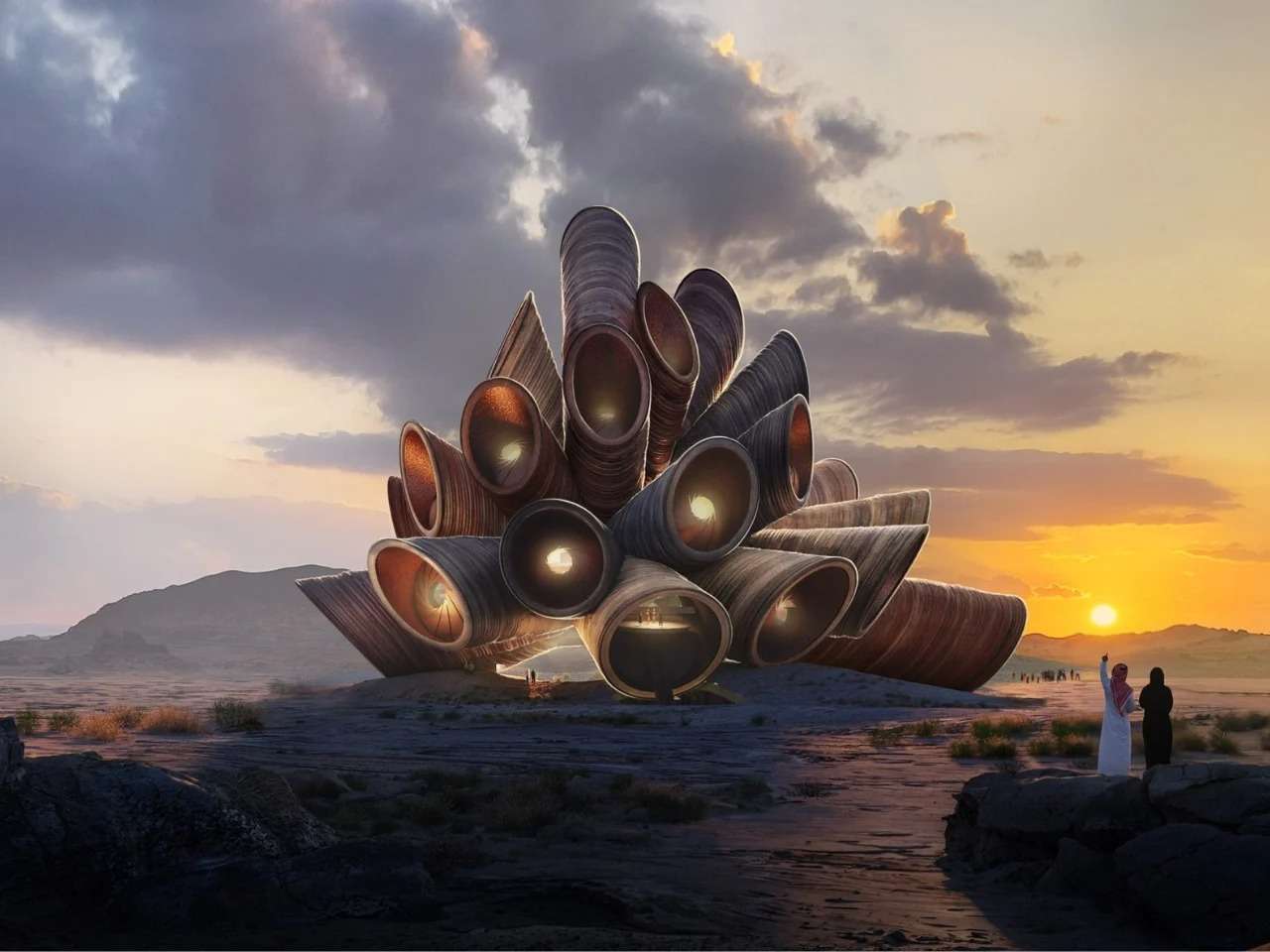
Spatial Experience and the Passage Toward the Cosmos
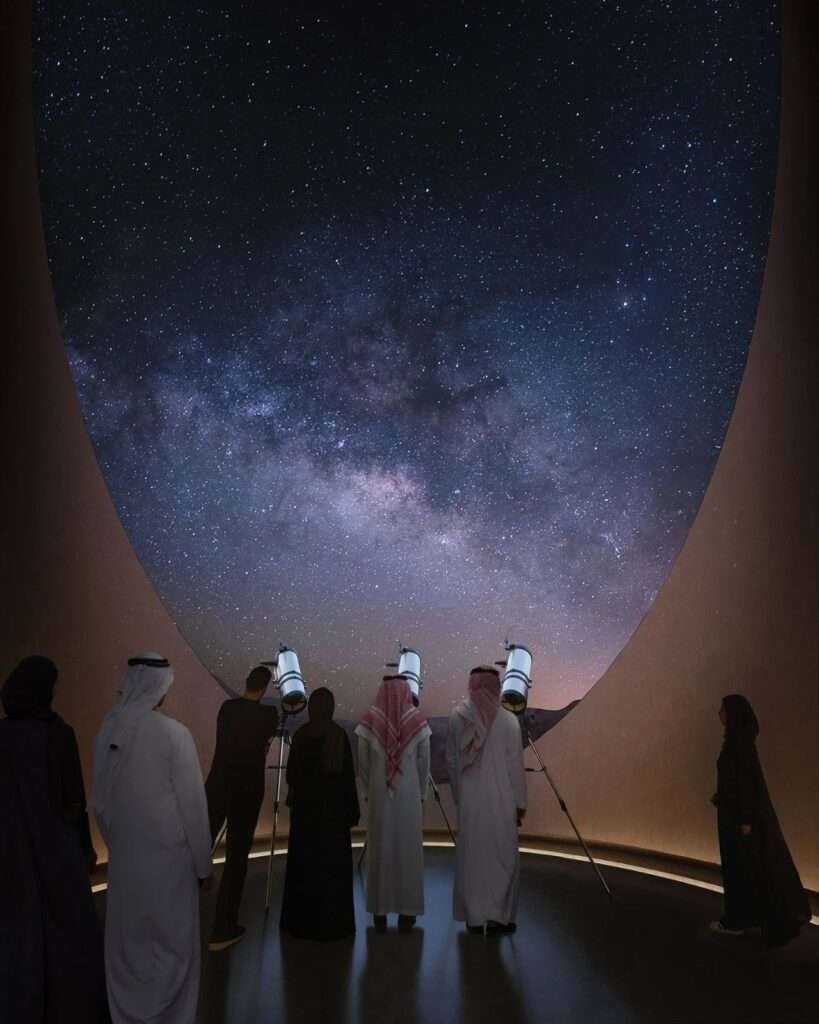
Here, architectural void transforms from a merely enclosed functional structure into a dynamic gateway that connects the user directly to the sky. The scenographic journey begins at the moment of approach within the open desert expanse, where the building is stripped of the conventional templates of cold observatories and becomes a natural extension of the earth. The design of circulation paths and transitions within the space drives the visitor into an ascending visual experience, smoothly shifting from the containment of solid terrestrial masses to a complete openness toward the infinite horizon, thereby stimulating a sense of human discovery in the face of the universe’s vastness.
Material Language and Living Interaction
The language of design gains its depth through the stone-clad appearance, which reinforces the building’s material and scenographic presence within its rocky environment. Solid masses intersect with natural light to produce shifting shadows that evolve throughout the day, following the sun’s trajectory across the desert horizon. This living interaction is not limited to visual perception but extends to the visitor’s psychological experience of space; stone materials provide a sense of stability and permanence, while the volumetric formations open pathways for air and light movement, embodying the concept of the “beacon” as a visual and spatial guiding tower oriented vertically toward the sky.
Environmental Impact and the Dark Sky Context
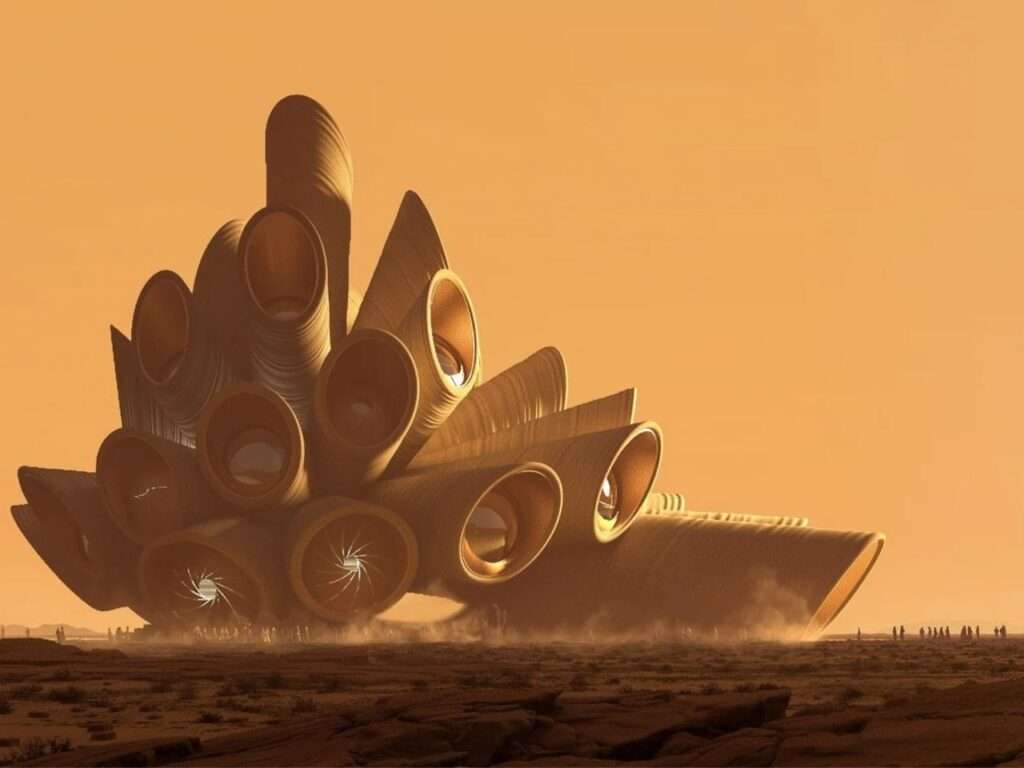
The spatial experience derives its value from the site’s geographical isolation, where near-zero light pollution becomes an intangible design element shaping the identity of the space. The project is located in a transitional zone between the geological formations of the Harrat Uwayrid Reserve and the Gharameel area, benefiting from its designation as a “Dark Sky Park” to reframe humanity’s relationship with the horizon. Here, architecture does not isolate the user from their surroundings; rather, it employs vast open spaces and profound darkness as a living scenographic backdrop that revives the region’s astronomical heritage and fosters a conscious contemplative experience based on visual abstraction and full immersion in the night sky.
Mass Deconstruction and Organic Form-Making
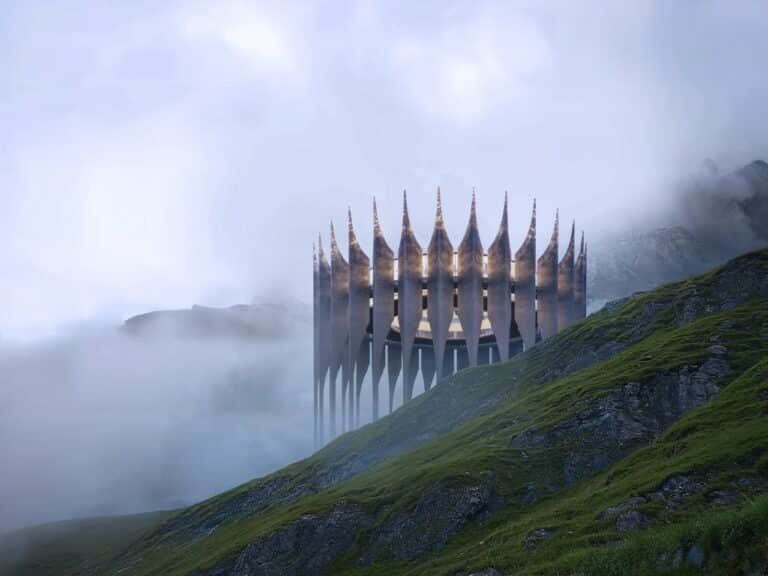
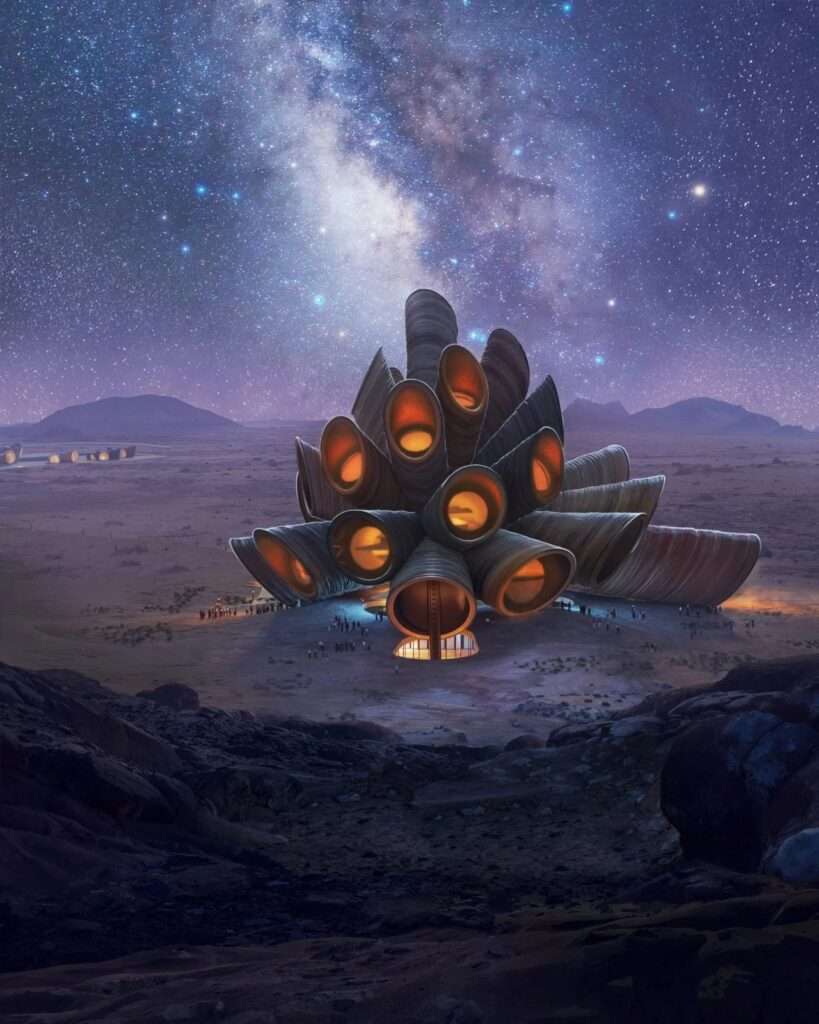
The architectural structure departs from solid masses, transforming into a set of dynamically upward-oriented tubular forms, resembling massive stone apertures that emulate the function of telescopes. These geometries derive their critical language from the organic spiral patterns found in galaxies and planetary rings, as well as shells and fossils, creating a balance between cosmic scale and terrestrial natural scale. The design deconstructs the notion of abstract imitation by integrating these spiral lines into the core of spatial movement. The textured stone gives material and emotional weight to the volumes, while the upper openings act as visual and psychological guides directing the flow of light, shadow, and air, transporting the user into a living scenographic experience that dissolves the boundaries between architecture and the cosmos.
Facade Materiality and Contextual Balance
The external scenography of the building operates through a precise visual dialectic between belonging and distinction. The design abandons cold contemporary materials such as glass and steel in favor of a cladding of locally sourced stone extracted from the surrounding environment. This materiality captures the dramatic tonal gradients of AlUla’s ancient sandy terrain without falling into literal imitation or superficial mimicry. It grants the mass a tangible weight that makes it feel rooted in its earthly context, while the geometric lines maintain their architectural autonomy; the building belongs to the land but does not dissolve into it, creating a balance that enriches the conscious visual experience of the passerby within the desert space.
Functional Deconstruction and Spatial Fluidity
The interior space is reconfigured to break the stereotypical image of astronomical observatories as isolated and sterile technical facilities, transforming it into an interactive human-centered environment aimed at integrating the public into the wonder of the cosmos. The spatial experience unfolds through a gradual transition between educational exhibitions and the planetarium, culminating in an open rooftop observation platform. These spaces intersect to dissolve psychological and physical barriers between the visitor and the astronomical phenomenon. The design language guides the movement of light, shadow, and air through openings, allowing the user to experience a passage from internal terrestrial containment to a full scenographic openness toward the infinite horizon.
Democracy of Space and the Human Dimension
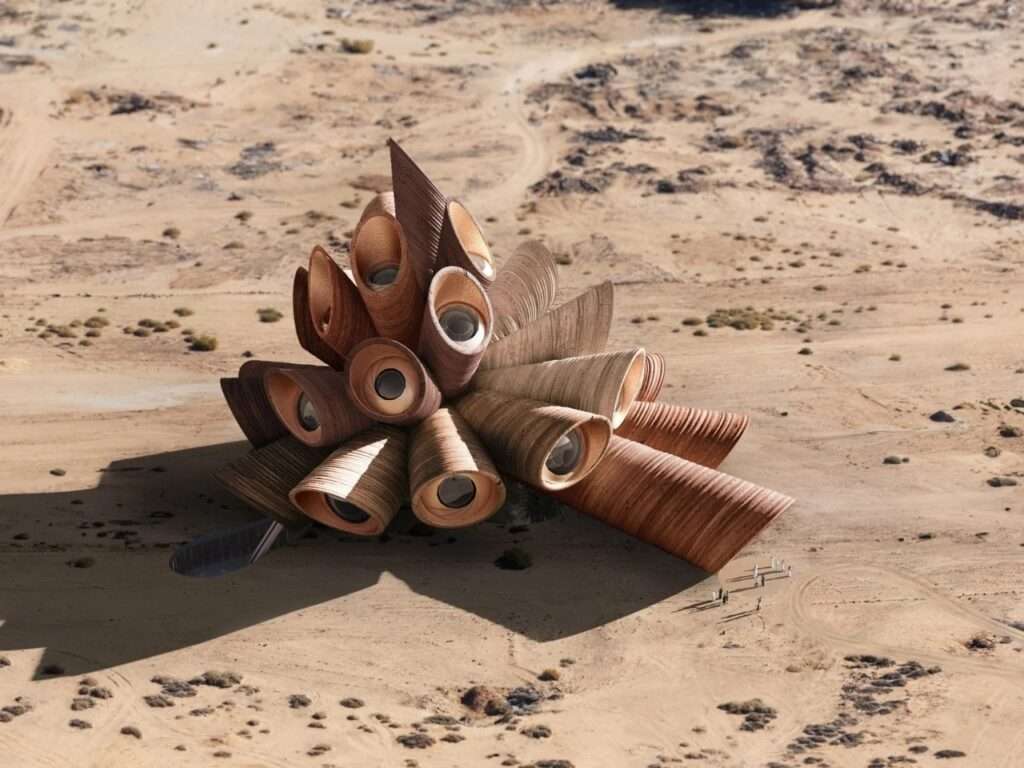
In this section, architecture shifts from an elitist functional structure reserved for scientists into an open public realm accessible to all, thereby reconfiguring the concept of “democratization of scientific knowledge” through a comprehensive scenographic experience. The visitor’s movement within the building transcends superficial visual tourism to engage emotional and psychological dimensions, as internal and external circulation paths establish a kinetic sequence that guides users toward open observation platforms. This transitional moment places the human being in direct confrontation with the vastness of the horizon, stimulating a collective sense of awe and wonder before the cosmos, making architecture a living mediator that integrates the individual into the depth of the astronomical phenomenon rather than merely observing it from a distance.
Cultural Context and Volumetric Balance
The maturity of the design language is revealed in the ability of the volumes to achieve a precise balance between function and architectural sculptural expression, moving beyond pure visual spectacle to serve the cultural dimension associated with Vision 2030. The architecture here does not rely on loud formal exaggeration to attract attention; instead, it invests in the stillness of the surrounding desert space and its silence as a complementary spatial element. Shadows intersect with stone forms to direct movement and visual perception vertically toward the sky, altering the user’s perception of place and time. Thus, the building transcends being a mere physical container for activities and becomes a dynamic component interacting with human experience, reshaping the relationship between the body, external space, and the desert environment.
✦ ArchUp Editorial Insight
The AlUla Manara proposal redefines astrotourism from an isolated, elite scientific practice into a democratic cultural spectacle. Through the use of locally sourced building materials expressed in organic tubular geometries, the design attempts to embed the foundations of global soft-power initiatives within an authentic geological context, transforming the traditional observatory into an accessible spatial monument that merges public education with full immersion in nature.
However, this romanticized democracy overlooks the investment realities of state-driven tourism. Behind this poetic sculptural design, the project fundamentally operates as an exclusive destination asset rather than a genuinely open civic space. By stripping the observatory of its specialized technical functionality in favor of a curated visual experience, the architecture risks becoming a highly photogenic regional promotional tool, concealing beneath its universal cosmic appeal a tangible layer of social and economic exclusivity.