Vertical Programmatic Complexity in Hangzhou Prism

Morphological Composition and Spatial Porosity
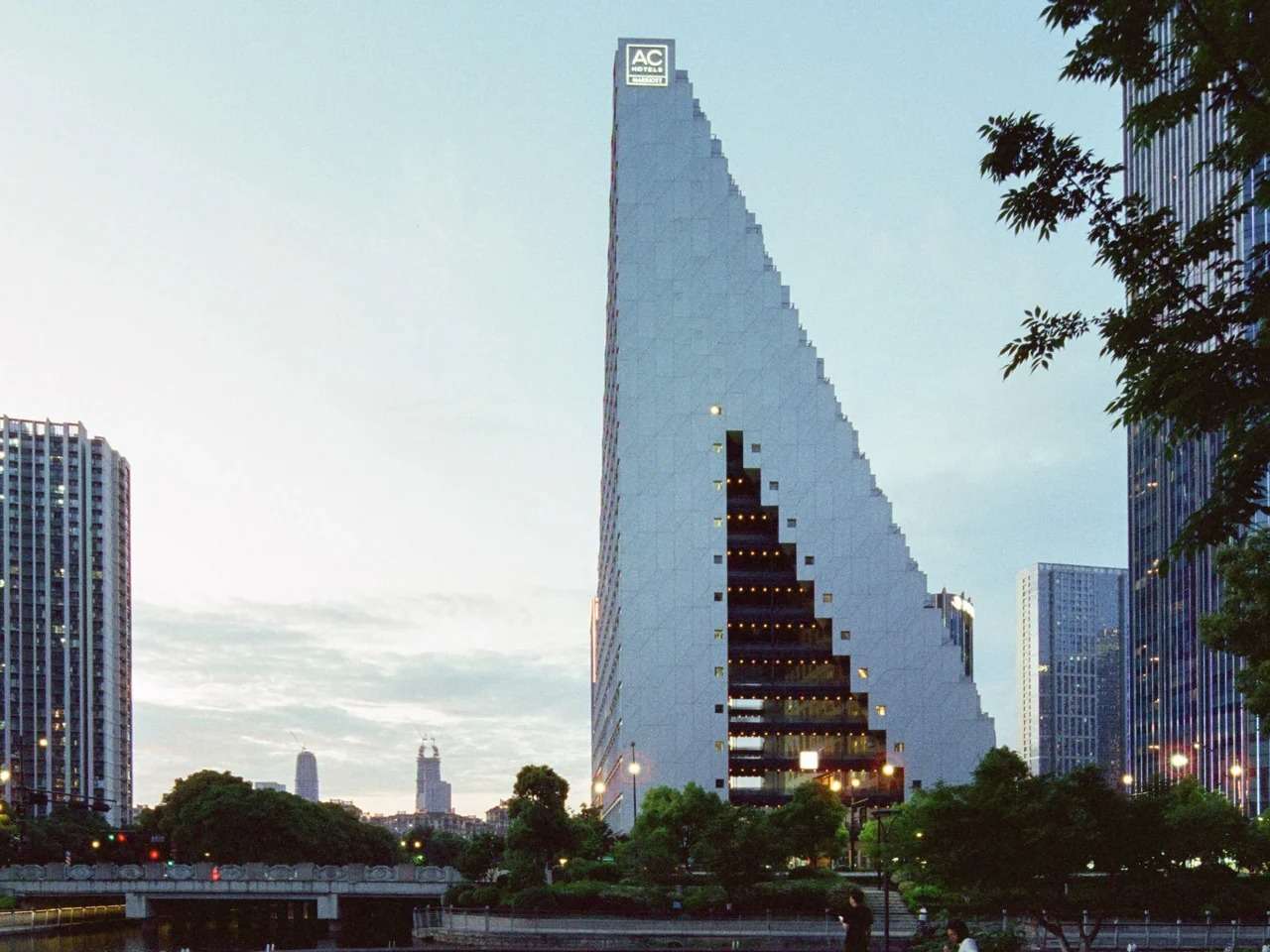
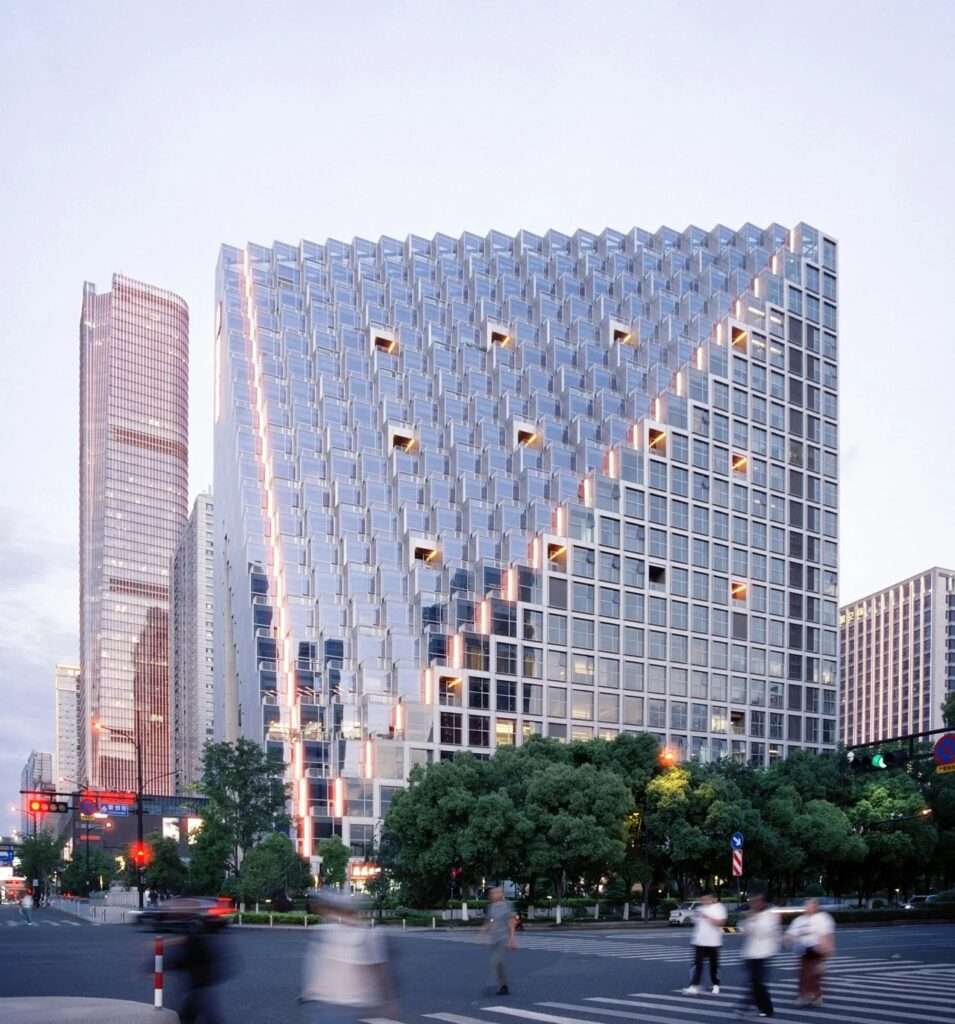
The Hangzhou Prism building challenges the conventional typology of residential and commercial towers, moving beyond the classical logic of vertical stacking toward the formulation of a unified and porous geometric structure. The design is based on the deconstruction of the solid mass to create permeable voids that enable visual and spatial connectivity, transforming the building from a mere functional container into an integrated urban environment resembling a three-dimensional vertical village. This inclined pyramidal articulation reduces the visual impact of the 106.5-meter height while establishing a balanced relationship between private spaces allocated for young professionals and open public areas accessible to visitors.
Scenographic Experience and Light Movement
The human experience within the space is founded on the dynamic interaction between natural light and inclined masses, where shadows shift across surfaces throughout the day following the sun’s path. As users move through the building, the engineered voids and apertures create a seamless transition between exterior and interior environments, while volumetric fractures guide natural airflow through the porous spaces. This material articulation is not limited to aesthetic concerns; it aims to deepen the psychological and physical impact on users by generating evolving visual pathways that enrich the daily spatial experience.
Angular Formation and Surface Kinetics
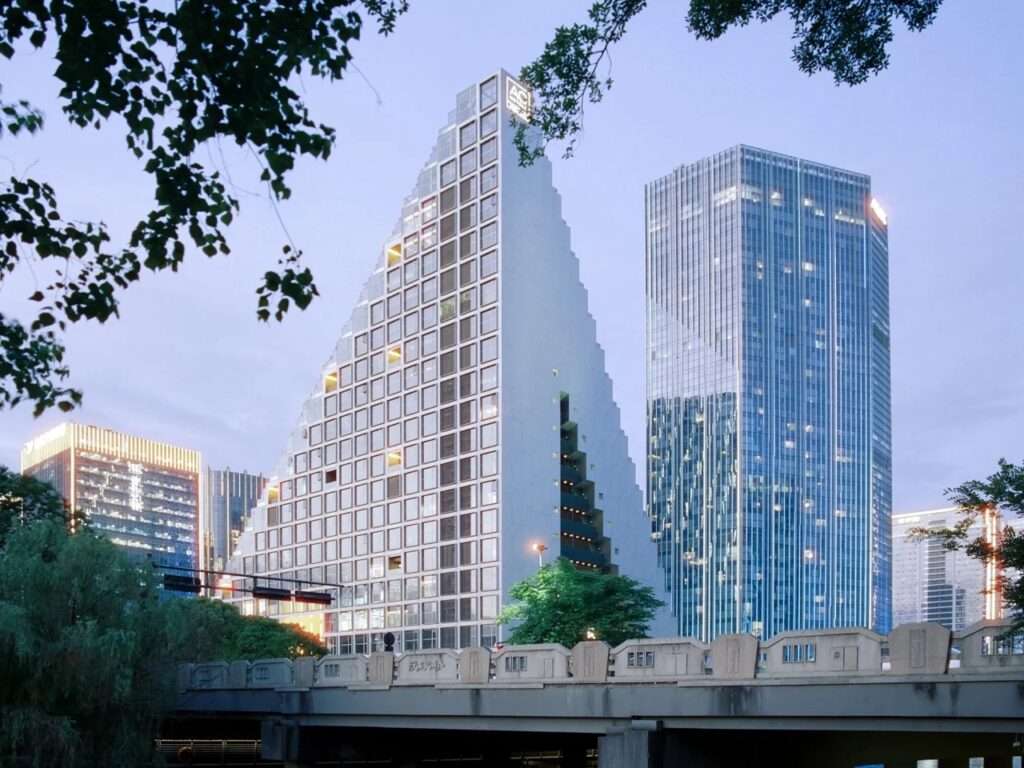
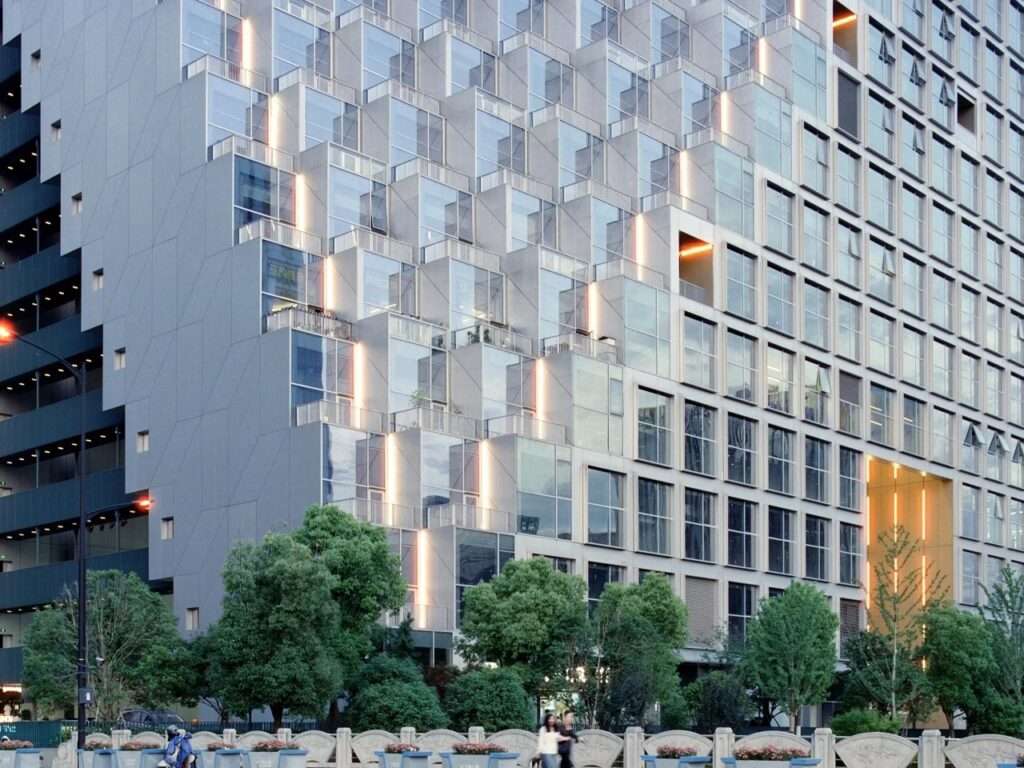
The external facades are shaped through two radical inclined cuts that penetrate the building envelope, producing an asymmetrical angular geometry that disrupts the rigidity of solid masses. This volumetric articulation enables the emergence of staggered terraces that offer extended panoramic views of the urban horizon, complemented by protruding cubic balconies that add tangible depth and a shifting shadow texture. This visual strategy transcends the static notion of architectural mass, presenting the building as a continuously transforming entity whose visual and scenographic identity changes according to the viewer’s perspective and movement around the space.
Base Void and Urban Connectivity
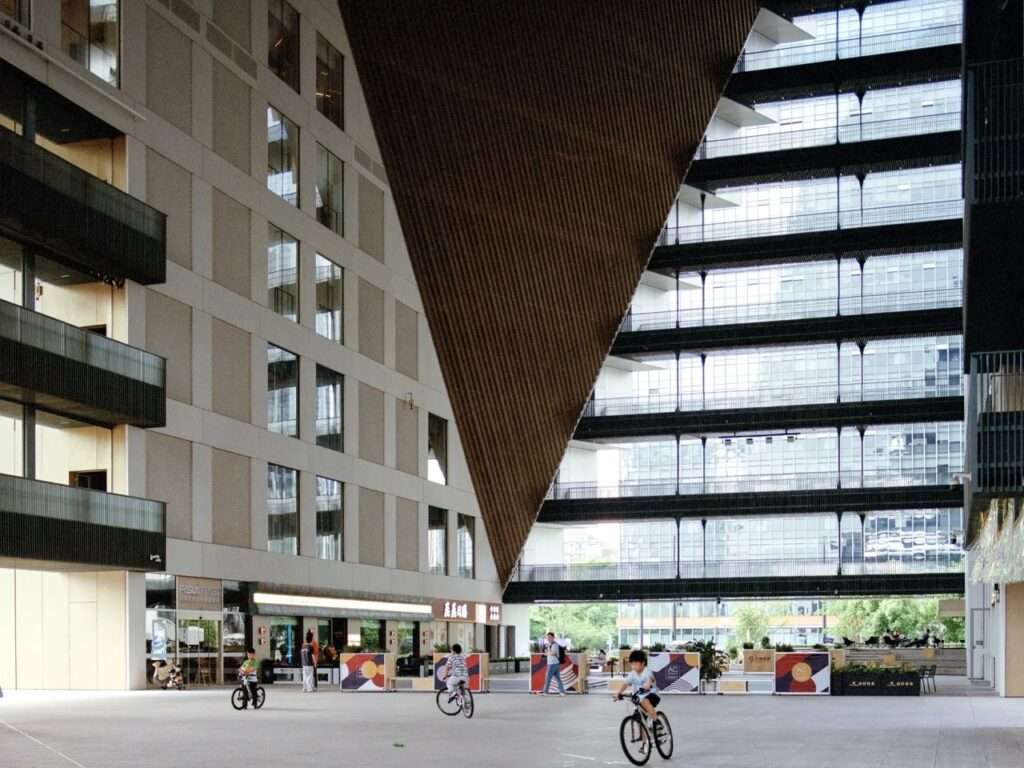
At ground level, the design opens into a wide structural void that cuts through the planar facades, forming a public atrium that dissolves the traditional boundaries between the building’s interior space and the adjacent public park. The human experience at this base is defined by kinetic orientation and free visual flow, where the lower plane becomes an interactive plaza accommodating community activities and daily pedestrian movement. This approach reconfigures the relationship between building and city; rather than operating as an enclosed traditional tower, priority is given to active spaces that support visual permeability and natural air circulation in the lower levels.
Functional Articulation and Vertical Distribution
The design addresses programmatic density by distributing functions vertically in an intuitive manner within the tapered volume, avoiding both visual and spatial congestion. This volumetric articulation allows each function to develop its own scenographic environment; residential and hospitality spaces benefit from stepped terraces and maximum natural lighting, while office and commercial areas are integrated into the lower levels to ensure efficient circulation flow. This structural gradation guarantees a fluid spatial movement, separating degrees of privacy and turning daily transitions into a psychologically and materially stable experience.
Urban Context and Innovation Orientation
The bold architectural language of the building goes beyond meeting immediate functional requirements, becoming a reflection of urban intentions aligned with its location at the heart of Asia’s innovation corridor and contemporary cities. The geometric formation seeks to create a spatial and material environment that stimulates dynamic interaction, where shadows and natural airflow intersect to reflect the identity of the contemporary tech district. The design stands as a case study demonstrating that formal boldness and volumetric fragmentation do not come at the expense of public utility, but instead generate connected and open spaces that secure a lasting and influential presence within the city’s visual landscape.
✦ ArchUp Editorial Insight
Hangzhou Prism embodies a carefully calibrated architectural shift away from traditional high-density urban block typologies, employing sharp spatial voids to transform commercial congestion into a fully integrated porous vertical environment. Through the carving of open civic balconies directly into the solid envelope, the design prioritizes human scale and public permeability, breaking the rigidity of conventional buildings in rapidly evolving tech cities.
However, this formal idealism collides with the rigid economic realities of real estate investment; distributing a complex mixed-use program of 43,000 square meters across fragmented and non-orthogonal floor plates introduces significant operational and structural challenges. Moreover, elevating public voids above inclined facades risks transforming these interactive spaces into enclosed, corporate-controlled enclaves, potentially isolating the building rather than integrating it into its urban context.