Brasília W3 House: Butterfly Roof and Spatial Reconfiguration

Design Concept and Structural Direction
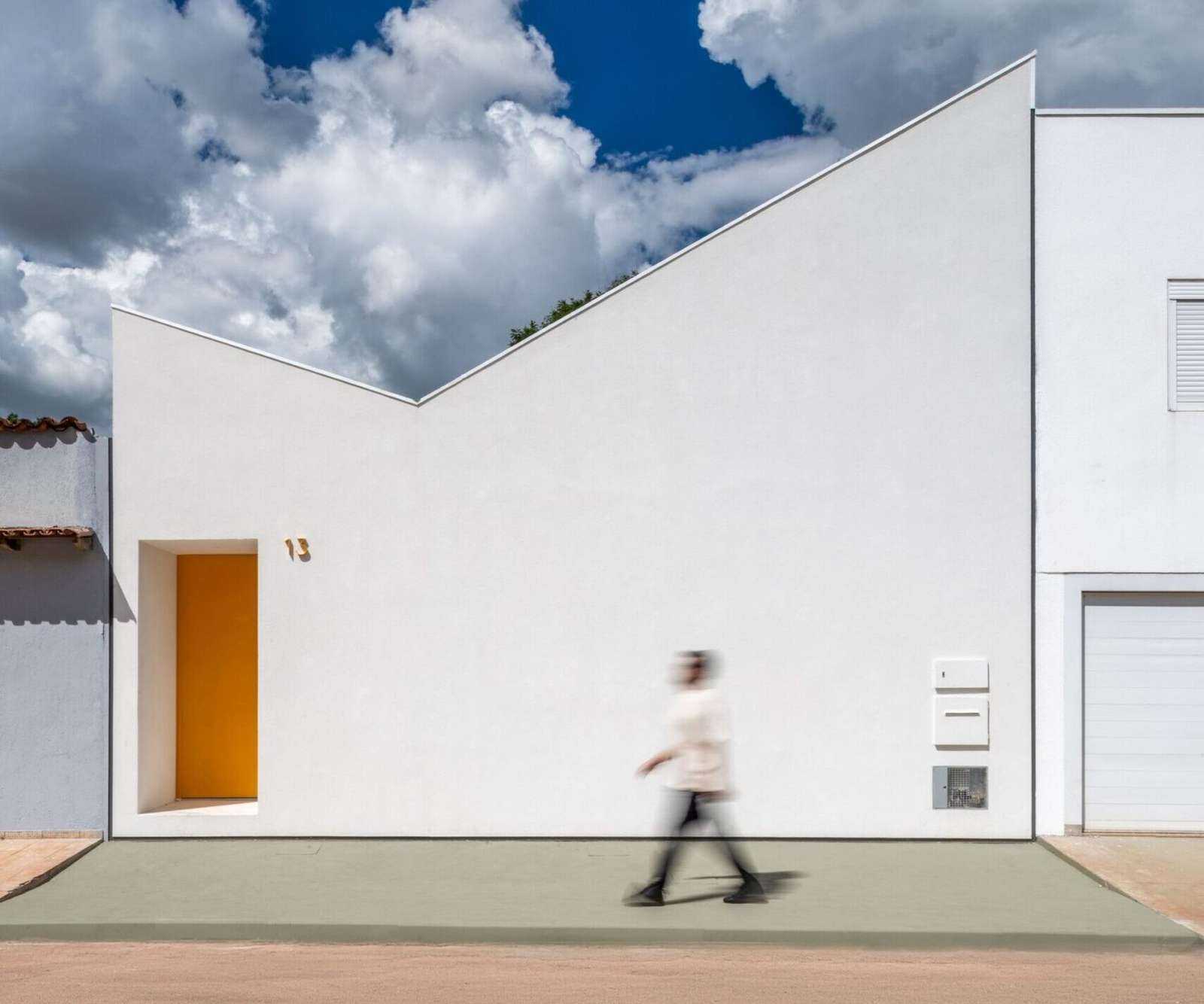
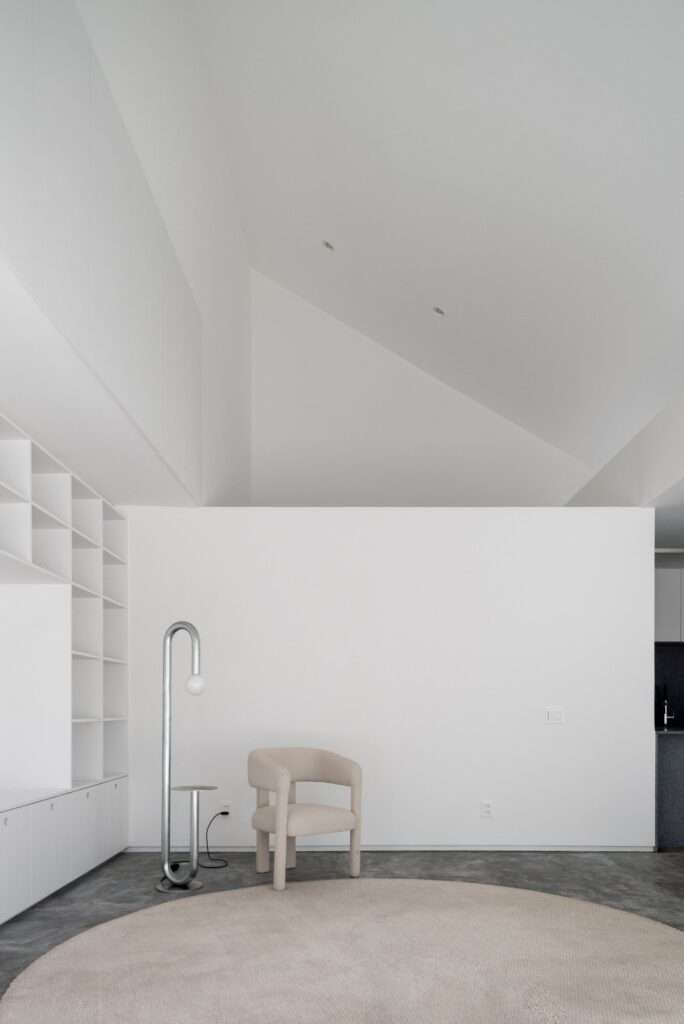
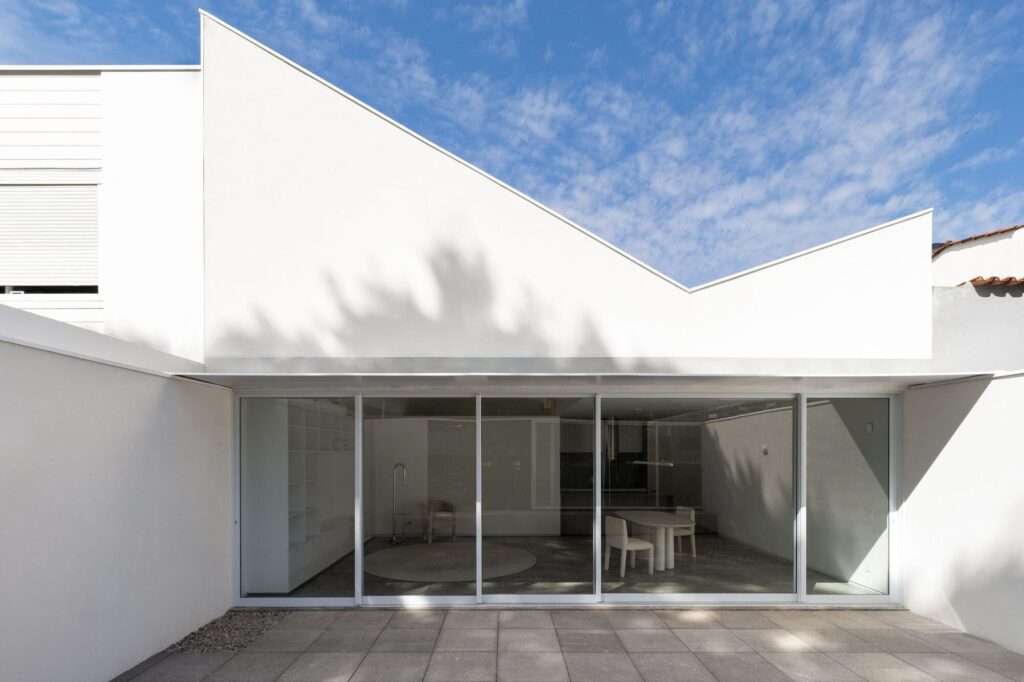
The design proposal of the project transcends the constraints of the narrow site to reconfigure the residential space through three “typological sections” that clearly define the different functional zones of the house. This spatial stratification appears as an organizational tool that disintegrates the 20-meter depth, granting the plot, whose frontage does not exceed 8.50 meters, high efficiency in distributing structural covering paths and movement. By directing the roof slopes in a “butterfly” form inward, the roof transforms from a mere structural covering into a dynamic scenographic element that guides light and visual movement, replacing conventional drainage solutions with a clear visual and architectural treatment.
Spatial Experience and Vital Interaction
The human experience within the space is shaped by this structural roof orientation, where the central longitudinal element functions as a life axis that connects interior and exterior realms. This axis is not limited to collecting rainwater through the central gutter; it also acts as a continuous vital channel for natural light penetration and renewed ventilation. The intersection of shadows with the volumes beneath this butterfly roof creates a visual contrast that shifts throughout the day with the sun’s path, granting the user a tangible perception of time and imbuing circulation within the house with a psychological effect that balances openness and privacy.
Visual Harmony and Spatial Proportion
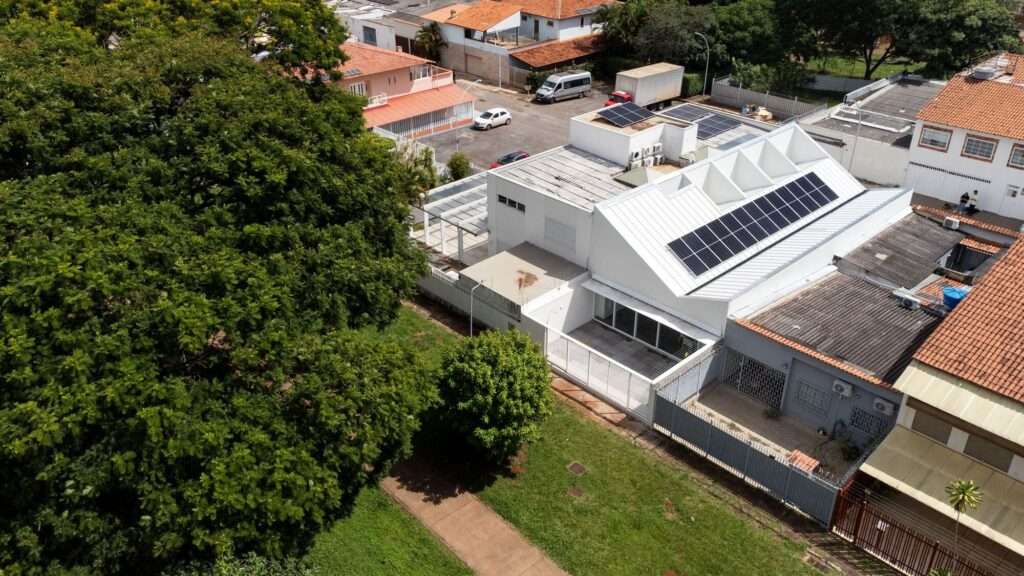
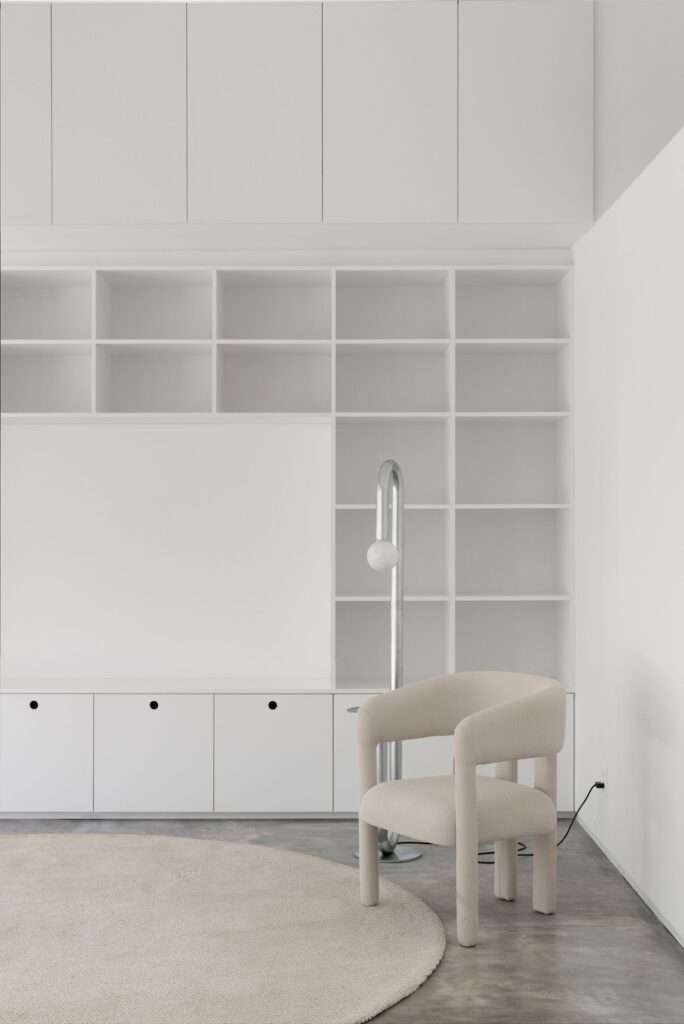
The roof adopts an architectural language that respects the surrounding urban context, where proportional and alignment relationships have been carefully calibrated to correspond with the general lines of neighboring houses, ensuring the integration of the mass within its residential fabric. This visual harmony is evident in the upper section dedicated to bedrooms, where the “folding” of the roof toward one side of the plot appears as a conscious massing strategy responding to site and contextual requirements. This configuration is not intended as a purely aesthetic gesture but operates as a structural tool to break down the upper volume and soften its visual presence in relation to adjacent buildings.
Scenography and Environmental Extension
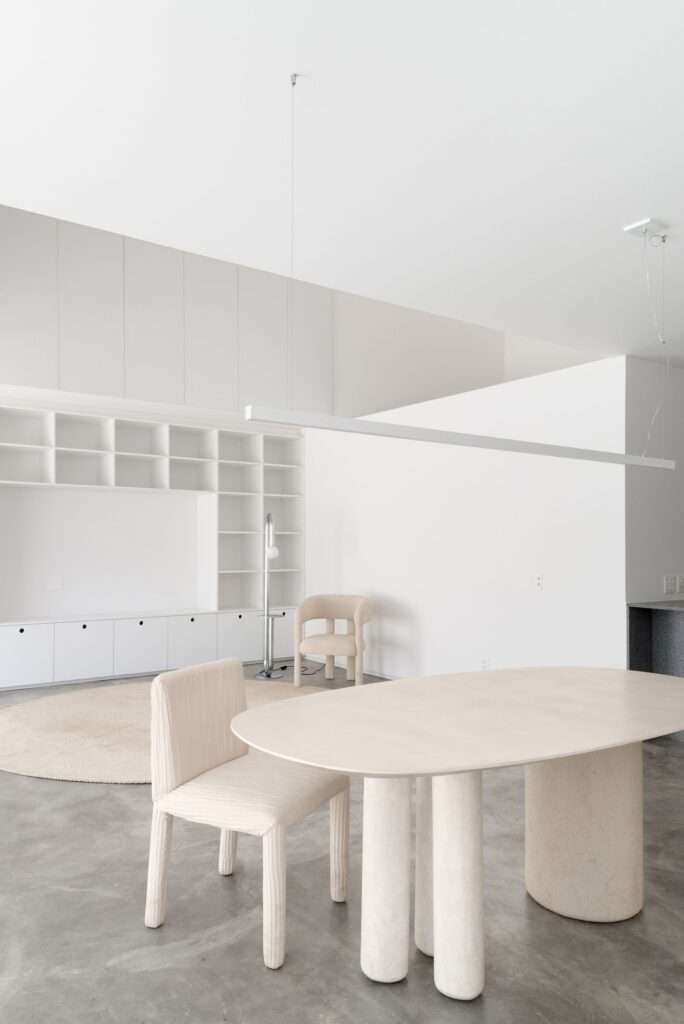
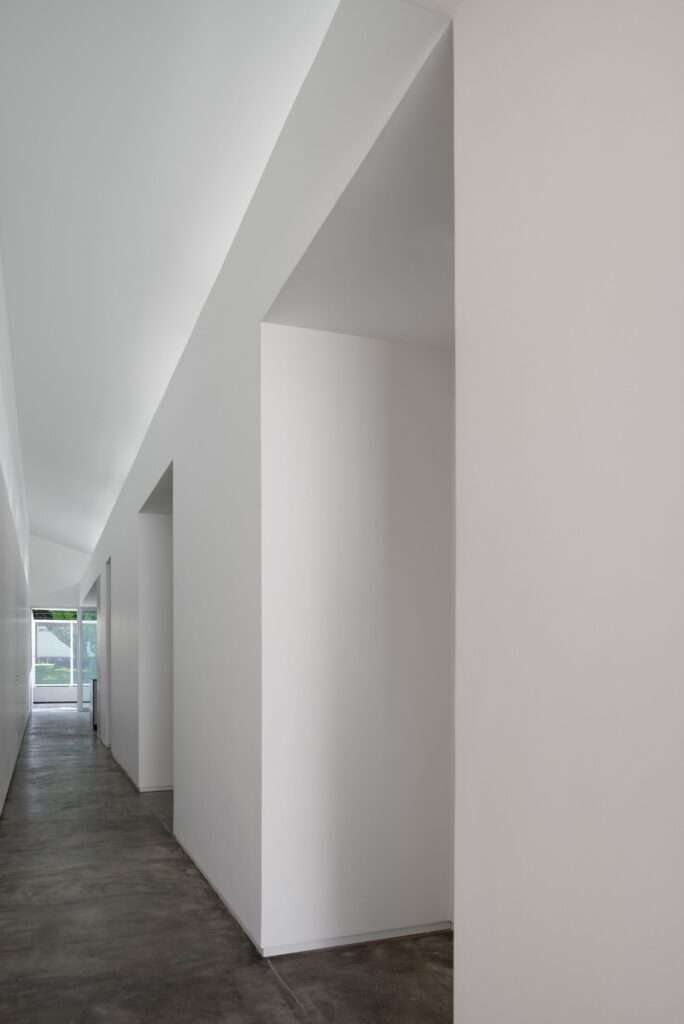
The roof’s “fold” within the bedroom zone becomes a dynamic mechanism for directing natural elements toward the depth of the interior residential spaces. This angular design expands the incidence of natural light, feeding the uncovered internal gardens and transforming them into living light wells through which the bedrooms breathe. This treatment enriches the daily human experience by generating a continuous scenographic contrast between solid wall masses and open gardens, where shadow lines produced by the sloping roof intersect with air movement and vegetation, adding both psychological and material depth to the experience of circulation within the house and reinforcing spatial movement.
✦ ArchUp Editorial Insight
The critical deployment of geometric standardization, such as the butterfly roof section and the tri-axial functional division, operates as a clinical manifestation of a broader structural shift toward maximizing spatial efficiency within high-density urban models. When isolating the spatial constraints of a limited plot, layers of non-architectural data, specifically solar radiation paths, regional rainfall parameters, and real estate development boundary mechanisms, reveal a precise computational assemblage for resource optimization rather than a purely stylistic choice. This condition generates intense systemic pressure along the site’s primary axes, enforcing an institutional decision-making framework that redefines architecture not as an expressive monument but as a highly calibrated infrastructural system, where spatial orientation and structural covering primarily function to mitigate friction caused by dense urban proximity.
Accordingly, the architectural outcome emerges as a logical byproduct of this operational framework, where spatial compression is deconstructed through a carefully studied topographic treatment of the mass. The built volume under these strict site constraints operates through calculated angular inflections, specifically the asymmetric folding above the bedroom zone, transforming what are traditionally solid interior corners into active light wells that attract solar radiation. In the context of contemporary cities facing land scarcity after waves of densification, this spatial organization demonstrates that open courtyards are no longer merely aesthetic elements, but vital components of an algorithmic infrastructure governing local thermal performance and user psychological comfort. Ultimately, the role of the architect shifts from a creator of objects to a strategic asset manager, bearing strict fiduciary responsibility to maximize environmental capital, marking a definitive transformation of the profession toward precise calibration of real estate volumes and architectural research.