Urban Cabin in Amsterdam: A 3D Printing and Tiny Living Approach

Spatial Experience and the Dynamics of Passage
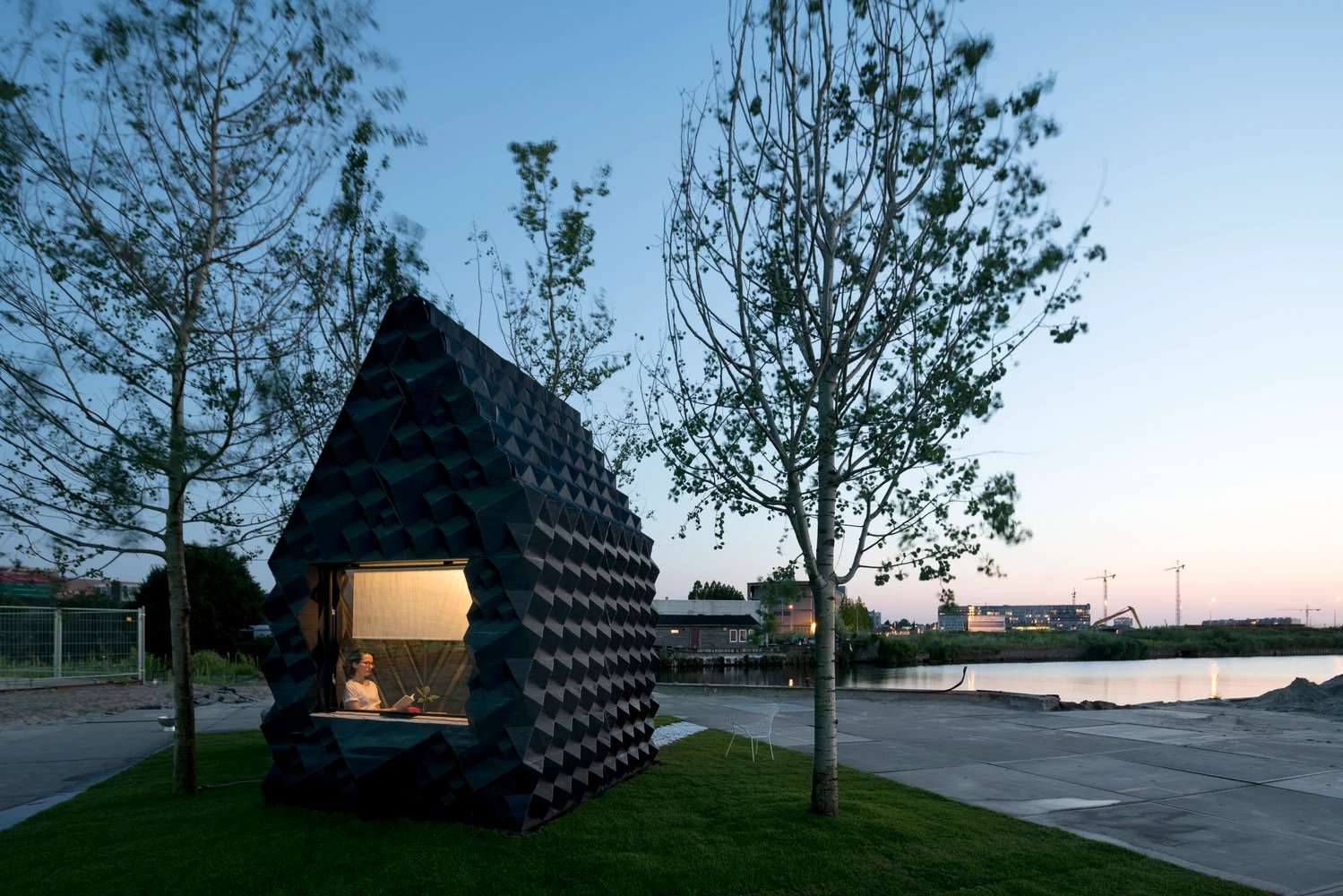
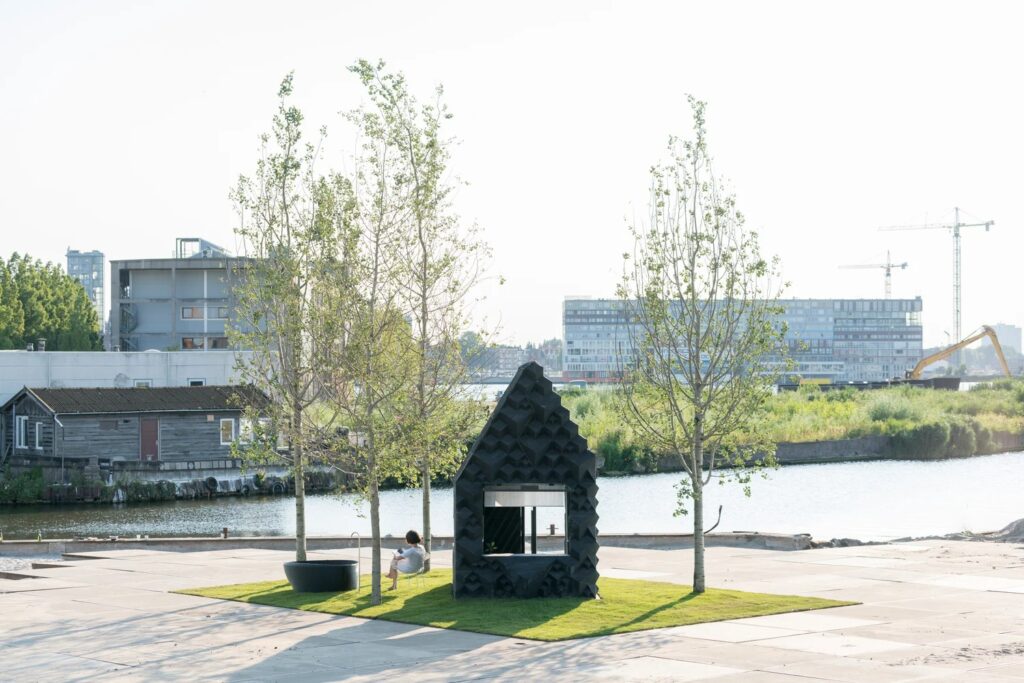
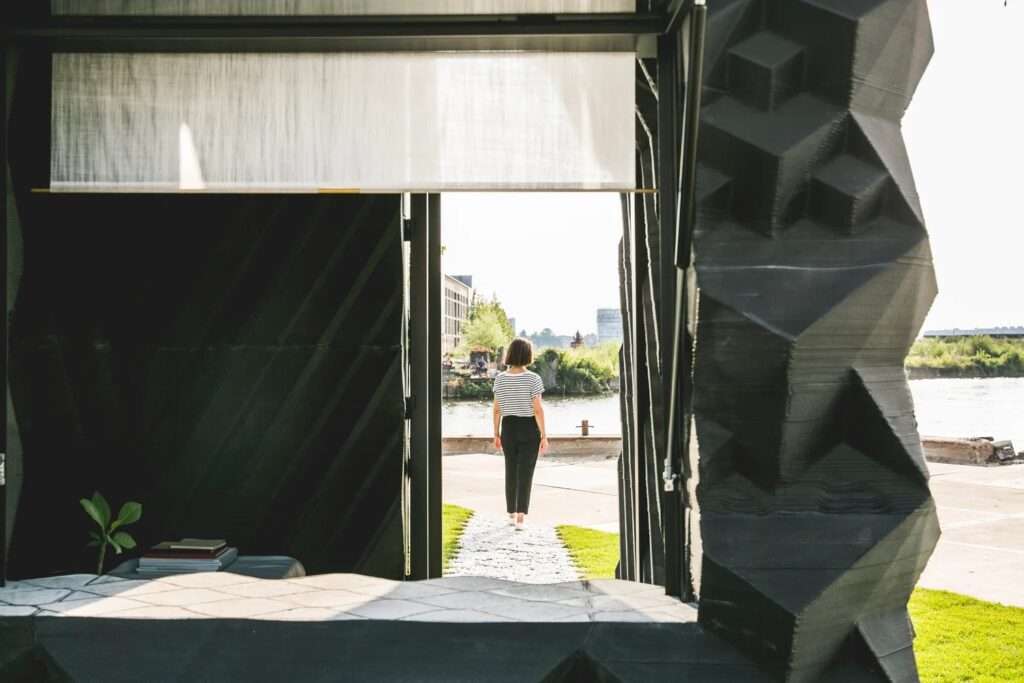
The compact urban rest space is transformed into an applied study in the scenography of micro-spaces, where the user experiences the moment of entry and passage within an area not exceeding 8 square meters, yet designed to deconstruct the notion of physical constraint. The kinetic pathway flows seamlessly from the former industrial external environment into the printed mass, where spatial engineering provides a calm refuge that isolates the user from the accelerated rhythm of the city through a design language focused on containment and on balancing the limited physical footprint with a sense of urban comfort.
Biological Interaction and Material Analysis
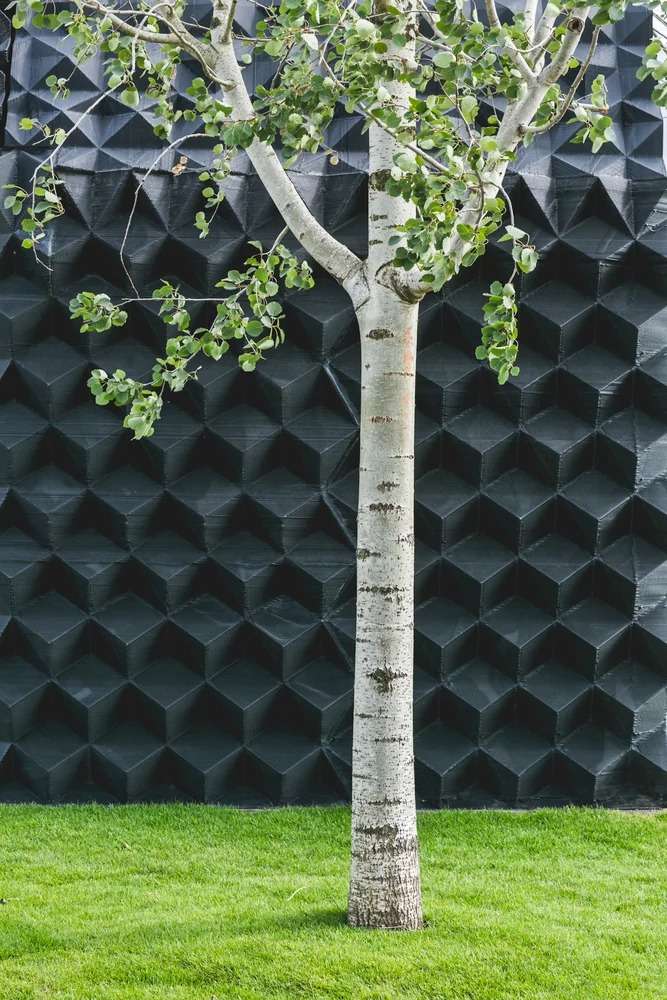
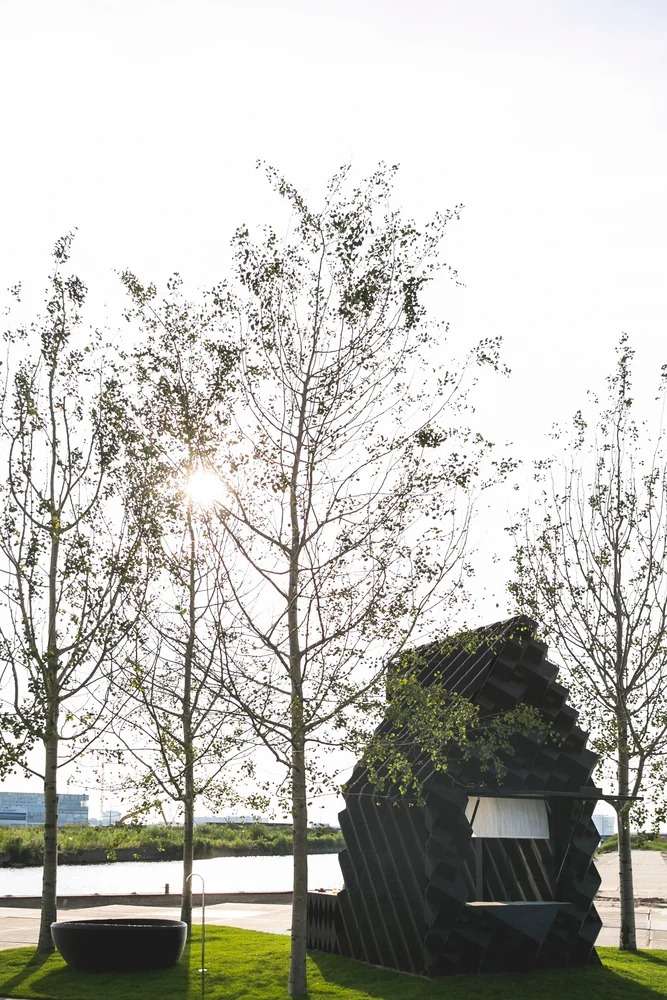
Walls made entirely of bio-plastic gain visual depth through the roughness of surfaces produced by 3D printing layers, creating a continuous living interaction with the sun’s trajectory and the shifting shadows of the mass throughout the day. This scenographic effect extends outward, where the internal void intersects with a small garden and an external bathing basin, allowing air and light to penetrate fluidly and deepening the psychological and material impact of the sustainable materials used, which give the user a sense of connection to a flexible environment that is fully recyclable and reconfigurable.
| Field | Value |
|---|---|
| Architects | DUS Architects |
| Area | 8 m² |
| Year | 2015 |
| Photography | Ossip van Duivenbode, Sophie van den Hoek, DUS Architects |
| Pocket Park Designer | Delva Landscape |
| Landscaping | Boomkwekerih Ebben |
| Contractor & 3D Printing | Actual |
| Client | 3D Print Canal House Foundation |
| City | Amsterdam |
| Country | Netherlands |
Scenographic Balance and Spatial Extension
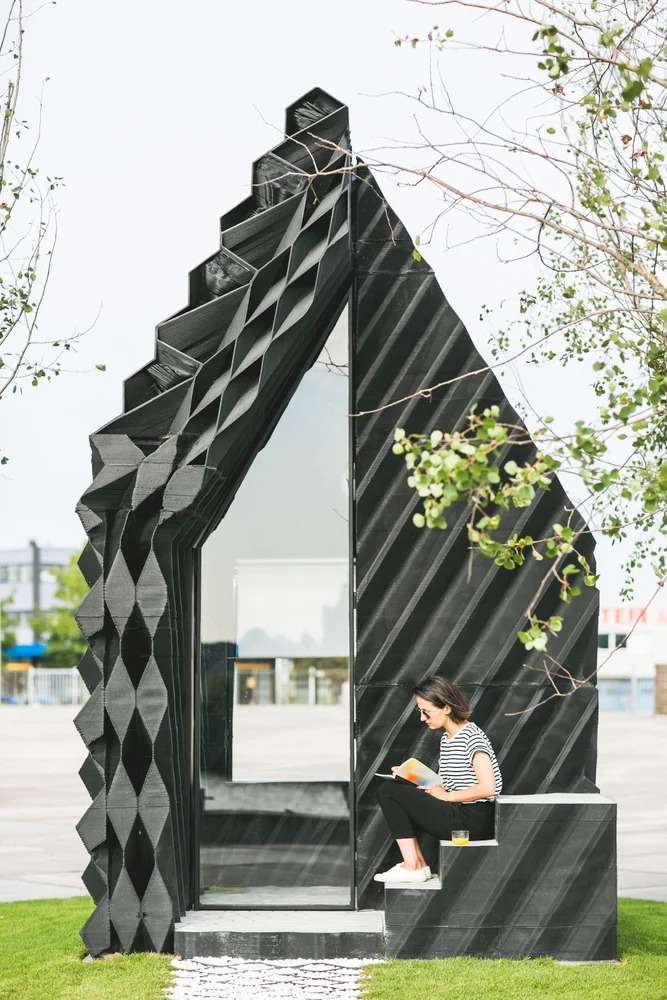
The design deepens its formulation of a balanced visual and kinetic relationship between the compact interior space and the surrounding environment, achieving a sense of physical and psychological well-being within an extremely small urban footprint. The façades printed in black bio-material emerge as a dominant visual language, where integrated ornamental elements and refined geometries transcend structural function to contribute to thermal insulation and material efficiency, enhancing the feeling of enclosure and safety within the mass.
Material Harmony and Circulation Paths
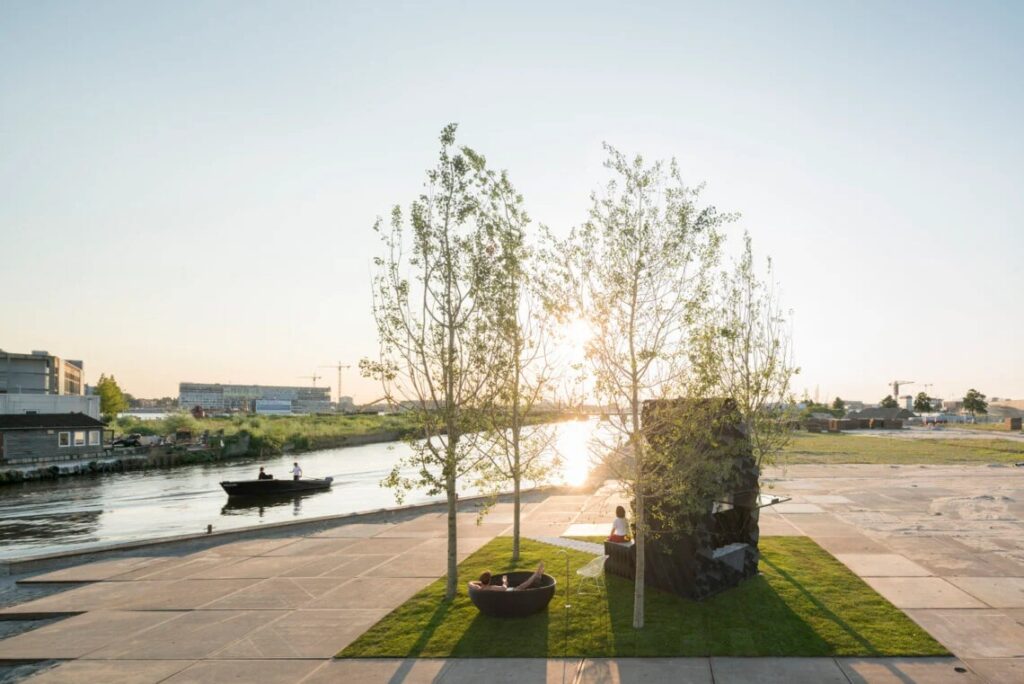
Concrete asserts its material presence in the flooring and stepped terrace, forming a visual extension that translates the user’s movement from the interior space into an organized path that traverses the surrounding small garden. This kinetic sequence integrates with natural elements, where biological interaction becomes evident in the sculpted and 3D-printed bathing basin, precisely oriented to allow the user to experience relaxation while observing the sun’s trajectory and sunset through the shadows of poplar trees.
Dynamic Dimensions and Spatial Containment
The spatial engineering of the cabin integrates with the logic of “tiny houses,” addressing major housing challenges through compact solutions, where a space not exceeding 8 square meters and a volume of 25 cubic meters is experienced through high functional flexibility. The passage begins at a small terrace and transitions into an adaptable interior space where the sofa transforms into a double bed, reflecting the scenographic design’s capacity to respond to evolving human needs and to provide full kinetic efficiency and psychological containment within micro-scale environments.
Material Response and Customized Urban Solutions
The critical value of 3D printing technology emerges in the production of temporary architectural structures and small-scale dwellings suitable for disaster zones, where the material experience relies on a bio-printing medium capable of complete decomposition and reconfiguration into new designs after its intended use. This structural flexibility supports customizable, on-demand housing solutions developed to respond to the rapid growth of cities, reflecting the applied dimension of the architectural mass within contemporary urban environments.
✦ ArchUp Editorial Insight
The project redefines urban density through additive manufacturing, demonstrating the capacity of circular bio-polymers to intensify spatial utility within compact habitats. Through the testing of zero-waste masses in former industrial zones, this small cabin proposes customized digital production as an alternative to large-scale housing crises, improving material efficiency and spatial performance to deliver tailored spatial autonomy within future cities. However, this reliance on ultra-minimal localized design over-romanticizes and simplifies transient minimalist tendencies, overlooking the strict economies of scale that govern the real estate sector. Despite technological advancement, temporary plastic models fail to integrate into existing structural networks or regulatory frameworks, rendering them more of an aesthetic trend rather than scalable solutions to urban displacement.