The Last Drawing: Why Architectural Photography Matters More Than Most Architects Think


There is a moment every architect eventually faces, though few discuss it openly. The contractors have gone. The client has moved in. The drawings are archived. And the building, after years of decisions and negotiations and material selections, stands complete in the world. It is precisely at this moment that most architects exhale and consider the work finished. It is also precisely at this moment that the work’s public life is only beginning.
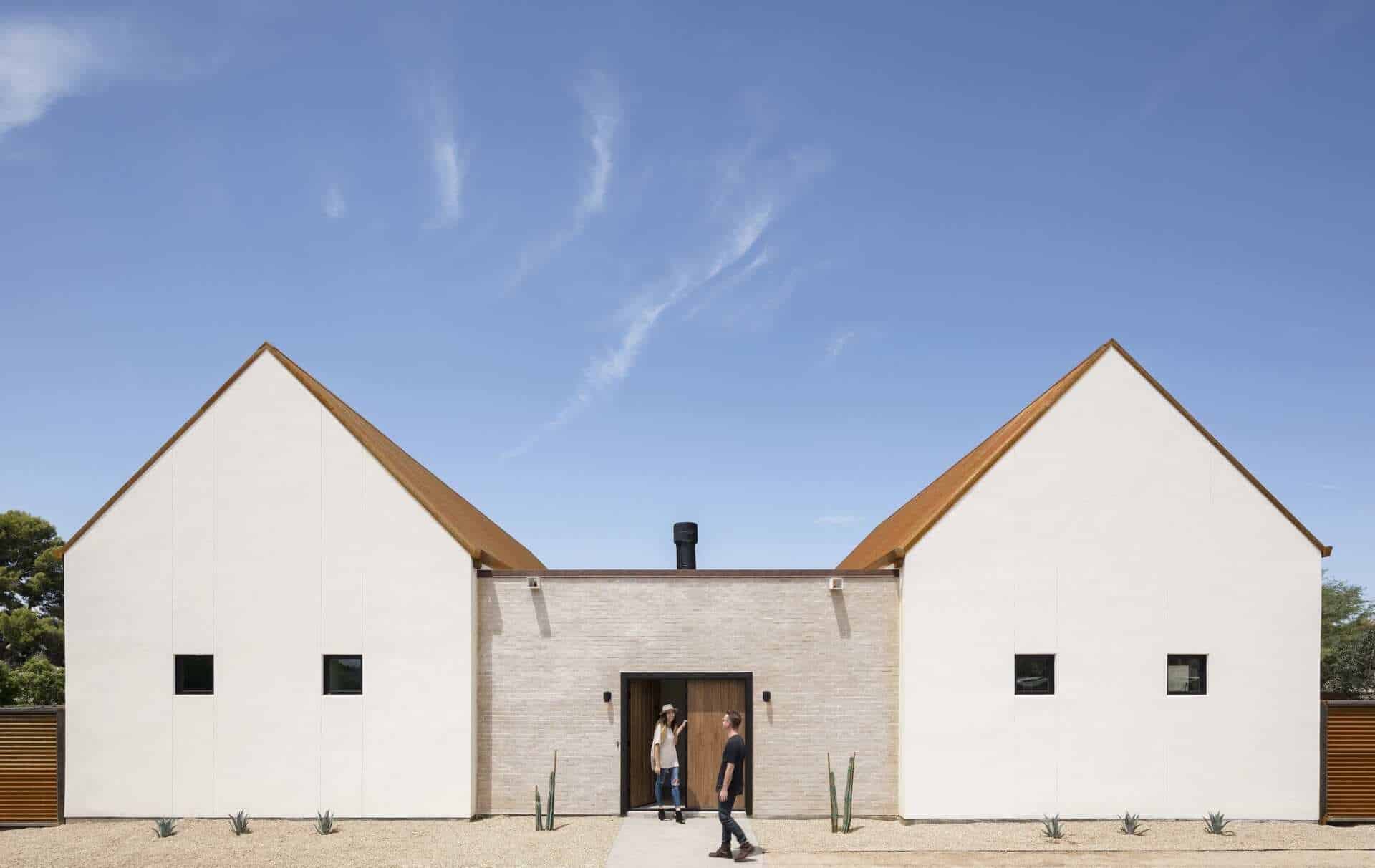
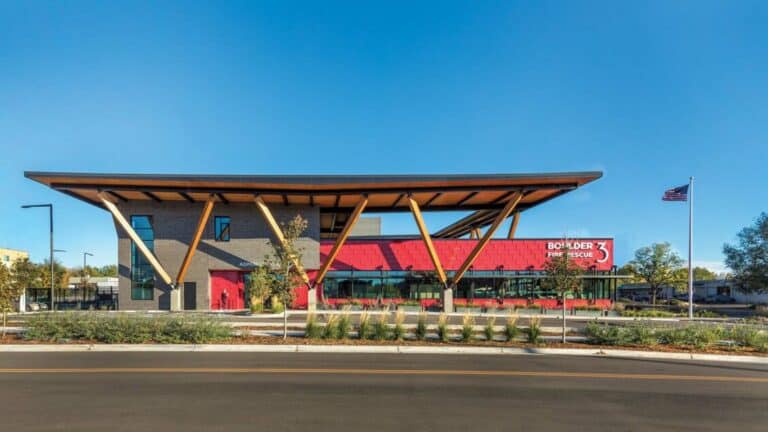
A building enters history not through its construction but through its image. The overwhelming majority of people who will ever encounter any given project will never physically stand inside it, never feel the proportion of its ceilings, never experience the quality of its light at three in the afternoon. They will encounter it through a photograph. Their judgment of its character, its intelligence, its contribution to the discipline, will be formed by framing, by shadow depth, by the color temperature of a single decisive hour. This is not a modern phenomenon produced by social media. It is a structural condition of the profession that has existed since architectural photography became a discipline in its own right, and one that the field has been slow to absorb into its professional self-understanding.
There is a quote that circulates in architectural circles, unverified but persistent, attributed to one of the great practitioners of the last century, suggesting that architecture resembles marriage. It demands patience, commitment, and, above all, money.
I cannot confirm who said it. I am not certain anyone did.
But if the analogy holds, I would extend it one step further.
If architecture is the wedding, then architectural photography is the wedding photographer. And no matter how much was invested in the ceremony, no matter how many years went into making it possible, most people will eventually know it only through the photographs. Not through presence. Through images.
Buildings are no different.
Architects are trained to think like directors. The good ones spend considerable energy imagining where the sun will enter, which corner will become the building’s signature, how a shadow will move across a surface over the course of a day. To the structural engineer, this sometimes reads as excess. To the architect, it is the core of the discipline, because architecture is never experienced from every angle with equal weight. Every project has a perspective that concentrates its meaning. Every building has a moment when its intentions become legible. The camera does not create that moment. It finds it. And the difference between a photographer who finds it and one who does not is, in many cases, the difference between a building that enters the conversation of the field and one that disappears into the archive.
What most architects underestimate is how much preparation precedes that moment of finding. The camera is not generous with incompleteness. Stone surfaces that read as acceptable to the moving eye become conspicuous under a high-resolution sensor. Glass that appears clean in natural light reveals its streaks under the compression of a wide-angle frame. Signage that was deferred, landscaping that has not yet matured, construction residue that seemed minor, all of it surfaces with a clarity that the daily site visit never produces. A photographer can improve an image. A photographer cannot finish a building. The documentation process is not a passive recording of what exists. It is a final quality inspection conducted by optics.
Light is the material that governs all of it. In most climates, the windows that matter for exterior documentation are narrow and unforgiving: the first ninety minutes after sunrise and the final ninety before sunset. During these periods, shadows acquire depth, surfaces reveal texture, glass becomes expressive rather than merely reflective, and the building stops appearing flat against its background. Outside these windows, the same building under the same sky can read as ordinary. This is not a photographic limitation. It is a physical reality that the best architectural photographers understand as deeply as any material specification. Light is not illumination applied to architecture. In the photograph, it is the final construction material, and it cannot be substituted.
The arrival of high-capability smartphones has introduced a productive complication into this conversation. Devices that shoot in RAW format now allow a serious practitioner to recover highlights, manage shadows, and produce images of genuine documentary value. This has not made the professional photographer obsolete. The difference between what a professional sees and what most people see through any lens remains significant, and it has little to do with equipment. It has to do with alignment, with perspective correction, with the management of foreground, with an understanding of visual hierarchy that takes years to develop. The camera records. The photographer interprets. These are not the same act, and the gap between them is visible in the final image to anyone trained to look.


Post-production is where that gap is often most consequential, and it remains a subject of unnecessary suspicion in architectural culture. Nearly every published architectural photograph undergoes color balancing, exposure adjustment, perspective correction, and contrast refinement. These are not acts of fabrication. They are acts of translation, the same logic that governs the use of a rendered image to communicate a building before it is built. The sensor cannot fully capture what the eye experiences inside a well-designed space. The photograph, after editing, is an attempt to close that gap, to communicate the building as it was intended to be experienced rather than as the physics of the capture moment happened to record it.
The most consequential professional error in this territory is also the simplest. An architect can invest years in designing and constructing a building of genuine quality, then document it with inadequate preparation, poor timing, and no understanding of what the image needs to communicate. The result is a project that disappears. Architectural history is partially a history of photography. Many buildings became canonical because someone understood how to frame them. Others of equal ambition vanished because no one did. This asymmetry is not new, and it is not going away. In a field where the image travels across publications, across continents, across decades, long after the building has stopped being news, the photograph is the medium through which the project makes its argument to posterity.
Architects often speak of the construction document as the final drawing. After the experience of documentation, that assumption becomes harder to sustain. The photograph may be the final drawing, the last act of authorship before the building passes entirely into the experience of others. Because after the contractors leave and the client settles in, it is the image that carries the project forward. Across websites and journals and search results and future students’ reference folders. A building may stand for fifty years. A photograph may determine how it is understood for a hundred. That is not a marketing consideration. It is a design responsibility, and it arrives at the end of the process, when most architects have already moved on to the next project.
✦ ArchUp Editorial Insight
The reliance on architectural photography as the ultimate validator of built work is a clinical symptom of a spatial economy where the image supersedes the physical enclosure. Data layering reveals that the overwhelming majority of a project’s audience will never physically occupy its spaces, meaning a building enters the historical record and public consciousness almost exclusively through its digital curation. This systemic pressure generates an institutional decision framework where “imageability” becomes a primary operational constraint, forcing the architect to design for the lens rather than tactile human presence.
Consequently, the architectural outcome is the reclassification of the photograph as “The Last Drawing”—the final, binding document that dictates the legacy of the built massing. In 2026 cities, the physical environment is optimized for algorithmic dissemination, where shadow, proportion, and materiality are engineered to perform efficiently on screens. This paradigm shifts the architect’s role into a fiduciary of visual capital, finalizing the transition of architecture from a localized, lived experience into a globally consumable two-dimensional asset.