AI Platforms Reshape Early Architectural Design Workflows

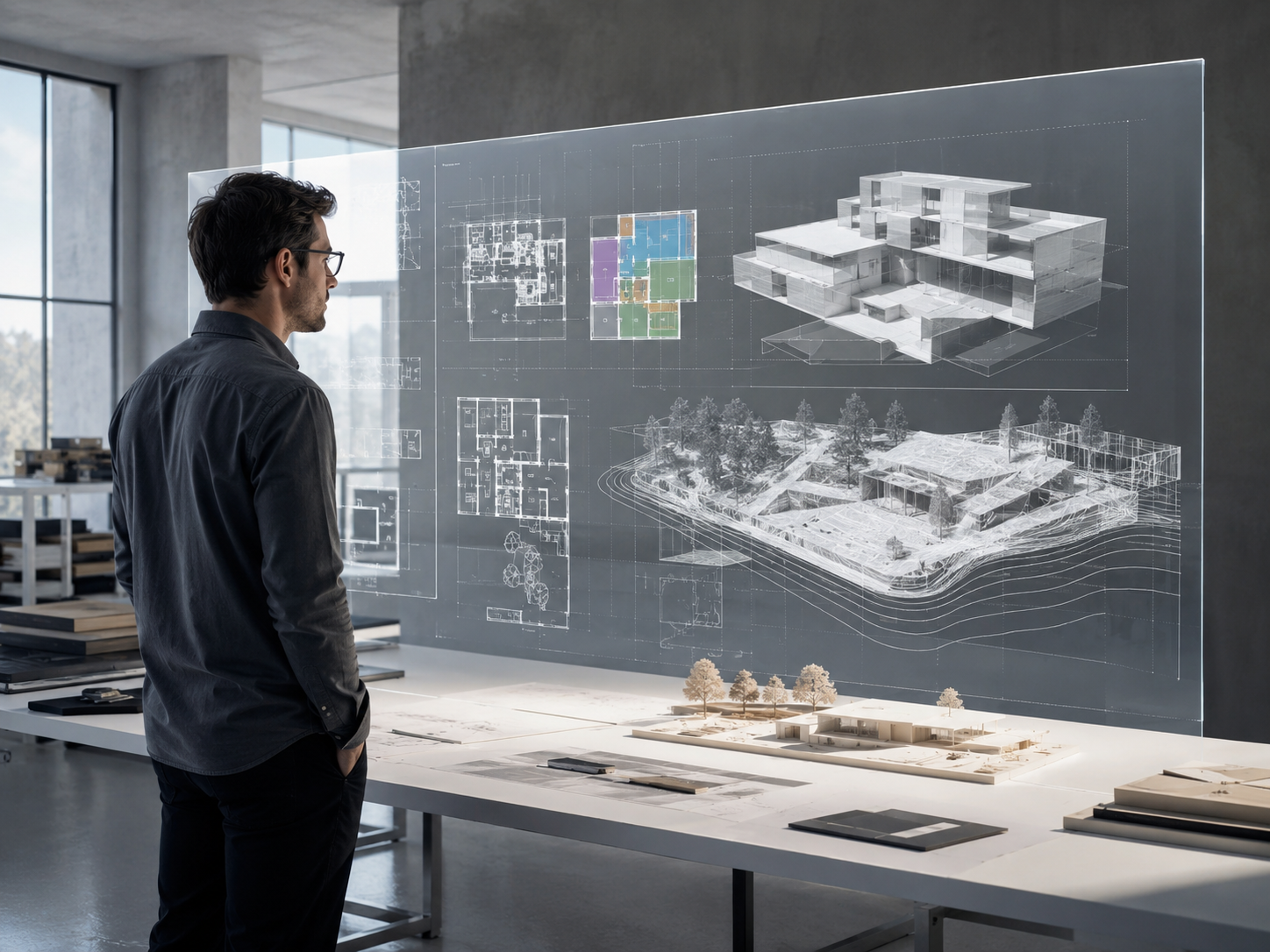
Artificial intelligence now enters architectural practice through generative design platforms that convert short text descriptions into preliminary floor plans and three-dimensional models within seconds. A growing number of tools allow users to describe a house or building in simple language and receive multiple spatial layouts ready for review and modification.
This shift affects the earliest and often most time-intensive phase of architectural work: the translation of client requirements into initial spatial proposals. Instead of sketching and iterating manually over several days, designers can now compare numerous layout options almost immediately.
From manual drafting to generative layout systems
Traditional architectural workflows begin with client consultations, followed by hand sketches and progressively refined drawings. Designers translate programmatic needs into diagrams, then into measurable plans. This process can extend over days or weeks depending on scale and complexity.
Generative design platforms compress this timeline. A user can enter a prompt such as “a modern three-bedroom house with a garden and open kitchen” and receive several editable plan variations within seconds. Algorithms analyze predefined parameters such as room count, adjacency requirements, and site dimensions, then produce multiple spatial configurations.
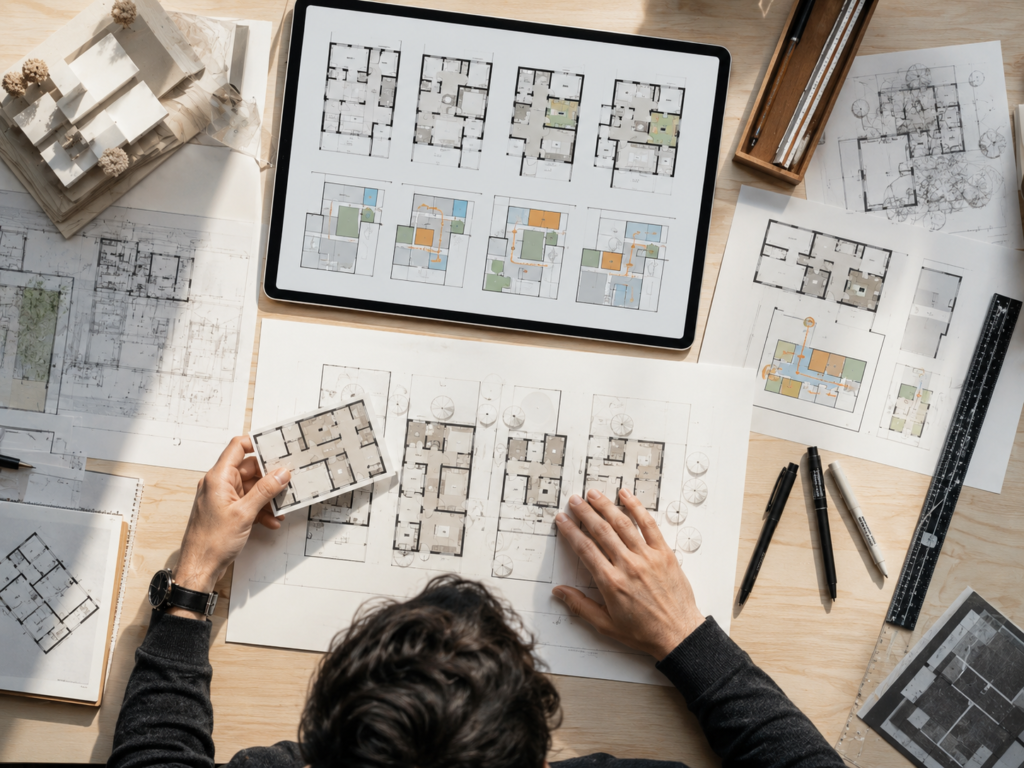
The image presents multiple spatial options that help the designer compare room distribution and circulation during the concept stage.
Autodesk describes generative design as a method that explores a wide range of solutions based on goals and constraints defined in advance. This approach expands the solution space beyond what conventional linear drafting typically allows.
Drafted AI and the rise of text-to-plan platforms
Among the emerging platforms, Drafted AI allows users to generate house plans by entering textual descriptions and basic requirements such as room numbers, plot area, and stylistic preferences. The company positions the tool as a support system for the conceptual phase, where teams test ideas and establish initial directions.
Recent reporting indicates that the platform attracted around 250,000 visitors and generated more than 300,000 plans within months of launch. The company also secured $16 million in seed funding, reflecting strong market interest in AI-assisted architectural tools.
Other platforms target not only architects but also homeowners. Tools such as Maket allow users to produce modifiable residential layouts through written descriptions, lowering technical barriers at the pre-consultation stage.

Algorithmic compliance with spatial and functional constraints
Developers train these systems on large datasets of architectural drawings and spatial arrangements. When a user submits a request, the model evaluates relationships between rooms, circulation paths, and functional adjacencies, then proposes alternatives that align with specified constraints.
Recent academic research shows that large language models can generate layouts that respect numerical and functional constraints with higher accuracy than earlier rule-based approaches. Some research teams have also developed systems that export text-generated layouts directly into professional environments such as Revit while maintaining parametric properties required for documentation and construction workflows.
In addition, a scientific review published in Nature highlights how automated generative systems can integrate evaluation metrics into early design stages. Designers can therefore assess energy performance and resource efficiency during concept development rather than after schematic design.

Productivity gains and operational risks
Speed drives much of the current enthusiasm. AI tools allow architects and clients to review dozens of alternatives before selecting a preferred direction. This rapid iteration can improve decision-making at the briefing stage and reduce repetitive drafting tasks.
At the same time, experts note clear limitations. Algorithms do not fully grasp cultural context, symbolic meaning, or nuanced social expectations embedded in architecture. Overreliance on similar datasets can also produce repetitive formal patterns. Furthermore, intellectual property concerns and training data transparency continue to raise legal and ethical questions.
Practitioners report variable plan quality. Some generated layouts contain functional inconsistencies or technical inaccuracies that require professional correction before implementation. For this reason, major firms treat AI as a support tool rather than a replacement for architectural judgment. Reports indicate that Zaha Hadid Architects uses AI tools to accelerate early visualization and design studies while designers retain final creative control.
Toward a collaborative human–machine workflow
Current trajectories suggest a collaborative model rather than a competitive one. AI systems excel at data analysis, rapid iteration, and option generation. Architects contribute contextual understanding, cultural interpretation, and complex decision-making that extend beyond quantifiable metrics.
The central question therefore shifts from whether AI can design a building to how it reshapes the way humans design. As platforms continue to evolve, they influence workflows, client engagement, and the structure of early-stage architectural exploration.
✦ ArchUp Editorial Insight
AI-driven generative design platforms reconfigure the front end of architectural production. They compress the conceptual phase, expand the range of spatial alternatives, and integrate performance evaluation into early decision-making. At the same time, they expose the limits of algorithmic reasoning in culturally embedded design contexts. The technology does not eliminate architects; instead, it redistributes effort from repetitive drafting toward evaluation, selection, and refinement. As firms adopt these tools, the profession must define new standards for authorship, responsibility, and data governance while maintaining architectural judgment as the central organizing force.
Project Team: Drafted AI; Autodesk; Maket; Zaha Hadid Architects. Location: Not specified in source.
Project Notes: Platforms operate in active development and recently reported significant user growth and seed funding. Research teams continue to refine large language models for architectural plan generation and integration with professional software such as Revit.