Climate-Responsive Headquarters Opens in the Kazakh Steppe

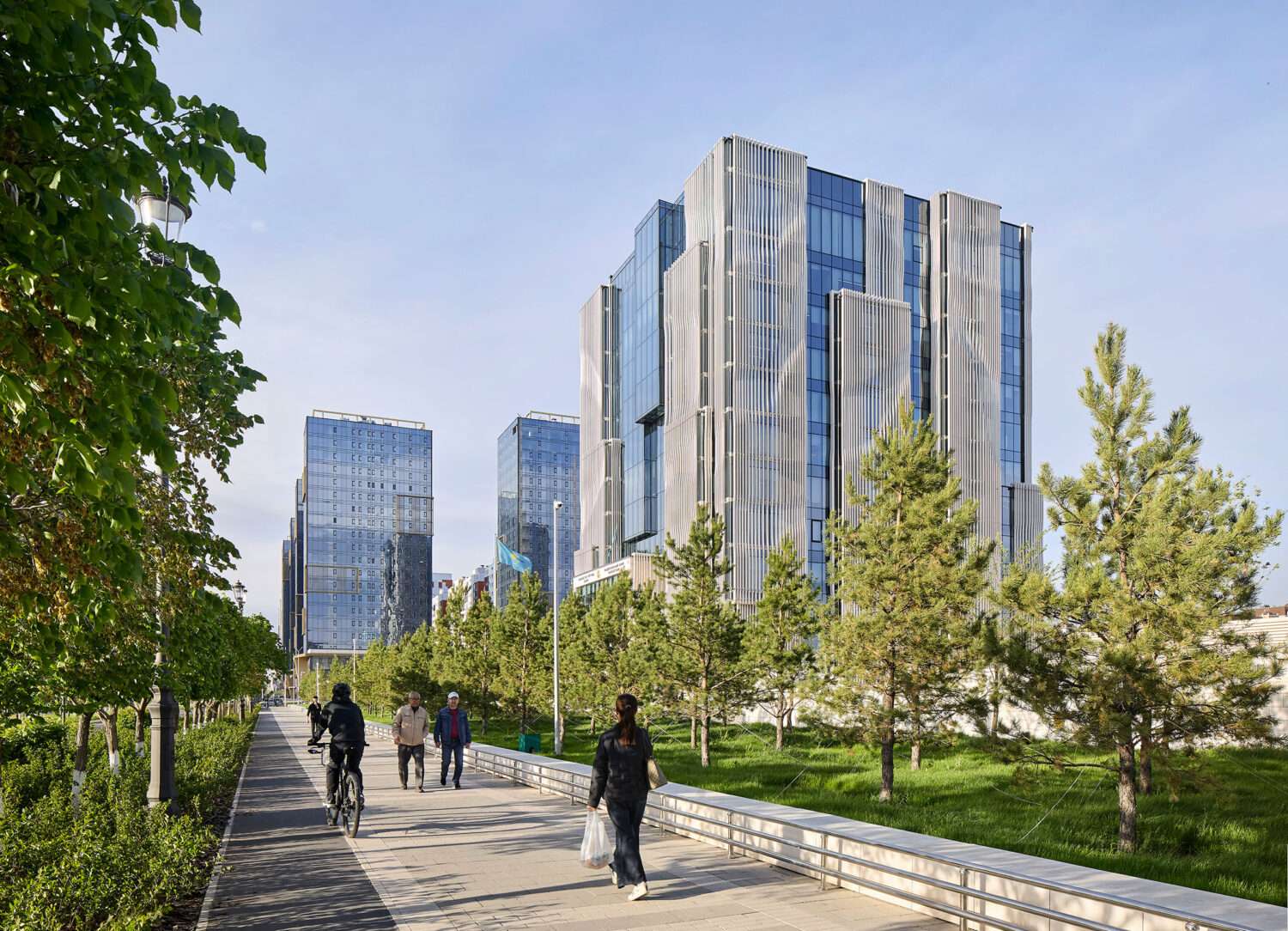
The new headquarters for the National Bank of Kazakhstan in Astana houses all departments within a single 13-story integrated campus. The project responds to the extreme continental climate of the central Kazakh steppe through a high-performance envelope and a central climate-controlling atrium. This approach creates a stable internal environment for 800 employees despite external temperatures that fluctuate by 80 degrees Celsius throughout the year.
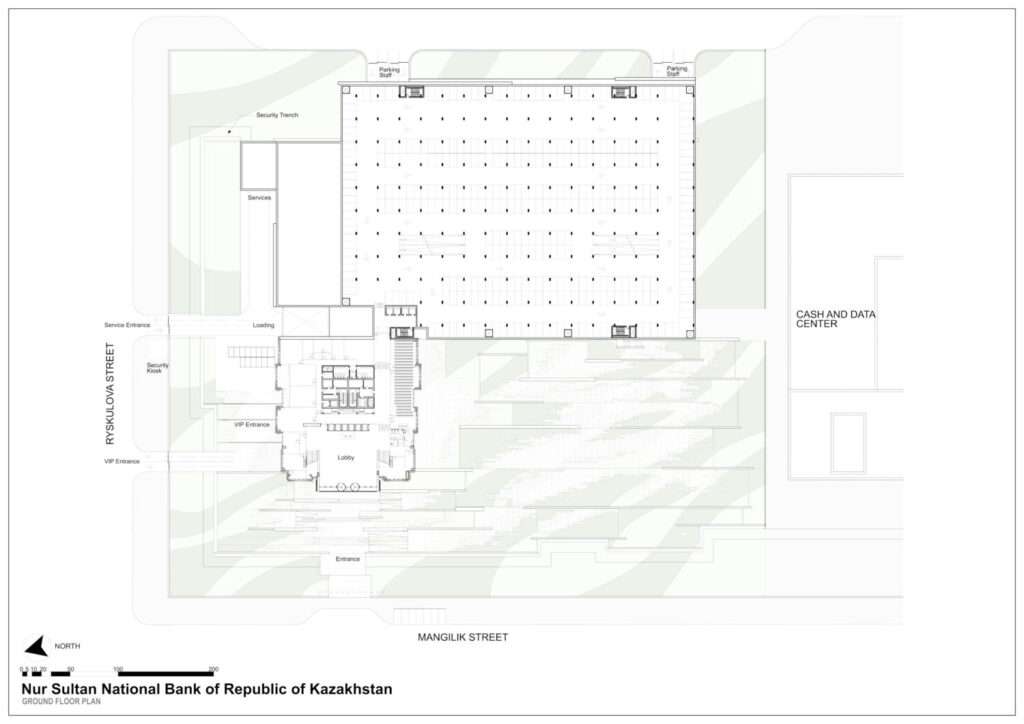
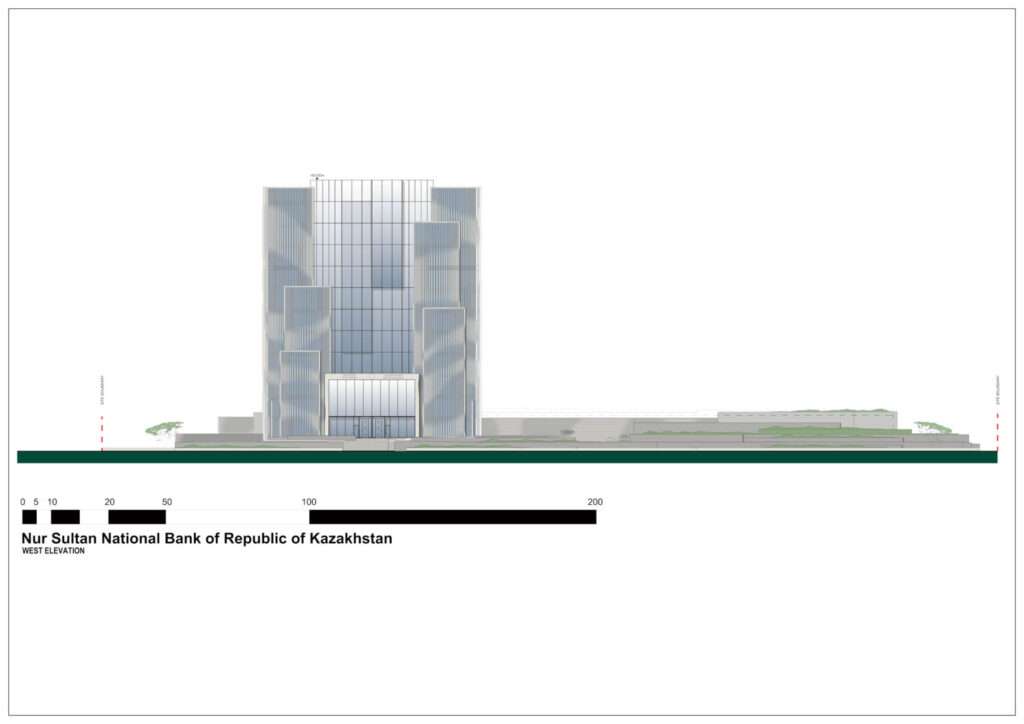
The 13-story cubic structure addresses the semi-arid conditions of the region, where winter temperatures can drop to -51 degrees Celsius. The team selected local materials and high-density structural systems to improve energy resilience. The building sits near the new light rail system, connecting the financial institution to the broader cities network and the local university district.
Climatic Shielding and Geologic Expression
The project uses a facade of carved local limestone to protect the interior from harsh environmental forces. These stone panels take inspiration from the natural rock formations and cliffs that rise from the Kazakh plains. The fins provide essential shading from summer sun while acting as a physical barrier against the strong winter winds and snowstorms that define the local climate.
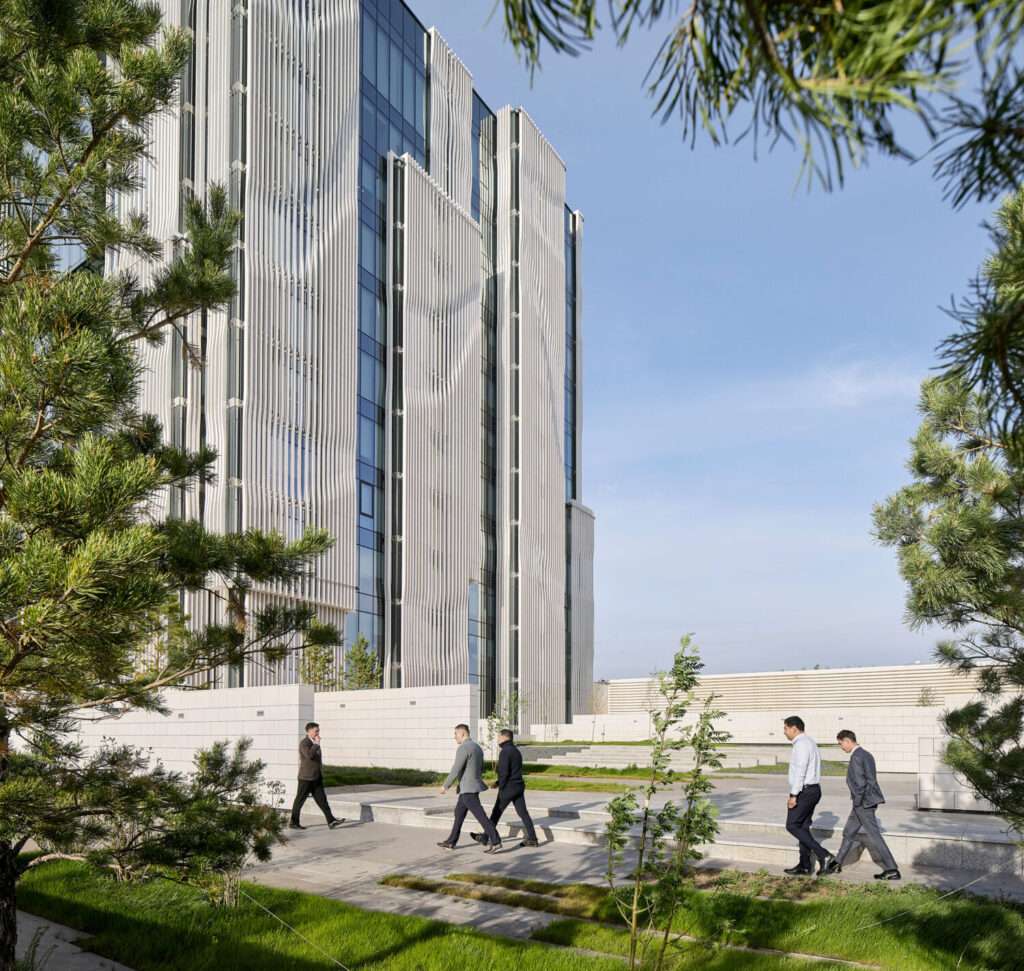
Behind the stone exterior, a modular curtain wall uses triple-layer glazing to maximize insulation. While the building appears solid from a distance, the stone slabs overlap to reveal transparent sections. These openings ensure that every workstation receives natural light and maintains a visual connection to the city. The team used reinforced concrete produced nearby, which reduced the carbon footprint associated with long-distance material transport.
Thermal Regulation and Vertical Connectivity
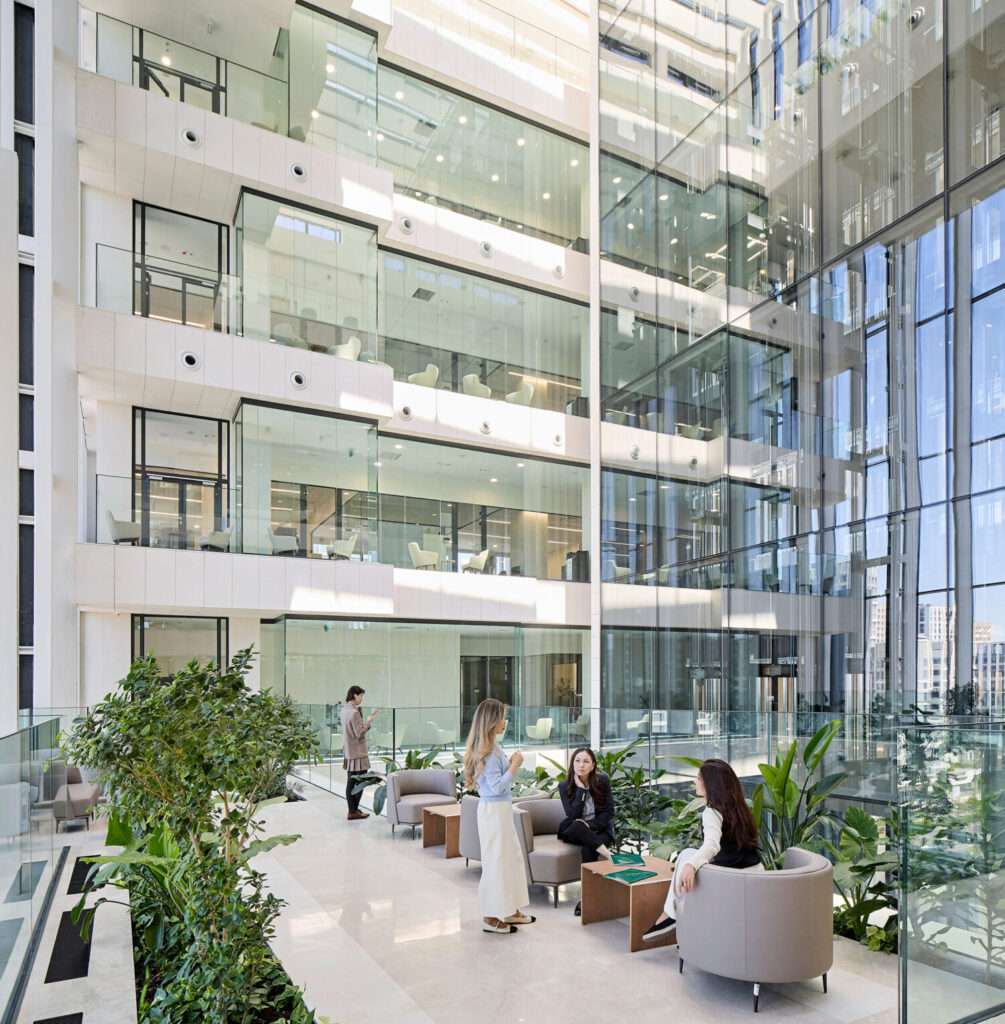
The central winter garden serves as the primary environmental engine for the building. During summer months, the atrium works as a thermal chimney, pulling cool air from lower levels and venting warm air through the roof. In winter, the glass-enclosed space captures solar heat, which the high-mass concrete structure then absorbs and redistributes. This buffer zone reduces the need for mechanical cooling and heating systems.
Office floors surround this central void, allowing employees to see the garden from their desks. Bridges span the atrium every three floors to link different departments and encourage spontaneous interaction. This layout replaces the traditional isolated office model with a more transparent and collaborative spatial sequence. The design prioritizes employee comfort by carefully balancing humidity, air quality, and natural illumination within the harsh steppe environment.
Climatic Resilience and the Logic of the Thermal Buffer
The project manages the extreme environmental variables of the Kazakh steppe through a clear hierarchy of structural and thermal zones. The team uses the central atrium as more than a visual centerpiece; it functions as a lungs-like mechanism that regulates air and light. This 13-story void simplifies the complex requirements of a high-density office by centralizing circulation and ventilation. The external envelope further reinforces this strategy, using the high thermal mass of local stone to resist temperature fluctuations. By integrating these systems, the project establishes a robust dialogue between the interior workspace and the external climate. The use of bridging elements every three floors provides necessary horizontal connectivity, ensuring that the vast vertical scale of the atrium does not compromise the functional proximity required for banking operations.
✦ ArchUp Editorial Insight
The project achieves a sophisticated synthesis between monumental form and environmental performance by treating the central atrium as a primary climatic engine. By utilizing the winter garden as a thermal buffer and a solar chimney, the scheme effectively manages extreme temperature shifts without relying solely on high-energy mechanical systems. This structural logic aligns spatial transparency with operational efficiency in a harsh architecture context. However, the reliance on local limestone as a ‘geologic’ skin raises questions regarding the tension between symbolic representation and authentic materiality. While the carved fins evoke the Kazakh steppe, the rigid cubic geometry still prioritizes a centralized institutional presence over the fluid urban fabric of Astana. This formal density might consolidate power effectively, but it risks isolating the sustainability narrative within a sealed, inward-looking corporate monument.
Project Team: Zaha Hadid Architects (ZHA), Patrik Schumacher, Chris Lepine, Oliver Bray, Edgar Payan. Location: Astana, Kazakhstan.
Project Notes: Completed and operational status. Engineering and environmental consultancy by Buro Happold. Executive architecture by IT Engineering. Project management by Drees & Sommer. Landscape consultancy by Gillespies. Client: National Bank of Kazakhstan (NBRK).