Azadi Tower: Negotiating Historical Memory and Urban Identity

Spatial Experience and the Symbolic Gateway
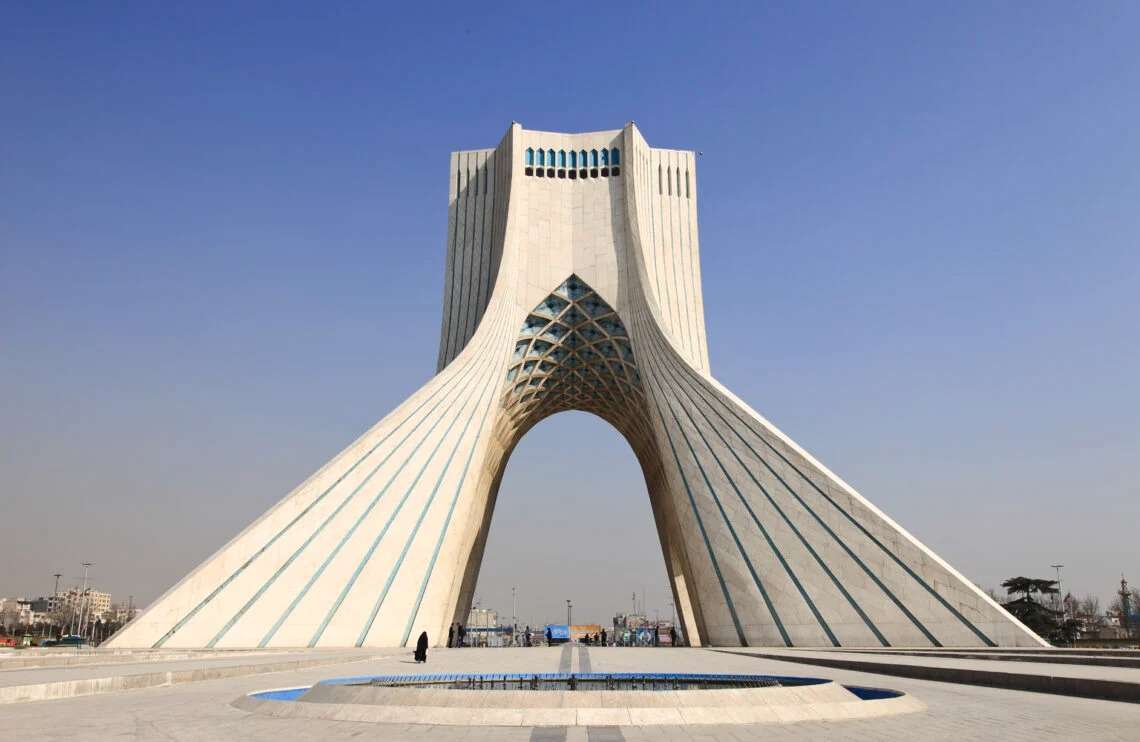
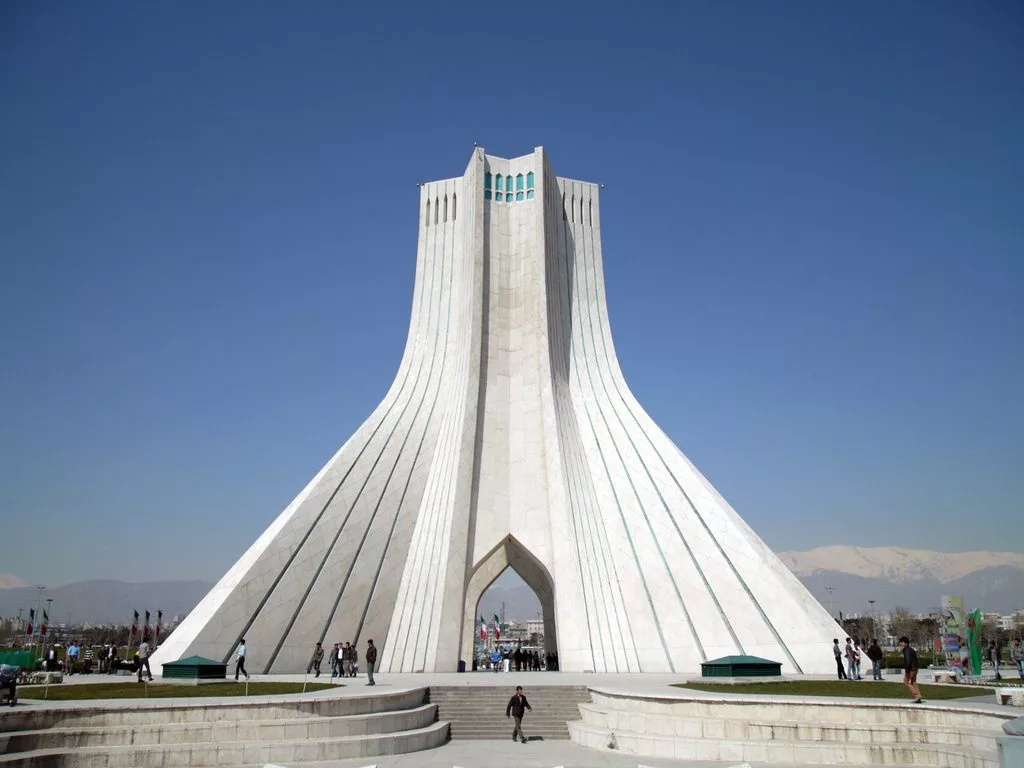
The design of Azadi Tower is founded on the concept of passage as an architectural experience that connects the past and the present through the user’s movement within space. This experience begins in the open plaza that leads toward the sculptural gateway rising 45 meters (148 feet), where the parabolic arch inspired by Sassanian architecture intersects with the pointed arch associated with Islamic architecture. This composition does not merely create a visual entrance to the monument; it establishes a spatial sequence linking the plaza, museum, and underground cultural spaces, reinforcing the idea of transition between different levels and functions within a unified architectural system.
| Category | Details |
|---|---|
| Architects | Hossein Amanat |
| Year | 1971 |
| Photography | froderamone, kosoof, rickyd, rasoulali, Shutterstock.com, Wikimedia Commons, Hamed Saber, Laurens R. Krol, Safa.daneshvar, Clemens Schmillen, Blondinrikard Fröberg, Tasnim News Agency, احمد جمالی مقدم, Bjørn Christian Tørrissen, Iran Persian Gulf Forever, Erfan7, Mahdi Kalhor, WikiArquitectura |
| Structural Engineer | Ove Arup & Partners |
| Main Contractor | MAP Company |
| Client | Council of Celebrations |
| City | Tehran |
| Country | Iran |
Material Composition and Visual Identity
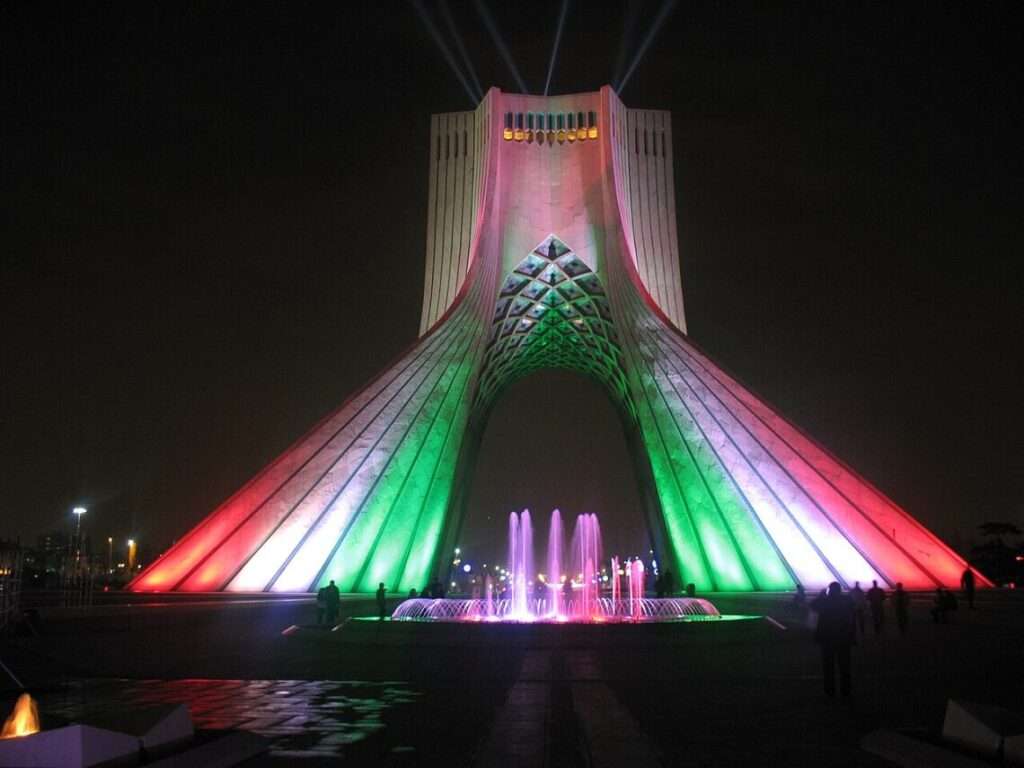
The monument is constructed from a reinforced concrete structure clad in white marble, giving it a distinctive visual presence within Tehran’s urban landscape. The façade geometry is characterized by a network of ribs and curves that interact with natural light, causing its visual perception to shift throughout the day as lighting angles change. This interaction enhances the perception of the mass as a visually dynamic sculptural element despite its physical permanence, lending the tower a character that combines commemorative symbolism with a contemporary architectural presence.
Formal Transformation Between Historical References and Modernity
Azadi Tower represents an architectural attempt to integrate elements from different periods of Iranian architectural history into a single composition. The main arch draws inspiration from the expansive forms of Sassanian architecture, while the upper details evoke motifs associated with Islamic architecture. Rather than reproducing these elements literally, the design reinterprets them within a modern structural framework, giving the monument an independent architectural identity that balances historical continuity with contemporary geometric language.
Structural Engineering and Functional Integration
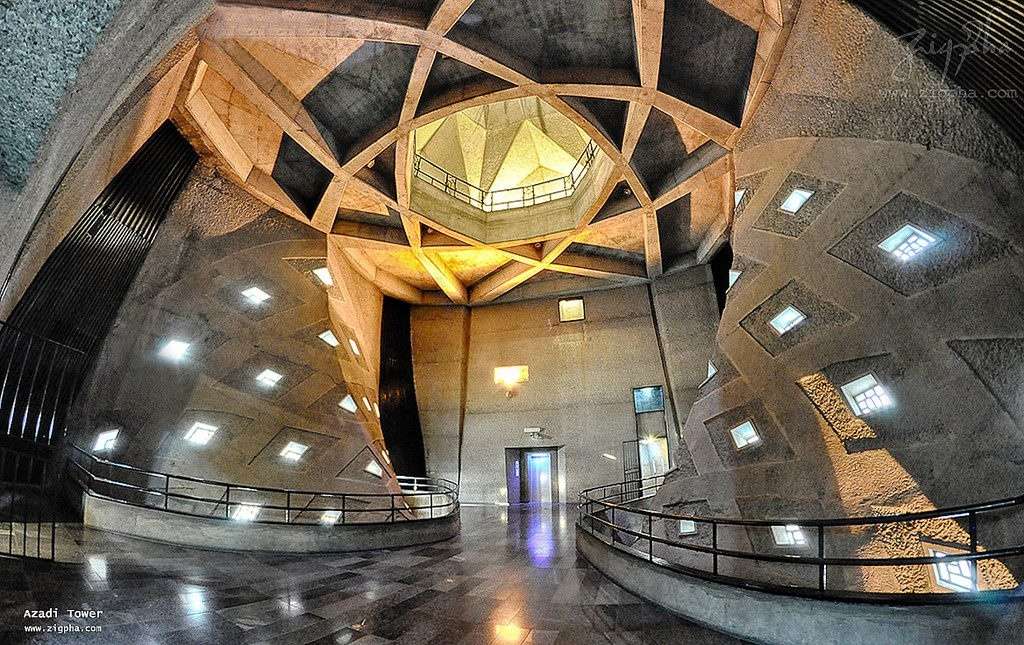
The monument’s structural system relies on cast-in-place reinforced concrete to support its curved surfaces and intersecting arches. The façades are clad with thousands of marble panels designed to conform to the tower’s complex geometry, creating a cohesive envelope that integrates structural function with aesthetic expression. At the same time, cultural and service functions are organized within underground levels, preserving the purity of the commemorative mass above the plaza without visual congestion. The use of marble as one of the primary building materials contributes significantly to the monument’s visual identity.
Spatial Organization and Underground Levels
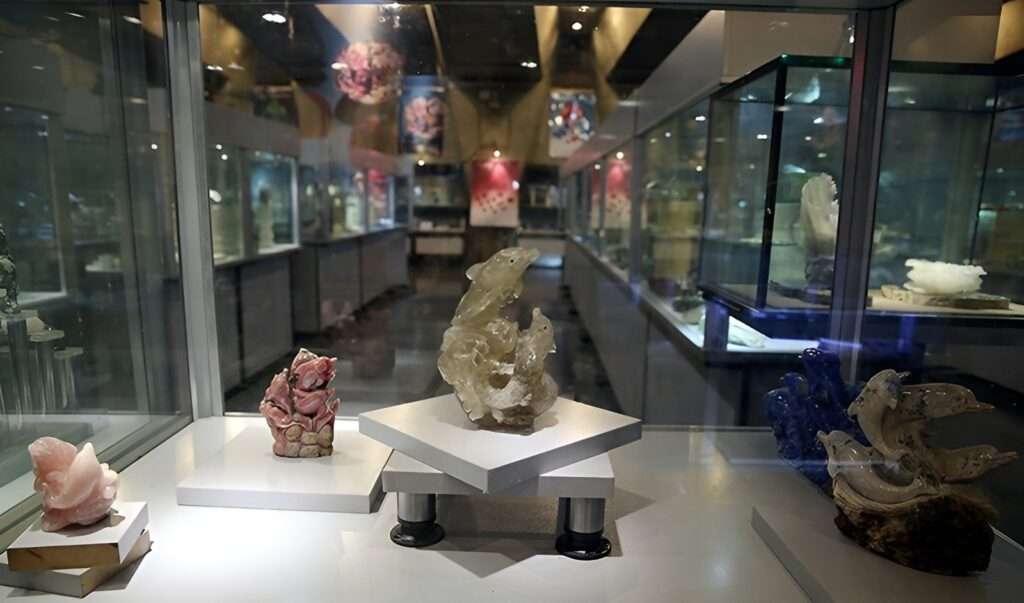
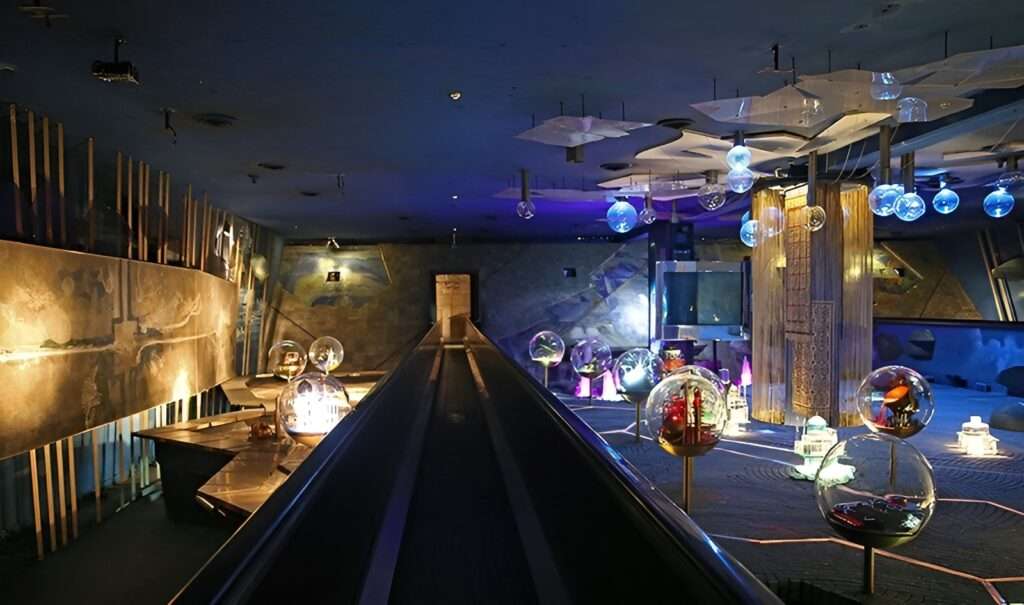
Functionally, the tower is organized into three interconnected levels linked by elevators and stairways, while most cultural activities are concentrated within the spaces beneath the plaza. This area includes a museum, exhibition halls, and venues for cultural events and multimedia presentations, transforming the monument from a memorial landmark into an active cultural center. The transition from the open plaza to these enclosed spaces creates a clear spatial progression that enhances visitors’ perception of the relationship between the visible mass above ground and the functional programs concealed beneath it.
Urban Extension and Symbolic Transformation
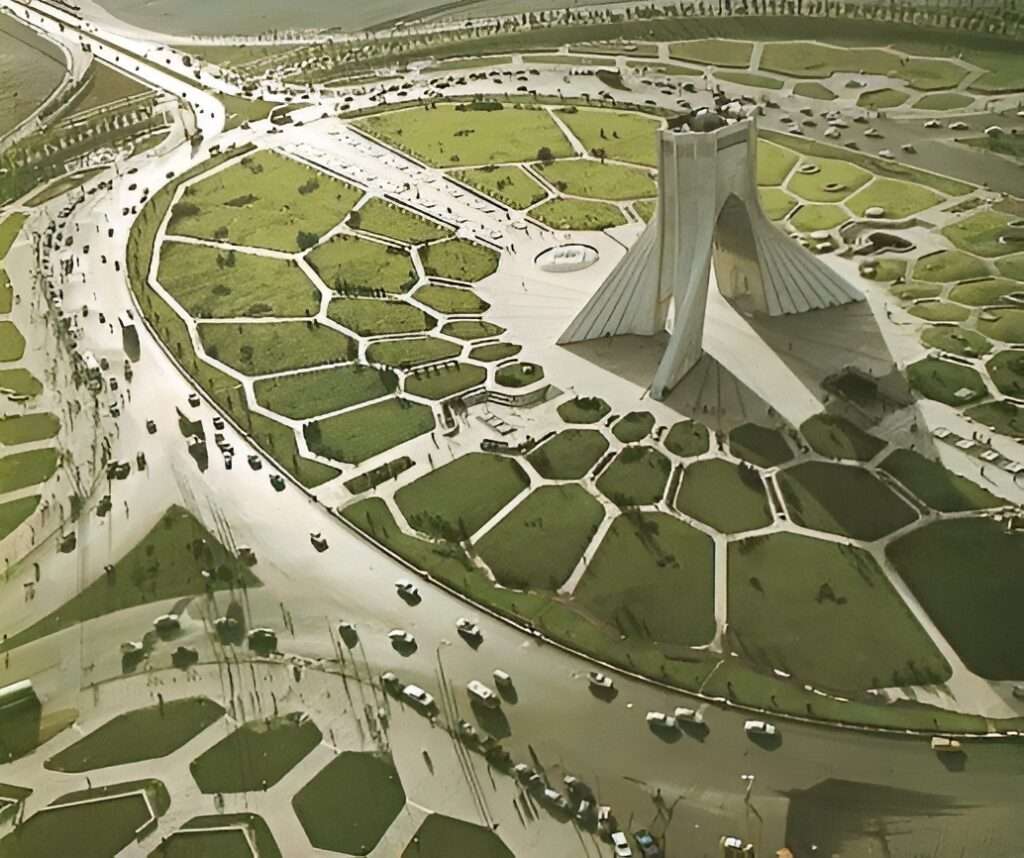
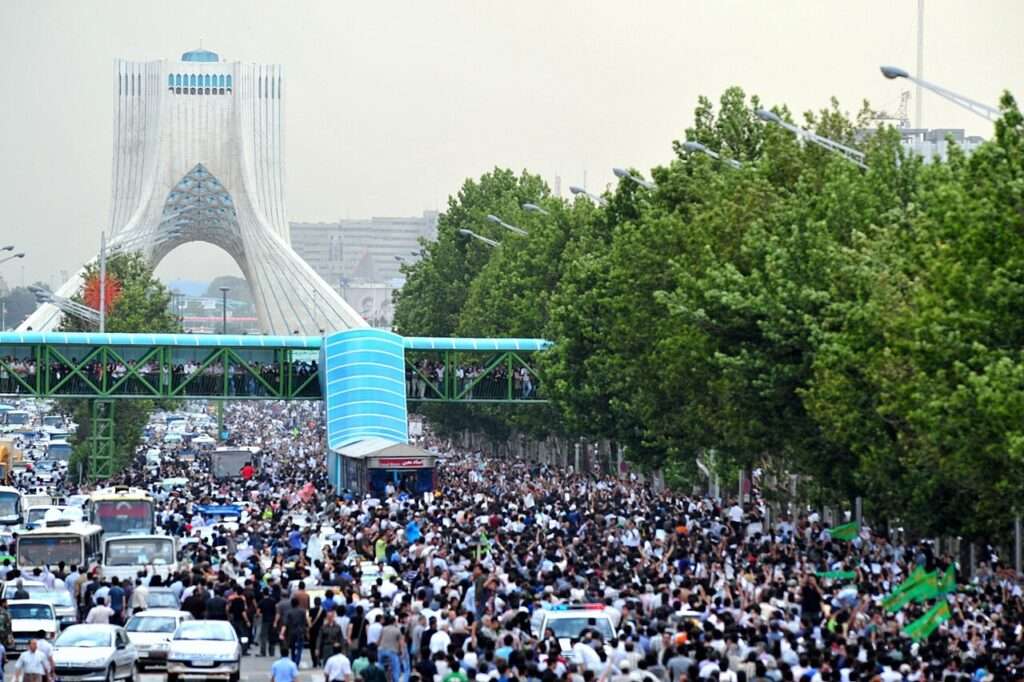
Azadi Tower stands at the center of a cultural complex covering approximately 68,000 square meters (731,946 square feet), surrounded by green spaces, fountains, and circulation paths inspired by the principles of Persian gardens. Since its inauguration, the tower has surpassed its original commemorative role to become one of Tehran’s most prominent urban symbols. Originally constructed under the name “Shahyad Tower,” it acquired new meanings following the Iranian Revolution and became known as “Azadi Tower,” a transformation that reflects architecture’s capacity to absorb political and social change without losing its spatial presence or symbolic value. As one of Tehran’s iconic landmarks, it also contributes to the identity of major cities in the region.
Public Space and Civic Presence
The significance of the tower extends beyond its architectural form to its role as a public space associated with national celebrations, civic gatherings, and cultural events. The scale of the surrounding plaza and the clarity of its visual presence have reinforced its status as one of Iran’s most important urban landmarks, serving as a meeting point between historical memory and contemporary civic identity within an urban landscape that continues to preserve its symbolism and influence to this day.
✦ ArchUp Editorial Insight
Azadi Tower can be understood as an architectural negotiation between historical memory and the national modernization project rather than as an isolated commemorative monument. Its integration of Sassanian geometry, Islamic motifs, and reinforced concrete technologies reveals an attempt to condense centuries of cultural identity into a single urban artifact. More importantly, the project transcends symbolism through the incorporation of underground cultural functions, transforming the monument into an active civic framework within the broader discourse of architecture and urban development. Similar analytical perspectives are often explored through architectural research and professional discussion.
However, this interpretation may overemphasize the notion of continuity while overlooking the impact of political transformations in reshaping meaning. The tower’s enduring presence may be linked as much to its strategic urban location and its ability to accommodate evolving narratives as to its formal composition itself. From this perspective, the persistence of its symbolism appears to stem from the capacity of major landmarks to absorb successive interpretations rather than from architectural innovation alone. As a result, the tower remains a valuable reference within architectural archives and studies of significant urban projects.