BIG and Polk Stanley Wilcox Reveal Design for Bentonville STEM Campus

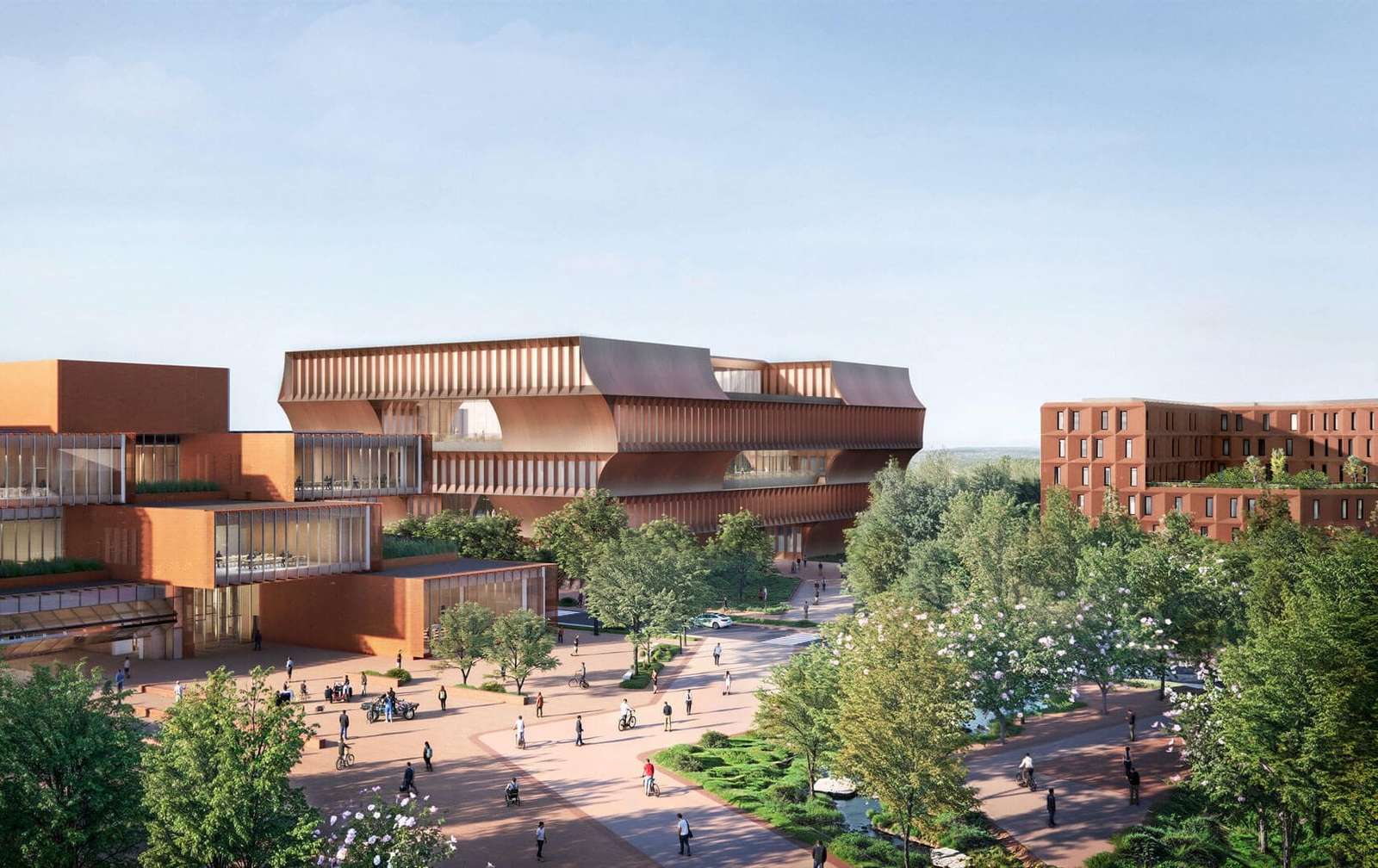
Bjarke Ingels Group (BIG) and Polk Stanley Wilcox (PSW) revealed designs for a new nonprofit, STEM-focused university campus in Bentonville, Arkansas. The project occupies approximately 422,000 square feet on the former site of the Walmart Home Office. The Walton family supports the institution, which aims to prepare students for careers in artificial intelligence and technological change.
The masterplan organizes the campus across two city blocks, featuring three primary buildings with reddish, weathered facades and industrial silhouettes. The design team integrates green spaces and public squares throughout the site to connect the academic environment with the surrounding urban fabric. This strategy seeks to dissolve traditional boundaries between faculty, students, and the local community.
Inhabited showcases and makerspaces define the program
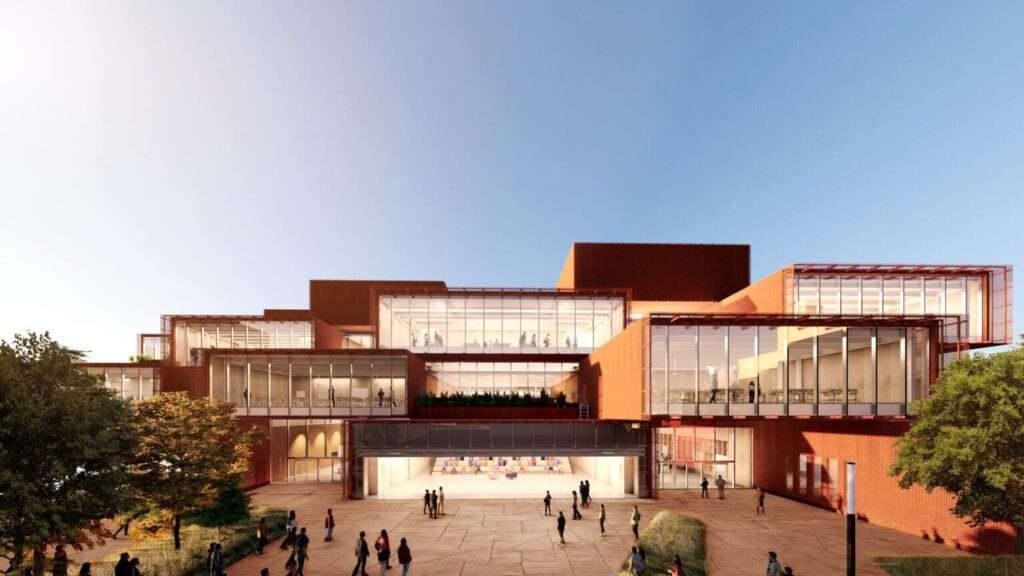
The makerspace serves as a physical showcase for experimentation and rapid prototyping. This building houses workshops, laboratories, common areas, and a flexible forum. Large glazed sections allow passing citizens to observe the internal activity, reinforcing the goal of social and academic accessibility. The design creates a lively neighborhood atmosphere that supports both professional and educational functions.
The academic building features a large open atrium that organizes study areas, classrooms, labs, and office spaces. Clerestory windows provide natural light to the central interior volume. The design references regional Ozark vernacular, incorporating elements like the dogtrot breezeway and stacked volumes that echo the logic of historic log houses found in Northwest Arkansas.
Residential courtyards and landscape integration
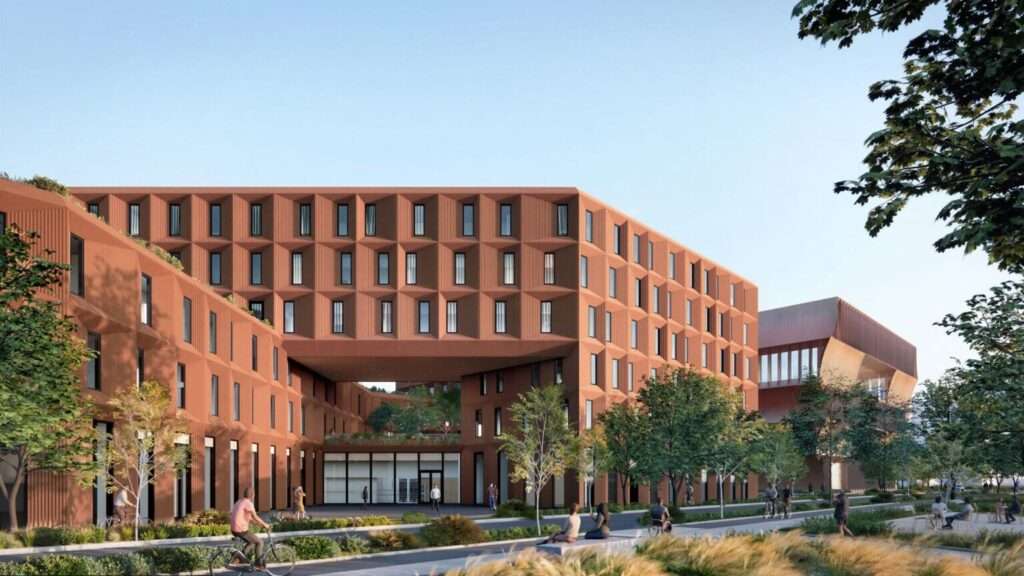
The student residence utilizes a figure-eight floor plan to create two distinct outdoor environments. These elevated courtyards sit above a dining hall and shared amenity spaces on the lower levels. The building orientation ensures that one courtyard receives morning light while the other captures afternoon sun, providing varied thermal and lighting conditions for residents throughout the day.
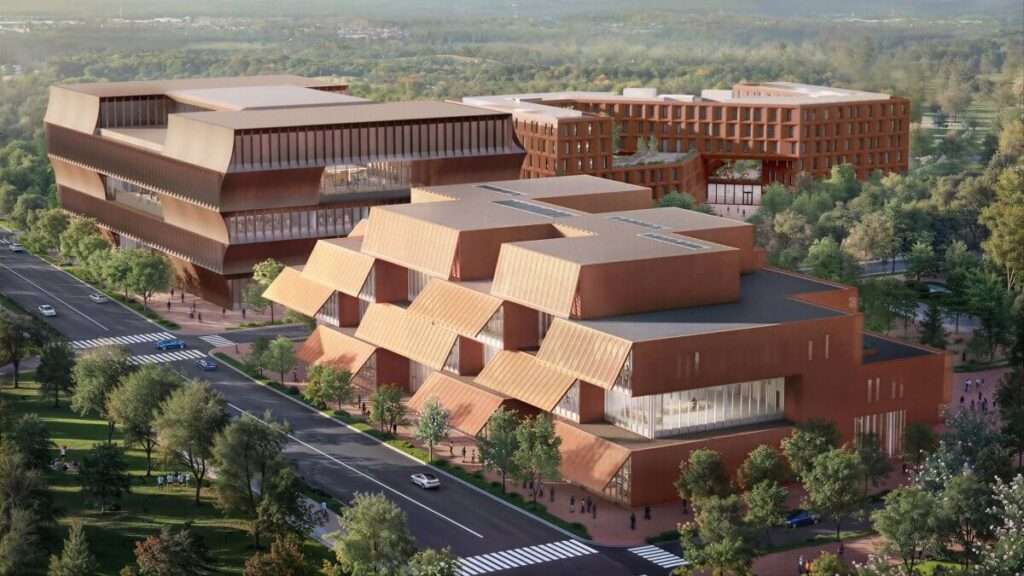
A network of green spaces connects the three primary structures, facilitating pedestrian movement across the architecture of the buildings. These landscape interventions act as transitional zones between the specialized academic facilities and the public realm. The project team expects the university to welcome its first class of students in 2029.
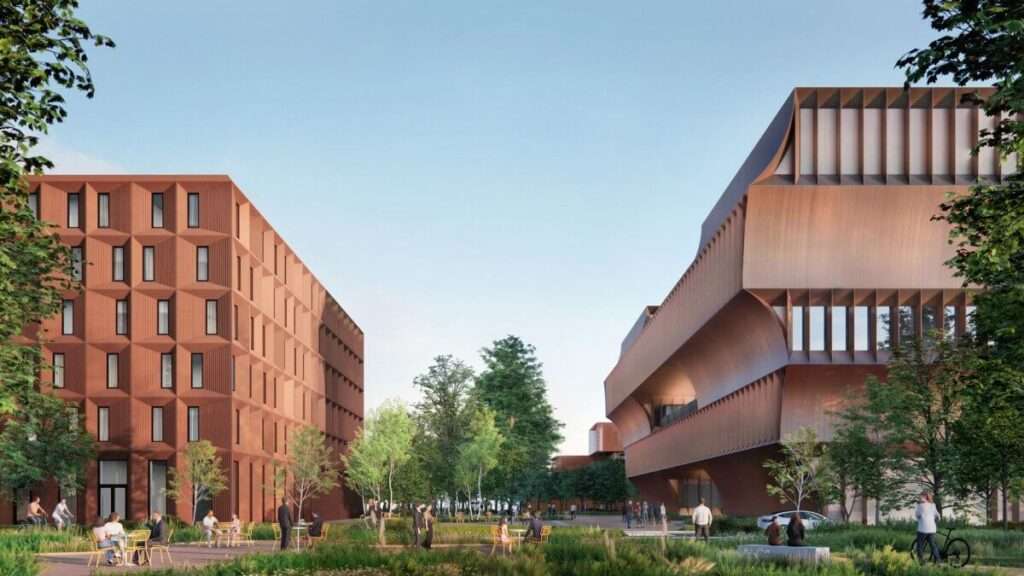
“For the new campus, we have sought to break down the boundaries between campus and community through a lively new integrated neighborhood for faculty and citizens alike.”
Bjarke Ingels
Project Team: Bjarke Ingels Group (Design Architect), Polk Stanley Wilcox (Architect of Record). Location: Bentonville, Arkansas.
Project Notes: The project currently undergoes design development. The team plans to open the university to students in 2029 on the former site of the Walmart Home Office.
✦ ArchUp Editorial Insight
The design reclaims industrial archetypes to merge specialized academic production with civic life, utilizing the dogtrot vernacular to soften the scale of a massive corporate-to-campus conversion. By exposing the makerspace as an inhabited showcase, the architecture frames technical labor as a public performance, attempting to integrate rapid prototyping into the daily pedestrian experience of the downtown core.
However, this spatial transparency often masks the rigid control of a privately funded educational enclave. While the project champions accessibility through tuition subsidies and open squares, the aestheticization of “industrial forms” risks reducing the local Ozark identity to a curated backdrop for corporate philanthropy. Such developments can inadvertently accelerate gentrification in cities, potentially displacing the very community the “integrated neighborhood” claims to welcome into its reddish, weathered halls.