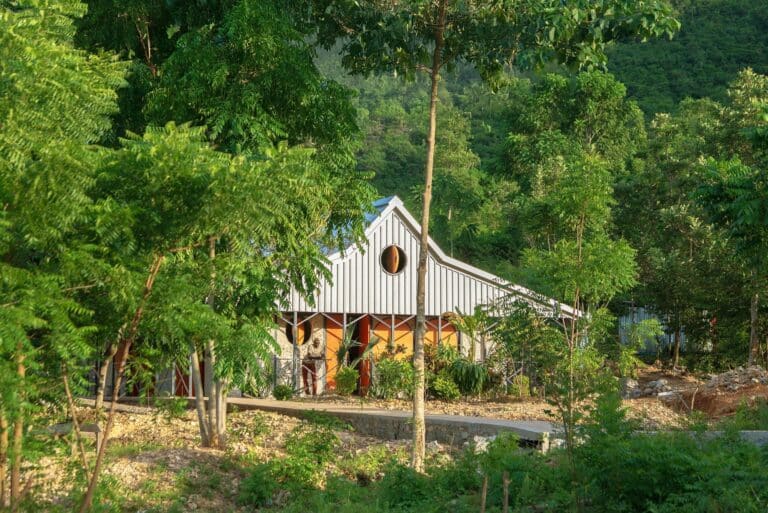
Rock Pavilion: Nature and Architectural Space Redefined

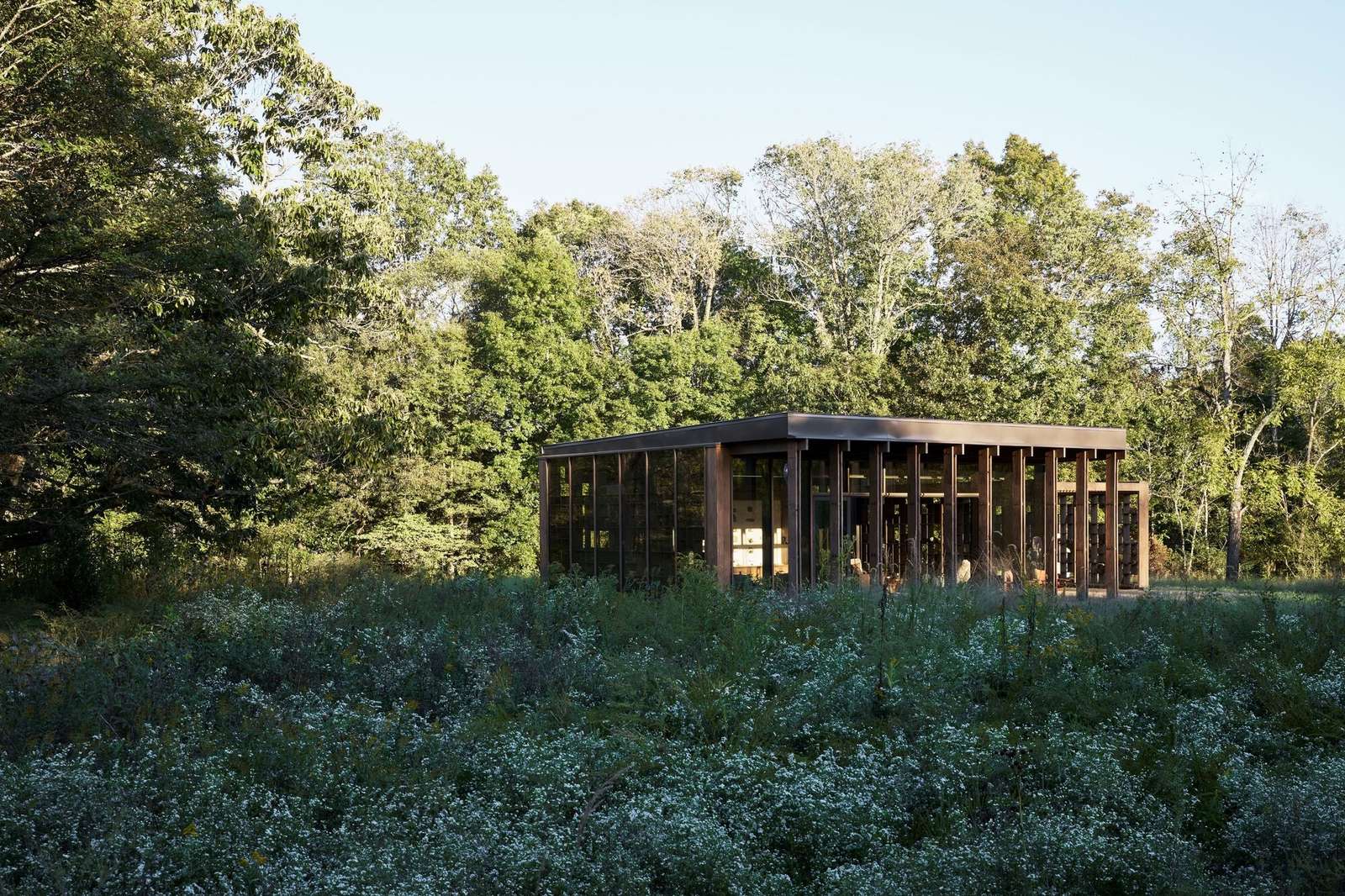
The Dialectic of Mass and Void: The Interplay of the Structure with the Forest Edge
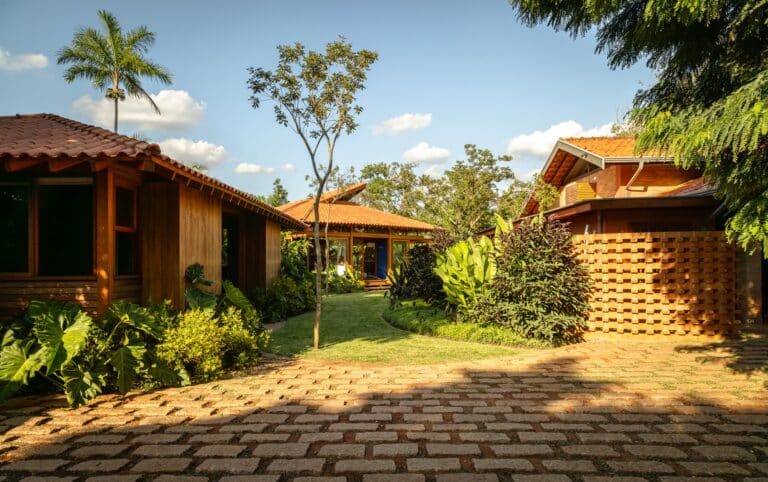
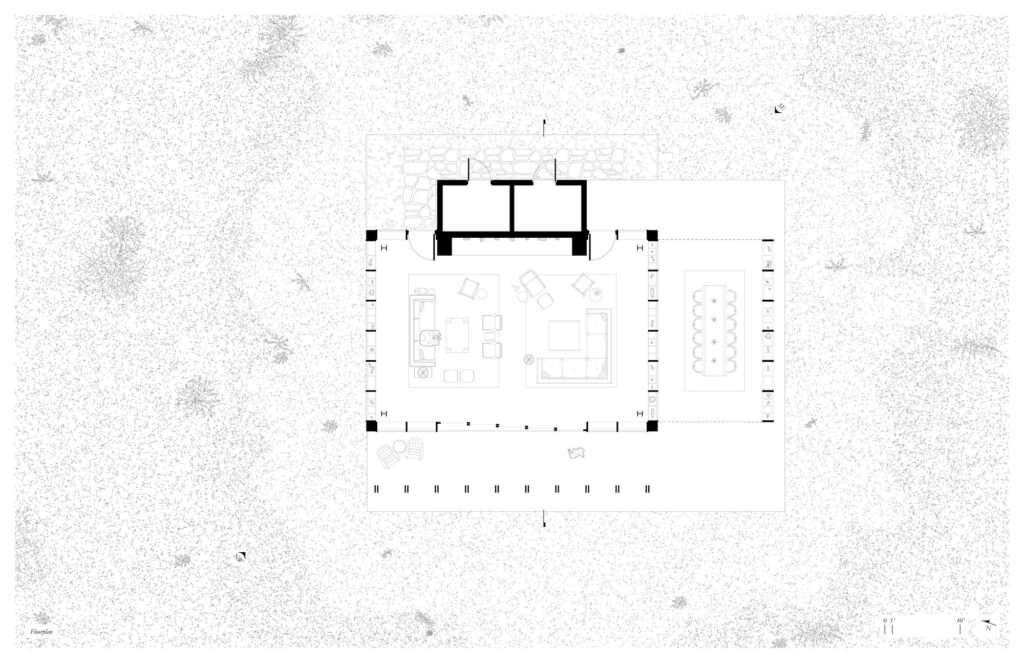
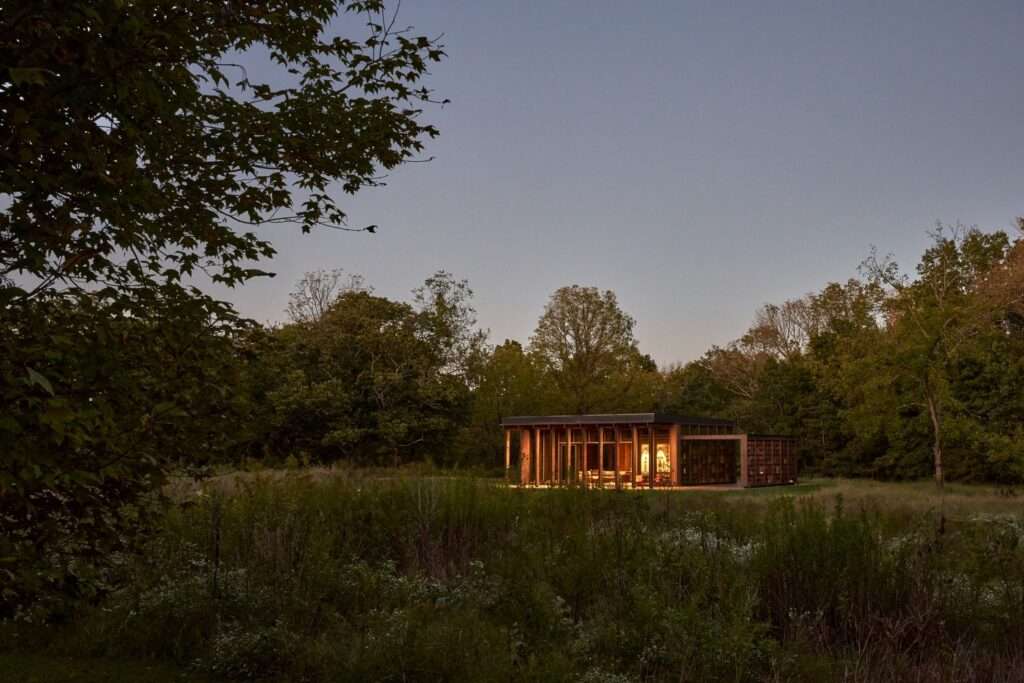
The pavilion is positioned along the threshold between the expansive natural landscape and the agricultural surroundings, where the structural system engages with the site not as a visual backdrop, but as an active agent that defines the trajectory of human experience. This interplay emerges through a restrained glass envelope framed in dark “Douglas Fir” wood, which functions as a device for regulating vision and framing the surrounding river and environmental landscape. As one moves from open spaces toward the tree line, the user experiences a gradual spatial transformation; the building visually recedes, allowing natural elements and rock formations to articulate the true identity of the place. This turns the moment of entry and passage into an experience grounded in conscious contemplation and attentive observation.
Light Scenography: The Display Wall and the Interaction of Shadows
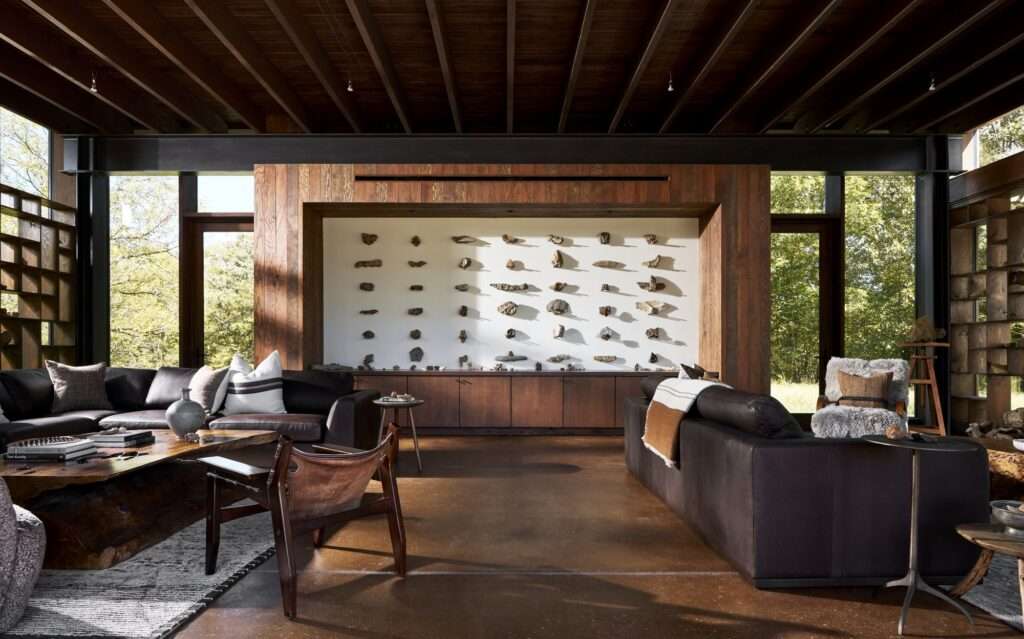
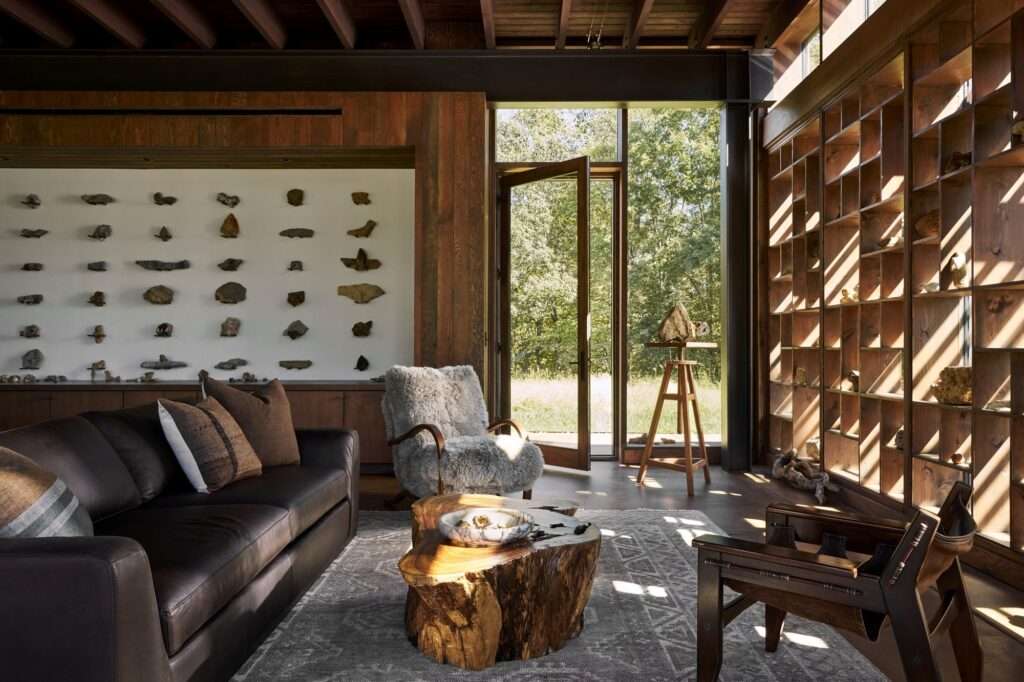
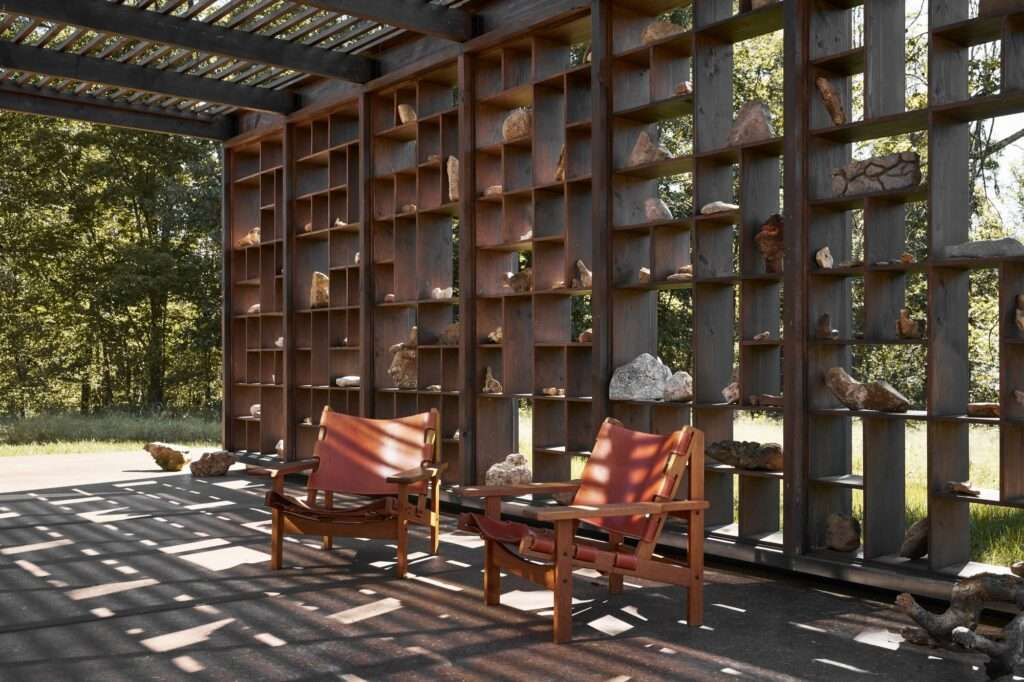
The internal design language operates within a context that merges storage functionality with a constantly shifting visual effect, most clearly expressed in the continuous shelving system that wraps and penetrates the glass boundary between interior and exterior. This interwoven network creates a living scenographic dialogue governed by the path of the sun and the movement of light throughout the day, where shadows intersect with the exhibited stone masses to reveal their texture and material detail. This dynamic enhances the psychological impact of the space; the building functions not as a static shelter, but as an interactive gallery whose appearance changes with shifting light angles, giving movement within the farm an exploratory quality that directly connects the user to the surrounding environment and ecosystem.
Structural Transparency: Dissolving Boundaries and the Sense of Enclosure
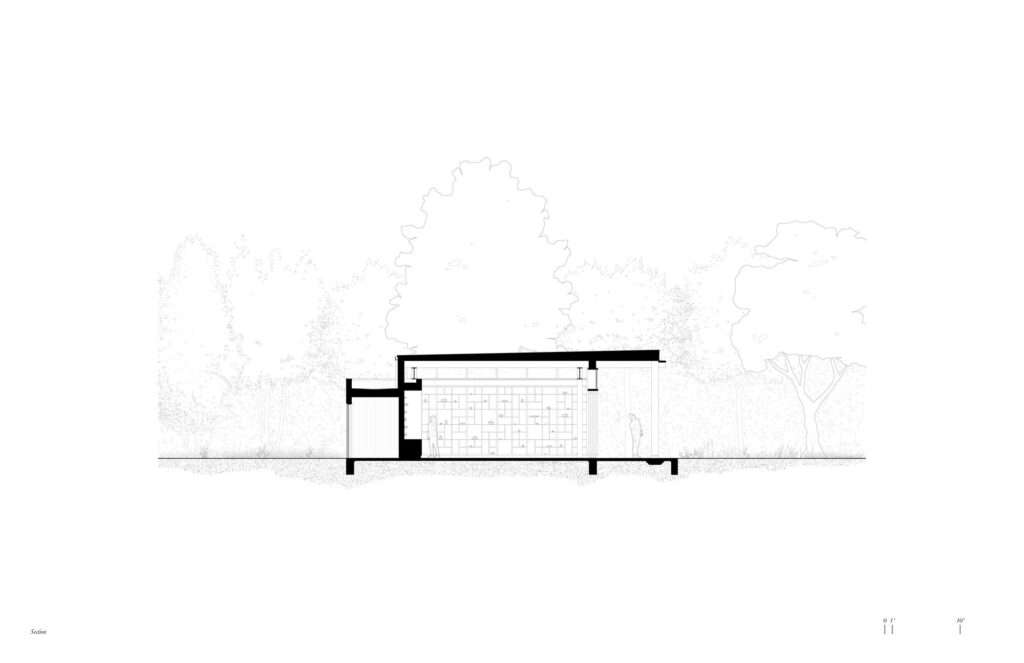
The forested character of the site imposes a strict design language that balances visual openness with the creation of a protected human realm. This balance becomes evident while crossing the covered corridor toward the central exhibition hall, where “Douglas Fir” beams extend across the space and rest on wide-flange steel beams through concealed structural connections. This technical solution allows large glass panels to span beyond the visible structural frame, dissolving the boundary between interior space and exterior environment and immersing the pavilion in a flowing natural light that shifts with the density of the surrounding trees.
Material Scenography: Light Filtering and System Integration
The material scenography design extends beyond the enclosed space into an outdoor dining area, where a third wall of shelving defines its visual boundary beneath a precisely engineered lattice roof. This roof acts as a physical filter that modulates the path of the sun and refines its rays, generating continuously changing geometric patterns of light and shadow throughout the day, giving the seating area a calming yet vital atmospheric quality. At the rear, a compact service volume houses mechanical systems and storage spaces without visually intruding on the experience, while a concealed air diffuser integrated into an upper slit ensures airflow and environmental control while preserving the purity of the ceiling plane and its uninterrupted visual continuity.
Material Embodiment: Material Rigour and Tactile Dialogue
The material palette of the project is strictly defined, aiming to echo the tonal range and rough texture of the exhibited stone collection. Dark-stained “Douglas Fir” wood, exposed aggregate concrete, steel, and glass form a restrained and durable material composition that gives the space a scenographic weight grounded in the earth. Through the use of a small footprint and simple geometric construction logic, the structural priority is given to longevity and permanence over formal excess, resulting in an architectural form that feels firmly embedded in its site rather than a transient expressive object imposed upon it.
Human Dimension: Architecture as a Framework for Reflection and Belonging
The pavilion transcends its role as an isolated structural object, becoming a spatial framework designed to direct human experience toward gathering, contemplation, and the perception of shifting everyday beauty. The design language works in harmony to enhance the psychological and material impact of space on its users, where air movement and light paths merge with material masses to create a continuous sensory experience. This critical approach reinforces the notion that Architecture as a Framework for Reflection and Belonging gains its deepest meaning when a structure is profoundly rooted in its natural context, transforming space into an emotional refuge that deepens the human connection to its surroundings.
✦ ArchUp Editorial Insight
The pavilion articulates a contemporary desire to dissolve tectonic mass within the natural landscape, shifting focus from expressive form toward strict environmental observation. Through a restrained palette of construction materials and concealed structural connections embedded within a wooden grid, the project frames geology as a curated interior experience, attempting to address the spatial alienation embedded in contemporary rural development.
However, this deeply localized approach reveals a romantic blind spot regarding global real estate dynamics. The elevation of raw stone into curated commodity relies on extractive processes and carbon-intensive logistics that strain fragile ecosystems. This reductive focus on programmatic purity overlooks how contemporary architecture must negotiate complex environmental supply chains rather than merely aestheticizing immediate topography.