Beskid House: Topography, Form, and Function Integration

Topographical Context and Site Response
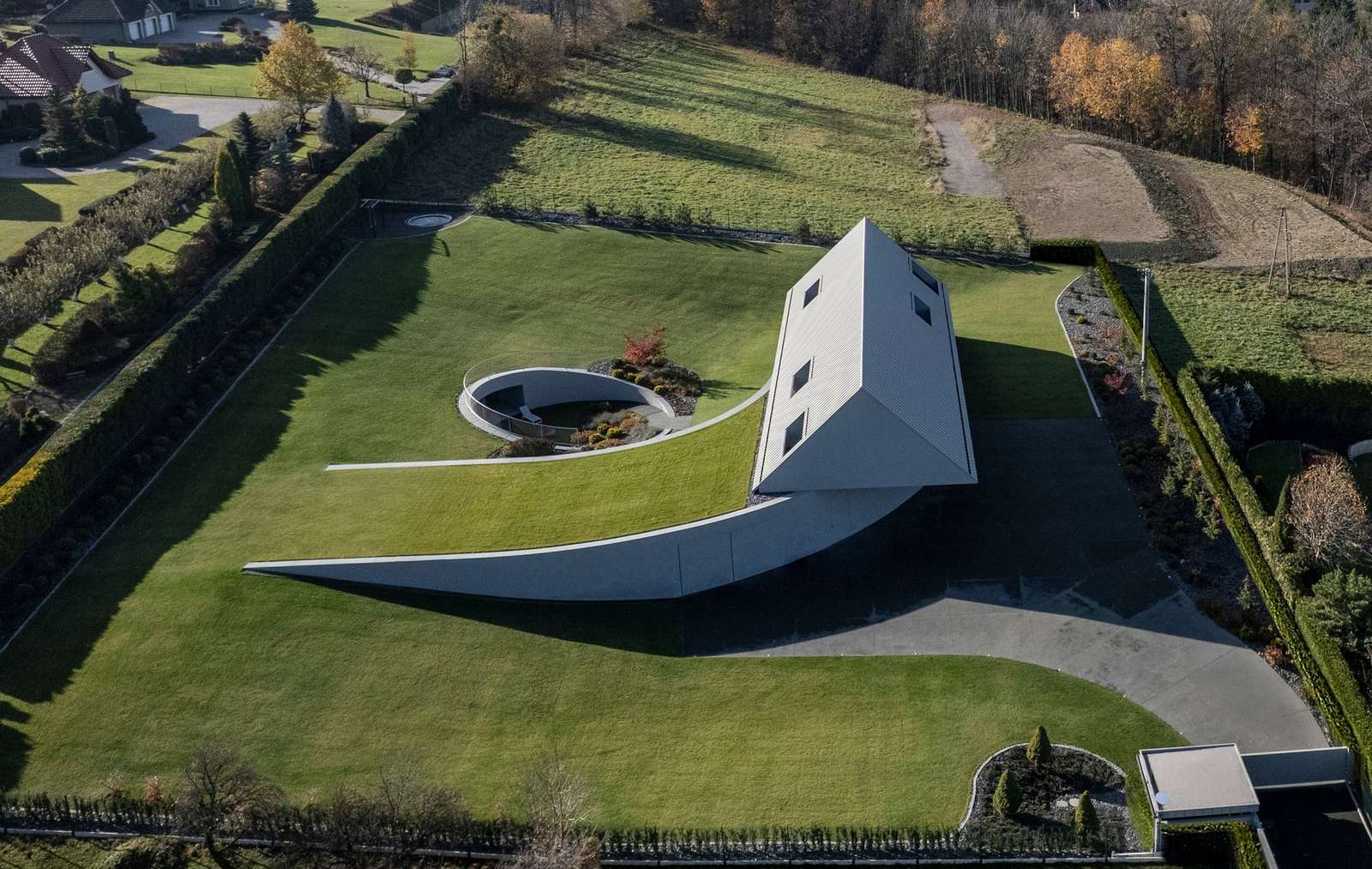
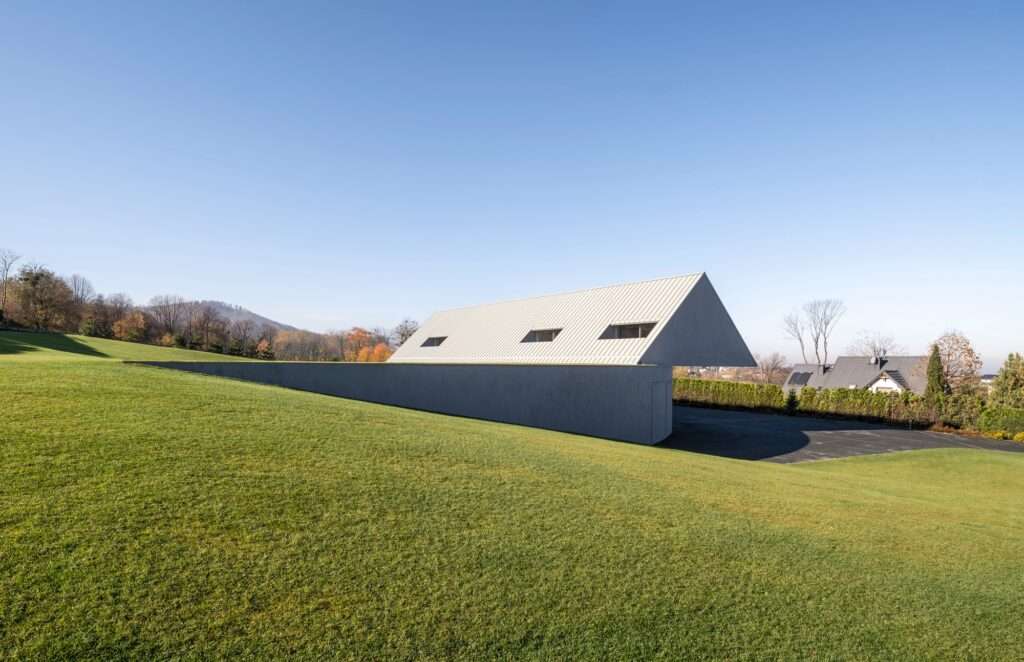
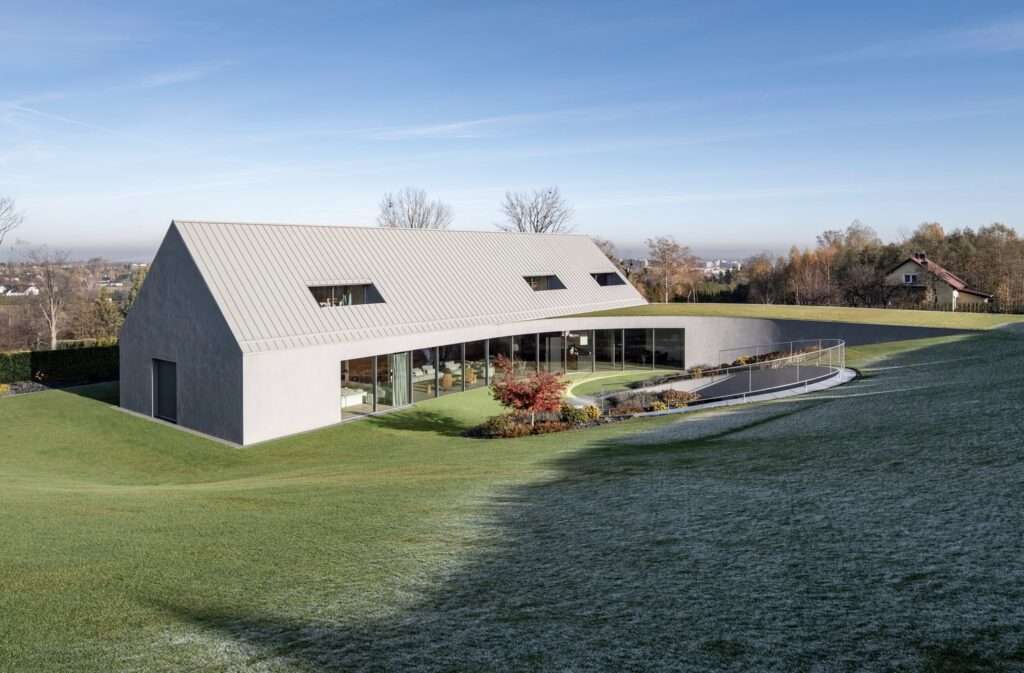
The house is located in the Beskid Mountains on a plot of land with a pronounced and challenging slope. Instead of resisting the terrain, it was treated as a guiding element in shaping the Architecture mass, so that the site becomes part of the building’s formation rather than merely a backdrop.
Geometric Transformation (Yaw) as a Form-Making Mechanism
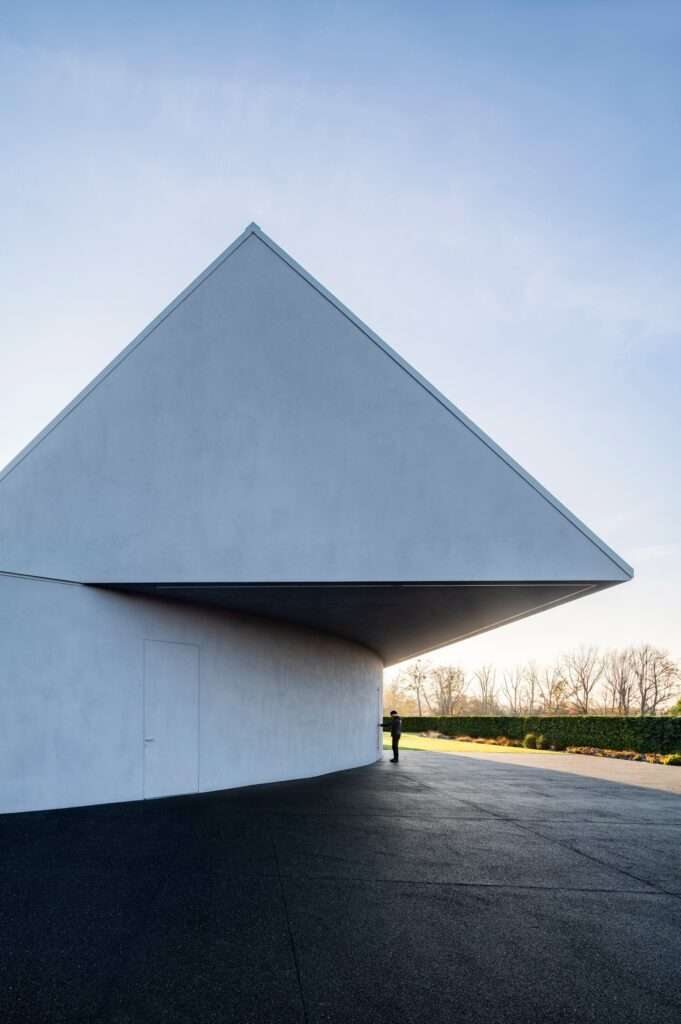
The Design initially began as a conventional volume with a gabled roof aligned parallel to neighboring Buildings, reflecting the local context. Later, a slight rotation around the vertical axis reoriented the mass, allowing the building to be more directly integrated into the slope and linking the composition more strongly with the surrounding landscape.
Spatial Organization and Functional Response
As a result of this rotation, the volume was intuitively divided into clear functional zones, with openings placed in locations requiring stronger connections to the exterior. This adjustment helped structure the relationship between interior and exterior according to usage needs rather than relying on a predefined fixed form.
| Field | Details |
|---|---|
| Architects | KWK Promes, Robert Konieczny |
| Year | 2025 |
| Photographs | Jakub Certowicz |
| Structural Design | Kornel Szyndler Proeco |
| Home Decor | WIDAWSCY studio architektury |
| Glazing | KELLER system glazing, KER+3MR |
| Category | Houses |
| Authors | Marek Golab-Sieling, Robert Konieczny |
| Collaboration | Anna Szewczyk |
| Site Area | 4870 m² |
| Gross Covered Area | 1354 m² |
| Ground Floor | 581.7 m² |
| First Floor | 206.7 m² |
| Pool | 141.5 m² |
| Volume | 3095 m³ |
| Country | Poland |
Functional Distribution and Programmatic Response to Use
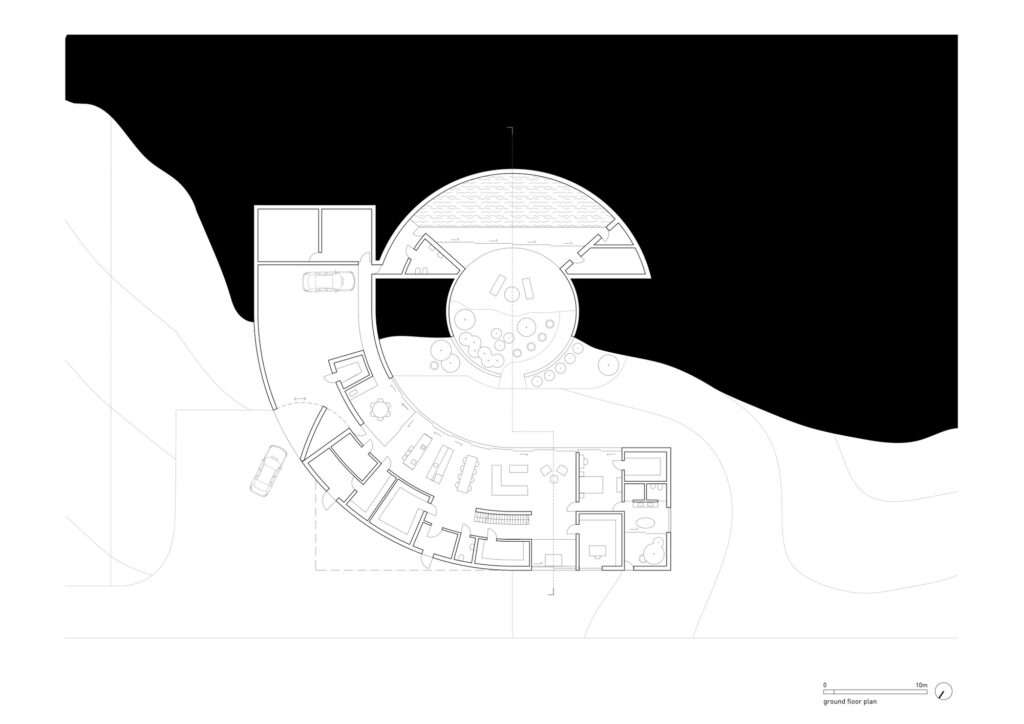
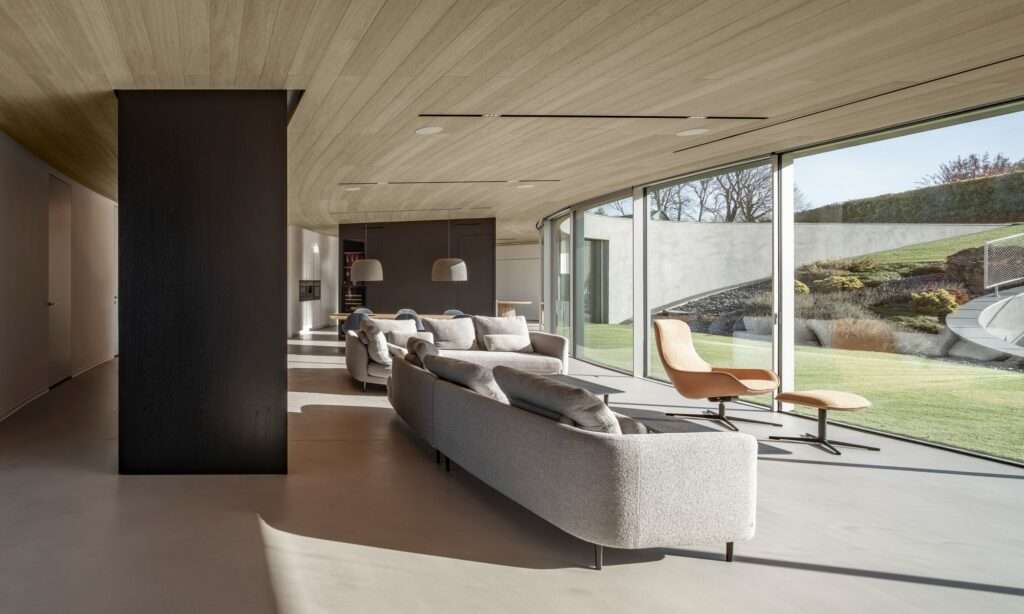
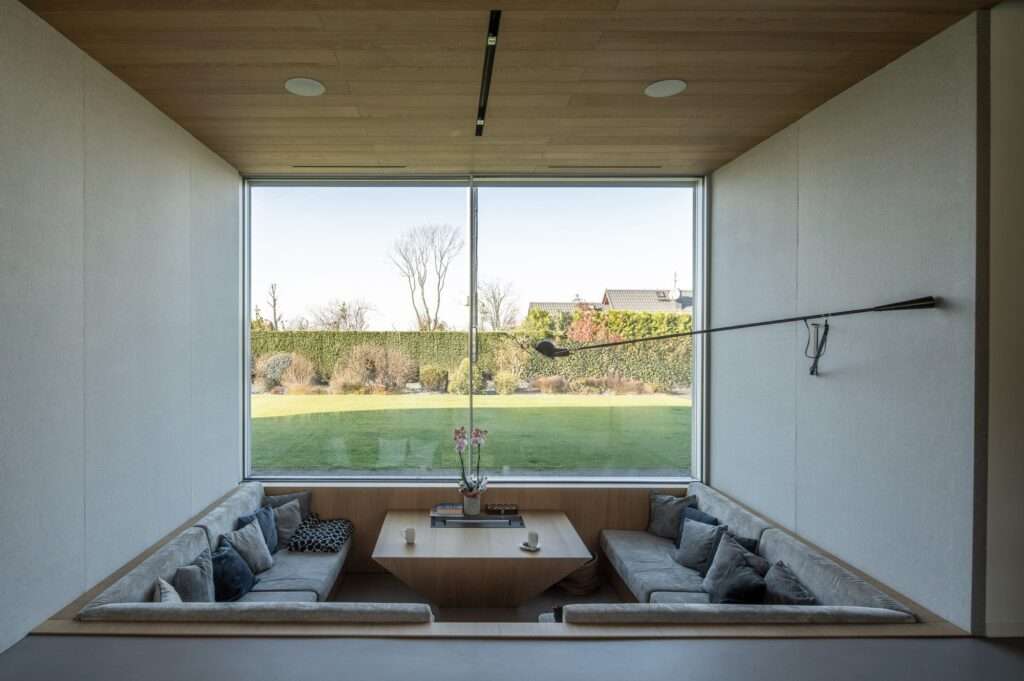
The architectural organization results in a clear functional layout, where the entrance area and technical spaces are located at the front façade, corresponding to uses related to vehicles and outdoor activities. On the garden-facing side, the open living area is distributed to maintain a direct connection with greenery, natural light, and views, while the sleeping zone is separated on the upper floor to ensure greater privacy. The Interior Design approach supports this functional clarity.
Adaptive Construction Process and the Introduction of the Pool Element
During the Construction phase, an unplanned variable emerged in the form of a user requiring intensive rehabilitation. This development led to the introduction of a swimming pool into the project. As a result, a design challenge arose regarding how to integrate this element within an already ongoing construction without disrupting the overall architectural logic.
Design Flexibility and Conceptual Recalibration
The introduction of the pool required a reassessment of several design decisions to ensure the new element could be absorbed within the existing structure. This was treated as a functional shift within the same conceptual framework, preserving the coherence of the project while allowing a flexible response to changes during execution. Such adaptive strategies can be found in various Projects across different contexts.
Integration of Architectural Elements and Central Composition
The swimming pool was integrated into the existing design in a way that did not compromise the overall coherence of the project; instead, it contributed to its functional and formal completion. Upon execution, the element appears as if it had been an inherent part of the original scheme, placed centrally in a circular form to act as an anchor point within the interior space. Detailed Material Datasheets helped guide the selection of finishes around the pool area.
Lighting Strategies and Climatic Interaction
Light played a fundamental role in shaping design decisions, as the topographical orientation of the building required precise placement of openings. UV-filtering glazing was also used to achieve a balance between natural daylight intake and heat reduction. As a result, the building interacts with solar movement and aligns with the slope of the terrain, while part of the roof merges with the surrounding landscape. For more insights on environmental response, browse our Research section.
Site Coordination and Response to Safety Factors
The project design does not rely solely on passive integration with the terrain; it is based on an active interaction with the site, including external landscape planning. In this context, although the initial intention was to use wild meadows to naturally surround the building, the vegetation cover in this specific project was modified in response to safety considerations related to the presence of snakes, where plant growth was intentionally controlled for non-aesthetic reasons. Stay updated with the latest insights via Architectural News.
✦ ArchUp Editorial Insight
The project emerges as a spatial translation of land value logic associated with the slope of the Beskid Mountains, where steep gradients and access constraints act as direct tools for regulating building volume and mass distribution. The initial functional layout reflects a capital logic oriented toward mobility-based use, separating the service frontage for vehicles from residential units. During execution, an unplanned health-related intervention redirects resources toward introducing a centrally placed circular void with a therapeutic function within the spatial system. Constraints related to solar radiation, UV filtration requirements, and environmental risk management intersect to reshape the Building Materials selection and vegetation treatment. You can also explore similar themes in the Archive for reference.
The final composition stabilizes through layered functional zoning separating service functions from landscape-facing living areas and upper private floors, while the alignment of the roof with both slope and solar trajectory operates as an environmental compliance mechanism within a network of structural and regulatory constraints. To see how other architects approach such challenges, visit the Architects Lobby.