Slight Decline in New Home Sales in the U.S. in October 2025

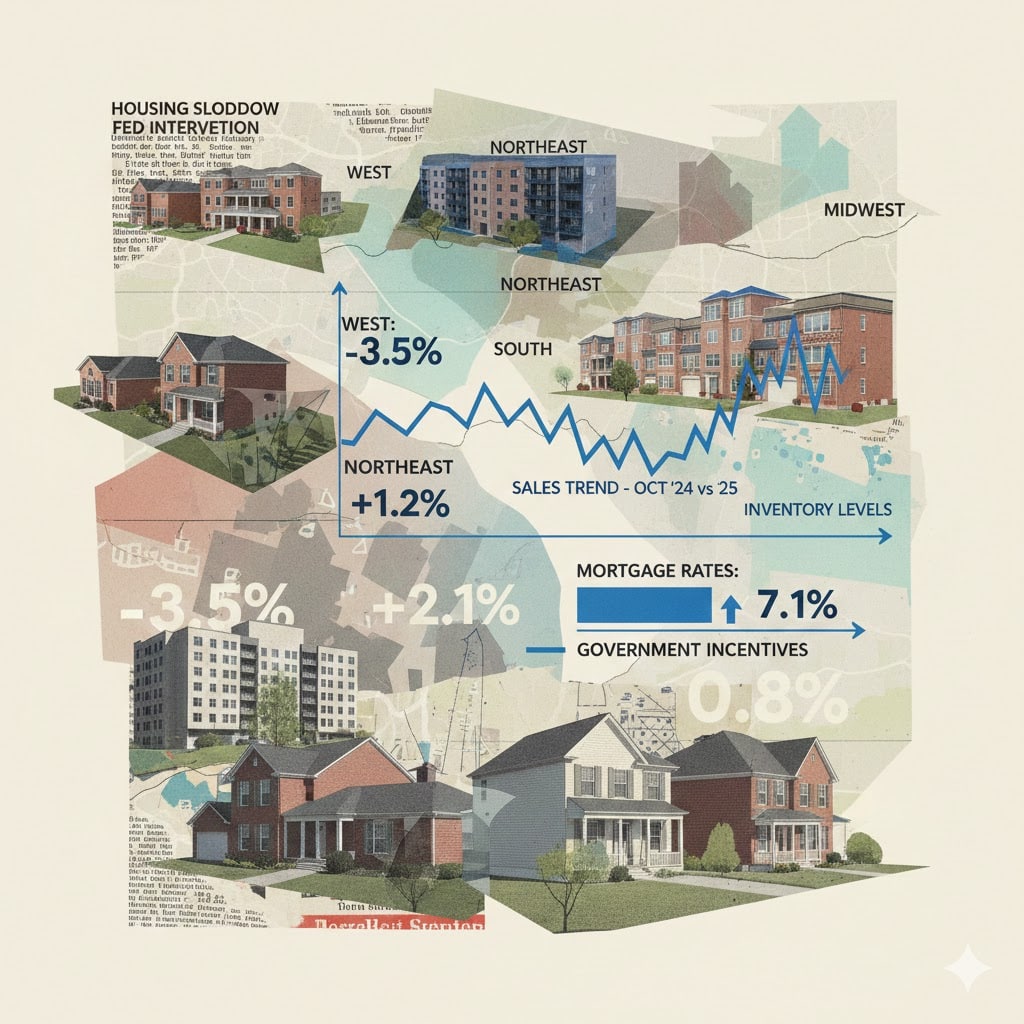
New home sales in the United States experienced a slight decline in October 2025, according to data from the U.S. Department of Commerce. The ministry reported a 0.1% annual decrease, reaching 737,000 homes per year, following a 3.8% increase in September.
Regional Sales Distribution
The decline came after sales reached their highest level since May 2023, with sales in the Western U.S. dropping by 36.3%, in the Northeast by 14.3%, while sales in the Southern U.S. increased by 16.9%. The Midwest saw a 9% decrease.
Inventory and Prices
The number of new homes for sale in October was 488,000 units, unchanged from the previous month, covering 7.9 months of demand. Meanwhile, the average new home price fell to $392,300, down 3.3% from September and 8% from the same period last year.
Future Outlook
Experts indicate that the U.S. housing market is experiencing a period of relative stability after several fluctuations. Some regions are expected to see gradual price improvements, supported by government initiatives such as purchasing $200 billion in mortgage-backed securities, potentially boosting demand for new homes in the coming months.
✦ ArchUp Editorial Insight
The modest decline in U.S. new home sales in October 2025 highlights a transitional phase in Contemporary Residential Development, reflecting regional disparities and market recalibration after prior growth peaks. While inventory levels remain stable and average prices show a slight reduction, these dynamics underscore the importance of Functional Resilience in maintaining supply-demand balance and supporting affordability across diverse urban contexts. However, the uneven performance across regions raises questions about Contextual Relevance, particularly in addressing localized housing needs and integrating new developments within existing urban fabrics. Supported by government interventions such as mortgage-backed security purchases, the market signals a cautious yet steady path forward. Ultimately, this period presents an opportunity for Architectural Ambition focused on stabilizing delivery, enhancing livability, and fostering resilient, adaptable neighborhoods across the U.S.