Rosa Jamaica Beach Club: Massing and Coastal Topography

Mass Dynamics and Living Topography
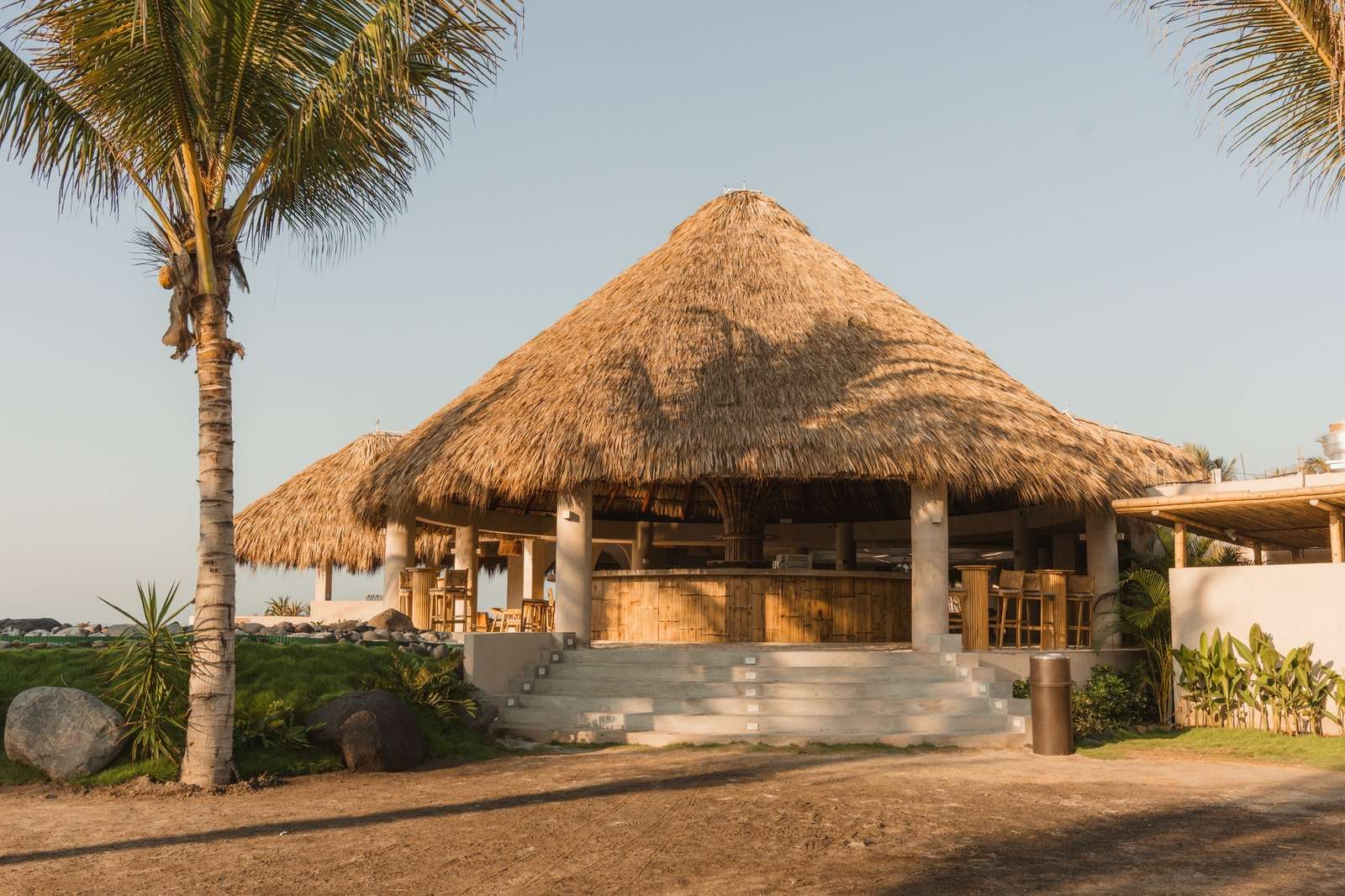
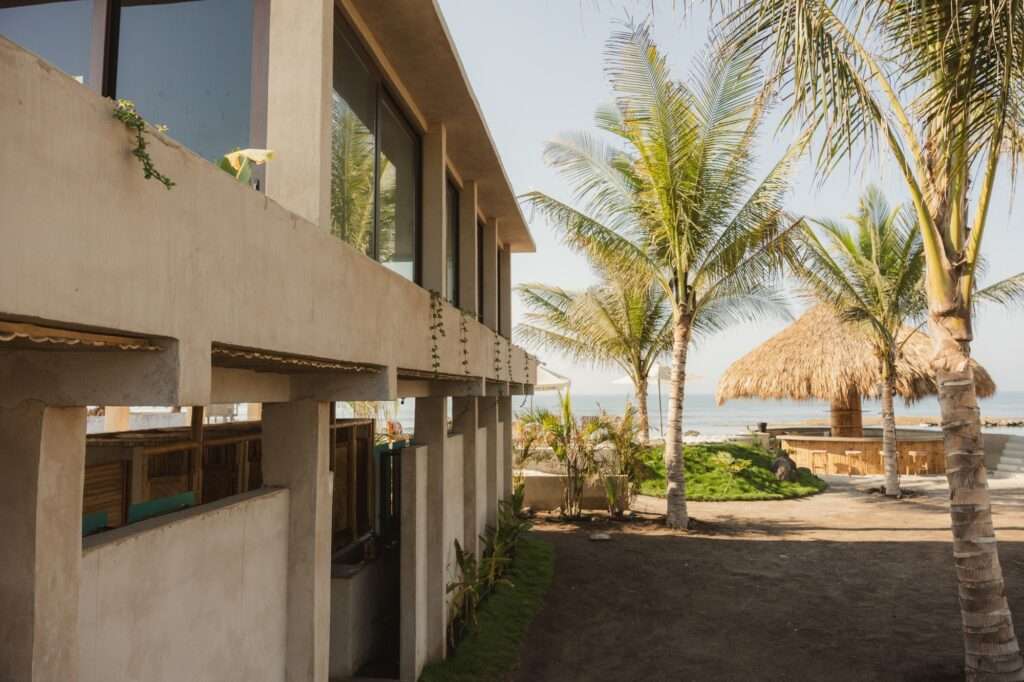
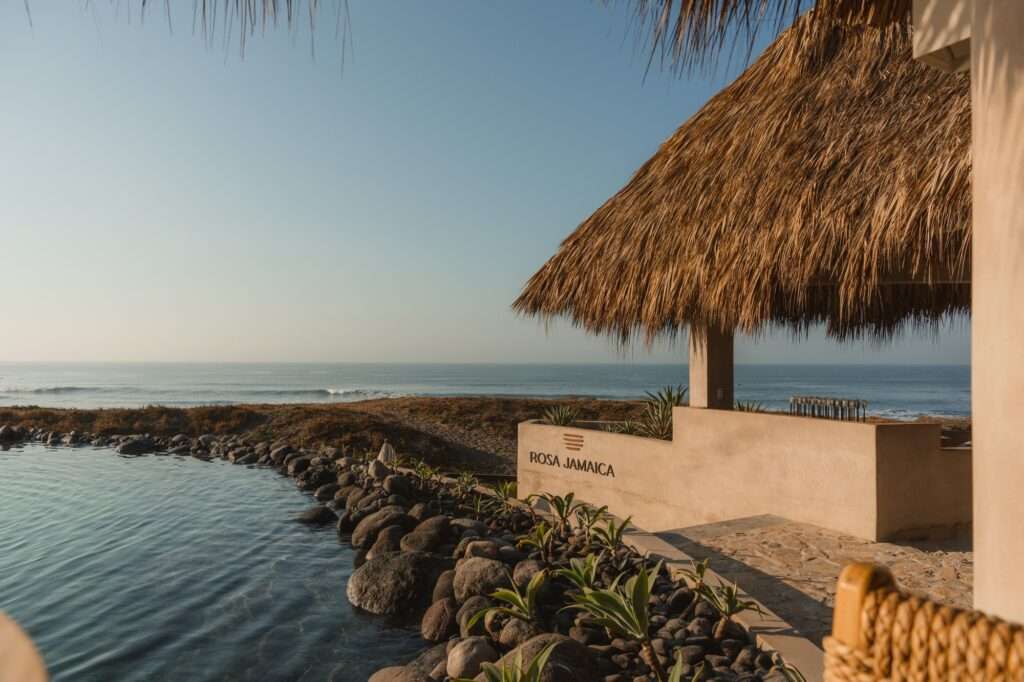
The project engages the site’s topographic character as both a structural given and a primary spatial driver. The massing strategy abandons the idea of imposing architectural volume onto the coastal environment; instead, the functional program of the restaurant, kitchen, and bar is embedded within the existing sand dune. This spatial interweaving generates a scenographic experience based on concealment and revelation, where architectural masses do not confront the sea but rather shelter behind the natural hill, which acts as a physical buffer and a guide for coastal wind movement. This results in a naturally achieved thermal and hydrological balance within the operational spaces without reliance on complex mechanical systems.
Human Experience and Spatial Transition
The human experience within the project unfolds through a transitional path that begins at the silent moment of entry behind the dune, where direct visual access to the sea is deliberately obstructed to create a psychological state of anticipation. As one moves through the passages carved into the terrain, a dynamic interaction emerges between the user and natural light. Sharp shadows cast by the oriented masses intersect with the sun’s shifting trajectory throughout the day, giving the material surfaces a temporal, ever-changing character. Meanwhile, the open design allows coastal air currents to flow through the space, engaging the body directly and reinforcing a tangible connection to the surrounding natural environment.
Organic Distribution and Material Simulation of the Coastal Environment
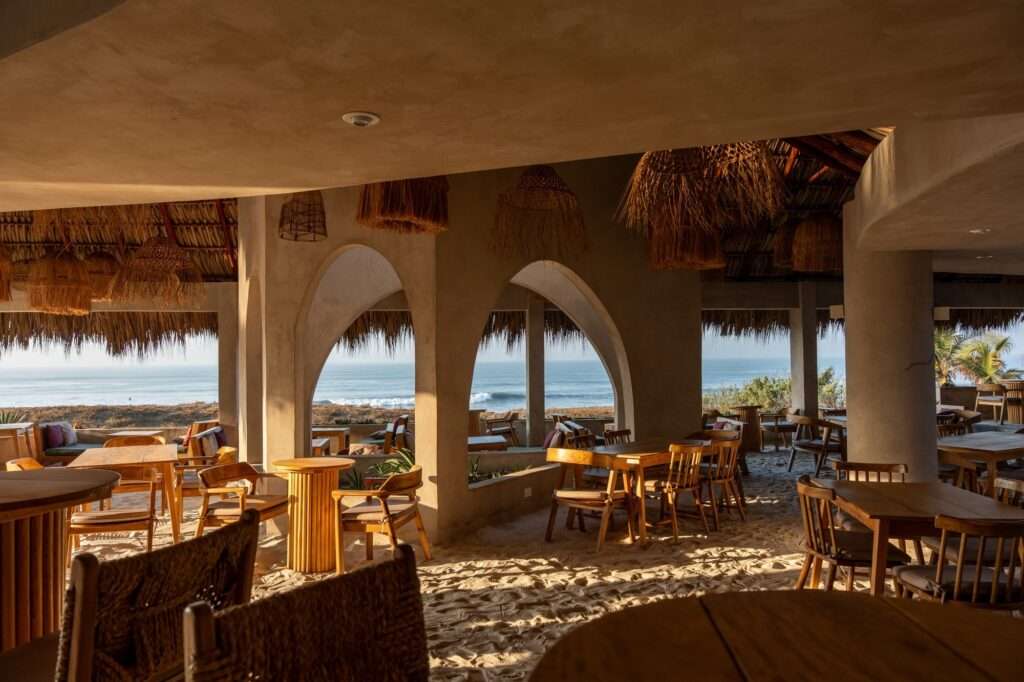
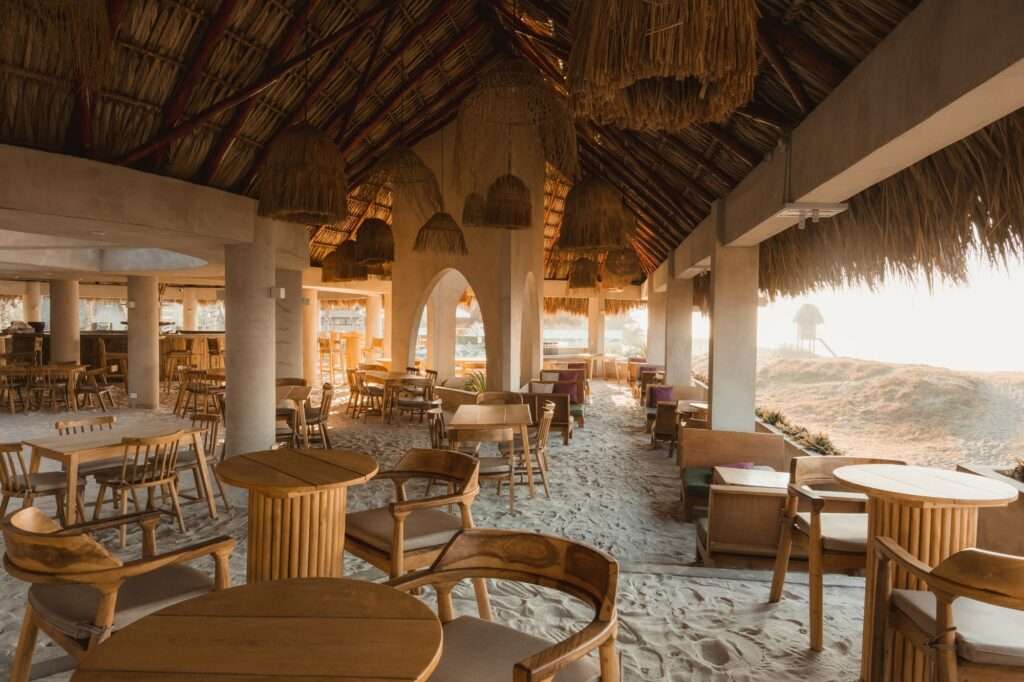
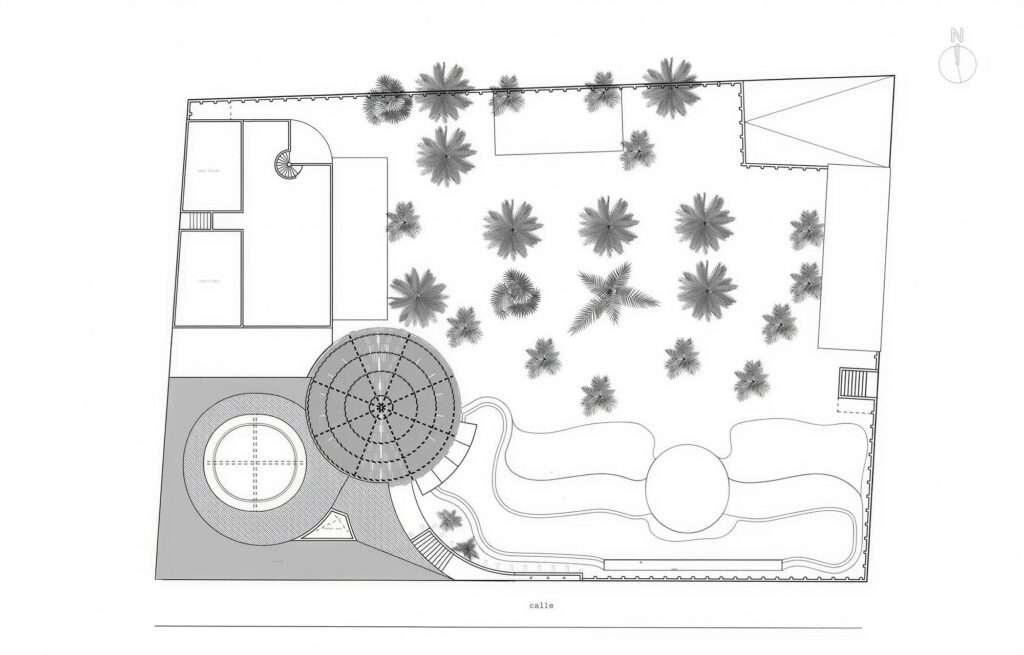
The design rejects architectural centrality in favor of a dispersed arrangement of the functional program, comprising the restaurant, kitchen, bar, and gathering spaces, distributed across the 2000-square-meter site. This spatial dispersion allows the natural landscape to breathe between functional zones and creates movement paths that enable visitors to experience varied spatial conditions, naturally protected from coastal winds through viewing platforms carved into the sand dune. The scenography of space is achieved through the material honesty of the chosen palette, where white sand, natural stone, and native vegetation combine to generate visual and tactile atmospheres rooted in the genetic identity of the coast, without resorting to artificial naturalization or exaggerated structural gestures.
Hydrological Formation and Scenographic Experience
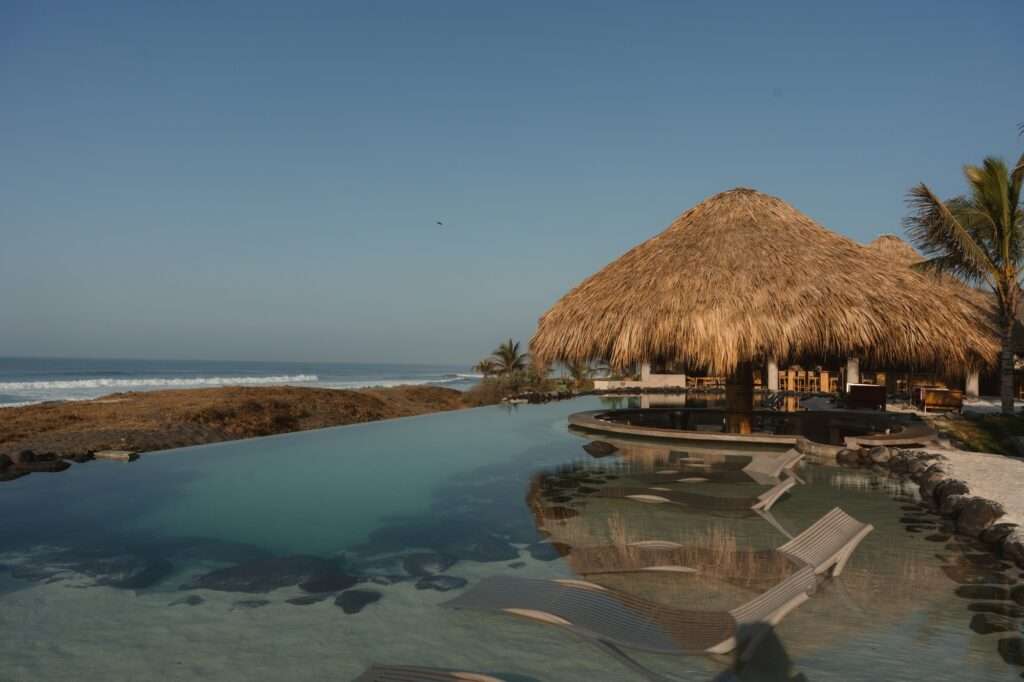
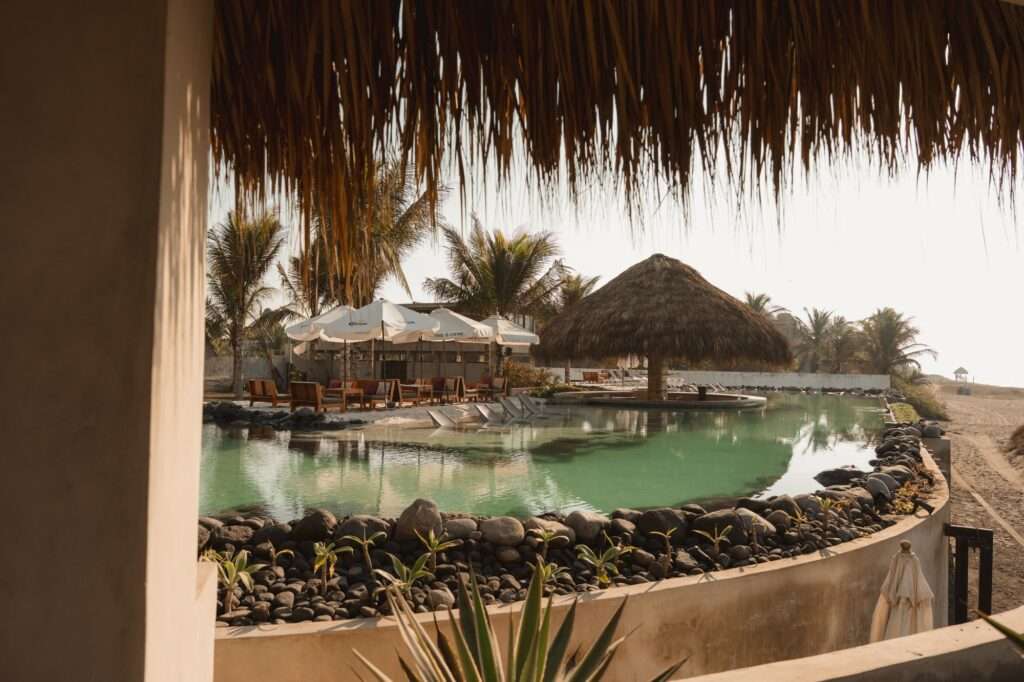
At the heart of this distribution, the organic swimming pool emerges not as a rectilinear geometric basin, but as a free-form water body that mimics natural lagoons carved into elevated terrain. This hydrological approach enhances the human experience during movement through the site, where architecture does not assert itself overtly but instead recedes, allowing the dynamic interaction between water surfaces and natural elements to take precedence. Plant shadows and surrounding masses intersect with the sun’s reflection on the water surface, deepening the psychological and material perception of the place, and creating the sensation of an untouched environment whose spatial logic has been refined only to provide physical and psychological comfort.
Topographic Isolation and Environmental Integration
Spatial scenography is achieved through vertical engagement with the elevated terrain, offering users an experience that combines spatial privacy with expansive panoramic views. Guests occupy elevated event spaces above ground level, a carefully calibrated strategy that leverages the protective capacity of the sand dune, providing genuine visual and psychological isolation without disconnecting them from the coastal environment. Human activities are thus integrated into the landscape without artificial barriers, achieving environmental efficiency directly linked to design flexibility and its ability to accommodate continuous commercial use without compromising the site’s natural resources.
Spatial Permanence and Architectural Temporality
The project moves beyond the notion of instantaneous spatial consumption to establish a symbiotic relationship between commercial investment and environmental management. design decisions rooted in existing topography ensure a continuous process of site maturation that evolves over time rather than deteriorating under use. The resulting psychological and material effect centers on making the visitor aware of the inevitability of architecture within its context. Airflow patterns, shadow movements, and light dynamics interact with the massing over a period of five to ten years, making the architecture appear as though it has naturally emerged from the ground. Environmental sustainability here becomes both an operational mechanism and a visual asset, ensuring the longevity and organic evolution of the project within its sensitive coastal setting.
✦ ArchUp Editorial Insight
The underlying critical tension in the adaptive development of “El Paredon Buena Vista” functions as a clinical case study of a broader structural transformation in coastal hospitality infrastructure. The environment is no longer treated as a scenic backdrop but as a primary asset for risk mitigation. A deep data overlay of non-architectural variables, from shifting microclimatic wind paths and coastal erosion metrics to the highly volatile financial implications of building in high-risk zones, reveals that traditional aggressive land clearance is no longer economically or structurally viable. This reality imposes intense systemic pressure on contemporary development models, forcing the evolution of an institutional decision-making framework that redefines operational priorities. Within this framework, environmental preservation ceases to be an ideological luxury and instead becomes a strategic mechanism for ensuring structural longevity, reducing long-term mechanical maintenance costs, and leveraging natural topography to absorb environmental shocks.
The resulting spatial organization emerges as a logical byproduct of this risk-minimization framework, shifting away from monolithic and centralized massing models toward a fragmented and decentralized architectural distribution. Under these site-driven constraints, building masses are deliberately dissolved, allowing the pre-existing topographical formations to dictate the programmatic layout of the design, restaurant, bar, and communal areas. In the context of 2026 urban expansion and increasingly volatile recreational coastal edges, where land scarcity intersects with climate instability, this tactical dispersion allows the ecosystem to operate as an active partner in spatial performance. It enhances natural ventilation through carefully structured voids and employs local building materials to manage thermal mass without defensive structural interventions. This shift fundamentally redefines the architect’s strategic and fiduciary role, marking a definitive transition from the composition of fixed autonomous forms to the systemic management of dynamic regional and environmental assets.