Byron Bay Tiny Home Interior Design and Space Organization

Internal Organization in Tiny Homes
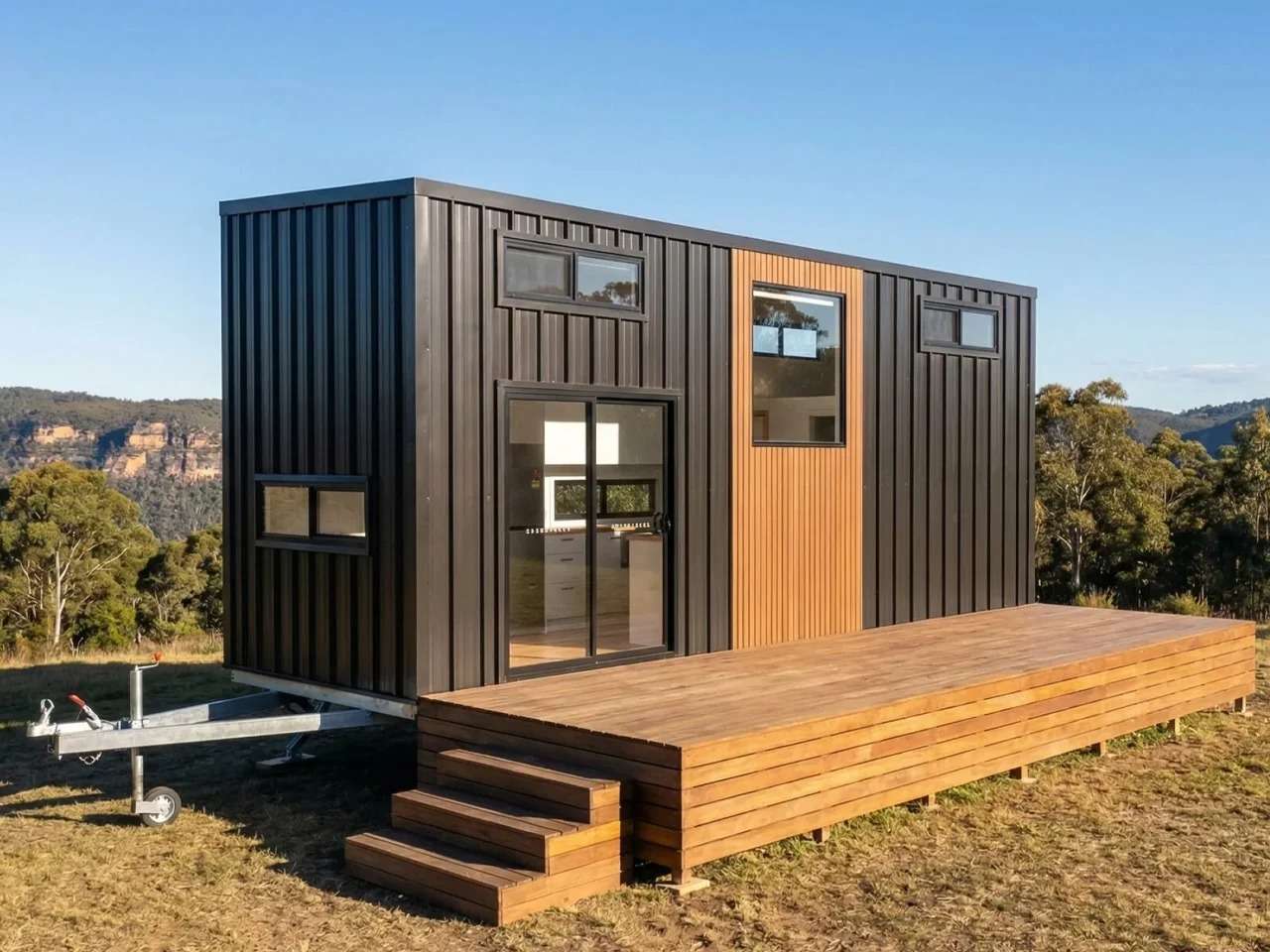
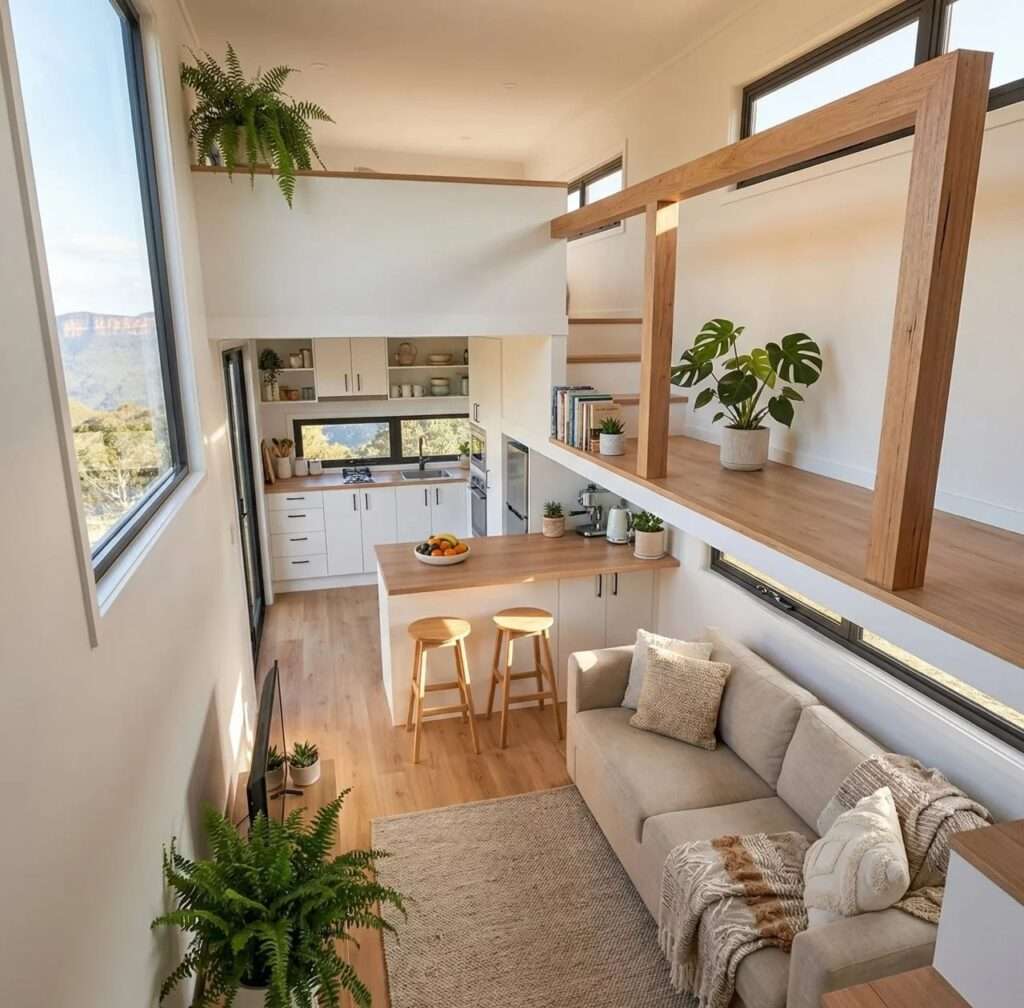
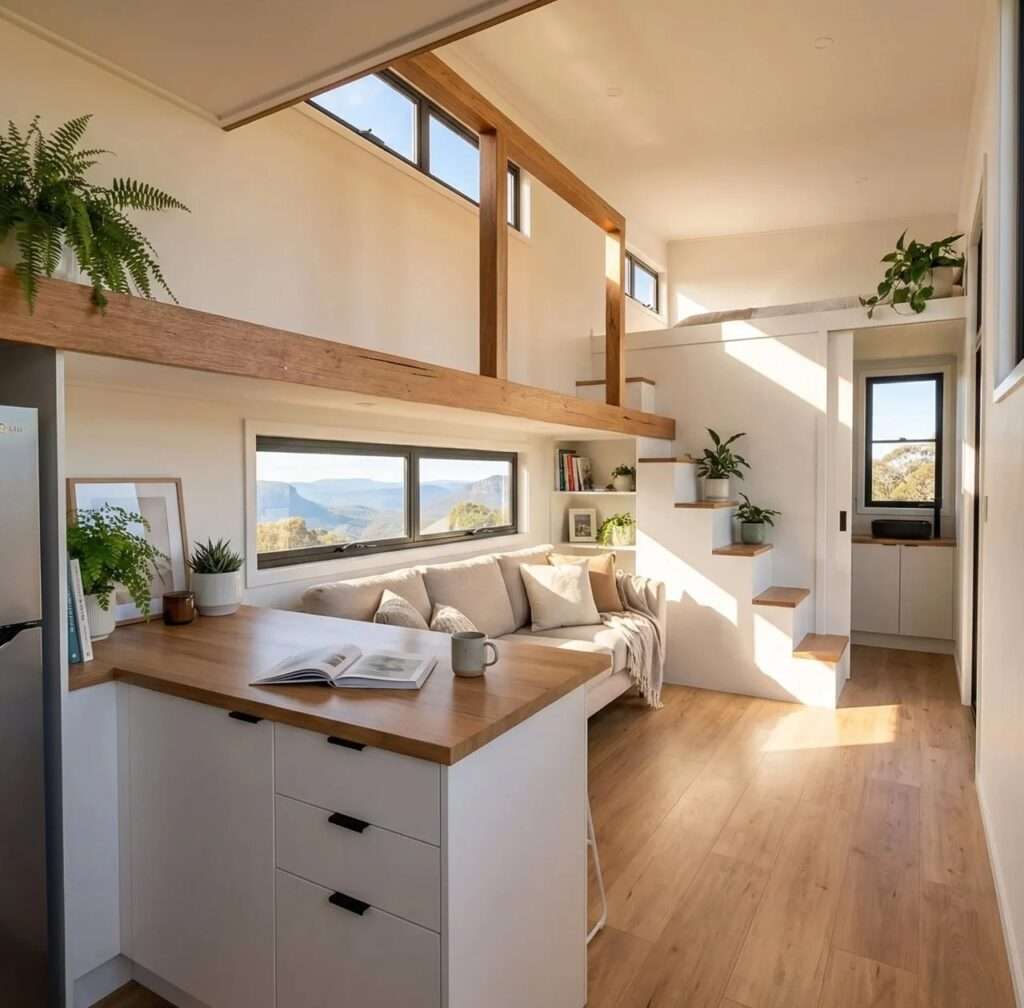
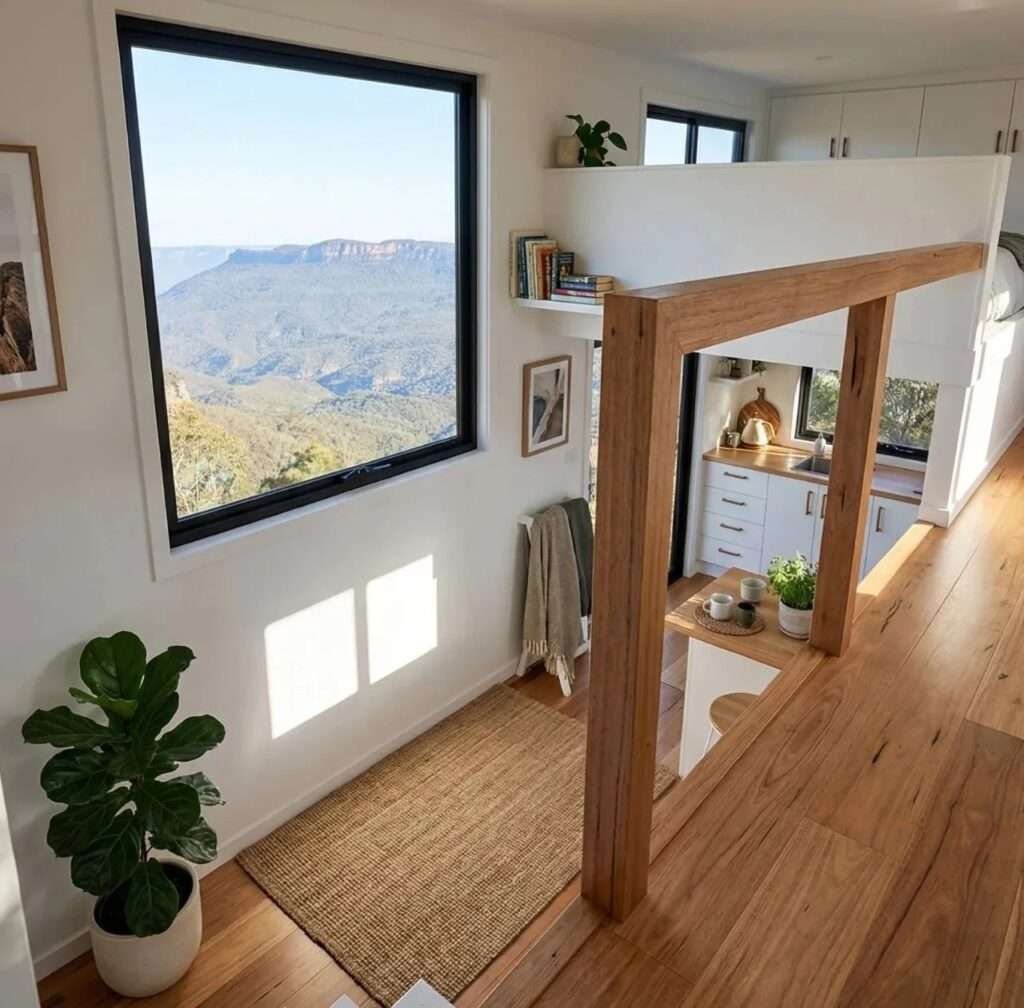
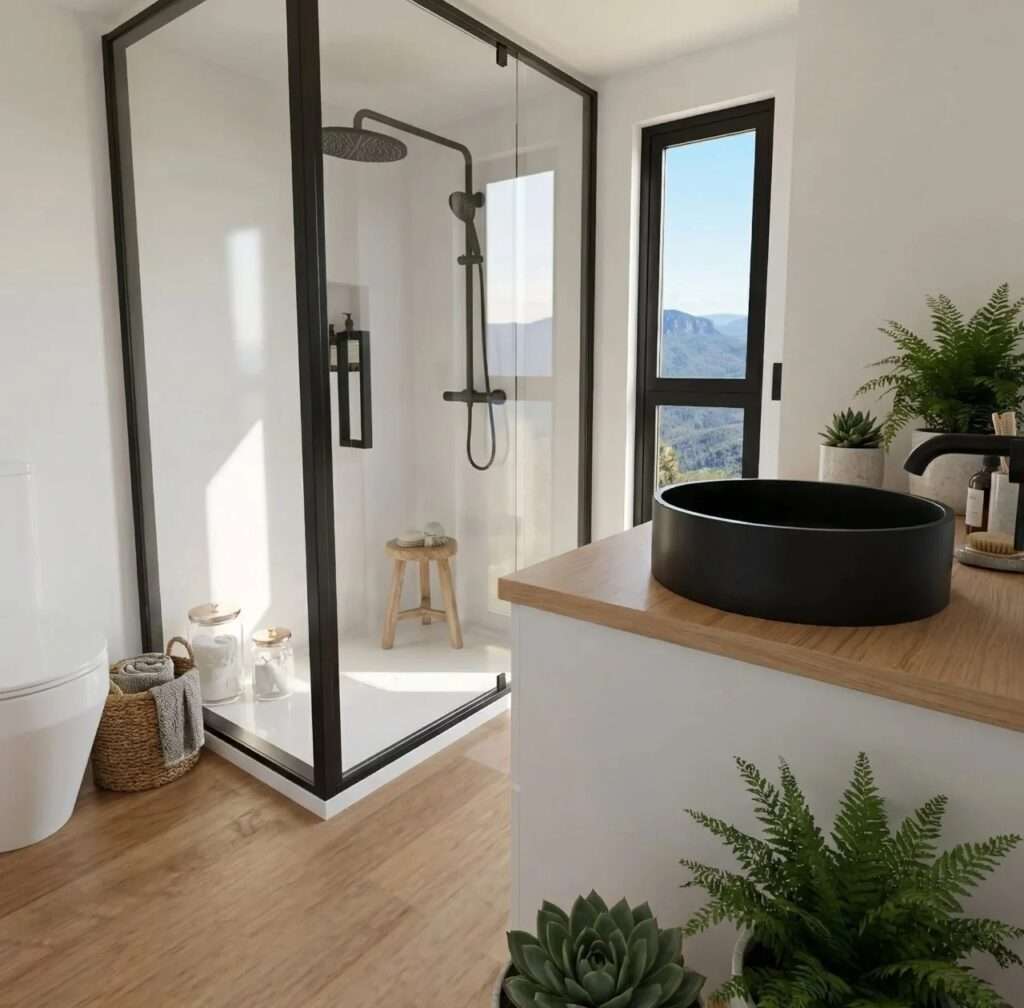
The Byron Bay model is used as a case study to understand how spatial constraints are handled within Architecture tiny homes. The Design is based on two loft bedrooms and a full linear kitchen, with an internal layout aimed at enhancing the sense of a complete dwelling rather than merely reducing elements within a limited space.
Impact of Dimensions on Usability
The model measures 8.4 meters in length, 2.5 meters in width, and 4.3 meters in height, placing it within the larger category of legally transportable tiny homes. These additional dimensions directly affect internal usability, as they provide more space for organizing daily functions and reduce the feeling of congestion. For similar spatial strategies, you can explore various Projects that maximize limited footprints.
The Role of Vertical Movement in the Living Experience
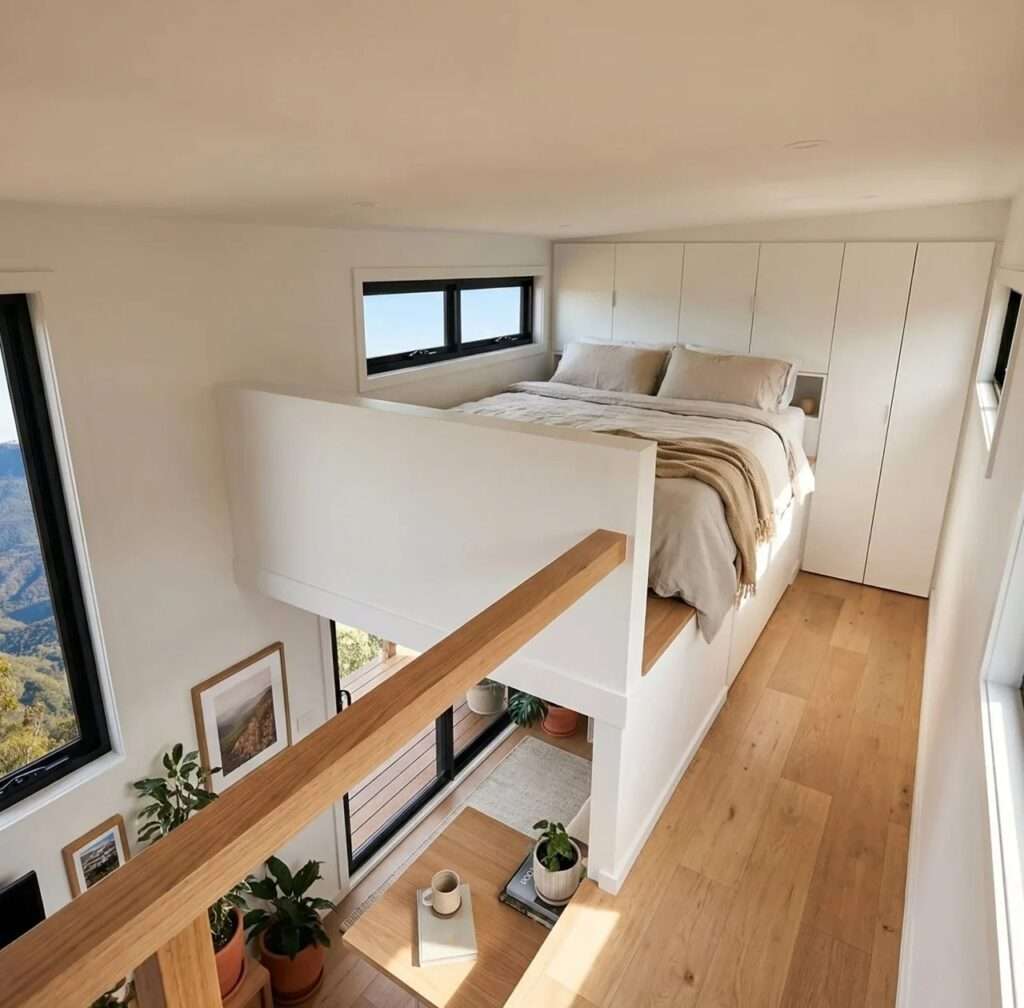
The two loft bedrooms are connected by a full-height passage that allows comfortable movement. This Design approach shows how a simple functional detail can significantly affect daily use, reducing the need to bend or adapt to movement restrictions. As a result, sleeping areas feel closer to conventional rooms rather than temporary or compressed spaces. Learn more about innovative layouts in our Archive.
Natural Lighting and Its Impact on Spatial Perception
On the ground floor, the open-plan living area relies on a spacious kitchen connected to a large panoramic window. The entry of natural light alters the visual perception of space, making the 33-square-meter area feel more expansive than its actual dimensions. This demonstrates the role of lighting in improving perceived scale within small residential spaces. For more on lighting and spatial quality, browse our Research section.
Integrating Storage into Architectural Elements
The model also demonstrates an approach that integrates storage solutions into surfaces and internal elements rather than adding them as separate units. This method helps maintain spatial order and reduces visual clutter, while keeping functional use present without compromising the clarity of the interior composition. For further details on material integration, check the Material Datasheets.
Self-Sufficiency as a Response to Housing Needs
On another level, the concept of operating independently from utility networks emerges as one of the key directions in modern tiny homes. This idea is used to meet housing needs in locations distant from traditional infrastructure, while also reflecting a trend toward combining mobility with reduced reliance on centralized services as a practical option for certain living patterns. Stay updated with the latest trends via Top News.
Functional Distribution within Small Spaces
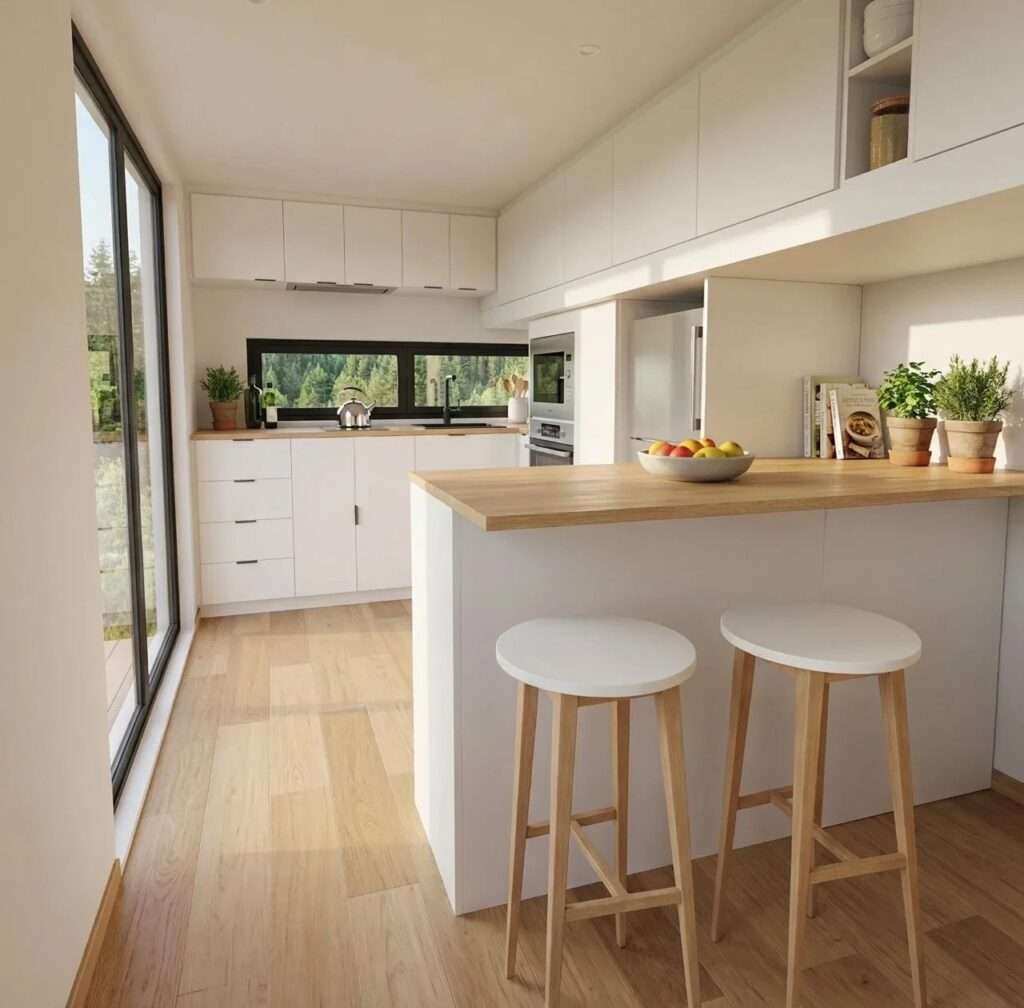
The Byron Bay model is used as a case study to understand how small spaces can be adapted to family living needs. The Design provides two separate sleeping areas and a fully equipped kitchen, with an internal layout focused on ease of movement and circulation between different functions within the dwelling. Discover similar organizational concepts in Buildings designed for efficient living.
The Relationship Between Design and Long-Term Livability
From a functional perspective, tiny homes are not limited to temporary or restricted use. The more a design achieves balance between circulation, storage, and privacy, the greater its ability to support daily life as a primary living space. For professional insights, visit the Architects Lobby.
Space as a Perceptual Element Rather Than Just a Number
The model also demonstrates that the living experience does not depend solely on square meters, but is strongly influenced by how internal space is organized. Thoughtful planning can reshape the user’s perception of space, shifting attention from actual size to how effectively it is utilized within everyday life. Explore more about spatial perception in different Cities and their housing models.
✦ ArchUp Editorial Insight
The Byron Bay model functions as a programmatic response to the pressure of purchasing power in the Australian housing market, where mortgage financing and land value volatility are reshaping traditional ownership pathways. This “spatial outlet” is defined through regulatory constraints tied to mobile housing units, road transport limits, and insurance classifications that determine what can be considered a tradable dwelling. The internal structure emerges as a compromise between fixed infrastructure requirements and a desire for operational autonomy, which explains the appearance of loft bedrooms as volumetric extensions above a linear service core. Lighting openings and vertical circulation are not read as formal decisions but as responses to standards of daylighting, ventilation, and the reduction of spatial pressure within a constrained footprint. The repetition of this model reflects a state of structural inertia in the prefabricated housing market, where financing caution and risk management tend to stabilize architectural configurations rather than evolve them. For ongoing discussions on market trends, see Discussion.