TT Houses: Courtyard-Based Twin Housing and Flexibility

The Internal Courtyard as an Organizing Element
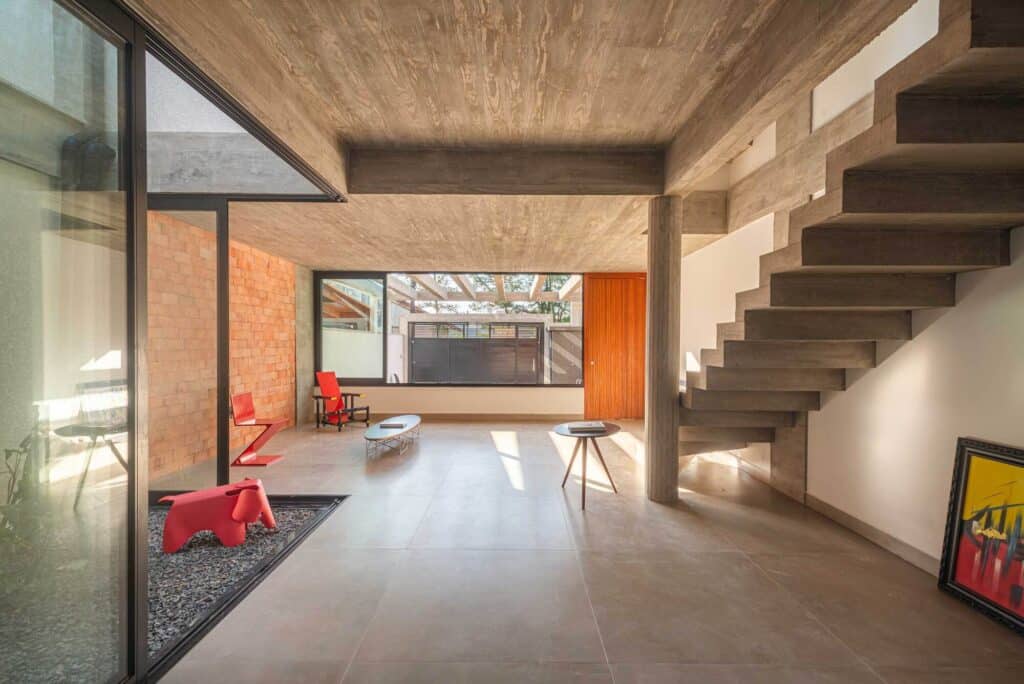
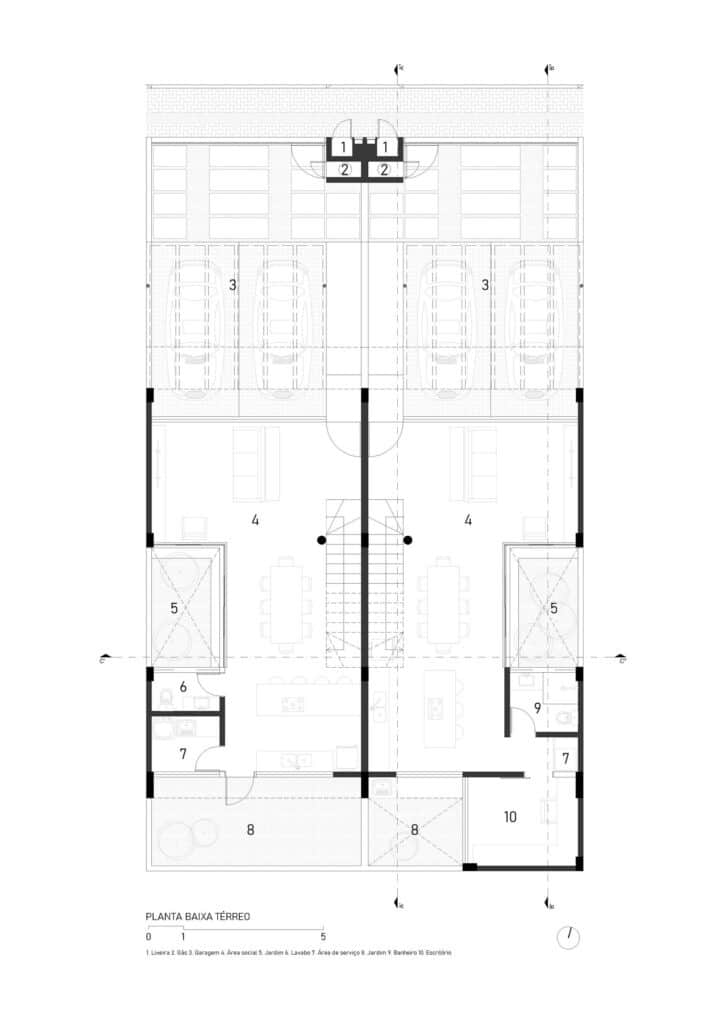
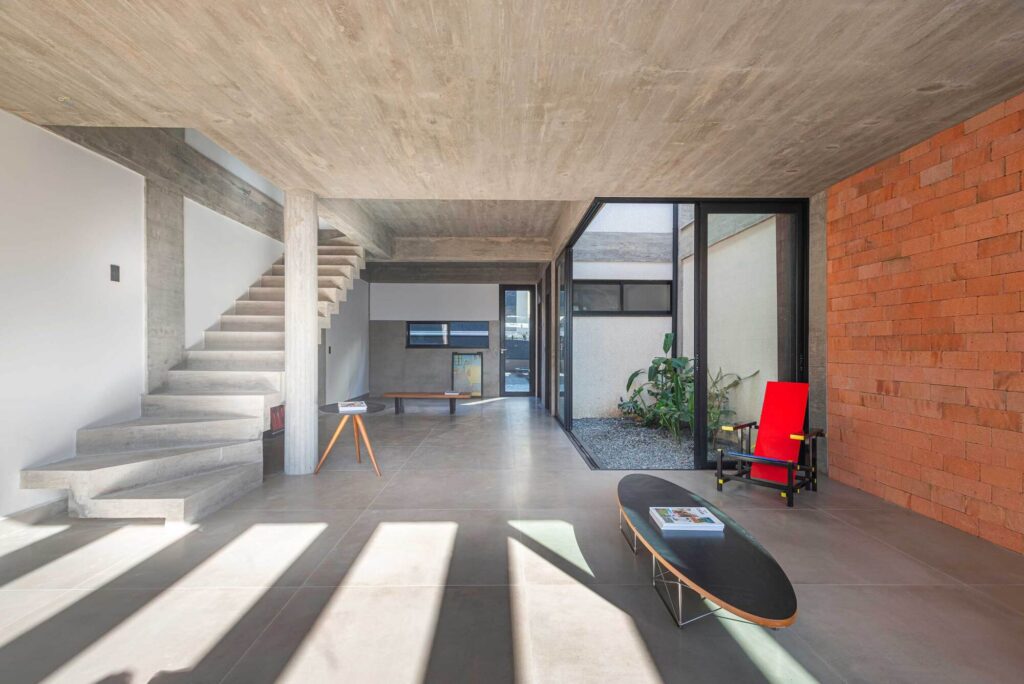
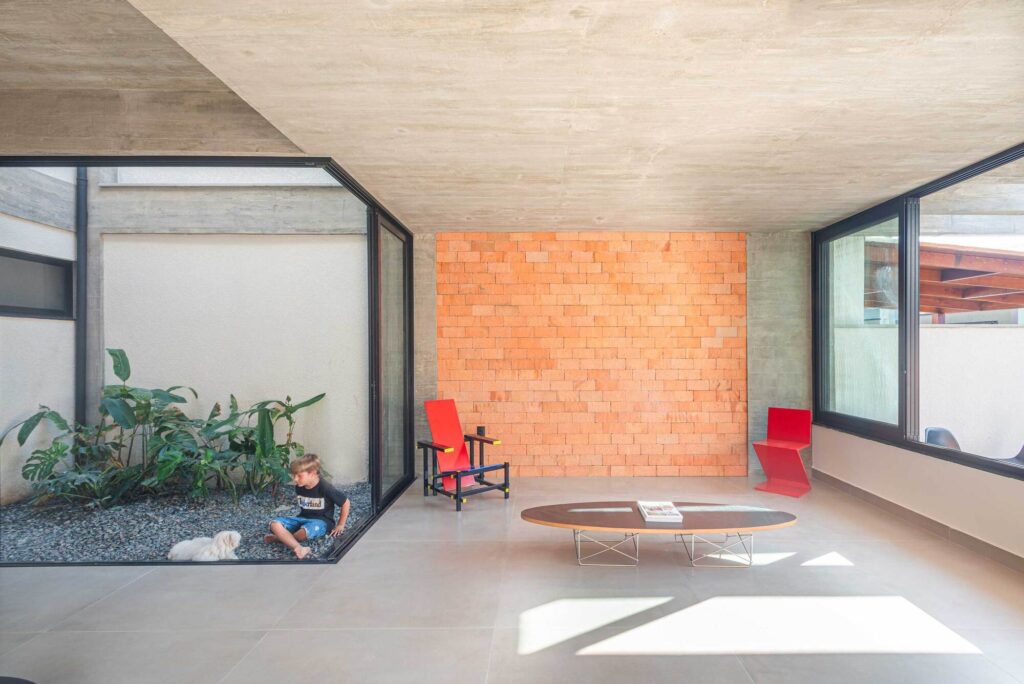
The project is based on the idea of introducing an internal garden at the heart of the dwelling as a breathing space. In this context, the courtyard is not used solely as an aesthetic element, but as an organizational tool that influences the distribution of spaces. It is positioned at the center of the plan to allow natural light to enter and enhance cross ventilation, creating a continuous relationship between the interior and exterior and reshaping the living experience within limited spaces.
Site Conditions and Climatic Constraints
The two units are located on a narrow plot oriented toward the northwest, with significant exposure to afternoon sunlight. Therefore, the design relies on spatial strategies that reduce the impact of these conditions through the organization of openings and the orientation of spaces. At the same time, the project reflects an attempt to move away from the conventional twin-housing typology, focusing instead on environmental comfort and quality of use within the constraints of the site.
Spatial Distribution and Functional Flexibility
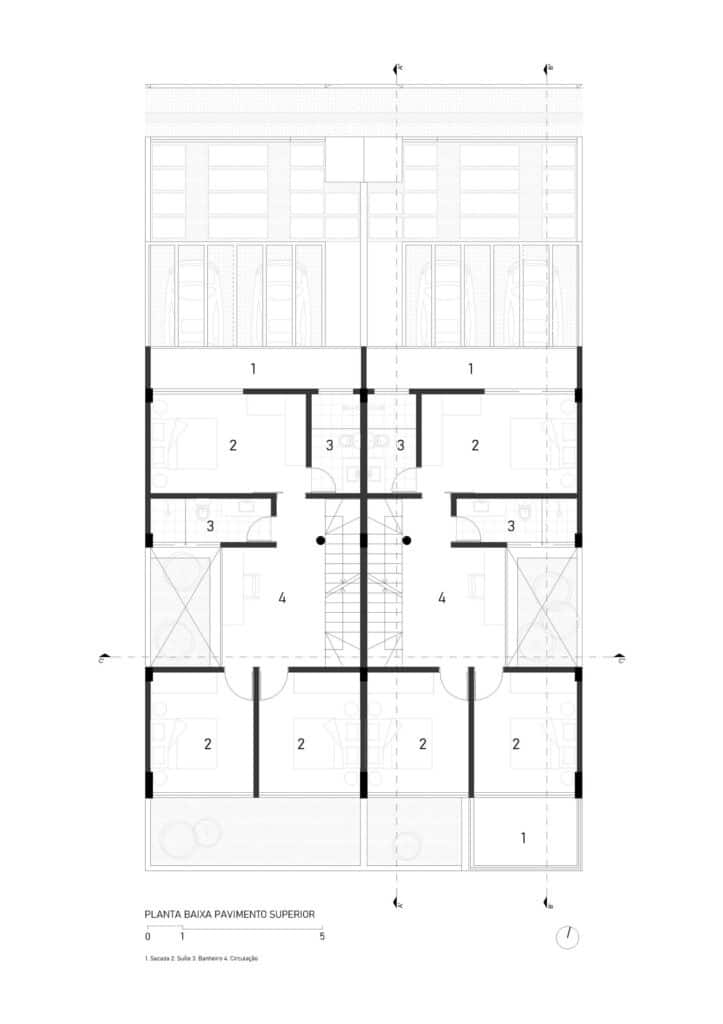
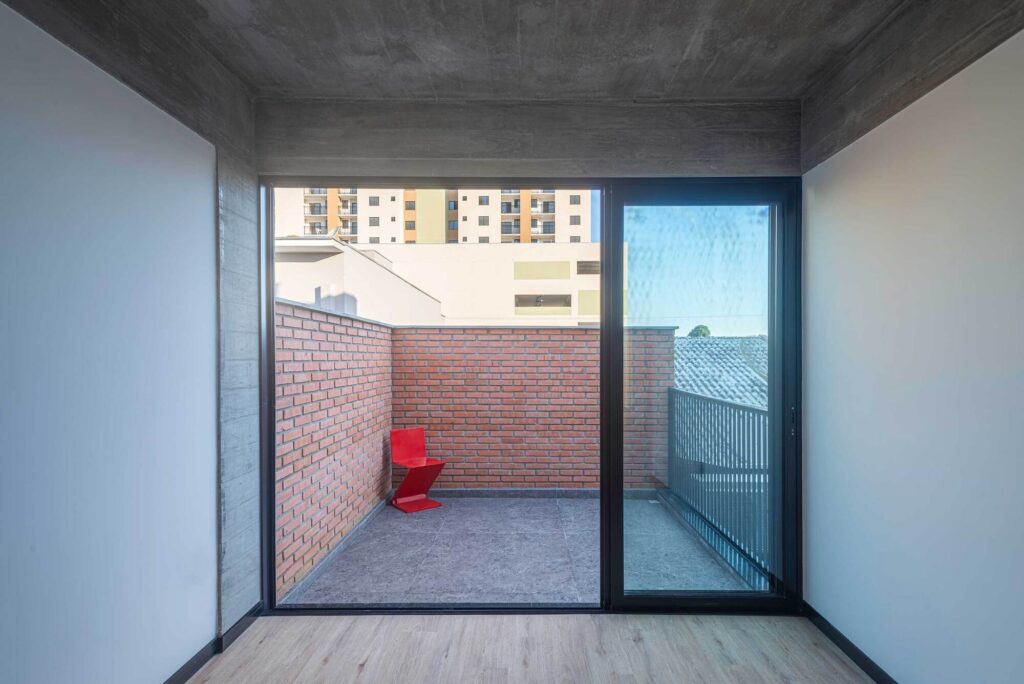
The project is organized across three levels: living spaces on the ground floor, bedrooms on the upper floor, and rooftop terraces. This arrangement allows functional separation while maintaining spatial continuity through the internal courtyard. In addition, one of the units has been designed to operate entirely on the ground floor, enhancing usability flexibility as family needs change, and demonstrating a long-term approach toward adaptability.
| Field | Details |
|---|---|
| Architects | PJV Arquitetura |
| Area | 291 m² |
| Year | 2024 |
| Photographs | Alexandre Zelinski |
| Category | Houses |
| Principal Architect | Pablo José Vailatti |
| Co Author | Arq. Ana Cristina Meirinho Neves |
| City | Balneário Piçarras |
| Country | Brazil |
Vertical Circulation and Spatial Experience Organization
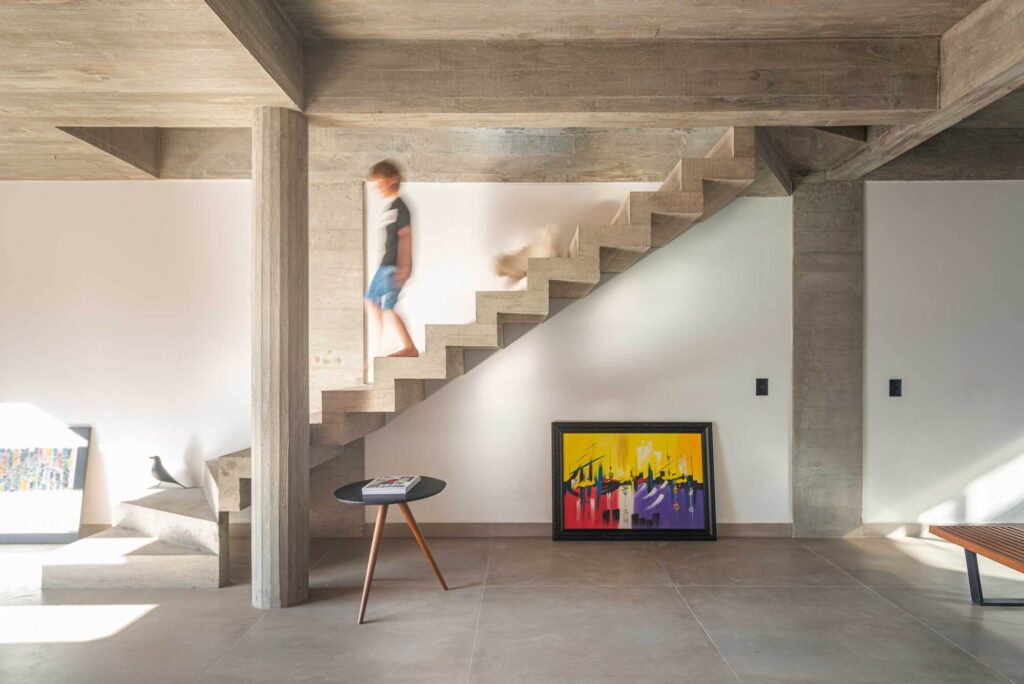
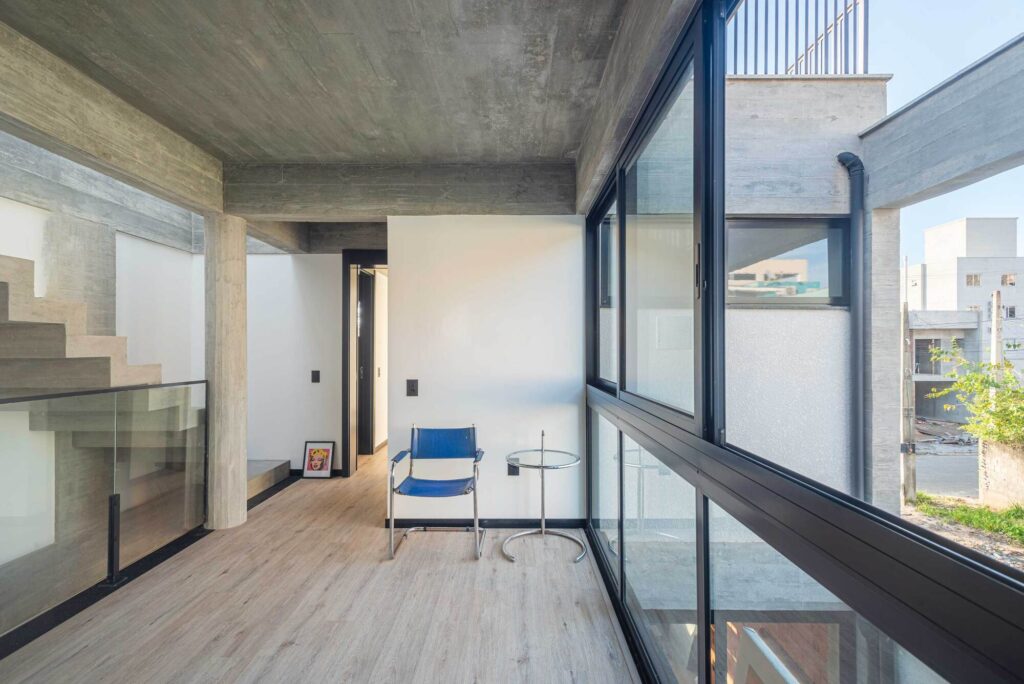
Vertical circulation within the project is achieved through a linear concrete staircase located directly at the entrance. This element defines the transition path between levels, from the entry point on the ground floor up to the rooftop terraces, making movement part of the spatial experience organization rather than a mere connecting function.
The Internal Courtyard and Visual Relationship on the Private Floor
On the upper floor, the internal courtyard re-emerges as a key visual anchor. The bedrooms are connected to the internal garden through floor-to-ceiling openings, which reduces the sense of a closed mass. As a result, visual continuity between interior and exterior spaces is significantly strengthened in a clear and direct manner.
Structural Expression and Materials
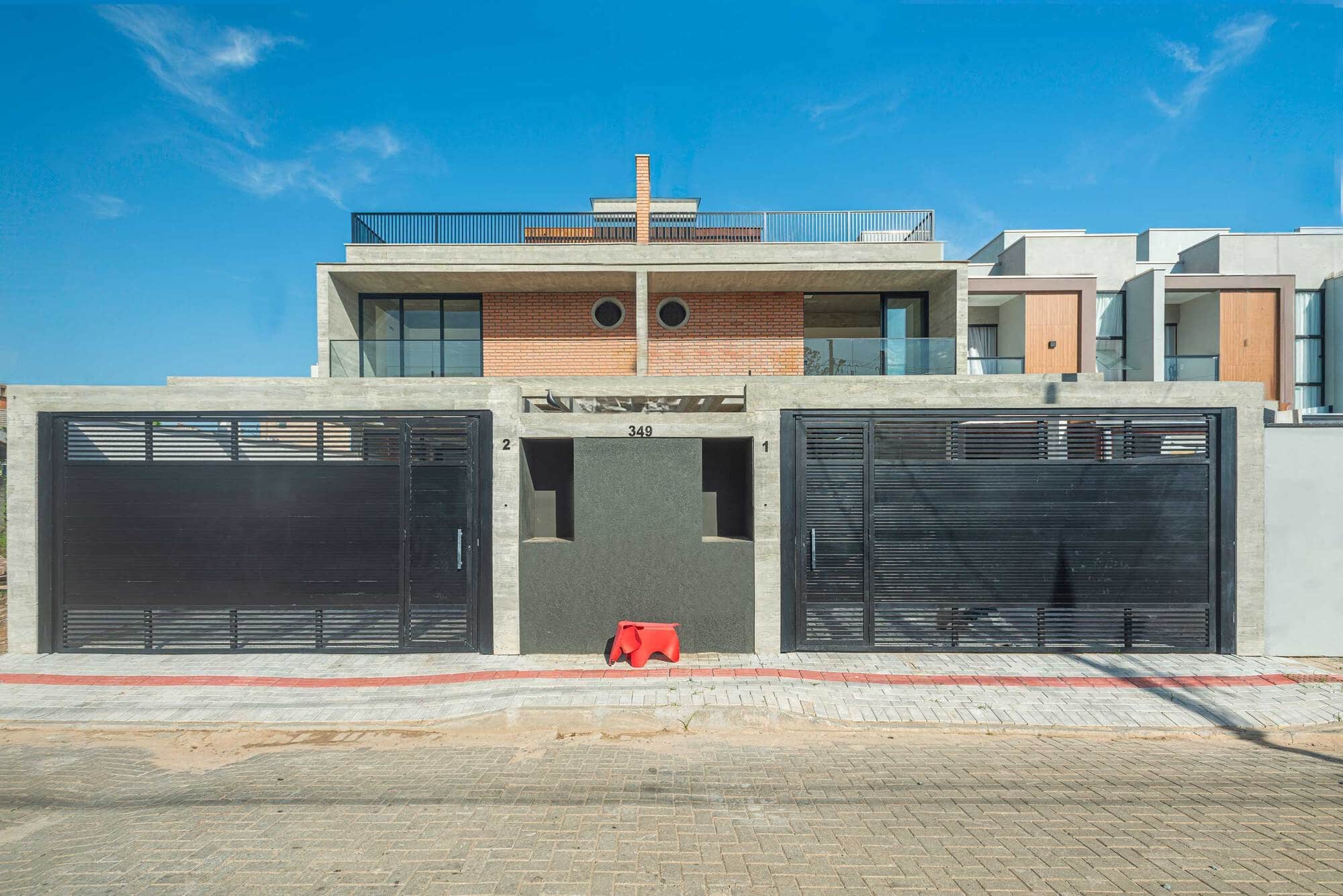
The architectural language is based on exposing the concrete structure as an organizing element of the overall form, visible in both façades and interior spaces. In contrast, selected elements such as the circular window and cylindrical supports near the staircase introduce visual variation within the composition. Materials such as concrete, solid brick, glass, wood, and black aluminum have been used to achieve a balance between structural solidity and adaptation to the coastal climate.
Environmental Comfort as Part of the Architectural Composition
Environmental comfort solutions are integrated into the design through fundamental and simple elements. This relies on abundant natural lighting and cross ventilation, enhanced by the internal courtyard and wide openings. The spatial organization also contributes to supporting stable and comfortable interior environments throughout the year, while reducing reliance on artificial air-conditioning systems.
Housing Organization and Redefining the Twin-Housing Model
The project goes beyond the idea of being a set of adjacent houses, offering instead a different interpretation of twin housing within compact urban contexts. This model focuses on breathing spaces and connection to the external environment, alongside functional flexibility that allows spaces to adapt over time and respond to changing user needs.
Simplicity of Decisions and Its Architectural Impact
The project is based on direct design decisions, yet executed in a precise and structured manner. As a result, this simplicity is transformed into an effective system that engages with human needs and responds to daily life requirements, without relying on formal complexity or unnecessary additional interventions.
✦ ArchUp Editorial Insight
TT Houses function as a direct spatial outcome of constrained land subdivision policies and the economics of medium-density housing, where the twin-housing model is recalibrated to maximize return per square meter under narrow plot constraints. The initial driver is not formal experimentation, but a regulatory pressure shaped by land scarcity and market demands for dual occupancy.
Sun exposure constraints on a northwest-oriented site, along with requirements for ventilation and daylight, shift environmental control strategies toward absorption within the central void rather than treatment on the façades. The internal courtyard thus becomes a programmatic device that organizes circulation, light, and airflow without increasing the complexity of the external envelope.
Ultimately, the composition reflects a balance between the standardization of concrete construction and the need for functional flexibility, where architecture does not produce a new form as much as it reveals a pre-existing negotiation between financing mechanisms, regulatory frameworks, and climatic conditions.