Bristol Approves Retrofit of Grade II-Listed Canons Wharf

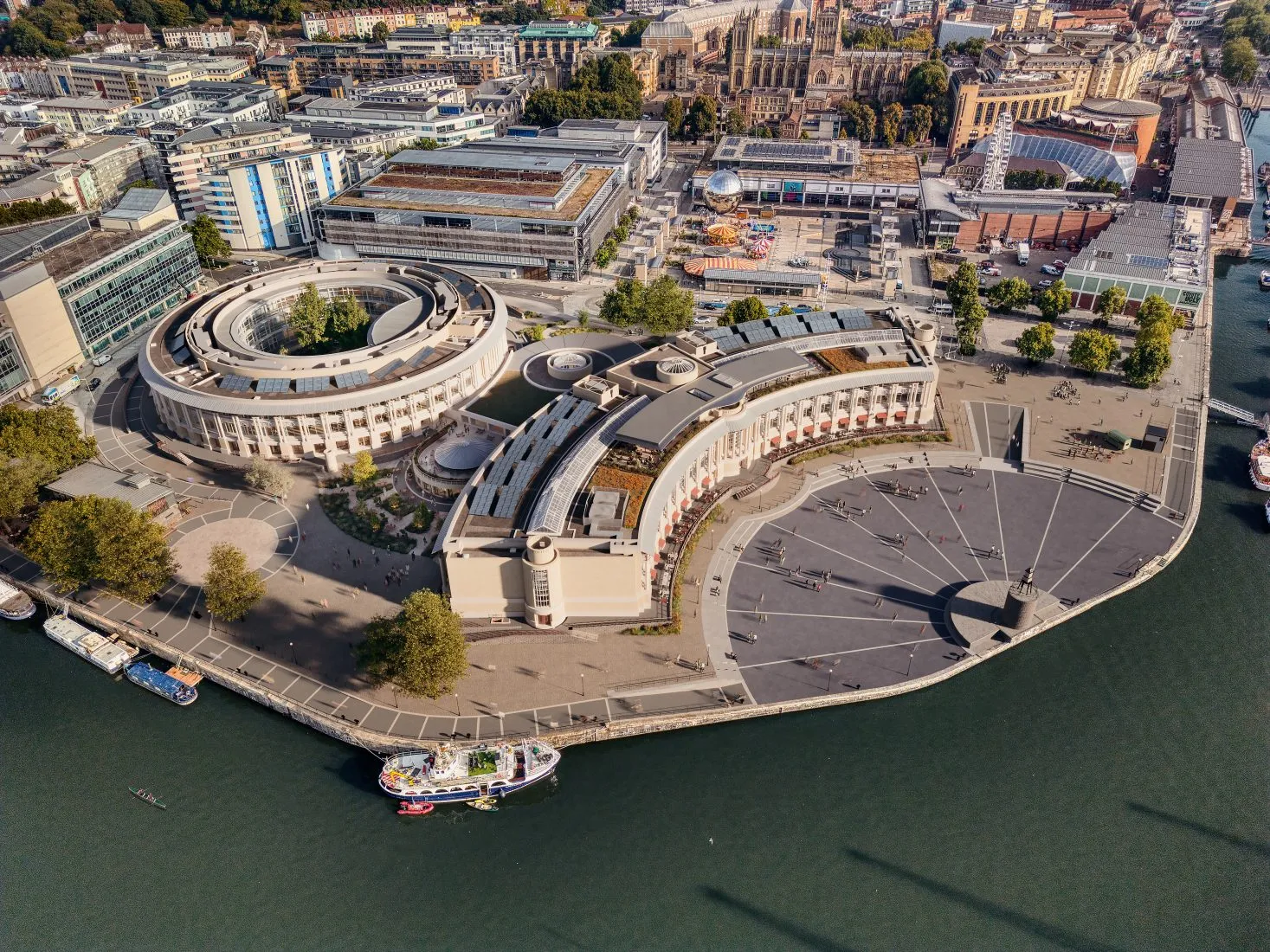
Bristol City Council recently granted planning permission for the comprehensive retrofit of Canons Wharf, a 35-year-old Postmodern landmark on the city’s harbourside. Buckley Gray Yeoman designed the scheme to transform the former single-tenant Lloyds Bank headquarters into a 28,800-square-metre multi-tenanted office building. The project revitalizes the Grade II-listed colonnaded crescent while introducing significant public amenities and cultural spaces.
The intervention focuses on a building originally completed between 1988 and 1991 to designs by Arup. The 18,300-square-metre refurbishment plan aims to improve the relationship between the private office structure and the surrounding cities fabric. By activating the building edges, the design team intends to invite public engagement with a site that historically functioned as a closed corporate campus.
Interior Reconfiguration and Programmatic Diversity
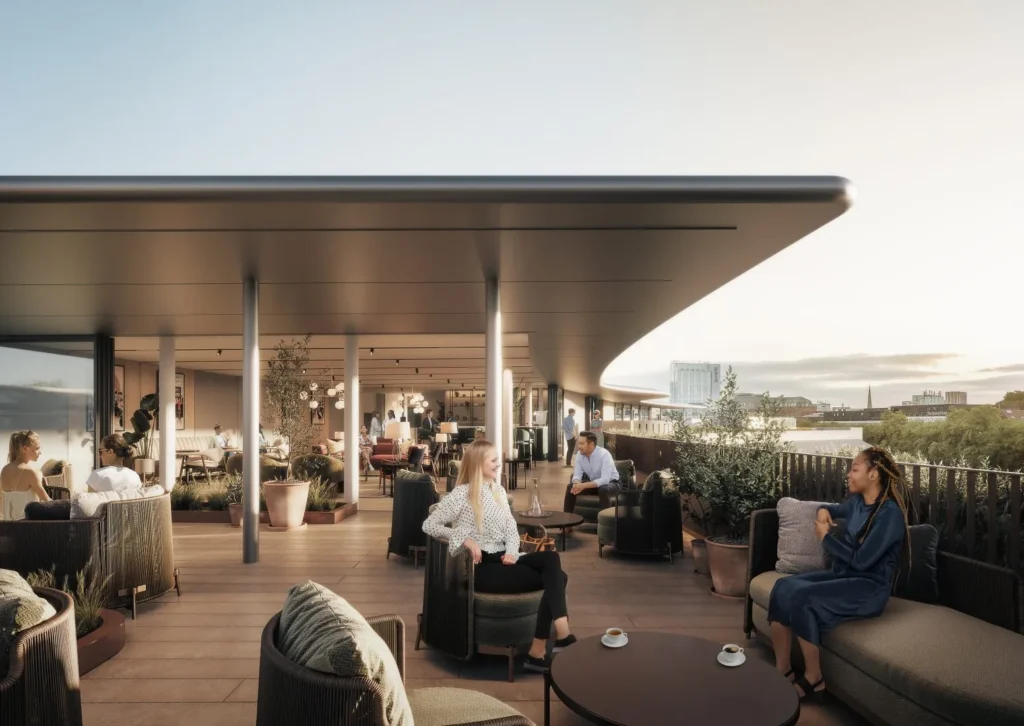
The redesigned program replaces the rigid single-occupancy layout with a flexible framework for multiple tenants. New facilities include a 200-capacity auditorium for cultural events, a podcast studio, and a rooftop boardroom featuring views of the Bristol skyline. These additions supplement traditional office functions, positioning the building as a localized destination for both professional and public use.
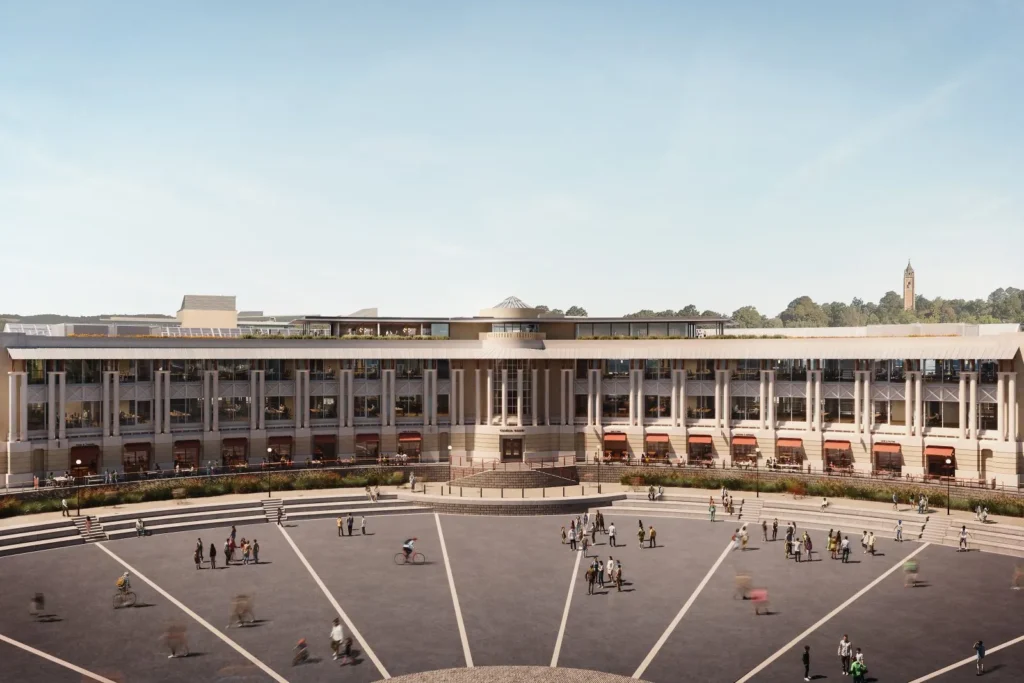
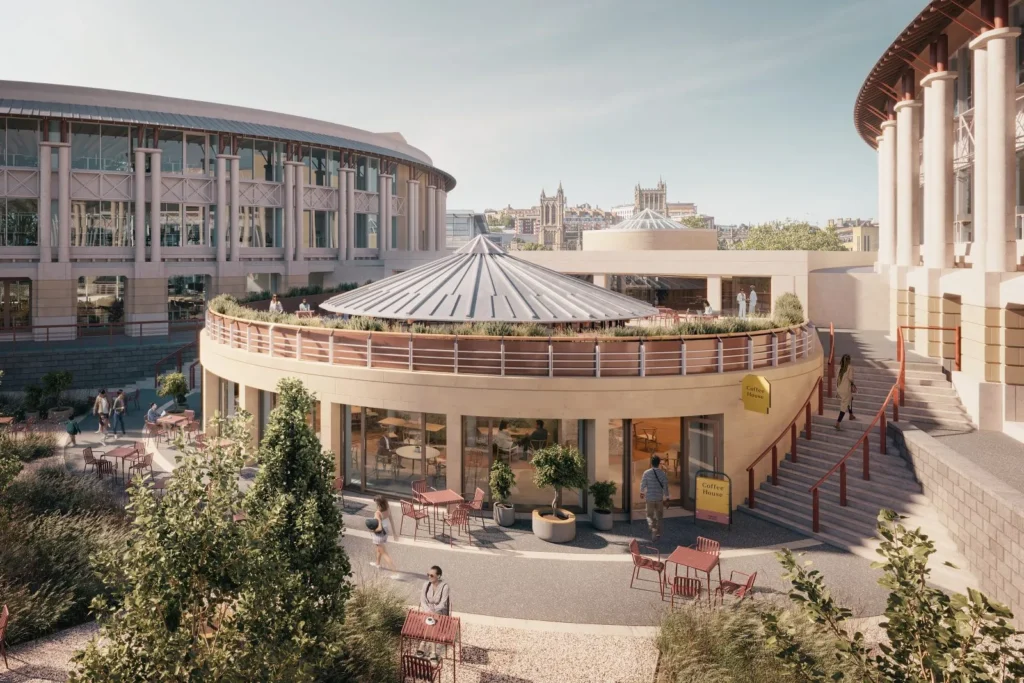
In addition to workspace, the scheme integrates extensive wellbeing and hospitality infrastructure. The plan includes a performance gym, exercise studio, cold plunge pool, and saunas. Ground-floor activation involves the insertion of a coffee shop, restaurants, and gardens that overlook the harbourside, effectively linking the building’s internal life to the existing public amphitheatre.
Preserving Postmodern Heritage through Technical Upgrades
Historic England recognizes the site as a key public assembly space and a prominent example of Postmodern architecture. The retrofit strategy respects the 2022 listing status while implementing modern building materials and systems to ensure long-term operational viability. Arup returns to the project as the structural and services engineer, providing continuity with the building’s original technical logic.
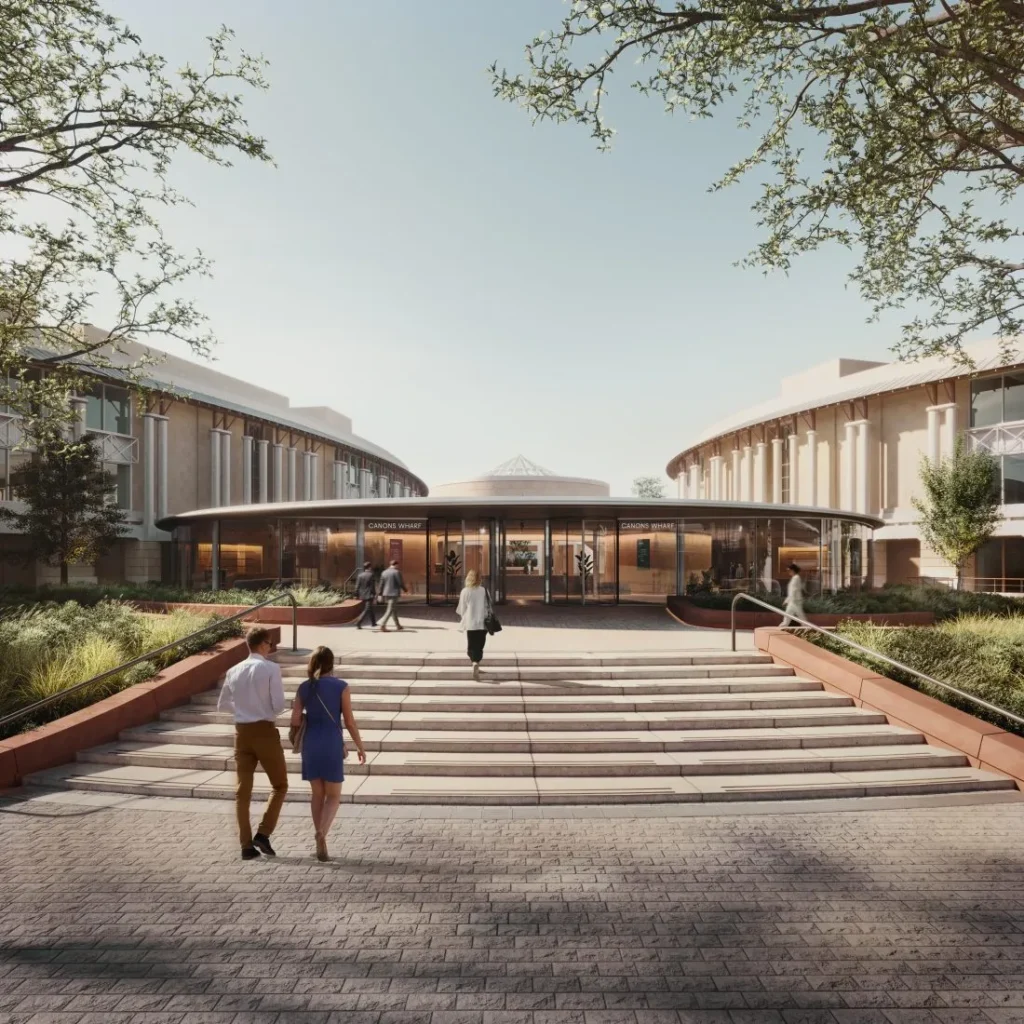
“Over the last 15 months, alongside the wider team, we have carefully crafted a design that responds to the building’s character, enables a multi-let future and creates new opportunities to bring the public inside.”
Andrew Brown and Nick Jones, Buckley Gray Yeoman
The project represents the largest speculative office repositioning in Bristol’s city centre to date. Following the recent approval through delegated powers, the construction phase proceeds toward a scheduled completion in 2026. This timeline aligns with the broader institutional goal of densifying and diversifying the economic activity within the harbourside district.
✦ ArchUp Editorial Insight
The Canons Wharf retrofit functions as a clinical symptom of the post-corporate shift toward porous urbanism. Data layering of occupancy rates and historical heritage status reveals a significant systemic pressure on single-use suburbanized archetypes within the urban core. This pressure forces an institutional decision framework that prioritizes “repositioning” over demolition, transforming static financial monuments into flexible, multi-tenanted assets. The transition reflects an era where algorithmic infrastructure and market volatility demand spatial resilience over brand-centric permanence.
[Image of the Postmodern colonnade meeting the public amphitheatre at Bristol Harbourside]
The architectural outcome manifest at Canons Wharf illustrates a logical byproduct of this economic constraint. The built massing remains intact while the internal circulation and programmatic permeability undergo a radical reconfiguration. Within 2026 cities, such interventions represent the finalized transition of the designer from a form-giver to a curator of operational longevity. The architect now fulfills a fiduciary responsibility to the city, ensuring that legacy structures remain viable nodes within the broader social and economic network.
Project Team: Buckley Gray Yeoman (Architect), Arup (Structural, Services, and Fire Engineer), Kinrise & Mactaggart Family & Partners (Client). Location: Bristol, United Kingdom.
Project Notes: Secured planning approval in May 2025; construction phase leads to scheduled completion in 2026. Turner & Townsend serves as project manager.