MVRDV Completes La Vallée Verte Residential Development in Bordeaux

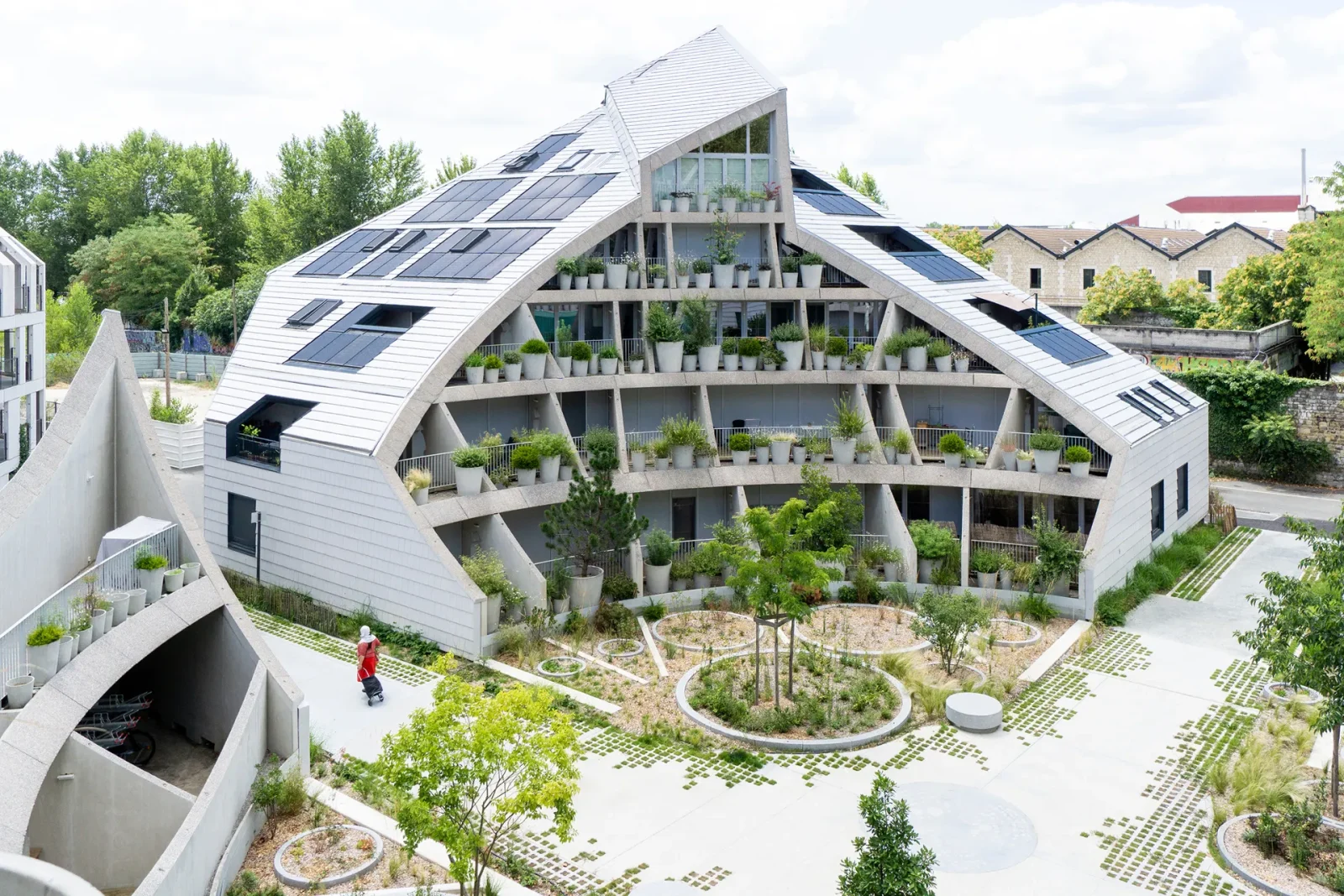
MVRDV completed La Vallée Verte, a residential development that transforms a former military and industrial site into a green urban neighborhood in Bordeaux. Situated on the right bank of the Garonne River, the project occupies a triangular plot within the larger Bastide Niel masterplan. The design integrates historic preservation with innovative parametric strategies to establish a high-density living environment focused on daylight access and biodiversity.
The project comprises three interconnected buildings that preserve the original urban layout of the district. Rather than clearing the site, the masterplan weaves new architecture into the existing fabric of industrial facilities and military barracks. This approach maintains a strong connection to the history of the area while creating a network of compact, shaded streets that prioritize pedestrian movement.
Parametric suncuts shape the building volumes
The design team utilized a parametric method known as “suncuts” to determine the geometry of the structures. This strategy shapes the building volumes based on solar paths to ensure every apartment receives adequate natural light throughout the year. The resulting roofscape features sharp angles and sloped surfaces, creating a distinctive profile across the Bordeaux skyline that prevents buildings from overshadowing one another.
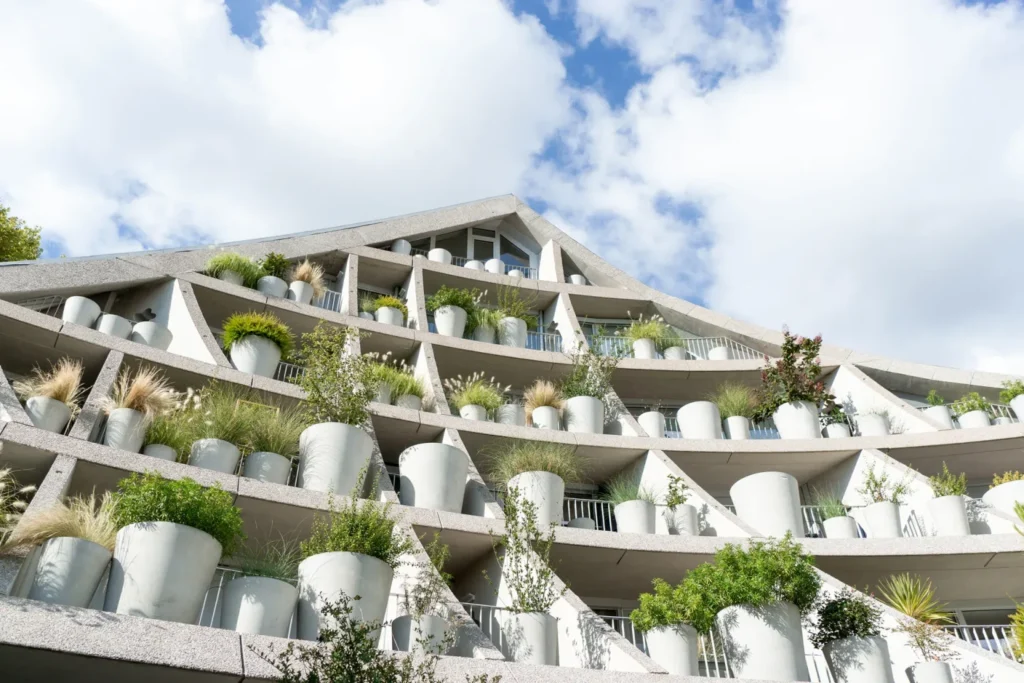
In addition to the exterior form, the project features a light-grey tiled envelope. This material choice serves two purposes: it complies with the specific daylight requirements of the masterplan and reduces heat absorption in the dense urban context. These smooth surfaces contrast with the lush interior of the plot, where the buildings carve inward to reveal a circular central courtyard.
Integrated plant pots create a vertical ecosystem
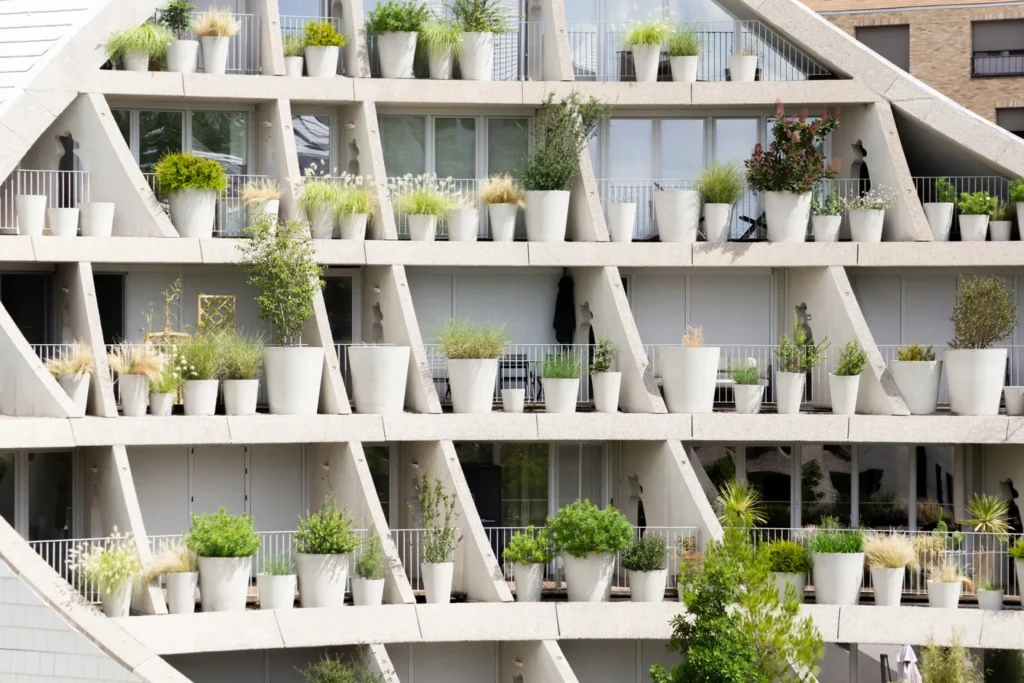
The central courtyard functions as a private green sanctuary, separate from the surrounding cities. Hundreds of plant-filled loggias line the inner façades, creating a tiered landscape of flowering shrubs, evergreen species, and small trees. This arrangement mimics the layers of a natural valley, introducing significant biodiversity into the residential core.
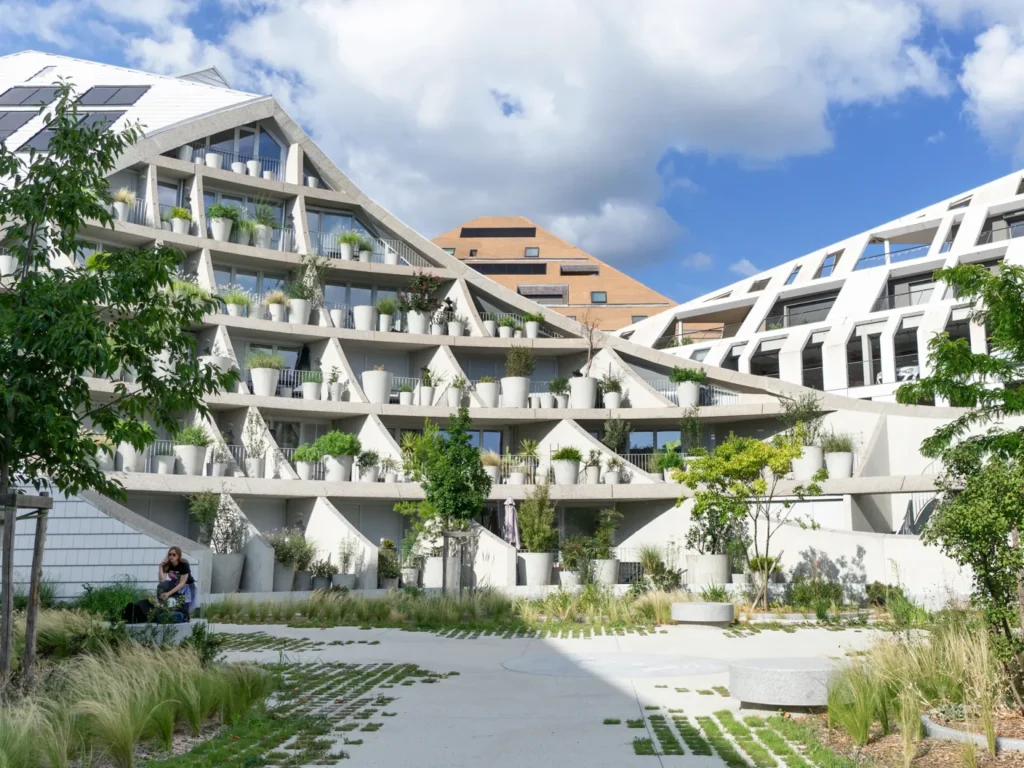
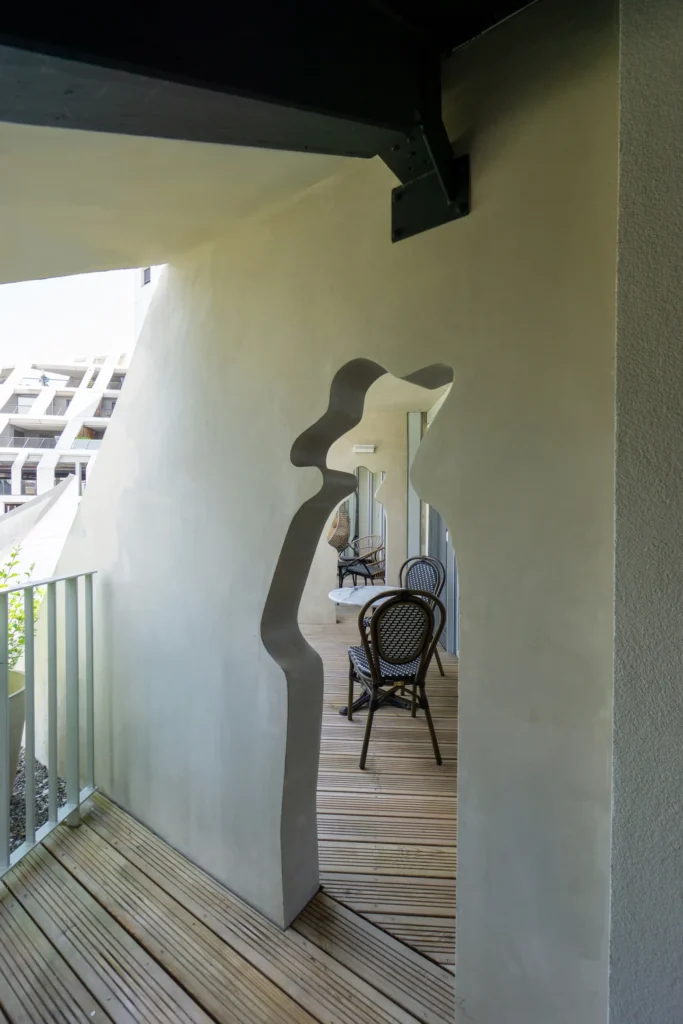
To support this living ecosystem, the design includes dedicated access routes for professional maintenance. Playful steel doors and openings, which reference the silhouette of gardeners, facilitate the ongoing care of the vegetation. This integrated building materials strategy improves local air quality and fosters a direct connection between residents and nature within the built environment.
Environmental resilience and district infrastructure
The development adheres to the standards of France’s EcoQuartier initiative through several technical systems. The buildings connect to a district heating network and utilize photovoltaic panels for renewable energy production. Furthermore, the porous landscape design manages rainwater and flood risks, an essential requirement for the Garonne River floodplain.
The project team elevated the ground-floor apartments and consolidated parking above ground to increase structural resilience. These decisions reduce the embodied carbon of the construction while ensuring operational continuity during potential weather events. Together, these elements position La Vallée Verte as a functional model for high-density, climate-responsive housing.
✦ ArchUp Editorial Insight
La Vallée Verte functions as a clinical symptom of the shift toward algorithmic urbanism, where solar data layering dictates the physical envelope. The project responds to systemic pressure for density in flood-prone cities by adopting an institutional decision framework that prioritizes environmental performance over traditional block typologies. This data-driven approach redefines the residential threshold, turning the facade into a performative filter for both light and ecology.
[Image of the sloped rooflines and tiled façades against the Bordeaux skyline]
The architectural outcome establishes a logical byproduct of the “suncut” constraint, resulting in a built massing that prioritizes the collective right to light. By integrating a managed vertical forest within the architecture, the project transitions the role of the resident from a passive occupant to a participant in a managed algorithmic infrastructure. This finalized transition forces a new fiduciary responsibility upon the architect to balance automated environmental compliance with the maintenance of living systems.
Project Team: MVRDV (Lead Architect), Winy Maas (Principal-in-Charge). Location: Bordeaux, France.
Project Notes: Completed in 2026. Part of the Bastide Niel masterplan and EcoQuartier certified development.