Ramp-Based Accessible Housing in Casa Circular House

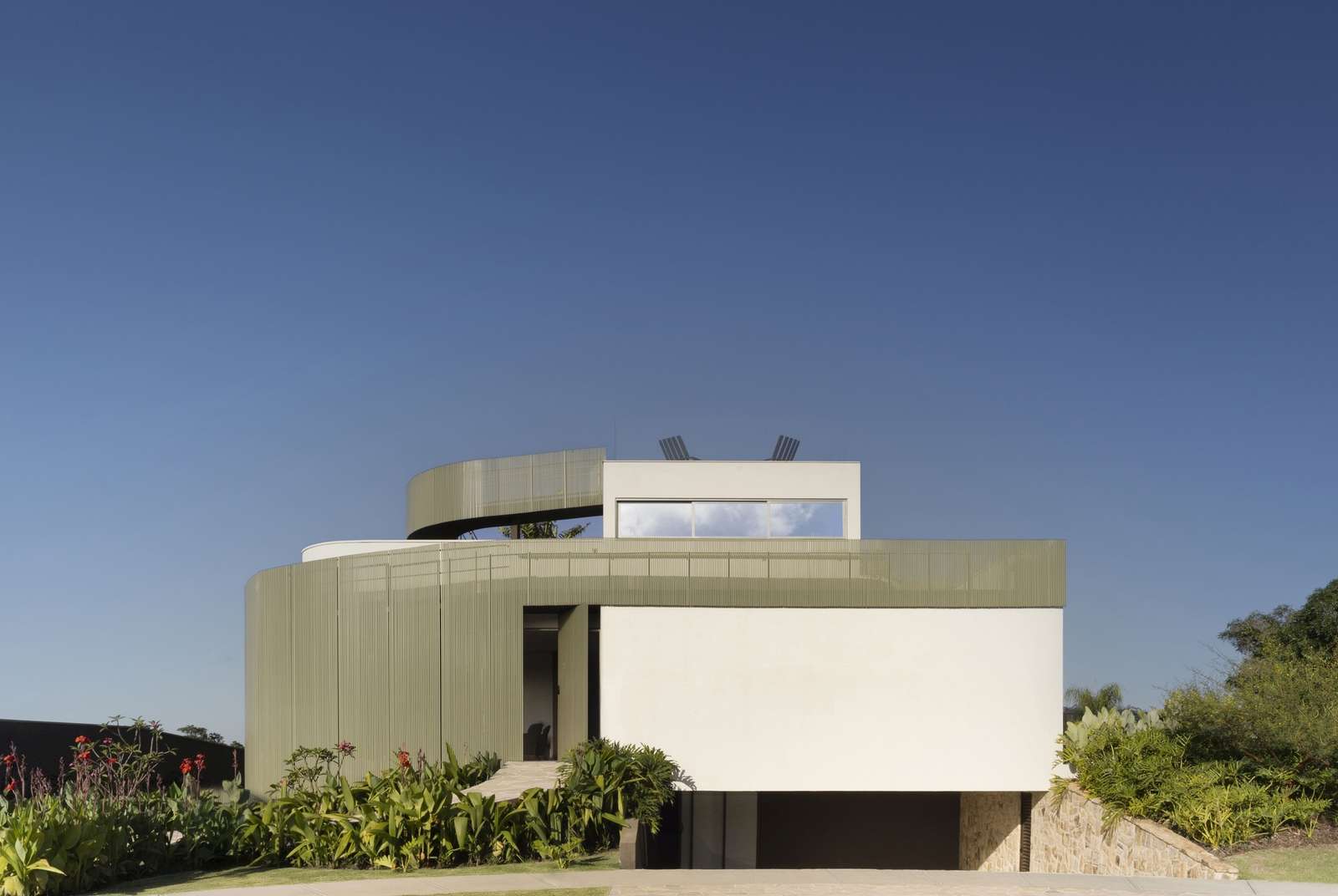
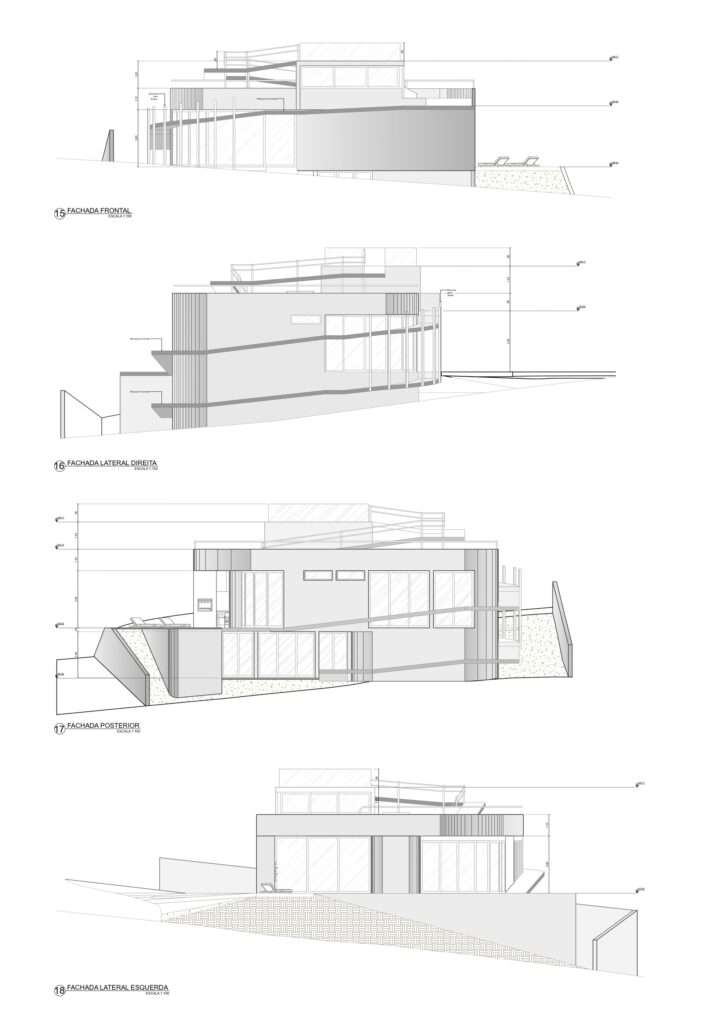
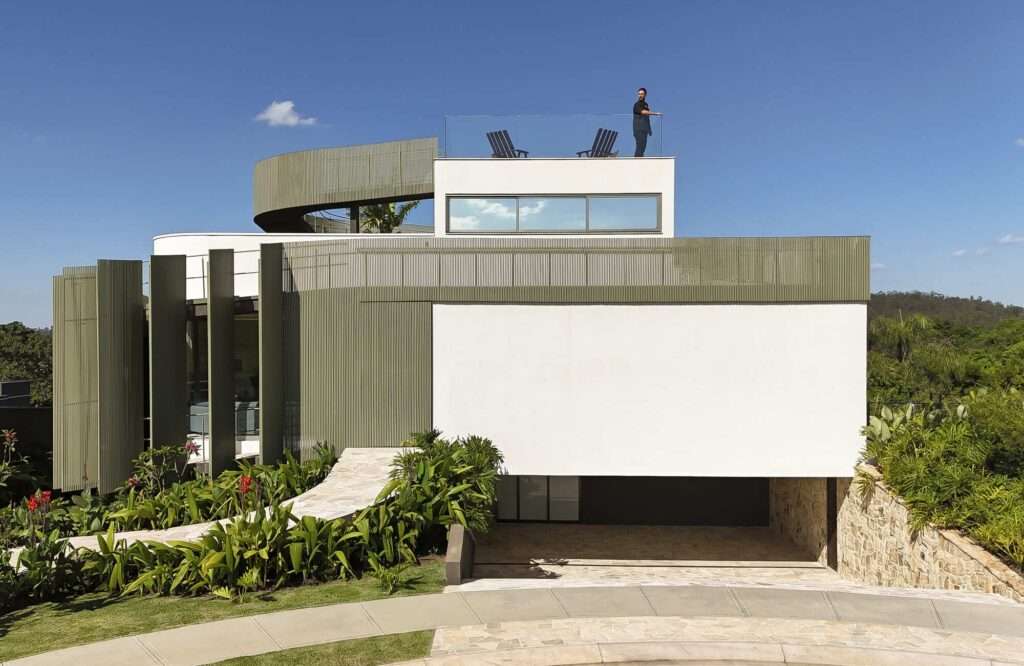
Casa Circular House redefines the concept of accessible living entirely by transforming the mobility constraint into a continuous spatial dynamic. The architectural idea is based on eliminating traditional vertical circulation elements such as stairs and elevators, replacing them with a ramp system that wraps around the entire mass in a continuous spiral path. This design approach does not merely solve the problem of movement; it creates a scenographic experience that the resident undergoes while gradually transitioning between the four levels, where the visual perception of the surrounding environment continuously changes with every new elevation angle.
Spatial Fluidity and the Effect of the Spiral Path
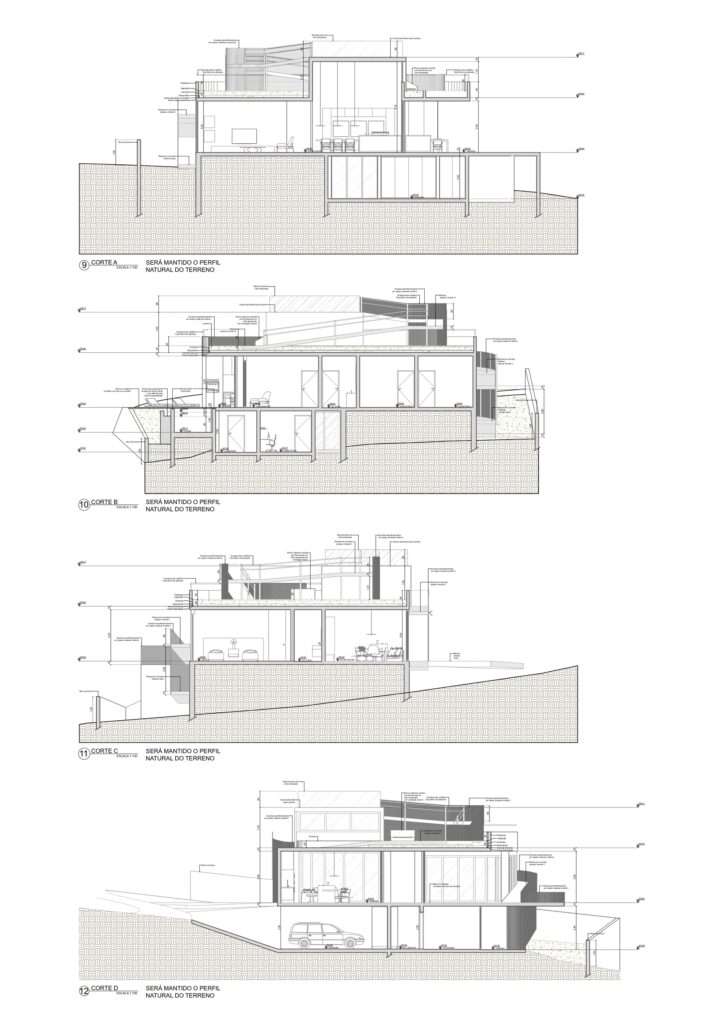
The human experience within the dwelling moves through a sloped horizontal path that connects different functions without physical interruption. This path begins at the lower level, which accommodates the garage, office, and laundry space as a grounded base, before gradually rising toward the main floor where the vital spaces converge, living room, kitchen, and entertainment area, ultimately leading to the residential suites. This gradual transition gives the interior spaces a sense of lightness and integration, dissolving traditional boundaries between floors and turning movement into a tool that links daily activities through continuous visual and kinetic fluidity.
Environmental Scenography and the Roof Garden
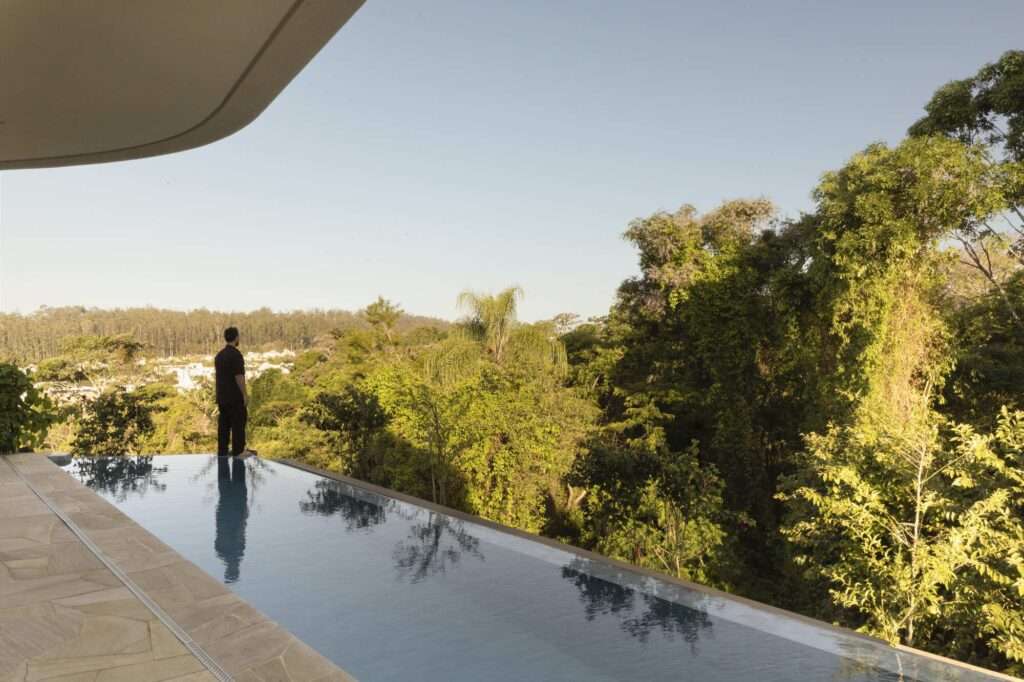
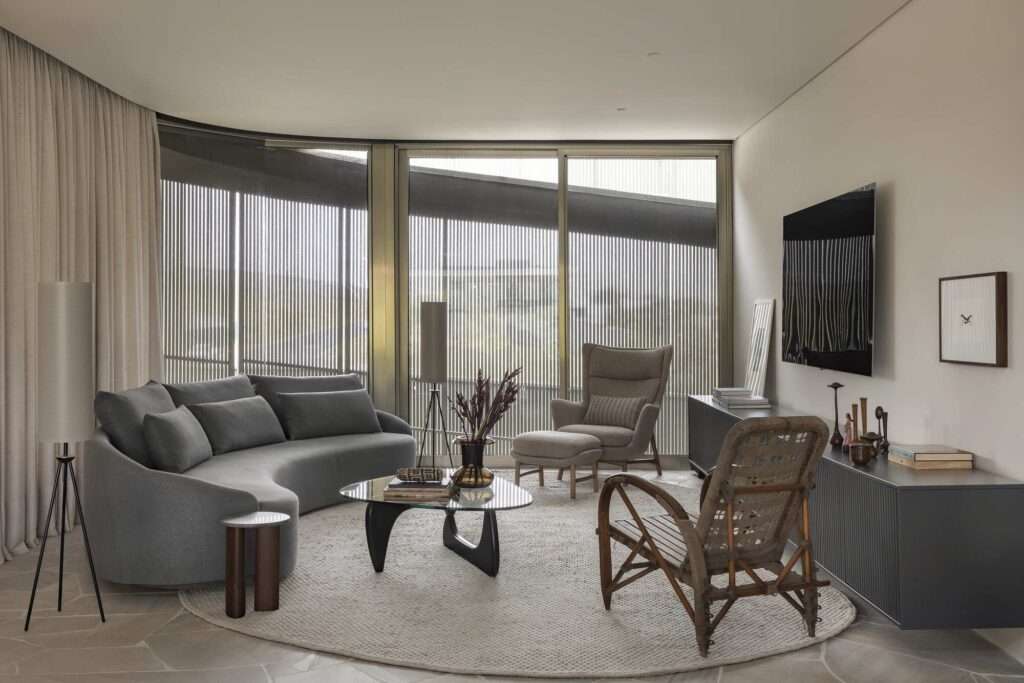
The spiral path reaches its functional and aesthetic peak when opening onto the roof garden and the panoramic viewing point. The external ramp orientation enhances a dynamic interaction with natural elements, where architectural masses intersect with the sun’s trajectory and the shifting shadows throughout the day, granting the facades a constantly renewed visual rhythm. The user experiences a physical and psychological transition moving from relative enclosure in the lower levels to complete openness toward the horizon and surrounding environment at the roof level, fulfilling the owners’ core desire to integrate nature as an inseparable component of the home’s design.
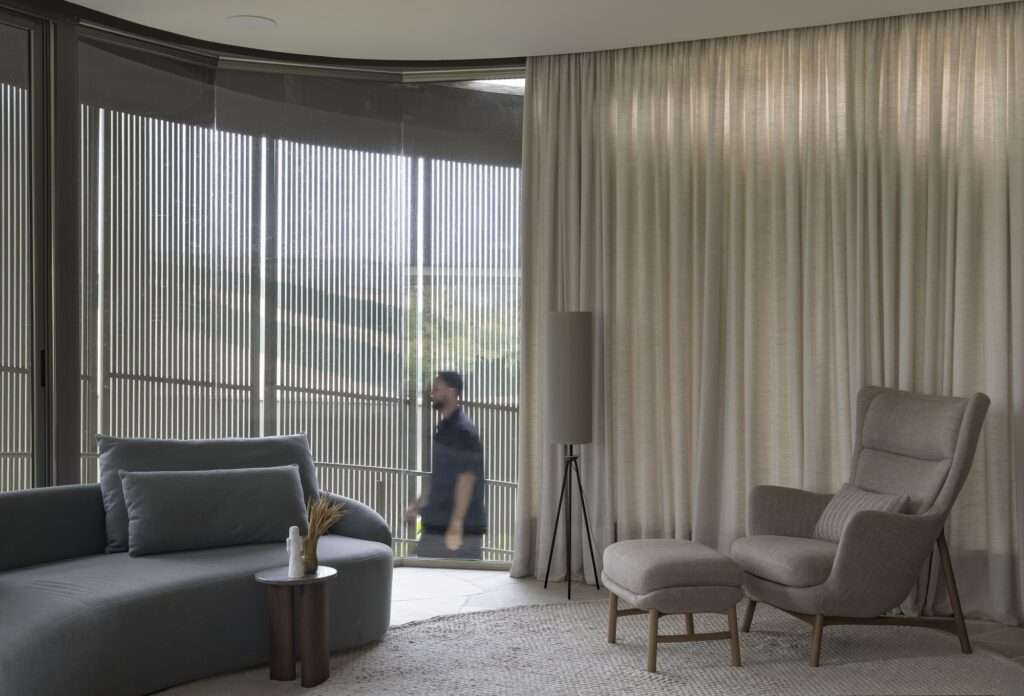
The building envelope transforms into a dynamic element that goes beyond structural function to become a scenographic device controlling light and space. The Brise métallique system forms a semi-transparent membrane enveloping the external ramp system, providing the user with a sense of protection during movement without disconnecting from the surroundings. This material experience reaches its peak in front of the living room, where the envelope mechanically unfolds like flower petals, enabling a continuous shift in the relationship between interior and exterior and casting ever-changing geometric shadows on interior surfaces influenced by the sun’s movement throughout the day.
The Central Core and Visual Continuity
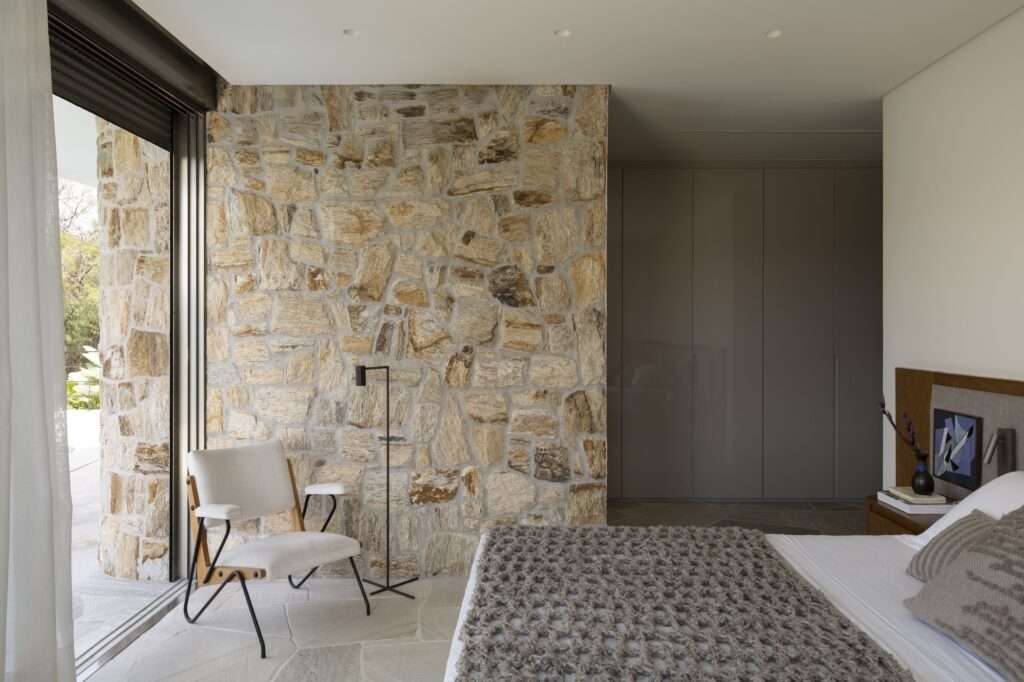
The spatial structure of the dwelling is organized around the kitchen, which occupies a central position as the architectural core and a visual and social connector between the living room, entertainment area, and swimming pool. This spatial configuration enhances social interaction and continuous visual connectivity among occupants, as spaces flow into one another without solid barriers. The central space also opens onto the surrounding vegetation of the residential complex, integrating the external landscape as a living backdrop for daily life inside the house.
Passive Environmental Strategies and Psychological Impact
The central space features a double-height volume that provides vertical extension and visual relief, integrated with passive environmental solutions ensuring thermal comfort. Natural light entering through skylights and high-level windows bathes the space in balanced daylight, while elevated openings activate the physical “chimney effect,” expelling hot air upward in conjunction with cross-ventilation that continuously renews indoor air. This interplay between directed airflow and filtered overhead light produces a calming psychological effect, deepening the occupant’s sense of environmental comfort within the architectural space.
✦ ArchUp Editorial Insight
Casa Circular House intelligently reinterprets the concept of universal access, transforming it from a mere mechanical addition into a continuous spatial loop. By replacing traditional vertical circulation systems with an external kinetic ramp, the design succeeds in converting physical constraints into a fluid spatial narrative. This structural system generates an environmental harmony between passive thermal physics and a dynamic external envelope, demonstrating the ability of suburban residential architecture to achieve environmental efficiency grounded in spatial equity.
However, this curved configuration entails a clear functional compromise; the extensive area required to sustain the continuous ramp becomes the primary determinant of the internal spatial volume. Prioritizing this sequential movement restricts the flexibility of interior partitions and increases construction costs, raising questions about the feasibility of applying such spatial models in denser urban contexts. Additionally, the mechanical façade imposes complex maintenance demands throughout the building’s life cycle, revealing a structural vulnerability that ties the poetic quality of the architecture to the continuous performance of its mechanical systems.