Decentralized Multi-Wing School with Flexible Learning Spaces

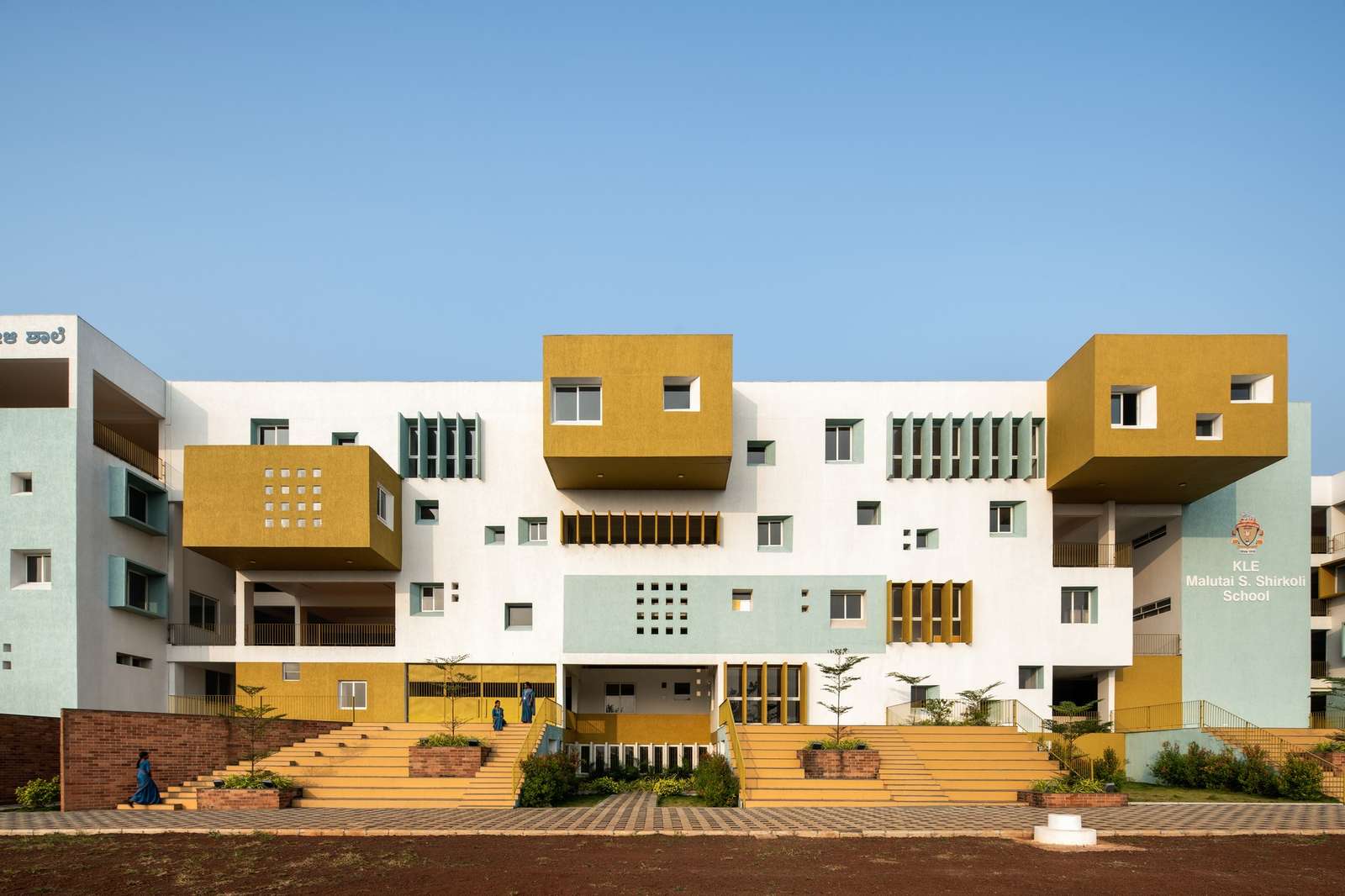
Avenue Formation and Decentralized Kinetic Orientation
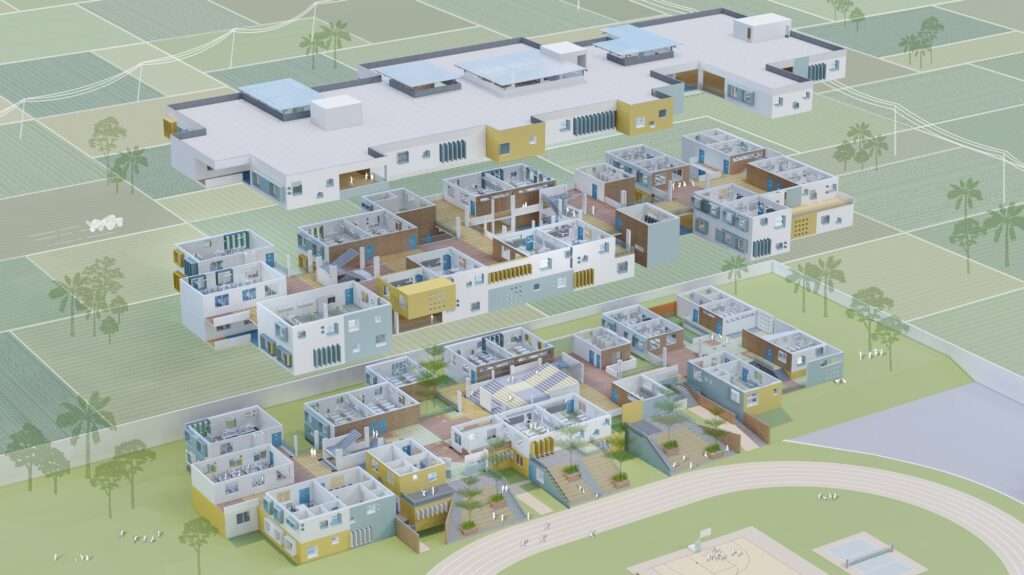
The massing configuration of the project is based on a decentralized distribution strategy activated through internal courtyards, where the design abandons solid centralization in favor of a central void occupied by an open theater that functions as a civic and social node upon which the academic and administrative wings are organized. The efficiency of this distribution becomes evident in kinetic separation; vertical circulation cores are relocated to the sides of the main pathways instead of being concentrated in a single point. This strategic orientation ensures an efficient distribution of human flow, relieving pressure from the educational wings and granting the academic spaces the environmental and functional calm required to accommodate the student density distributed across different academic stages.
Scenographic Dynamics and the Experimental Axis
The continuous axial corridor that cuts through the architectural mass transforms from a static functional connector into an experimental scenographic path that regulates the rhythm of human movement. The design manipulates the dimensions of this artery through visual and spatial expansion–contraction techniques, breaking the monotony of conventional corridors and organizing a gradual transition between public, semi-private, and private realms. This kinetic formulation provides the user with a continuously renewed visual experience, as the corridor periodically opens onto vertical and horizontal vistas where shadows intersect with natural light coming from the open theater and surrounding green areas, enriching spatial perception and continuously connecting users with the external environment.
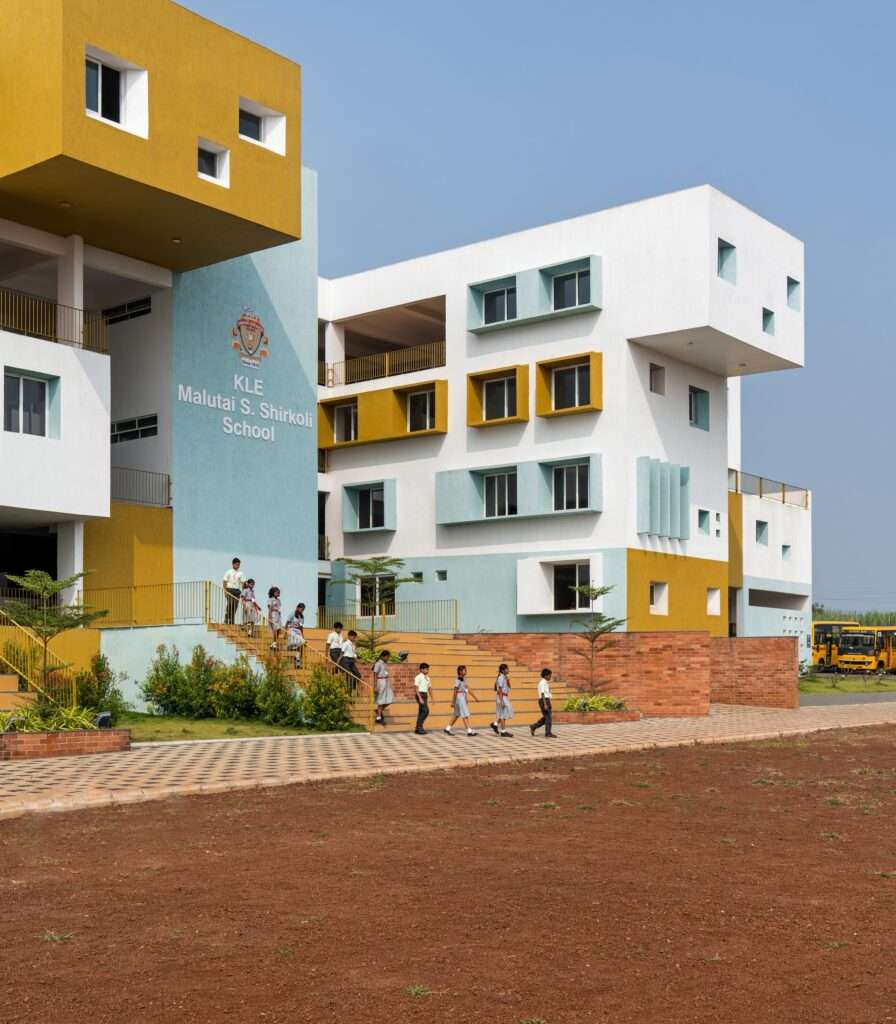
Mass Orientation and Passive Environmental Control
Analytical thinking is evident in the orientation of the architectural mass through the distribution of academic wings along the eastern and western edges, a strategy aimed at maximizing the benefit of changing natural light throughout the day while protecting interior spaces from harsh solar penetration. This orientation integrates with a modular network of interstitial courtyards and open shelters that permeate the classroom blocks; these green pockets do not merely serve a visual function but act as thermal buffers and dynamic air inlets that stimulate cross-ventilation and passive cooling deep within the floor plates. This design breaks the monotony of solid masses and creates a living climate where shadows and air movement intersect to provide a thermally comfortable environment for users.
Plan Flexibility and Spatial Integration
The project addresses changing educational needs through an open and adaptable layout, where human experience moves between multiple spatial configurations and functional levels. The organizational structure goes beyond the traditional classroom model to integrate specialized facilities and double-height spaces that give the building scenographic dimensions, enhancing the perception of spatial expansion and visual continuity. This spatial diversity, comprising laboratories, administrative areas, workshop and activity rooms, and the open theater, creates flexible transition zones and informal rest areas that seamlessly merge the enclosed educational environment with the open natural context, transforming the campus into a continuous spatial fabric that encourages interaction and free movement.
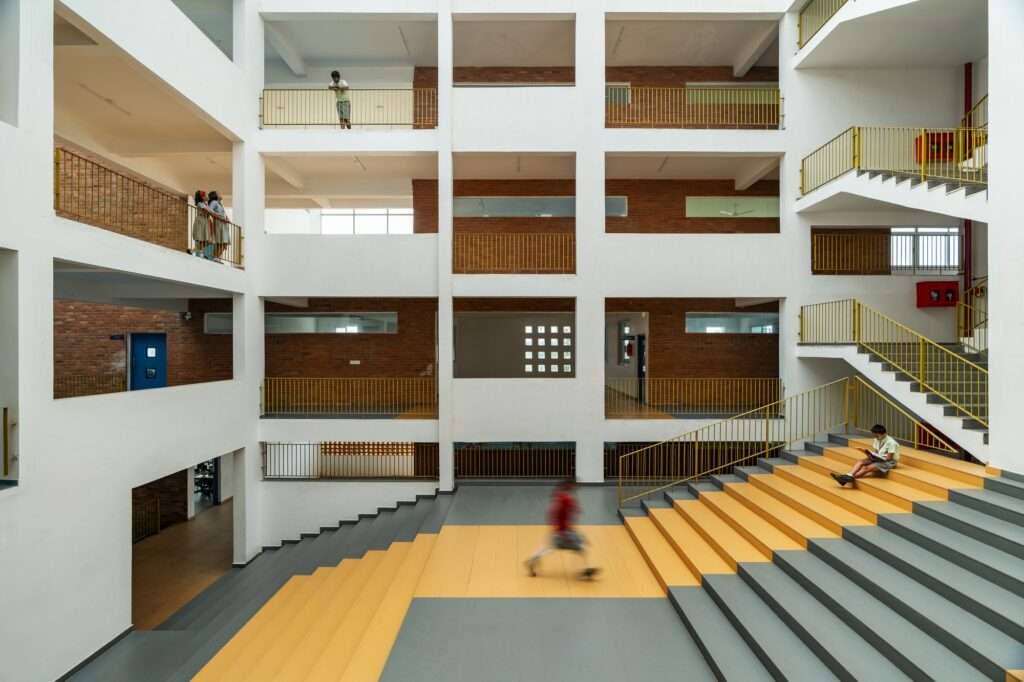
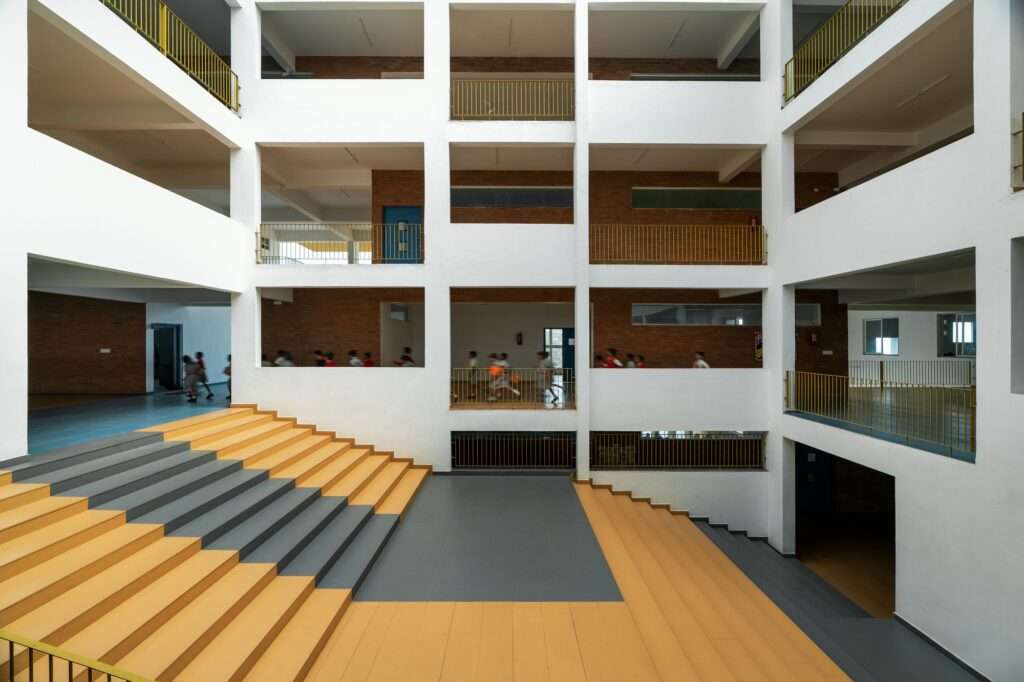
Spatial Deconstruction and the Alternative Human Experience
The design rebels against the rigidity of traditional school campuses based on courtyards and wide circulation routes with sharp boundaries, moving instead toward an interactive architectural environment that supports contemporary exploratory teaching systems. The human experience is shaped through seamless overlap between zones; users intuitively transition from enclosed formal classrooms to semi-outdoor learning spaces integrated within gardens and courtyards, and onward to extended spaces distributed along corridors and the open theater. This spatial diversity eliminates boundaries between learning environments and allows the human body to experience fluid movement that stimulates perception and supports diverse patterns of activity.
Urban Simulation and the Scenographic Dynamics of the Facade
The spatial organization of the floor plates, longitudinally extended in the north–south direction, draws anthropological inspiration from the morphological structure of nearby village streets, where the urban simulation recreates a central winding street along which masses are aligned and regularly interrupted by open spatial pockets. Through this configuration, the central movement axis transforms from a solid passage corridor into a shaded, vibrant social space that accommodates informal activities, spontaneous encounters, and dining within an environmentally protected setting. This scenographic experience is completed by the exterior façade composition, which departs from traditional educational monotony, employing dynamic forms and carefully orchestrated color interplays that express a playful character, turning the façade into a stimulating visual element that interacts with incident natural light and enriches contemporary design language.
Mass Deconstruction and the Language of Free Facades
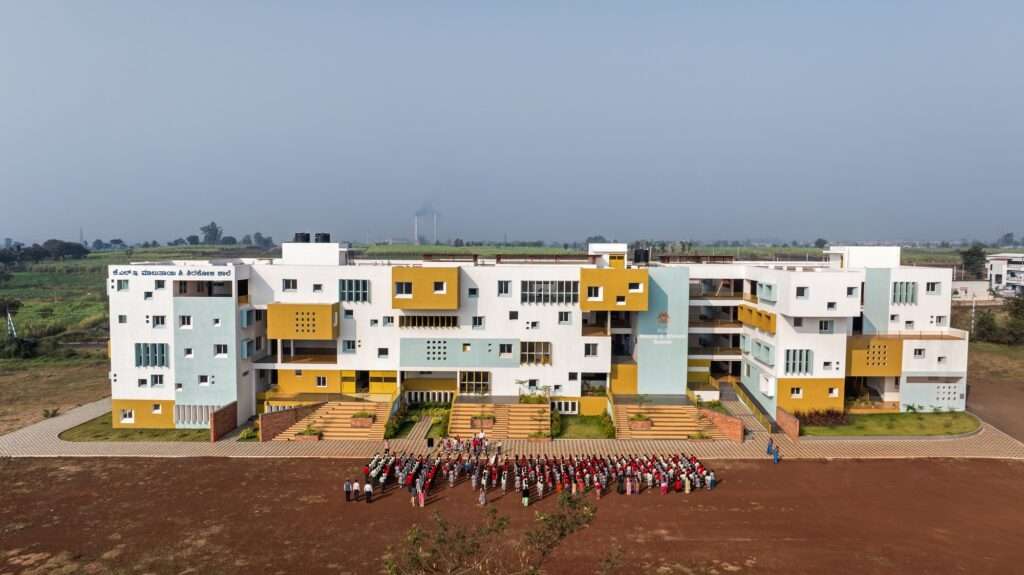
The analytical critique of the façade is expressed through the breaking of planar horizontality via massive architectural volumes with cantilevered projections painted in a vivid mustard-yellow tone, giving the building dynamic depth and a three-dimensional perception in which masses intertwine with their continuous shadows. The façade departs from the repetitive pattern of conventional openings, adopting a scattered and asymmetrical distribution of square and rectangular windows recessed within walls of varying colors. This architectural composition critically echoes Le Corbusier’s philosophy of the “free plan” and “free façade,” where the façade becomes an independent structural and visual canvas that reinterprets punched windows and sun-shading elements within a contemporary educational context.
Scenographic Experience and the Material Impact of Space
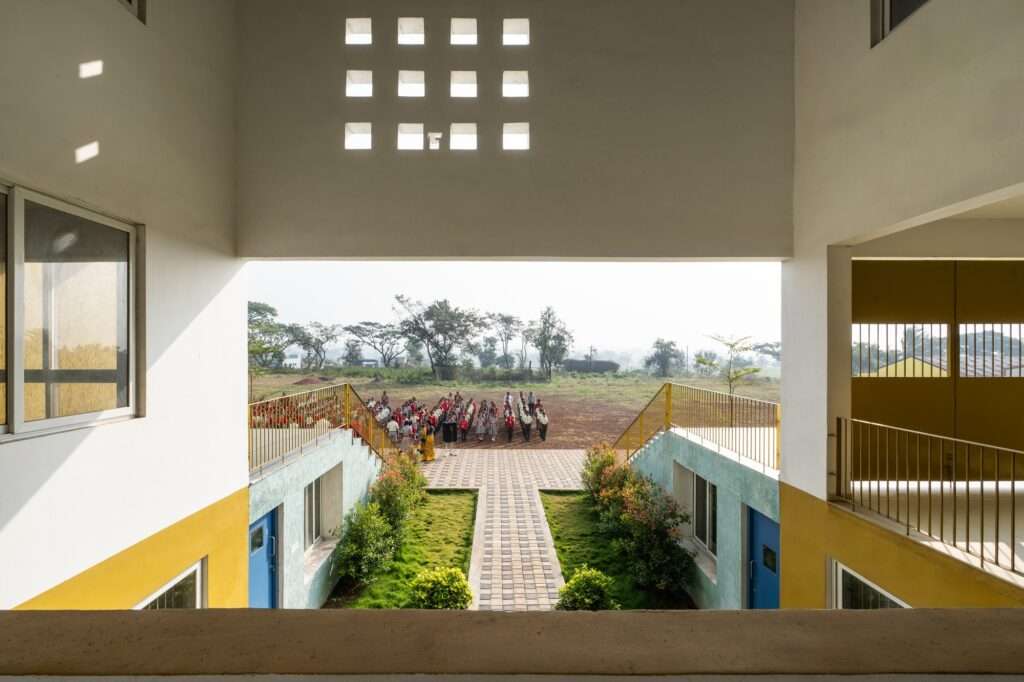
The human experience upon entry unfolds as a ceremonial kinetic event; the building meets the ground through a wide, stepped main staircase interwoven with integrated planting beds, echoing the formation of open stepped theaters that merge mass with the surrounding landscape. The kinetic experience deepens in early morning hours through Brise-Soleil elements that filter harsh eastern glare, generating shifting scenographic patterns of light and shadow that disrupt the building’s horizontal mass with a rhythmic vertical texture. This psychological and material effect is completed through the directed color and material composition; white acts as a neutral backdrop that highlights the vibrancy of the protruding yellow volumes while softening their intensity through pastel cyan-blue surfaces, while brick-clad walls framing the stepped entrances provide a warm earthy flow that balances the monumentality of the architecture.

Spatial Rhythm and Deconstruction of the Horizontal Mass
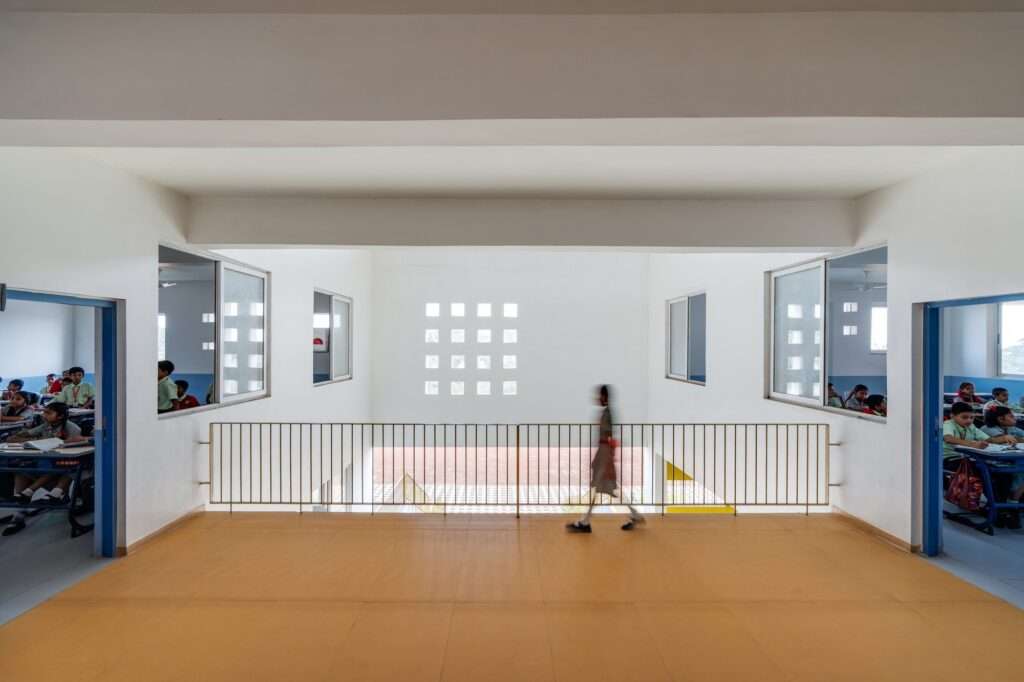
The scenography of the façade is achieved through the rhythmic insertion of balconies and double- and triple-height corridors, through which the design successfully deconstructs the building’s massive horizontal volume, transforming it into a visual composition in which carefully curated voids alternate with precisely carved recesses. This deconstruction is critically deepened through sections that incorporate perforated square patterns; this treatment functions as a semi-permeable architectural membrane that regulates environmental and visual flows, allowing the passage of air currents and diffused natural light into internal circulation corridors, while maintaining the required level of privacy for the educational interior from the exterior.
Visual Transparency and the Vertical Human Experience
The user experiences a spatial and kinetic condition characterized by openness and continuous connection to the surrounding environment across multiple building levels. Slim metal railing sections (balustrades) are employed to provide structural safety without obstructing sightlines or creating solid visual barriers, thereby enhancing the sense of transparency and spatial expansion. This design direction grants balconies and corridors high functional flexibility, allowing them to be used as interactive zones for outdoor teaching and diverse activities. The building ultimately appears as an interwoven stacking of volumes, colors, and materials, whose architectural language is shaped to express a playful functional identity aligned with the perceptual nature of contemporary educational environments.

✦ ArchUp Editorial Insight
The text diagnoses a deliberate departure from rigid educational typologies, replacing enclosed courtyards with a decentralized massing formation inspired by local urban morphology. By treating the central artery as an accordion-like corridor that expands and contracts spatially, the project exploits chromatic diversity and cantilevered projections to transform otherwise monotonous circulation paths into a highly responsive and interactive social and kinetic landscape.
However, this formal excess risks overestimating the pedagogical efficiency of spontaneous interactions; by prioritizing decentralized nodes at the expense of fast and organized movement paths, the design complicates the daily operational flows of the institution. Furthermore, this fragmented geometry accelerates the deterioration of building materials exposed to environmental conditions due to the increased ratio of external surface area to total volume, ultimately sacrificing long-term functional durability in favor of a temporary, stylistically driven novelty.