Micro Journal Rev.6.1 and Spatial Isolation in Writing Devices

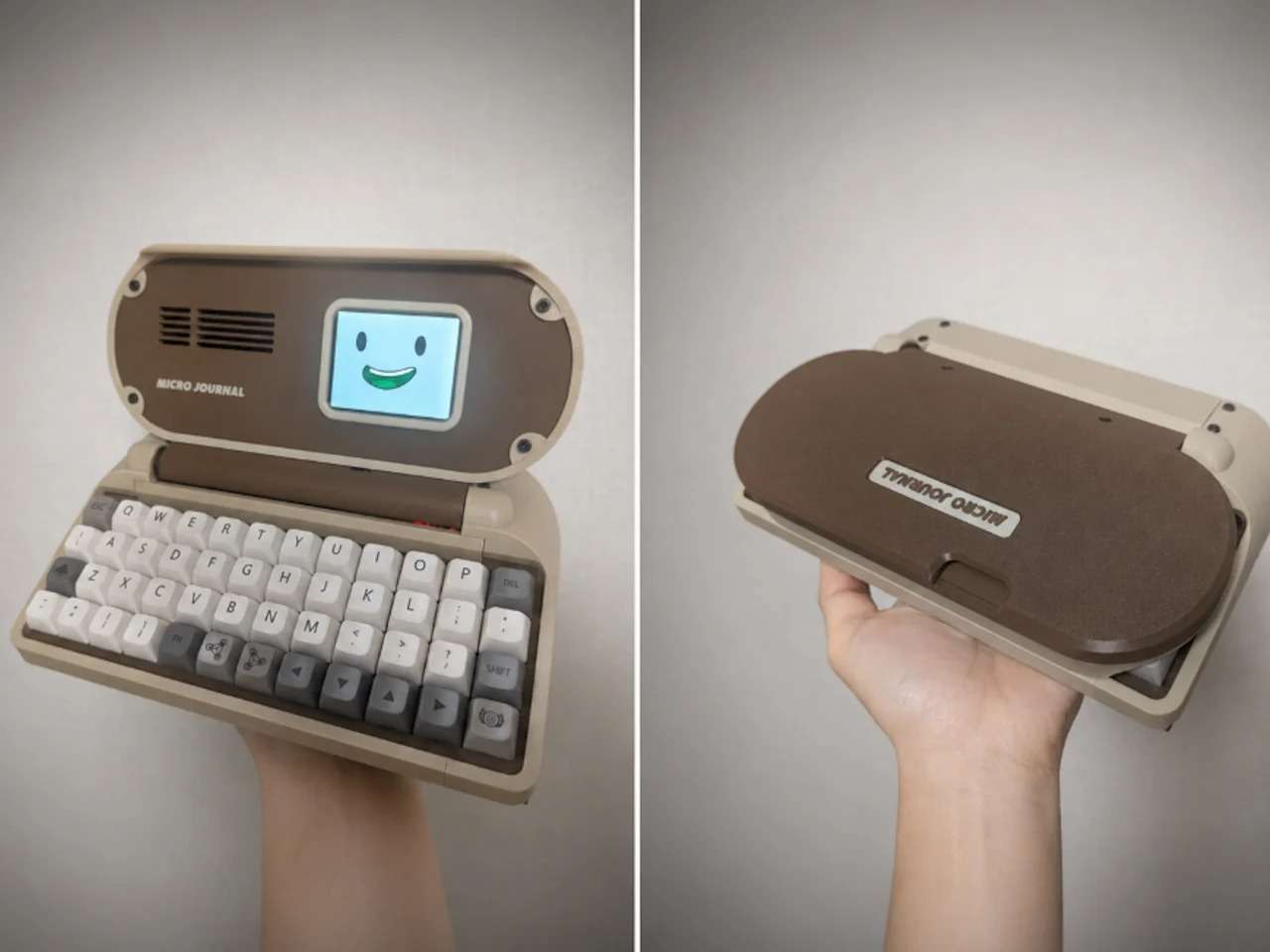
Monolithic Void Synaesthetics and the Isolation of the Mass
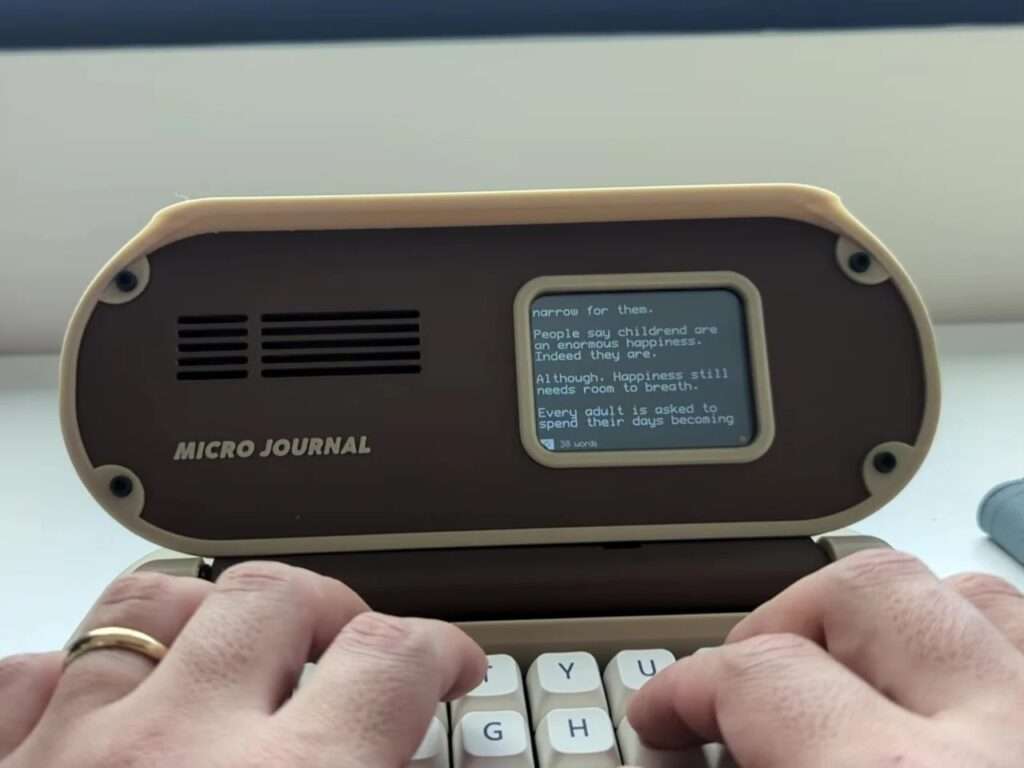
The device’s outer shell moves according to a clamshell design mechanism, forming, immediately upon opening, a miniature “spatial refuge” that isolates the user from their surroundings. The moment of entering this space does not pass through software gateways or complex operating systems, but rather through a direct physical transition that begins with a mechanical motion and ends with the instant emergence of the writing interface. This kinetic sequence eliminates “digital corridors” (such as notifications and browsers) that distract attention, placing the writer in front of a solid, stable visual interface resembling a pure concrete wall in a Minimalist structure, where there is no room for decorative additions or lateral visual pathways.
Material Interaction and the User’s Kinetic Flow
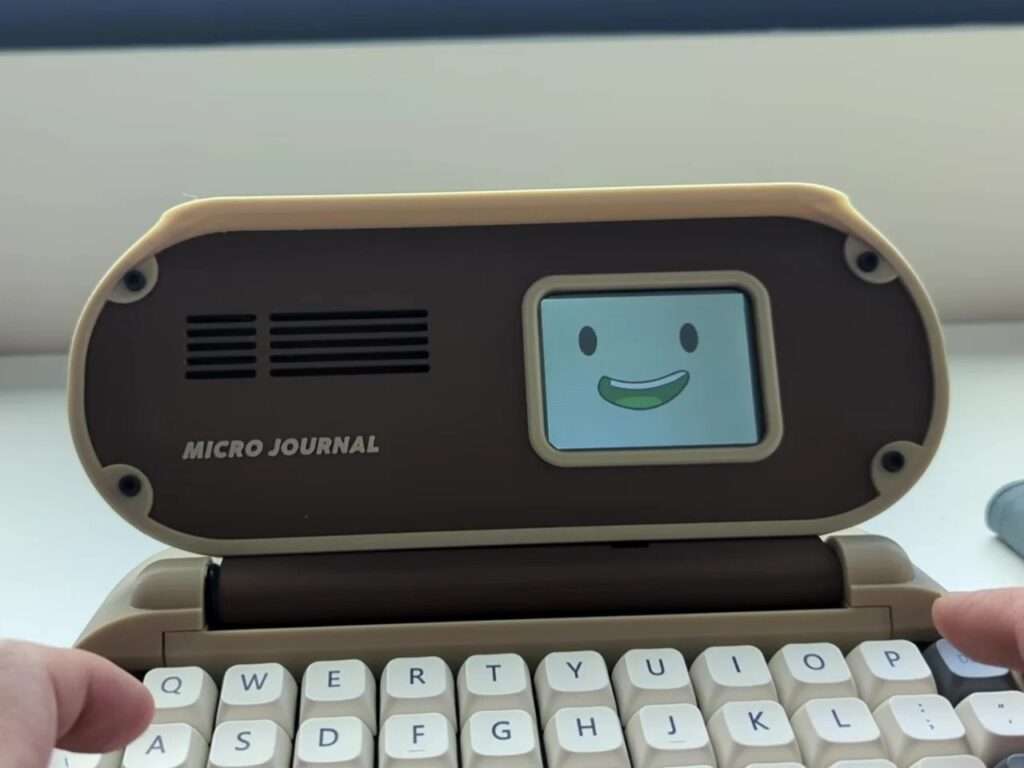
The act of writing is transformed here into a living material experience in which finger movement intersects with the geography of the mechanical keyboard, generating a rhythmic acoustic and kinetic feedback that reinforces psychological presence within the space. The absence of dynamic, constantly changing components (such as browsers and pop-up windows) allows the light cast on the static screen to define the boundaries of the experience without fluctuation, creating a visually comfortable environment characterized by static stability. This material design echoes the dynamics of the classical paper notebook in its simplicity, while extending technologically through silent backend channels that connect the product to the cloud space without disturbing the spatial purity of the device’s mass.
Morphological Evolution and the Mass’s Response to the External Environment
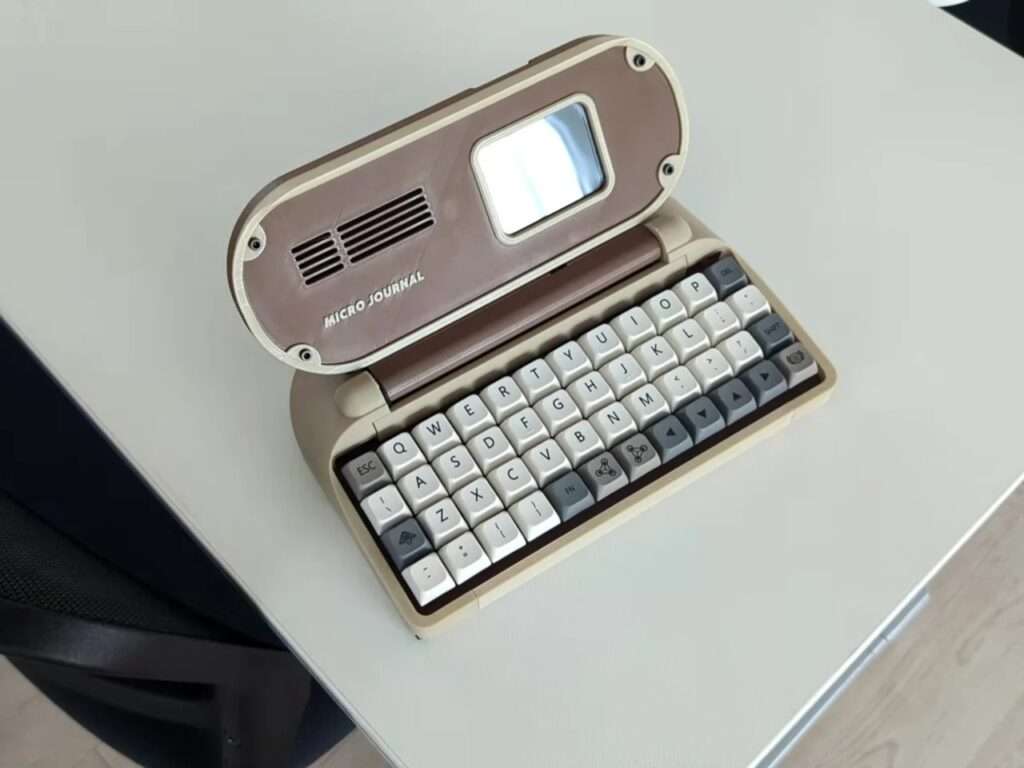
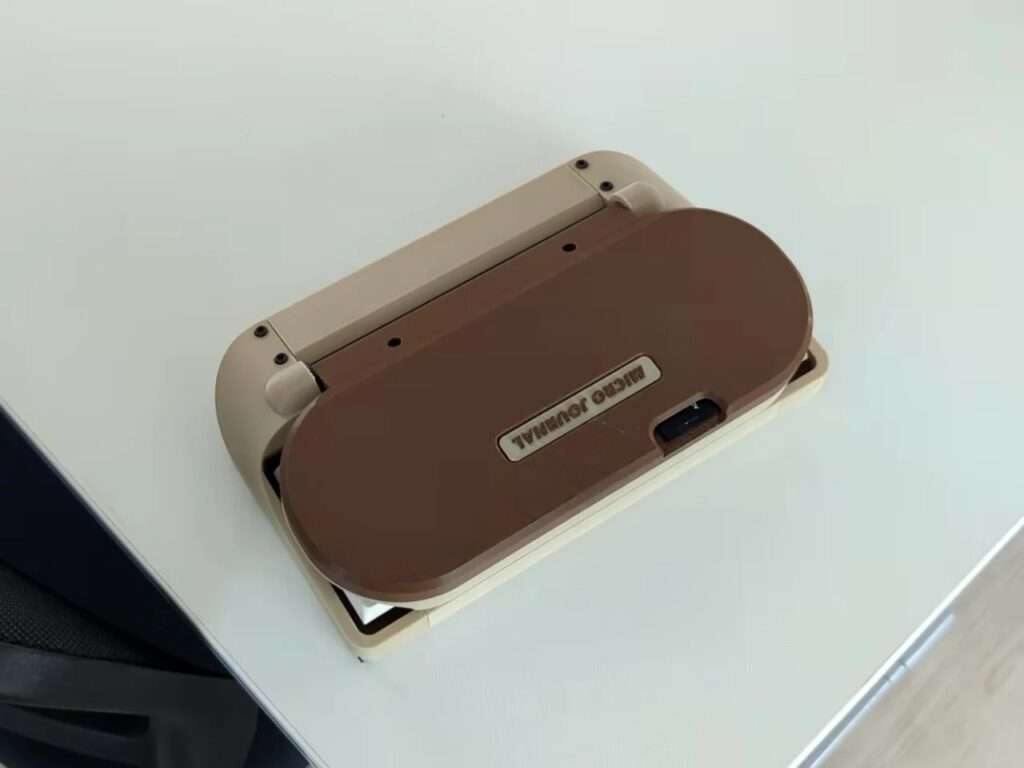
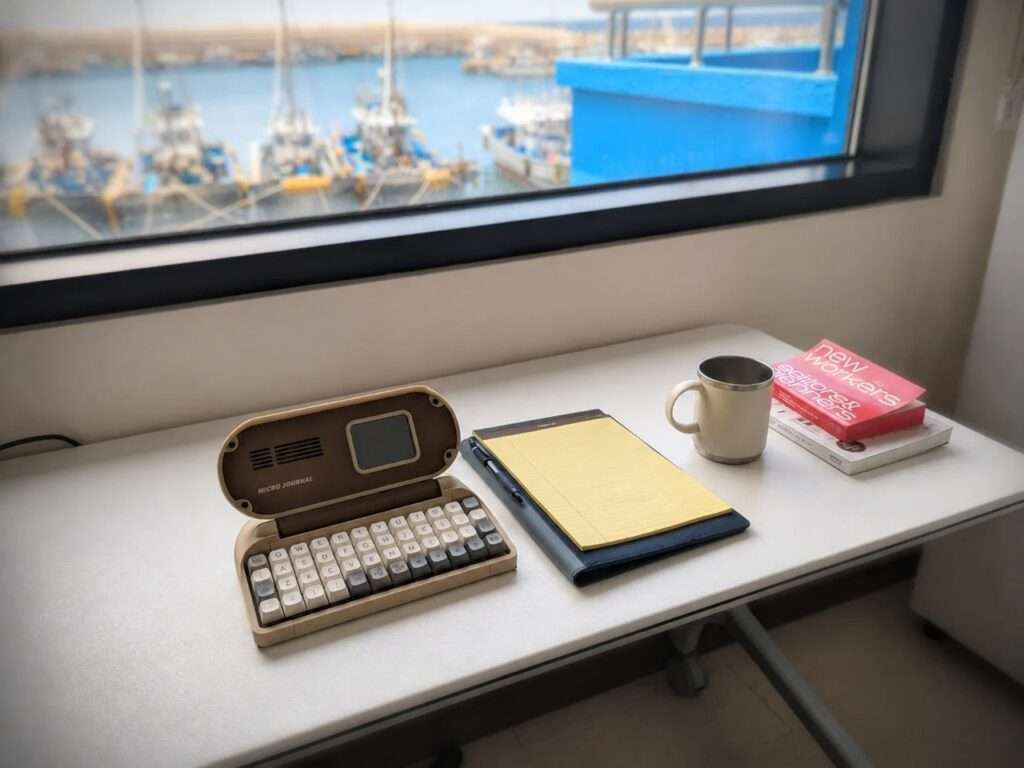
The design transition from the previous version to the current model reflects a flexible architectural response to the demands of “mobile voids” (such as cafés and urban environments). The transformation of the structure into a folded clamshell configuration represents an engineering solution for reducing physical volume and facilitating movement and portability within bags without disrupting internal content. This structural modification, based on user feedback, represents an ongoing process of “iterative restoration and development,” where spatial relationships between the IPS color display and the keyboard are continuously reconfigured. The flat closure thus becomes an external protective shell that preserves the integrity of the human experience in any spatial context in which the device is placed.
Deconstruction of the Physical Interface and Precision of Kinetic Interaction
The 48-key keyboard becomes a highly precise interactive interface through the integration of Kailh sockets compatible with Cherry MX switches, granting the user full control over the tactile (mechanical and acoustic) feedback of the input process. This hot-swappable modular construction treats the physical act of typing as a spatial phenomenon worthy of calibrated tuning. From a scenographic perspective, the rhythm of movement extends beyond the visible dimensions through “hidden layers” that can be remapped, creating an invisible functional extension that amplifies the flexibility of the small void. This affirms that the device’s usability depth is not defined by its visible physical footprint, but by its ability to adapt to the geography of the hand and its free motion.
Spatial Sustainability and Cross-Border Dynamic Connectivity
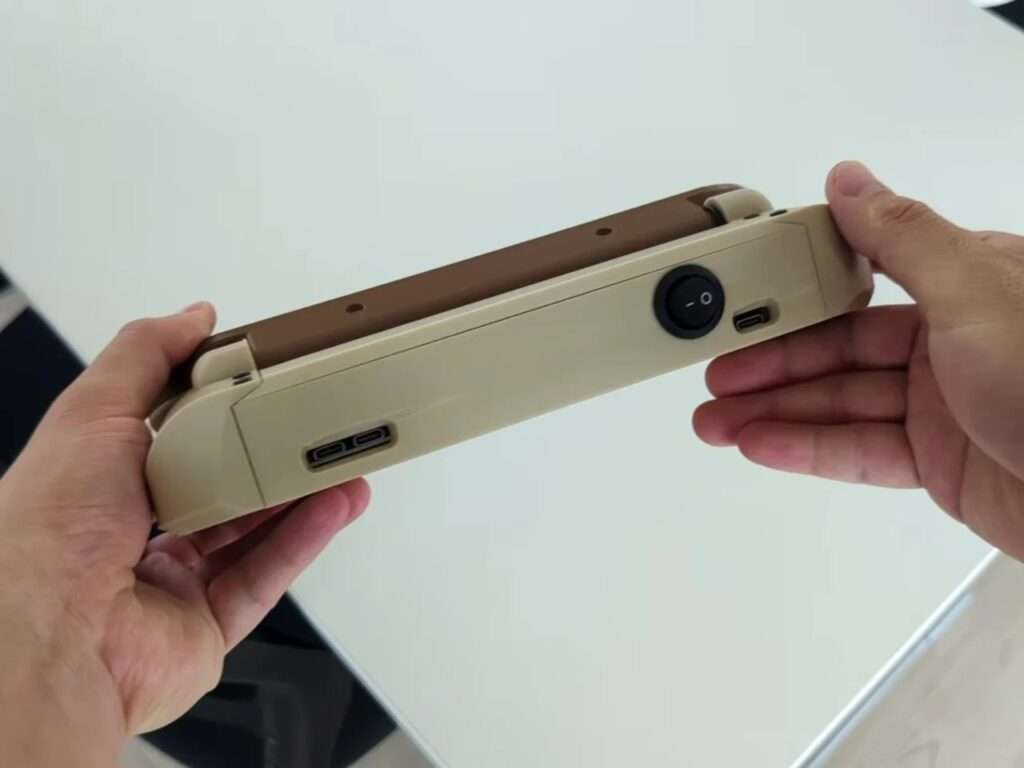
The device’s operational structure is liberated from service dependency through a direct synchronization protocol connected to Google Drive’s cloud space via Wi-Fi networks, without the need for a distorting digital intermediary that compromises spatial privacy. This invisible information flow runs parallel to material energy sustainability provided by a rechargeable 18650 battery, where the USB-C port represents the only physical point of contact with other device ecosystems. These engineering details ensure that the “writing refuge” remains functionally isolated, yet chemically and technologically connected to global contemporary standards, achieving a scenographic balance between necessary isolation and effective connectivity.
Maker Culture and the Crafting of Spatial Materiality
The Micro Journal Rev.6.1 belongs to a growing generation of specialized writing voids (writerDeck), where the product is treated as a serious productivity tool rather than a transient entertainment device. The aesthetics of “maker culture” are clearly expressed in the texture of the enclosure and its manually assembled details after each order, giving the mass a unique human imprint that distinguishes it from machine-polished consumer products (such as Freewrite). This visible craft trace does not constitute a structural flaw, but rather an authentic material expression of design language; conscious roughness and constructive clarity become a scenographic invitation for mechanical keyboard users seeking a pure, silent void entirely free of visual distraction.
✦ ArchUp Editorial Insight
The Micro Journal Rev.6.1 diagnoses how digital networks fragment human attention, offering a spatial antidote in the form of a highly precise physical mass. By stripping the device of complex software architecture, this design functions as an analog refuge that echoes solitary chamber rooms; it employs sensory materiality and mechanical responsiveness to isolate the user and actively protect cognitive focus within our modern, excessively noisy cities.
However, this design isolation carries a deep romanticized dimension that overlooks the realities of modern production. Elevating absolute focus as the sole spatial goal ignores the fact that contemporary idea formation is structurally dependent on the algorithmic infrastructure that the device rejects. Total isolation becomes a luxury, and separating the act of writing from immediate references and real-time cloud collaboration risks transforming this pure refuge into an impractical monastic chamber that obstructs the flow of collective work.