Casa Sota la Mola: Topography, Fragmentation, Nature

Site and Natural Context
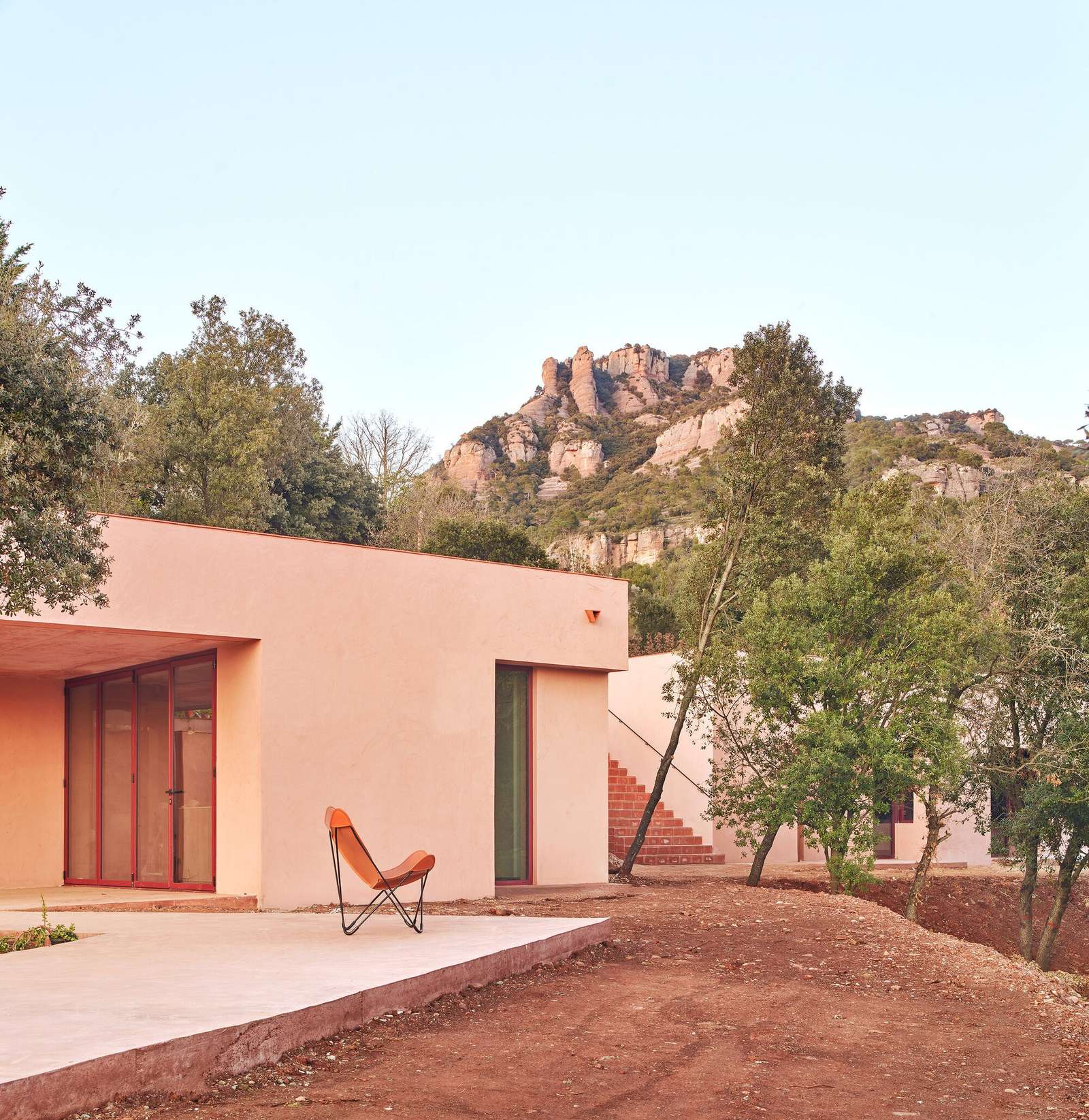
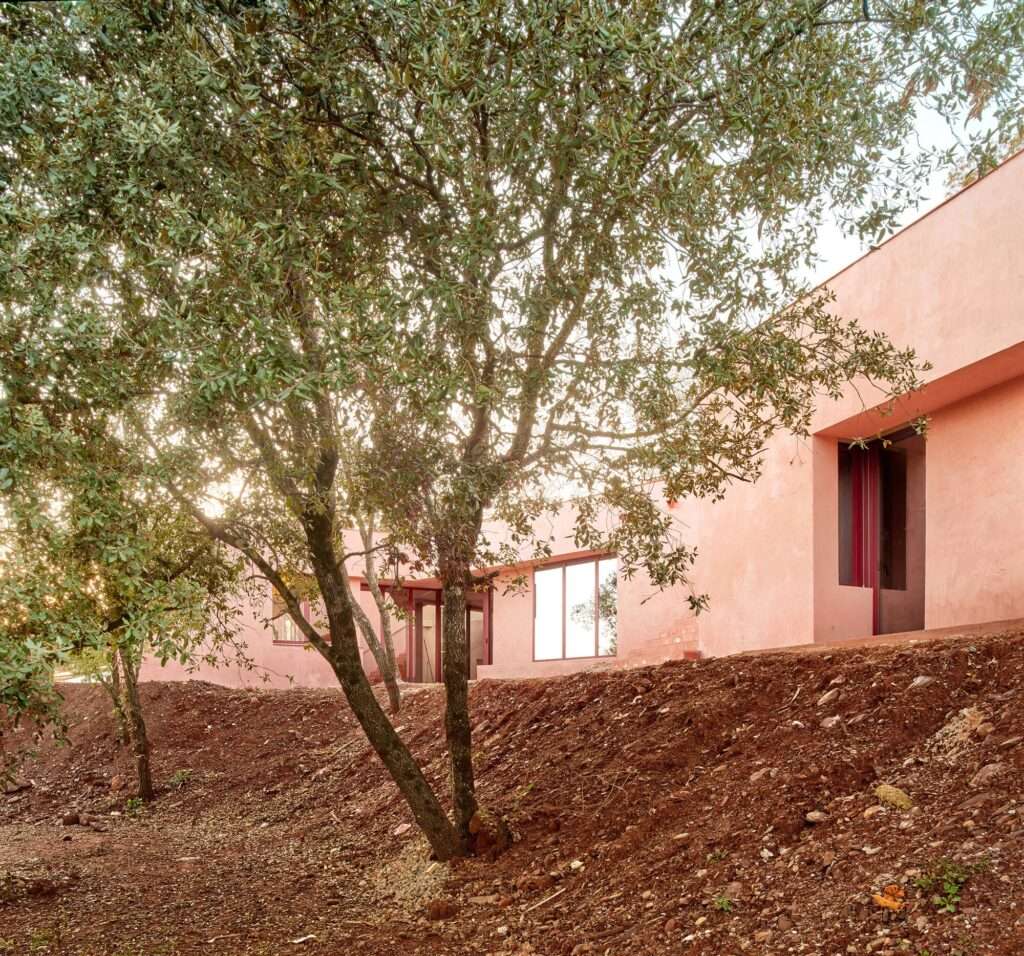
The Casa Sota la Mola project is located in Matadepera at the foot of the Sant Llorenç del Munt i l’Obac Natural Park in Barcelona. The approach to the site is based on a direct reading of the terrain’s nature and the dominant colors of the landscape, particularly the characteristic red tones of the area. This positioning aims to integrate the Buildings into its natural context rather than separate it from it.
Architectural Reading of the Project
The Architecture composition is based on the idea of a monochromatic mass that visually interacts with the surrounding ground. The building appears as an extension of the terrain rather than an independent object, while maintaining a balance between the presence of the architectural volume and the calmness of the natural environment. This approach strengthens the visual relationship between interior and exterior without formal exaggeration.
Users’ Background and Design Drivers
The project was designed for a couple with two young children, with a clear focus on creating a relationship between family lifestyle and the surrounding environment. One of the owners has a personal connection to Matadepera due to his childhood in the area, while years of living in Australia, where outdoor life plays a central daily role, reinforced the desire to return to the land and build a home that directly engages with nature.
| Field | Details |
|---|---|
| Architects | TwoBo arquitectura |
| Area | 250 m² |
| Year | 2025 |
| Photographs | Jose Hevia |
| Manufacturers | Bivaq, Isist Atelier |
| Category | Houses |
| Design Team | María Pancorbo, Alberto Twose, Pablo Twose |
| Collaborators | Claudia Canalda, Sara Alves, Javi Comadrán, Víctor Díaz-Asensio, Ourania Chamilaki |
| Construction | Prismatic 360 + Coterm |
| City | Matadepera |
| Country | Spain |
Adaptation to Site Topography
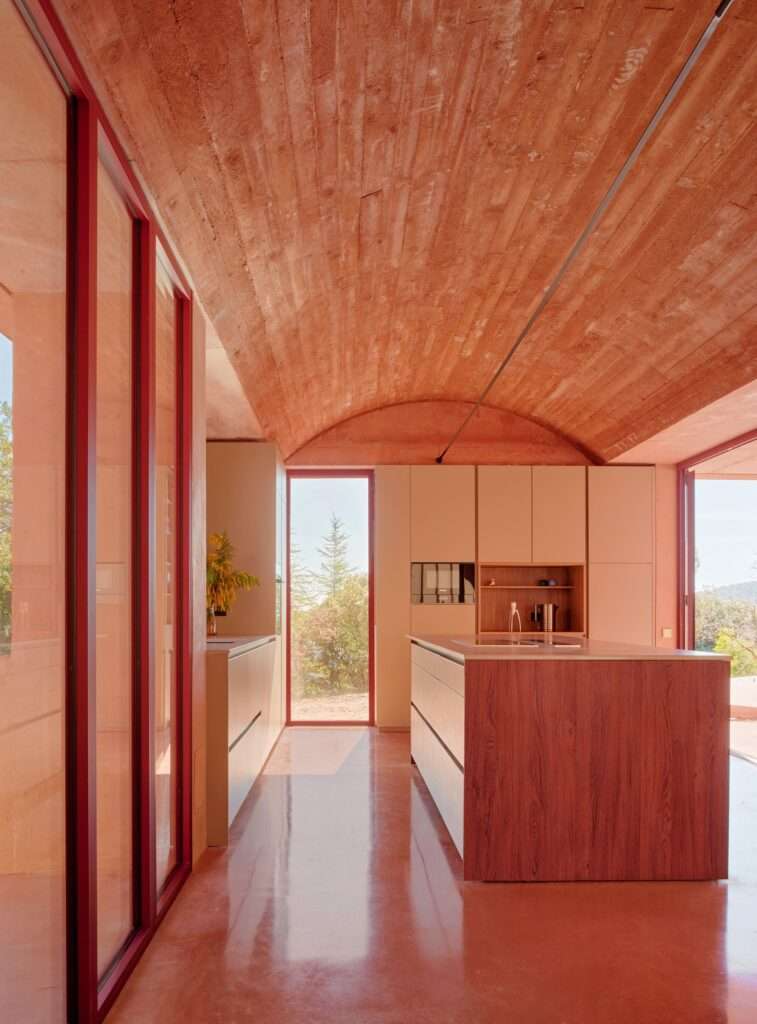
Casa Sota la Mola is based on a direct response to the topography of Mount La Mola, where the Design is guided by a precise reading of site conditions. The architectural form is based on fragmentation, breaking the mass into smaller units that interact more naturally with the terrain and reduce its visual impact on the landscape.
Materials and Relationship with the Landscape
Building Materials are chosen to correspond to the red tonalities of the surrounding soil, reinforcing the visual continuity between the building and its site. This choice creates chromatic cohesion between architectural elements and topography, allowing the building to blend into the environment rather than appear as a separate object.
Design Reference and Fragmentation Strategy
The design concept is rooted in a critical reading of Alvar Aalto’s Muuratsalo Experimental House, where fragmentation is understood as a tool for integrating Architecture with nature. In this context, breaking down the architectural mass becomes a means of reducing confrontation with the site and achieving a form of visual disappearance, allowing the building to merge with the surrounding natural system.
Functional and Spatial Organization
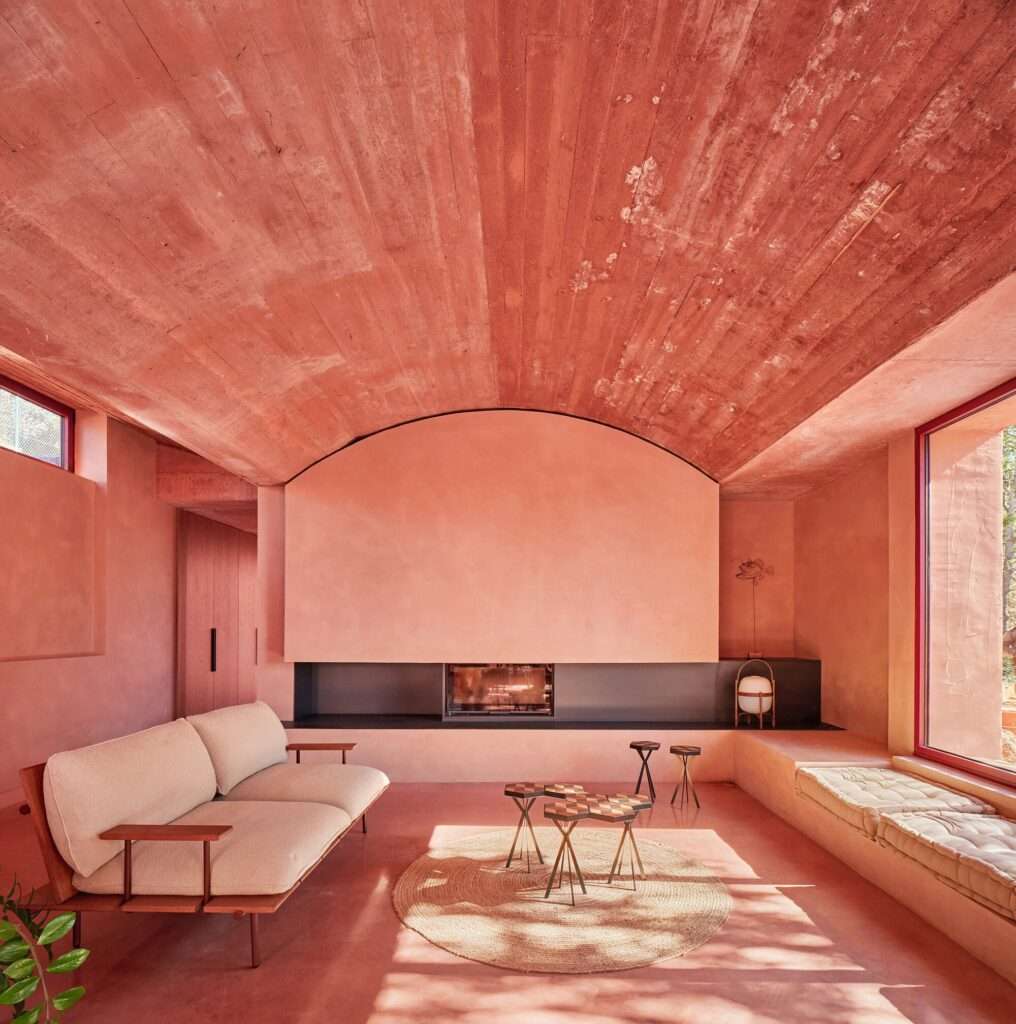
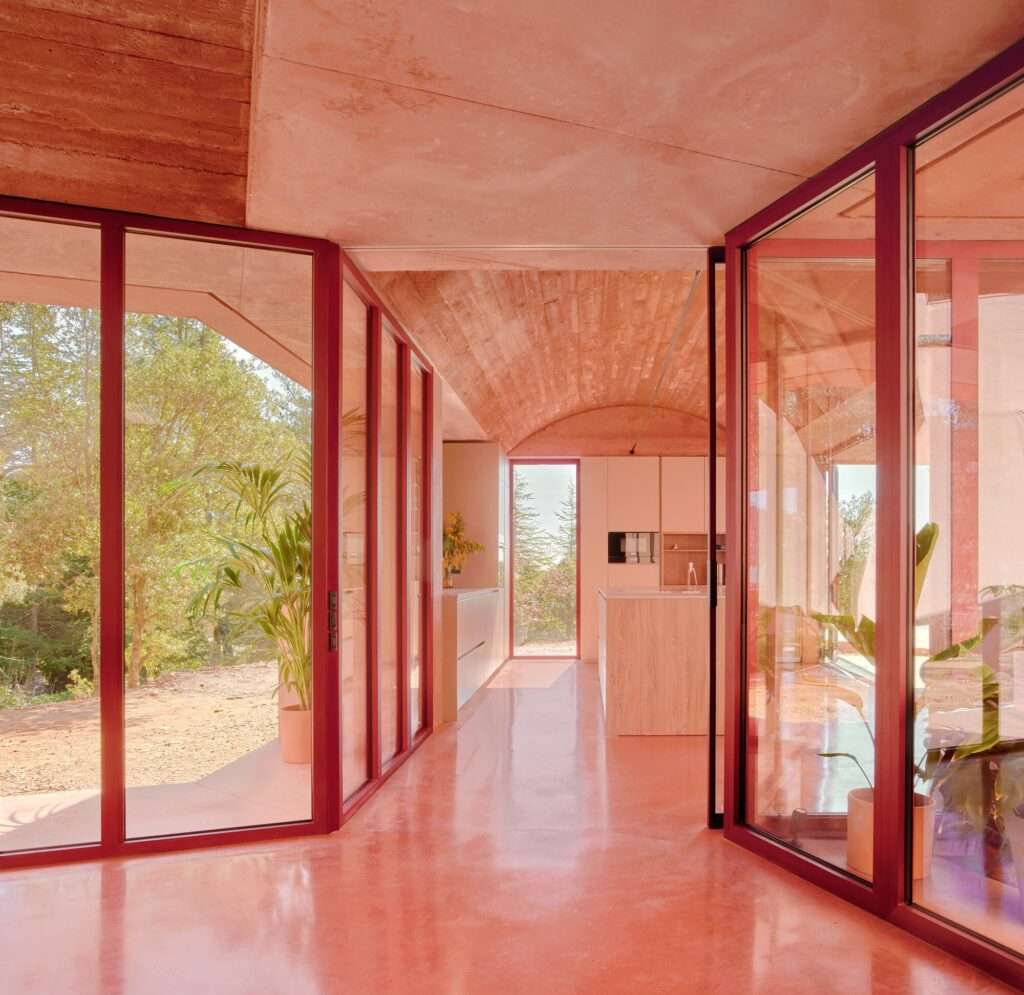
The house is laid out on a single level and divided into two clearly defined functional volumes. The first volume contains shared spaces such as the kitchen, dining, and living areas, while the second is organized around an internal courtyard and includes private areas and bedrooms. This separation creates a clear distinction in use, with varying degrees of openness and privacy between the two parts.
Climate and Site Relationship
This arrangement produces spaces with different environmental characteristics. The elevated, west-facing portion, open to views and afternoon sunlight, becomes the main living area. In contrast, the more shaded and cooler central volume provides a quieter and more secluded atmosphere. The building’s positioning also directs its relationship toward the landscape while minimizing exposure to neighboring Cities constructions.
Materiality and Structural Expression
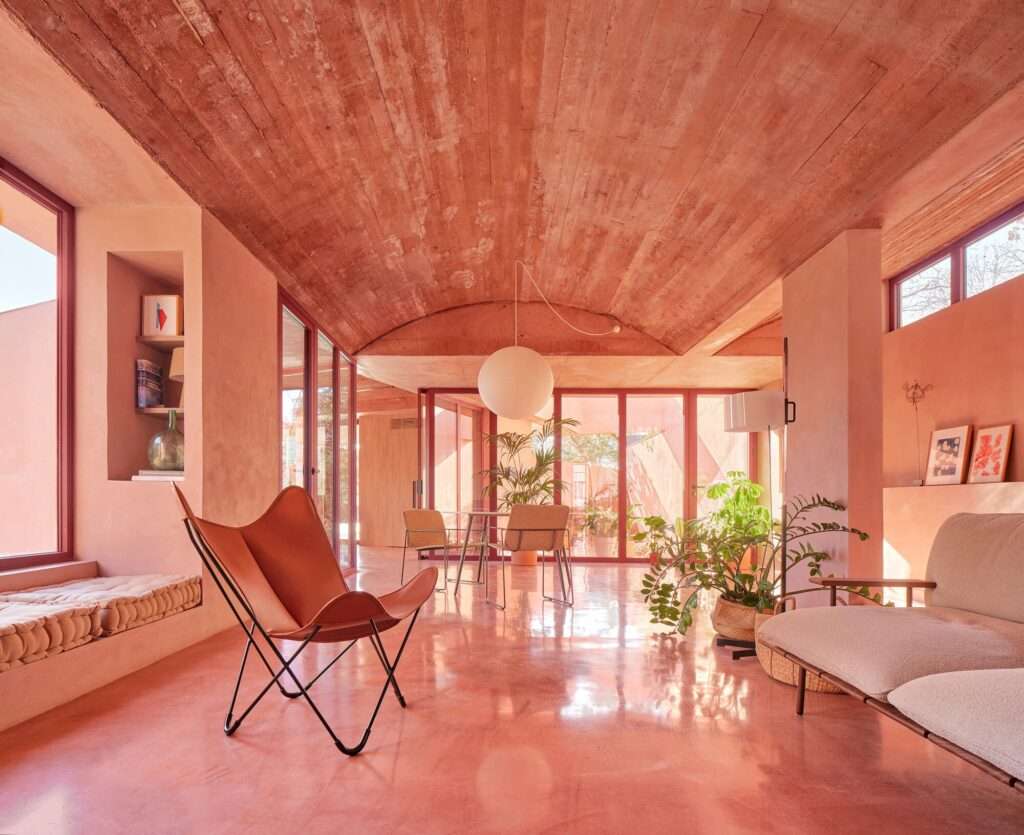
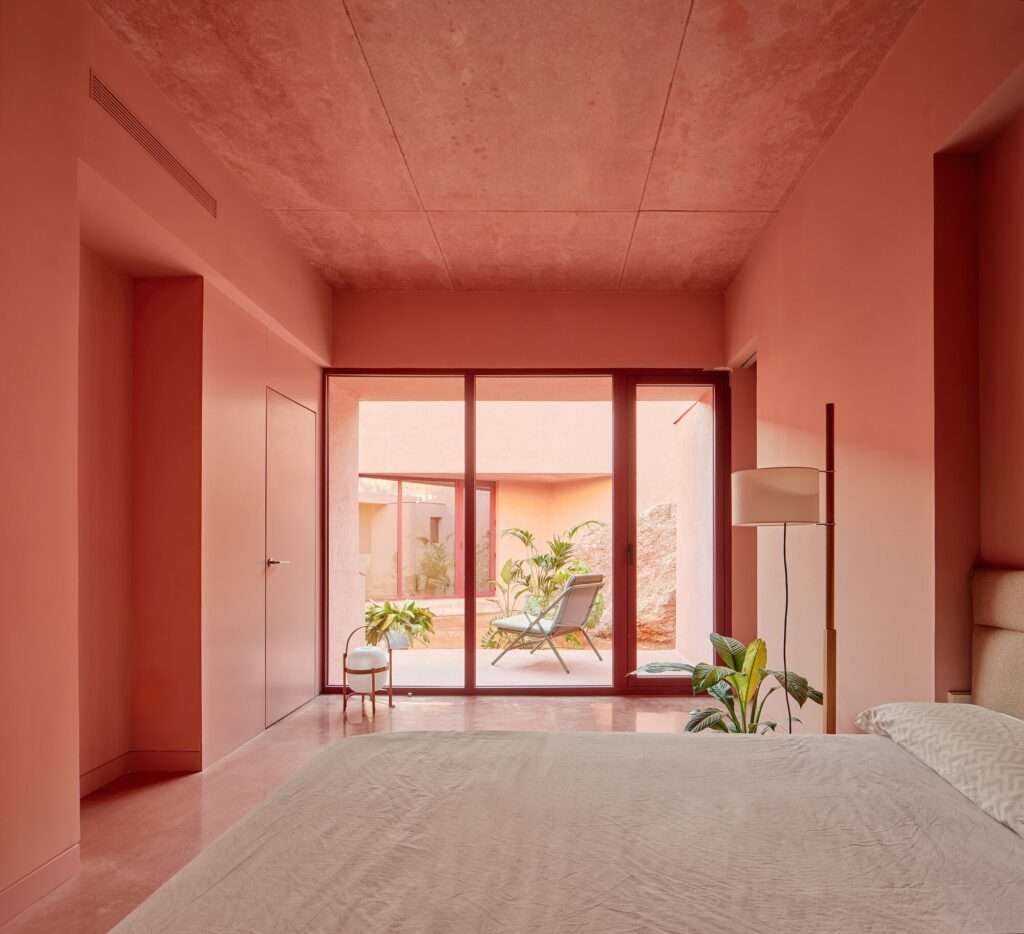
The Interior Design is based on the idea that the structural system itself serves as the final finish without additional layers. Red-pigmented concrete is used as the primary material, defining the project’s material identity, while preserving the imprint of wooden formwork on the surfaces. The Catalan vault system defines the main spaces, giving the interior a continuous, structural, and almost sculptural character.
Color Contrast and Interior–Exterior Relationship
The earthy red tones interact with the green of the surrounding landscape, which flows into the interior through large openings, creating a strong visual contrast between inside and outside. This contrast continues in the master bedroom bathroom, where green ceramic tiles are used against red finishes, directly referencing the relationship between exterior vegetation and the building’s materiality.
Internal Courtyard and Site Engagement
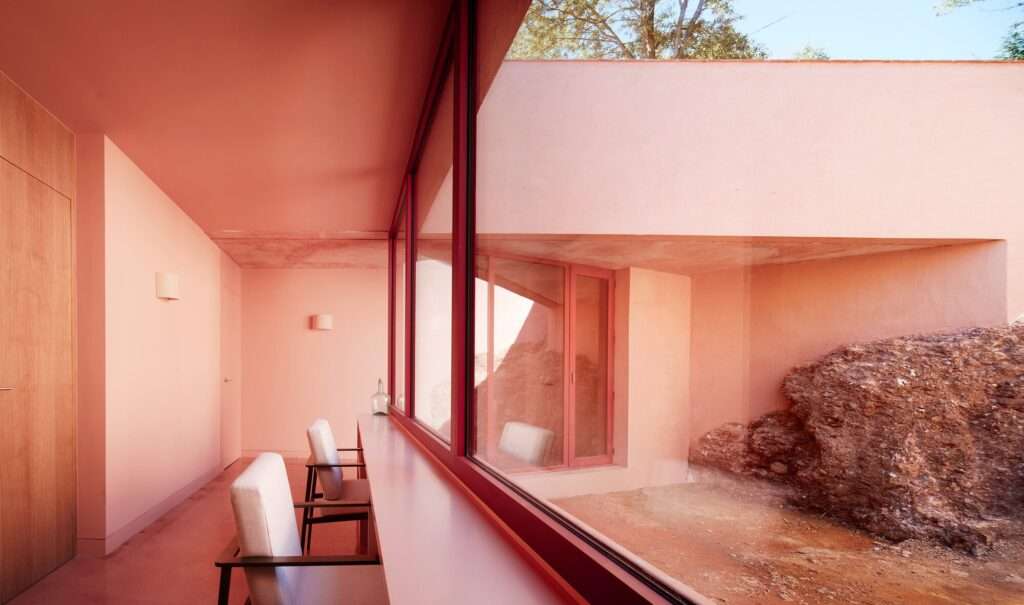
The Projects design extends outward through the internal courtyard connected directly to the master bedroom, where a natural rock uncovered during excavation was preserved and integrated into the walls as part of the structural composition. The surrounding vegetation was largely left untouched, with only minimal adjustments made to accommodate the building’s footprint within the land.
Integration with Nature and Architectural Outcome
The project reflects a direct relationship with the site’s topography through a form that emerges from the ground and adapts to its variations. Between light, shadow, and seasonal water flows, Casa Sota la Mola achieves a balance between the natural environment and interior spaces, linking family life to the rhythm of the landscape without a clear separation between them.
✦ ArchUp Editorial Insight
Casa Sota la Mola operates as a direct outcome of the intersection between private capital flows in single-family housing and low-density planning regulations near protected natural areas in Matadepera, alongside topographical constraints that limit continuous Construction. The foundational driver is a residential investment seeking to establish a spatial presence within an environment governed by environmental restrictions and limitations on excavation and geological modification.
Regulatory and logistical constraints linked to the site’s slope, soil preservation, and vegetation protection generate a fragmentation of the mass into units and a programmatic organization based on the courtyard as an intermediary solution. Pigmented concrete and formwork texture become standardized responses aimed at cost control and construction speed rather than purely expressive Design choices.
The final outcome is a spatial configuration that balances privacy requirements with climatic exposure through a direct response to site constraints, reflecting the prioritization of compliance and construction economy over autonomous formal decisions.