Rasa Tiny Home: Efficient Small Space Design

Rethinking the Efficiency of Small Spaces
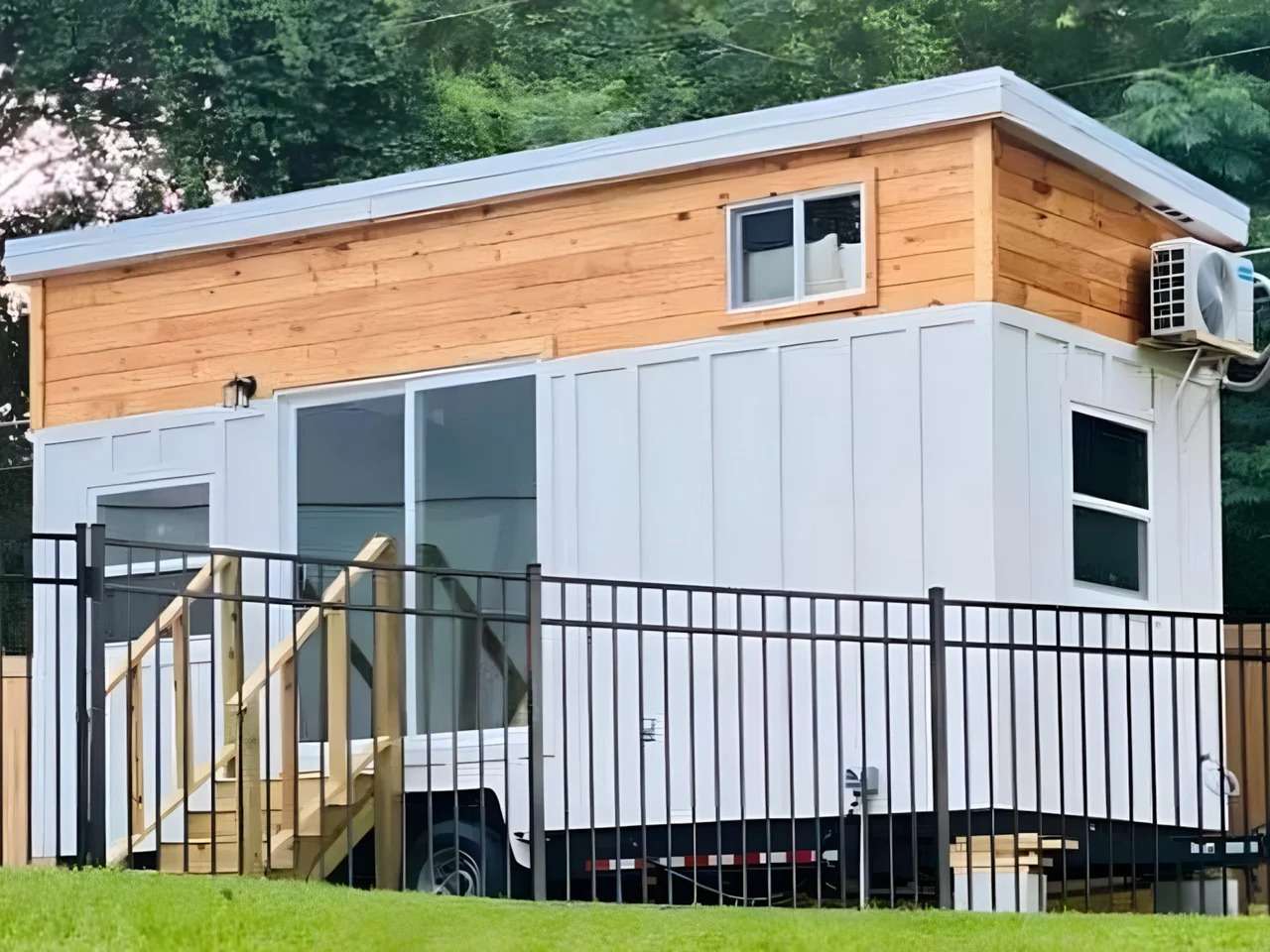
Some mobile tiny homes are based on a concept that goes beyond simply reducing space, focusing instead on reorganizing internal functions to achieve the maximum possible utilization of limited size. The Rasa house, developed by Simplify Further Tiny Homes, is a clear example of this approach. Its Design is the result of hands-on experience in managing short-term rental units and understanding the actual needs of users within compact living environments.
Space Utilization Within Limited Dimensions
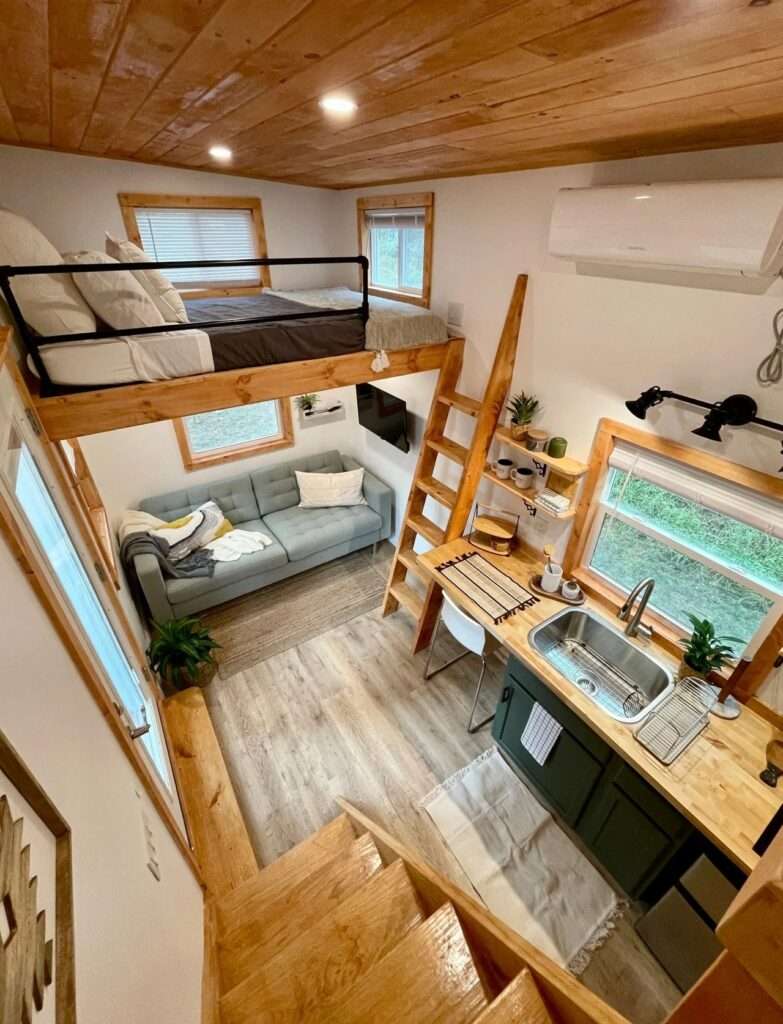
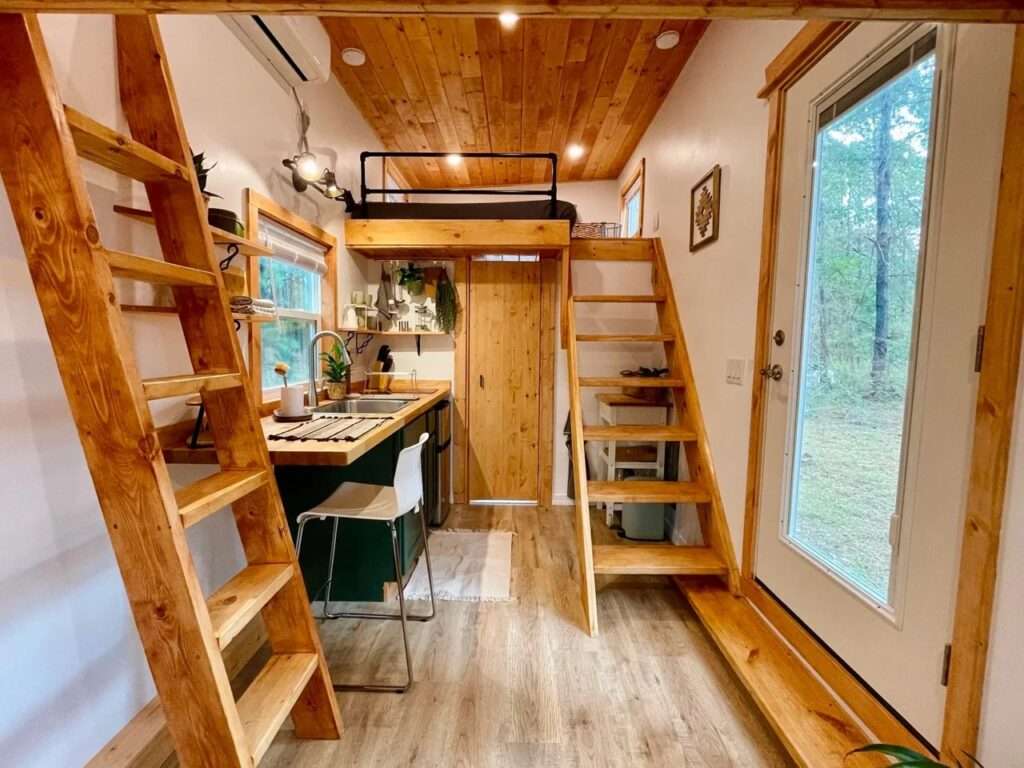
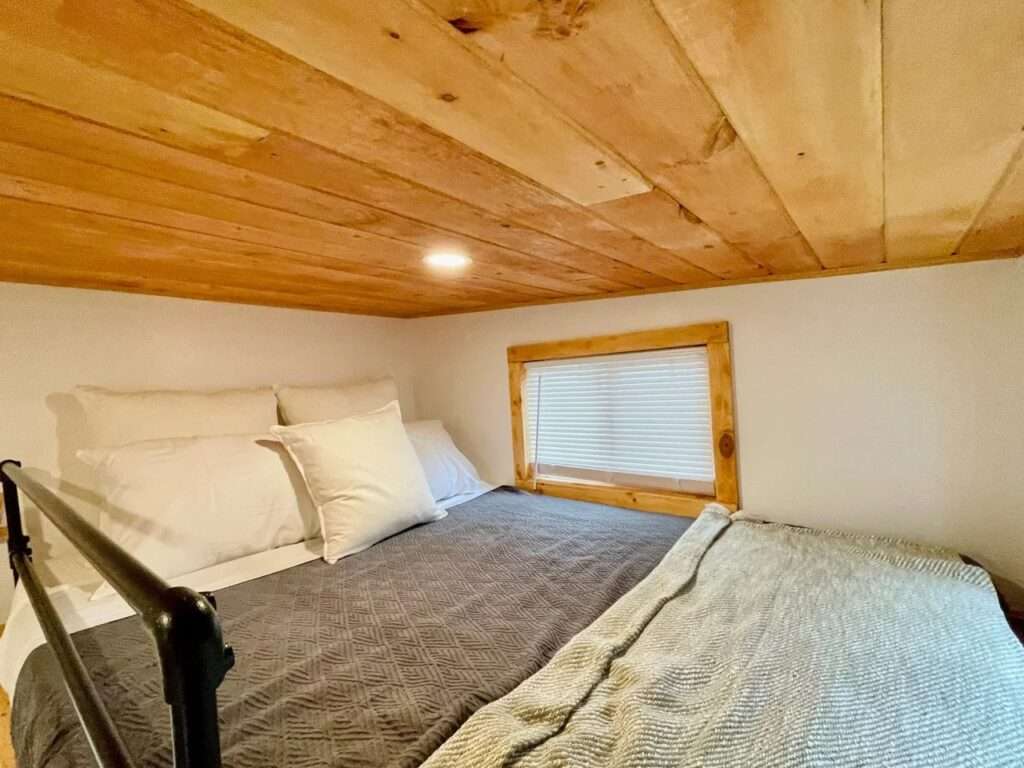
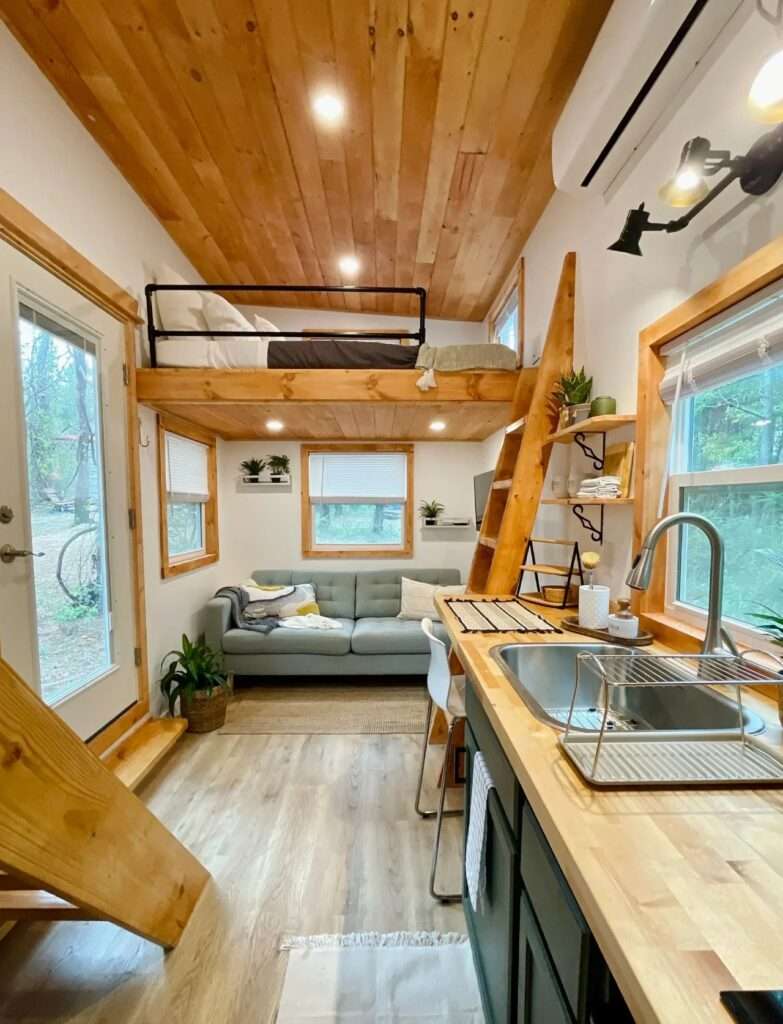
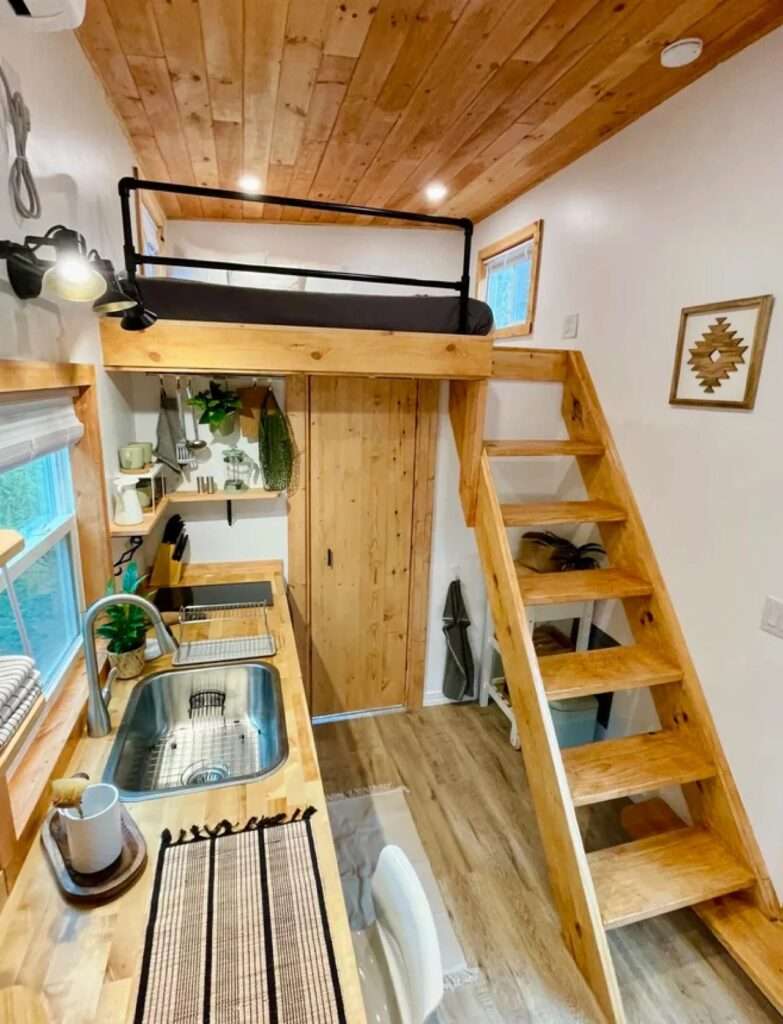
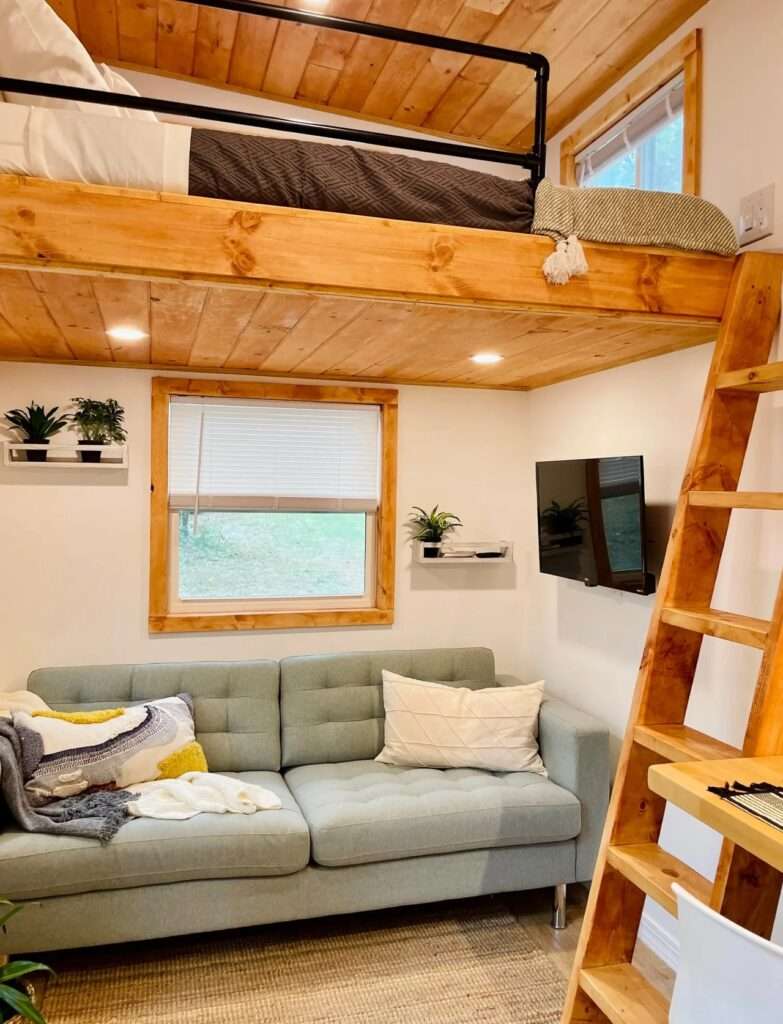
The home covers approximately 224 square feet, within a structure measuring 20 feet in length and 8 feet in width. Despite these limited dimensions, the Interior Design includes two Queen-size sleeping lofts that can accommodate up to six people. The main loft is accessed via an open staircase, while the second loft is reached by a ladder, allowing vertical distribution of functions instead of relying entirely on horizontal space.
A Sense of Spaciousness in the Interior Design
The interior height, which exceeds 6 feet 4 inches beneath the sleeping lofts, helps reduce the feeling of confinement in the main living area. In addition, black metal railings are used as a visual element, adding a simple and modern Architecture character, distinct from the traditional style commonly found in many mobile tiny homes.
An Integrated Kitchen with Clear Core Functions
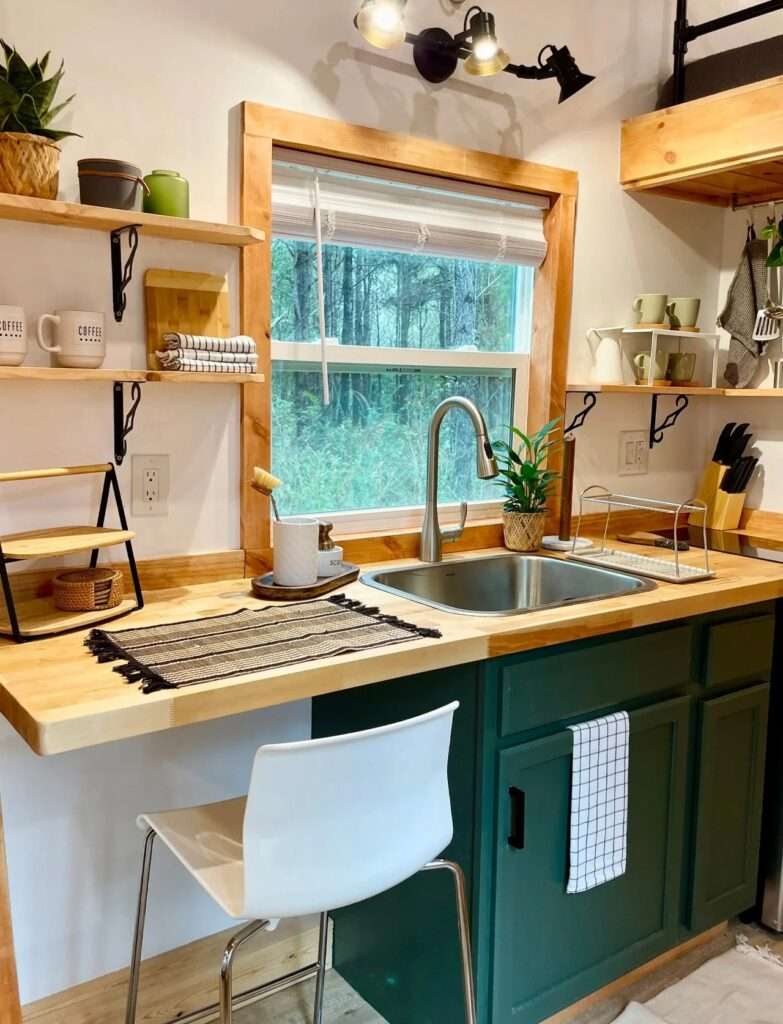
The kitchen design in the Rasa home reflects an approach focused on providing essential functions within a limited space without visual clutter or daily-use congestion. It includes a two-burner electric cooktop, a small refrigerator, and a stainless-steel sink equipped with a pull-down sprayer, while maintaining a practical usable countertop. Built-in bar seating has also been added, which can be replaced with additional cabinetry, highlighting the design’s flexibility based on user priorities between storage or open social space. For similar solutions, you can explore more Projects that focus on compact living.
Bathroom Organization in Small Spaces
The bathroom follows the same principle of space optimization without compromising essential functions. The design includes a shower cabin, a sink, and a flush toilet, along with integrated storage units. The focus here is on distributing elements in a way that prevents a sense of overcrowding, a common issue in many mobile tiny homes. The choice of durable Building Materials plays a key role in ensuring longevity and ease of maintenance.
Design Driven by Practical Experience
The development of this model came from practical experience in managing short-term rentals, rather than being based solely on aesthetic considerations. The experience of Simplify Further Tiny Homes shows that design decisions were directly linked to operational factors such as ease of cleaning, reduced maintenance requirements, and improved living experience within compact spaces. You can find more insights in the Archive of case studies on efficient housing.
Simplicity as an Operational Solution in Tiny Homes
This type of tiny home adopts simplicity as a means of improving day-to-day operations rather than just a visual style. Clean interior lines reduce cleaning complexity, while durable materials help minimize ongoing maintenance needs. In addition, the adoption of a NOAH-certified RV chassis allows the unit to be moved and legally used across multiple locations, providing greater operational flexibility compared to traditional fixed homes. For technical specifications, refer to the available Material Datasheets.
The Relationship Between Design and Usability
The Rasa model demonstrates how architectural design can be directly linked to usability and investment requirements, especially in the short-term rental sector. Rather than focusing solely on appearance, the project balances ease of management, reduced operational costs, and improved living experience within a limited space. Stay updated with the latest trends through Architectural News on tiny home innovations.
Tiny Homes as a Scalable Model
The experience of Simplify Further Tiny Homes reflects the growing interest in portable tiny homes across the United States, particularly with the increasing demand for flexible and easy-to-manage housing solutions. The Rasa model is used here as a case study showing how small spaces can combine operational efficiency with practical usability within an integrated architectural framework. This approach is part of a larger transformation in how we design and inhabit Buildings.
✦ ArchUp Editorial Insight
The Rasa model emerges from a capital-driven environment in which short-term rental units are managed according to a logic of maximizing returns from limited-space assets. In this context, the driving force is not architectural innovation as an end in itself, but rather a response to accumulated operational data from previous hosting experiences. The core driver is asset utilization efficiency within the constraints of a 20-foot RV structure and compliance requirements with NOAH standards, alongside pressures related to insurance, cleaning costs, and rapid turnover cycles. These factors are frequently discussed in the Discussion forums on efficient housing models.
The response is embodied in the vertical redistribution of residential programs, the integration of the kitchen and bathroom as compact units, and the transformation of usage elements into reconfigurable components aimed at increasing occupancy density within 224 square feet. In this context, the role of the architect is reduced in favor of standardization logic, minimizing operational friction, and ensuring mobility across multiple regulatory frameworks. For those interested in pushing these boundaries further, various Architecture Competitions are exploring similar themes of micro-living and adaptability.