Svatman Reinterprets Terrain and Interior Space

Project Conceptual Approach and Relationship to the Site
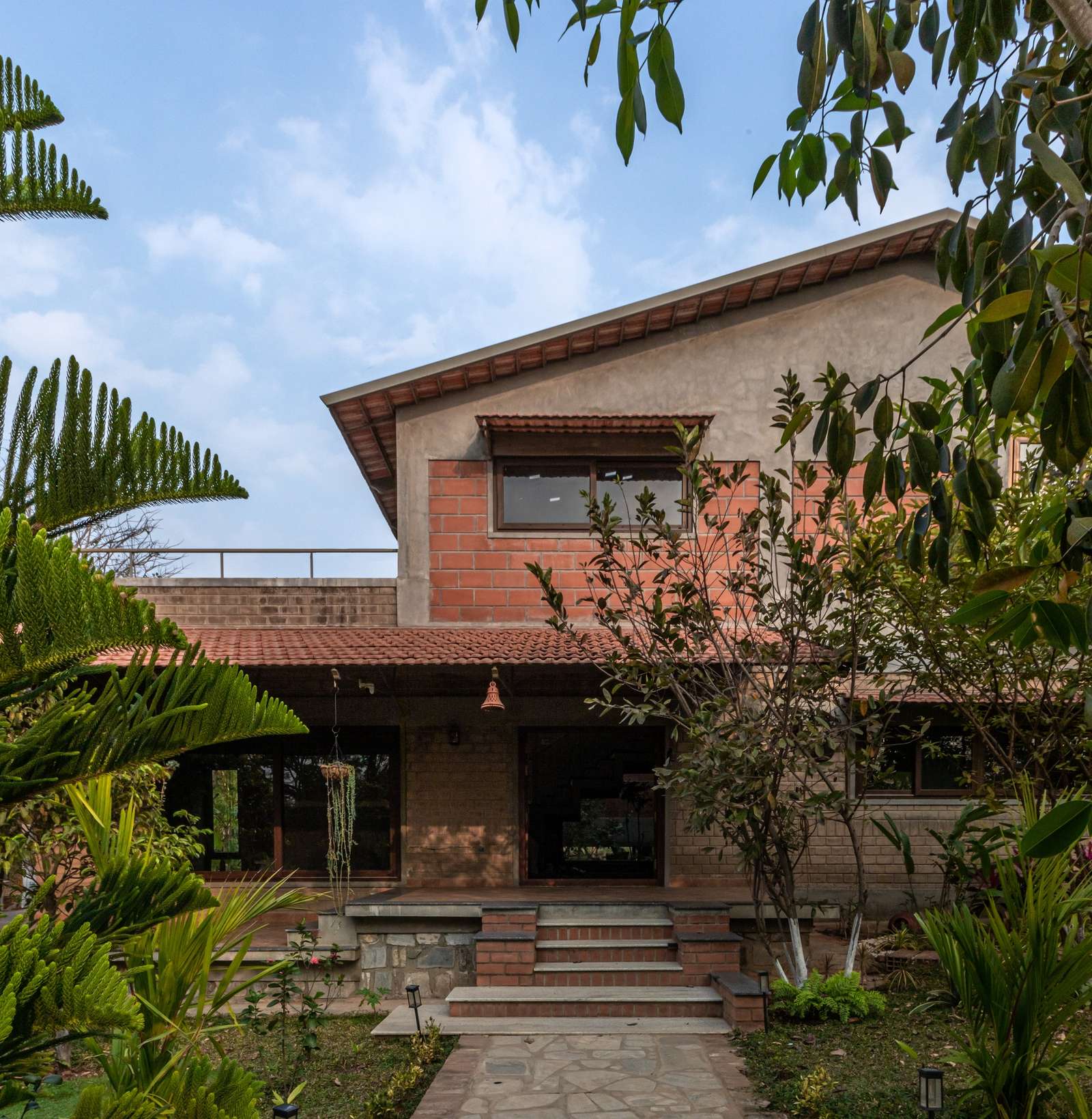
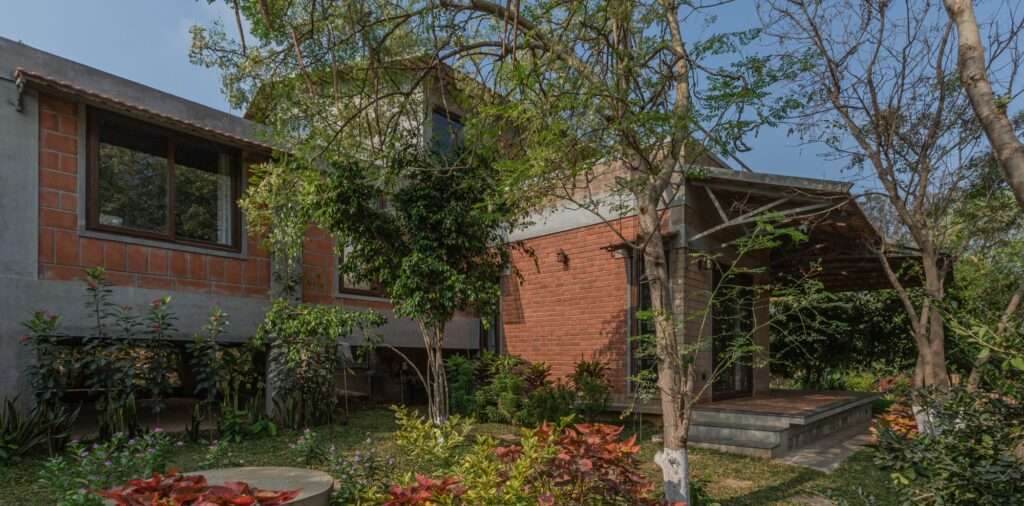
The “Svatman” project is based on the idea of retreating inward while maintaining a direct connection with the surrounding natural landscape. It is situated within the stepped terrain of Shoolagiri, where rocky ground and dry vegetation dominate the setting, making the building’s presence restrained and unobtrusive. Rather than imposing itself visually, it is positioned within a belt of mango trees, allowing it to adapt to the agricultural rhythm and seasonal changes as part of its overall Design.
Vegetation Structure and Its Role in Shaping the Experience
The Architecture organization begins with the existing elements of the site, particularly the mature mango trees that define the spatial framework. An additional layer of fruit-bearing trees, including guava, papaya, water apple, and coconut, is introduced to expand the vegetation cover. As a result, the green mass becomes an organizing element that functions simultaneously as a natural façade and a visual screen.
Spatial Perception and Visual Gradation
The vegetation density contributes to a gradual perceptual experience of the building, preventing it from being fully visible from a single point. Instead, it is revealed through partial views and shaded pathways that guide movement inward. Consequently, approaching the building becomes a progressive process linked to movement through the landscape itself, drawing from principles found in many Projects that prioritize site integration.
The Relationship Between the Building and the Terrain
The architectural design directly follows the slope of the land, with the living space positioned at a lower level along the site’s natural gradient. This placement provides the space with a sense of quiet seclusion and reflects a clear response to the site’s topographic characteristics. Structurally, this approach is translated through a clay filler slab roof, combining clay and concrete to create an experience that integrates structural performance with spatial perception. Such innovative use of materials relates to ongoing Research in sustainable building techniques.
Vertical Gradation and Movement Organization
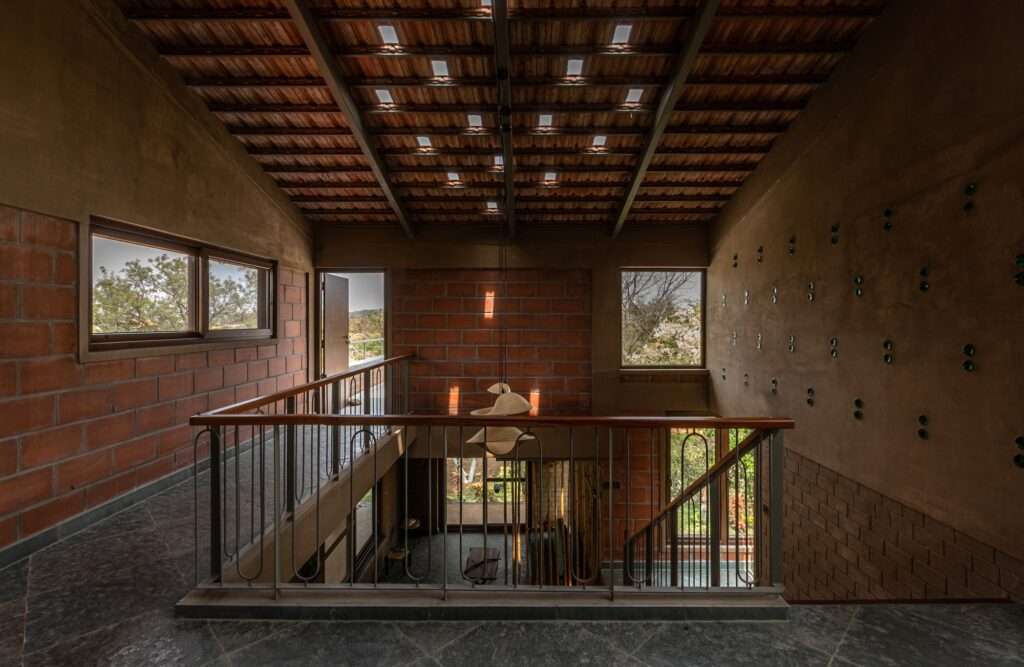
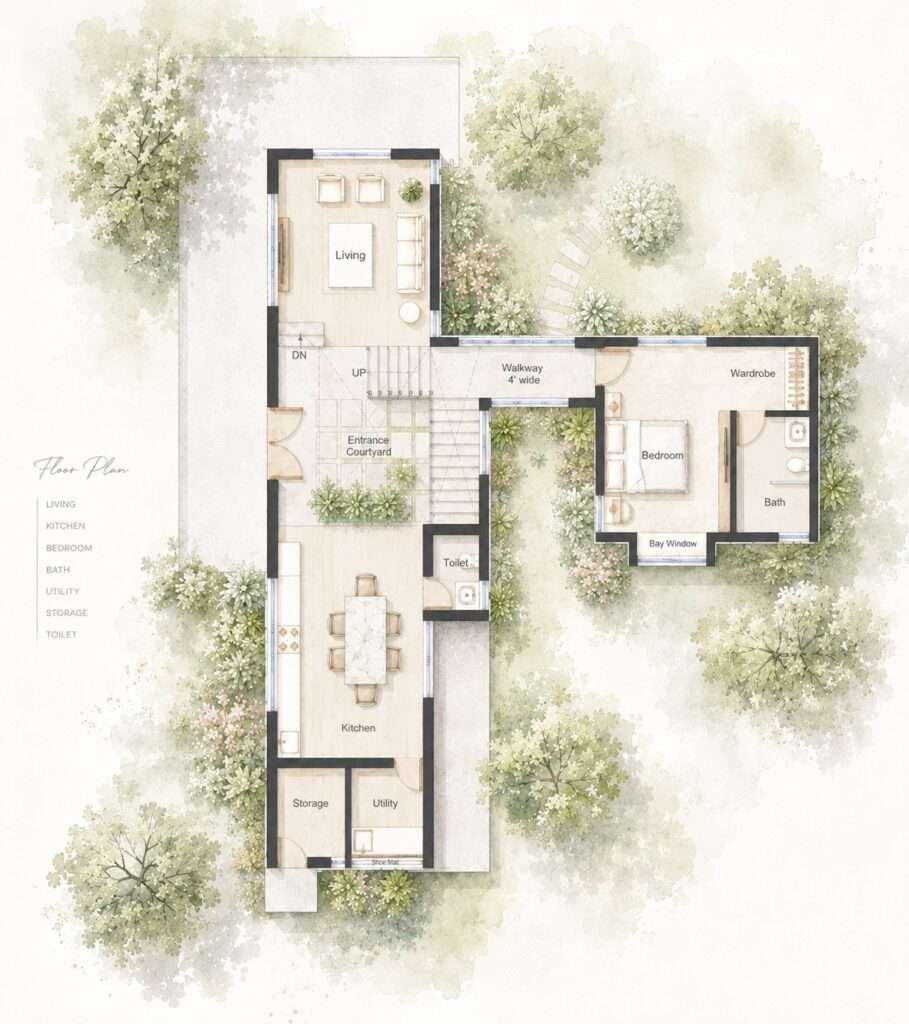
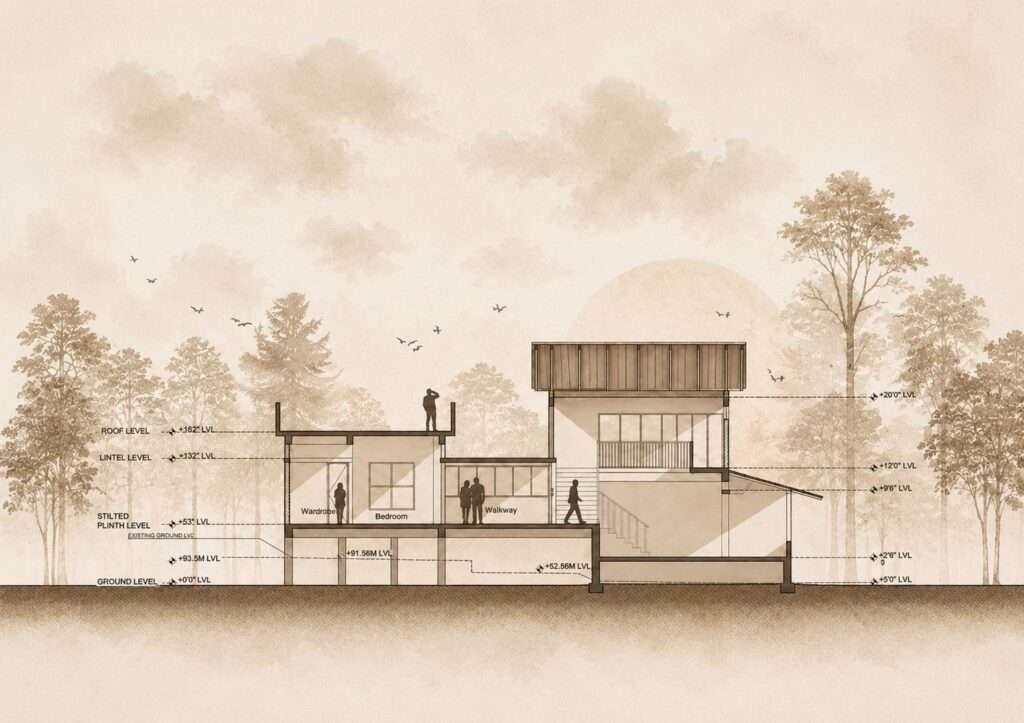
The vertical relationships within the house alternate between being embedded within the ground and rising above it. While the living area is connected to the lower level, the stairs leading to the guest wing lightly rise above the koi pond on an elevated column-supported structure, bridging changes in levels without altering the essence of the terrain. Consequently, a sectional reading of the residence is established, based on movement across multiple levels rather than a single fixed horizontal plane. This approach to levels and circulation is a recurring theme in contemporary Buildings that respond to difficult topography.
The Central Space and Visual Perception
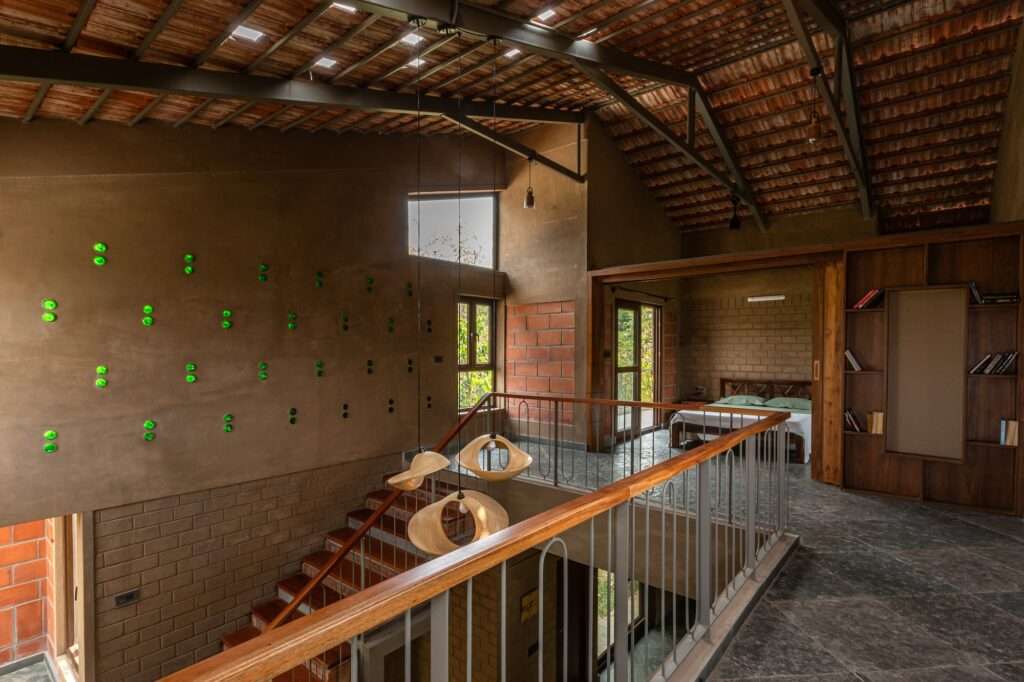
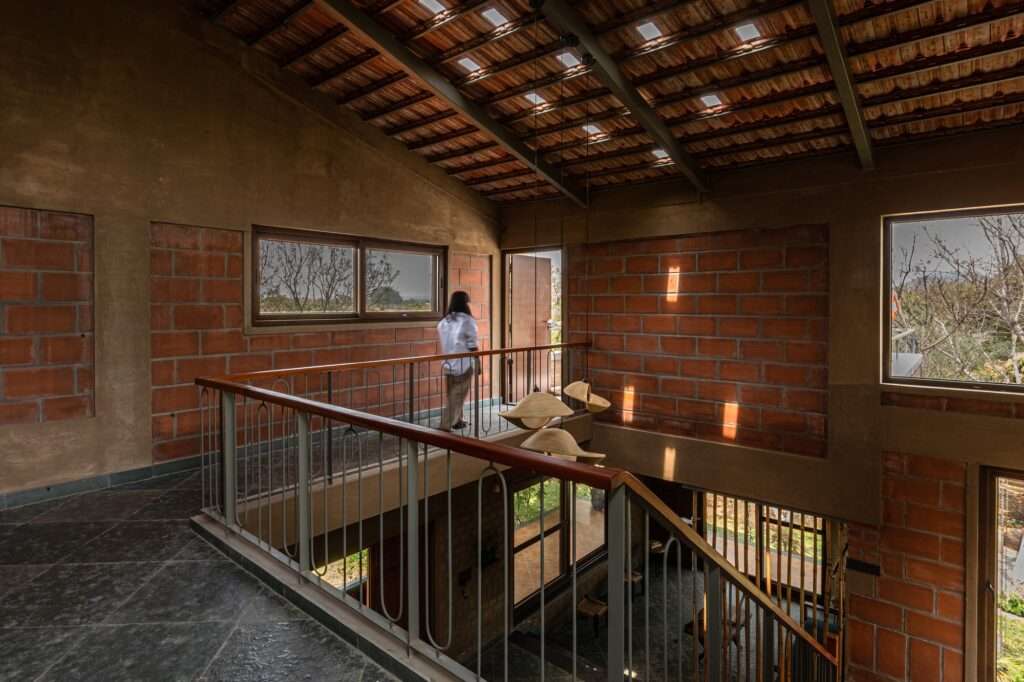
The entrance point is defined by a double-height courtyard that combines water and architectural space along a single axis, with the koi pond positioned at the base while light filters down from above to reshape the surrounding levels. This vertical space acts as an organizer of internal relationships, while the upper bridge connects different parts of the house without compromising the independence of each space. Openings are carefully controlled to frame the surrounding landscape through partial views that gradually unfold with movement, culminating at the outdoor terrace where the view fully opens. The use of natural light and water elements is a common strategy in Interior Design to enhance spatial experience.
The Staircase and Light as a Perceptual Element
The staircase above the koi pond reinforces the relationship between architectural mass and visual lightness. Despite its structural stability, its presence changes according to the movement of light and its reflections across surrounding surfaces. Over time, sunlight creates shifting patterns across the Kota stone flooring, recording the passage of time as a continuous perceptual element within the space. Details like this are often highlighted in Top News features on innovative residential architecture.
Material Structure and Clarity of Structural Expression
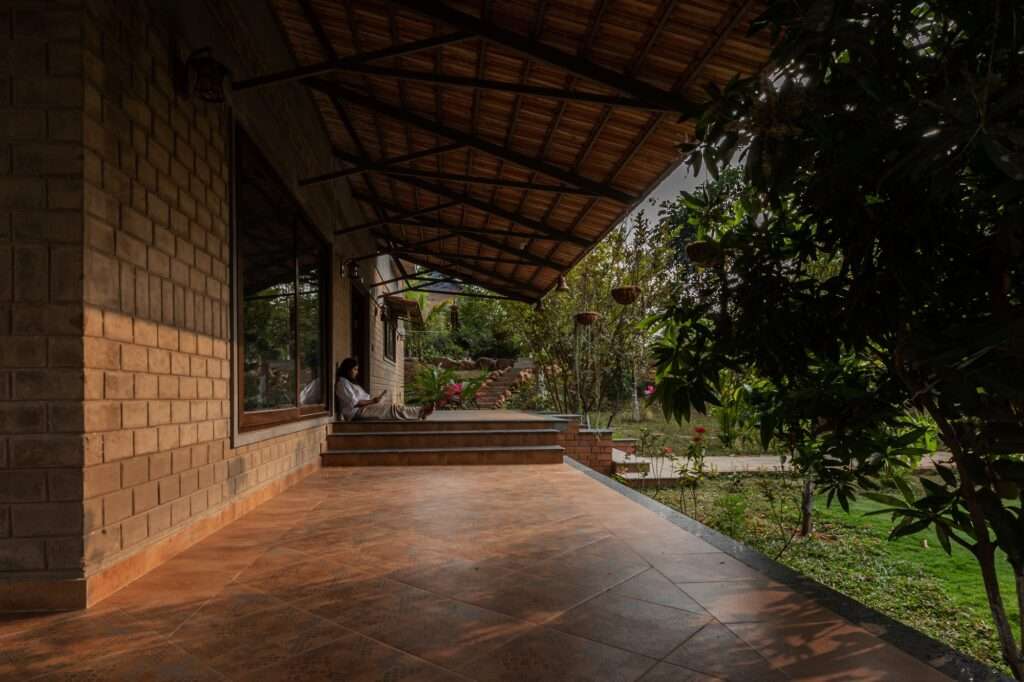
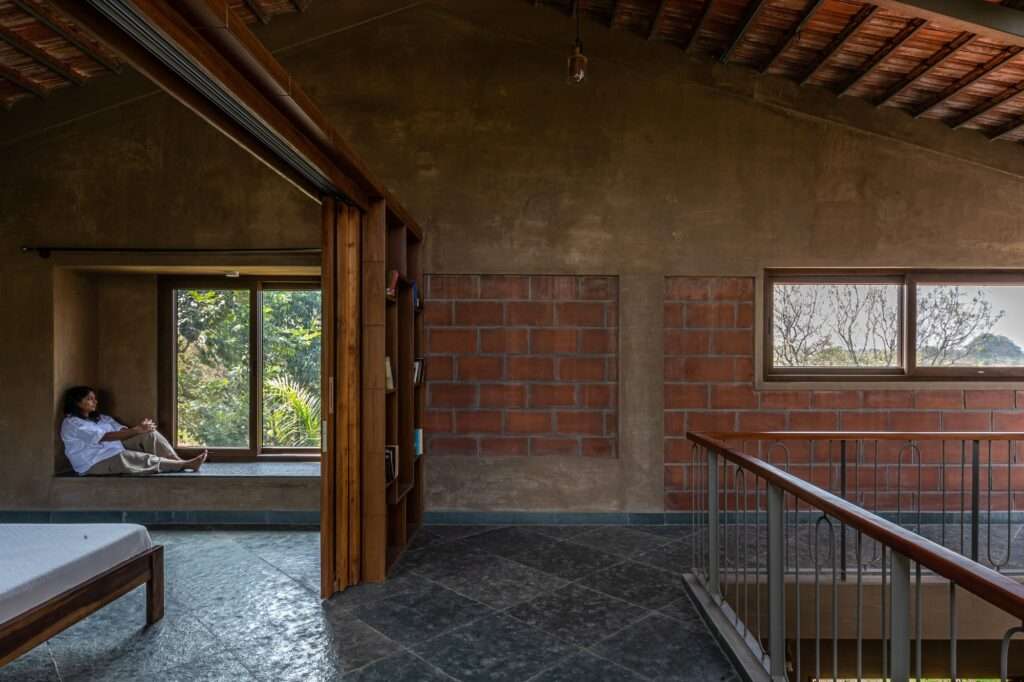
The house relies on a direct material language rooted in simplicity and the absence of ornamentation. Walls and partitions are composed of compressed earth blocks, wire-cut bricks, and hollow clay blocks, with materials left in their natural state without additional finishes. As a result, the building appears as an exposed structural system that clearly reflects the nature of its material composition. The selection of materials is closely tied to the local Building Materials and the site’s geological context.
Roofs, Foundations, and Site Responsiveness
The sloping, extended roofs clad with Mangalore tiles project outward to create a continuous band of shade and protect the building mass from climatic conditions. Despite their traditional character, they are reinterpreted through carefully calibrated variations that align with the surrounding context. In contrast, the foundations rely on granite waste and leftover local stone from nearby quarries, forming the primary load-bearing structure while minimizing the use of concrete. This resource-efficient method aligns with data found in many Material Datasheets for sustainable Construction. A comprehensive set of related references can be explored in the Archive of similar projects.
Ventilation as a Product of the Sectional Structure
The project’s ventilation strategy relies on the sectional structure rather than independent additions. As spaces rise and interconnect, warm air is allowed to move upward and exit through high-level openings, generating continuous airflow throughout the house. The use of Kota stone flooring further reinforces this system due to its density and cool surface properties, helping stabilize thermal comfort within the spaces. This approach to environmental control reflects advanced Research in passive cooling strategies.
The Guest Wing and Main Wing as Contrasting Relationships
The guest wing is designed as a more enclosed space, defined by a Rohtak dome constructed entirely of brick without the use of steel and integrated into the roof composition. This creates a relatively independent space with a clearly expressed structural identity. In contrast, the main wing is connected to the double-height space, allowing it to engage with a broader and more open spatial environment while maintaining visual continuity between different levels. Such spatial differentiation is a hallmark of thoughtful Interior Design in contemporary residential Projects.
Architectural Composition Logic
The “Svatman” project is not driven by a single architectural idea, but by the accumulation of small Design decisions responding to the land, climate, and patterns of use. The building gradually reveals itself through the interaction of light, movement, and materials, creating a quiet inward-oriented perceptual experience while maintaining a continuous connection with its surrounding context. This philosophy aligns with core principles documented in the Archive of site-responsive Architecture.

✦ ArchUp Editorial Insight
its relationship with the surrounding agricultural context, and the control of material costs within a low-density rural setting. The primary driving force emerges from the site’s productivity and local climatic organization rather than from a purely formal design intention, where residual vegetation and the site’s relationship with water are transformed into passive environmental compliance mechanisms. Regulatory and logistical pressures become evident through the reliance on local stone, compressed earth blocks, and the reduction of concrete use, reflecting supply-chain optimization within a non-industrial environment. The selection of these materials is directly informed by available Material Datasheets for sustainable Construction in rural settings.
The structural section becomes the principal tool for organizing airflow, thermal gradation, and vertical movement as low-cost systems. The building takes shape as an intermediate solution between land topography and occupancy distribution, where bridges and recessed spaces emerge as inevitable outcomes of structural-economic logic rather than purely formal design choices. Innovative residential Buildings like this are frequently featured in Top News for their integration of economy and environmental sensitivity. For a broader overview of similar design methodologies, visit the main Architecture section.