Desert Community Center Uses Snorkel Roofs to Capture Indirect Light

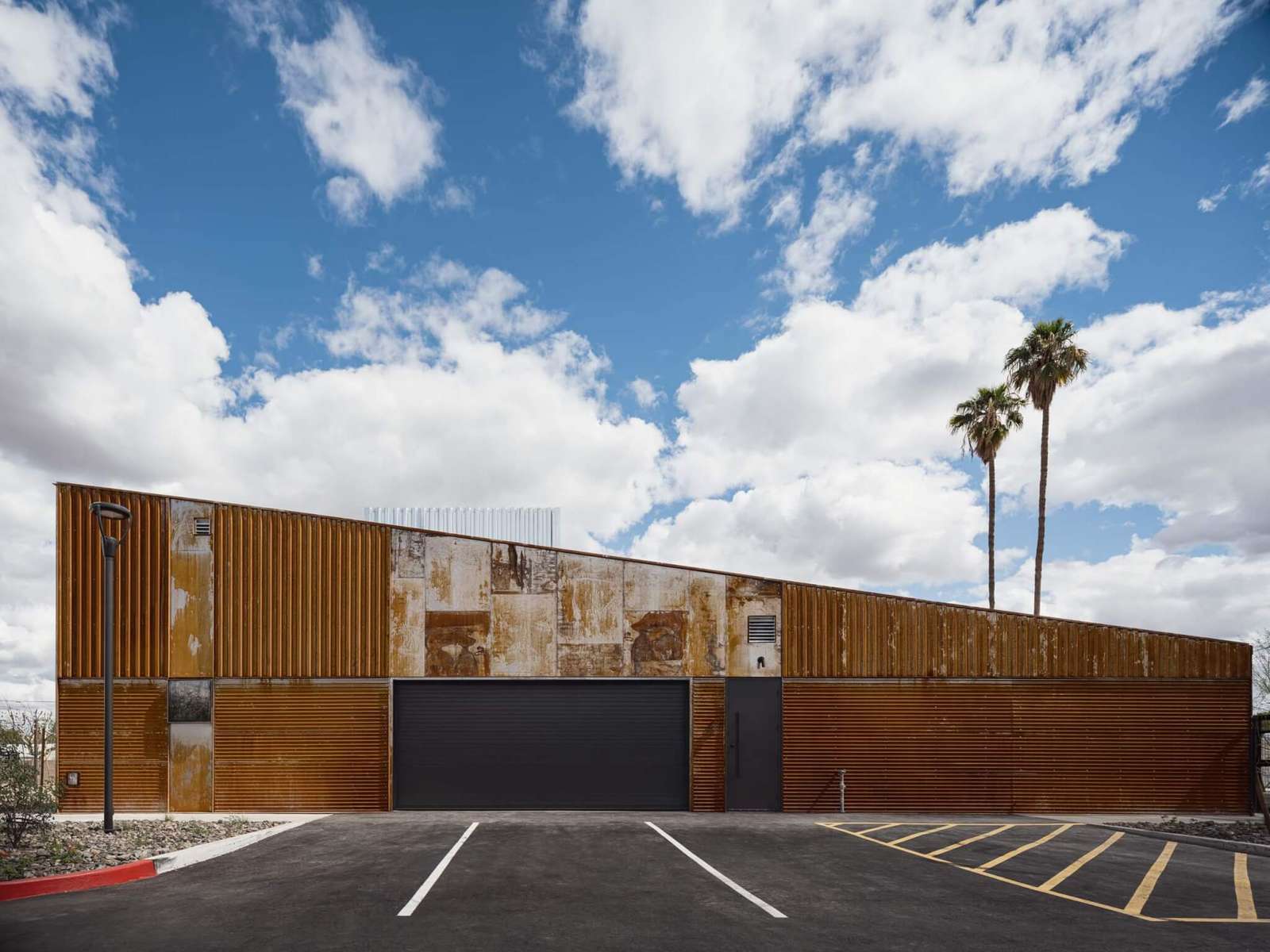
A new community center in Chandler, Arizona, transforms a previously abandoned site into a vocational and social hub designed specifically for the desert climate. The project features a distinctive roof profile that rises toward the north to pull in soft, indirect light while shielding the interior from the harsh southern sun. This approach creates a high-capacity gathering space that remains thermally comfortable without sacrificing its connection to the outdoors.
The facility serves as an after-school and neighborhood resource, offering specialized spaces for vocational training alongside traditional meeting areas. The floor plan positions a large central gathering room between a functional garage and a commercial kitchen. This arrangement allows young people to learn car repair and culinary skills in a professional environment that also functions as a social anchor for the local area.
Passive Cooling and Material Resourcefulness
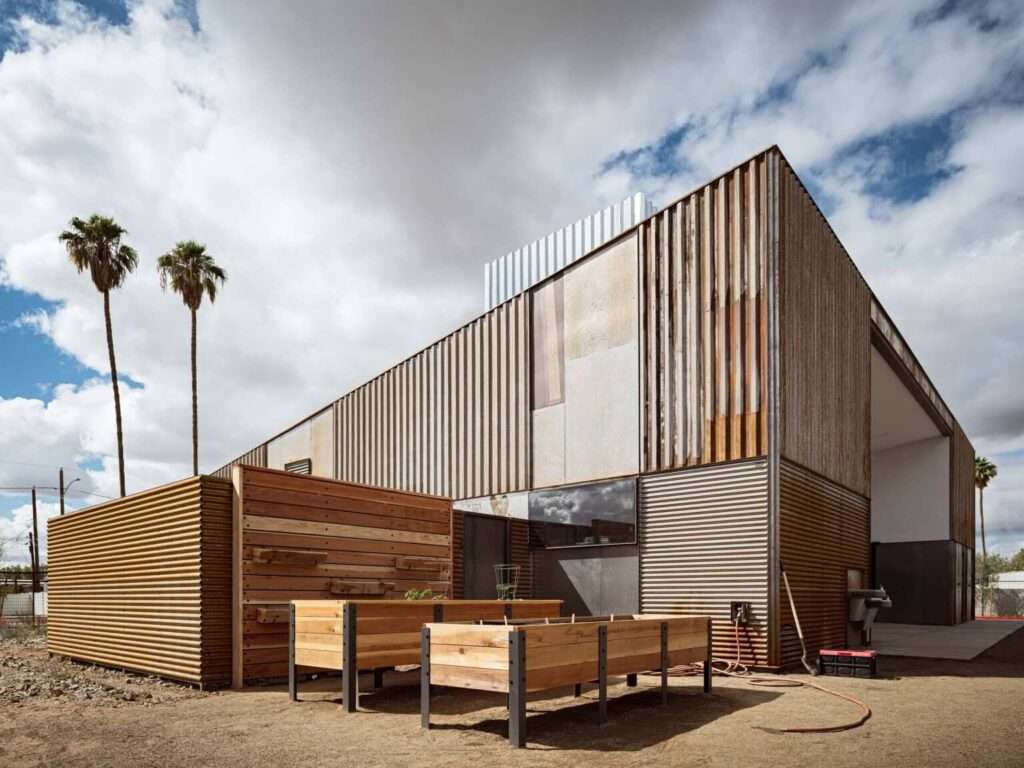
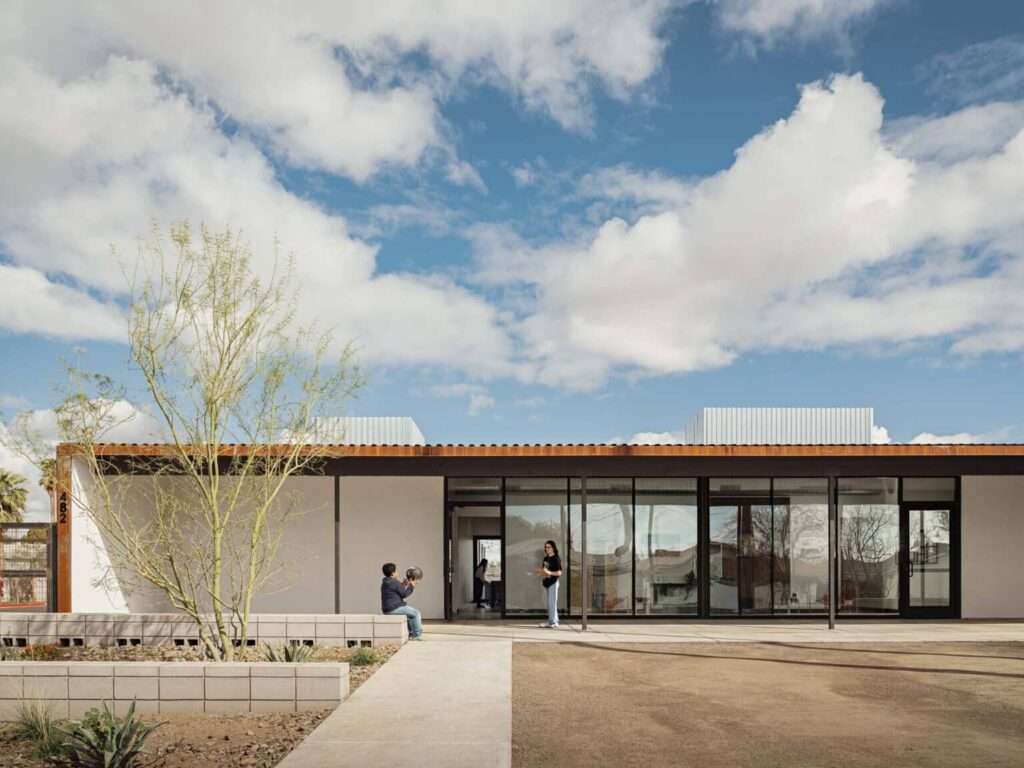
To mitigate the extreme heat of the Southwest, the team utilized “snorkel” roofs. These structures extend well beyond the glass building envelope, providing deep shade that prevents the sun from hitting the windows directly. A large sliding window on the northern elevation allows the 200-person interior space to flow into the outdoors, effectively doubling the capacity for community events during cooler hours.
The exterior skin reflects a commitment to local material sourcing and durability. The team wrapped the facade in three types of weathered, flat sheet metal salvaged from local yards and distributors. This patchwork pattern of rusted steel mimics the natural textures found in the desert. By using repurposed materials instead of new painted surfaces, the construction achieved a mature, industrial character immediately upon completion.
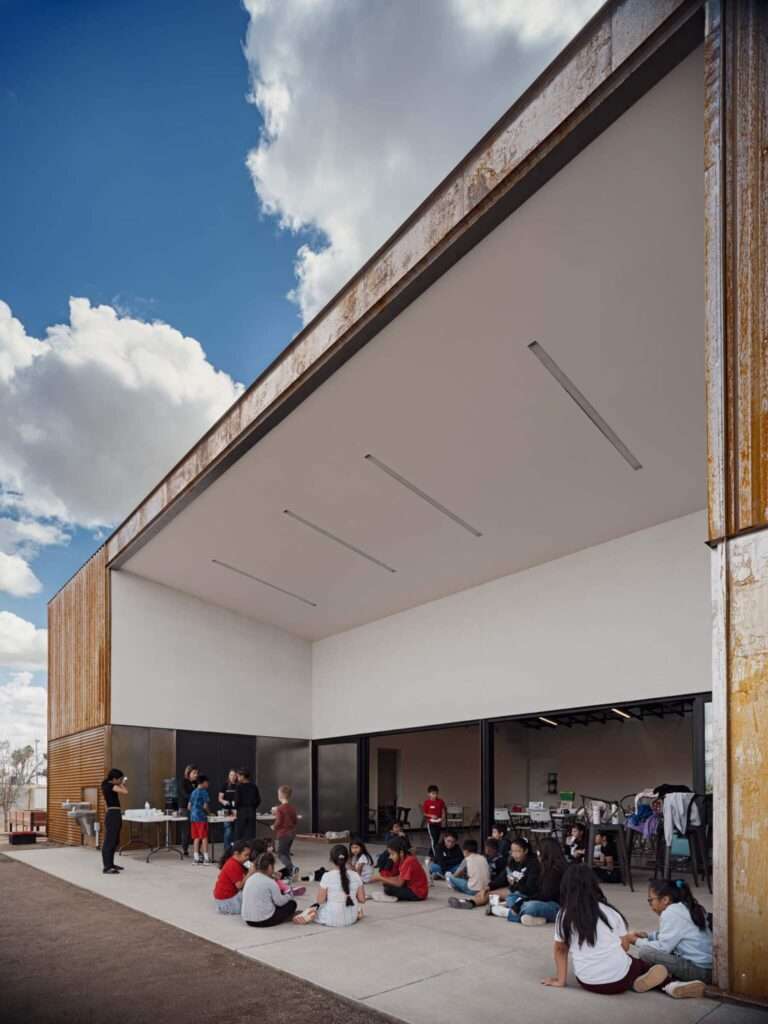
The project navigated a complex two-year timeline involving phased fundraising and contractor changes before opening its doors in 2024. Despite these logistical hurdles, the finished architecture maintains a clear focus on grassroots utility. The design balances a bold structural silhouette with a scale that remains sensitive to the surrounding residential neighborhood.
Circulation Hierarchy and Programmatic Intelligence
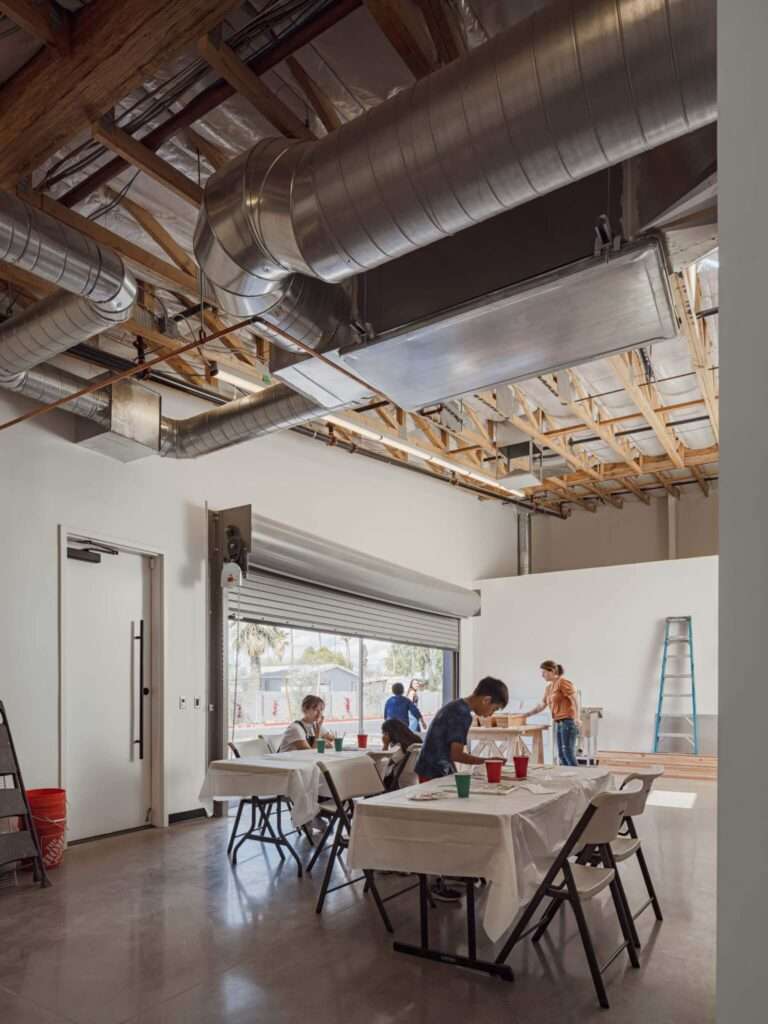
The project demonstrates a sophisticated understanding of programmatic layering by nesting vocational workshops within a civic framework. The central meeting hall acts as a thermal and social buffer, situated between the high-activity zones of the kitchen and garage. This layout prioritizes operational flexibility, allowing the building to transition from a classroom setting to a large-scale public event space via the northern sliding interface. The structural logic of the “snorkel” roof serves a dual purpose: it acts as a passive cooling device while defining a clear hierarchy of light. By funneling consistent northern light into the deep plan, the design reduces reliance on artificial lighting and creates an airy, expansive interior atmosphere that belies the building’s rugged, industrial exterior.
✦ ArchUp Editorial Insight
The project succeeds by treating the harsh Arizona sun as a primary driver for architecture rather than an obstacle to be mitigated solely by mechanical systems. The snorkel roof and salvaged metal skin demonstrate a resourceful approach to sustainability that prioritizes passive cooling and material longevity. By focusing on vocational training as a core program, the design elevates the community center from a passive venue to an active site of economic and social production. However, one must consider if the reliance on industrial salvaged steel, while aesthetically evocative of the desert, risks fetishizing a “rugged” aesthetic that may require specialized long-term maintenance against oxidation. Furthermore, the openness of the northern glass facade assumes a stable urban context that must remain unobstructed to maintain the project’s delicate light-harvesting logic.
Project Team: DeBartolo Architects (Design Architect), Kristian Kelley Landscape Architecture, Rudow & Berry (Structural), Woodward Engineering (Electrical), Landcor Consulting (Civil). Location: Chandler, Arizona.
Project Notes: The project opened in 2024. The Live Love foundation served as the client and developer. The project received the 2025 AIA Arizona Distinguished Architecture Honor Award.