Interconnected Office Campus Creates Public Park in Shenzhen

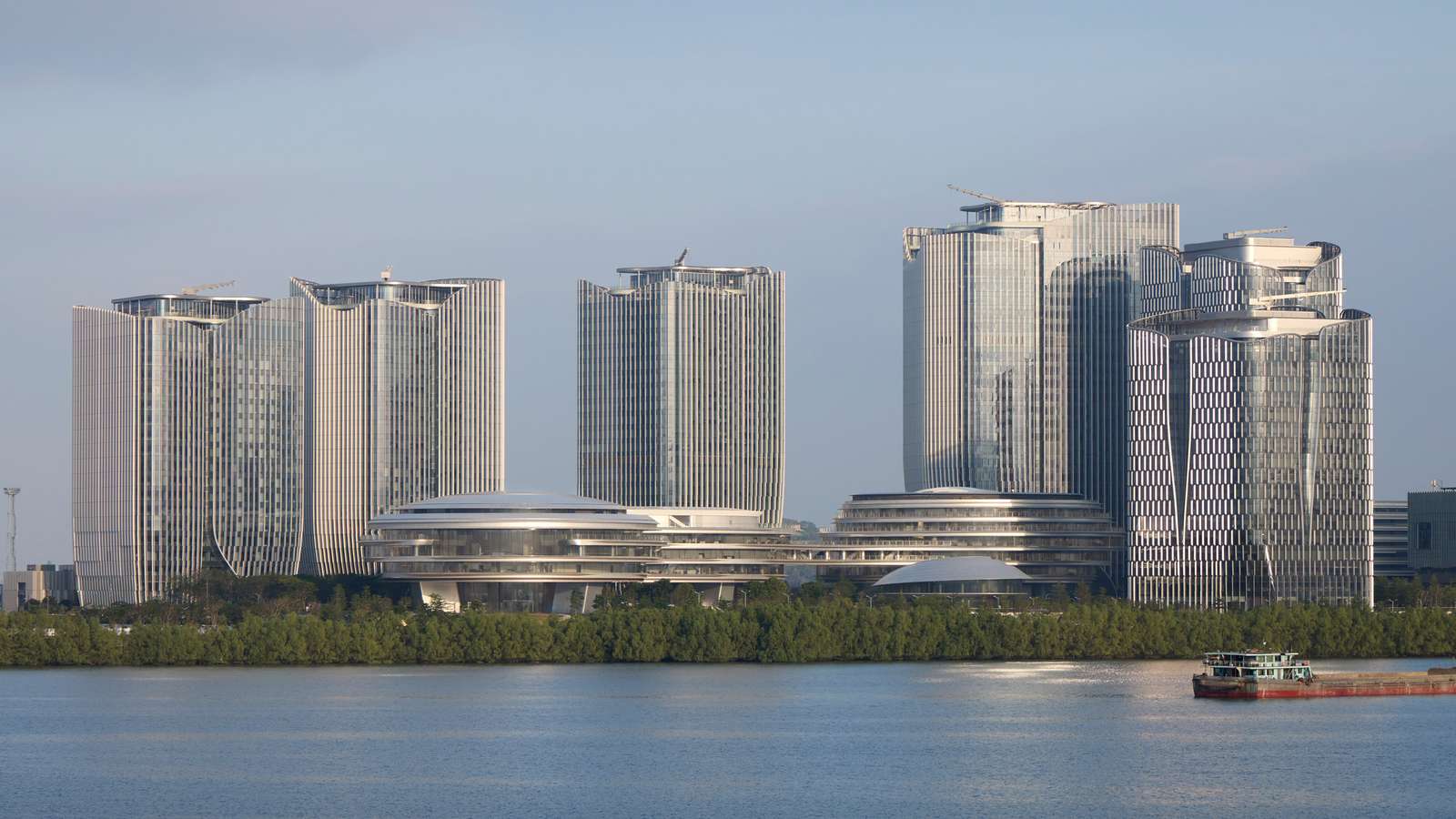
A new office complex in Shenzhen lifts three curved glass volumes high above the ground to return the waterfront land to the city. The project replaces the traditional closed corporate tower with an open campus that functions as public infrastructure. This structural choice allows the local community to access the site and view the bay while the offices operate overhead.
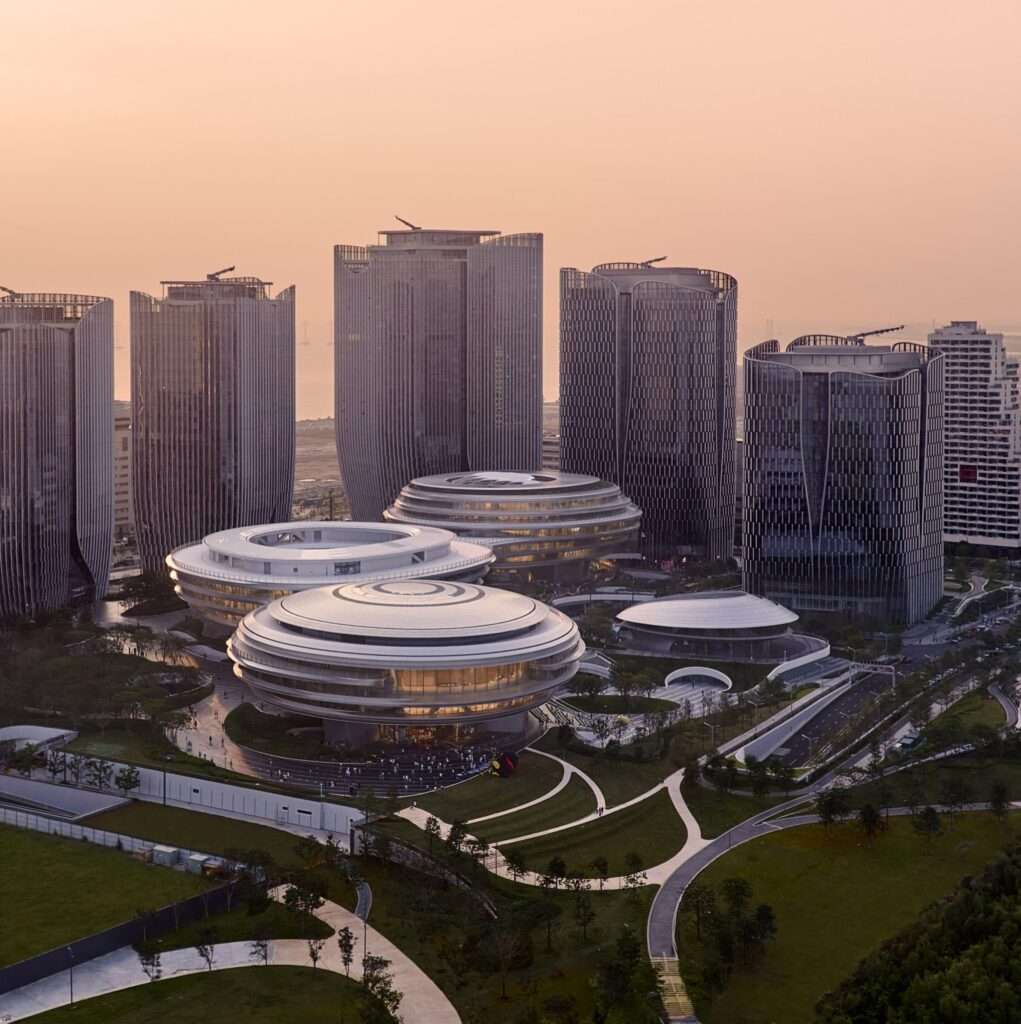
The development spans 72,000 square meters within a larger technology district. The design features three primary interconnected buildings, often called “cloud buildings” due to their rounded, horizontal forms. In addition to these main volumes, the site includes two office towers and a smaller droplet-shaped structure. Together, these elements form a workplace centered on openness and sustainability through land conservation.
Ten structural cores support the three primary volumes, raising them 8.6 meters into the air. This elevation clears the ground level entirely, removing barriers between the city and the water. By lifting the buildings, the team created a shaded public realm that integrates existing mangroves and gardens into a new pedestrian network.
Circulation and Internal Transparency
Steel-truss bridges link the three main volumes at their upper levels. These bridges allow employees to move between different zones without descending to the ground. The northern and central buildings house traditional office environments, while the southern building contains flexible halls for exhibitions and events. This programmatic split ensures the campus can host diverse activities throughout the day.
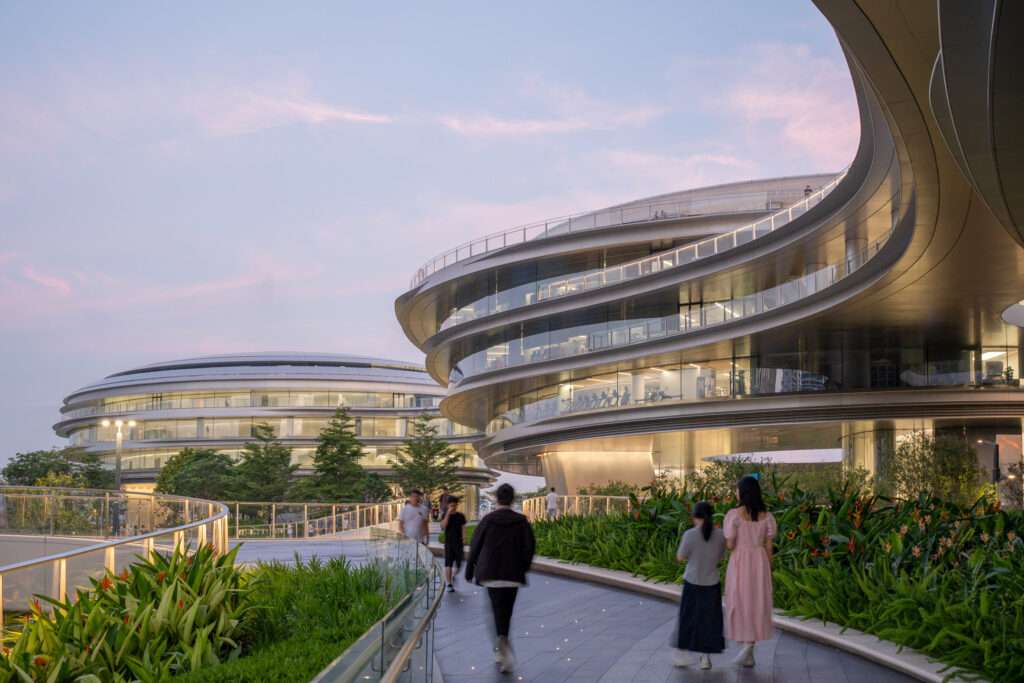
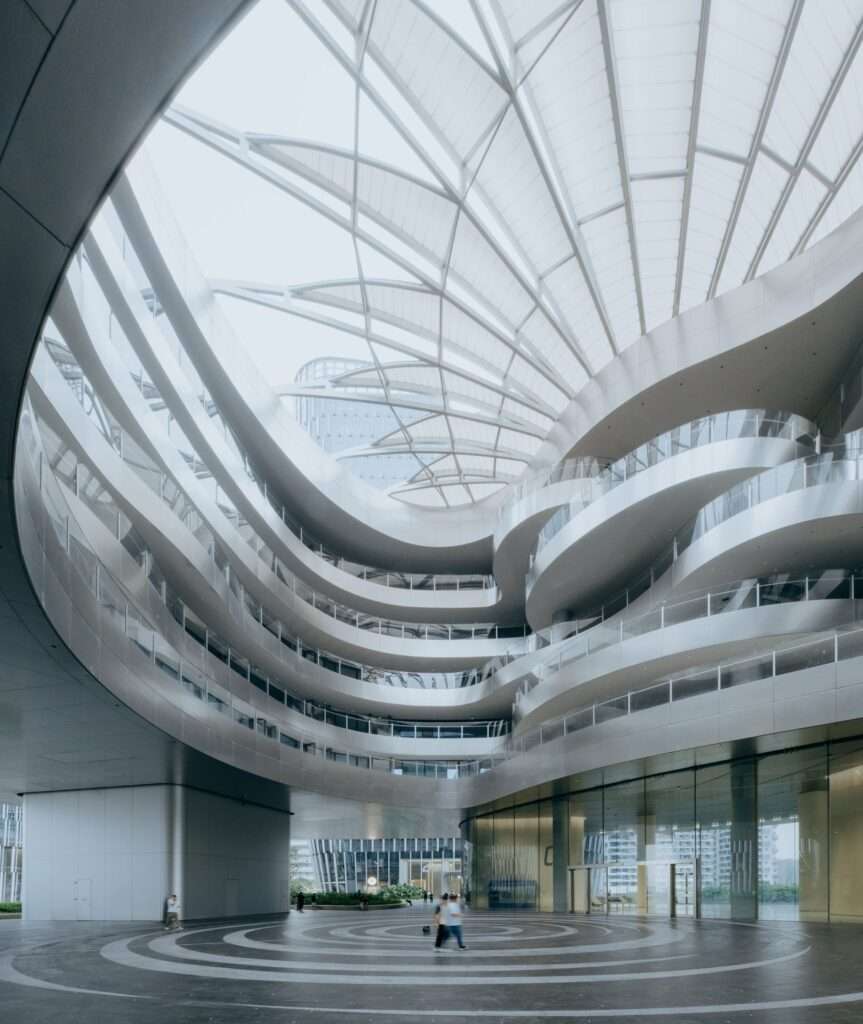
Inside the offices, the team utilized long-span structures to remove internal columns. This engineering choice creates wide, unobstructed floors that maximize natural light. Central atriums topped with semi-open skylights bring sunshine into the deep center of each building. Every workstation maintains a visual connection to the bay, as the design prioritizes shared views over private executive suites.
Facade Logic and Environmental Shading
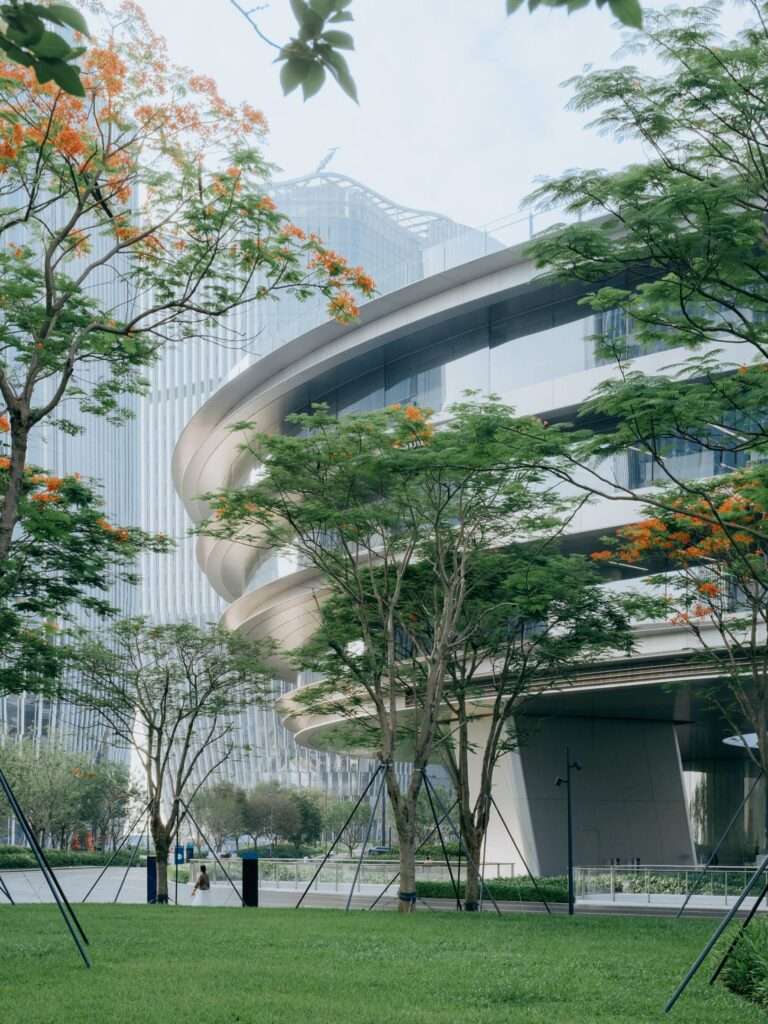
The exterior uses extensive glazing wrapped in horizontal shading fins. These fins reduce solar heat gain while maintaining the visual fluidity of the curved facades. The towers and the low-rise volumes share this material language, creating a cohesive visual identity across the entire campus. This envelope protects the construction from the intense Shenzhen sun without sacrificing the transparency required for the waterfront views.
Spatial Logic and Structural Implications
The project redefines corporate presence by replacing vertical density with horizontal porosity. By utilizing ten concentrated structural cores, the scheme liberates the ground plane from the typical forest of columns found in massive developments. This creates a clear circulation hierarchy where the public moves freely at the base while private operations occur in the suspended volumes. The use of steel-truss bridges to unify these floating masses ensures structural stability while allowing the volumes to step down toward the bay. This configuration respects the urban scale and avoids the monolithic wall effect often created by coastal high-rises, favoring a more permeable interface between the city and its natural edge.
✦ ArchUp Editorial Insight
The project successfully challenges the traditional corporate fortress by elevating its private functions to unlock the ground plane for the public. This structural strategy transforms a private office into a civic asset, utilizing long-span engineering to create a porous architecture that prioritizes urban connectivity. By lifting the massing, the design preserves the local mangrove ecology and provides a shaded sanctuary in the dense fabric of cities like Shenzhen. However, one must question if this “floating” typology truly integrates with the city or merely creates a sophisticated vertical segregation. While the ground is open, the bridge-linked volumes remain an exclusive sky-campus, potentially isolating the workers from the very street life the project claims to serve. The result is a high-performance workspace that offers a beautiful public ceiling but keeps the primary social and economic life of the building safely above the reach of the public it welcomes below.
Project Team: MAD Architects, Ma Yansong. Location: Shenzhen, China.
Project Notes: Completed in 2024. Developed for Tencent. Site includes residential high-rises by MVRDV.