A Room Becomes a Camera: Compound Camera 3

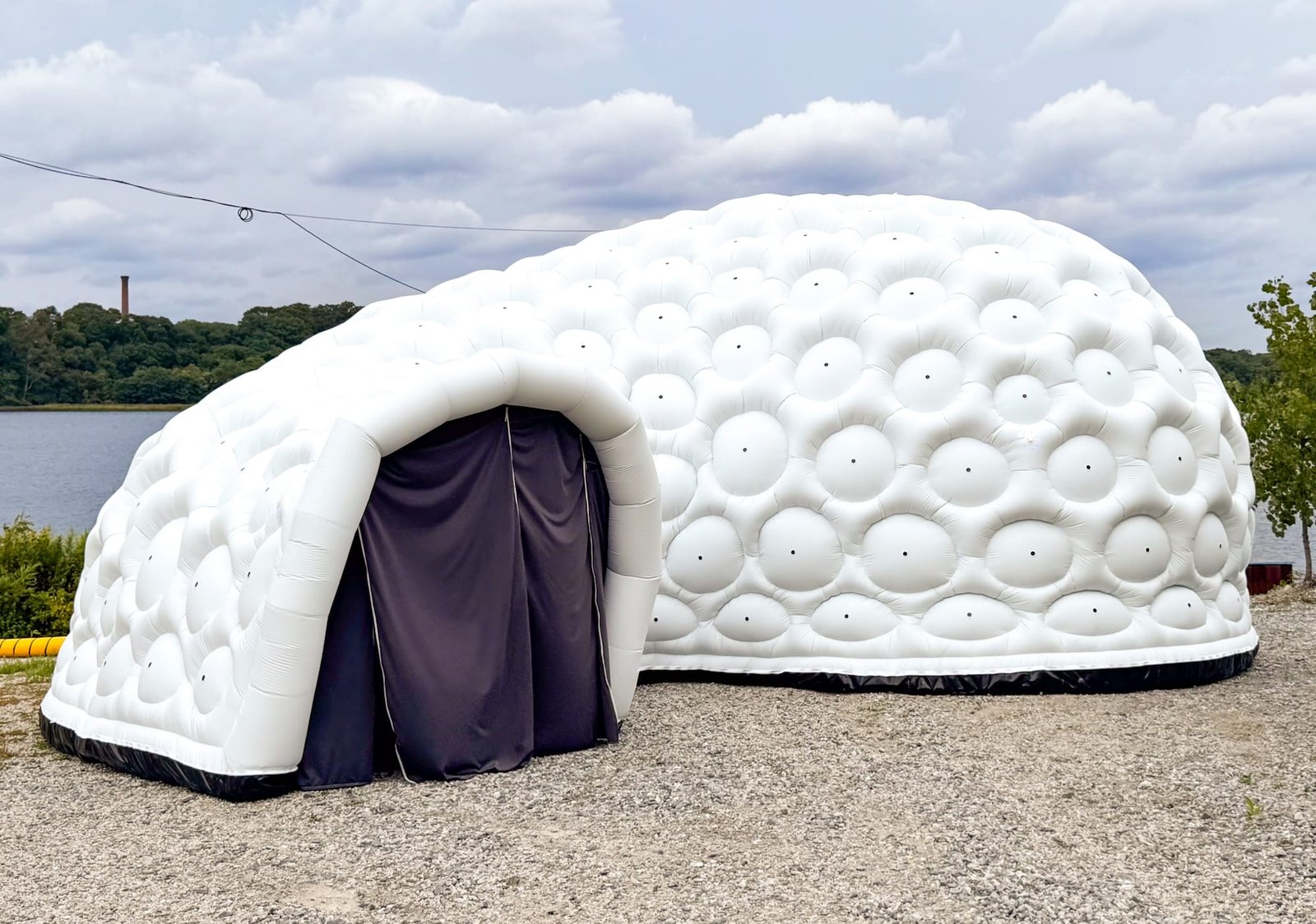
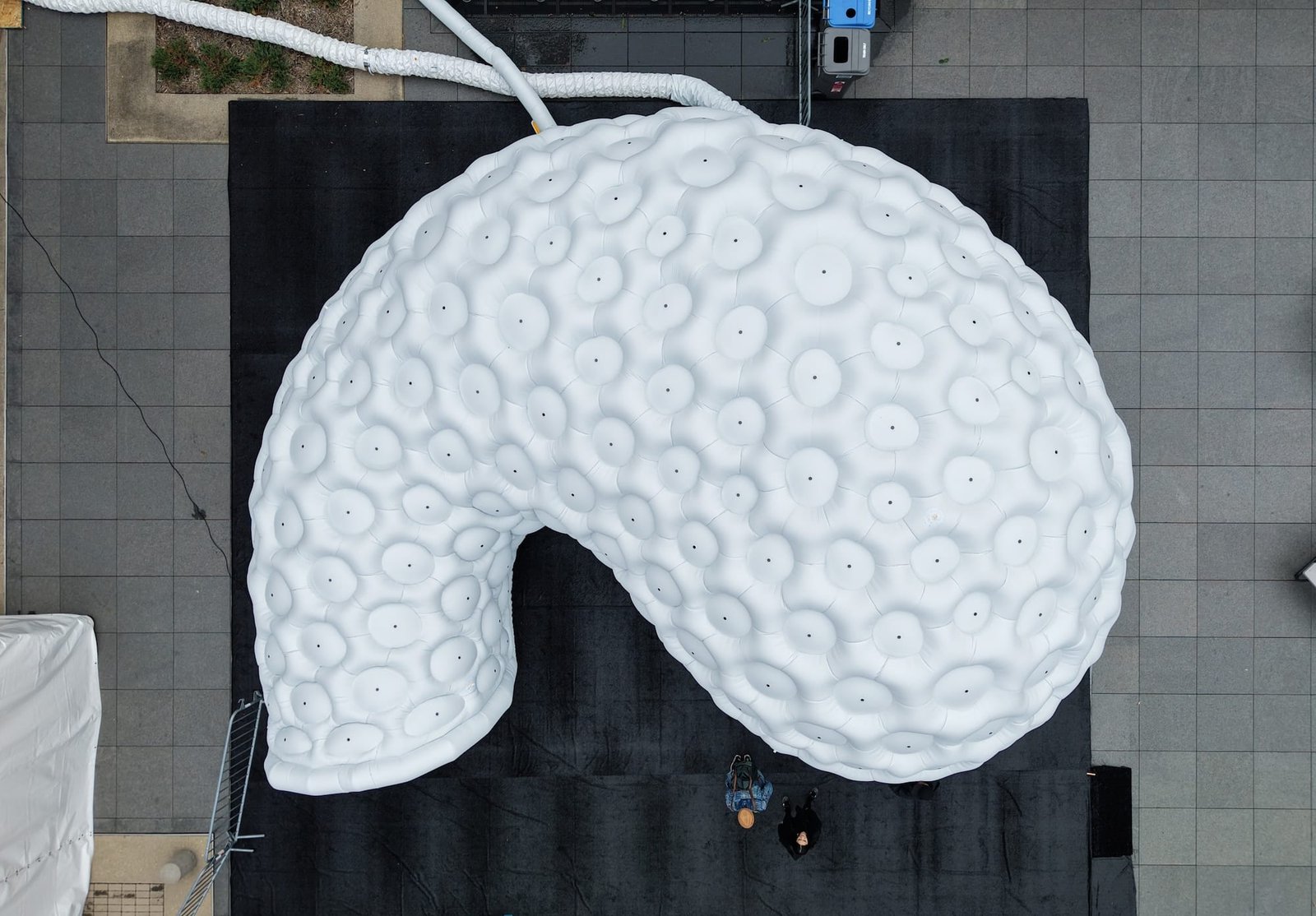
What happens when the room itself becomes a camera? Compound Camera 3 is an inflatable installation containing 221 lenses that bring views of the surroundings onto its interior surfaces. Visitors enter the image instead of looking at a screen from outside it. The work uses daylight for its optical projections and does not record the scenes it presents.
The enclosure is also the receiving surface
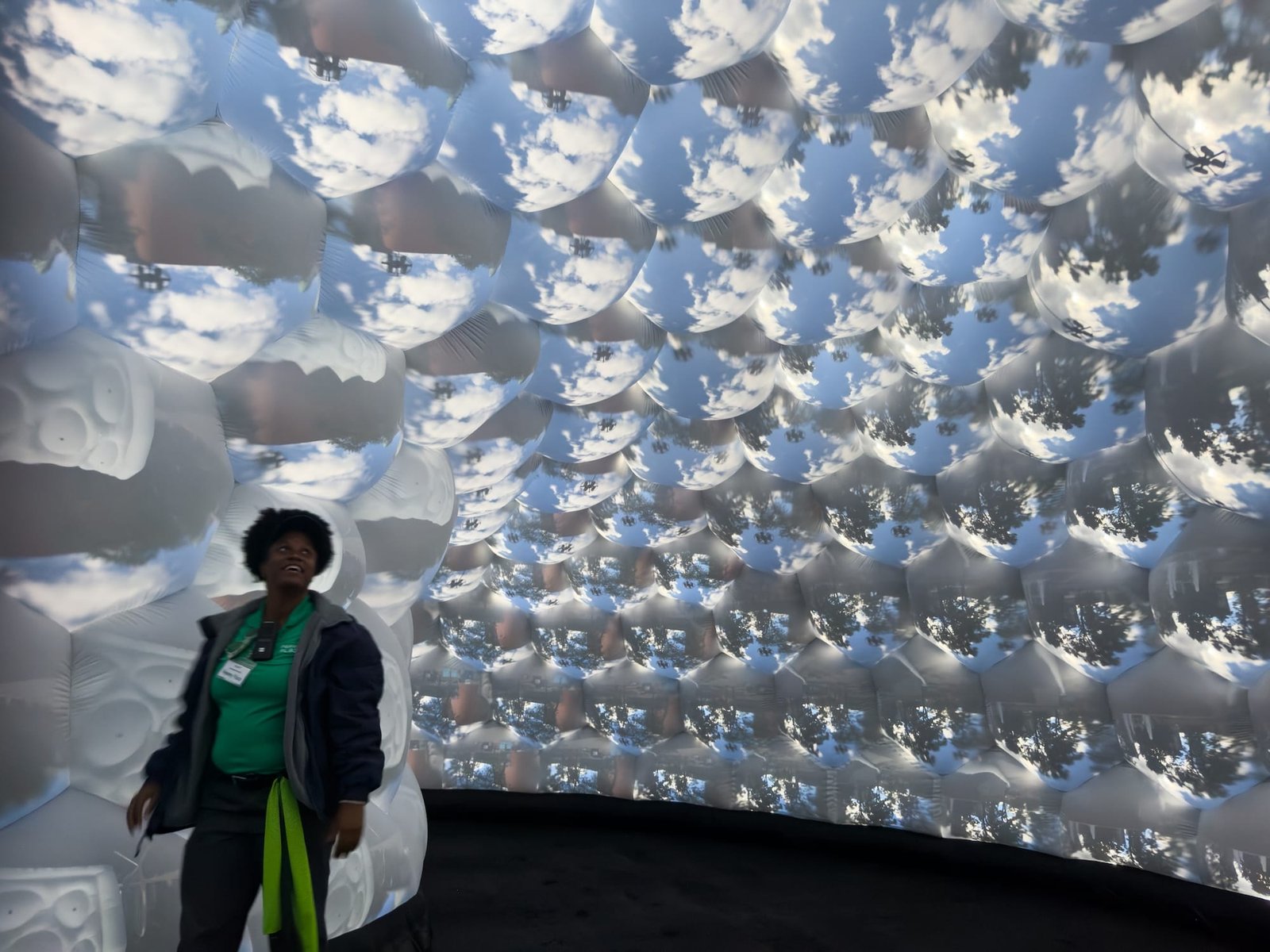
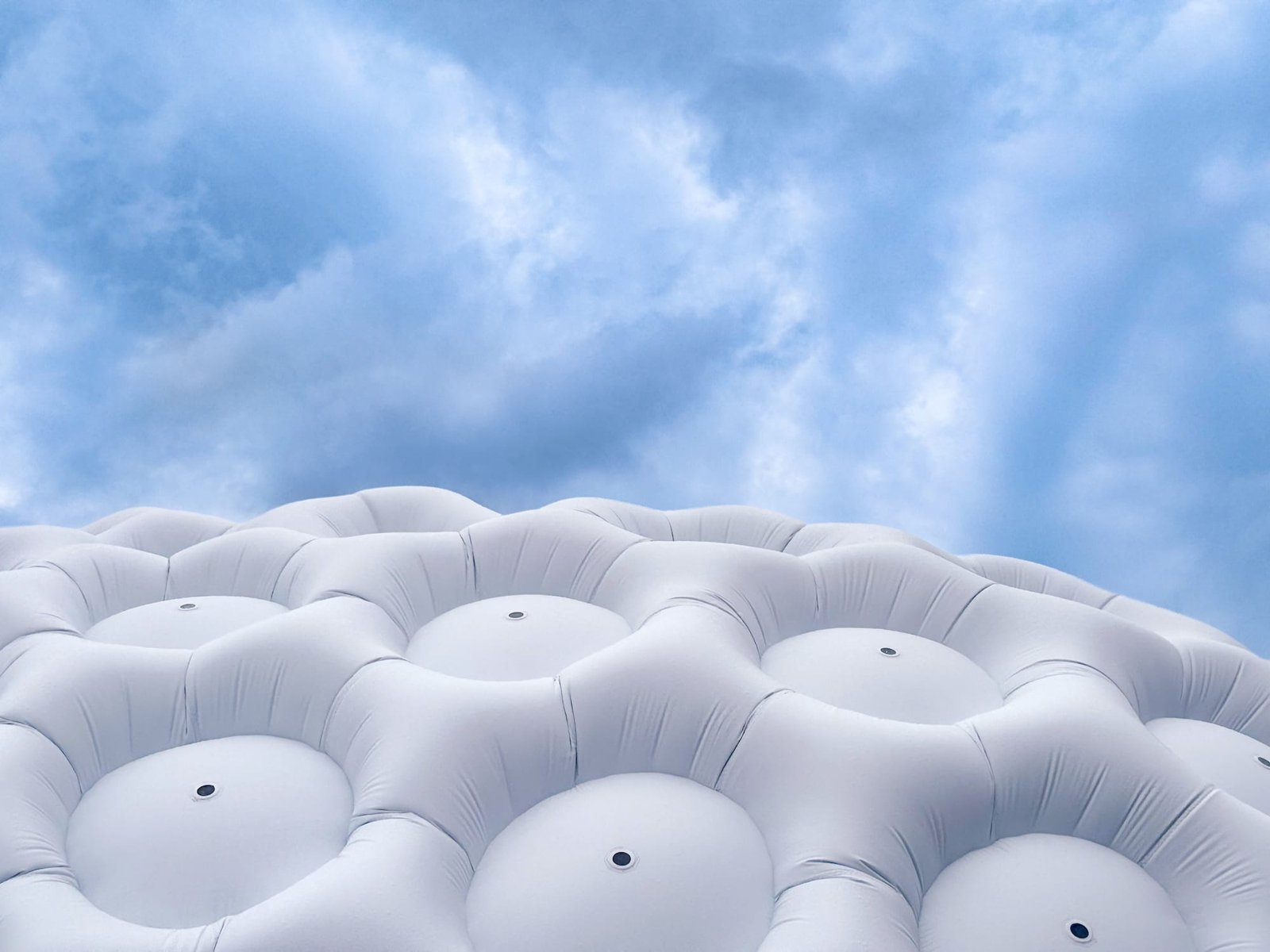
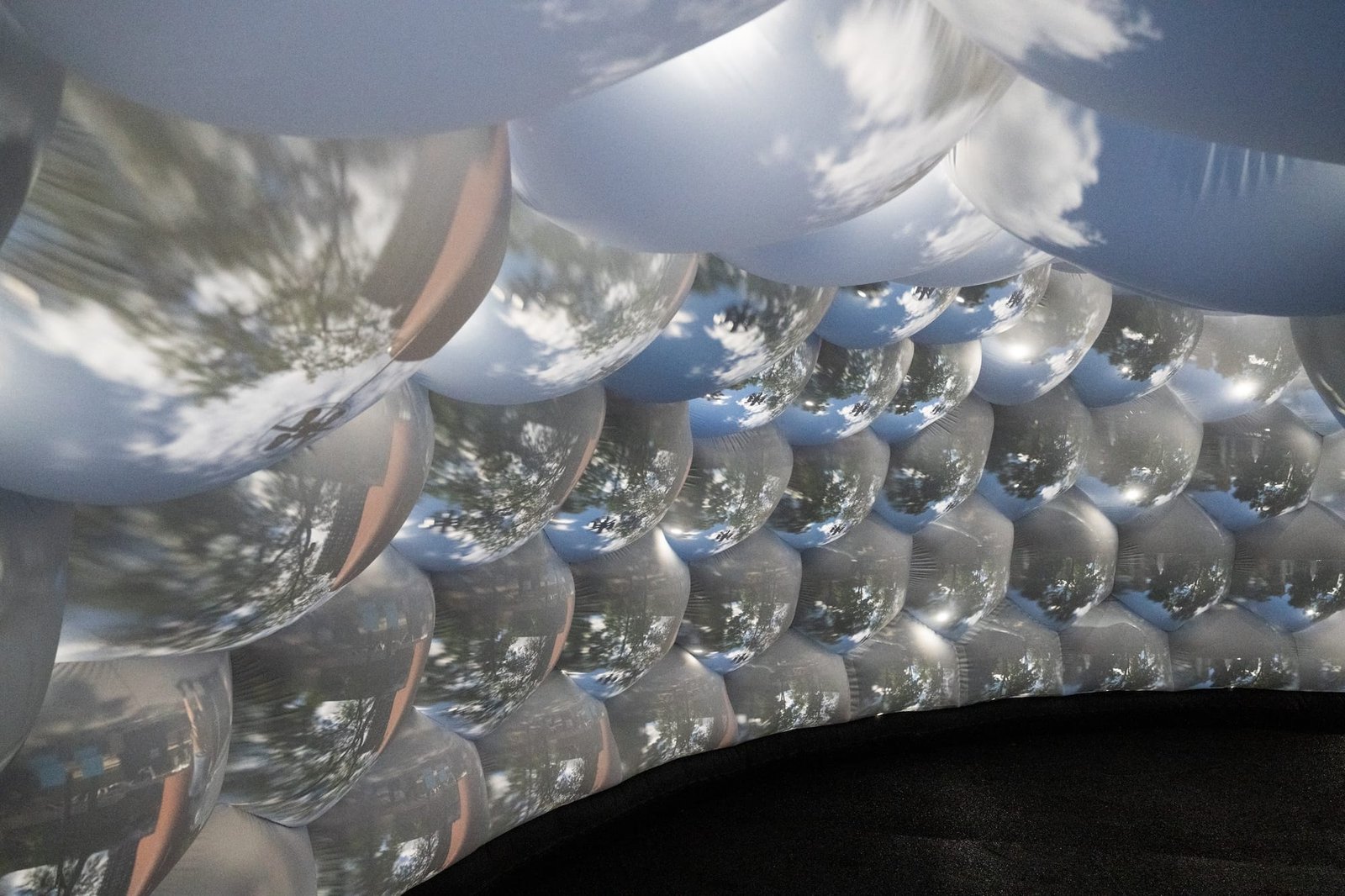
From outside, the white, rounded volume reads as a temporary enclosure. Inside, its repeated bulging surfaces divide the view into many small fields. Lenses directed upward bring in the sky; others face trees, buildings and people around the installation. The resulting interior is assembled from simultaneous fragments of its own setting.
The principle is that of the camera obscura: light from a scene passes through an opening or lens and forms an image on a receiving surface inside. Here that familiar optical relationship is multiplied. The room does not need one privileged viewpoint for all visitors, because the images are distributed across its envelope.
Touch changes the image
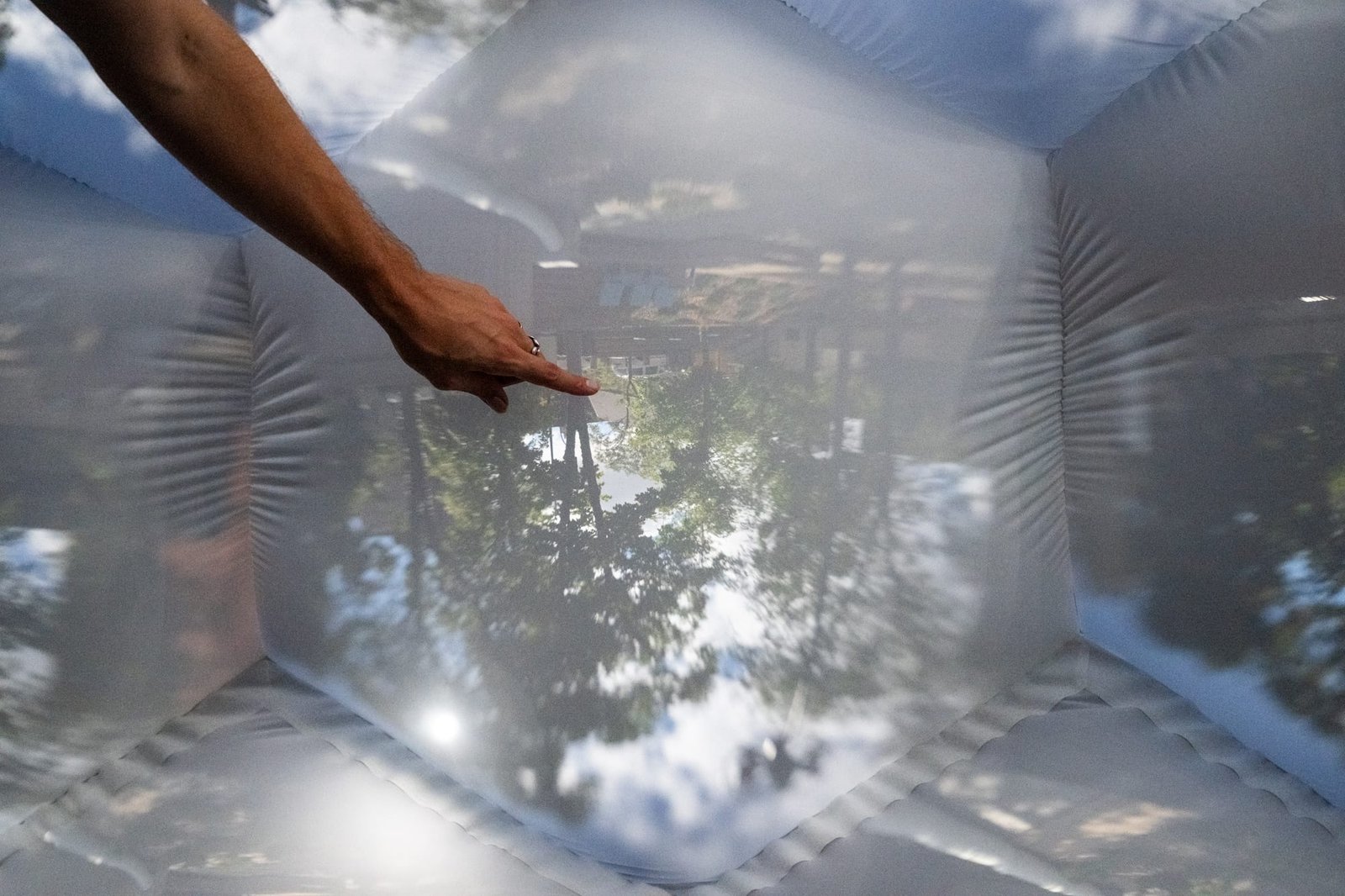
A conventional projection usually asks its screen to remain still. This installation allows visitors to press the soft material, altering the surface on which the image lands. The interaction is physical: changing the geometry of the receiving surface changes the appearance of the projected scene.
That makes the envelope part of the encounter rather than a neutral background. A visitor can watch a view, approach it and then affect its shape. The work connects seeing and touching without making the image depend on a menu or a handheld controller.
Moving through several views at once
The installation covers more than 700 square feet, approximately 65 square metres. Its scale permits visitors to walk through a shared interior rather than lean into a single viewing device. Turning, approaching a surface or stepping back changes the relationship between the body and the many images.
The exterior remains the subject, but it is no longer experienced as one continuous panorama. Splitting it into fields can draw attention to small changes: a person passing, a branch moving or a patch of sky shifting. This is an interpretation of the spatial arrangement, not a measured claim about how every visitor responds.
What the design contributes to interiors
The strongest connection to interior design is the treatment of a surface as an active participant. Shape, image and contact are designed together. A ceiling or wall can influence where attention settles without relying only on a new finish or a brighter light fitting.
There are also practical distinctions to preserve. Daylight powers the projection; that does not establish that the complete inflatable installation operates without electricity. Likewise, a responsive, soft surface creates questions about handling, cleaning and maintenance that photographs alone cannot resolve. These are considerations for transferring the idea into other settings, not reported faults in this work.
For exhibitions and temporary interiors, the transferable idea is a close relationship between a space and its immediate surroundings. A different setting changes the images available to the room. The installation therefore gathers its content from where it stands rather than presenting an identical sequence everywhere.
✦ ArchUp Editorial Insight
An installation that places visitors inside a projected view has to coordinate two different requirements: an enclosure suitable for entering and a surface on which an optical image can appear. Compound Camera 3 combines them in an inflatable, faceted interior rather than treating the screen as a separate object. Its many lenses distribute the surrounding scene across the room, while the flexible surfaces allow touch to modify that scene. The result is a direct relationship between the visitor, the envelope and the outside world: movement changes the viewing position, and contact changes the receiving surface. This is the design’s useful contribution to architectural thinking. A wall can do more than separate inside from outside or carry a picture; it can mediate a changing perception of its surroundings. The trade-off is dependence on conditions that a conventional digital display can regulate more tightly, including daylight and the geometry of projection. Those dependencies are part of the experience rather than evidence of a technical shortcoming. The lesson for interior design is not to reproduce the inflatable form, but to consider how surface shape, light and bodily interaction can work together before adding another screen.
Design: Pneuhaus. Work: Compound Camera 3.