Hong Kong Moves to Acquire Land for 20,400 Public Homes in Tuen Mun

Hong Kong’s Lands Department posted notices on October 15 to resume 320 private lots covering approximately 16.9 hectares for developments at San Hing Road and Hong Po Road in Tuen Mun. The schemes, including associated infrastructure, are intended to provide around 20,400 public housing units upon completion.
The land is due to revert to the government on January 16, 2027. Officials say compensation and rehousing matters are being handled. The announcement does not provide a housing completion date.
Land secured is not housing delivered
The immediate development is an administrative step in assembling the sites, not the delivery of apartments. Keeping those milestones separate matters: a planned housing total cannot be treated as an immediate addition to occupied stock.
For architects and construction teams, the distinction directs attention toward the interfaces between land availability, infrastructure and building delivery. A site boundary alone says little about when access, utilities and working areas can support a construction programme. Those conditions must be established through project documentation rather than inferred from the scale of a housing target.
Two sides of the delivery programme
Housing expansion also has an existing population on its other side. Compensation and rehousing belong within the account of how development proceeds, alongside the number of future units. Their mention should not be mistaken for evidence that every affected case has been resolved.
Useful follow-up reporting will therefore distinguish possession of land, readiness for works and availability for occupation. It will also examine how arrangements for existing households and businesses relate to the programme. These are separate tests of delivery, not interchangeable measures of progress.
✦ ArchUp Editorial Insight
Public housing programmes connect two systems that are often reported separately: the administration of land and the production of habitable space. The first establishes control over a site; the second must turn that control into homes with functioning services and usable connections to the city. Treating the first as evidence of the second compresses a complex delivery chain into a single headline number. A more useful assessment asks which obligations have been completed, which remain contingent, and who bears the consequences if their schedules diverge. Existing households need a workable transition, while future residents need more than an eventual building shell. Neither requirement can be evaluated from an apartment count alone. For the design and construction professions, the relevant task is to make these dependencies explicit in briefs, procurement packages and programme reviews. This does not establish that the Tuen Mun developments will encounter delays or displacement failures. It identifies the evidence needed to judge progress without confusing administrative advancement with residential availability. Architecture appears at the end of that chain, as the physical result of decisions about land, timing, infrastructure and continuity.
Source: Hong Kong Lands Department, government announcement on land resumption and acquisition for San Hing Road and Hong Po Road, October 15, 2026. Analysis: ArchUp News Desk.
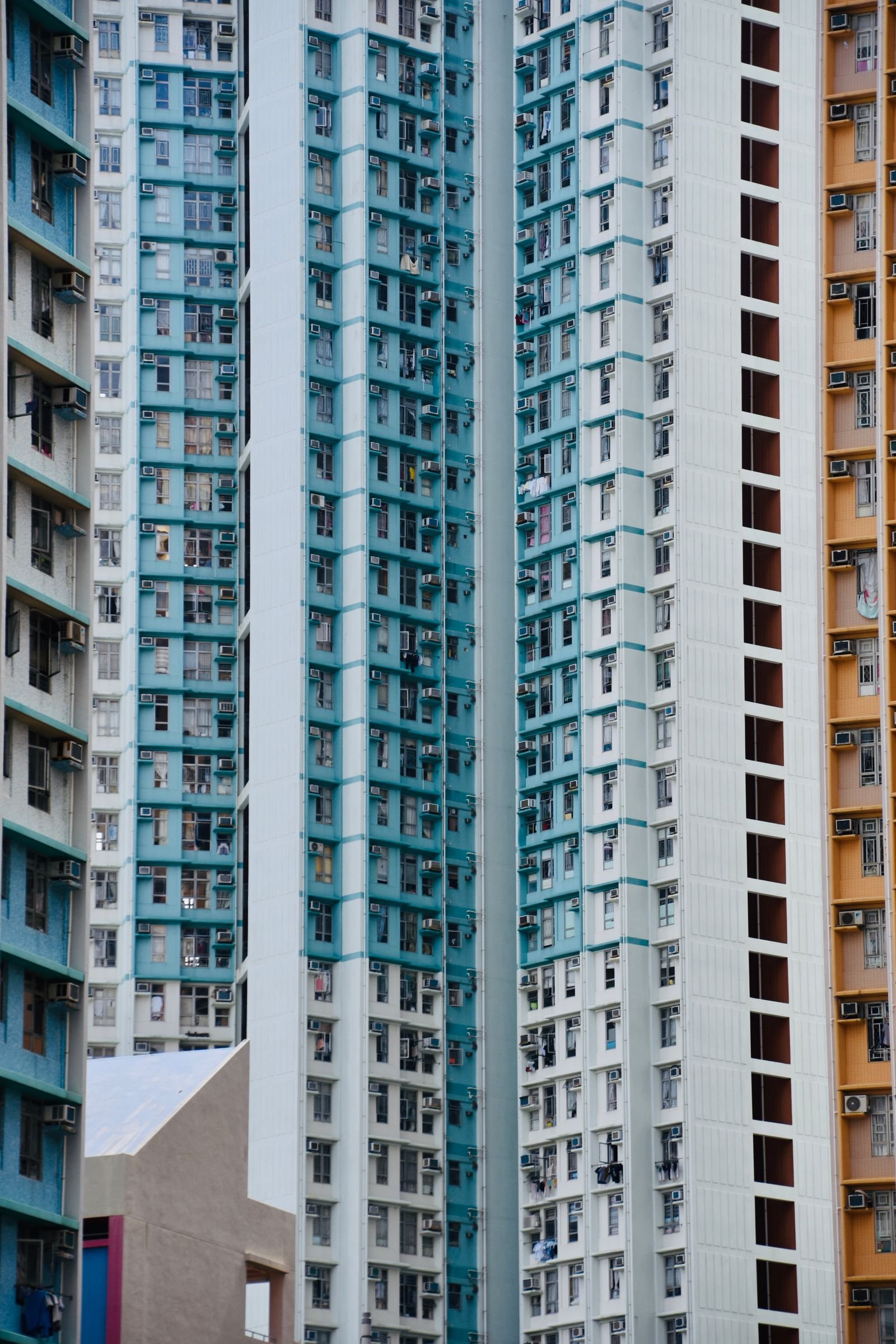
Feature photograph: High-rise residential buildings in Hong Kong. Contextual stock image, not a view of the announced Tuen Mun developments. © Jonas F / Pexels.