Counter-Slope House: Architecture on a Natural Slope

Void Negotiation with Rugged Topography
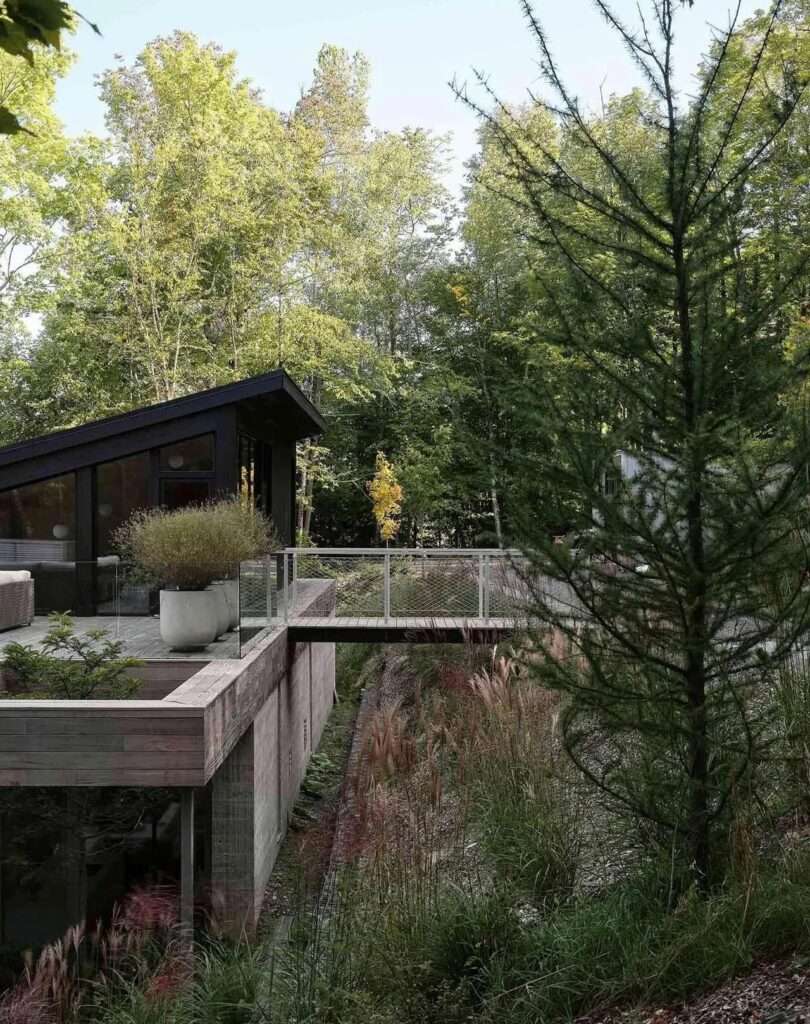
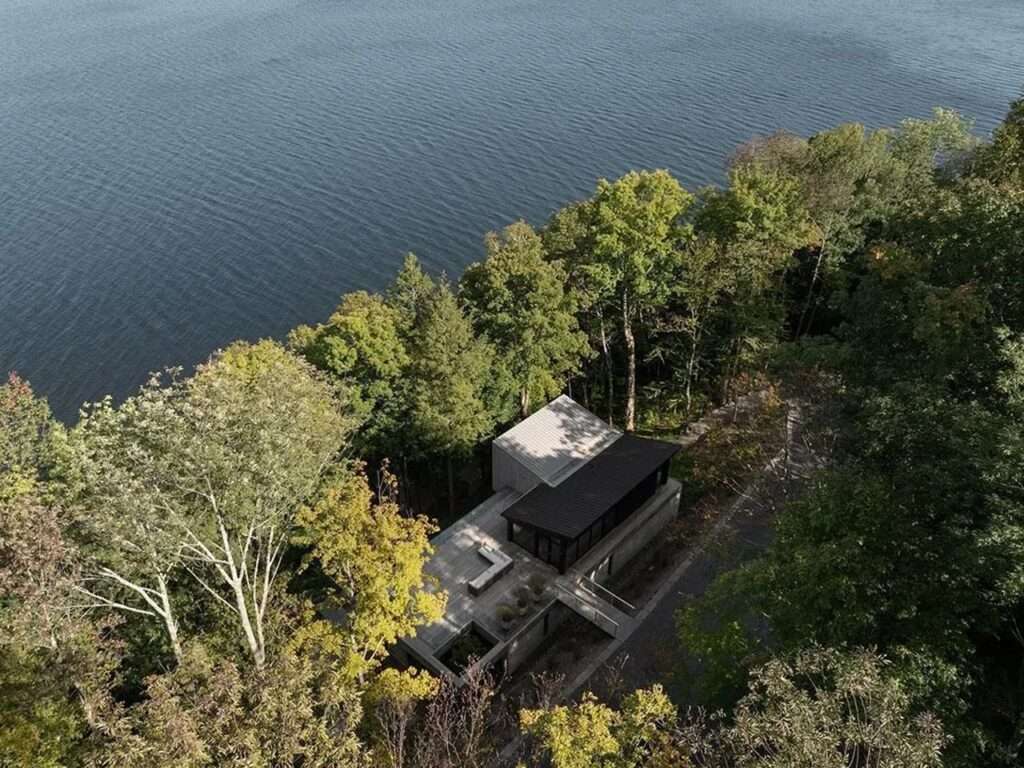
The architecture project avoids the conventional visual confrontation typical of waterfront architecture, replacing it with a quiet language of negotiation with the complex topography of the southern shore of Lake Memphremagog. This approach is manifested in how the architectural mass sits on the steep slope; the building does not seek to impose an overbearing presence upon the land, but rather aligns itself with the contour lines and subtly recedes into the dense woodland fabric. This volumetric withdrawal transforms architecture from a tool of landscape domination into a visual mediator that interprets the movement of terrain and respects the natural shadows cast by the surrounding mountains, granting the space a structural calm that is reflected in the composition of the architectural masses.
Kinetic Scenography and Human Experience
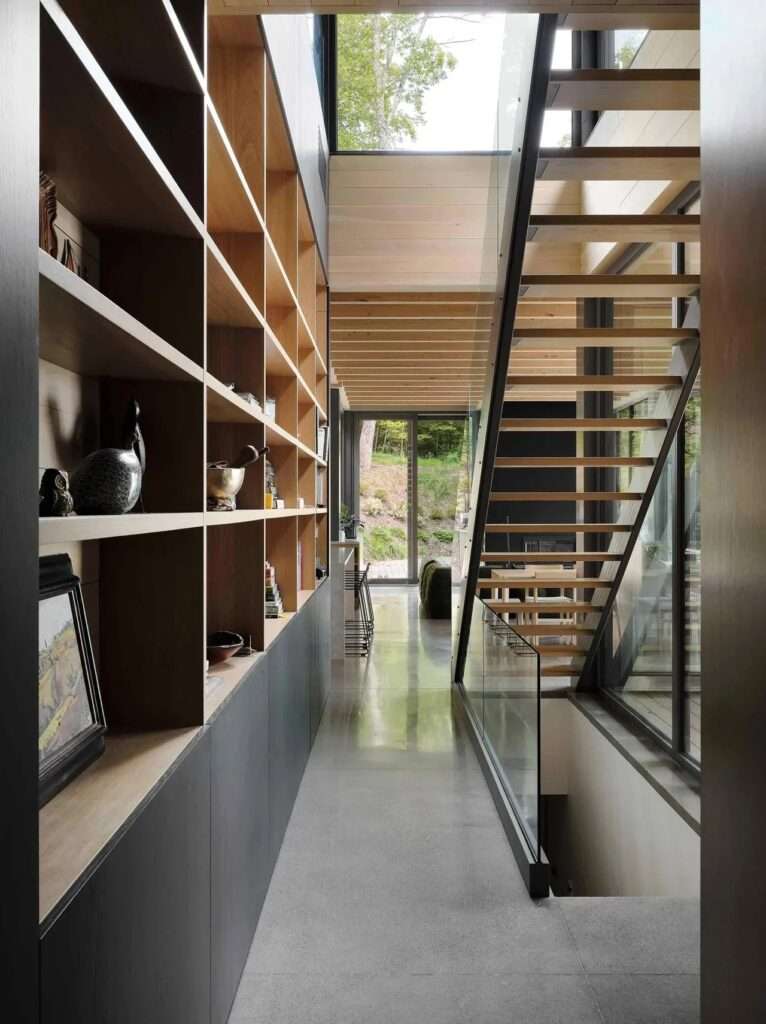
The human experience within the space is shaped by a carefully choreographed movement that begins at the moment of approach and passage through the descending terrain, where the user is guided through dynamic pathways in which air movement intersects with the shifting path of the sun. The design language produces a living scenography based on the intersection of shadows with solid, polished volumes, enhancing the psychological and material impact of the selected materials and turning the interior space into a sensory extension of the surrounding forest. The user experiences transition as a sequence of unfolding frames that do not reveal the landscape all at once, but instead gradually disclose it, fostering a sense of containment and protection through an architectural formation that treats light and shadow as invisible structural elements.
Volumetric Deconstruction and Topographic Camouflage
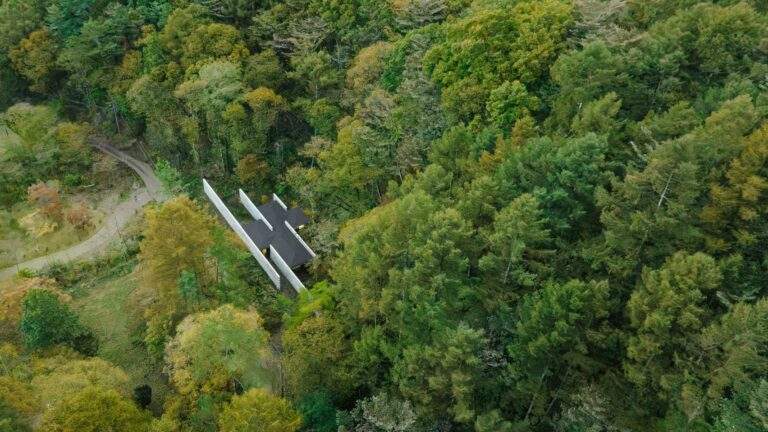
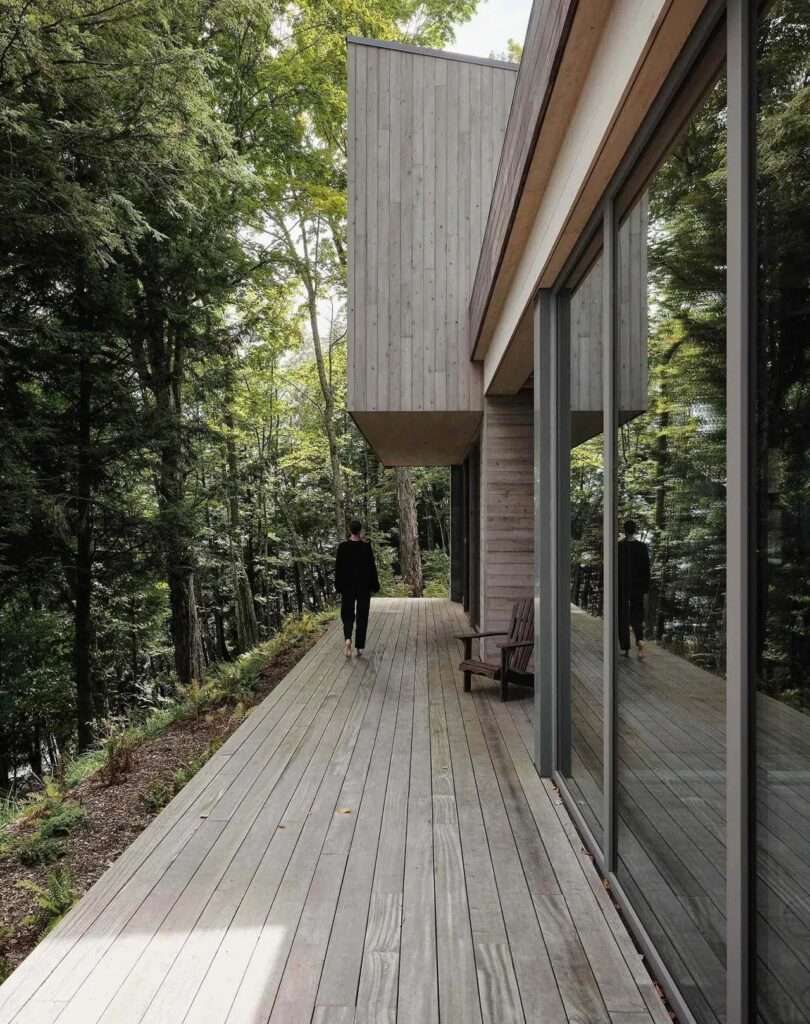
The structural system is formed through the division of the project into two distinct volumes that gently descend along the natural slope of the land, avoiding any forced terrain leveling. Each volume is capped with a subtly shifting dual-pitched roof that reduces the building’s visual mass and echoes the surrounding geography, creating a form of architectural camouflage that makes the house appear as an organic extension of the hill. The efficiency of this deconstruction lies in establishing a balanced relationship between spaces, where geometric lines recede to interpret the slope and merge with it without creating any visual rupture with the mountainous environment.
Light Scenography and Framing of Space
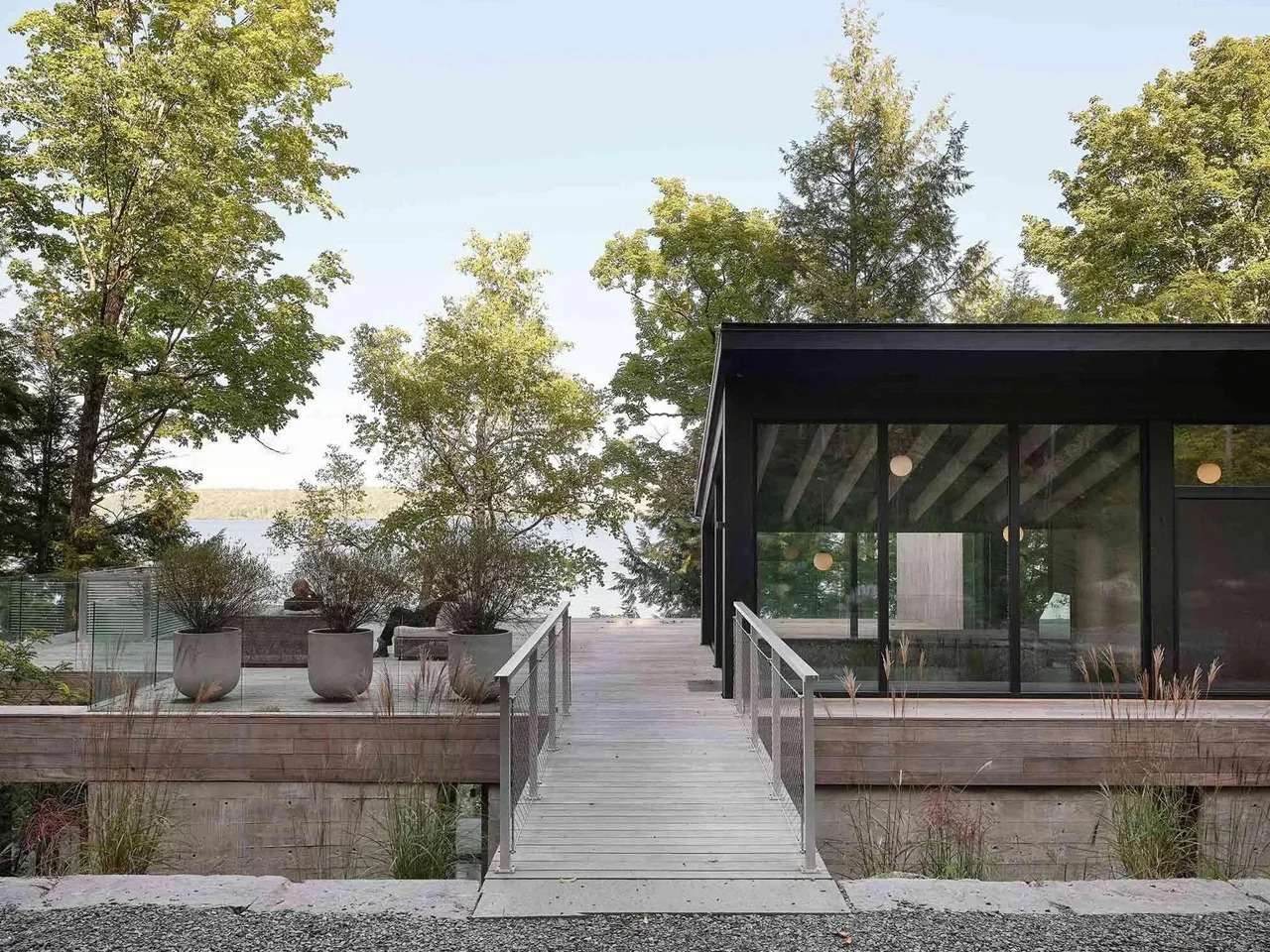
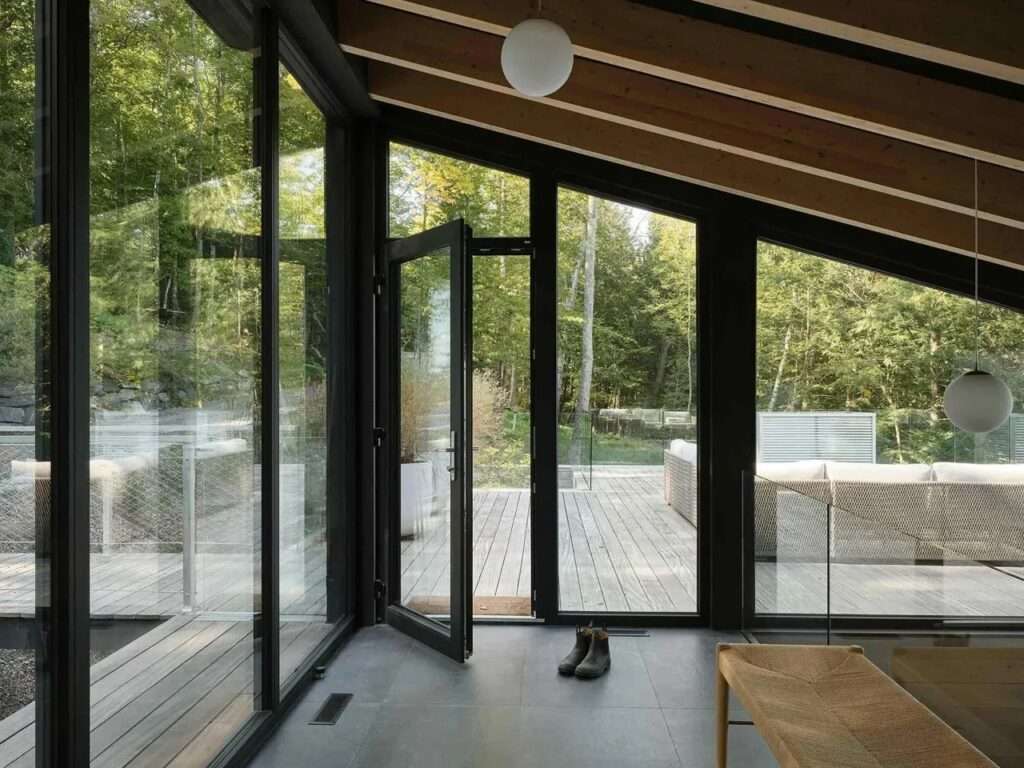
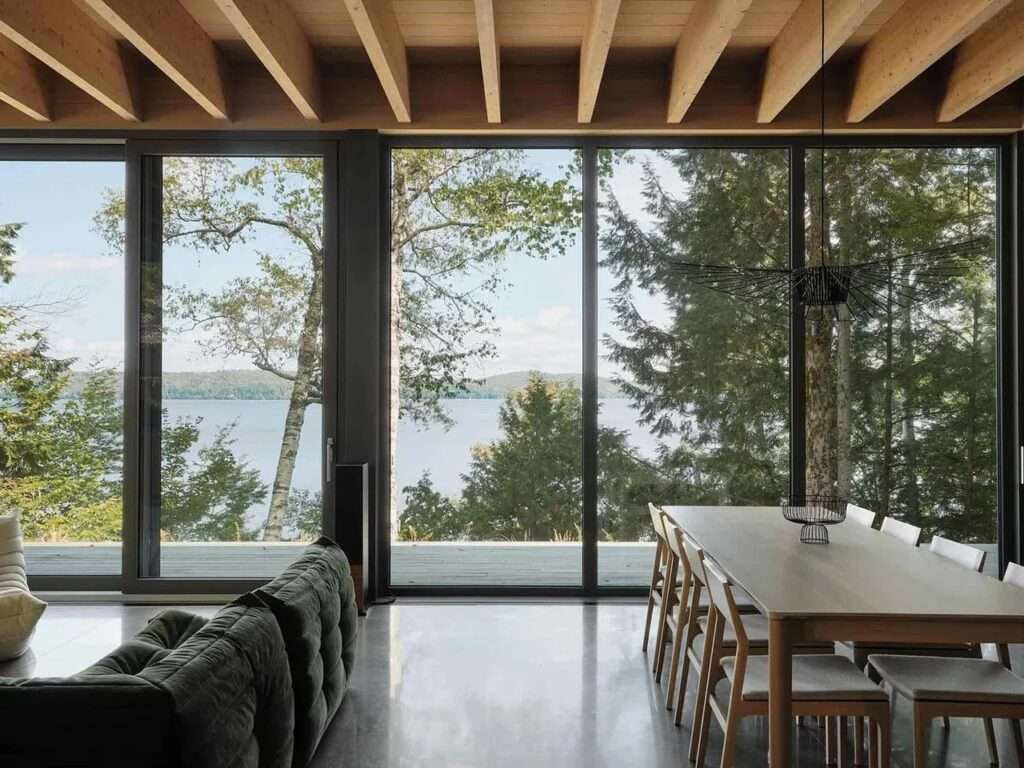
The dense layer of trees separating the building from the lake becomes an architectural device that reshapes the experience of vision, as windows are not placed to directly frame the water but to capture fragmented, shimmering glimpses through the foliage as something gradually discovered. Conversely, light gently penetrates from the opposite side into the interior, shifting dynamically with the sun’s movement throughout the day, linking human experience to time and natural seasons. This interaction produces a psychological and material effect that enhances the user’s perception of the slow movement of the external world, transforming circulation within the house into a living visual reading of the intersection between shadows, materials, and volumes.

Material Economy and Visual Integration
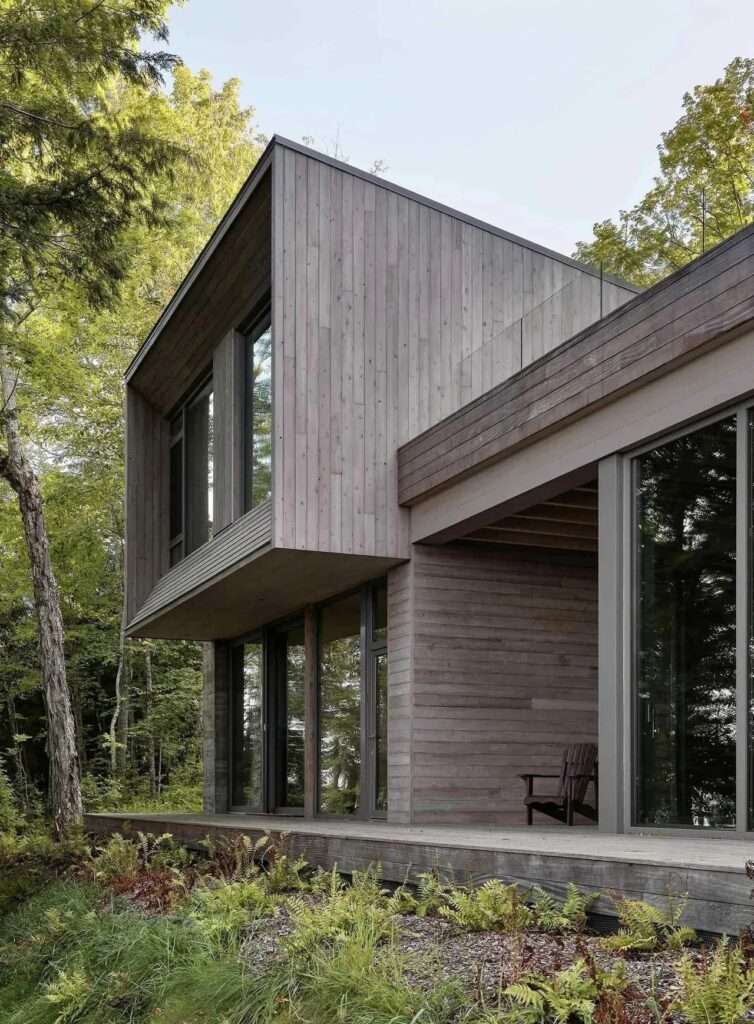
The exterior composition relies on a cladding of weathered cedar wood, whose color and texture gradually dissolve into the surrounding forest, avoiding visual display and achieving a silent integration with nature. Inside, white oak and the exposed timber structure create a sense of warmth and structural rhythm within the spaces, with the wood left unfinished to remain honest in its material expression and precise in its functional performance. Select black architectural elements appear selectively, acting as frames that define and enhance the visual relationship between the interior space and the extended natural landscape outside.
Tension Scenography and Architectural Control
The design does not seek to resolve the tension between architecture and nature, but instead leaves it open and balanced, allowing each element to maintain its own logic and spatial dynamism. The human experience in this space is shaped through a design language based on restraint and deliberate avoidance of excess, reflecting an intellectual maturity that transforms architecture into a sensory medium through which the user experiences the intersection of mass, light, and shadow. This balance emerges as both a psychological and material effect, enabling the observer or passerby to experience space as a conscious critical reading, where architecture appears as a tool for containing nature rather than controlling it.

✦ ArchUp Editorial Insight
The architecture project characterizes contemporary luxury residential architecture as an excessive volumetric visual intrusion, offering instead a carefully calibrated topographic camouflage. By dividing the local mass into two volumes that conform to the slope, the design intelligently redefines the fragile boundary between private capital and pristine environment, transforming rugged terrain from a site constraint to be erased into an active structural determinant that dictates geometric form.
However, this careful calibration carries a romantic blind spot regarding the durability and performance of construction materials. The reliance on untreated wood exposed to harsh sub-zero microclimates demands intensive ongoing maintenance, turning environmental modesty into a continuous financial burden for the elite. Furthermore, the decision to leave environmental tension permanently unresolved merely pulls the visual expression toward idealization, overlooking the inevitable ecological disruption caused by extracting this structure from lake ecosystems.