Exploring Spatial Duality and Mountain Context in Cut Out House

Spatial Duality and Site Responsiveness
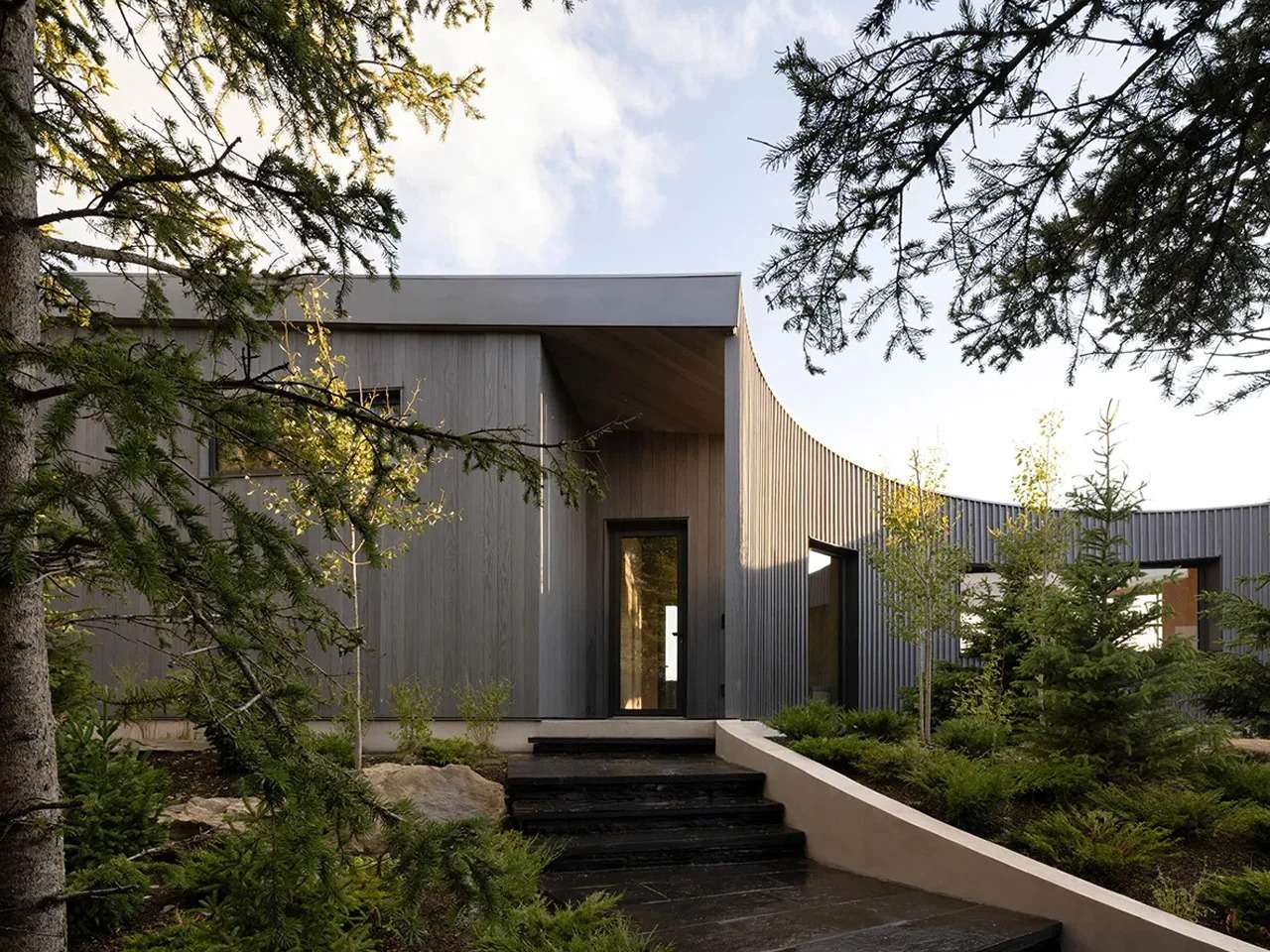
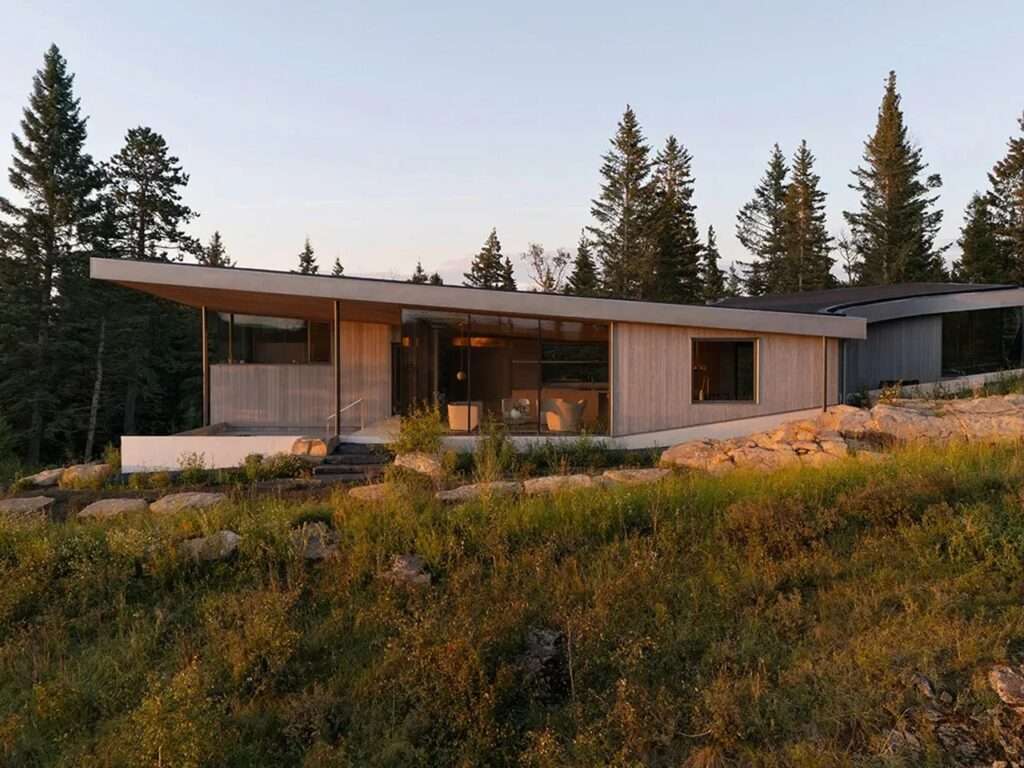
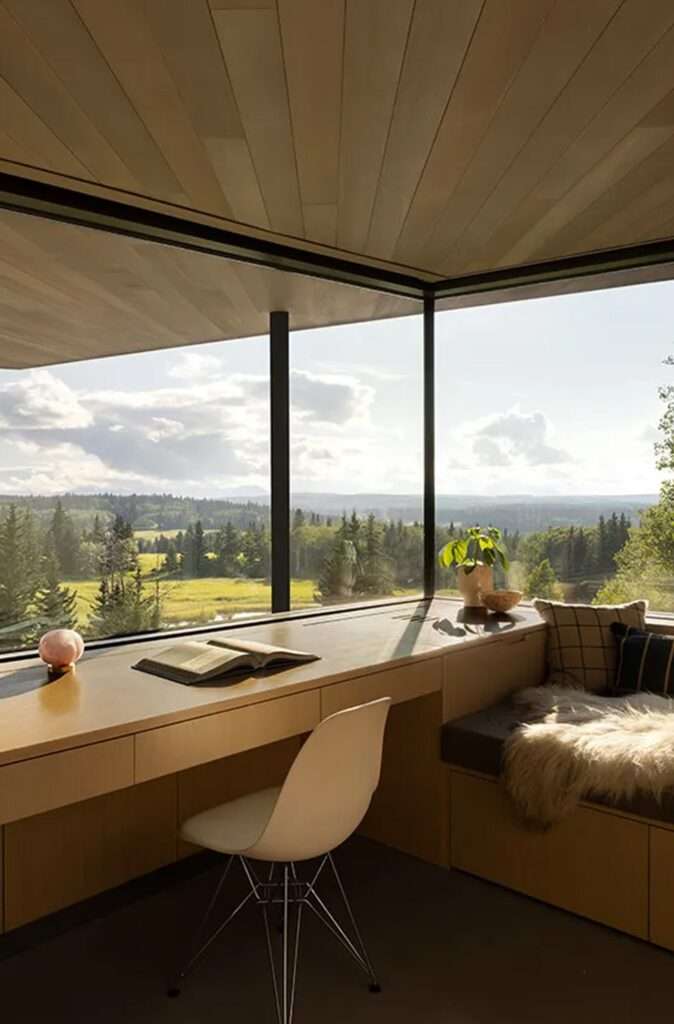
The user moves through the dwelling across two distinct levels of visual and spatial perception. The arrival sequence begins within intimate, relatively enclosed spaces that direct the gaze deep into the dense surrounding forest, fostering a sense of retreat, protection, and stability. This experience gradually transforms as one transitions into the communal zones, which open dramatically and unexpectedly toward the expansive visual horizon of the Canadian Rocky Mountains. This carefully orchestrated movement between enclosure and openness reflects the house’s primary function as a family retreat, balancing the need for privacy with the desire to engage fully with the surrounding natural landscape.
Scenographic Interaction and the Choreography of Light
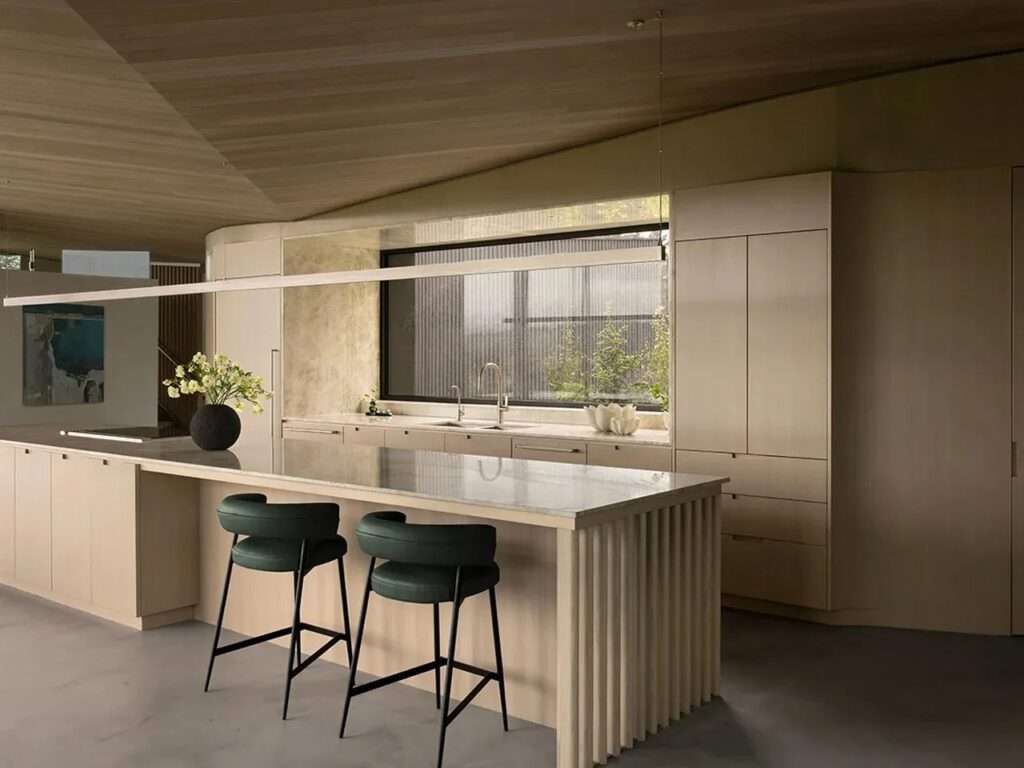
The architectural mass abandons formal spectacle, allowing natural forces to shape the spatial experience. The building’s geographical orientation manipulates solar trajectories, casting shifting patterns of light and shadow across interior surfaces throughout the day. These shadows intersect with the house’s geometric forms, creating a tactile material contrast that stimulates the senses and transforms circulation into a constantly evolving experience. Likewise, the movement of air and the controlled penetration of daylight through carefully positioned openings reinforce both the psychological and physical qualities of the chosen materials, deepening the occupant’s connection to the surrounding environment without artificial dramatization.
Butterfly Roof Dynamics and Visual Orientation
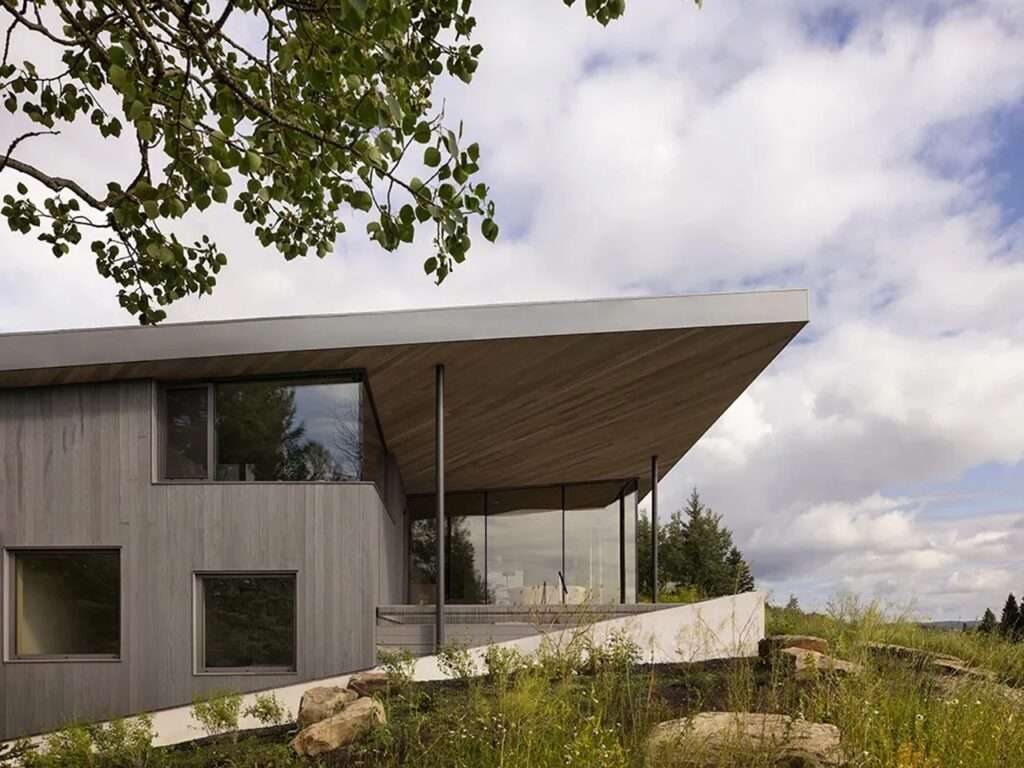
The butterfly roof operates as a critical architectural instrument for organizing movement and directing visual perception within the space. Its opposing sloped planes serve a dual purpose: they echo the contours of the surrounding mountain terrain while simultaneously controlling interior sightlines toward the horizon. Where the roofline rises, shared living spaces gain vertical expansion and open toward sweeping panoramic views, instilling a sense of freedom and connection to the vast geographical landscape. In contrast, the roof lowers in areas facing dense woodland, allowing the bedrooms to retreat into sheltered, tranquil corners that reinforce privacy and psychological comfort.
Subtractive Carving and the Silent Mass
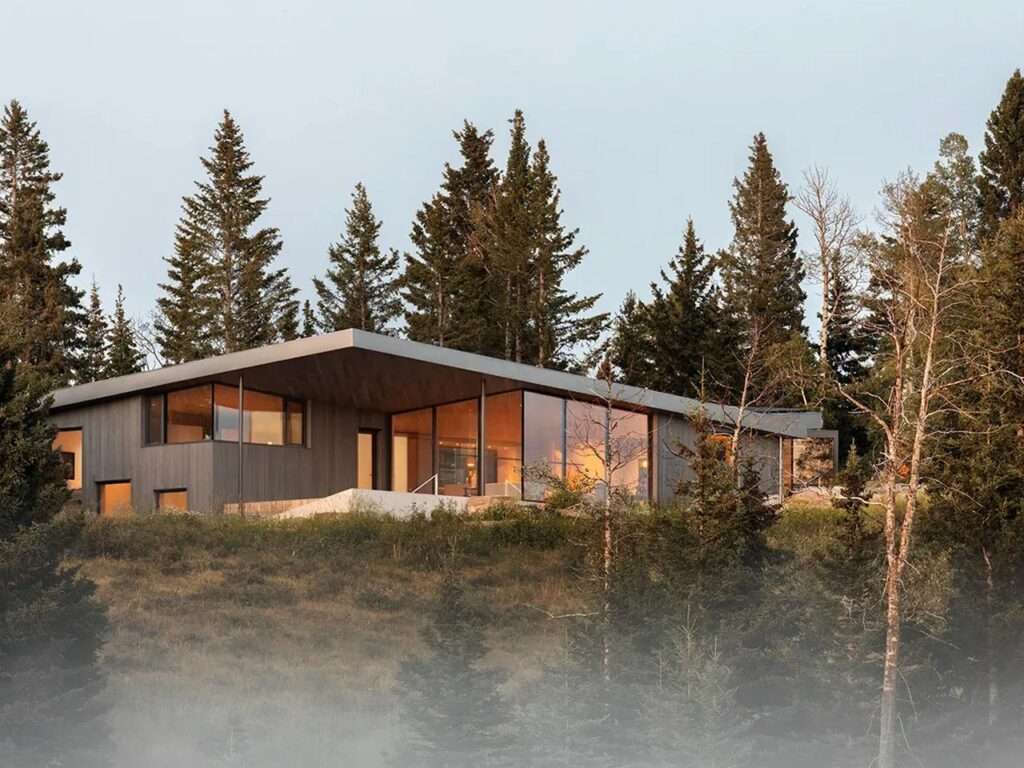
The building’s formal identity emerges through a strategy of subtraction from a unified volume. Carved voids and incisions establish a sculptural character that relies as much on the absence of material as on its presence. This alternation between solid mass and excavated space generates a dynamic relationship with light, as shadows penetrate these architectural folds to reveal a restrained design language that avoids structural excess. Through this approach, the building occupies its mountainous setting with clarity and confidence, neither surrendering entirely to the landscape nor competing visually with it, resulting in a balanced spatial and material experience.
Material Dialogue and Scenographic Interaction
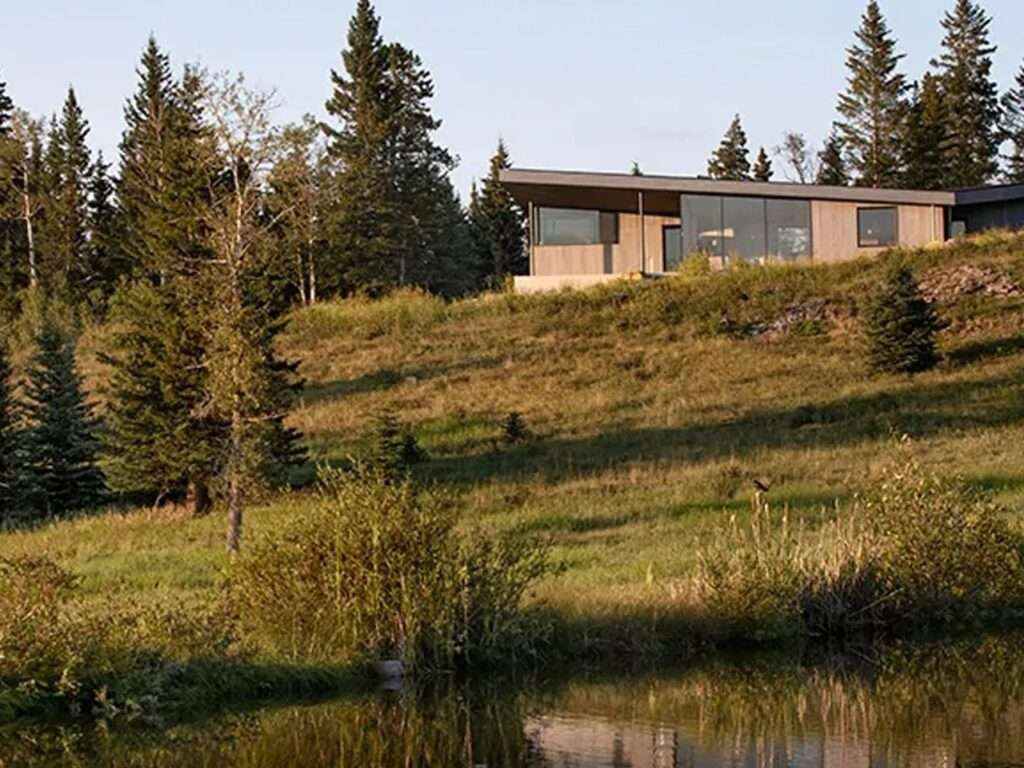
Gray Accoya wood cladding provides the exterior façades with a material and chromatic continuity that gradually dissolves into the natural context. This material choice responds gracefully to weathering over time, visually aligning itself with the surrounding rock formations and vegetation. From distant viewpoints across nearby bodies of water, the butterfly roofline emerges as a dynamic visual marker whose appearance shifts continuously with changing light conditions throughout the day, creating an impression of movement despite the structure’s physical stillness. This material and formal harmony reduces the building’s visual impact, transforming it into a natural extension of the terrain rather than an object imposed upon it.
Constructing Visual Narratives and Contextual Connectivity
The design functions as a precise visual apparatus for redefining the relationship between interior space and the mountainous landscape. Windows and architectural openings become carefully calibrated points of intersection that preserve equilibrium with the surrounding environment. Rather than competing with the Rocky Mountains or asserting an overwhelming presence, the building aligns itself with their topography and organizes its massing around their directional forces. As a result, movement and moments of pause within the house become continuous acts of framed observation and intentional visual engagement. This approach reflects a design language concerned with the integration of architectural form into environmentally sensitive contexts, transforming the residence from a simple family retreat into a spatial mediator that reconnects its occupants with the elevated mountain landscape.


✦ ArchUp Editorial Insight
Cut Out House by Young Projects presents a tactical architectural statement that challenges the excessive visual expression often associated with mountain architecture. Through a massing strategy based on subtraction, excavation, and the deployment of a dynamic butterfly roof, the design transforms negative space into a balancing force, replacing conventional residential display with a restrained and responsive envelope that treats the Rocky Mountains as a critical environmental and architectural partner rather than a mere scenic backdrop.
Yet this poetic retreat into material silence also reveals a distinctly elite romanticism. By reducing sculptural and architectural strategies to a leisure-oriented aesthetic, the project overlooks the reality that luxury residential developments rarely alter broader planning frameworks or the pressures of intensified urban expansion. Genuine contextual integration requires structural solutions capable of replication and wider application, whereas this highly customized and resource-intensive intervention remains an isolated exception, one that ultimately relies on capital investment to simulate architectural modesty. Similar themes continue to shape contemporary research, discussion, and emerging perspectives within the broader field of buildings.