Penetrating Urban Density: Śhālā Twam’s Spatial Deconstruction

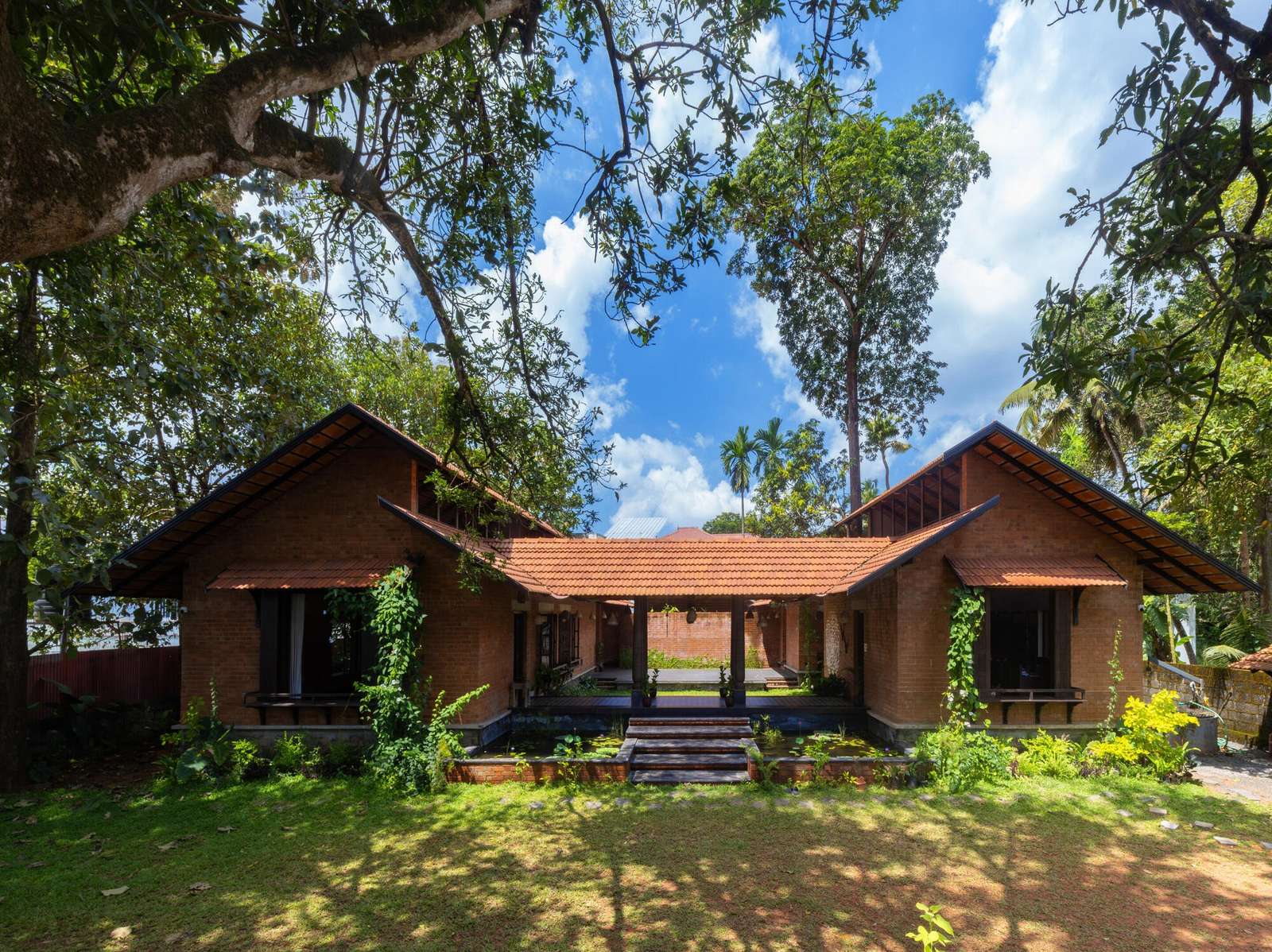
Penetrating Urban Density and Deconstructing Boundaries
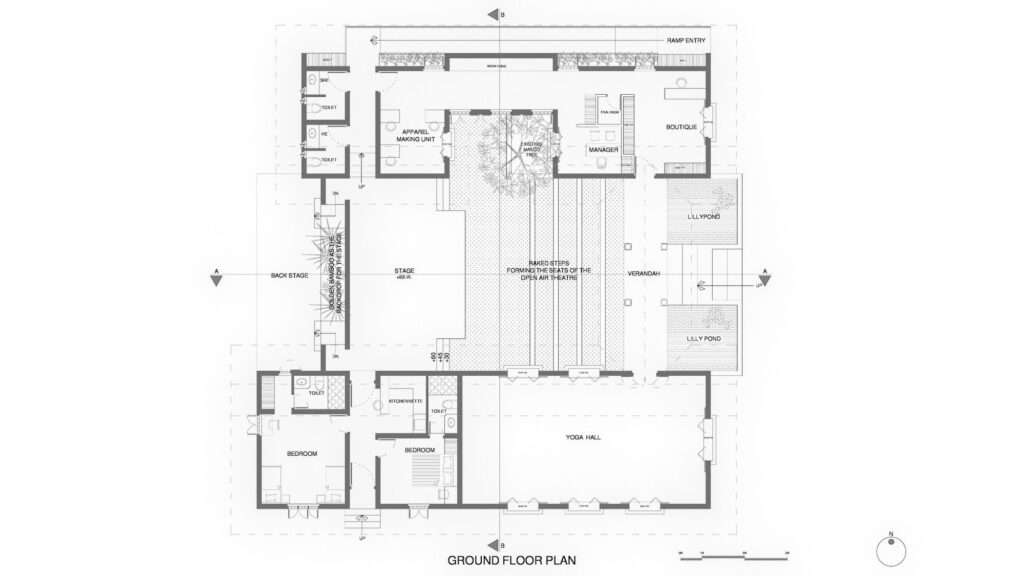
The spatial experience in this architectural composition begins at the moment of transition from the dense urban fabric into a space that breathes independently. The concept here does not rely on constructing an isolated sanctuary, but rather on reconfiguring a private plot to become a spatial and social extension of the neighborhood. As the visitor crosses the threshold of the project, they experience a gradual dissolution of the rigid boundaries between what is public and what is private; where garment production spaces intertwine with cultural gathering platforms and bodily practice zones in a continuous kinetic sequence. This functional integration generates a natural human flow within the space, uninterrupted by solid barriers, reinforcing a sense of community belonging within an informal spatial framework.
Dialogue of Masses and the Employment of Natural Scenography
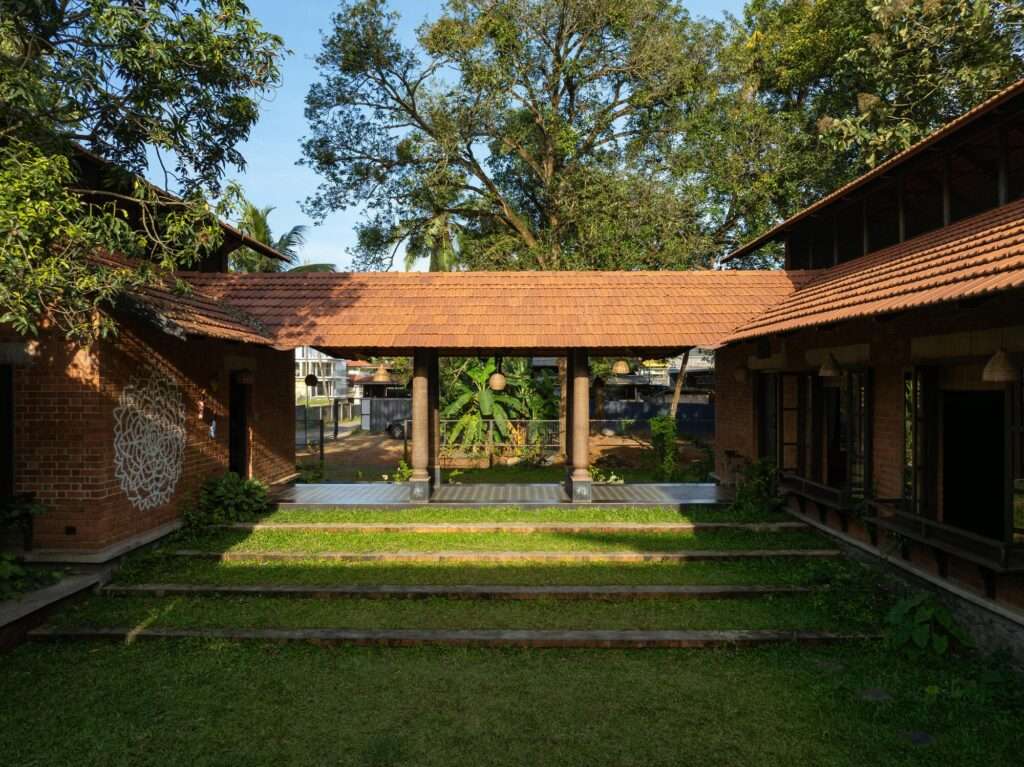
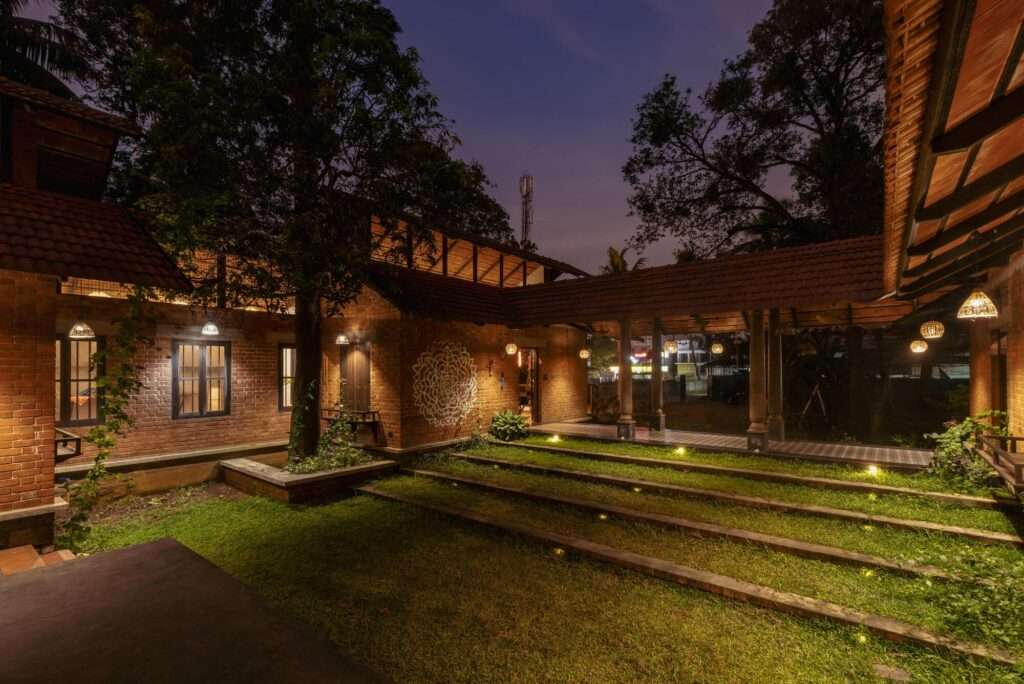
Rather than imposing a rigid geometry that erases the site’s identity, the built mass is shaped in dialogue with its original environment, adopting the two existing mango trees as both structural and conceptual anchors for the design. The first tree acts as a visual and spatial guide after being directly integrated into the building envelope, enforcing a continuous interaction between natural airflow and the dappled shadows filtering through its leaves, casting ever-changing patterns across interior surfaces. In contrast, the composition uses the larger tree to form a living climatic canopy above the open-air stage at the heart of the project. This treatment generates a scenography that transforms throughout the day with the sun’s path, offering users both psychological and physical shelter, dissolving the conventional divide between architecture as a solid mass and nature as a flexible void.
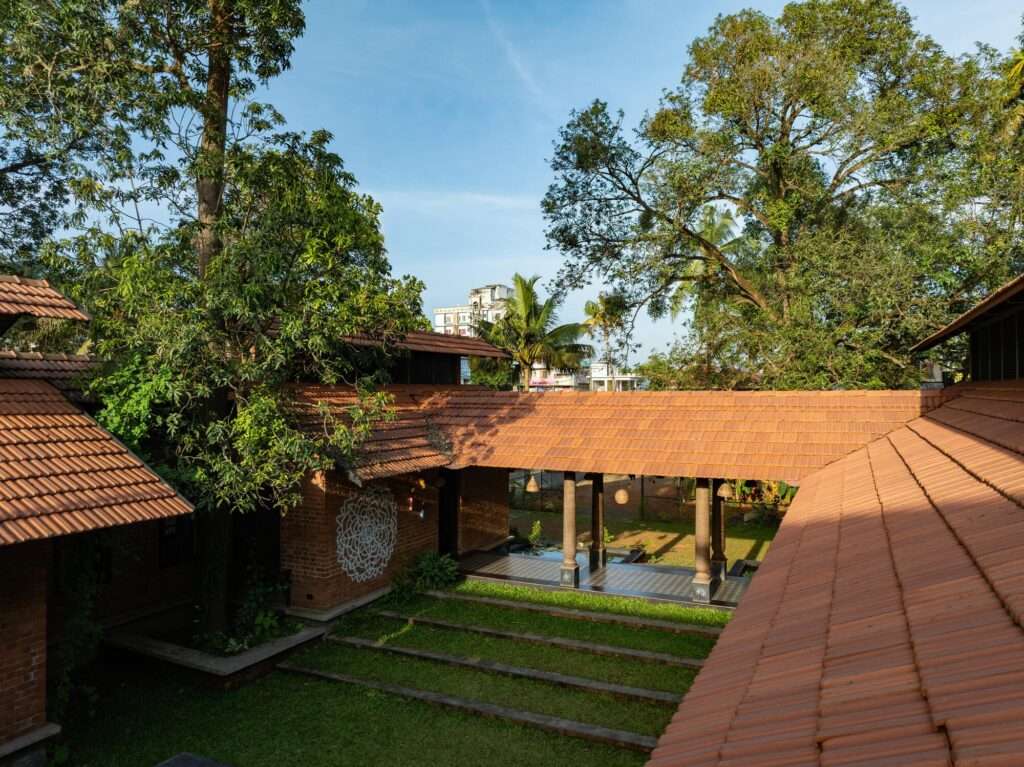
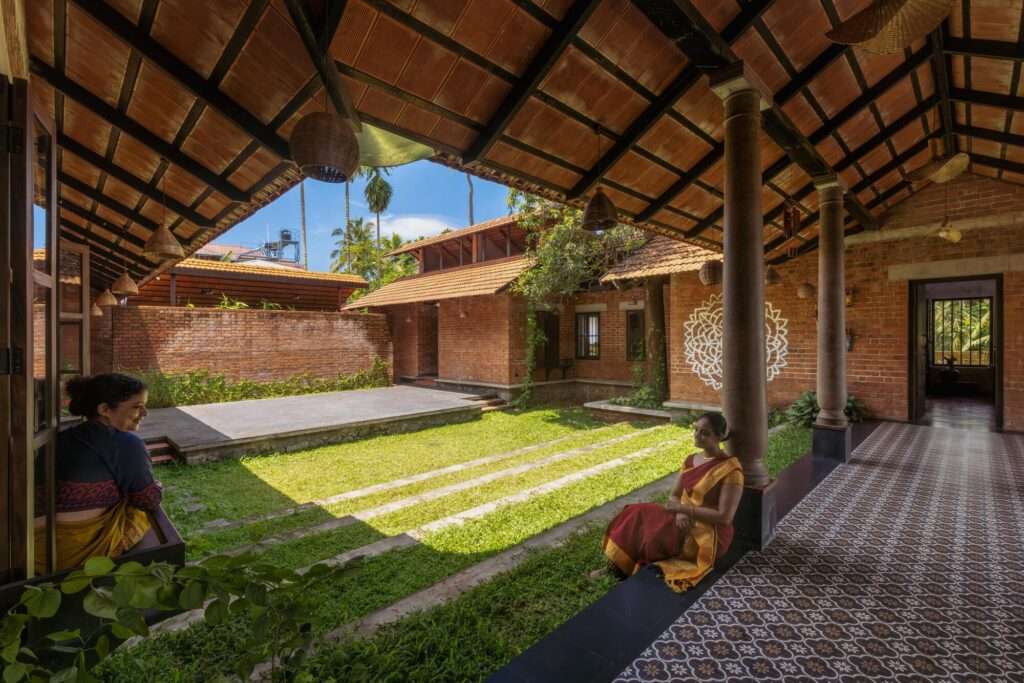
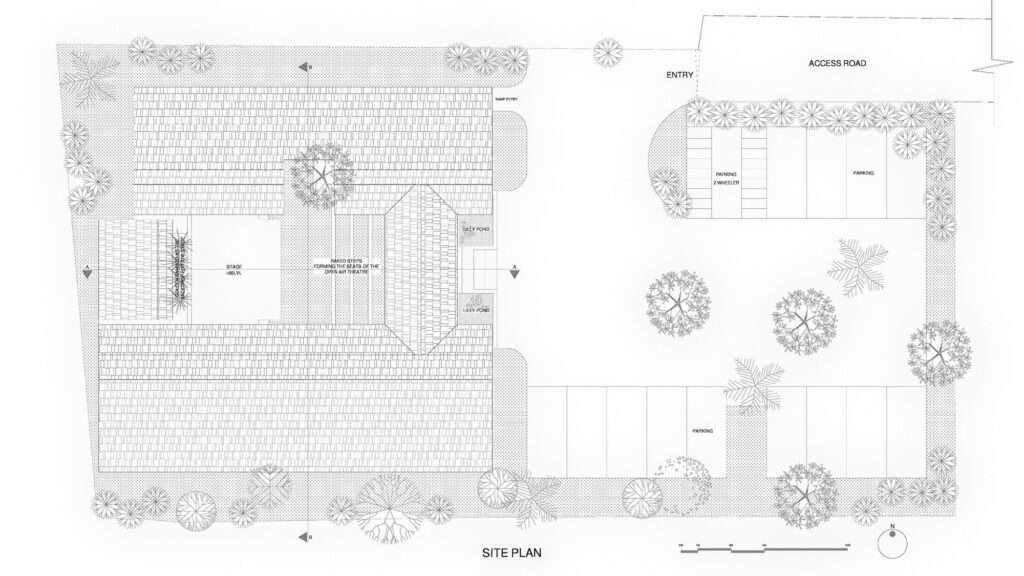
Interwoven Activities and the Dynamics of Semi-Open Circulation
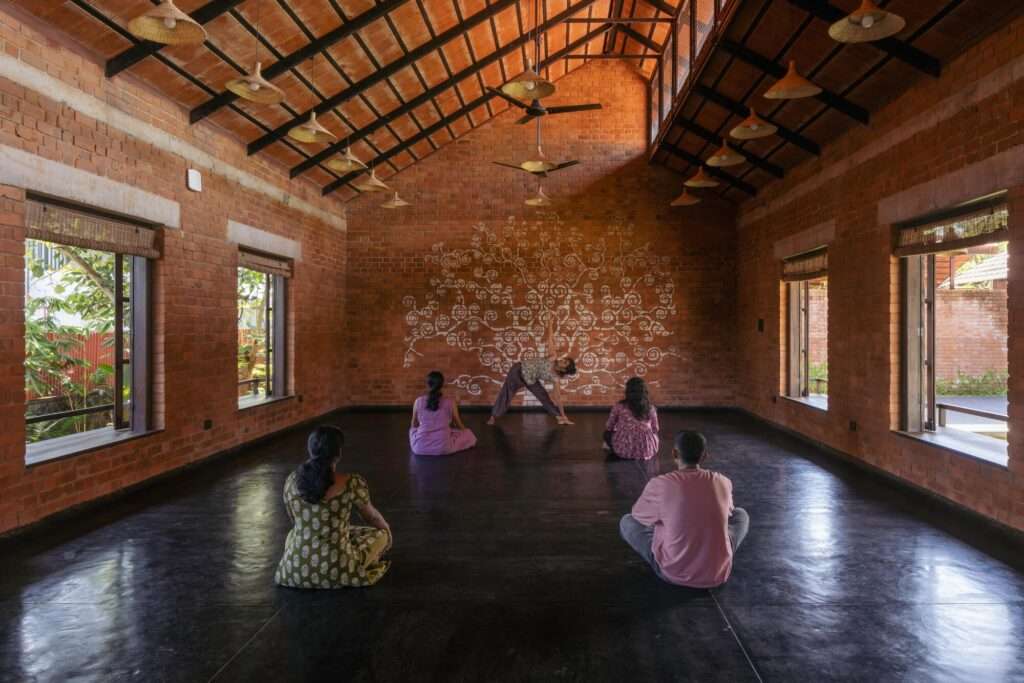
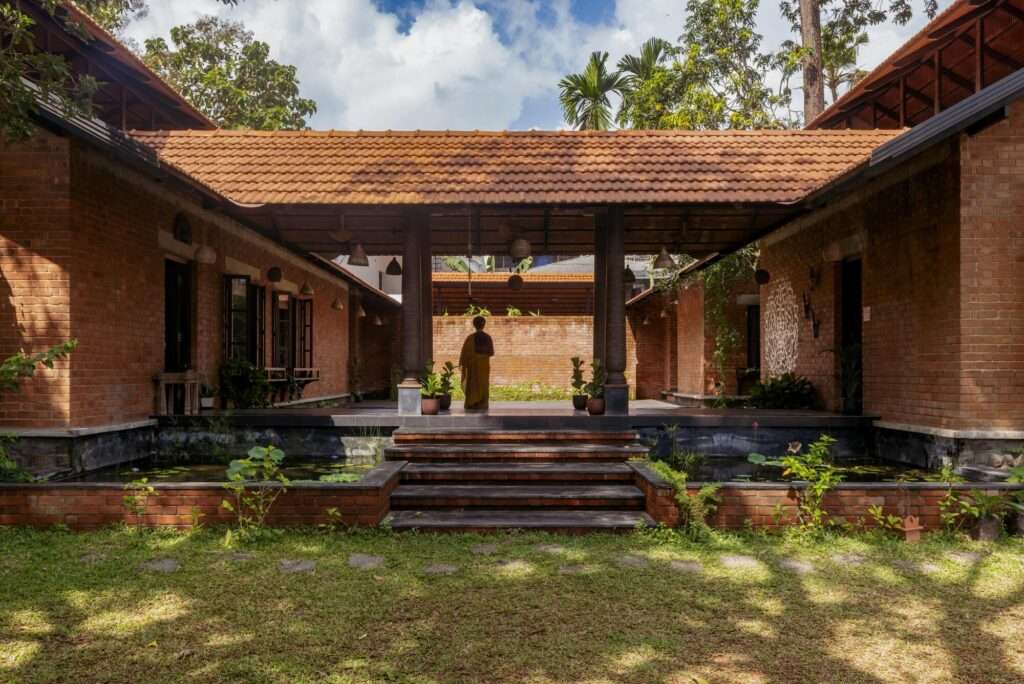
Human experience within this space moves through flexible transitional routes, where shaded verandas and semi-open corridors act as mediating elements connecting the building’s diverse functions. Rather than a strict separation between the yoga hall and the organic clothing unit, these architectural transitions allow for spontaneous overlap of activities throughout the day, granting users a sense of visual and kinetic freedom. The passerby experiences subtle shifts in natural lighting and ventilation while moving between enclosed and open spaces; supporting areas such as changing rooms and temporary accommodation are integrated with the backstage zones of the theater without compromising user privacy, giving the design a fluid language that evolves with the spontaneous daily movements of neighbors and children.
The Open Theater as a Democratic Spatial Platform
The scenographic critique of the project culminates in its core element: the open-air theater occupying the heart of the composition beneath the large mango tree. This space does not function as a decorative feature but rather as an open civic void that extends the neighborhood both geographically and socially within an urban context lacking public spaces. Beneath this vegetal canopy, users interact directly with nature and climate, where airflow and shadow trajectories shape human behavior, transforming what was once a closed residential plot into an interactive democratic platform. This spatial openness produces a psychological effect of comfort and cohesion, exploring how private architecture can relinquish its constraints in service of collective urban life.
Social Empowerment and Spatial Openness for Production
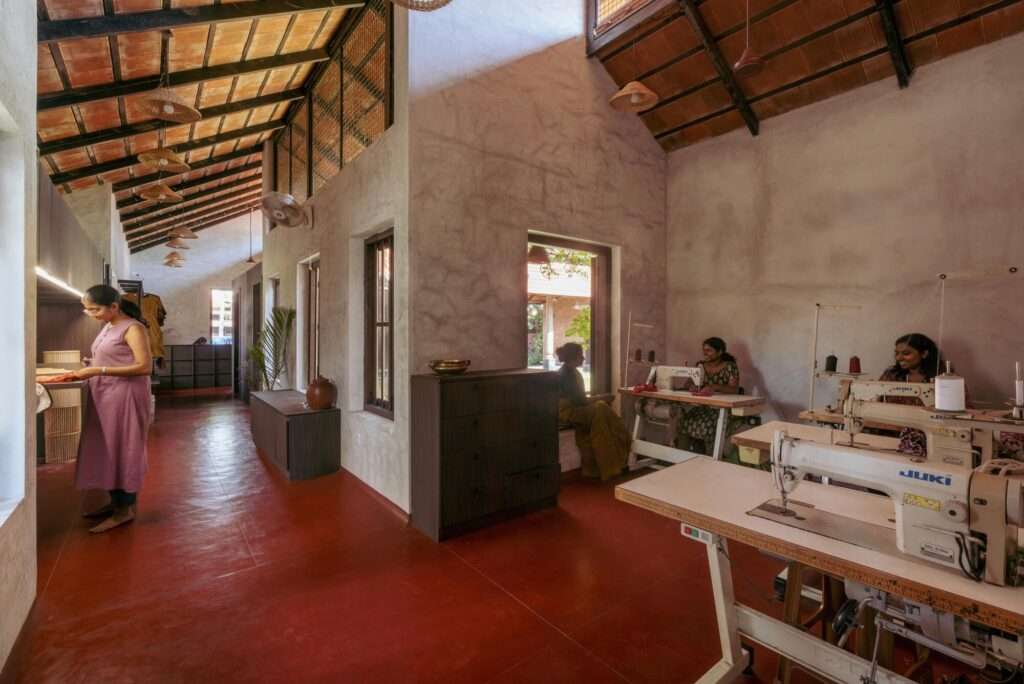
The architectural structure transcends its physical role to function as a spatial framework supporting social equity and sustainable livelihoods within the urban environment. By shaping socially open spaces, the design provides a flexible environment for women-led initiatives and crafts, where the movement of manual production and skill exchange blends with the daily flow of the community. This spatial dynamic breaks the traditional isolation of production spaces and allows users and visitors to experience a shared visual and kinetic environment that enhances small-scale entrepreneurship, turning architecture into a tangible tool of empowerment integrated within the neighborhood’s human fabric.
Material Honesty and Environmental Scenography
The building’s response to climate is expressed through a material strategy grounded in honesty and resource efficiency, avoiding excessive technological complexity. Exposed brick and clay tile roofs offer a rich tactile visual experience that reinforces psychological stability for users and evokes a sense of belonging and rootedness. Breathable surfaces and open shaded verandas guide airflow and reduce heat gain, creating a comfortable thermal environment entirely dependent on natural ventilation. This material approach, combined with the preservation of existing trees to stabilize the microclimate, proposes an alternative model of urban development that transforms a small architectural intervention into a shared cultural and environmental landscape.
✦ ArchUp Editorial Insight
The project diagnoses accelerating urban density in cities by proposing small-scale interventions as decentralized social and environmental nodes. Through the reconfiguration of a private plot into a flexible, climate-responsive public gathering ground, the design utilizes local construction materials and vegetation cover to dissolve rigid property boundaries, framing civic infrastructure as a communal and localized rather than large-scale governmental endeavor.
However, this micro-utopian direction carries a romanticized gap that overlooks the dynamics of the real estate market; reliance on individual altruism to compensate for municipal shortcomings limits scalability and replicability. Without systematic institutional integration, such localized patterns risk being appropriated as cultural privileges that indirectly inflate surrounding land values, transforming shared space into an unintended catalyst for spatial commodification.