New Grand Mosque Unveiled in Saudi Arabia’s Diriyah Gate Development

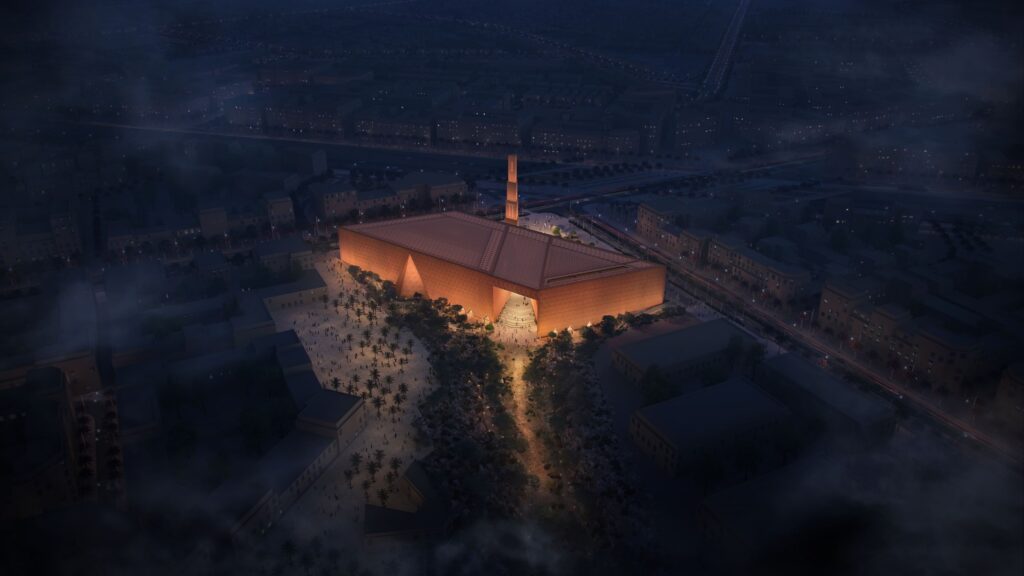
Planners revealed a new Grand Mosque for Saudi Arabia’s Diriyah Gate II development. The massive project sits securely in a historic Riyadh district. It anchors vital local urban planning efforts. The structure connects deep heritage preservation with modern civic spaces. Furthermore, it serves both local residents and regional visitors.
Connecting History and Modernity
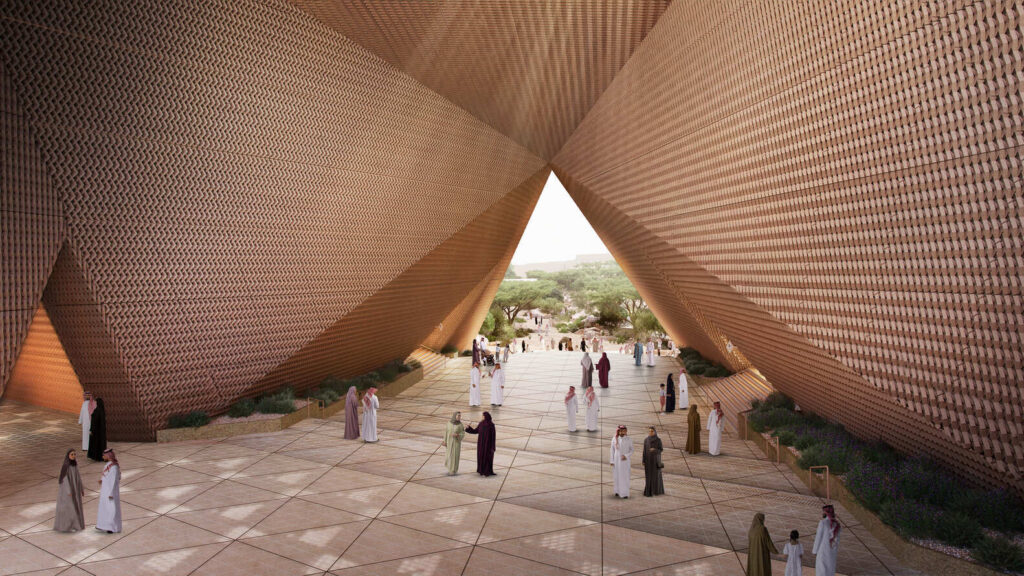
The site links a main boulevard directly to the historic Wadi Hanifah valley. The design uses open and enclosed spaces instead of a single heavy object. Plazas and shaded walkways guide daily pedestrian movement. Moreover, landscaped terraces connect street levels to the natural topography. A recessed entrance creates a practical shaded forecourt. This specific area leads to a central courtyard for large community events. The complex remains fully accessible beyond designated prayer times. Therefore, the new buildings function as a vibrant public realm.
Expanding Civic Purpose
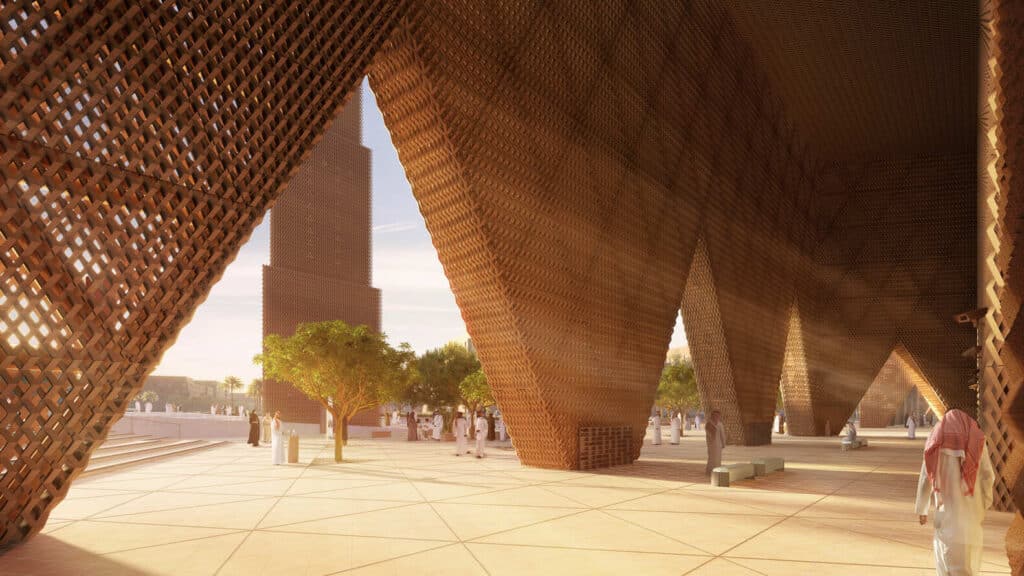
The massive complex holds nearly 11,400 worshippers comfortably. The entire site spans well over 21,000 square meters. The overall built area reaches roughly 12,300 square meters. Meanwhile, the layout includes essential educational and community spaces. Classrooms and a vast library support daily public learning. These functions encourage continuous activity throughout the entire day. Planners distributed these areas evenly across the whole site. Builders prioritized highly accessible construction methods. The team ensured step-free circulation everywhere.
Modernizing Traditional Elements
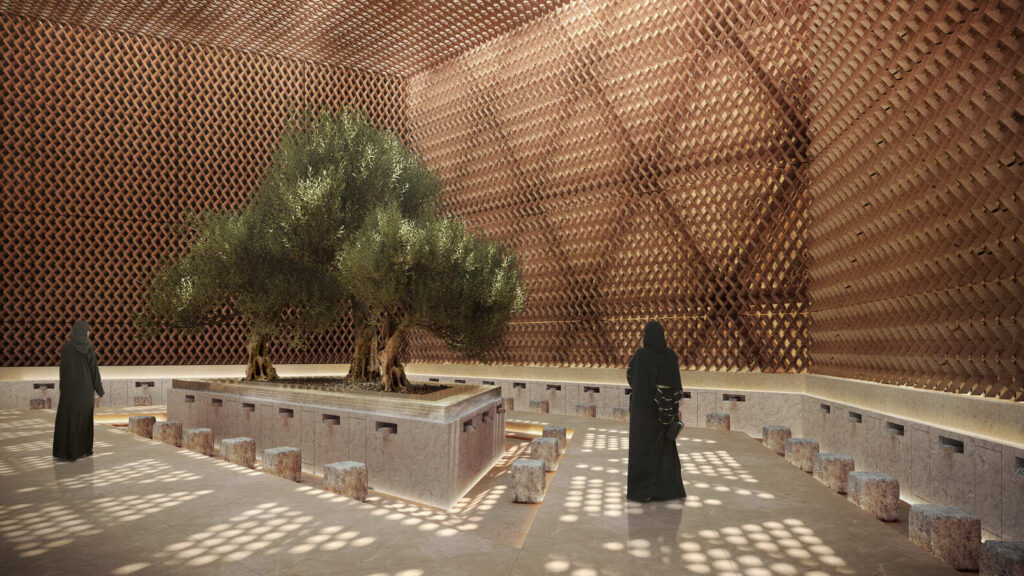
The regional architecture draws from traditional Najdi spatial characteristics. Designers incorporated compact massing and thick walls into the plan. They translated these historic references into modern forms. The layered facade utilizes prefabricated building materials. This resulting lattice envelope filters direct sunlight effectively. Consequently, the design lowers internal solar heat gain significantly. It introduces controlled daylight into the interior spaces. Planted courtyards provide vital natural ventilation for visitors. However, modern systems maintain climate control within the main prayer halls.
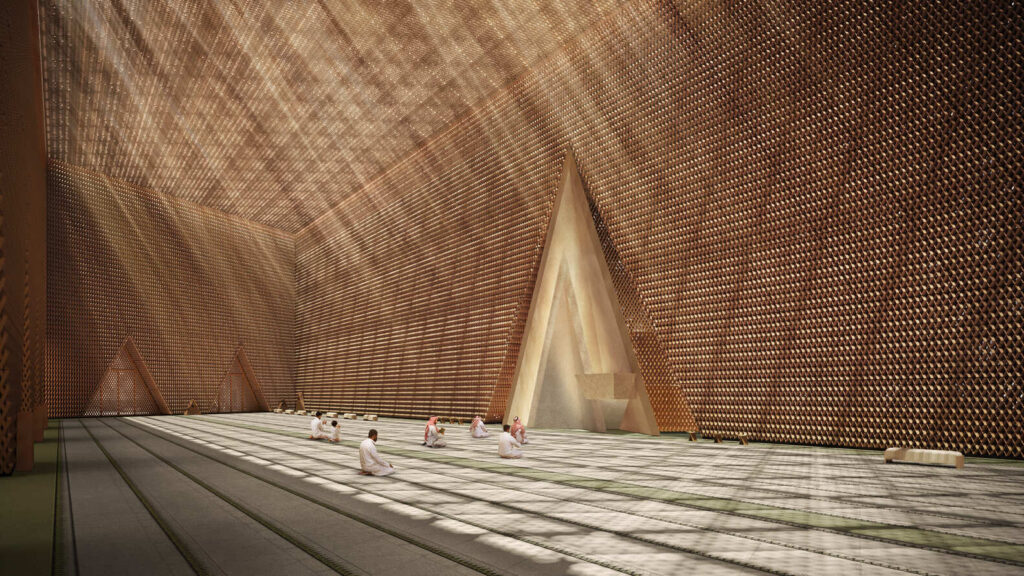
Shaping a Cultural Destination
The mosque aligns with broader regional development goals. Planners integrate this religious center with future museums nearby. They position it near upcoming sports and entertainment venues. This surrounding development marks a major cultural shift for Diriyah. New civic institutions prioritize sustainability naturally across the district. This recent news highlights ongoing national transformation efforts. Ultimately, the new mosque anchors these diverse upcoming projects.
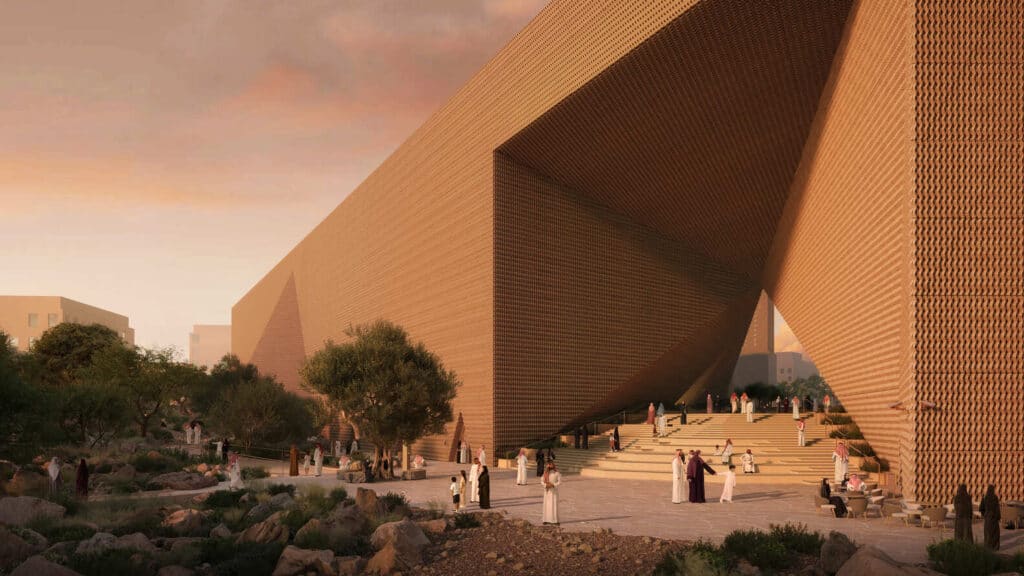
A Quick Architectural Snapshot
The Diriyah Grand Mosque merges historic Najdi roots with modern urban demands. This civic anchor supports over 11,000 daily worshippers. Its lattice envelope maximizes overall environmental efficiency. The accessible layout seamlessly integrates public plazas and community spaces. It firmly joins the expanding Saudi capital.
✦ ArchUp Editorial Insight
Embedding religious infrastructure into large-scale cultural districts reflects a strategic shift in state planning. Urban policies now position worship centers within mixed-use tourist zones to sustain civic engagement. Economic mandates to diversify national revenue streams dictate the commodification of historic sites, demanding massive structural investments to handle pedestrian volume. This project is the logical outcome of state-funded tourism expansion, heritage commercialization, and top-down urban densification strategies.