Pina House Redefines Mass and Nature in Florianópolis


Context and Botanical Memory of the Site
The Architecture project is grounded in the relationship between dwelling and the pre-existing context prior to intervention. Located in Santo Antônio de Lisboa in the city of Florianópolis, this relationship emerges as an extension of a spatial memory shaped over time. The native vegetation, planted by the mother of one of the residents, remains an active component of this context, functioning as both a natural and structural element tied to the site’s personal memory. Among these plants, the Juçara palm (Euterpe edulis) stands out, contributing to the naming of the house and reinforcing this contextual connection. The project benefits from extensive Research on local botanical memory.
Architectural Composition and the Interior–Exterior Relationship
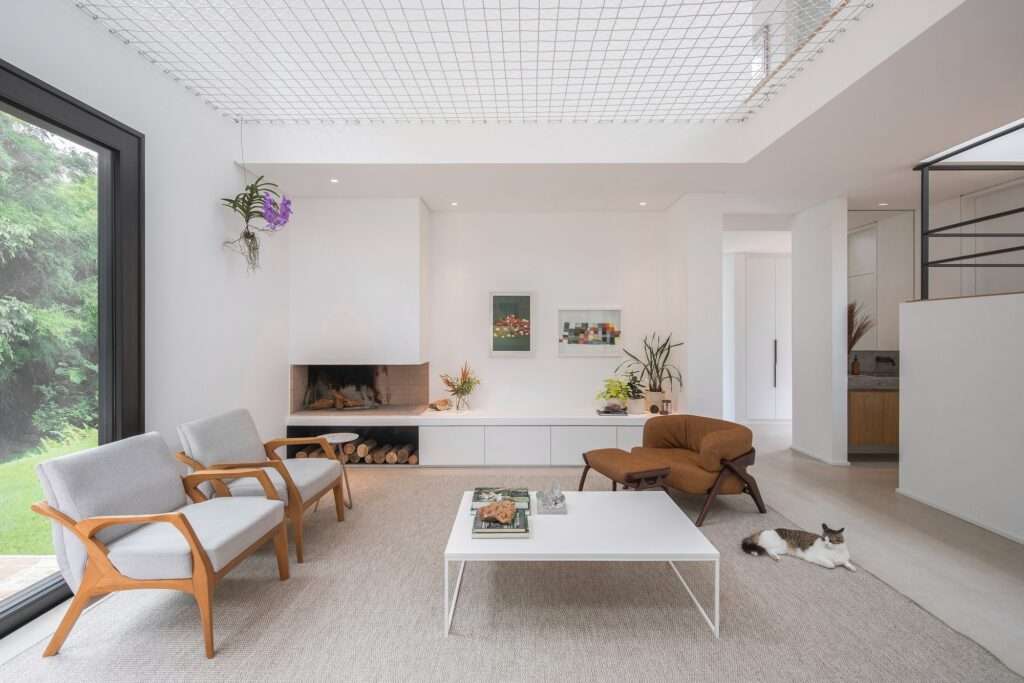
In contrast, the project adopts an architectural stance that does not rely on broad glazed openness toward the surroundings, but instead leans toward inwardness as an organizational strategy. This approach is expressed through relatively solid masses that establish a more controlled relationship with the exterior. That relationship is mediated through selective openings, cuts, and carefully designed circulation paths, generating an indirect dialogue between the interior and the surrounding environment. The Design strategy prioritizes internal continuity over outward exposure.
The Composition’s Response to Site Conditions
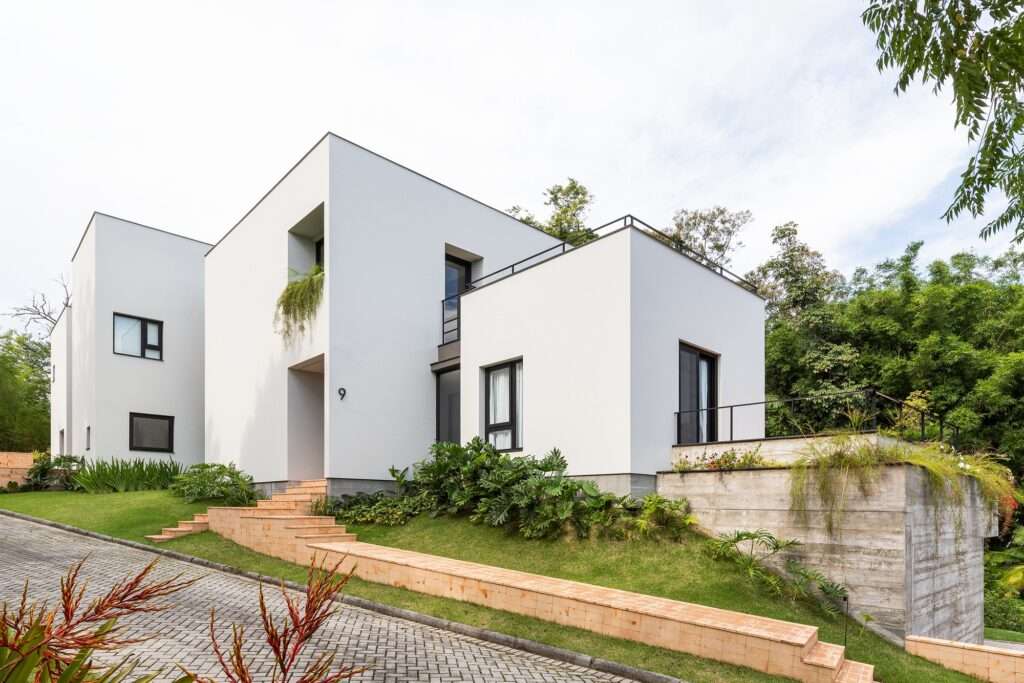
The characteristics of the site directly influence the distribution of the architectural program, particularly the longitudinal slope, the preservation of part of the Atlantic Forest, and the northern orientation of sunlight exposure. Together, these factors contribute to organizing the masses and defining the locations of the functional spaces within the project. Many similar Buildings in the region respond to topography in comparable ways.
Vertical Organization and Programmatic Gradation
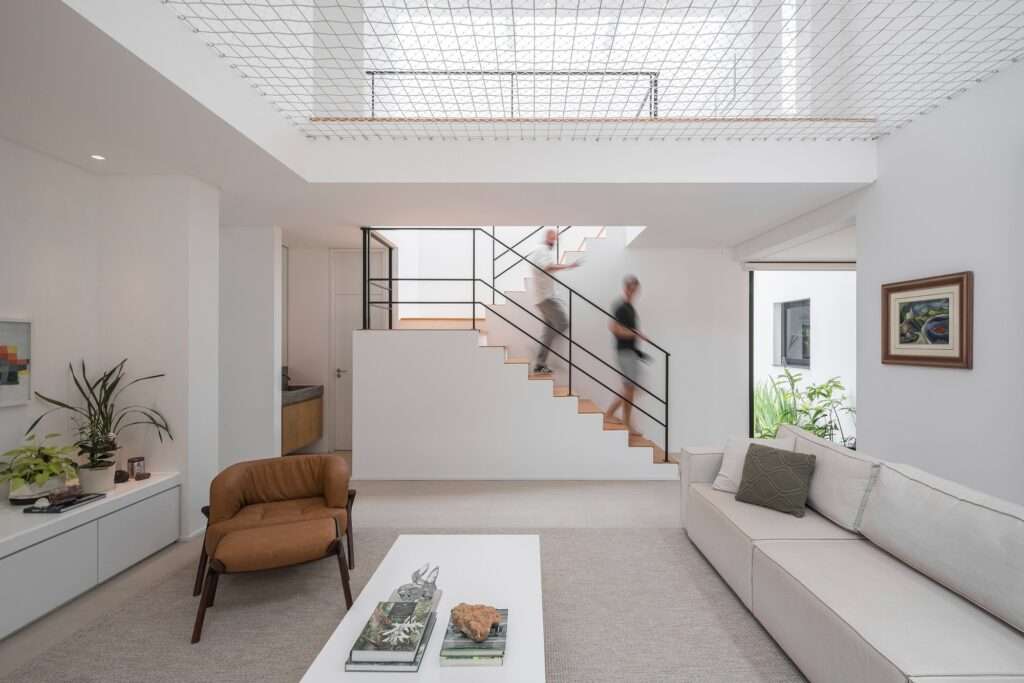
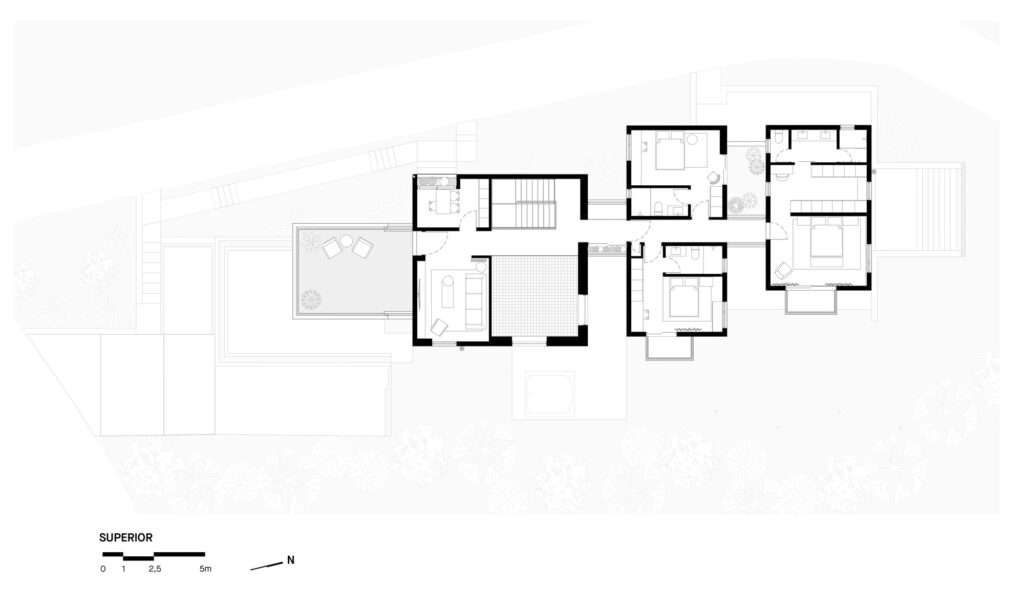
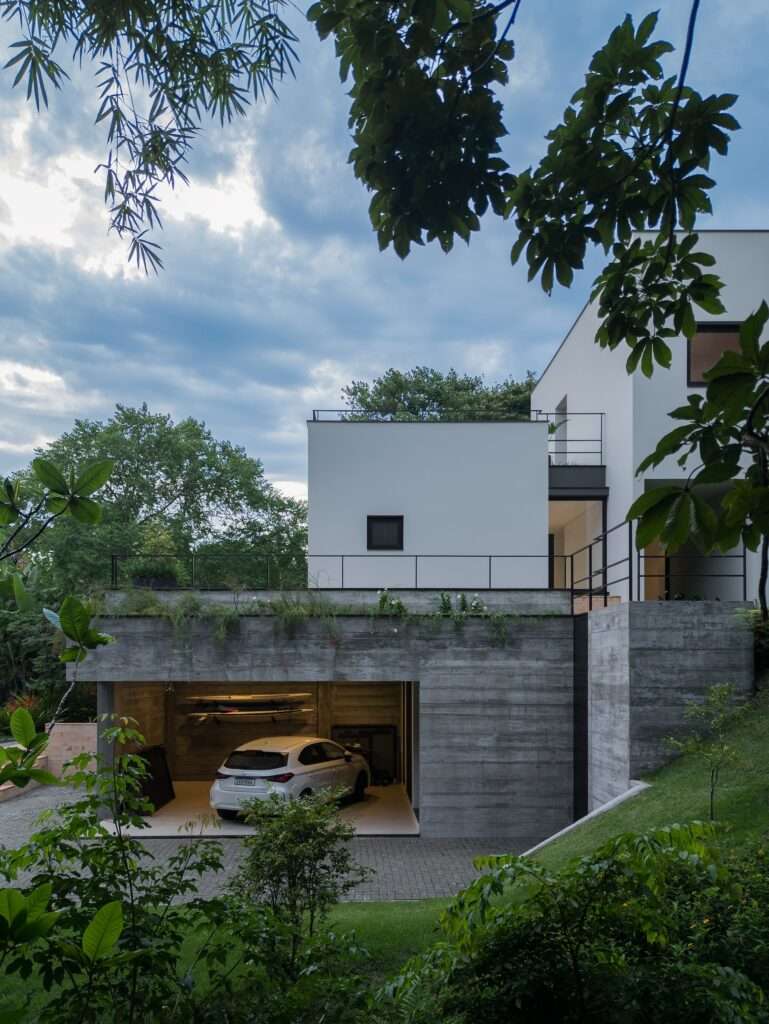
Access begins from the lower level, where the garage is positioned within an exposed concrete volume that engages with the ground as an extension of it. From this level, a staircase leads to the ground floor, which contains the living and service areas, along with a guest room that maintains a relatively independent character. The upper floor accommodates the private spaces, including three bedrooms, television rooms, and an office. The Construction method uses exposed concrete to reinforce the dialogue with the terrain.
Fragmentation of the Volume and Its Relationship to Topography
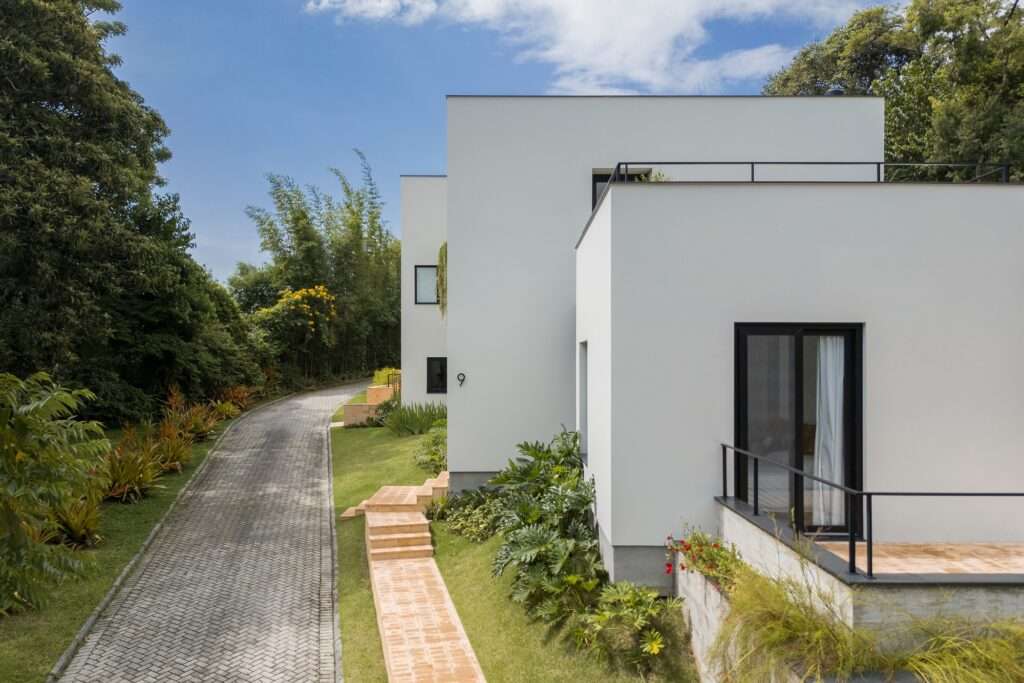
The composition initially appears as a solid and enclosed volume facing the street, contrasted by its openness toward the interior of the site. Gradually, this volume is fragmented into separate masses connected through a clear circulation axis within the overall composition. These masses are further repositioned through lateral displacements, allowing them to adapt to the terrain and its natural slope. For a broader overview of built works, visit the full Projects archive.

The Project’s Relationship with the Natural Landscape
The project does not seek to dissolve into the natural landscape as much as it aims to establish a balanced relationship with it. Within this framework, brick flooring extends through the interior spaces to create continuous circulation flows, generating a distinct contrast with the solidity of the architectural masses. Selecting appropriate Building Materials was essential to achieving this textural contrast.
Sensory Gradation Between Solidity and Void
Vegetation surrounds the project without direct contact in most cases, with its presence primarily manifested through shifting shadows throughout the day. Inside the living room, a suspended net occupies the double-height space and functions as an area for contemplating the visual extensions, introducing a light and playful dimension that balances the strict volumetric character. The spatial experience is further enriched by the Interior Design, which enhances the interplay of solid and void.
Spatial Extensions and the Experience of Stillness
Outdoor terraces are added as direct extensions of the masses, reinforcing a carefully controlled relationship between interior and exterior. Through this configuration, the project offers a spatial experience characterized by calmness, presenting itself as a balanced retreat between architectural order and the surrounding nature. Many Cities worldwide adopt similar strategies for integrating nature into residential fabric.

✦ ArchUp Editorial Insight
The residential composition in Santo Antônio de Lisboa operates as the residual outcome of overlapping regulatory and environmental constraints more than as an autonomous design decision. The longitudinal topography, the preservation of portions of the Atlantic Forest, and the northern orientation of sunlight collectively generate a spatial logic governed by subdivision regulations and environmental optimization, where the program distribution follows the logic of elevation, slope, and land-use efficiency. Existing vegetation, including the inherited Juçara palm, functions less as a cultural reference and more as an environmental asset integrated into the equations of land value and site continuity. The architectural volume is fragmented into separate masses connected through a circulation axis shaped by slope limitations and construction efficiency, while the limited openings and the relative enclosure of the façades reflect a response to risk management between internal stability and the fluctuations of the external environment. Ultimately, the project produces a condition of balance in which form emerges as a direct consequence of infrastructure and environmental requirements rather than as a self-expressive architectural statement. For further technical details, consult the Material Datasheets and stay updated with the latest Top News in architectural innovation.