Eden Gardens Stadium Expansion in Kolkata Increases Capacity to 85,000 Seats

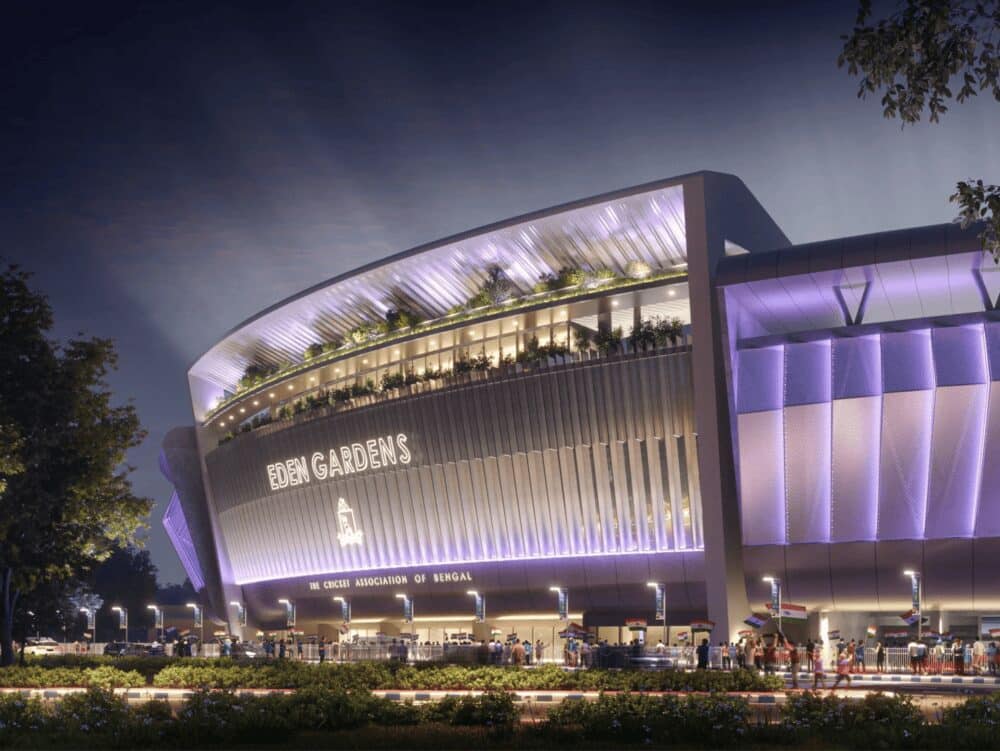
Populous has revealed plans to expand Eden Gardens cricket stadium in Kolkata, India. The project will increase capacity from 68,000 to 85,000 seats. It will introduce new hospitality zones and public areas. The upgrade aims to modernize one of the world’s largest cricket venues while respecting its urban context.
Expanding an Iconic Cricket Venue
The expansion transforms Eden Gardens into a larger and more flexible sports destination. The design adds a sky deck, corporate hospitality suites, private boxes, and lounges. Moreover, the redevelopment will deliver 41,000 square feet of hospitality areas and 44,000 square feet of non-match facilities.
The project introduces six seating categories and increases corporate hospitality capacity by 30 percent. These additions respond to evolving demands in sports architecture and large-scale buildings. Meanwhile, planners have worked within the constraints of the tight inner-city site.
Eden Gardens, built in 1864, first hosted a test match in 1934. Today, it ranks as the world’s third largest cricket stadium after venues in Ahmedabad and Melbourne. Therefore, the expansion strengthens its position among global sports towers and arenas.

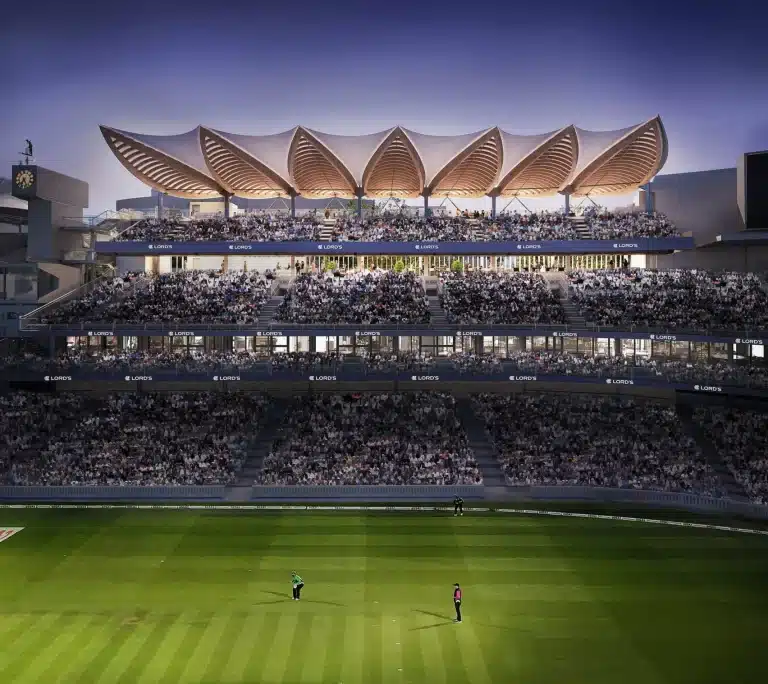
Interior view of the upgraded cricket stadium during a live match. Image © Populous
Hospitality and Fan-Centered Design
The new design prioritizes visitor experience on match days and beyond. Fan zones will serve Indian Premier League audiences. In addition, a members club and new lounges will activate the stadium throughout the year.
The venue will open more directly into the surrounding gardens. This strategy connects the stadium to broader cities and ongoing urban planning initiatives in Kolkata. Non-event spaces will host community and commercial functions, ensuring daily use.
Designers have emphasized clear sightlines and acoustic performance. Every seating tier aims to bring spectators closer to the pitch. Consequently, the redevelopment enhances atmosphere without altering the historic identity of the ground.
Construction Strategy and Sustainability Goals
The project team has planned the construction process around the dense urban location. Phased development will allow the stadium to maintain operations during upgrades. However, the tight footprint requires careful coordination of logistics and structural systems.
The scheme also integrates updated building materials and improved environmental systems. These measures support long-term sustainability targets and operational efficiency. Safety standards and crowd management strategies align with international benchmarks for contemporary sports facilities.
Meanwhile, the stadium’s renewed interior design will redefine premium seating and hospitality environments. The transformation reflects broader trends in global sports venue design, recently highlighted in industry news.
A Quick Architectural Snapshot
Project: Eden Gardens Expansion
Location: Kolkata, India
Capacity: 85,000 seats after expansion
Program: Sky deck, hospitality suites, fan zones, members club
Scale: 85,000-seat international cricket stadium
Focus: Modernization, urban integration, sustainability, year-round use
✦ ArchUp Editorial Insight
The expansion of Eden Gardens functions as a direct response to the shifting economic landscape of professional sports. Large-scale venues no longer exist solely for match-day attendance; they must now operate as 365-day revenue generators to justify their footprint in dense urban centers. The decision to prioritize corporate hospitality and non-match day facilities reflects a broader pressure to monetize underutilized real estate within historic stadium boundaries. In cities where land is scarce, vertical expansion and the intensification of existing sites become the primary method for maintaining global competitiveness. This redevelopment signals a shift where the stadium transitions from a civic landmark into a commercial hub designed to capture diverse spending streams. This project is the logical outcome of increasing fan density requirements, the demand for premium hospitality tiers, and the necessity for year-round asset activation.