
Onda: Rethinking Space in Multi-Level Tiny Homes

The Shift Away from the Traditional Pattern in Tiny Homes
Most tiny homes follow a repetitive model based on a conventional spatial distribution, where the sleeping area is placed on an upper level and the kitchen below. In contrast, the Onda model, as a case study, presents a different approach that relies on completely inverting this arrangement. This direction falls within attempts to rethink the organization of spaces within limited areas, moving away from common templates.
Reallocation of Functions Between Levels
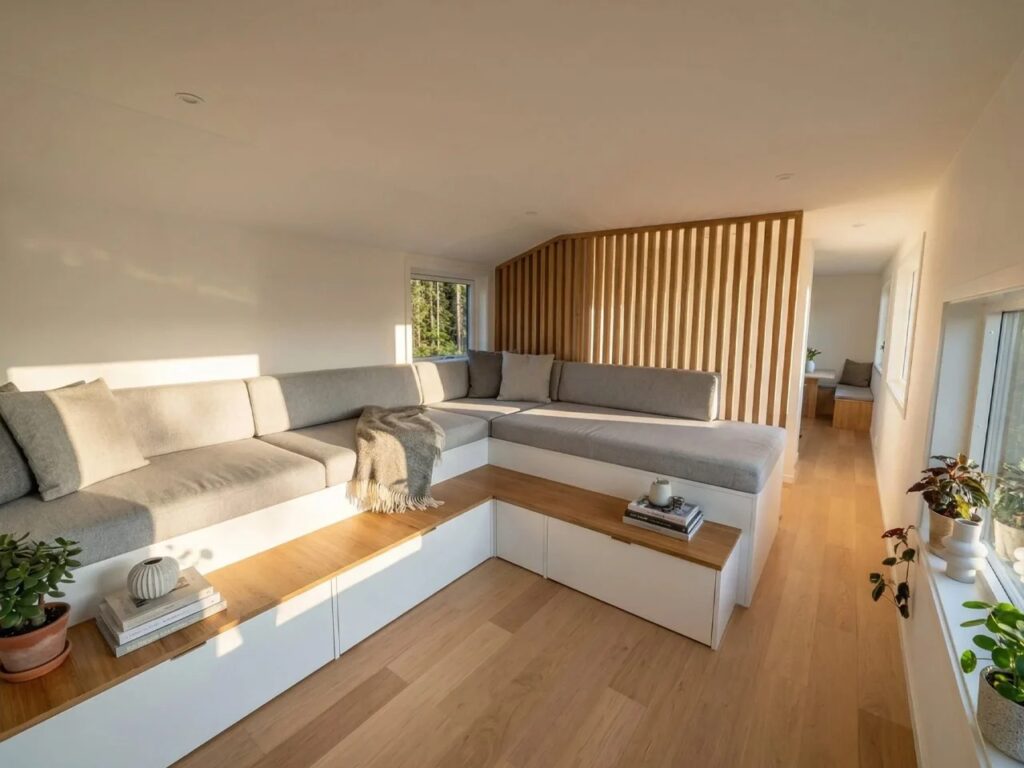
The design is based on moving the bedrooms to the ground floor, while the upper levels are dedicated to shared activities such as living and cooking. This distribution reflects a clear separation between private and public functions, where daily uses are grouped on a single open level, while sleeping areas are isolated on a quieter level.
Logic of Movement and Spatial Connectivity
Through this study, a more defined movement sequence emerges between the two levels, as the user naturally transitions from private to public spaces. This organization also contributes to a more coherent visual and functional connection, while maintaining the simplicity of the core idea without complexity in the overall composition.
Dimensions and Overall Structure
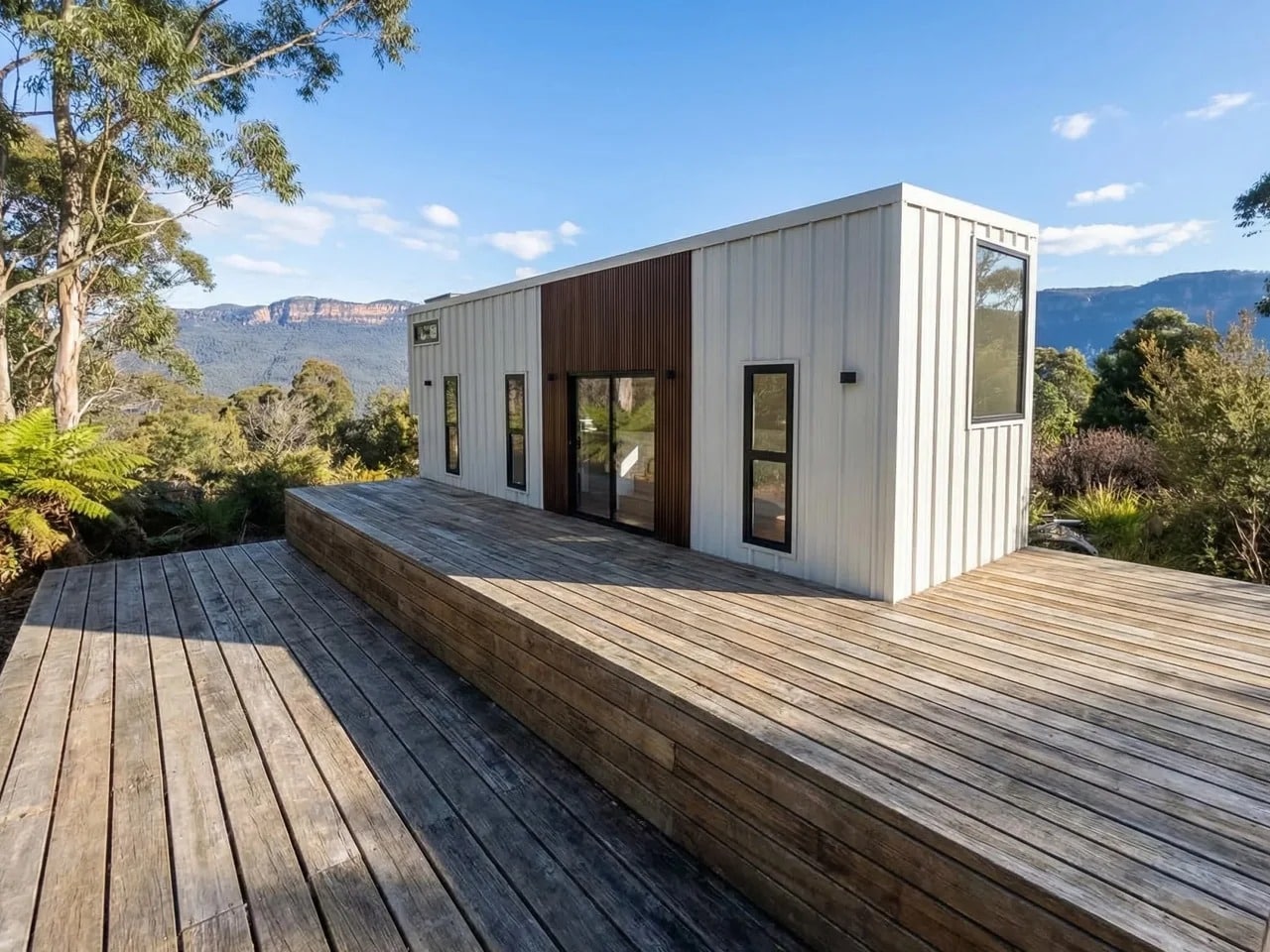
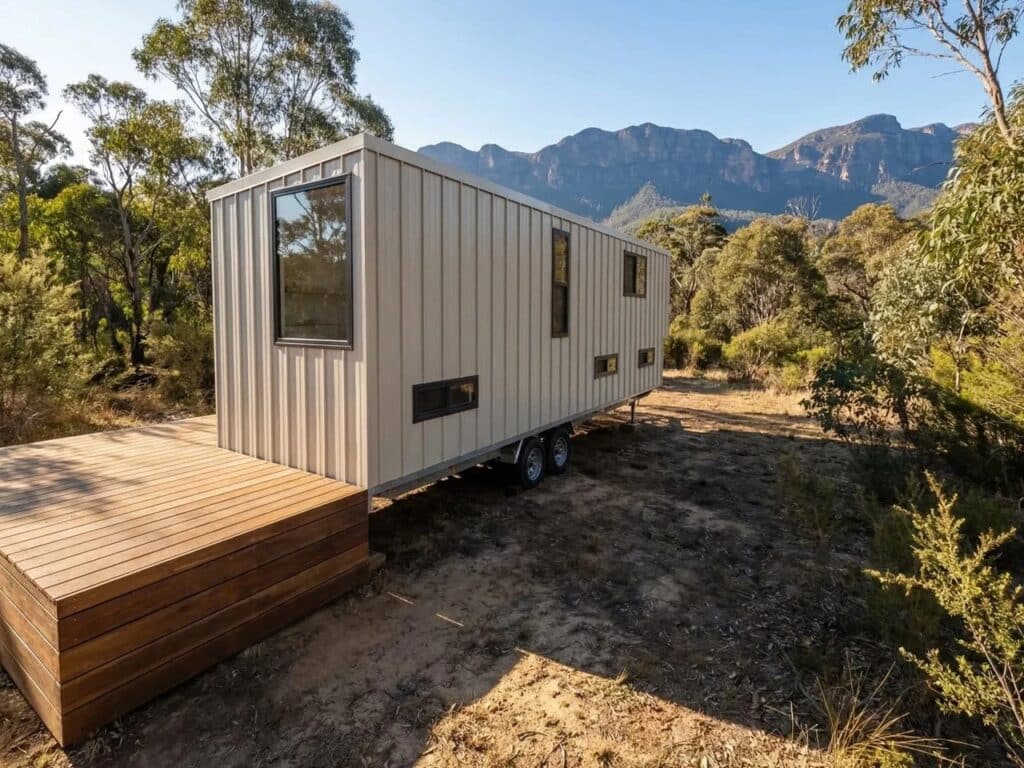
The house is built on a dual-axle trailer, using a steel-clad finish supported by wooden elements to achieve a visual balance that softens the industrial character. Its dimensions are approximately 10 meters in length, 3.4 meters in width, and 4.5 meters in height, measurements that are closer to conventional apartment-scale living than traditional tiny home approach models. In addition, the option of adding an external deck expands the usable area, allowing living activities to extend outdoors when weather conditions are suitable.
Upper Floor Configuration
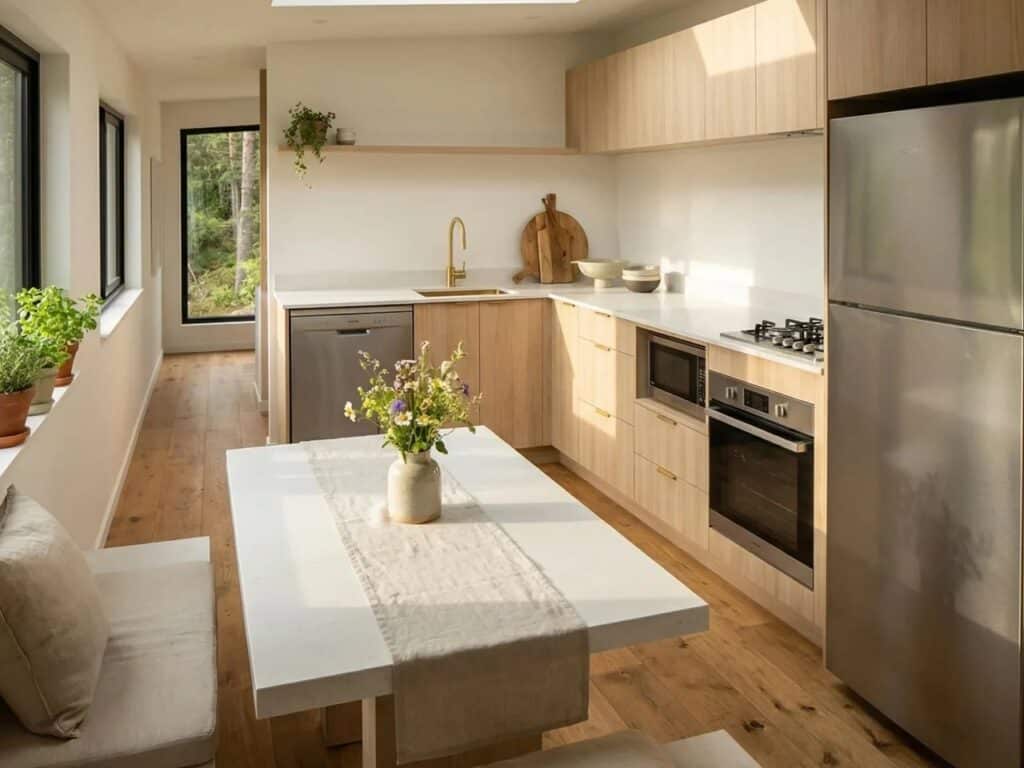
The upper level is dedicated to daily functions, featuring a fully equipped kitchen with complete fittings, including worktops and storage cabinets, without compromising essential elements. It connects directly to the living space, which relies on natural lighting from skylight windows, enhancing the sense of openness within the limited spaces volume.
Treatment of Service Spaces
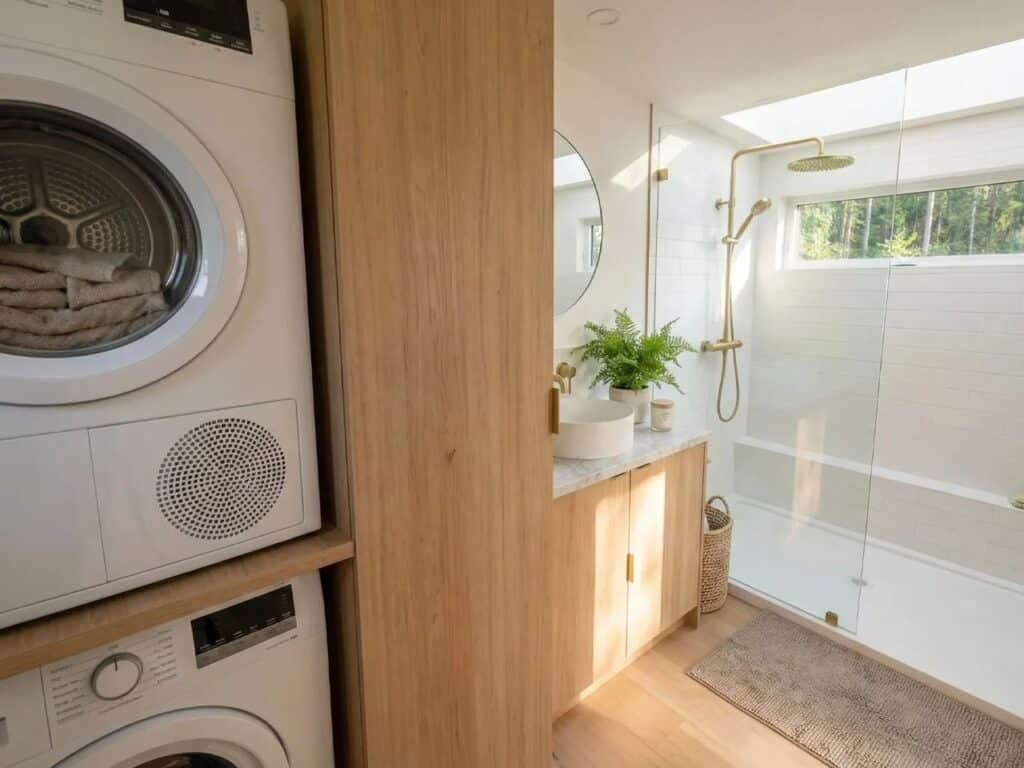
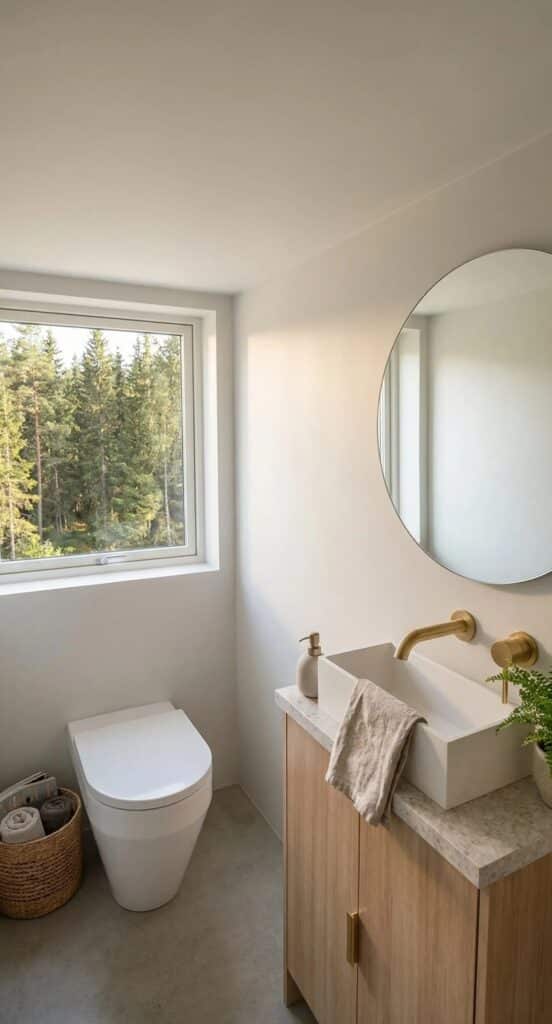
The bathroom Design reflects an efficiency-driven approach to spatial use, integrating multiple functions within a single organized zone. The space includes a central sink, a glass-enclosed shower positioned beneath a skylight opening, as well as a toilet and combined storage and laundry units. This configuration creates a fully functional environment while maintaining clarity in the internal composition.
Redefining Private Spaces
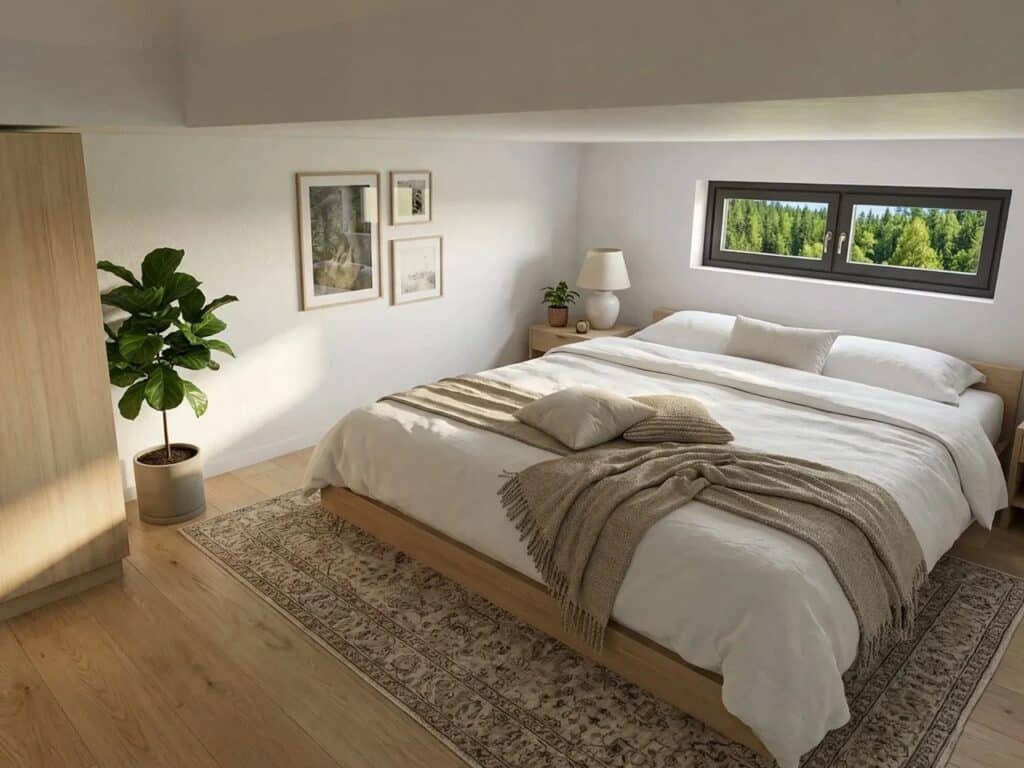
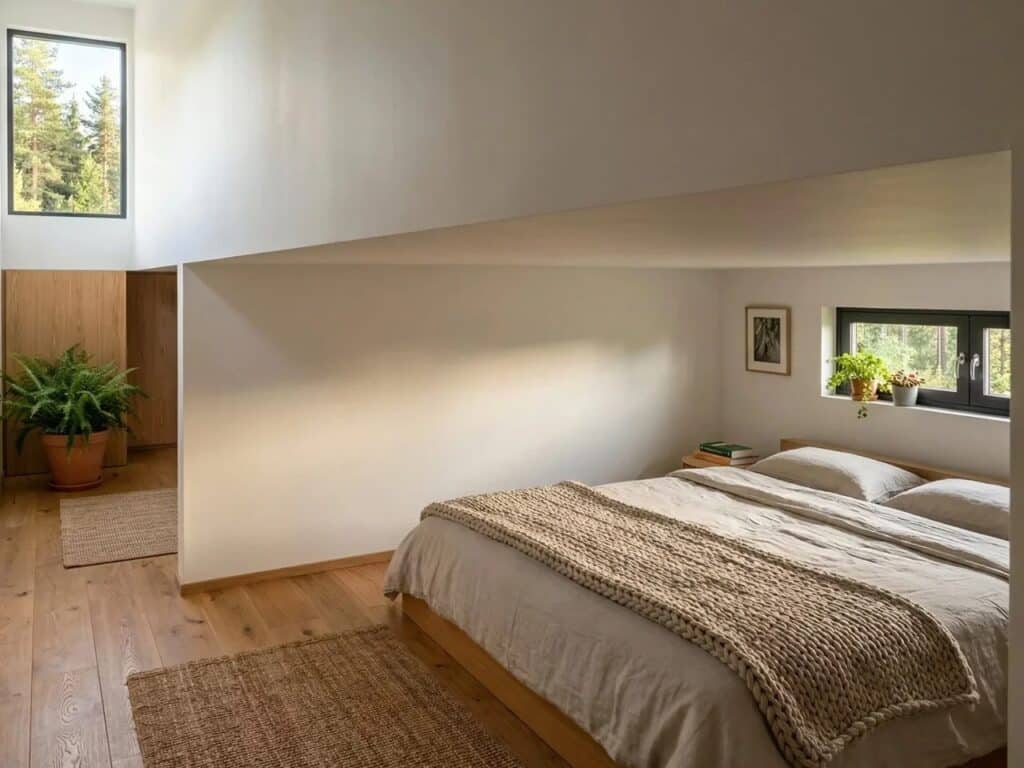
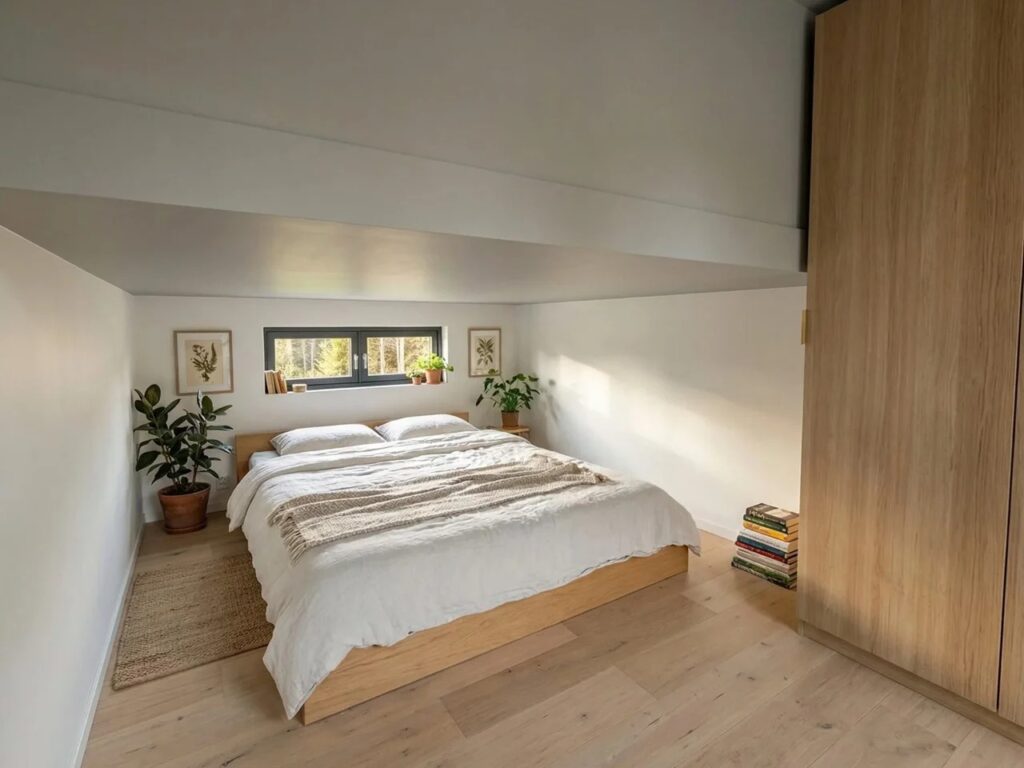
The distribution of the three bedrooms on the ground floor offers a different level of privacy compared to traditional models that rely on shared upper-level level spaces. This shift enhances the sense of independence within the residential unit, making it closer to the needs of families rather than functioning as a temporary or limited-use solution. In this way, the model moves from an experimental idea to a viable option within a more complex residential context.
Customization as a Design Flexibility Tool
The available customization options highlight an important role in adapting the dwelling to different conditions, whether through the redistribution of openings to achieve better lighting and ventilation, or through this organization approach that allows flexibility without altering the core structure. This reflects a design mindset focused on adaptability, responding to site variables and usage patterns.
A Reading of Value Versus Space
Within this category, pricing emerges as a point of discussion linked to the unit’s size and functional layout, especially with its inclusion of three bedrooms and two bathrooms. Compared to conventional housing solutions, this proposition can be understood in the context of seeking alternatives that offer higher efficiency in space utilization, while maintaining an acceptable level of comfort and internal organization.
✦ ArchUp Editorial Insight
The Onda house can be read as a direct outcome of housing market pressure and the transformation of compact living into a priced real estate asset, governed by the logic of maximizing return per square meter in Australian suburbs. The driving force emerges from rising entry costs into the residential market and the increasing reliance on “luxury tiny home” models as a financial solution rather than an architectural one. Regulatory constraints are reflected in transportation requirements on a dual-axle trailer, road dimension limits, and building code divisions between wet and dry spaces, in addition to off-grid capability options as mechanisms for risk reduction. The final configuration represents a negotiation among these pressures through a vertical inversion of functional distribution, creating a strict separation between modes of occupancy and transforming the dwelling into a modular construct shaped more by financing and standardization logic than by an independent design decision.

★ ArchUp Technical Analysis
Technical and Documentary Analysis of the Onda Project – Australia:
This article presents an architectural analysis of the Onda project as a case study in reformulating the distribution of functions in multi-level tiny homes. To enhance its archival value, we would like to present the following key technical and design data.
The home is built on a tandem-axle trailer, with a steel finish complemented by wooden elements, measuring approximately 10 meters in length, 3.4 meters in width, and 4.5 meters in height. The design employs an inverted distribution of functions: relocating the bedrooms (three rooms) to the ground floor with two bathrooms, while dedicating the upper level to daily functions (a full kitchen with complete appliances, a living space, with natural lighting from skylights).
The ground floor includes a master bedroom and two additional bedrooms, along with a bathroom featuring a central basin and a glass shower beneath a roof opening, plus a toilet, storage units, and laundry. An optional external deck is available to expand the usable area, with customization options including reconfiguring openings for better light and ventilation, and preparing the unit for off-grid operation.
Related Insight: Please refer to this article to understand the context of modern architectural preservation:
Multi-Level Tiny Homes: Vertical Distribution Strategies for Functions.




✅ Official ArchUp Technical Review completed for this article.