Einstein Tower: Mass, Light & Time in Expressionist Architecture

Sculptural Expressionism and Mass Kinetics
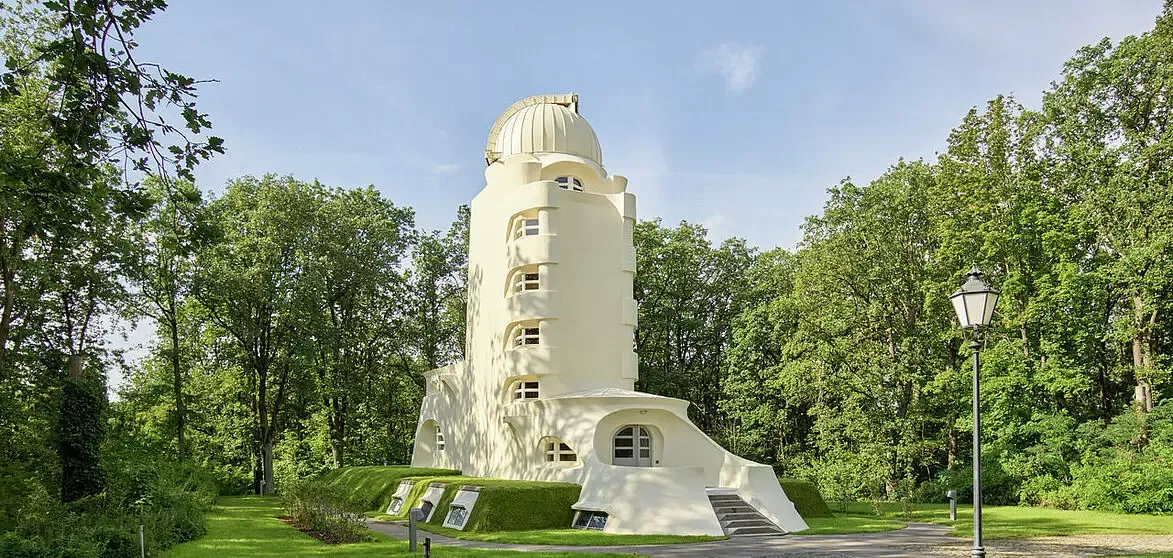
The tower transcends its role as a mere physical shell for a scientific instrument, becoming a spatial embodiment of an intellectual context that coincided with the evolution of concepts of time and space in the early twentieth century. Expressionist architecture is manifested in fluid surfaces and sculptural massing that suggest continuous motion despite the material’s physical stillness. Structural constraints of the period imposed a hybrid system of brick and plaster with limited concrete elements; however, the unified surface treatment successfully reduced the visibility of this contrast, presenting the mass as a single visual entity closer to a geological formation emerging from the earth.
Spatial Scenography and Human Experience
The building experience begins at the moment of approach, where architectural curves guide the visitor’s movement and visual perception gradually toward the interior. Natural light interacts with the mass through carefully calibrated facades, where illumination is not limited to the scientific requirements of observation but contributes to continuous shadow shifts that reflect the rhythm of time within the space. This interaction extends to the lower levels of the building, where laboratories integrate with the overall structural logic, placing the user within an environment that merges scientific function with a structured sensory perception of space.


Spatial Dynamics and Deconstruction of Mass
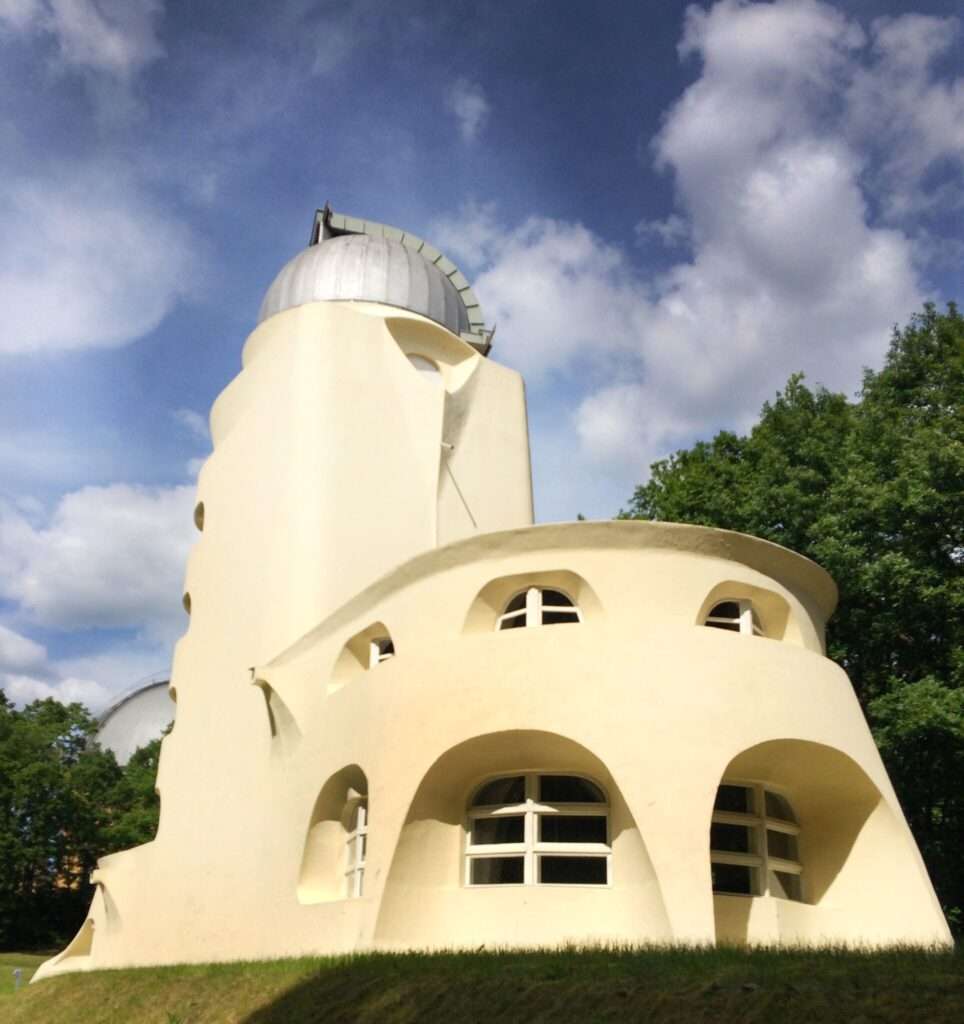
Expressionist architecture here redefines mass as a non-static structure, where horizontal bands and continuous curvatures produce a visual sense of motion despite the stability of form. Although the initial concept relied on a more homogeneous concrete structure, technical shifts during execution resulted in a composite system of brick, plaster, and concrete. Nevertheless, the visual unification of facades reduced the impact of this material plurality, transforming the building into a visual medium that expresses notions of movement and temporal change more than serving as a purely functional structure.
Material Scenography and Human Experience
The internal experience is defined through a gradual transition from exterior to interior, where the user perceives movement as governed by a curved space that embraces their path. Spatial perception continuously shifts due to the interaction of light with curved surfaces, producing dynamic shadow effects that reinforce a sense of temporal fluidity. Thus, the space becomes an organized perceptual system linking the scientific function of the building with the user’s sensory experience without excessive descriptive embellishment.
Latent Energy and Material Transformations
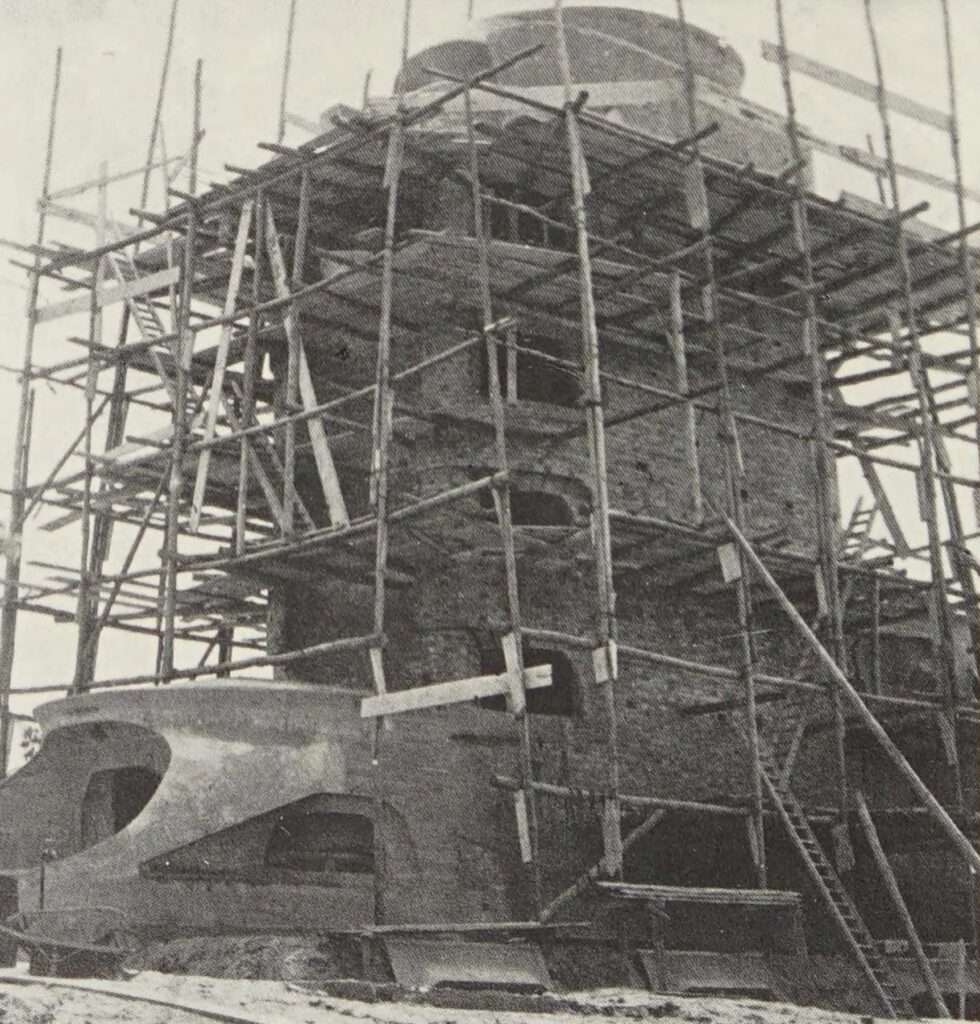
The project reflects a tendency to transcend strict geometric forms in favor of an expressive language based on motion and transformation. Concrete was initially used as a medium to achieve a unified mass; however, technical limitations in Potsdam during the 1920s led to a composite structural system of brick covered with plaster. This shift was not merely formal but later generated material challenges such as moisture and cracking, placing the building in a continuous state of interaction with time through its material layers.
Passage Experience and Physical Scenography
Spatial perception relies on a sensory passage experience that gradually reveals the nature of the curved mass. Fluid surfaces evoke a sense of organic growth, while solar movement and wind continuously reshape shadows across the facades throughout the day. The result is a perceptually variable space that merges scientific function with sensory experience, redefining the relationship between user and building as a unified system interacting with light and time.
Technical Calibration and the Philosophy of the Spatial Machine
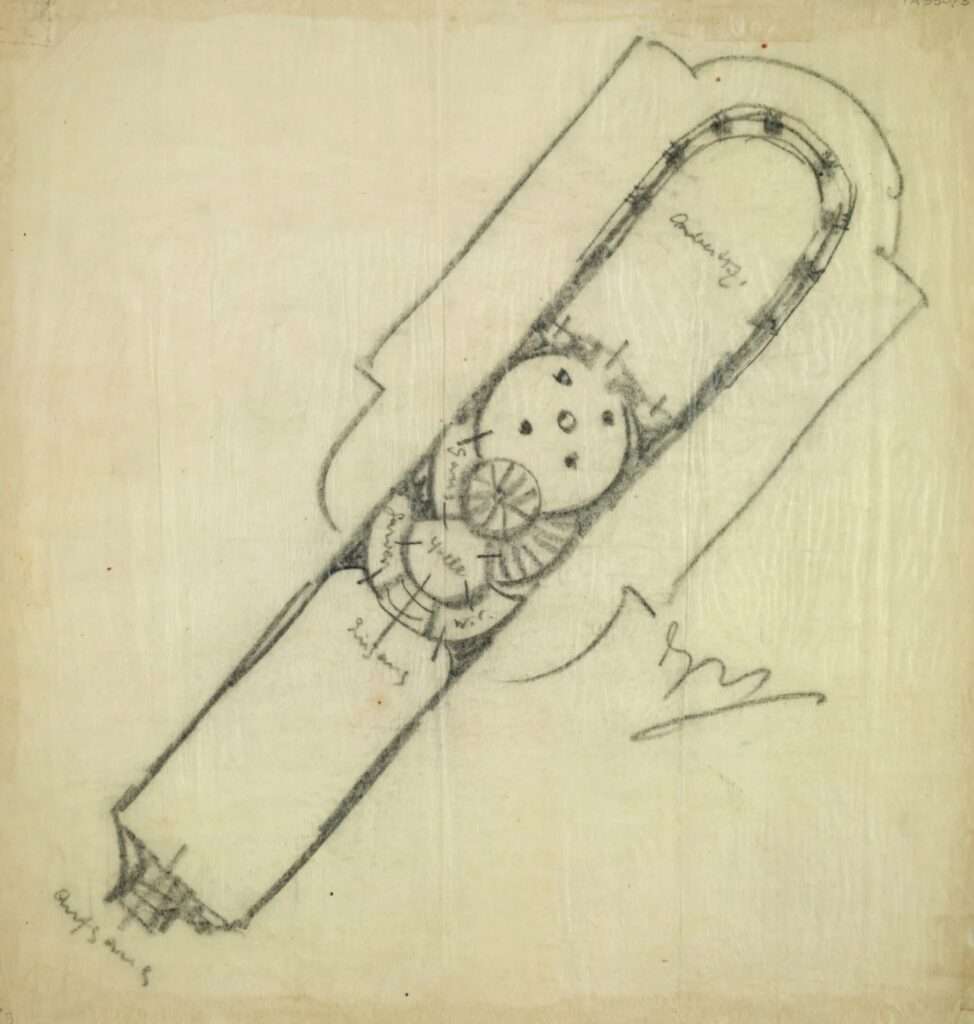
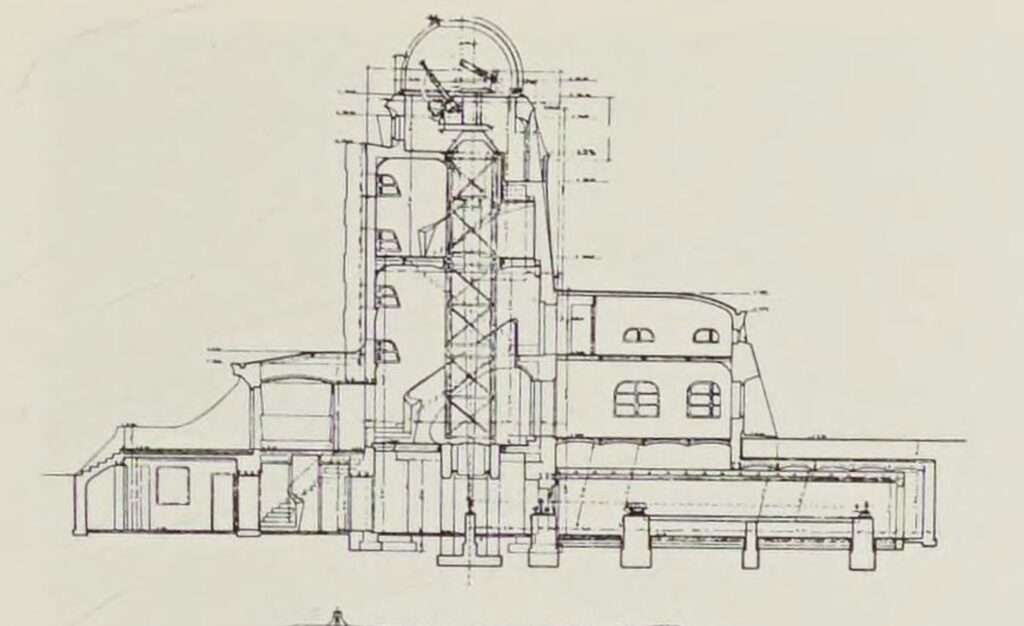
The building here transforms from an architectural shell into a visual-scientific system reflecting the relationship between light and spatial structure. Solar rays are directed through mirrors at the top of the tower into its vertical shaft, forming an organized light path that connects sky and ground. This arrangement functions not only as abstract symbolism but as part of an operational logic tied to observational and analytical mechanisms within the building, particularly the spectral analysis laboratory located in the earthbound mass. Thus, structural and scientific dimensions integrate, making space itself an organizational medium for observational practice.
Temporal Passage and Physical Scenography of Matter
The building treats time as a readable material layer, having undergone structural changes and damage associated with World War II, moisture, and material aging. Restoration efforts, particularly between 1997 and 1999, re-stabilized the formal identity of the facade while preserving the original character of the mass. Moving through the space, the user perceives that matter is not static but continuously reconfigured between preservation and decay, giving the building a layered historical condition that connects multiple temporal moments within a single structure.
Functional Paradox and Formal Differentiation
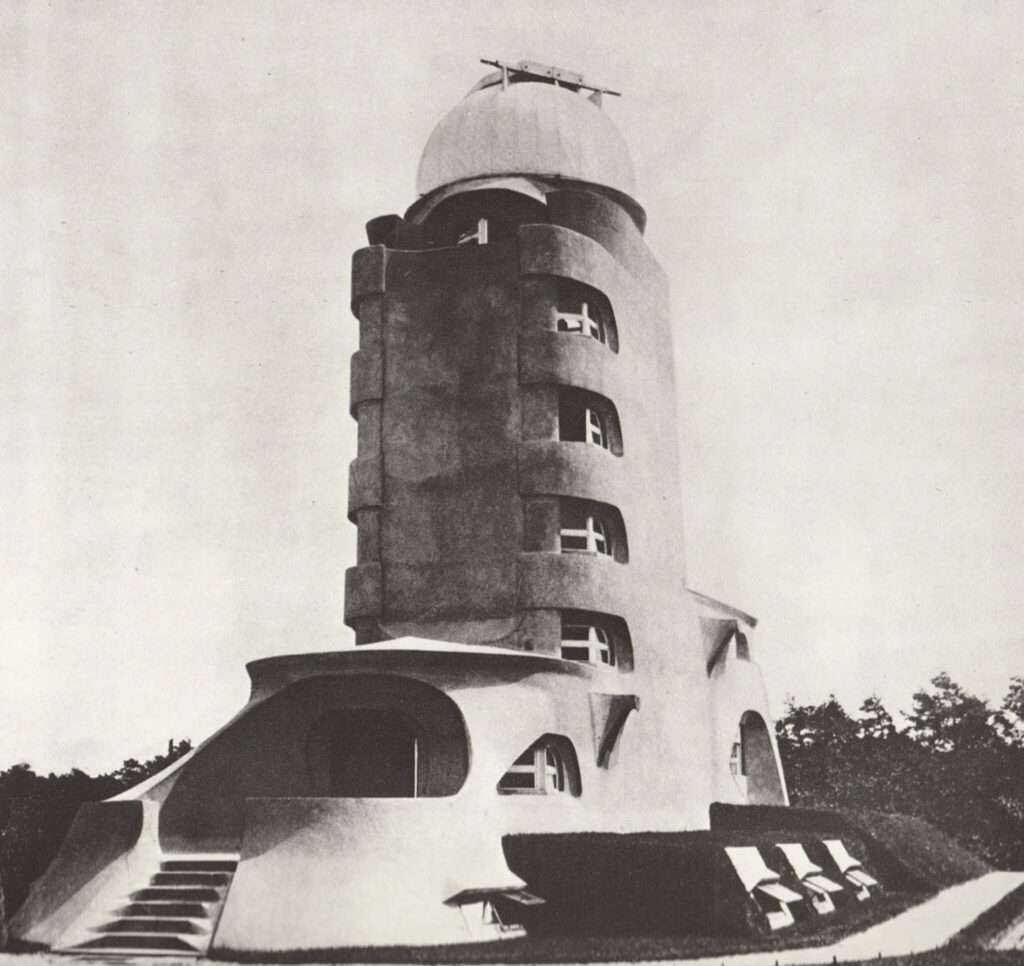
The tower maintains its function as a solar observatory affiliated with the Leibniz Institute for Astrophysics in Potsdam, continuing to serve as a testing platform for modern scientific instruments. Its architectural significance lies in being a model outside the trajectory of mainstream modern architecture, which later moved toward geometric rigor and international style. In contrast, this building preserves its fluid language and sculptural massing, reasserting the relationship between form and function as a nonlinear one, where formal experimentation can serve scientific purpose without contradiction.
Spatial Vitality and Contemporary Scenographic Experience
The building offers a dynamic perceptual experience based on the interaction of light with architectural curves, producing a visual system that shifts with time and seasonal variation. This interaction is not limited to aesthetics but affects the user’s perception of spatial movement itself, where scientific observation functions overlap with the sensory experience of place. The tower thus becomes an integrated environment that merges scientific performance with architectural experience, without separation between function and structure or between technique and perception.

✦ ArchUp Editorial Insight
The Einstein Tower is reframed as a visual-scientific interface that transforms solar light into measurable motion, where expressive massing intersects with the logic of astronomical observation. Curves, brick, and plaster are not merely structural solutions but a material translation of the idea of light as moving time. In this sense, the building becomes a mediator between science and sculptural form within a field based on continuous observation.
However, readings that prioritize visual harmony overlook the fragility of the material structure and its dependence on costly maintenance cycles caused by moisture and layer degradation. Here, the building appears as a technical artifact bound to temporal constraints rather than a pure formal statement. In contrast, contemporary observatories rely on lightweight systems, precise computation, and advanced materials that reduce dependence on heavy massing, making the expressive character closer to a historical archive than a sustainable model within a shifting technological context.