Do Not Disturb: At EquipHotel 2026, Privacy Becomes the Exhibit

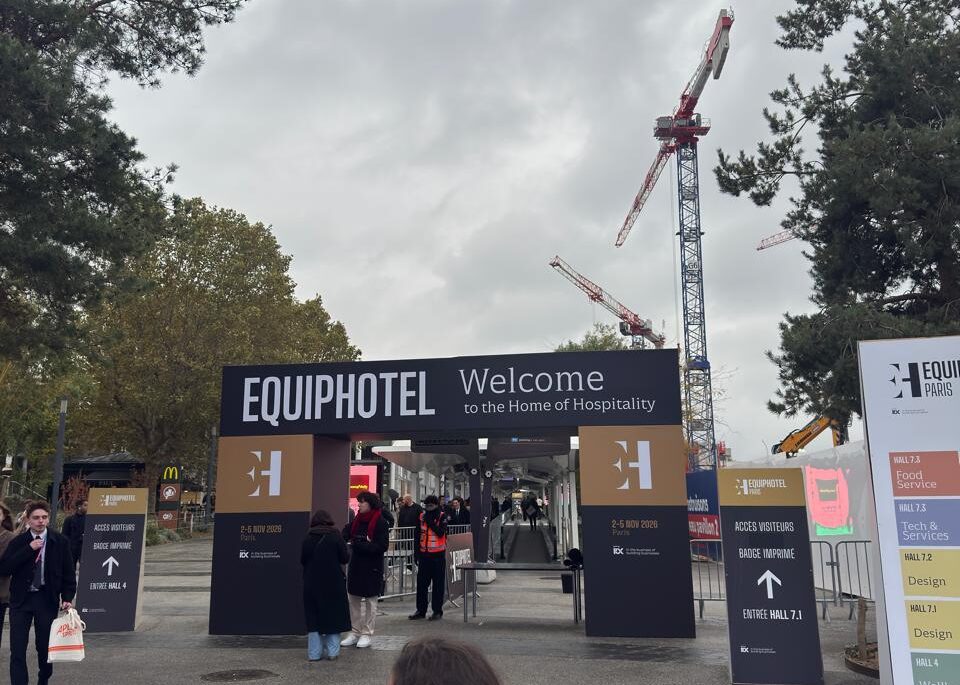
On 2 November 2026 the doors of Paris Expo Porte de Versailles opened on EquipHotel, the international hospitality salon that returns to the French capital every two years and runs this time until 5 November. The edition carries a single idea across its halls, “plural hospitality,” and nowhere is that idea stated more quietly, or more deliberately, than in a small exhibition set apart from the noise of the stands. Its title is an instruction every traveller already knows by heart: Do Not Disturb.
The premise is almost contrarian for a trade fair, an environment built on attention, footfall and display. The exhibition proposes the opposite as the luxury worth talking about now: privacy. In an age of permanent exposure, shared location and machines that listen, it argues that the rarest thing a room can still offer is the right to be left alone. The claim is easy to make and hard to stage, and the show stakes it on the most overlooked object in the building, the card that hangs on a door handle.
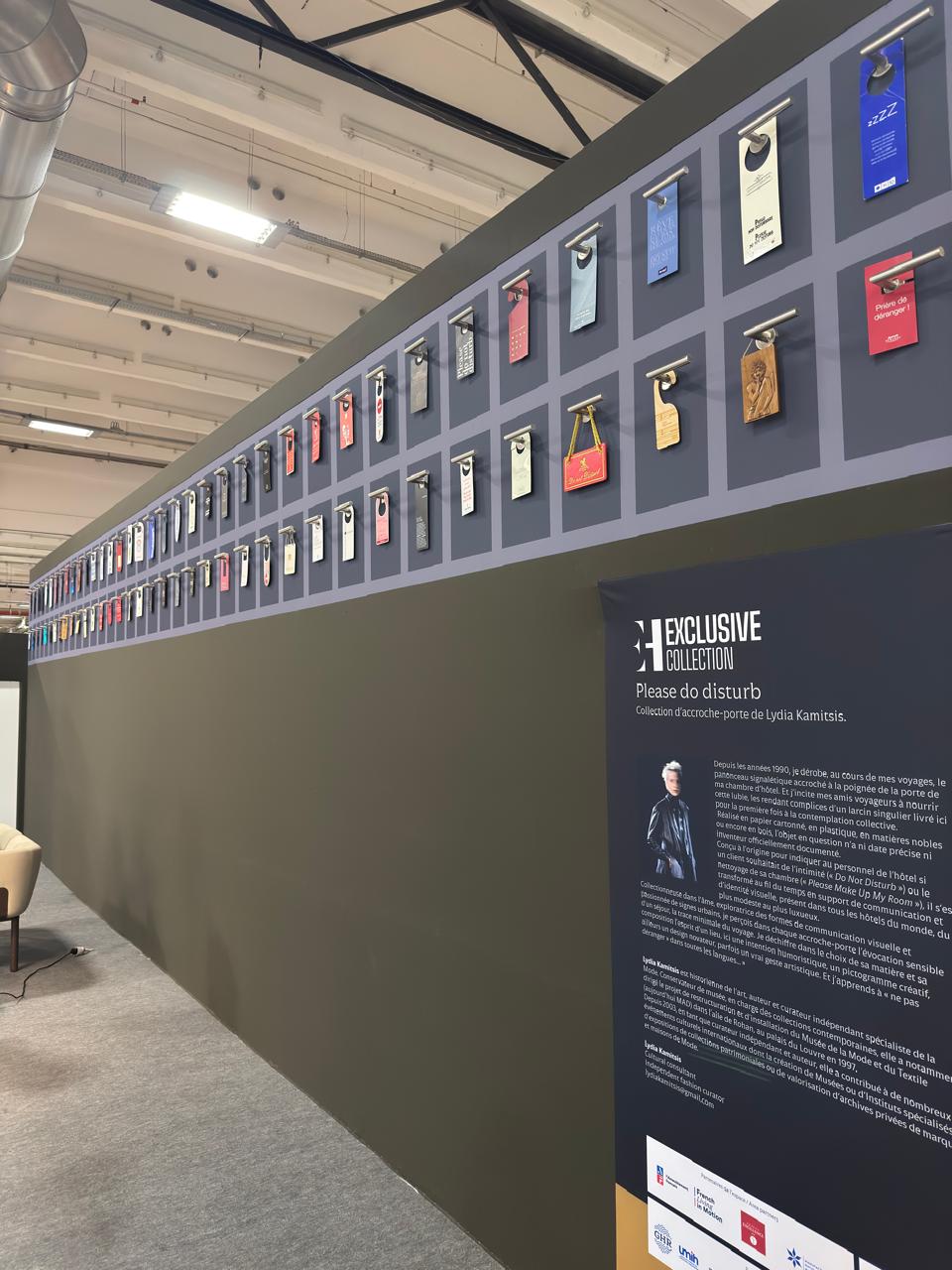
Two hundred ways to say “leave me alone”
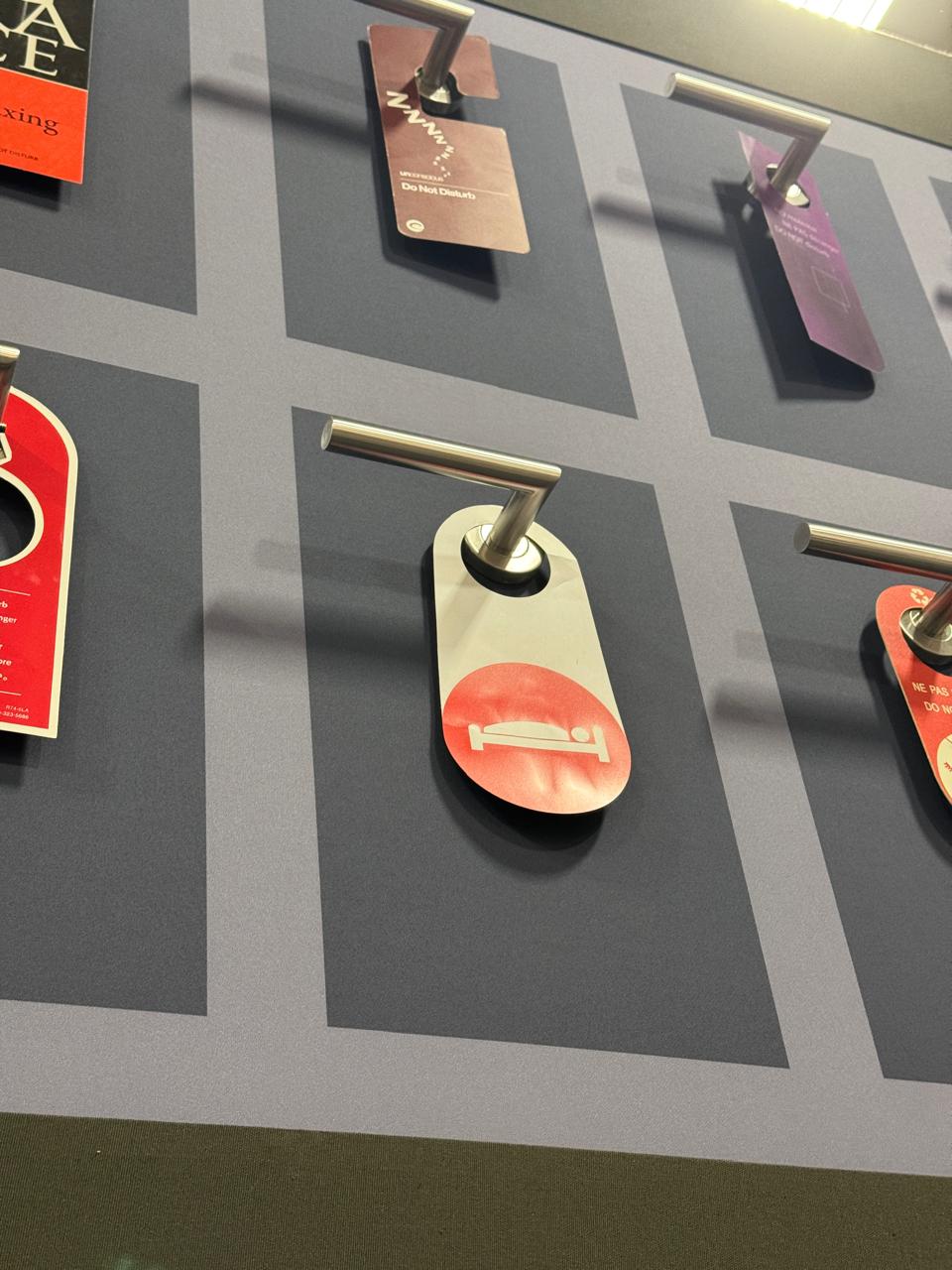
The centre of the exhibition is a wall of roughly two hundred door hangers, each one a genuine “Do Not Disturb” sign lifted from a real hotel room somewhere in the world over the course of years of travel. Gathered in one place, they stop being hotel stationery and become something closer to an archive. Card, plastic, wood, embossed paper, a line of cord: the same four-word request appears in dozens of languages and almost as many design decisions, and the differences are the point.
Read as a group, the collection is a quiet study in visual communication. Each hanger compresses an entire establishment into a single gesture, a typeface, a joke, a pictogram, a material. A thick stock and a restrained mark say one thing about a house; a cartoon and a bright colour say another. The object was designed for the plainest of purposes, to tell a member of staff whether to enter or stay out, and it has drifted, almost without anyone deciding so, into a carrier of identity. Standing in front of two hundred of them at once, a visitor reads less a set of instructions than a map of how the world imagines rest.
There is a second reading available to anyone who has lived out of a suitcase. The door hanger is the smallest possible trace of a stay, the one disposable thing a guest actually controls. To collect it is to keep the residue of a journey after the room, the city and the trip itself have been forgotten. The wall works because it treats a throwaway as evidence, and asks the viewer to take it as seriously as the architecture around it.
From the smallest object to the whole room
Around this wall the exhibition widens its scale. Alongside the collection, a group of designers and architects were each given a free hand to reinterpret a single intimate space of a hospitality venue, a bedroom, a lounge, a bathroom, a patio, the kinds of rooms a guest retreats into rather than performs in. Presented together, and produced in partnership with France’s national furniture institution, the rooms read as variations on one brief: what does privacy look like when it is designed on purpose rather than left to a sign on the door.
Seen with an architect’s eye, the sequence is more coherent than most fair installations. It moves from the two-hundred-piece wall, where privacy is a request printed by someone else, to a set of rooms where privacy is a spatial decision, light held low, a threshold thickened, a view framed or withheld. The exhibition does not resolve the tension between the two, and it is better for leaving it open. A trade show is the least private place imaginable, and there is something honest in watching an industry that sells exposure try, for a few square metres, to design its opposite.
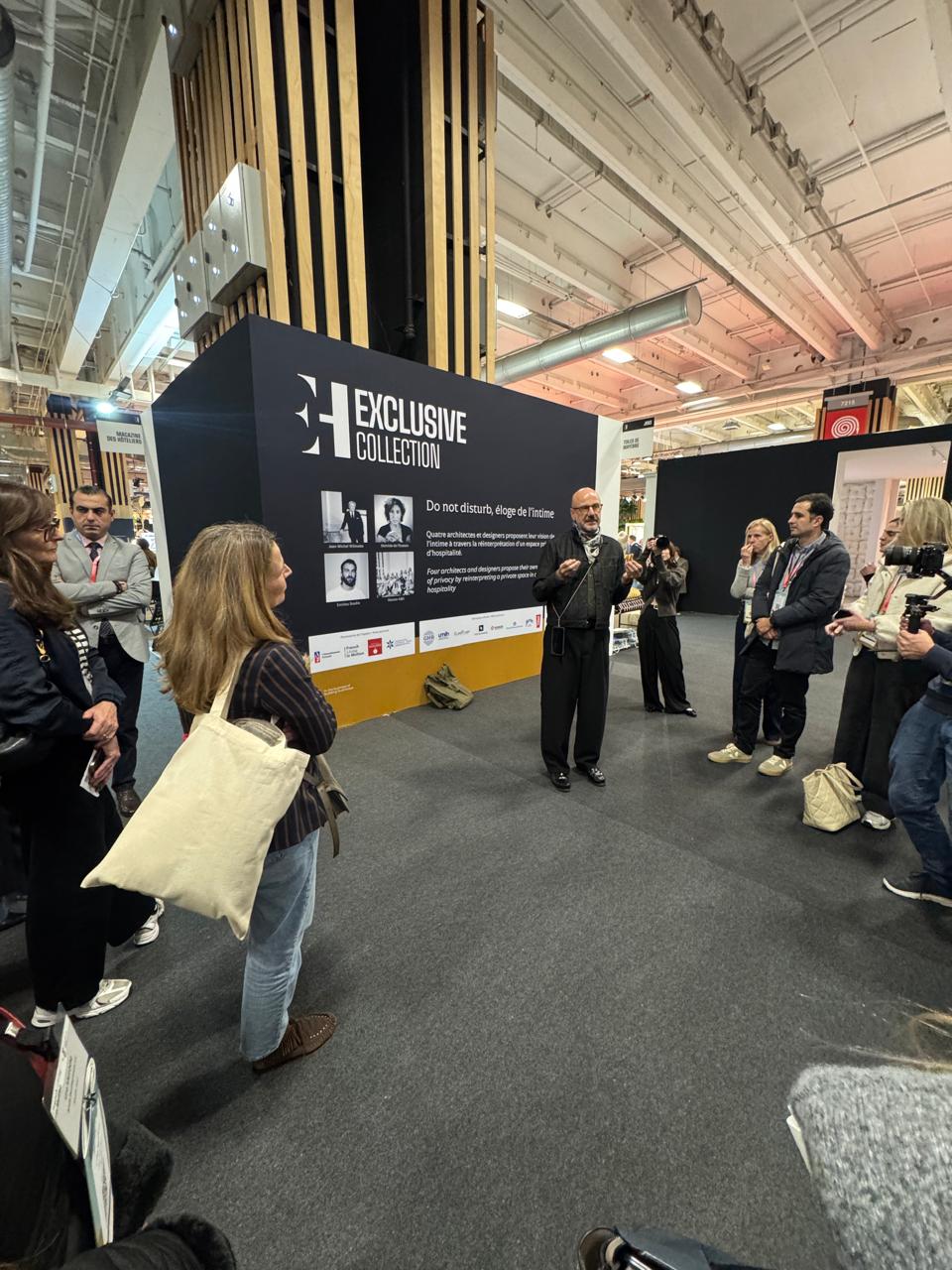
What the show finally offers is not a product but a question for the people who commission and build hotels. If intimacy is now the asset, it will not be delivered by a thicker door or a quieter corridor alone; it is a matter of how a space is organised and what it chooses not to reveal. The humblest object in the exhibition, two words on a piece of card, states the ambition more plainly than any rendering. The rooms behind it are the industry’s attempt to answer. EquipHotel runs at Paris Expo Porte de Versailles until 5 November 2026.