Estero Residences: Redefining Public and Private Space

Urban Overlap and Spatial Scenography
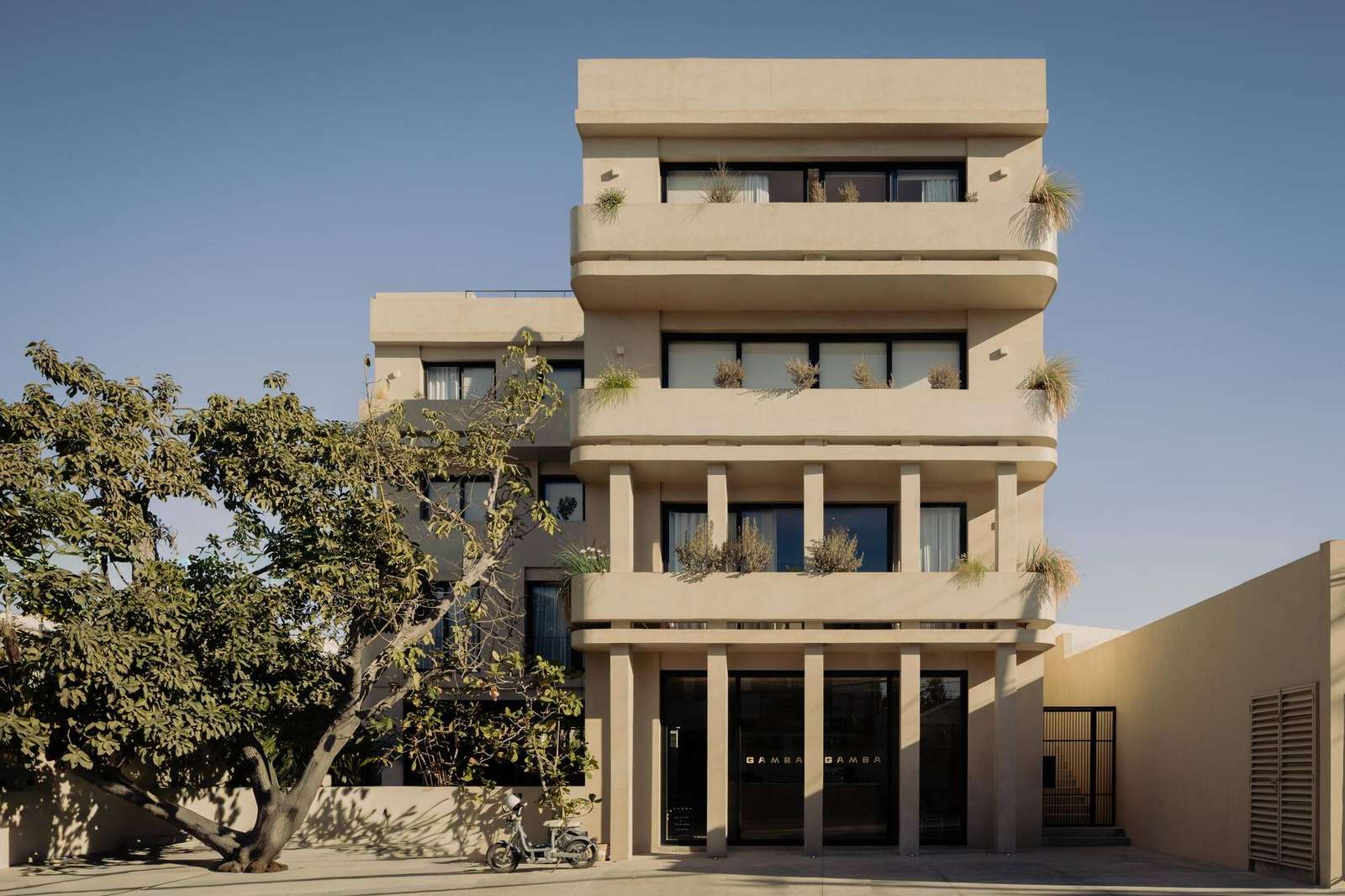
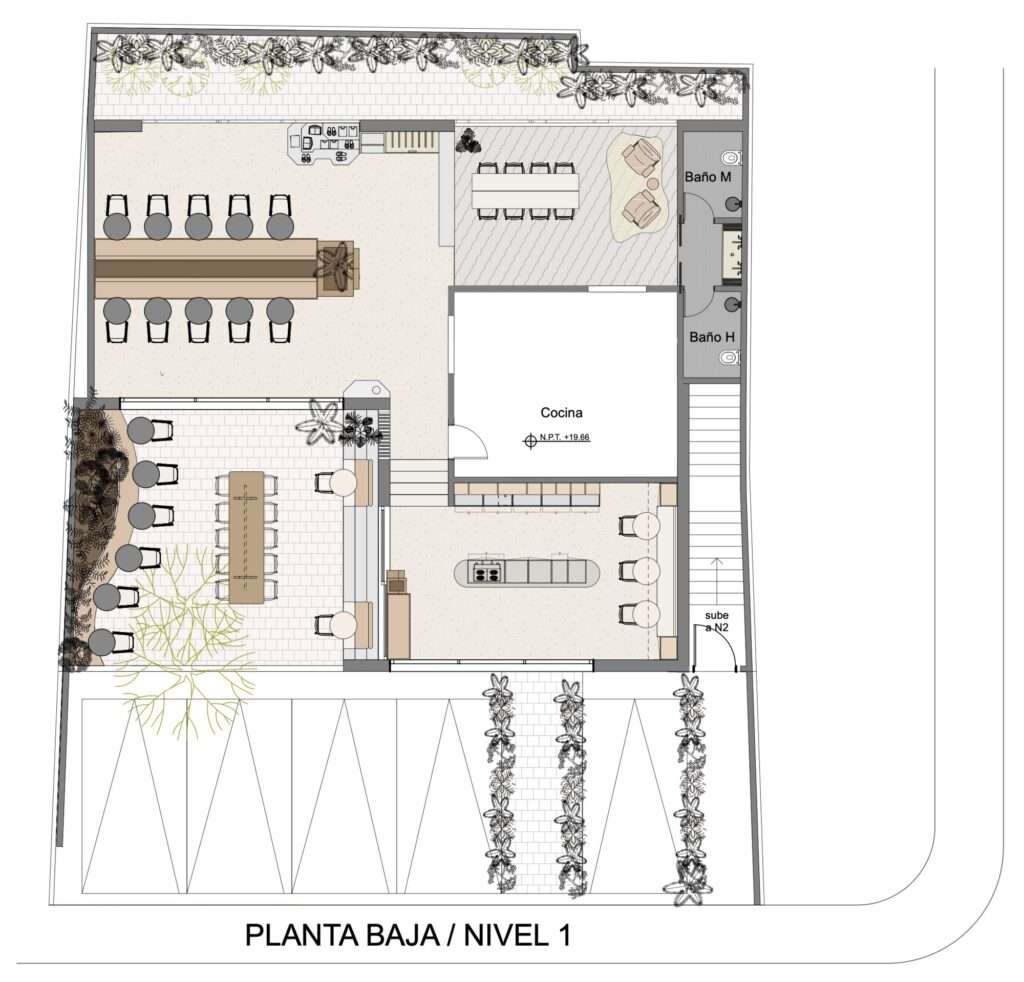
The project transcends the notion of an isolated residential mass, proposing instead an open architectural structure that engages with the historic fabric of San José del Cabo. The design concept centers on creating a transitional void that connects the public realm with the residential domain, where the ground floor operates as an active urban frontage hosting Gamba Café and its associated commercial activities. The sequence of movement is constructed through a spatial gradation that softens the traditional boundaries between interior and exterior, reinforcing the project’s presence within the everyday life of the city rather than its separation from it.
Spatial Experience and Climatic Response
The spatial configuration relies on the use of shadows and open voids as organizational elements that directly respond to local climatic conditions. Circulation routes and shared facilities are oriented to allow natural airflow and reduce dependence on mechanical systems, while concrete volumes and local materials regulate the relationship between light and heat. This produces a spatial environment that transforms throughout the day under the movement of the sun and the shifting of shadows, strengthening the architectural form’s connection to site-specific and climatic characteristics.

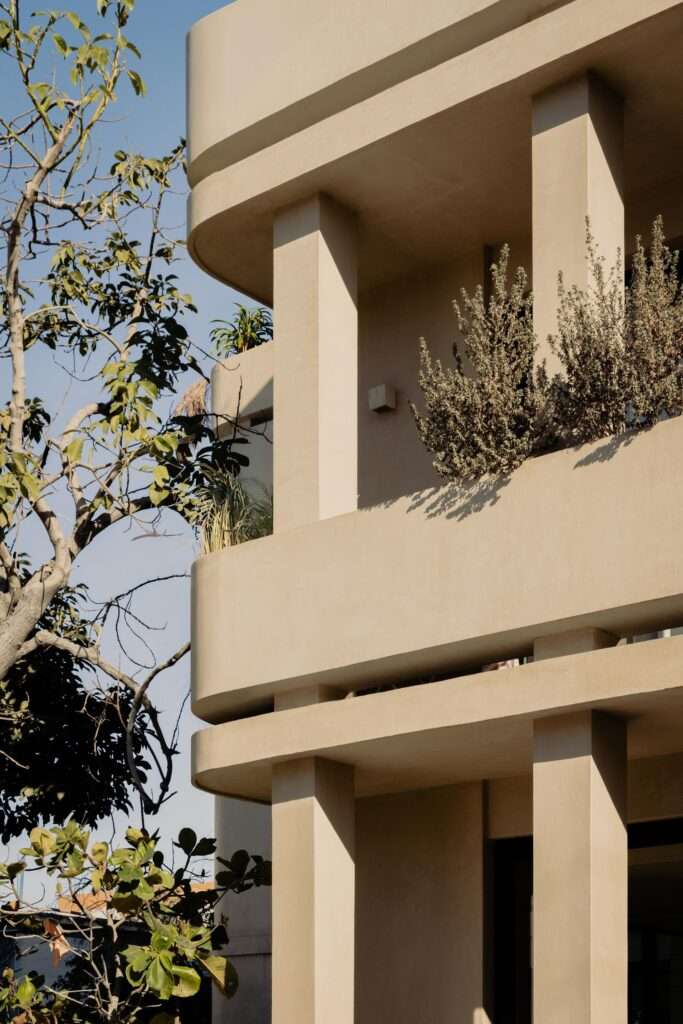
Massing Formation and Privacy Gradation
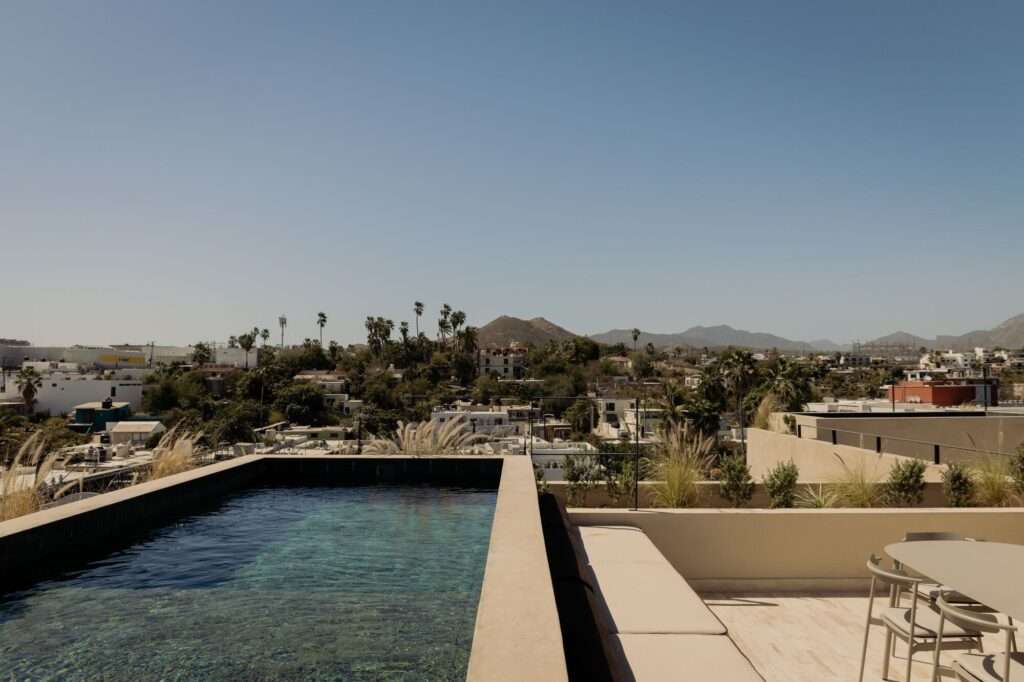
The design addresses the site’s spatial constraints through a vertical organization that separates public activities from residential functions within a stepped massing. While Gamba Café establishes an active urban base at street level, the six residential units are distributed across the upper levels following a sequence that ensures increasing degrees of privacy. This progression culminates in the penthouse and shared rooftop terrace, where views open toward the city, the mountains, and the surrounding estuarine landscape.
Materiality and Desert Scenography
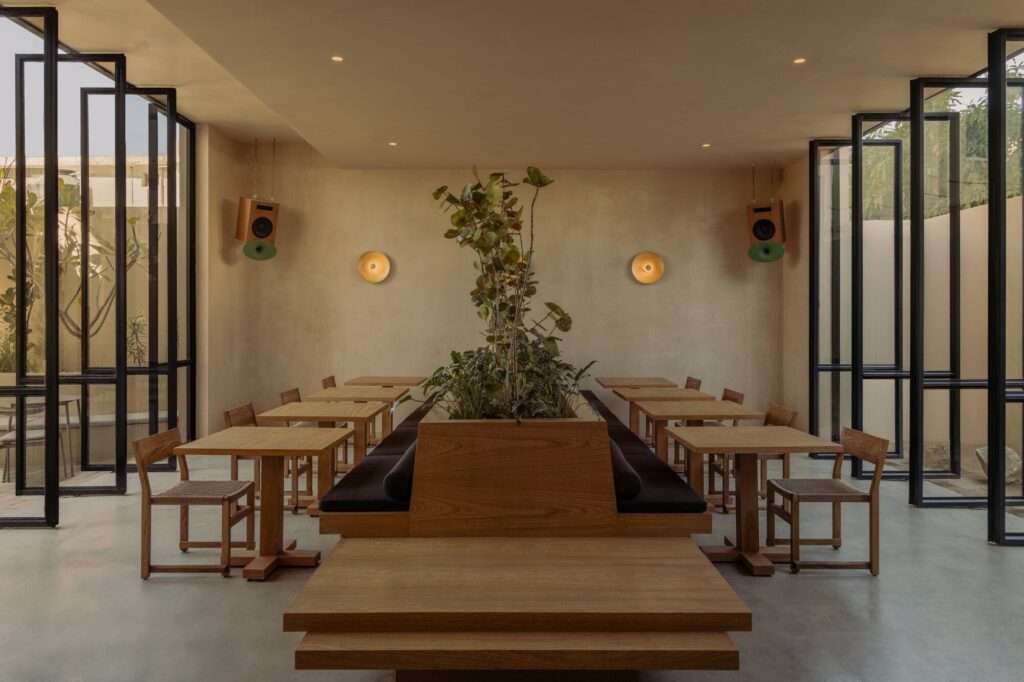
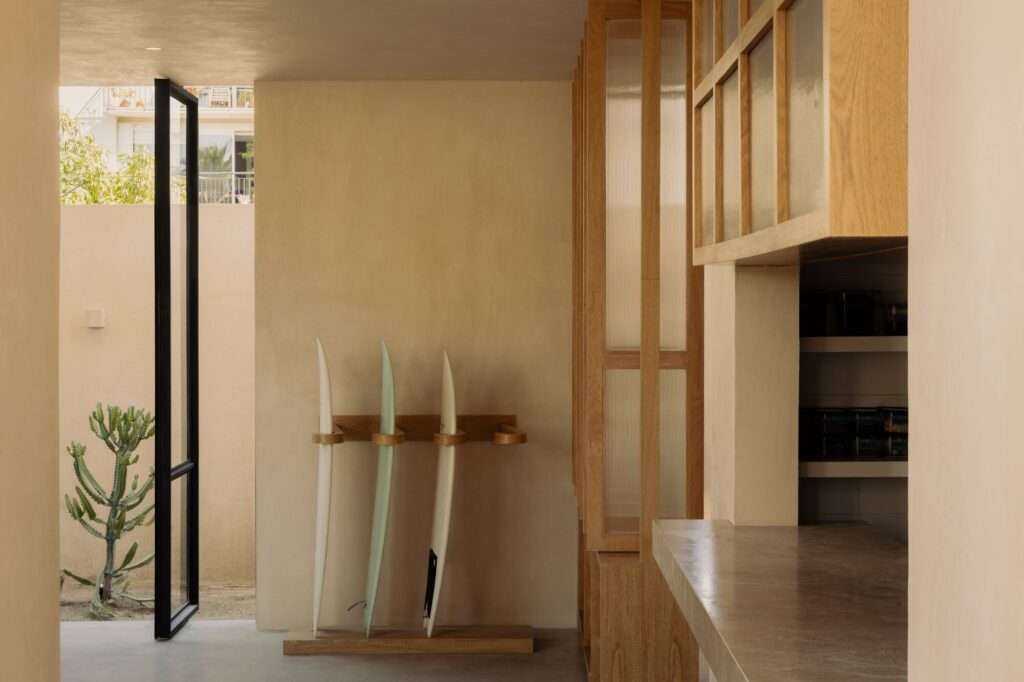
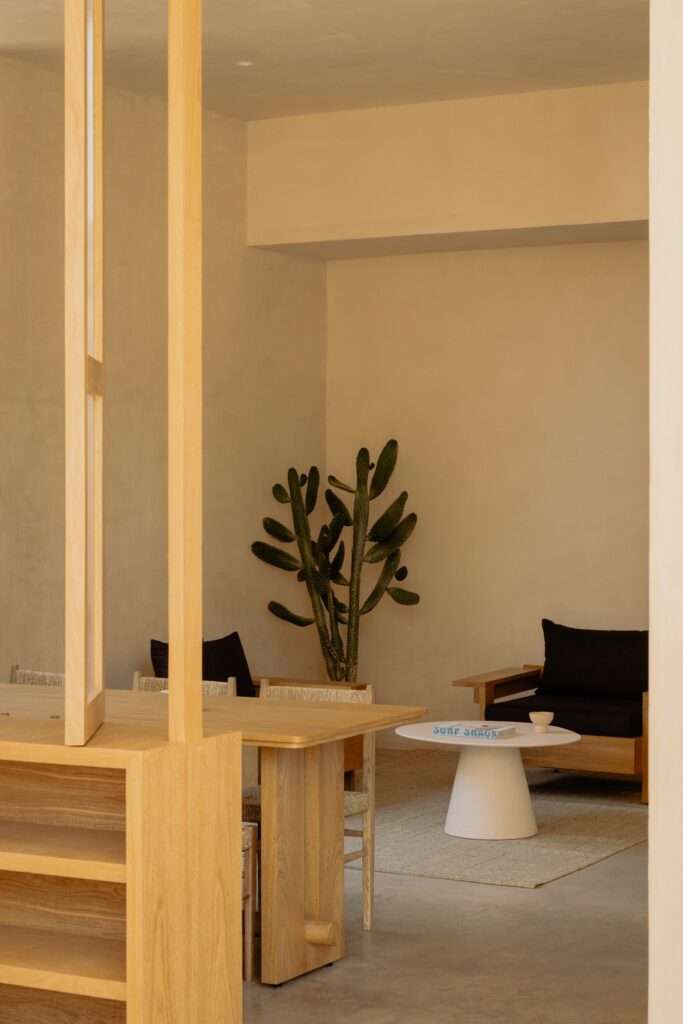
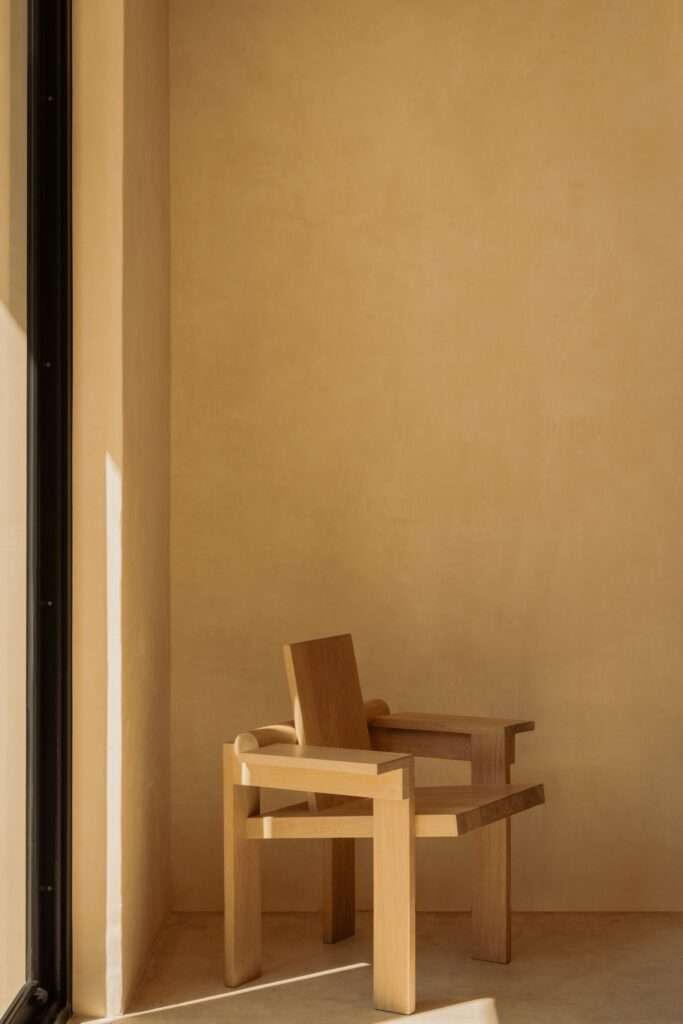
The material identity of the project is grounded in a limited palette associated with regional construction traditions and the desert climate of the area. Layers of chukum plaster and microcement flooring form a neutral backdrop that integrates with Rosa Morada wood, natural stone, and specially fabricated metal elements. Recessed openings and shaded exterior spaces play a dual role in reducing direct solar exposure and enhancing natural ventilation, while generating continuous contrasts between light and shadow that give façades and outdoor spaces a constantly shifting visual depth. Detailed specifications for such finishes often relate to broader discussions surrounding material datasheets and performance criteria.

Local Craftsmanship and Material Sustainability
The project reflects a clear reliance on the expertise of local craftsmen and regional construction firms, evident in the precision of detailing and the quality of execution. The selected materials are used not only for their environmental suitability but also for their capacity to develop new visual characteristics over time under coastal exposure. This approach grants the building a material presence deeply connected to its place, reinforcing the continuity of its aesthetic and structural performance over the long term. Similar approaches can be observed across contemporary projects that prioritize local knowledge and material longevity.
Urban Approach and Social Integration
The project proposes a contemporary model of urban living in Baja California Sur by integrating residential, hospitality, and shared activities within a single, permeable structure. Rather than presenting a closed residential complex, the design seeks to enhance interaction with the public realm and enrich everyday activity in downtown San José del Cabo. This approach helps establish a more direct relationship between the building and its urban context while preserving the privacy of residential functions within a compact and multifunctional architectural mass. Such strategies frequently contribute to ongoing discussion regarding mixed-use urban development and social engagement.
✦ ArchUp Editorial Insight
The project is presented as an open residential-commercial structure that reconfigures the relationship with the historic fabric of San José del Cabo through a porous urban ground plane acting as an active civic threshold. Movement, public functions, and private uses are interwoven within a continuous spatial gradient that integrates Gamba Café and commercial activities with housing. Vertical organization is redefined as a climatic and material response grounded in shadow, ventilation, and local materials, offering a renewed reading of cities as systems of urban densification.
However, this narrative overlooks how climatic rhetoric and material appeal are embedded within a tourism-driven economy that reduces “authenticity” to a marketing value rather than a structural necessity. The reliance on local materials and craftsmanship does not negate the high maintenance demands in coastal environments, while the claim of urban integration masks a socially uneven gradient in access to views and amenities. The vertical mass becomes a selective device that redistributes privilege within the city, redefining the relationship between housing and the urban façade through an investment-driven logic of material production. Such critiques resonate with broader themes explored in contemporary research on urban development and spatial equity.