Xingu House: Mass and Terrain Reinterpreted

Mass Formation and Terrain Dialogue
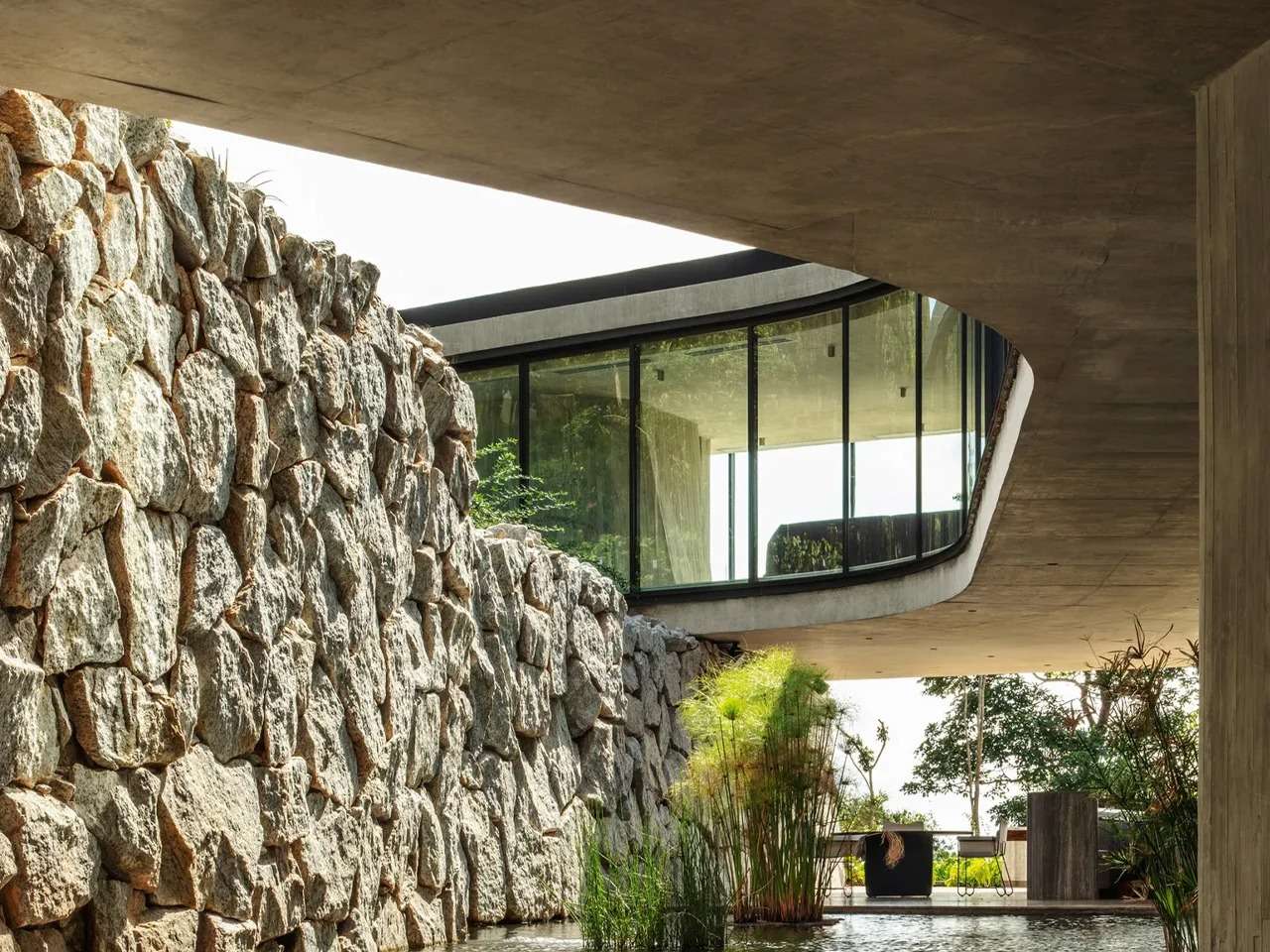
The design does not treat the site as a blank slate, but rather as an extended geological structure; where the direct response to the nature of the land is manifested in the imposition of the Xingu House mass over the remaining ancient stone walls from a previous construction. The building appears as a material event that cuts through the terrain and emerges from it, rather than a prefabricated structure simply dropped onto the site. This mass deconstruction allows the project to open itself toward grassy plateaus and expansive mountain views, while containing the visual and physical pressure imposed by the surrounding forests at the edges, creating a dynamic balance between enclosure and openness of the mass.
Spatial Experience and Living Scenography
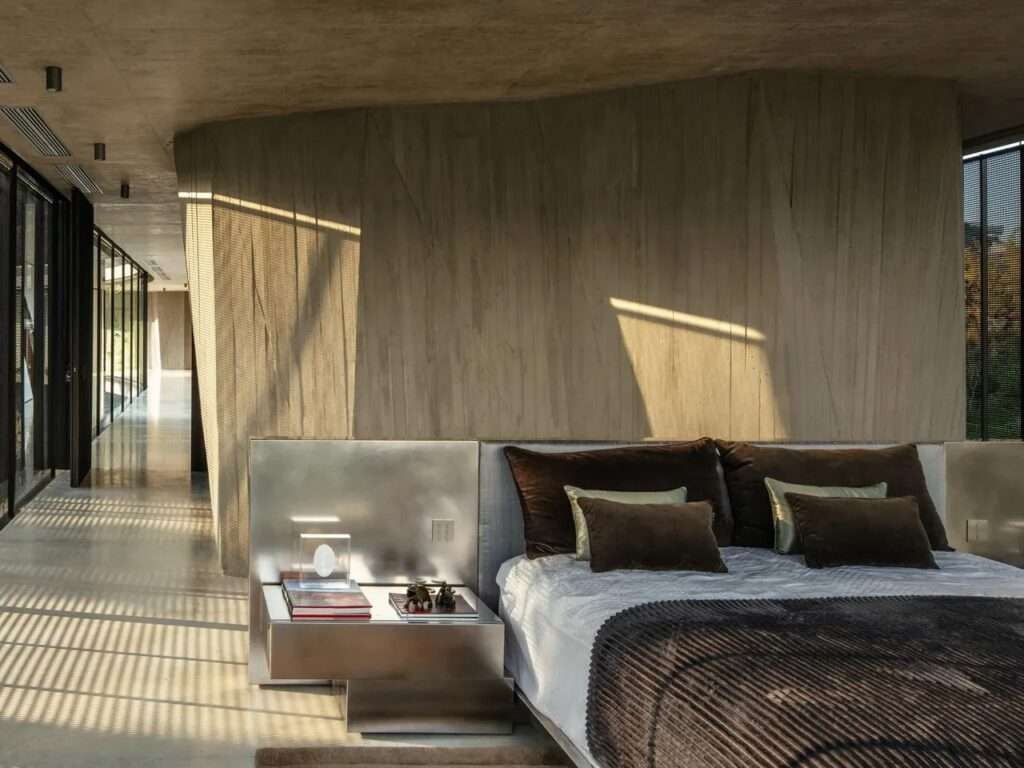
The human experience within the space is shaped through a continuous material and psychological dialogue with the surrounding natural and historical elements. From the moment of entry and passage between the stone walls, the user senses the passage of time and the materiality of place through the intersection of shadows with concrete and stone masses, a scenographic movement that shifts throughout the day in response to the sun path and air currents. This psychological and material effect extends to connect the user’s vertical movement with the earth’s core, where the path beneath these volumes leads to a lower void carved within a natural cave, intended in the future for wine production and cheese storage, deepening the sense of inhabiting a complete geological event.
Structural System and Visual Orientation
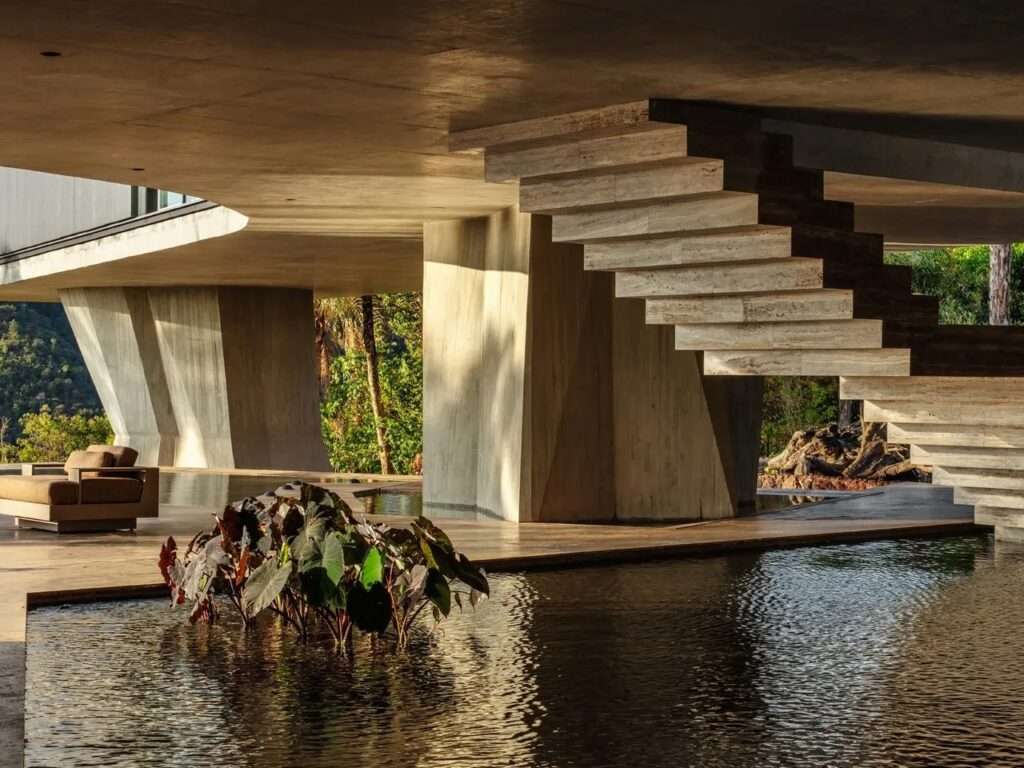
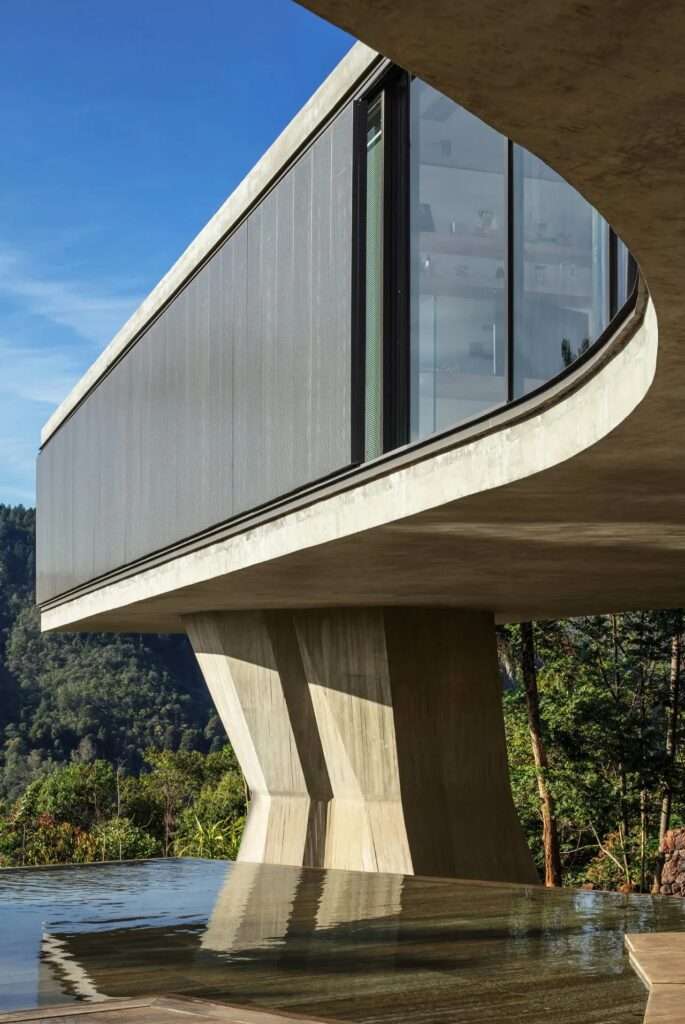
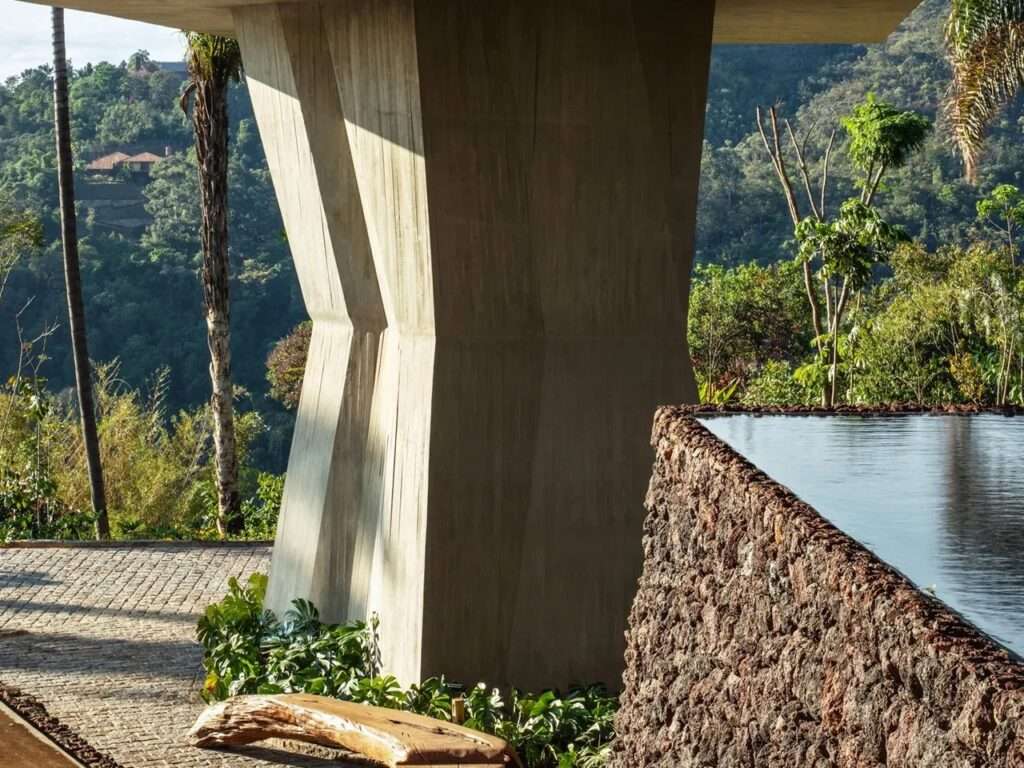
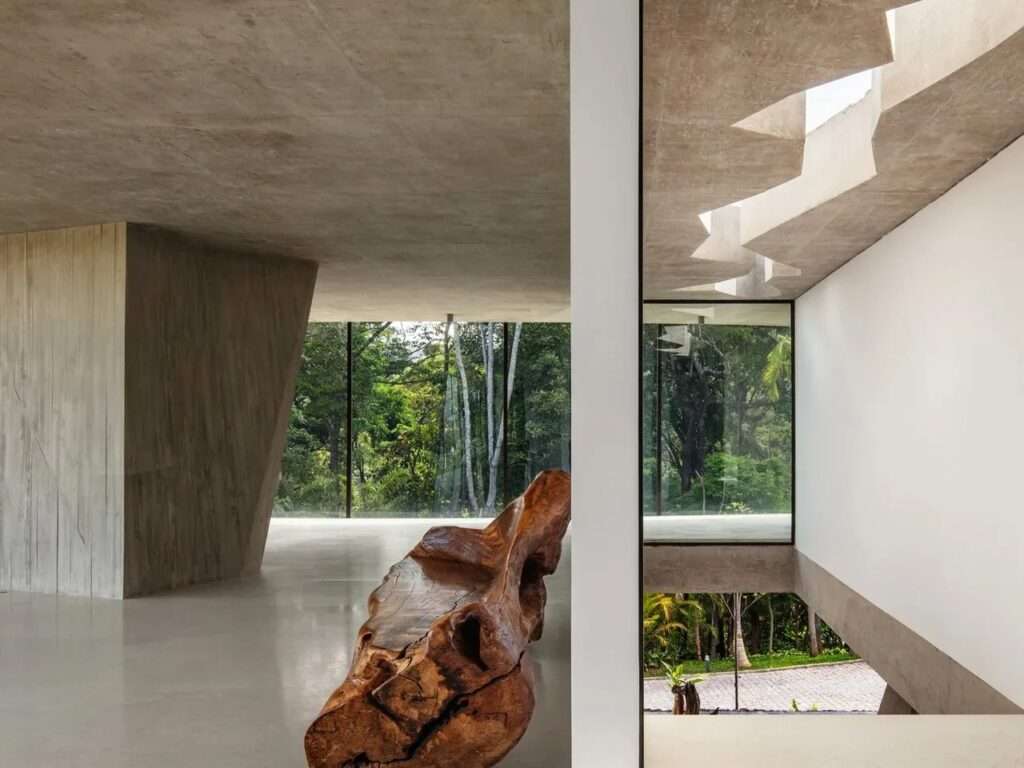
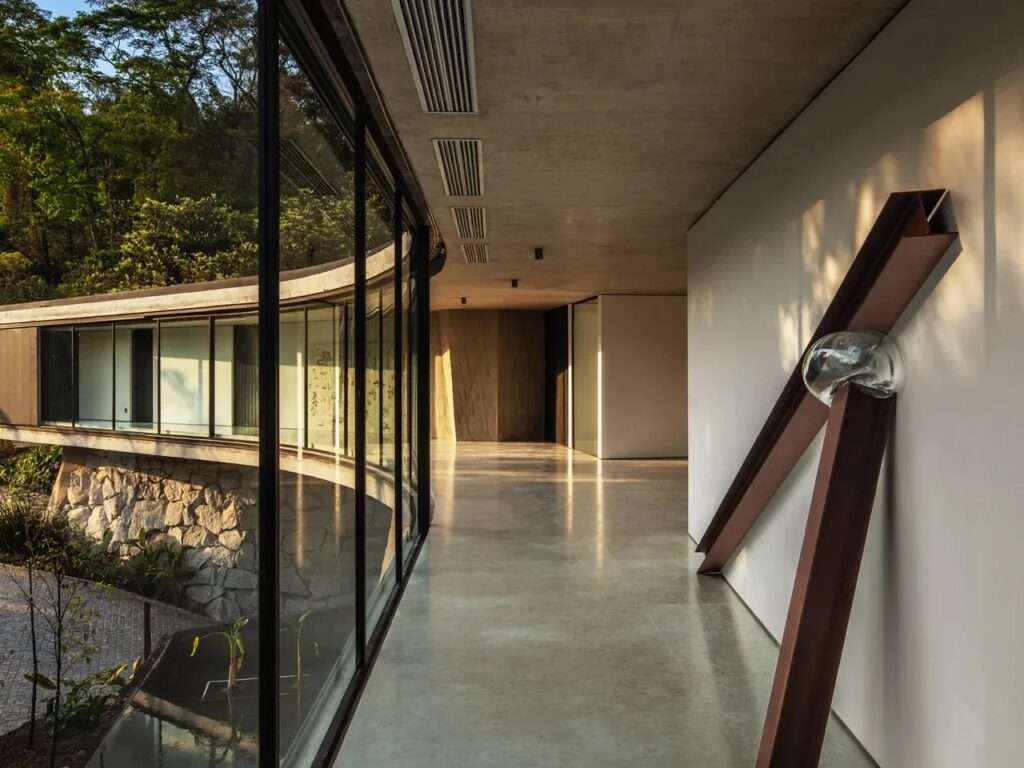
The architectural perspective of the building is formed through the concept of strict visual orientation toward the horizon, where the main volume of the house rises six meters above natural ground level, floating freely above the ancient stone walls. This suspended structure is achieved through thick, irregularly shaped concrete columns emerging from below, serving a dual function that combines structural support with the containment of service spaces such as bathrooms, stairs, and the elevator within their solid mass. This mass treatment grants the main wings an uninterrupted panoramic view of the surrounding mountains, achieving a visual and material pull that directs the user toward nature from every possible angle.
Spatial Deconstruction and Kinetic Experience
The spatial movement of the project is distributed across three distinct geometric sectors extending outward as open arms, each pointing toward a different part of the terrain, making the building extend across the land rather than rest statically upon it. The elevated main volume contains the primary wings, while the other two sectors extend to sit directly on the plateau formed by the ancient stone walls and accommodate the guest units. This mass elongation creates a scenographic kinetic experience for the user while moving between sectors, where perception of space shifts between floating above suspended concrete columns and direct physical grounding on the site’s historical stone structure.
Environmental Scenography and Spatial Separation
The relationship between the built structure and nature takes on a more deliberate character in the spa area, where this part is designed as a completely independent volume physically detached from the main house space. This small structure slips between existing trees, avoiding their displacement, reflecting a design language that responds to the forest rather than forcibly imposing the mass upon it. Inside, the functional program, comprising the sauna, changing rooms, relaxation area, and gym, flows both spatially and visually through directed openings that allow the interplay of shadows and fresh air currents to penetrate deep inside, creating a psychological effect that integrates the user into a living environmental experience.
Materiality and Visual Control
Despite the project’s overall large scale, the architectural composition succeeds in containing structural and functional complexity, preventing it from turning into visual noise that disturbs the natural landscape. This spatial calm is achieved through a restrained and explicit material language that allows raw concrete to visually merge with the surrounding natural environment. This material choice provides a clear sense of function and purpose, where complex structural details recede behind a direct and silent material dialogue between concrete mass, ancient stone walls, and geological site elements.
✦ ArchUp Editorial Insight
The thesis frames this architectural work as a seamless geological extension, employing concrete austerity to conceal highly complex structural engineering. By elevating the residential mass to adapt to the rugged terrain, the historical ruins are transformed into spatial supports, revealing an excessively luxurious design strategy; where site preservation is reduced to massive capital expenditure and aggressive material manipulation, turning the surrounding natural environment into a silent visual backdrop.
However, the claim of environmental submission remains a purely aesthetic illusion; the suspension of a 1,500-square-meter concrete volume over a sensitive ecological system inevitably requires polluting logistics and deep ground-anchored structural interventions. This narrative overly idealizes site integration, while in reality executing a resource-intensive intervention that subjugates genuine environmental fragility to a scenographic consumption masked as contextual sensitivity.